Nguyet Nguyen is a Senior Lecturer at the Faculty of Business and Law, University of Roehampton, affiliated with the Centre for Sustainability and Responsible Management. She holds a PhD in Accounting and Finance from the University of Kent (2017) and an MSc in Business and Management (2012). Her research focuses on accounting conservatism, earnings management, financial reporting practices, and their implications for corporate governance and audit quality. Her work bridges theoretical and applied aspects of financial accounting, with a particular interest in how deviations from Benford's Law and board composition influence financial statement reliability. Collaborations span international research networks, as evidenced by co-authored papers with institutions in Vietnam and Australia. Key Areas: Accounting Standards, Fraud Detection, Corporate Governance Media Engagement: Contributed insights to industry publications on auditing and financial training in Vietnam Nguyet has published in peer-reviewed journals such as the Journal of Applied Accounting Research and Review of Quantitative Finance and Accounting, demonstrating expertise in both qualitative and quantitative research methodologies.
Guillaume COQUERET is a Professor of Finance and Data Science at emlyon business school since 2018 and Director of the AIM Institute, which coordinates research and teaching in artificial intelligence applied to management. His academic qualifications include an HDR (2022) from Université Lumière Lyon 2 and a PhD in Business Administration from ESSEC Business School (2012). His research focuses on quantitative finance, machine learning in capital markets, sustainable finance, and heterogeneous agent models. He previously served as a Quantitative Researcher at EDHEC-Risk Institute (2013–2015). Education : 2022: HDR, Université Lumière Lyon 2 2012: PhD in Business Administration, ESSEC Business School 2008: Master in Probability and Finance, Université Pierre et Marie Curie (Paris 6) 2007: Master in Management, ESSEC Business School Research Interests : Machine learning applications in finance, factor investing, climate risk modeling, ESG integration, and algorithmic portfolio strategies. Publications : Over 30 peer-reviewed articles in journals such as The Journal of Portfolio Management , European Journal of Operational Research , and Quantitative Finance . Notable works include studies on climate betas, biodiversity premiums, and supervised learning in equity investing. Books : Machine Learning for Factor Investing: Python Version (2023) Perspectives in Sustainable Equity Investing (2022) Awards : None explicitly mentioned, but recognized for contributions to quantitative finance and AI in management. Labs/Teams : Leads the AIM Institute, fostering AI-driven research in management and finance.
Roméo TÉDONGAP is a Professor of Finance at ESSEC Business School (Paris-Singapore), specializing in empirical asset pricing, behavioral finance, and macro-finance. He holds a Ph.D. in Economics from Université de Montréal and has held academic positions at Stockholm School of Economics (2007–2016) and ESSEC since 2016. His research focuses on asymmetric risk attitudes, systemic risks, and long-term investment valuation, with notable contributions to journals like Journal of Financial Economics and Review of Financial Studies . Key distinctions include the 2013 EFMA Best Paper Award and the 2008 Best PhD Thesis award. Education: Ph.D. in Economics (Université de Montréal, 2008) Engineer’s Degree in Statistics and Economics (ENSEA Abidjan, 2003) Bachelor’s in Mathematics (University of Dschang, 2000) Research Interests: Macroeconomic uncertainty, behavioral asset pricing, climate finance, African stock markets, and systemic risk dynamics. His work bridges theoretical models with empirical applications, addressing topics like ultra-long investments, pandemic impacts, and microfinance strategies in Africa. Awards: 2013 EFMA Best Conference Paper Award 2008 Université de Montréal Best PhD Thesis Wallander Scholarships (2007–2013) Teaching & Leadership: Associate Dean for Research at ESSEC (2021–2024) Head of Finance PhD Program (2018–2021) Courses include Financial Markets, Advanced Derivatives, and Asset Pricing Grants & Editorial Roles: ANR grant for LONGTERMISM (2017) Associate Editor, British Accounting Review Editorial Board, Pan-African Scientific Research Council Labs & Collaborations: Active in ESSEC’s Energy & Commodity Finance Research Center, focusing on sustainable finance and climate transition investments.
Professor Kannan Govindan serves as Director of the Center for Sustainable Operations and Supply Chain Resilience at the University of Adelaide, Australia, and holds a Chair Professor position at the University of Southern Denmark. Recognized as a Highly Cited Researcher in 'Engineering' for seven consecutive years (2018-2024) by Clarivate Analytics, he stands among the top scholars globally in his field with over 475 international journal publications. His research focuses on sustainable supply chain management, reverse logistics, and circular economy models, integrating environmental, social, and economic dimensions of sustainability within supply chain operations. Professor Govindan has pioneered approaches for measuring sustainability performance using multi-criteria decision-making methods and extensively studied barriers to implementing green supply chain practices across diverse industries. His recent work emphasizes digital transformation of supply chains through Industry 4.0 technologies to enhance sustainability and resilience, particularly in response to global disruptions like the COVID-19 pandemic. His influential publications span topics including healthcare supply chain resilience, circular economy implementation, and sustainable supplier selection. Analysis of his recent work (2019-2023) reveals a strong focus on integrating digital technologies with sustainable practices, addressing supply chain disruptions, and developing frameworks for circular economy implementation in various industry contexts. Professor Govindan's scholarly contributions have been recognized with numerous prestigious awards: Highly Cited Researcher in 'Engineering' (2018-2024) Research.com Business and Management in Australia Leader Award (2025) Research.com Engineering and Technology in Australia Leader Award (2025) Multiple Research.com Leader Awards for Denmark (2022-2024) in both Business Management and Engineering Technology As an academic leader, Professor Govindan serves as Executive Editor of the Journal of Cleaner Production and holds editorial positions with several other leading journals. His research has attracted significant grant funding, supporting large-scale studies on sustainable supply chain practices across multiple industries. He actively mentors PhD and Master's students, focusing on developing the next generation of supply chain sustainability researchers. At the University of Adelaide, Professor Govindan leads the Center for Sustainable Operations and Supply Chain Resilience, which brings together interdisciplinary researchers to address critical challenges in sustainable supply chain management. The center maintains strong industry partnerships globally, facilitating the translation of research findings into practical applications that enhance supply chain sustainability and resilience in real-world contexts.
Dr. Jeroan Allison is Chair and Professor at UMass Chan Medical School's Department of Population and Quantitative Health Sciences. Trained as a primary care physician and epidemiologist (Harvard SPH), he leads research in narrative interventions for health behavior change, with continuous funding from NIH, AHRQ, and RWJF. His work spans hypertension control in Vietnam, AI-driven health communication, and implementation science for non-communicable diseases. Harvard School of Public Health: Master of Science in Epidemiology University of Alabama at Birmingham: MD Samford University: BS in Chemistry Research interests include narrative medicine , health disparities , mHealth , and health services research . He has published extensively on hypertension interventions in Vietnam, digital health tools, and tobacco cessation strategies using peer engagement. Recent publications focus on AI applications , global implementation science , and social determinants of health . His team has developed culturally adapted interventions for HPV vaccination and hypertension management using community storytelling methods. Scientific contributions include: Co-Editor-in-Chief of Medical Care Developing simulation-based training for research assistants Designing peer recruitment models for smoking cessation Dr. Allison holds multiple grants and leads the UMMS-Vietnam research collaboration , focusing on late-stage translation research in low-resource settings.
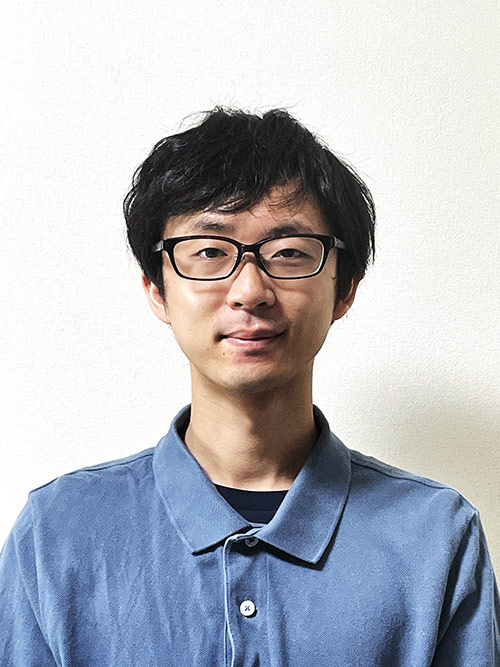
Dr. Akira Endo is an Assistant Professor at the National University of Singapore (NUS), holding a primary affiliation with the Saw Swee Hock School of Public Health and a joint appointment at the Yong Loo Lin School of Medicine. He also served as a Visiting Research Fellow at Nagasaki University and the London School of Hygiene & Tropical Medicine. Dr. Endo earned his MD & BSc in Medicine from the University of Tokyo (2011–2017) and a PhD in Infectious Disease Epidemiology from the London School of Hygiene & Tropical Medicine (2017–2021). His research focuses on mathematical modelling of infectious disease dynamics, particularly examining transmission patterns within households, schools, workplaces, and sexual networks. He has contributed to understanding optimal control strategies for outbreaks like mpox (monkeypox) and influenza, emphasizing network interventions and public health policy. His work bridges epidemiology and mathematical modeling, addressing challenges such as overdispersion in disease transmission and the impact of superspreading events. Key areas of interest include: Analysis of heavy-tailed sexual contact networks in mpox outbreaks Assessment of border control and vaccination strategies for pandemic management Quantitative design of interventions to mitigate disease spread Dr. Endo has been recognized with awards including the Japan Society for Mathematical Biology Early Career Award (2022) and the Japan Society for the Promotion of Science Overseas Research Fellowship (2021). His research also explores global health equity, such as assessing mpox risks in Southeast Asia and vaccine development for emerging pathogens like Nipah virus. His career includes roles as an Assistant Professor at Nagasaki University and a JSPS Research Fellow in London. He collaborates internationally, contributing to interdisciplinary teams like the CMMID COVID-19 Working Group. His work frequently appears in high-impact journals such as Science , Lancet , and Proceedings of the National Academy of Sciences .
Mounir El Asmar is an Associate Professor at Arizona State University’s School of Sustainable Engineering and the Built Environment in the Del E. Webb School of Construction. He is also a Senior Sustainability Scientist at the Julie Ann Wrigley Global Institute of Sustainability and an Honors faculty member at Barrett Honors College. Additionally, he serves as co-director of the National Center of Excellence on SMART Innovations. His roles emphasize leadership in sustainable engineering, project delivery systems, and infrastructure development. El Asmar holds a Ph.D., M.S., and B.E. in Civil and Mechanical Engineering from the University of Wisconsin-Madison and the American University of Beirut. His research focuses on decision-making in construction, innovative project delivery systems like Design-Build and Integrated Project Delivery (IPD), sustainable performance metrics, and infrastructure resilience. He has conducted research for the U.S. Department of Transportation, the Construction Industry Institute, and global organizations. His work has been recognized with over 25 awards, including the CII Distinguished Professor Award, ASCE’s Thomas Fitch Rowland Prize, and the DBIA Distinguished Leadership Award. He has led funded projects on topics like EVMS reliability, public-private partnerships, and sustainable construction practices. El Asmar also chairs major conferences, such as the 2020 ASCE Construction Research Congress, and serves on editorial boards for journals like the ASCE Journal of Construction Engineering and Management. He advises Ph.D. students and teaches courses on construction engineering, sustainable practices, and project management. His research integrates technology like augmented reality (AR) to enhance communication and quality control in construction sites. He actively bridges academic research with industry needs through workshops, policy development, and community engagement. Key affiliations include the Global Futures Scientists and Scholars program, the Transportation Research Board, and the Design-Build Institute of America. El Asmar’s contributions span education, research, and service, reflecting ASU’s New American University mission of innovation and societal impact.
Professor Lyn English is a leading academic in STEM and mathematics education at Queensland University of Technology's College of Education, Department of Curriculum. Her research focuses on interdisciplinary approaches, particularly integrating engineering and data science into early years education. She has authored or co-edited numerous books and journal articles, emphasizing the role of design-based problem solving and mathematical modeling in fostering critical thinking. English has contributed extensively to curriculum frameworks, including the 'Pattern and Structure Mathematics Awareness Program' (PASMAP), and has explored gender dynamics in mathematics achievement. She collaborates with institutions globally, such as Routledge, Springer, and the Australian Council for Educational Research, to advance educational methodologies. Her work highlights the importance of bridging theory and practice in STEM education. English’s research spans cognitive development in statistical and probabilistic reasoning, foundational mathematical concepts in primary education, and teacher professional development. She advocates for accelerating students' learning through innovative curricula like the RAMR framework and has conducted studies on pedagogical practices in diverse educational settings. Her edited volumes, including Handbook of International Research in Mathematics Education and Ways of Thinking in STEM-based Problem Solving , consolidate cutting-edge perspectives in the field. English’s contributions to conferences and symposia underscore her commitment to advancing STEM integration and addressing challenges in mathematics education research.
Maria Cristina Morales is a Professor in the Department of Sociology & Anthropology at the University of Texas at El Paso, College of Liberal Arts . Her research critically examines how Latinx ethnicity intersects with social statuses and institutions, particularly along the U.S.-Mexico border , using quantitative and qualitative methodologies while prioritizing reflexive and theory-driven approaches . Education: PhD in Sociology, Texas A&M University (2004) Research Focus includes structural violence at the U.S.-Mexico border, environmental hazard perceptions near border ports, and gender/sexuality dynamics . Her publications and presentations bridge border studies, immigration, labor rights, and environmental justice . Recent projects include decolonizing survey research and Latinxs on the Margins (forthcoming). Scientific Awards include the Norma Williams Distinguished Service Award (2024), UT Regents Outstanding Teaching Award (2016), and multiple recognitions from the Southwestern Sociological Association and Building Scholars programs. Grants highlight her leadership in National Science Foundation and North American Development Bank funded projects addressing sociological issues, air quality assessment , and data accessibility for vulnerable communities.
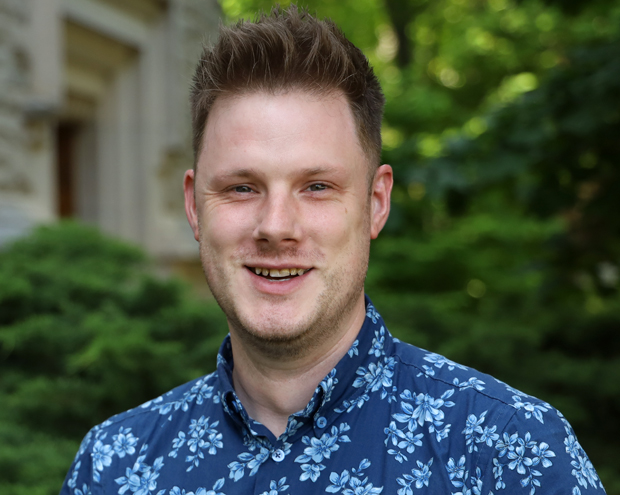
Andrew King is the Allen and Kelli Questrom Professor in Strategy & Innovation at the Questrom School of Business, Boston University, and an affiliated faculty member of the Boston University Institute for Global Sustainability (IGS). His academic career includes a PhD from MIT Sloan School of Management, an MS in Mechanical Engineering from UC Berkeley, and a BA in Mechanical Engineering from Brown University. His research focuses on corporate sustainability, environmental policy, and the credibility of academic research. Key themes include ESG investing flaws, model uncertainty in sustainability frameworks, and the interplay between financial and environmental performance. He critiques conventional strategies like win-win scenarios and emphasizes rigorous empirical methods to address research biases. King’s articles span over two decades, addressing topics like ESG valuation shortcomings, corporate transparency, and the dangers of methodological overconfidence. He has contributed to debates on academic rigor through critiques of statistical practices and calls for improved empirical methodologies. His work bridges strategy, environment, and ethics, influencing both corporate practices and academic discourse. No notable awards are listed, but his extensive publications reflect significant scholarly impact.
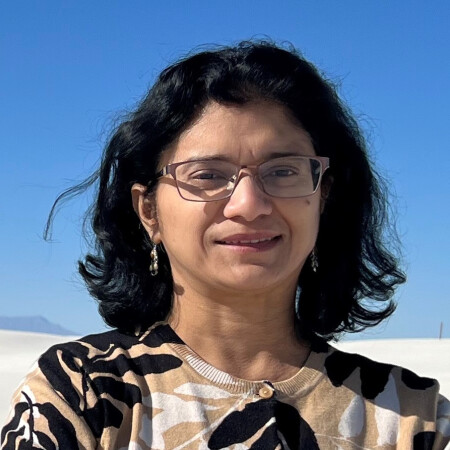
Dr. Swati Biswas is a Professor and Associate Department Head in the Department of Mathematical Sciences at the University of Texas at Dallas (UTD). She holds a Ph.D. in Biostatistics from The Ohio State University (2003) and has held academic positions at UTD since 2012, including roles at the University of North Texas Health Science Center prior to that. Her research focuses on biostatistical methods for genetic epidemiology, cancer genetics, and risk prediction modeling, with a particular emphasis on Bayesian approaches. Education: B.Sc. (1994), M.Sc. (1996) in Statistics from the University of Delhi, followed by a Ph.D. in Biostatistics from The Ohio State University (2003). She completed a postdoctoral fellowship at MD Anderson Cancer Center (2004–2005). Research interests include statistical genetics, rare haplotype analysis, Bayesian clinical trials, and personalized risk prediction models for diseases like breast cancer and substance use disorders. She has developed tools such as CBCRisk for contralateral breast cancer prediction and Bayesian hierarchical models for pathway analysis. Her publications span over 40 peer-reviewed articles, focusing on methodological advancements in genetic association studies and clinical risk modeling. Notable awards include the 2016 Young Researcher Award from the International Indian Statistical Association and the 2011 President’s Award for Educational Excellence from UNT HSC. Dr. Biswas has secured grants totaling over $10M, including NIH funding for projects like multifrequency ultrasound imaging for breast cancer monitoring and Bayesian meta-analysis of cancer risk. She mentors doctoral students and has advised nine completed dissertations, with several current students.
Dr. Sally A Kuykendall is a Professor in the Department of Health Sciences at Saint Joseph’s University, where she has served since 2004 (holding roles including Department Chair from 2011–2015). A former critical care nurse with multidisciplinary academic training (PhD in Health Studies from Temple University, MS in Health Education from Saint Joseph’s University, and BSc in Chemistry/Biology from the University of Plymouth), her work spans bullying prevention, scientific misconduct analysis, and trauma-informed care. She led a nine-year bullying prevention study and authored seminal works like Skewed Studies (2020), exposing flaws in health/psychology research. Her research also examines family violence, adverse childhood experiences, and firearm-related youth behavior. Professional experience includes clinical roles at SmithKline Beecham Pharmaceuticals and Abington Hospital, alongside adjunct/visiting professorships at Temple University and Saint Joseph’s University. She has secured over $3 million in grants for initiatives like the Olweus Bullying Prevention Program implementation and Healthy Lessons for Urban Youth. Awards include the Teaching Excellence Award (2003) and Crystal Community Impact Award (1996). Her recent focus includes creative problem-solving research and book projects addressing institutional responses to whistleblowing. Key contributions include evidence-based bullying prevention frameworks, trauma-informed care protocols, and critiques of unethical research practices across health and psychology disciplines.
Dr. John Sakaluk is an Associate Professor in the Department of Psychology at Western University. He holds affiliations with the Social, Personality, and Developmental Psychology area and the Clinical Science and Psychopathology area. His research focuses on psychometric measurement modeling, particularly in developing analytic tools for measurement techniques, and evaluating psychological intervention literatures for credibility and inclusivity. Sakaluk earned his PhD in Social Psychology (with a Quantitative minor) from the University of Kansas and completed a postdoctoral fellowship with Dr. Emily Impett. Previously, he taught at the University of Victoria, covering human sexuality and research methods. His work emphasizes methodological rigor and the use of secondary data to assess intervention impacts. Education: PhD in Social Psychology, University of Kansas (with minor in Quantitative Psychology) Bachelor’s in Psychology, minor in Family and Child Studies Research Interests: Sakaluk’s work bridges quantitative methodology and applied psychology. He develops psychometric tools for group-based meaning analysis and evaluates intervention efficacy through meta-scientific lenses. His recent focus includes dyadic structural equation modeling and assessing biases in close-relationship research. He advocates for transparent reporting and replicability in clinical and social psychology. Advising & Grants: While no advisees are listed, his teaching and research emphasize statistical methods, suggesting an active role in mentoring graduate students in quantitative techniques. No specific grants are mentioned in the provided text. Labs/Teams: Affiliated with Western’s Department of Psychology research groups, though no specific lab names are provided.
Benjamin Lev is a Professor in the Department of Decision Sciences and Management Information Systems (DS&MIS) at the LeBow College of Business, Drexel University. He previously served as Trustee Professor (2014–2021) and Department Head (2009–2014) at Drexel. His academic leadership extends to prior roles as Professor, Department Head, and Dean at the University of Michigan-Dearborn (1990–2009), Professor and Department Head at Worcester Polytechnic Institute (1987–1990), and Professor and Department Head at Temple University (1970–1987). He has held short appointments at institutions in China and the U.S., including the Wharton School and Tel Aviv University. Lev’s research spans Operations Research, Management Science, and Decision Sciences , with expertise in mathematical programming, operations planning, inventory control, supply chain management, and optimization under uncertainty. His recent work focuses on applications in disaster management, sustainable supply chains, AI in operations, water resource allocation, and emergency logistics. He has published over 150 journal articles and authored or edited 18 books, with a strong emphasis on real-world problem-solving using quantitative methods. The trends in his recent publications (2022–2025) reflect a focus on complex optimization under uncertainty , particularly in humanitarian logistics, environmental sustainability, and digital commerce. His work frequently employs advanced methodologies such as bi-level programming, stochastic optimization, fuzzy logic, and data envelopment analysis (DEA), often applied to critical societal challenges like disaster response, air pollution, and resource scarcity. Lev is an INFORMS Fellow (2003) and has received several honors, including the 2023 Top Cited Article award in Naval Research Logistics and the 2023 First Prize from the Jiangxi Province Social Science Outstanding Achievement Award. His editorial leadership is most notably demonstrated by his 23-year tenure as Editor-in-Chief (2002–2025) of OMEGA – The International Journal of Management Science , one of the premier journals in the field. He has advised numerous scholars and presented his work globally, particularly on his experience as EiC of OMEGA . He has been actively involved in academic collaborations, especially in China, serving on advisory boards and as an external reviewer for institutions like Sichuan University. He has also received significant grant funding from the U.S. National Institutes of Health, U.S. Public Health Service, and U.S. Air Force for research in medical information systems and operations research applications. Lev has been instrumental in organizing major international conferences and has served on the editorial boards of over 20 journals, including Interfaces, IIE Transactions, OR Journal, and Financial Innovation . His role as Vice President of TIMS and INFORMS further underscores his leadership in the global operations research community.
Elif Nuroğlu is a Professor at the Department of Economics, Faculty of Economics and Administrative Sciences at Türk-Alman Üniversitesi. She holds a PhD in Economics from Universität Wien (2010) and multiple master's degrees in Business Administration from Wirtschaftsuniversität Wien. Her academic career includes roles like Dozent (2014) and Assistenzprofessor at Türk-Alman and international universities. Her research focuses on international trade dynamics, digital transformation in industry, EU-Turkey-Germany geopolitical economics, climate change impacts, and econometric modeling. She has authored/co-authored over 30 peer-reviewed articles in journals like Insight Turkey , Empirical Economics , and Zbornik radova Ekonomskog fakulteta u Rijeci . Research Highlights: Analysis of Industry 4.0 implications for Turkish exports Gravity model applications in trade flow estimation Comparative studies on Turkey-Almanya digitalization strategies Post-pandemic capitalism evolution studies Balkans geopolitical economic rivalry analysis Environmental Kuznets curve validations for developing nations Her work intersects economic theory with applied policy analysis, particularly focusing on Turkey's position in global and regional markets. Current research trends emphasize digital transformation's role in trade competitiveness and green economic transitions under EU frameworks.