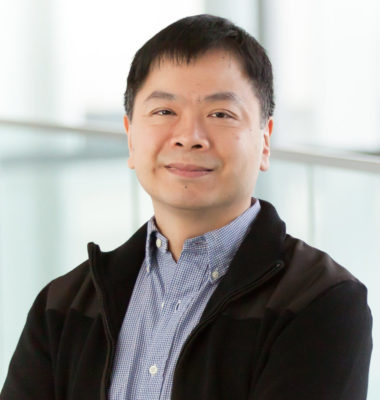
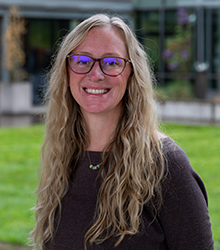
Roger Tam is an Associate Professor in the School of Biomedical Engineering (SBME) at the University of British Columbia (UBC), with a joint appointment in the Department of Radiology. He is also the Associate Director of Graduate Studies. His research focuses on machine learning and computer vision applied to medical imaging, particularly in personalized medicine and quantitative image analysis. Tam earned his PhD in computer science from UBC in 2004, specializing in computational geometry and visualization. Education: PhD in Computer Science, UBC (2004) MSc in Computer Science BSc (Honors) Research Interests: Medical imaging biomarkers Machine learning applications in healthcare Quantitative image analysis Personalized medicine His work bridges computer science and clinical medicine, emphasizing translational approaches to improve diagnostic accuracy and patient outcomes. Recent Research Trends: Focus on myelin content analysis in neurological disorders (e.g., multiple sclerosis) Development of efficient machine learning models for medical image classification Impact of physical activity on white matter health Labs & Programs: Directs the Engineers in Scrubs program, which integrates engineering principles into biomedical education. Active in collaborative research initiatives like the Centre for Brain Health and the Canadian Prospective Cohort Study (CanProCo).
Elizabeth Ooi is a Senior Lecturer of Finance at the UWA Business School, University of Western Australia. She holds a PhD from Monash University and has extensive experience in financial literacy and personal finance research, including consulting for the OECD. Her research focuses on superannuation governance, financial education, and corporate governance, with notable contributions to policy reports and peer-reviewed journals. She has secured over $140,000 in research grants and co-founded the UnderstandingSuper initiative to enhance financial literacy. Education: BA, BCom, PGradDipEc&Com (Monash University), PhD (Monash University). Research interests include financial literacy measurement, gender disparities in financial knowledge, superannuation fund governance, and socially responsible investing. Her work aligns with UN Sustainable Development Goals related to economic empowerment and financial inclusion. Grants and funding include projects with CPA Australia, Industry Superannuation Australia, and the NSW TechVoucher grant. She has supervised multiple PhD and honours students, contributing to academic and policy discussions on financial systems reform. Professional roles include Deputy Director of External Engagement (2018-2022), seminar series coordinator, and board memberships. She has presented globally at institutions like the OECD and the United Nations, and her media engagements include contributions to The Conversation, The Australian, and Sydney Morning Herald.
Roles and Affiliations: Doina Olaru is a Professor in the Department of Management and Organisations at the University of Western Australia (UWA) Business School. She is affiliated with the Planning and Transport Research Centre and holds a visiting position at the University of Burgos, Spain. Her work focuses on transport planning, urban sustainability, and data-driven decision making. Education: PhD in Transport Engineering (University Politehnica of Bucharest, 2000). Prior industry experience includes roles as a railway engineer and Postdoctoral Research Scientist at CSIRO. Research Interests: Urban transport systems, travel behavior modeling, accessibility analysis, environmental impacts of transport, and applications of artificial intelligence. She emphasizes sustainable solutions integrating land-use and transport policies. Grants and Collaborations: Principal investigator on 31 grants, including ARC Linkage Projects and industry partnerships with iMOVE CRC. Collaborates with institutions like the University of Oxford, University of Leeds, and University of Sydney. Awards: Multiple teaching awards (UWA Business School) and recognition for contributions to transport research, including the Dennis Moore Australian Computer Society Orator honor. Teaching: Courses include Data Analysis and Decision Making, and Quantitative Data Analysis. Over 10 teaching excellence nominations. Current Projects: Focus areas include smart transport technologies, roundabout modeling via drone analytics, and hybrid work impacts on transport demand.
Thomas Wernberg is a Professor in the School of Biological Sciences at The University of Western Australia (UWA), affiliated with the UWA Oceans Institute. His research focuses on ecological interactions in coastal marine habitats, particularly kelp forests, and their responses to climate change, marine heatwaves, and invasive species. He has held roles including Chair of UWA's Boating & Diving Safety Committee and Editor-in-Chief of Aquatic Botany . Wernberg has contributed to over 267 publications and secured 53 grants, including projects on kelp restoration and blue carbon management. He is a recipient of multiple 'Highly Cited Researcher' awards and has advised on initiatives like Seaforester . His work bridges sub-cellular to macro-ecological scales, addressing climate mitigation through marine ecosystem services. Education: MSc from Roskilde University (RUC). Previous Positions: ARC Future Fellow (2011–2015), Senior Lecturer (2015–2021), and various postdoctoral roles at UWA and other institutions. Research Themes: Climate change impacts, marine heatwaves, kelp restoration ( Green Gravel ), blue carbon, and biodiversity conservation. His lab explores resilience thresholds, ecological costs of stress, and genetic diversity's role in adaptation. Collaborations span global institutions, with active research in Arctic/Subarctic regions and Australian marine ecosystems. Grants & Projects: Includes operational upscaling of seaforestation, hydrodynamic energy attenuation studies, and blue carbon management. He leads initiatives to protect 4 million hectares of kelp forests by 2040. Awards: 2019–2022 Highly Cited Researcher (Web of Science), 2022 Senior Research Award (UWA School of Biological Sciences). Labs/Teams: Collaborates with the Great Southern Reef Foundation, Uluu Scientific Advisory Board, and international networks like the Green Gravel Action Group .
Dr. Nicholas A Smith is an Assistant Professor of Psychology at The University of Texas at Arlington, specializing in Industrial-Organizational Psychology and Workplace Diversity. He holds a PhD in Applied Psychology from Portland State University (2019), an MS in I/O Psychology from the University of Central Florida (2014), and a BS in Psychology from the same institution (2012). His research focuses on workplace diversity, mental health equity, and labor rights, with recent projects examining the impact of overtime legislation on Latinx agricultural workers and stigma reduction in service industries. He has secured grants totaling over $1.2 million, including a 2024 EPA grant for air quality advocacy in underserved communities and a Robert Wood Johnson Foundation-funded study on labor rights. Dr. Smith serves on editorial boards for Applied Psychology: An International Review and reviews for the Society for Industrial and Organizational Psychology. His teaching includes courses on Business Psychology and Research Methods. He actively engages in international collaborations, presenting at conferences in France, Spain, and Lithuania, and advocates for inclusive workplace policies through community-engaged research. His scholarly contributions span over 20 peer-reviewed articles, addressing topics from allyship strategies to stereotype content intersections. Despite no explicitly listed awards, his impactful grant-funded work reflects recognition of his research contributions.
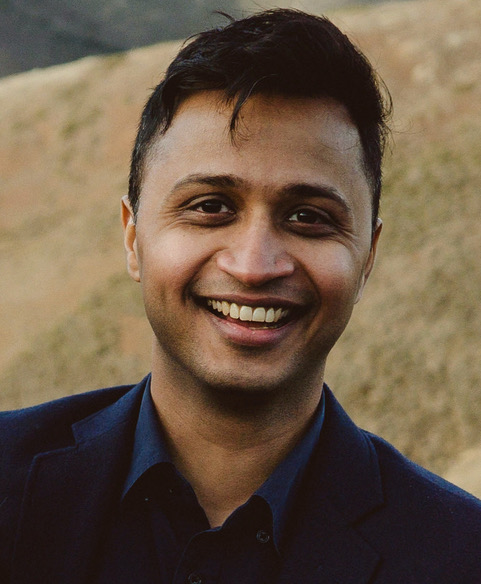
Rachit Dubey is an Assistant Professor in the Department of Communication at UCLA, affiliated with the College of Letters & Science. He holds a PhD in Computer Science from Princeton University, an M.S. in Education from UC Berkeley, and a BEng in Computer Science from Nanyang Technological University. His research bridges computational modeling, behavioral experiments, and policy design to address climate change challenges, focusing on human motivation and policy impact. Key research areas include using AI-generated visualizations to enhance climate communication, understanding cognitive underpinnings of climate inaction, and designing interventions to reduce polarization. His work has been featured in Nature Human Behavior , Nature Sustainability , and PNAS . Notable contributions include demonstrating that binary climate data visuals significantly amplify perceived urgency compared to gradual trends, and developing computational models of grief using reinforcement learning. He received the 2024 SfNC Dissertation Award for his doctoral work. Dr. Dubey collaborates closely with policymakers to bridge research and practice, and is recruiting PhD students in cognitive science, climate policy, and machine learning. His lab, the Computational Cognitive Policy Lab, emphasizes quantitative rigor and interdisciplinary collaboration.
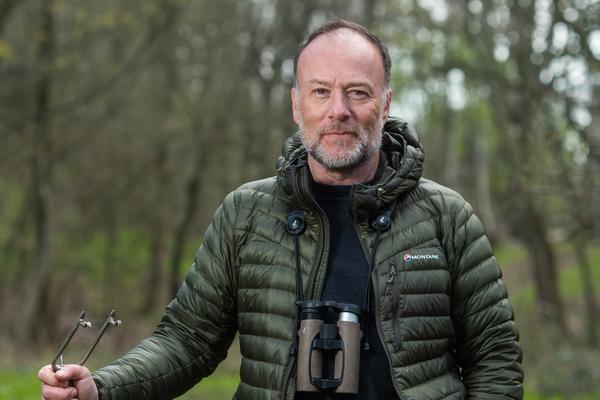
Professor Ben Sheldon FRS holds the Luc Hoffmann Chair of Ornithology and directs the Edward Grey Institute within the University of Oxford's Department of Biology. His research focuses on evolutionary ecology, particularly individual variation, environmental adaptation, and long-term ecological studies like the Wytham Woods great tit project. Current themes include spatial scaling of ecological interactions, life-history evolution, and social dynamics in bird populations. He has secured major grants from ERC, UKRI, NERC, and BBSRC, and hosted postdocs via Marie Curie Fellowships. Research interests integrate field studies, genetics, and quantitative analysis to explore how environmental and social factors shape animal behavior and adaptation. Recent work examines phenological mismatches, climate impacts, and social network effects on reproduction and survival. Awards include Fellowship of the Royal Society. Advising includes 7-8 graduate students and postdocs, with a focus on PhD and postdoc project supervision. Administrative roles include past Head of the Department of Zoology (2016–2021) and Senior User Representative for the Life and Mind Building (2019–2022). The Edward Grey Institute serves as a key research hub for avian ecology and ornithology.
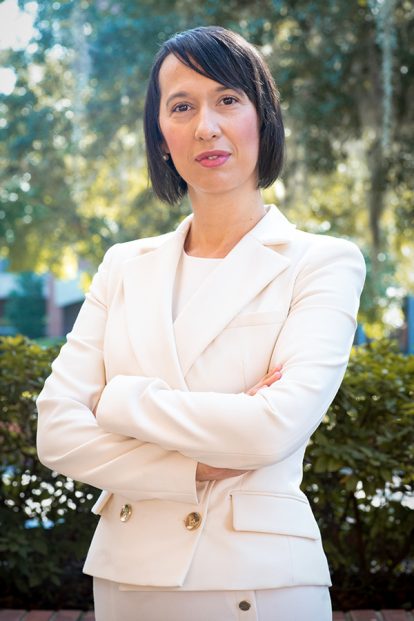
Eleni Bozia is an Associate Professor of Classics and Digital Humanities at the University of Florida. She leads the Data-Driven Humanities Research Group and serves as Associate Director of the Digital Epigraphy and Archaeology Project, focusing on 3D digitization of cultural heritage and AI integration in humanities. Her research explores linguistic/cultural diversity in Imperial Greek/Latin literature and its intersections with modern globalism. Bozia holds dual doctorates from the University of Florida (2009) in Classical Studies and Universität Leipzig (2018) in Digital Humanities. Her scholarly work bridges classical studies with digital innovation, including computational analysis of ancient texts, virtual reality for experiential learning, and collaborative global preservation initiatives. Recognized with awards from La Fondation Hardt and the American Academy in Rome, her contributions span peer-reviewed articles, edited volumes, and public engagements like TEDx talks. She actively promotes interdisciplinary collaboration through roles in the Florida Digital Humanities Consortium and the Literary Encyclopedia. Bozia’s research portfolio includes groundbreaking books on Lucian’s works, multilingual practices in antiquity, and digital epigraphy. She advocates for reimagining classical pedagogy through technology, emphasizing accessibility and relevance for younger generations. Her lab’s projects like the Digital Rosetta Stone and 3D artifact preservation redefine how ancient knowledge is studied, shared, and experienced in the digital age.
Jared Rubin is a Professor of Economics at Chapman University’s George L. Argyros College of Business and Economics and Co-Director of the Institute for the Study of Religion, Economics, and Society (IRES). His research bridges economic history, institutional economics, and religious studies, focusing on how historical political and religious institutions shaped economic development in the Middle East and Western Europe. Rubin’s work has been published in top journals like Review of Economic Studies and Journal of Economic Growth , and his book Rulers, Religion, and Riches (2017) received the Douglass North Best Book Award. He has secured over $1 million in grants from the John Templeton Foundation and serves on editorial boards for Journal of Economic History and Journal of Comparative Economics . Education: B.A., University of Virginia (2002) Ph.D., Stanford University (2007) Research Themes: Role of religious institutions in economic development Historical divergence between Middle East and Western Europe Political legitimacy and governance structures Cultural transmission of economic norms Recent Publications (2024): Religion, Political Legitimacy, and Complexity How Did the World Become Rich? Endogenous Political Legitimacy: The Tudor Roots of England’s Constitutional Governance Awards & Grants: Douglass North Best Book Award (2017) Over $1 million in grants from the John Templeton Foundation Leadership Roles: Co-Director, Institute for the Study of Religion, Economics, and Society (Chapman University) President, Association for the Study of Religion, Economics, and Culture (ASREC) Editorial Boards: Journal of Economic History Journal of Comparative Economics Explorations in Economic History
Dr. Anna Raffoni serves as a Senior Lecturer in Accounting and Finance at Loughborough Business School, Loughborough University, and holds the strategic role of Programme Lead for Social Science Research (Business and Management Studies). She joined the institution in January 2015 after accumulating academic experience at the University of East Anglia, Cranfield University School of Management, and the University of Bologna, establishing herself as a key contributor to the Accounting and Finance research group. Her academic foundation includes a PhD in Management Accounting (specializing in customer value management) awarded by the University of Florence in 2009, which continues to inform her interdisciplinary research trajectory. Raffoni's scholarly work centers on performance management, business analytics, and strategic management accounting, with publications appearing in premier journals including the European Journal of Operational Research, British Accounting Review, Production, Planning & Control, and Omega. Her research uniquely bridges quantitative operations research methods with accounting frameworks, particularly examining how data analytics transforms traditional performance measurement in banking and service sectors through techniques like machine learning and data envelopment analysis. Analysis of her 15 most recent publications (2012-2024) reveals a clear evolution toward integrating advanced analytics with performance management systems. She has pioneered multidimensional efficiency measurement in banking branches, explored total cost of ownership in supply chains, and investigated strategic performance measurement adoption, consistently demonstrating how operational research methods solve real-world accounting challenges while advancing theoretical models. Her scientific recognition features the Dean’s Award for Early Career Teacher of the Year (2017), acknowledging her excellence in undergraduate and postgraduate instruction. In her capacity as Programme Lead, Raffoni shapes research strategy and supports faculty development across Business and Management Studies. While specific supervisees and grant details aren't documented in available materials, her leadership role and active publication record indicate substantial engagement in research mentorship and academic community building. She actively collaborates within Loughborough's Accounting and Finance research group, contributing to interdisciplinary projects that address contemporary challenges in financial management through analytical approaches, with emerging work suggesting increasing focus on artificial intelligence applications in performance systems.
Dr. Sara Schmitt is the Bricker-Squires Faculty Chair in Early Intervention and an Associate Professor in the Department of Special Education and Clinical Sciences at the University of Oregon's College of Education. She holds affiliations with the Prevention Science Institute and the Prevention Sciences Graduate Program. Her research focuses on early childhood self-regulation, social-emotional development, and school readiness, particularly for underserved populations. Dr. Schmitt designs evidence-based interventions, such as the Early Learning Matters curriculum implemented in military child development centers. She has received accolades including the 2021 Society for the Study of Human Development Early Career Award and the 2021 Purdue University Trailblazer Award. Education: Ph.D., 2013, Human Development and Family Sciences, Oregon State University M.A., 2009, Developmental Psychology, San Diego State University B.A., 2003, Psychology, University of Wisconsin-Madison Research Interests: Dr. Schmitt investigates contextual and individual predictors of self-regulation, designs interventions to strengthen skills in disadvantaged children, and examines factors impacting school readiness. Her work emphasizes low-cost, scalable strategies and policy implications for educational equity. Publications: Her recent work includes studies on preschool program efficacy, block play’s impact on math skills, and the role of classroom quality in social-emotional development. These contributions underscore her focus on translational research bridging theory and practice. Awards & Grants: Funded by federal agencies and foundations, her research addresses socioeconomic disparities in early learning. She leads training initiatives for educators and has authored over 30 peer-reviewed articles. Labs/Teams: Active in the Prevention Science Institute and the Ballmer Institute Leadership Council, she collaborates on multidisciplinary teams advancing early childhood policy and practice.
Nikolaus (Nik) Fortelny is a Group Leader in Computational Biology at the University of Salzburg, Austria, where he leads the Computational Systems Biology research group within the Department of Biological Sciences & Medical Biology. His research focuses on understanding biological systems at the molecular level through advanced computational approaches. Dr. Fortelny's research interests include: Computational Systems Biology Multi-omics data integration and analysis Single-cell and spatial biology Machine learning applications in biology Network science approaches to biological regulation Immune system modeling His recent publications demonstrate a strong focus on applying computational approaches to understand complex biological systems, particularly in immunology and cellular regulation. His work often involves collaboration with experimental biologists to generate and analyze large-scale datasets from multi-omics experiments collected at single-cell or spatial resolution. Dr. Fortelny is actively involved in research recruitment and is currently hiring for professor positions in Medical Systems Biology and Animal Physiology at the University of Salzburg, with an application deadline of April 19th, 2025. His group regularly seeks students, PhD candidates, postdocs, and staff scientists to join their team.
Daniel Powell is a Senior Lecturer in Health Psychology and Programme Director of the MSc Health Psychology at the University of Aberdeen, School of Medicine, Medical Sciences and Nutrition. He is a core member of the Aberdeen Health Psychology Group and the interdisciplinary Centre for Labour Market Research. He holds a PhD from the University of Southampton and became a Fellow of the Higher Education Academy in 2019. His educational background includes: BSc (Hons) Psychology – University of the West of England, 2007 MSc Health Psychology – University of Southampton, 2009 PhD Psychology – University of Southampton, 2014 Daniel's research focuses on health psychology, particularly using intensive longitudinal methods such as ecological momentary assessment (EMA) to study stress, fatigue, self-regulation, and decision-making in real-world contexts. His work spans chronic illness (e.g., multiple sclerosis, diabetes), healthcare professionals (e.g., doctors, nurses), and occupational settings (e.g., fly-in fly-out workers). He leads the Stress and Health Research Theme and convenes regular workshops to support health psychology researchers. His methodological expertise includes real-time data collection, psychophysiology (e.g., heart rate variability, cortisol), and interdisciplinary collaboration with health economics, primary care, and bioengineering. His recent publications (2024–2025) reveal a strong trend in investigating decision fatigue in healthcare, stress and recovery patterns in medical professionals using biometric monitoring, and the psychosocial impact of shift and rotation work. He frequently employs EMA and systematic reviews to explore behavioral patterns in context. His work also extends to sustainable clinical research and digital health tools for pandemic response. His scientific recognition includes: Stan Maes Early Career Award, European Health Psychology Society (2019) Rosemary Anne Price Student Award, MS Society (2013) Daniel actively supervises five PhD students on topics including decision fatigue in healthcare, quality of life after limb loss, stress in medical and dental students, and low-carbon clinical trials. He teaches across postgraduate programs, coordinates the PU5053 course on Stress, Personality & Health, and co-founded an annual Summer School in Intensive Longitudinal Methods. He has no indication of part-time status and is actively engaged in research, teaching, and leadership. He is affiliated with several professional organizations, including the British Psychological Society (Chartered Psychologist), Division of Health Psychology, European Health Psychology Society, and UK Society for Behavioural Medicine. His research lab is embedded within the Aberdeen Health Psychology Group, which fosters interdisciplinary collaboration and methodological innovation in health behavior research.
Dr. Roy Lederman is an Assistant Professor at the Department of Statistics and Data Science , Yale University. He is affiliated with the Quantitative Biology Institute (QBio) , the Applied Math Program , the Institute for Foundations of Data Science (FDS) , and the Wu Tsai Institute (WTI) . He was awarded the Sloan Research Fellowship (2023) . He previously held a Gibbs Assistant Professorship at Yale (2014-2015) and a postdoc at Princeton University (2015-2018) . Education: PhD in Applied Mathematics, Yale University (2014); dual BSc in Physics and Electrical Engineering, Tel-Aviv University. Teaching: Courses include Computational Tools for Data Science, Signal Processing, and Mathematical Machine Learning. Research Areas: Dr. Lederman works at the intersection of computational biology , structural biology , Bayesian inference , numerical analysis , and machine learning . His recent work focuses on cryo-EM and hyper-molecules for studying molecular heterogeneity, alternating diffusion for common variable recovery, and Zernike polynomials for 3D imaging. He also develops Hamiltonian Monte Carlo methods and randomized DNA sequencing algorithms . Publications Trends: His publications (15 most recent) emphasize structural biology and cryo-EM applications, machine learning (Bayesian deep learning, diffusion maps), numerical analysis (Fourier/Laplace transforms), and computational biology (DNA sequencing algorithms). Key sub-fields include heterogeneity analysis , manifold learning , Hamiltonian Monte Carlo , and Zernike polynomials . Scientific Awards: Sloan Research Fellow (2023) Dr. Lederman actively mentors graduate students and postdocs at Yale, and co-organizes the One World Cryo-EM seminar series . His lab develops open-source software (e.g., prolate function implementation ) and explores theoretical bounds on transforms and common variable recovery in multi-sensor experiments.
Germain Gauthier is an Assistant Professor at the Department of Social and Political Sciences, Bocconi University. His work bridges economics and political science with a focus on political economy, public economics, and machine learning methods. He develops AI tools for social scientists, particularly for analyzing unstructured data like texts and images. Ph.D. in Economics, Ecole Polytechnique (2018–2023) Postdoctoral Researcher, ETH Zürich (2023) M.Sc. in Analysis and Policy in Economics, Paris School of Economics (2017–2018) M.Sc. in Quantitative Economics, HEC Paris (2013–2017) His research spans two main areas: applied studies on digital technologies' societal consequences (e.g., X's algorithms, #MeToo's impact) and methodological innovations in machine learning for social science data. Recent publications include work on protest dynamics, inequality, and narrative extraction from texts. Key trends in his publications include: Machine learning applications to political and economic analysis Text mining for social science narratives Empirical studies on protest movements and digital governance Algorithmic bias in labor markets Economic policy evaluation using big data He has received significant funding: Swiss National Sciences Foundation Grant (300K CHF, 2023–2026) Swiss National Sciences Foundation Grant (100K CHF, 2020) Laboratoire d’Excellence Ph.D. Grant (2018–2023) He teaches courses on Public Finance (Bocconi) and Text as Data for Social Sciences (LMU München), and has developed open-source software packages like relatio and DeepLatent for text analysis and latent variable modeling.