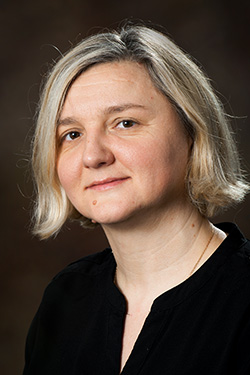
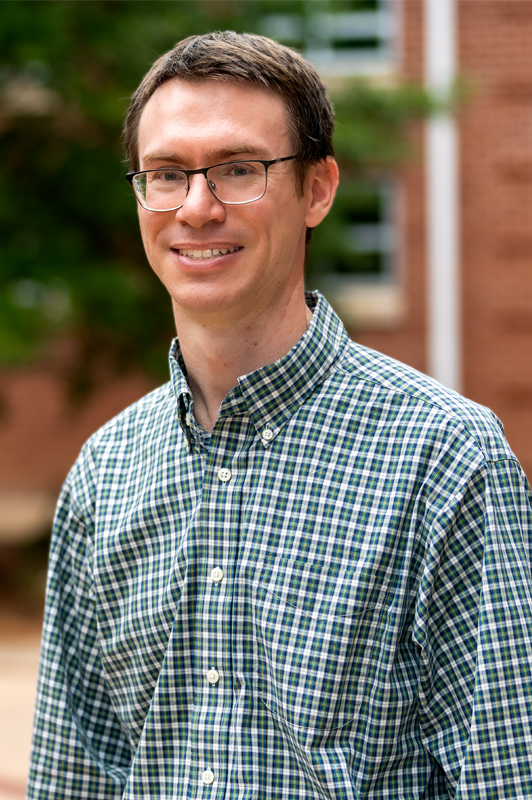
Ursula Andrea Gonzales Barron is a principal investigator affiliated with the Instituto Politécnico de Bragança (IPB), where she focuses on microbial risk assessment, biopreservation, and predictive microbiology. Her research spans food safety, particularly in dairy and fermented meat products, and she holds the Investigadora RENACYT (Nivel I) award from the Consejo Nacional de Ciencia y Tecnología e Innovación Tecnológica (2019). Current research projects include "Biointervenções e Modelação de Risco" (FCT-funded, 2019-2023) and "Agro-ecossistemas Frágeis Produtivos" (FCT, 2023-2026). Key scientific contributions: Pathogens-in-Foods (PIF) open-access database, meta-regression models for microbial inactivation, and risk assessment frameworks for Listeria monocytogenes in dairy/meat products. 2024-2025 publications address microbial dynamics in cheeses, antimicrobial plant extracts, and fermented food safety standards in Mediterranean regions. Her work combines experimental microbiology with statistical and computational approaches to model microbial behavior, optimize preservation techniques, and inform food safety policies. She collaborates on European food safety initiatives and develops biopreservation strategies using lactic acid bacteria and plant-derived compounds. Scientific awards: Investigadora RENACYT (Grupo Carlos Monge Medrano - Nivel I, 2019) Grants: FCT funding for agro-pastoral sustainability (2023-2026) FCT funding for Mediterranean fermented food safety (2019-2023)
Stephen Ramsey, an Associate Professor at Oregon State University, holds dual appointments in the School of Electrical Engineering and Computer Science (College of Engineering) and the Department of Biomedical Sciences (Carlson College of Veterinary Medicine). With a PhD in Physics from the University of Maryland, his postdoctoral training in computational genomics at the University of Washington, and professional experience at the Institute for Systems Biology and Center for Infectious Disease Research, Ramsey bridges computational methods with biomedical applications. Education : Ph.D., Physics, University of Maryland; M.S., Physics, University of Maryland; Sc.B., Mathematical Physics, Brown University Ramsey specializes in computational systems biology , focusing on bioinformatics , biomedical knowledge graphs , and precision medicine . His research integrates machine learning , gene regulatory network modeling , and multi-omics data analysis to address challenges in rare disease diagnostics , drug monitoring , and inflammatory disease mechanisms . Current work includes AI-driven biomedical translation and electrochemical biosensor development for non-invasive diagnostics . Recent publications highlight knowledge graph applications in translational biomedicine , causal network inference in clinical-environmental data integration , and cross-species cancer transcriptomics . His team develops tools like RTX-KG2 and PloverDB to standardize biomedical data sharing and semantic reasoning . Scientific Awards : 2019 Zoetis Award (Carlson College of Veterinary Medicine) 2016 NSF CAREER Award 2016 PhRMA New Investigator Award 2010 NIH K25 Mentored Quantitative Research Award Ramsey advises in computational biology courses (CS 446/546) and contributes to biomedical AI through projects like mediKanren for rare disease diagnostics . His NSF-funded research explores gene expression noise and regulatory network dynamics , while NIH and PhRMA grants support his translational medicine initiatives. He leads the Ramsey Laboratory , which develops graph-based reasoning tools for biomedical data translation and multi-omics integration . The lab's work spans comparative oncology models, electrochemical biosensors , and knowledge graph infrastructure for clinical decision support .
Khurram Nadeem is an Associate Professor of Statistics at the University of Guelph, specializing in predictive modeling of ecological and environmental systems. His research focuses on leveraging big data analytics to address challenges in wildland fire prediction, agricultural sustainability, and statistical bioinformatics. He leads a lab offering graduate research opportunities in these areas and collaborates with organizations like the Canadian Interagency Forest Fire Centre (CIFFC). Education: PhD in Statistics, University of Alberta (2013) MSc in Statistics, University of Karachi (2005) BSc (Honours) in Statistics, University of Karachi (2003) Research Themes: Wildland Fire Prediction: Developing spatiotemporal models to forecast fire occurrences in British Columbia, aiding fire management strategies. Agro-Environmental Science: Integrating big data from precision agriculture and genomics to optimize sustainable farming practices under climate change. Statistical Bioinformatics: Analyzing microbiome data in livestock and crops to improve disease prevention and crop resilience. Media & Partnerships: Featured in University of Guelph news for wildfire research and Food from Thought initiatives. Seeks industry partnerships in forest fire analytics, environmetrics, and quantitative ecology. Advising & Grants: Supervises graduate students in Statistics and Bioinformatics programs. Offers postdoctoral positions in applied statistics for climate-agriculture linkages and microbiome modeling. Labs & Teams: Hosts a multidisciplinary lab focusing on environmental and agricultural data science. Collaborates with the Canadian Forest Service and agricultural stakeholders.
Ana Sofia Ribeiro Duarte is a Senior Researcher at the National Food Institute, Technical University of Denmark (DTU), specializing in food safety epidemiology and antimicrobial resistance. She leads the Research Group for Foodborne Pathogens and Epidemiology within the DTU Microbes Initiative and serves as Project Manager for the DANMAP surveillance program. Dr. Duarte actively supervises PhD students and contributes to international research collaborations across Europe and Africa. Her educational background includes a PhD in The interpretation of quantitative microbiology data: meeting the demands of quantitative microbiological risk assessment from the National Food Institute (awarded 2013) and a combined Doctor of Veterinary Medicine (DVM) and Master of Science (MSc) in Veterinary Epidemiology from the University of Lisbon (awarded 2009). Dr. Duarte's research focuses on antimicrobial resistance in food systems, with particular expertise in quantitative microbial risk assessment, source attribution modeling, and metagenomics applications for surveillance. Her work bridges veterinary medicine, public health, and food safety through a One Health approach, examining transmission pathways between animals, food, and humans. She has pioneered the application of genomic data in risk assessment methodologies and has developed innovative surveillance techniques using metagenomics. Analysis of her recent publications reveals a strong emphasis on Escherichia coli resistance mechanisms, zoonotic pathogen transmission, and the development of integrated surveillance systems that connect animal, human, and environmental health data. Her research increasingly incorporates advanced modeling techniques and genomic approaches to understand resistance transmission dynamics across the food chain. Best Oral Presentation (2010) Dr. Duarte actively mentors PhD students including H. M. Stratton (investigating antimicrobial resistance at the domestic animals-wildlife-environment interface) and M. B. Hallgren (developing strategies to reduce antimicrobial resistance burden). She has secured significant research funding including the AMELIORATE project (heAvy MEtaL and antImicrObial Resistance exposure through wAsTe in kEnya) running from 2025-2029. Her teaching activities include international courses on quantitative microbial risk assessment under European Commission programs and a successful Coursera MOOC on metagenomics for pathogen surveillance. She leads the DTU Microbes Initiative's research on foodborne pathogens and epidemiology, contributing to the DANMAP surveillance program which monitors antimicrobial use and resistance across Denmark's food production chain. Her international collaborations span institutions in Austria, Australia, Spain, and Kenya, reflecting the global nature of antimicrobial resistance challenges.
Dr. Stig Hellebust is a Lecturer in Physical Chemistry at the School of Chemistry, University College Cork (UCC), Ireland. Based in Room 206B of the Kane Building, he can be contacted at s.hellebust@ucc.ie or +353 214902680. His research focuses on atmospheric chemistry, environmental monitoring, and advanced data analysis techniques for understanding air quality and pollution sources across Ireland. Dr. Hellebust's research interests span several key areas of environmental chemistry and data science: Atmospheric observational data analysis, particularly high-dimensional datasets collected over extended time periods Application of multivariate statistical methods and machine learning for environmental data interpretation Source apportionment of atmospheric pollutants using receptor modeling techniques Development of algorithms for processing large environmental datasets Application of clustering and classification techniques to identify pollution sources Fourier-transform infrared spectroscopy data analysis His extensive publication record demonstrates expertise in air quality monitoring, particularly focusing on PM2.5 sources, urban pollution dynamics, and health impacts. He frequently employs advanced statistical methods including principal component analysis (PCA), positive matrix factorization (PMF), and various machine learning approaches to extract meaningful information from complex environmental datasets. His work bridges atmospheric science, public health, and data analytics, with significant contributions to understanding Ireland's air quality challenges. Dr. Hellebust has secured substantial research funding from multiple sources including the Environmental Protection Agency (EPA), Health Research Board, Science Foundation Ireland, and European Union programs. His current major projects include "Sources of PM2.5 in the Air of Irish Towns" (2024-2027, €233,796.00) and "Impact of Agricultural Emissions on Rural and Urban Air Quality" (2022-2025, €119,700.00), demonstrating his leadership in addressing critical environmental challenges. He currently supervises doctoral student Rósín Eileen Byrne and has previously supervised Eimear Heffernan who completed her PhD in 2022 on "Spatial and temporal variation of ambient carbonaceous aerosol in Ireland and strategies for effective monitoring of source contributions." His mentorship extends to interdisciplinary research connecting chemistry, environmental science, and public health. Dr. Hellebust is an active member of UCC's Atmospheric and Environmental Chemistry research group, collaborating with colleagues across Ireland and internationally on air quality monitoring and pollution source identification projects. His work has significant policy implications for urban planning, public health interventions, and environmental regulation in Ireland and beyond.
Bina Joe , Ph.D., is a Distinguished University Professor and Chair of the Department of Physiology and Pharmacology at the University of Toledo College of Medicine and Life Sciences. She serves as the Founding Executive Director of the Center for Hypertension and Precision Medicine and Principal Investigator of the Program in Physiological Genomics. With appointments at the University of Toledo since 2004 and current roles in leadership and research, her work bridges genetic, physiological, and microbiome-based mechanisms in cardiovascular diseases. Research areas include hypertension genetics, gut microbiome-cardiovascular links, and precision medicine Key methodologies: systems biology, CRISPR engineering, and microbiome profiling Scientific Awards & Honors Fellow of the American Heart Association (FAHA, 2010) Distinguished University Professor (2017) President’s Awards for Excellence in Grantsmanship (2019, 2017, 2015) Ernest Starling Distinguished Lectureship (2022) Over 20 national/international awards and fellowships Her research team utilizes rat models to dissect genetic and microbiotal contributions to hypertension, with translational applications in human disease. Recent work emphasizes gut microbiota-diet-host interactions, epigenetic mechanisms (e.g., histone β-hydroxybutyration), and novel therapeutic targets for metabolic and cardiovascular disorders. Publications span top-tier journals like Cell , Nature Communications , and Physiological Genomics , with recurring themes of sex-specific regulation and microbiome engineering.
Prof. Katalin Demeter is an Assistant Professor affiliated with TU Wien's Environmental Microbiology and Molecular Diagnostics Research Group (E166-05-3). Her work focuses on advancing water safety through genetic and molecular diagnostic methods, particularly in microbial source tracking and quantitative risk assessment. Key projects include the QMRAcatch framework for modeling infection risks in riverine systems and evaluating faecal pollution impacts from shipping and wastewater. She leads innovations in real-time bacterial monitoring via automated flow cytometry and collaborates on interdisciplinary studies addressing climate change effects on water quality. Her research bridges environmental microbiology with engineering solutions for public health protection. Education & Background : Holds a PhD in Environmental Microbiology (2023 thesis on genetic faecal markers). Extensive collaborations with institutions like the University of Antwerp and Wageningen University. Research Themes : Development of molecular tools for water quality analysis Microbial contamination in large river systems Quantitative microbial risk assessment (QMRA) Automated environmental monitoring technologies Recent Work Highlights : Advanced methodologies for sourcing faecal pollution, climate change adaptation strategies for water safety, and real-time microbial surveillance systems. Labs & Teams : Principal investigator in TU Wien's Environmental Microbiology group, contributing to EU-funded projects on water safety and ecological resilience.
Jenny Schelin is a Senior Lecturer at Lund University's Faculty of Engineering (LTH), holding dual appointments at the Division of Biotechnology and Applied Microbiology within the Department of Chemistry and the Academic Development Unit. She also serves as Programme Director for the Pharmaceutical Technology Master's program and is a Profile Area Member for LTH's Food and Bio initiative. Her research focuses on food safety and food-borne virulence, particularly examining how pathogens like Staphylococcus aureus survive and produce toxins in food matrices and production environments. With expertise in microbial cultivation, detection methods, and risk analysis, her work targets increasing food safety while reducing waste in circular food systems. Recent publications demonstrate strong interdisciplinary connections between microbiology, packaging engineering, and sustainable agriculture. Her 15 most recent publications (2016-2024) reveal consistent focus areas: food safety risk assessment (43% of fingerprint), Staphylococcus aureus research (78%), and food waste reduction (66%). The work spans from fundamental microbiology to applied engineering solutions, with growing emphasis on sustainable packaging and circular food production systems since 2020. Lecturer of the year 2021 Teacher of the year 2019 Excellent Teaching Practitioner (ETP) 2014 Pedagogic Prize from Student Union (TLTH) 2012 As Educational Developer and Programme Director, she coordinates courses in packaging materials and the Erasmus Mundus Master in Food Innovation and Product Design. She chairs Sweden's National Network for Food Microbiology and serves as secretary for 'Livsmedelskollegiet', maintaining active national collaborations with food companies and international research partnerships. Current projects include FORCE (Center for Food Resilience), Siametics (sialic acid derivatives research), and Fermented Food innovation environments.
Dr. Bledar Bisha is an Associate Professor in Food Microbiology at the University of Wyoming's Department of Animal Science. With a dual appointment as an Affiliate Assistant Professor at Iowa State University, he focuses on developing innovative strategies for foodborne pathogen detection, microbial source tracking, and combating antimicrobial resistance across food and environmental systems. Mjek Veteriner (D.V.M), Veterinary Medicine, Agricultural University of Tirana M.S. & Ph.D. in Food Science & Technology, Iowa State University Postdoctoral Fellow in Food Microbiology, Colorado State University His research encompasses multi-omics approaches for microbial analysis, microfluidic biosensors for rapid diagnostics, and single-cell microbiology techniques. Recent work emphasizes microbial source tracking in water systems and antimicrobial resistance ecology in livestock-wildlife interfaces. Publications show a strong focus on foodborne pathogens (Listeria, Salmonella, E. coli), antimicrobial resistance in agricultural and environmental contexts, and innovative detection methods including paper-based microfluidics and mass spectrometry. He has contributed to understanding resistance gene transfer dynamics and developed novel sample preparation strategies for pathogen surveillance. 2019–Present: Associate Professor, University of Wyoming 2018–Present: Affiliate Assistant Professor, Iowa State University 2009–2013: Postdoctoral Fellow, Colorado State University 2002–2009: Graduate Research Assistant, Iowa State University Dr. Bisha teaches advanced courses in food microbiology and safety, while leading interdisciplinary research bridging agricultural practices, public health, and analytical technology development.
Stephen B. Thomas is Professor of Health Policy and Management and Director of the Center for Health Equity at the University of Maryland School of Public Health. A leading scholar in health disparities research, he investigates racial and ethnic inequities in cardiovascular disease, diabetes, and HIV/AIDS outcomes. Research applies evidence-based science to develop community interventions addressing chronic disease disparities. His work examines how social context shapes health behaviors, particularly regarding the Tuskegee Syphilis Study's impact on medical trust in African American communities. Policy contributions include serving on the Maryland Health Care Commission and drafting legislation for the Maryland Health Improvement and Disparities Reduction Act (2012). Gubernatorial appointments span both Democratic and Republican administrations, reflecting bipartisan recognition of his expertise. Research leadership extends to community-engaged studies on COVID-19 disparities, environmental justice, and vaccine equity. Current projects examine airborne chemical exposures in beauty salons serving minority communities and oral microbiome changes among tobacco users.
Dr. Renata Ivanek is a Professor in the Department of Population Medicine and Diagnostic Sciences at Cornell University College of Veterinary Medicine. She serves as Co-Director of the Combined DVM-PhD Degree Program (2021-present) and Co-Director of the Cornell Institute for Digital Agriculture (2023-present). Education: D.V.M. (Faculty of Veterinary Medicine, University of Zagreb, 1997), MS in Veterinary Epidemiology (Royal Veterinary College & London School of Hygiene and Tropical Medicine, 2001), PhD in Comparative Biomedical Sciences (Cornell University, 2008) Her One Health research integrates epidemiology, veterinary medicine, public health, mathematical modeling, biostatistics, and machine learning to control infectious diseases in humans and animals. Key projects include enhancing antimicrobial stewardship in livestock, improving farm-to-fork food safety, and addressing ethical challenges in AI applications for veterinary systems. Her lab develops computational models for pathogen dynamics in agricultural settings. Recent publications focus on bacterial growth patterns on fresh produce, thermal inactivation of avian influenza in dairy, and data governance in digital food safety. Awards include the Zoetis Award for Veterinary Research Excellence, SUNY Chancellor's Award for Teaching, and recognition for the "Find CoV Control" app. She leads interdisciplinary initiatives bridging veterinary science, AI, and public policy. Scientific Honors M.Sc. scholarship (Croatian Ministry of Agriculture & World Bank, 2000) MENSA membership (2001-present) Phi Zeta 2nd place (2005) Mark Gearhart Award (2008) Texas A&M Outstanding Young Faculty Research Award (2012) Zoetis Award (2017) SUNY Teaching Excellence (2019) IFPA Tech Innovation Finalist (2022) The Ivanek Lab trains students and professionals in cross-sectoral approaches to infectious disease control, leveraging collaborations with public health institutions and agricultural agencies. Current research emphasizes predictive analytics for microbial risk in food systems and sustainable solutions for antimicrobial use in livestock.
Brendan Higgins serves as an Associate Professor in the Department of Biosystems Engineering within Auburn University's Samuel Ginn College of Engineering. His research focuses on sustainable biological processes that incorporate algae and bacteria for waste remediation, water quality improvement, and production of high-value products. With funding from organizations including the USDA, NSF, and USGS, Higgins leads innovative projects addressing critical environmental challenges in agriculture and water management. Dr. Higgins received his educational foundation from prestigious institutions, earning his B.S. in Civil Engineering from Northwestern University, followed by an M.S. in Transportation Technology & Policy and a Ph.D. in Biological Systems Engineering from the University of California-Davis. His academic journey in Davis, California, cultivated his appreciation for environmental protection and sustainability that drives his current research. Ph.D. Biological Systems Engineering, University of California-Davis M.S. Transportation Technology and Policy, University of California-Davis B.S. Civil Engineering, Northwestern University Higgins' research spans multiple innovative areas including poultryponics (recycling poultry processing wastewater for crop irrigation), aquaponics (integrating fish farming with hydroponic crop production), algal cultivation on agricultural wastewaters for animal feed production, and upcycling solid wastes from poultry processing. His laboratory employs advanced analytical techniques including HPLC, LCMS, GCMS, quantitative PCR, and microbial community analysis to investigate organism interactions in biological treatment systems. Analysis of Higgins' recent publications reveals a strong focus on sustainable waste-to-resource conversion, particularly in poultry and aquaculture industries. His work demonstrates expertise in nutrient cycling, pathogen dynamics in food production systems, and developing practical solutions for wastewater treatment that simultaneously create valuable products. The geographical focus on Southeastern US conditions reflects his commitment to regionally relevant solutions for agricultural waste management. Higgins actively mentors graduate and undergraduate students in his laboratory, with documented success in guiding students through degree completion and research competitions. His REU (Research Experience for Undergraduates) program, funded by the National Science Foundation, provides valuable research opportunities for students interested in bioprocessing and waste valorization. Current grants support projects including poultry waste conversion, aquaponics optimization, and drinking water quality research funded by USDA, NSF, USGS, and municipal water utilities. The Bioprocess Engineering Laboratory led by Higgins features capabilities in algae and bacteria cell culture, sterile handling (BSL2 certified), multiple chromatography techniques for metabolite analysis, ion chromatography for nutrient analysis, quantitative PCR, and microbial community analysis. The lab operates pilot-scale systems including the "poultryponics" system for growing lettuce with treated poultry wastewater and one of the largest university-based aquaponics facilities in the country, which supplies produce to campus dining services and local markets.
Ann Charles Vegdahl is an Extension Associate in the Department of Food Science at Cornell University, based at Cornell AgriTech. She leads major food microbiology extension programs, including the Cornell Microbial Food Safety, Quality, and Outreach Program and the Cornell High Pressure Processing Validation Center. Her work supports the food industry through microbiology testing, shelf life studies, pathogen validation, and technical guidance. She collaborates with researchers, regulators, and food processors while actively participating in DEI initiatives within her department and community. Education: B.S., University of Connecticut (2011); Ph.D., Rutgers, The State University of New Jersey (2017). Research focuses on food safety, microbial food processing, and fermented foods. Her efforts bridge academic research with industry applications, addressing challenges in food preservation, non-thermal processing, and regulatory compliance. She also promotes DEI in food science through outreach and community engagement. Contact: Geneva, NY | acv45@cornell.edu | (315) 787-2258
Professor David Oliver is a Professor of Catchment Science at the University of Stirling. He specializes in interdisciplinary research addressing environmental and public health challenges in catchment systems, integrating natural and social science approaches. His work focuses on pollutant dynamics, water resource management, policy development, and the health benefits of blue/green spaces. Education PhD, University of Sheffield (2005) - Physical Geography (collaboration with Rothamsted Research) BSc, University of Sheffield (2001) - Physical Geography Research Interests His primary research themes include: Fate and transfer of pollutants across landscapes Integrated catchment management for public health Evidence-based policy for bathing water quality Health impacts of green/blue spaces Decision support systems for stakeholders Labs/Teams He collaborates with interdisciplinary teams and institutions, including the Land & Water Resources research group, and engages with policy communities globally.
Dr Luke Shi is a Lecturer in the School of Civil & Environmental Engineering at Queensland University of Technology (QUT) and an Adjunct Research Fellow at Monash University. His research focuses on urban stormwater management, digitalized water monitoring, and IoT applications. He leads a dynamic research team collaborating with academia and industry (e.g., Melbourne Water) on projects like real-time sensing frameworks and low-cost sensor development. Education: Doctor of Philosophy (Monash University) Affiliations: Co-Chair of the IWA/IAHR Real-time Control Working Group and Young Water Professional Representative at the International Water Association (IWA). Research interests include microbial risk assessment, pollution modeling, and sensor technology. Recent work emphasizes low-cost solutions for environmental health and real-time control systems in urban water infrastructure. Key awards include the Poul Harremoës Award 2021 and the Monash University Vice-Chancellor’s Award for Research Impact. Current PhD supervision spans IoT-enabled pollution monitoring, real-time control systems, and sensor development. Collaborations involve institutions like UNSW and industry partners such as South East Water.