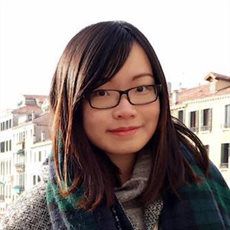
Yingjing FengView profile
Research Fellow
Dr. Yingjing Feng is a Research Fellow at the Centre for Systems Modelling and Quantitative Biomedicine within the Department of Metabolism and Systems Science at the University of Birmingham, working under Professor John Terry. She has established herself as an interdisciplinary researcher bridging computing, mathematics, and biomedical engineering to advance diagnostic and treatment methodologies for human diseases. Her academic credentials include: PhD in Applied Mathematics and Scientific Computing, University of Bordeaux (2021) MSc in Computing (Machine Learning) with Distinction, Imperial College London (2016) BSc in Computer Science with First-Class Honours, University of Birmingham (2015) BEng in Software Engineering, Sun Yat-Sen University (2015) Dr. Feng's research focuses on developing hybrid modeling techniques that combine statistical modeling or deep learning with mathematical models to improve treatment of epilepsy, cardiac arrhythmia and other pathologies. She is currently investigating novel mathematical models for modeling seizure susceptibility and developing deep learning methods for early psychosis detection using neuroinflammatory biomarkers and brain imaging. Her work encompasses spatiotemporal machine learning on ECG, EGG, EEG and fMRI recordings, pattern discovery, survival analysis of clinical treatment, and data assimilation of mathematical models with patient data. Her publication record demonstrates consistent contributions to computational biomedicine, with recent work advancing atrial fibrillation treatment and digital twin technology for precision cardiology. The research shows an evolving trajectory from cardiac mapping techniques toward broader applications in neurological disorders. Notable honors include: Distinguished MSc Project Prize during her Imperial College London studies Rosanna Degani Young Investigator Award at the Computing in Cardiology Conference (2019, Singapore) Dr. Feng actively supervises Master's student projects and mentors students exploring the intersection of deep learning and applied mathematics. She has significantly contributed to the academic community through organizing key events including a 12-session mini-symposium at the SIAM-Dynamical Systems Conference 2023 and the Early Career Researcher Symposium during the Perturbations in Epilepsy Workshop. For the 2024/2025 academic year, she serves as module lecturer for LH Neural Computation, further demonstrating her commitment to education and knowledge dissemination.