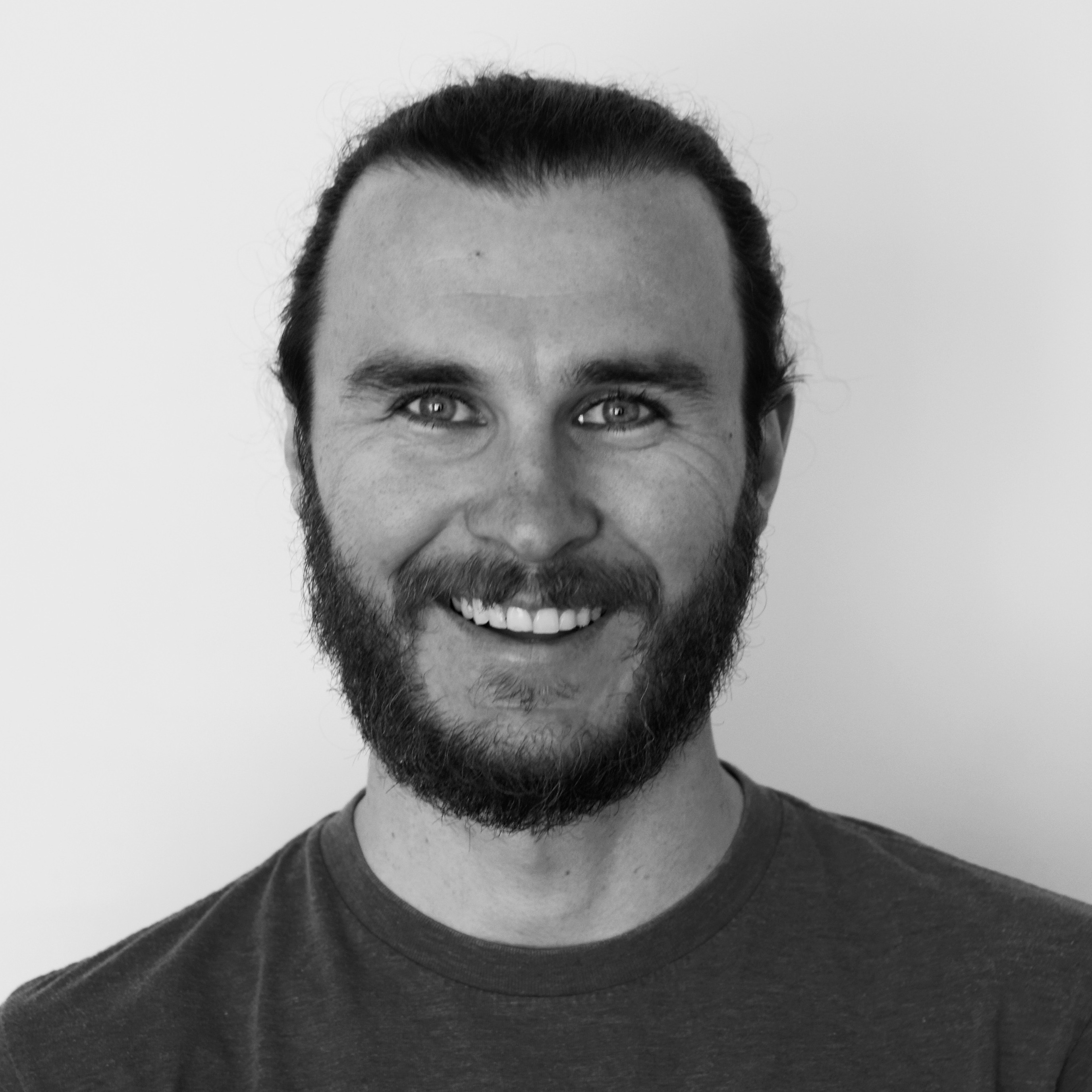
Anthony A Gatti is a Postdoctoral Scholar at Stanford University's Wu Tsai Human Performance Alliance and School of Medicine. His research integrates biomechanics , medical imaging , and machine learning to advance musculoskeletal health diagnostics, particularly focusing on knee osteoarthritis and exercise physiology. Education : Ph.D. in Rehabilitation Science (McMaster University, 2021), M.Sc. in Rehabilitation Science (McMaster University, 2015), B.Sc. in Kinesiology (McMaster University, 2013) His research develops automated tools for quantifying knee anatomy and integrating anatomical data with biomechanical models . These methods analyze acute responses to exercise and long-term joint degeneration, leveraging MRI , deep learning , and statistical shape modeling . Recent publications emphasize AI-driven segmentation , exercise-induced cartilage changes , and biomechanical simulations , spanning journals like Magnetic Resonance in Medicine and Arthritis & Rheumatology . Trends include machine learning validation for clinical predictions and open-source tool development for musculoskeletal analysis. Scientific Awards : CIHR Postdoctoral Fellowship (top 1%), Mitacs Accelerate Entrepreneur, Forge Student Start-Up Competition Winner, multiple scholarships from McMaster University He founded NeuralSeg , a company commercializing deep learning-based MRI segmentation technology. Collaborations include Stanford's Digital Athlete Moonshot Project with advisors like Scott Delp and Garry Gold.
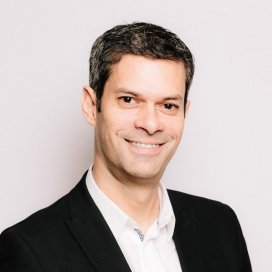
Adam de la Zerda is an Associate Professor at Stanford University's Department of Structural Biology (School of Medicine) and Electrical Engineering (by courtesy). He develops advanced optical molecular imaging technologies combining nanoparticle contrast agents and adaptive OCT systems for cancer and ophthalmic disease research. Technion-Israel Institute of Technology (BSc, 2005) Stanford University (PhD, 2011) UC Berkeley (Postdoctoral Fellowship) Research Themes : Virtual biopsy using machine learning-enhanced OCT Gold nanorod-based molecular contrast agents Speckle noise reduction for cellular resolution Needle beam optical coherence tomography angiography His 15 most recent publications demonstrate technical innovations in: Metasurface optics for extended depth-of-field Spectral deconvolution of multiple contrast agents Speckle modulation for improved diagnostic clarity Noninvasive lymphatic system mapping Scientific Honors : Pew-Stewart Scholar for Cancer Research AFOSR Young Investigator NIH Early Independence Award Forbes 30 Under 30 (x2) Chan Zuckerberg BioHub Investigator His lab team has developed clinical prototypes including OcuBell Inc. 's ophthalmic imaging systems and Visby Medical 's diagnostic platforms. Current research spans from in vivo glycoprotein imaging to de novo biosensor development for real-time disease monitoring in awake animal models.
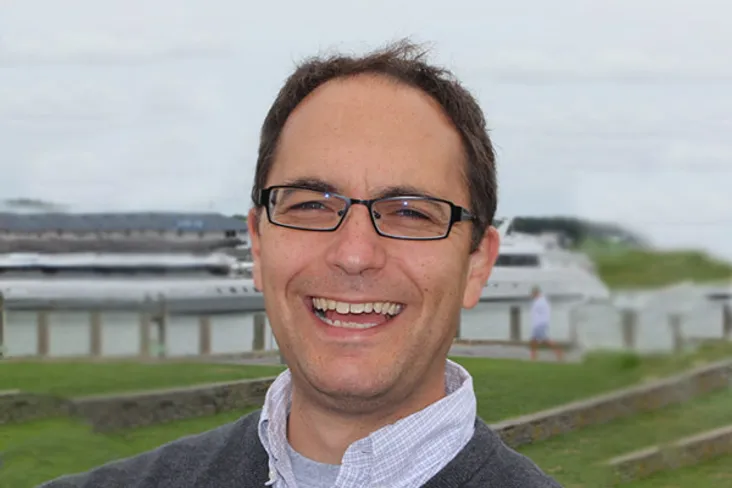
Steven Meikle is a Professor of Medical Imaging Physics and Head of the Imaging Physics Laboratory at the Brain and Mind Centre, University of Sydney. He also serves as Deputy Director (Preclinical) of Sydney Imaging and Deputy Director of the National Imaging Facility's Sydney node. His expertise spans advanced imaging technologies, with a focus on PET/SPECT instrumentation and molecular imaging. He holds a B.App.Sc.(Hons) from the University of Technology Sydney and a PhD from the University of New South Wales. Research focuses include developing novel PET systems like Open-field PET (for freely moving rodents) and Total Body PET, which enhance imaging sensitivity and enable real-time behavioral studies alongside brain function analysis. Collaborations include Tsinghua University (China) and UC Davis (USA). He leads projects on motion correction, quantitative imaging, and AI-driven analysis. Key achievements include over 180 peer-reviewed publications, editorial roles in Physics in Medicine and Biology , and leadership in professional societies. Awards include IEEE Senior Membership and Australian Institute of Physics Fellowship. Current student projects explore Total Body PET applications, motion correction, and radiopharmaceutical evaluation. Teaching roles include medical physics courses in diagnostic radiography and medical physics programs. He advises on imaging ethics, facility implementation, and translational research bridging basic science and clinical applications.
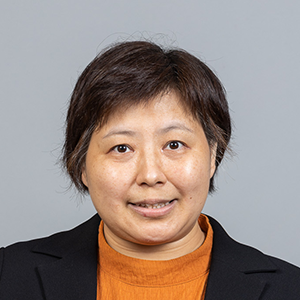
Liu Lili is a Lecturer (Educator Track) in the Department of Computer Science at the School of Computing, National University of Singapore. She holds a Ph.D. from Nanyang Technological University and a Master's in Computer Science from Shanghai University. Prior to NUS, she served as a Senior Research Scientist at Singapore Polytechnic and a Scientist at A*STAR's Institute of High-Performance Computing. Her research focuses on Machine Learning, Computer Vision, and Multi-modal Learning, with applications in FinTech, Social Media Analysis, and Algorithms & Theory. Notable projects include AI-driven coating inspection systems for marine assets and behavioral competency assessment tools for navigational safety. She has contributed to robotics for construction quality assessment and interactive virtual environments for rehabilitation. Liu's publications span AI applications in finance, robotics, and material science, reflecting her expertise in bridging theoretical computer science with practical industrial solutions. Her work emphasizes automation, anomaly detection, and multi-modal data integration.
Edward Andò is a Principal Scientist and Lecturer at École Polytechnique Fédérale de Lausanne (EPFL) , with affiliations to the IMAGING group and the College of Engineering (ENAC) . His work bridges software development, experimental geomechanics, and educational initiatives in image analysis. Principal Scientist, IMAGING-GE (EPFL) Lecturer, Sciences et Génie Civil (SGC-ENS) Lecturer, Enseignement à la Défense (EDEE-ENS) Research Interests Andò specializes in 3D image analysis , with a focus on X-ray tomography , digital volume correlation (DVC) , and micromechanical modeling of granular materials. His work addresses geomechanical failure mechanisms, soil dynamics, and open-source software tools like SPAM for practical material analysis. Publication Trends His recent articles (2025–2023) emphasize X-ray tomography for studying granular deformation , rock failure , medical imaging , and soft particle compaction . Topics span geomechanics, computational modeling, and software development for experimental validation. Labs and Teams Andò contributes to the IMAGING group at EPFL, where he co-develops the SPAM (Software for Practical Analysis of Materials) . His teaching includes courses like Fundamentals of Image Analysis and Quantitative Imaging for Engineers , which integrate hands-on training with theoretical frameworks.
Parvin Mousavi is a Professor at the School of Computing, Queen's University, and holds prestigious chairs including the Canada CIFAR AI Chair and Canada Research Chair in Medical Informatics. She directs the Medical Informatics (Med-i) Laboratory, focusing on computational approaches for biological process prediction and explanation. Education: Ph.D., University of British Columbia (2001) Research interests span machine learning in computer-assisted diagnosis, ultrasound imaging, medical image computing, bioinformatics, systems biology, and quantitative modeling of gene regulatory networks. The lab emphasizes interdisciplinary collaboration with medical professionals and institutions. Affiliations & Collaborations: Kingston General Hospital, Human Mobility Research Centre (HMRC), and University of California, San Francisco. The Med-i Laboratory is equipped with advanced parallel computing servers, clusters, and imaging devices. Awards: Canada CIFAR AI Chair Canada Research Chair in Medical Informatics Contact: Office: Goodwin 720 | Phone: 613 533-6070
Pingfu Fu, PhD, is a Professor in the Department of Population and Quantitative Health Sciences at Case Western Reserve University's School of Medicine. He is also a member of the Developmental Therapeutics Program at the Case Comprehensive Cancer Center. His expertise spans biostatistics, mathematics, and computer science, with a focus on cancer research and HIV/AIDS. Dr. Fu advises researchers on study design and statistical methodology for clinical and pre-clinical studies. He teaches courses in survival data analysis and clinical trials, and was recognized as 'Professor of the Year' in 2010 by the Department of Epidemiology and Biostatistics. Education: PhD in Biostatistics (Case Western Reserve University, 2001), MS in Statistics (Case Western Reserve University, 1996), MS in Mathematics (Xiangtan University, 1988), and BS in Mathematics (Jiangxi Normal University, 1984). His research interests include survival analysis, tree-based methods, clinical trials, and statistical applications in medical research. He has co-authored numerous peer-reviewed articles, focusing on cancer disparities, radiomics, and computational pathology. Professional memberships include the American Statistical Association, American Mathematical Society, and American Cancer Society. Dr. Fu holds editorial roles at Reviews on Recent Clinical Trials , Journal of Clinical Oncology , and Journal of the National Cancer Center . His work has addressed mathematical challenges in stochastic processes and resolved statistical issues in study design and tree-based models. Notable contributions include developing risk prediction models for cancer outcomes and advancing interdisciplinary collaborations across oncology, biostatistics, and computer science. His lab focuses on integrating computational methods with clinical data to improve patient outcomes.
Dr. Jason J. Corso is a Professor in the Department of Electrical Engineering and Computer Science at the University of Michigan . His research focuses on high-level computer vision , video understanding , and the intersection with human language and robotics . His work emphasizes Bayesian approaches to segmentation and recognition, with applications spanning biomedicine and recreational video analysis . He is particularly known for contributions to video object segmentation , activity recognition , and vision-language frameworks . Scientific awards include: NSF CAREER award (2009) ARO Young Investigator award (2010) Google Faculty Research Award (2015) DARPA CSSG grant He also leads major projects like YouCook2 dataset , Video2Text.net , and LIBSVX framework.
Prabir Burman is a Professor in the Department of Statistics at the University of California, Davis, with a career spanning over three decades. His research focuses on nonparametric function estimation, model fitting/selection, image analysis, time series, and discrete data. Education: Ph.D. (1982) and Master of Statistics (1977) from University of California, Berkeley; Bachelor of Statistics (1976) from Indian Statistical Institute, Calcutta. His work bridges theoretical statistics and applied problems, including ecological studies (e.g., coyote parasites, mountain lion tracking), biomedical research (e.g., metabolic syndrome in bipolar patients), and time series forecasting. He has secured multiple NSF and NSA grants for projects on multivariate analysis, shape modeling, and covariance estimation. Recent publications highlight his expertise in predictive model fitting, stock return analysis, and stroke survivor studies. While not explicitly listing awards, his editorial roles (e.g., Journal of Multivariate Analysis) and collaborative grants underscore his academic leadership.
Paul-Christian Burkner is a researcher in the Department of Computer Science at Aalto University. His work focuses on Bayesian statistical methods, computational modeling, and probabilistic programming. He collaborates with Professor Aki Vehtari's research group and has published extensively on topics like model sensitivity, spatiotemporal analysis, and variable selection techniques. His research interests include: Bayesian inference and model comparison Computational statistics Probabilistic programming Machine learning algorithms Statistical modeling in social sciences Neuroimaging data analysis Recent publications demonstrate expertise in simulation-based calibration, spatiotemporal modeling, and Gaussian process approximations. Collaborations span psychology, neuroscience, and machine learning domains. Contact: ext-paul-christian.burkner@aalto.fi
Zhi-Pei Liang is the Franklin W. Woeltge Professor in the Department of Electrical and Computer Engineering at the University of Illinois at Urbana-Champaign, with joint appointments in the Department of Bioengineering, Beckman Institute for Advanced Science and Technology, and Coordinated Science Laboratory. His research spans biomedical engineering, medical imaging, and signal processing with a focus on advancing magnetic resonance imaging and spectroscopy technologies. His educational background includes a Ph.D. in Biomedical Engineering from Case Western Reserve University (1989) and a B.S. in Electrical Engineering from South-China University of Technology (1982), followed by postdoctoral training at UIUC (1989-1991). Professor Liang's research interests center on magnetic resonance imaging and spectroscopy , with particular emphasis on ultrafast imaging techniques , model-based reconstruction methods , and the integration of physics-based modeling with machine learning . His pioneering work on SPICE (SPectroscopic Imaging by exploiting spatiospectral CorrElation) has revolutionized high-resolution metabolic brain imaging by enabling label-free molecular imaging through the marriage of spin physics and machine learning. His research spans pattern recognition, parameter estimation, image formation theory, and algorithms for medical imaging applications. Analysis of his recent publications reveals a strong focus on high-resolution metabolic imaging , particularly using SPICE methodology to map brain metabolism with unprecedented detail. His work bridges fundamental physics of magnetic resonance with advanced computational methods to overcome traditional limitations in imaging speed and resolution. Current research directions include J-resolved spectroscopic imaging, deuterium-based metabolic mapping, and multimodal integration of PET and MRSI for studying neurological disorders. Elected to International Academy of Medical and Biological Engineering (2012) Gold Medal, International Society for Magnetic Resonance in Medicine (2022) Technical Achievement Award, IEEE Engineering in Medicine and Biology Society (2014) Fellow, National Academy of Inventors (2021) Author of influential book 'Principles of Magnetic Resonance Imaging' (1999) President of IEEE Engineering in Medicine and Biology Society (2011-2012) Professor Liang has advised numerous students and postdocs in biomedical imaging research and has received multiple teaching honors including the Ronald W. Pratt Outstanding Teaching Award (2005) and multiple listings among UIUC's Excellent Teachers. His research has been supported by various grants from NIH, NSF, and other funding agencies. He leads the SPICE (Spectroscopic Imaging by exploiting spatiospectral Correlation) research group which focuses on developing novel imaging techniques that combine physics-based modeling with machine learning for ultrafast metabolic imaging. His laboratory, part of the Beckman Institute's Integrative Imaging Theme, collaborates extensively with clinical researchers at Carle Illinois College of Medicine and other institutions to translate advanced imaging techniques into clinical applications for neurological disorders, cancer, and metabolic diseases. Current projects focus on high-resolution mapping of brain metabolism in Alzheimer's disease, stroke, and brain tumors using novel MR spectroscopic imaging techniques.
Aniello Murano is a Professor of Computer Science at the Department of Electrical Engineering and Information Technologies , University of Naples Federico II. He serves as Scientific Director of the ASTREA (Automated Strategic Reasoning) Laboratory and leads cutting-edge research in Artificial Intelligence, Strategic Reasoning, Multi-Agent Systems , and Formal Verification . Research Interests : Strategic reasoning under perfect/imperfect information, specification/verification/synthesis of reactive systems, temporal/modal logics, automata theory, parity games, game theory, mechanism design, and formal languages. Notable Projects : PNRR Research Unit Coordinator (2023-2025) on Resilient AI, PRIN 2020 Unit Coordinator (RIPER: Resilient AI-Based Self-Programming and Strategic Reasoning), H2020-MSCA SEAL (Principal Coordinator). Awards & Honors : JPMorgan Faculty Research Award (2022), Royal Society Award (2016), Best Paper PRIMA (2015), INDAM Project Leader (2023), Italian Scientific Habilitation (2017-2018). Students & Postdocs : Supervised 6 PhD students (e.g., Silvia Stranieri, Vadim Malvone) and mentored postdocs such as Munyque Mittelmann and Bastien Maubert. Laboratory : Leads ASTREA Lab, focusing on automated strategic reasoning and resilient AI systems.
Richard B. Sowers is a Professor at the University of Illinois at Urbana-Champaign, holding joint appointments in the Department of Industrial and Enterprise Systems Engineering, Mathematics, and Statistics (courtesy). He has held faculty positions since 1996, starting as an Assistant Professor in Mathematics and advancing to Professor across multiple departments. His research spans stochastic processes, financial engineering, and data analytics. He also serves as a Research Principal at the Office of Financial Research since 2012. Education: B.S. in Electrical Engineering (Drexel University, 1986), M.S. and Ph.D. in Applied Mathematics (University of Maryland, 1988 and 1991). Research Interests: Financial networks, stochastic systems, and applications in decision-making and control. His work bridges theoretical probability with practical domains like finance and healthcare. Recent articles focus on machine learning applications in gait analysis for neurological disorders and stochastic modeling in financial systems. Professional Contributions: Taught courses in stochastic calculus, deep learning, and financial mathematics. His research often involves interdisciplinary collaboration, including projects on credit risk, algorithmic trading, and wearable technology for health monitoring. Labs/Teams: Active in the Institute for Predictive and Computational Science, focusing on data-driven solutions for complex systems.
Benoît Sagot is a Senior Researcher in Natural Language Processing and Computational Linguistics at Inria , currently holding the 2023-2024 Informatics and Digital Sciences Annual Chair at Collège de France. He directs the ALMAnaCH research team and contributes to the PRAIRIE Institute for AI research. Research Focus: His work spans neural language models, machine translation, text simplification, multimodal NLP, and lexical resource development for French and low-resource languages. He explores computational morphology, etymology, and historical linguistics, with applications in opinion mining and computational oenology. Recent Articles emphasize language model interpretability, cross-lingual transfer, and multimodal integration (speech, image). Tools & Resources: He has developed morphological lexicons (Le fff, Alexina), corpora (OSCAR, CAMEMBERT), and parsing pipelines (SxPipe). Projects: Involved in initiatives like ANR BASNUM (Furetière's dictionary digitization) and 3IA PRAIRIE (AI research). His career combines foundational work in syntactic analysis with evolving deep learning approaches.
Hongfu Sun is a Senior Lecturer at the School of Engineering, University of Newcastle. His research focuses on innovating MRI mechanisms for clinical and research applications, particularly in Quantitative Susceptibility Mapping (QSM). He is internationally recognized as a pioneer in QSM and integrates MR physics, signal processing, and AI for medical imaging advancements. Sun holds a Ph.D. in Biomedical Engineering from the University of Alberta, Canada. Professional Experience: Senior Lecturer at University of Newcastle (current) ARC DECRA Research Fellow at University of Queensland (2021–2023) Postdoctoral Researcher at University of Calgary (2015–2019) Research Interests: Focuses on MRI innovation, including QSM, deep learning for medical imaging, and AI-driven reconstruction techniques. His work addresses challenges like sub-millimeter resolution and artifact reduction in MRI. Recent projects involve generative AI models for MRI analysis and accelerated quantitative imaging methods. Grants and Funding: AU$1.69M in grants, including a 2021 ARC DECRA for microscopic MRI techniques 2024 NHMRC grant for Parkinson’s disease MRI diagnostics Teaching: Course coordinator for Medical Imaging and Signal Processing at University of Newcastle Focus on biomedical imaging, computational methods, and signal analysis Labs/Teams: Leads research in MRI innovation, collaborating on QSM, deep learning applications, and translational imaging techniques. Active in interdisciplinary projects combining physics, AI, and clinical medicine.