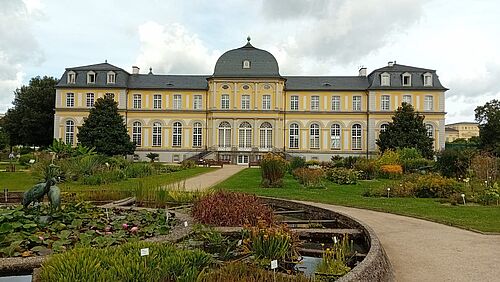
Prof. Boas Pucker is a Professor of Molecular Plant Sciences at the University of Bonn, having previously held positions at TU Braunschweig (since 2021), the University of Cambridge (2020-2021), and Ruhr-University Bochum (2019-2020). His research focuses on plant specialized metabolism, bioinformatics, and evolutionary genomics, combining computational methods with experimental approaches to study biosynthetic networks and synthetic biology applications. He leads the PuckerLab, which investigates plant metabolism, genome evolution, and functional genomics. Boas Pucker holds a Dr. rer. nat. and M.Sc. in Genome-based Systems Biology from Bielefeld University. His work has been supported by grants including DFG projects, the Freiraum2022 initiative, and fellowships from the Stifterverband and DAAD. He is an active member of organizations like the German Association for Synthetic Biology (GASB) and the European Society for Evolutionary Biology (ESEB). He serves on committees such as the Sustainability Council of TU Braunschweig and the Master's Admissions Committee. His research outputs include over 50 peer-reviewed articles on topics like genome assembly, metabolic pathway discovery, and plant-microbe interactions, with a focus on leveraging genomic data for biotechnological applications.
Filipe Alberto is a Professor in the Department of Biological Sciences at the University of Wisconsin-Milwaukee (UWM), part of the College of Letters & Science. His research focuses on molecular ecology and evolutionary processes in marine plants and algae, particularly giant kelp (Macrocystis pyrifera) and seagrasses. He leads a lab investigating genetic diversity, dispersal mechanisms, and adaptation to environmental changes. Key projects include DOE-funded research on kelp genetic selection for biofuel production and studies on kelp population dynamics using network theory and seascape genetics. Education PhD, University of the Algarve, Portugal (2005) MS, University of Montpellier II, France (2000) BS, University of the Algarve, Portugal (1996) Research Interests - Micro-evolutionary processes in clonal species - Genetic structure and biogeography of marine plants - Climate impacts on marine ecosystems - Quantitative methods in ecological modeling Lab & Collaborations His lab collaborates with institutions like UCSB and USC on kelp aquaculture and genomics. Recent studies include deep reef refugia for kelps and population genetics of Bull Kelp (Nereocystis luetkeana). Notable achievements include developing metapopulation models using graph theory and sequencing the giant kelp genome. Grants & Funding - DOE Arpa-e grant for kelp genetic selection (2017) - Long-term NSF-funded studies on kelp metapopulations Advising Recent advisees include Heidi Hargarten (PhD) and Bobby San Miguel (PhD candidate). Students focus on topics like kelp microbiomes and climate adaptation.
David Spade is an Associate Professor in the Department of Mathematical Sciences at the University of Wisconsin-Milwaukee, with office location in the Engineering and Mathematical Sciences building (room E459). He holds active roles as an Undergraduate Advisor and member of the Statistics Research Group. His research centers on theoretical and computational statistics, specializing in Markov chain Monte Carlo methods, Bayesian inference, and phylogenetic analysis. Key interests include convergence diagnostics for Gibbs and Metropolis-Hastings samplers, statistical modeling of biological systems (notably Daphnia motion), and applications in genomics and cancer research. His work bridges rigorous statistical theory with interdisciplinary biological problems. Analysis of his 2016-2025 publications reveals dominant trends in MCMC convergence theory (mixing time, geometric ergodicity, drift-minorization), phylogenetic inference, and biological modeling. His research demonstrates consistent focus on computational statistics with expanding applications in ecology, evolutionary biology, and medical research, particularly through collaborations with biologists. No scientific awards were documented in the provided materials. As an Undergraduate Advisor, he mentors statistics students within the department's academic framework. Dr. Spade actively contributes to the Statistics Research Group, fostering collaborative projects in statistical methodology development and interdisciplinary applications.
Peter Bullock is a Professor in the Department of Developmental, Molecular and Chemical Biology at the Tufts University School of Medicine. He holds expertise in virology, molecular biology, and antiviral drug development. His research focuses on understanding the molecular mechanisms of polyomavirus replication and identifying inhibitors of T-antigen, a key viral protein. Educational Background: Ph.D., University of California, Berkeley, 1984 M.Sc., SUNY Albany, 1977 B.A., SUNY Plattsburgh, 1974 Research Interests: Polyomavirus replication mechanisms Development of antiviral therapies targeting T-antigen Structural biology of viral proteins Role of polyomaviruses in human diseases like PML, renal dysfunction, and Merkel cell carcinoma Grants & Funding: National Multiple Sclerosis Society: 'Elimination of PML via Development of a Genetic Screen for Inhibitors of T-Antigen' (2011–2012) National Institute of Allergy and Infectious Diseases: 'A Chemical Genetic Approach to Inhibiting T-ag Assembly on the Viral Origin' (2007–2009) Teaching & Professional Activities: Teaches graduate-level biochemistry courses, including 'Graduate Biochemistry' and 'Biochemistry Foundations in Neuroscience' Serves on editorial review boards for journals like Journal of Virology , Nature , and PLoS Pathogens Active in university committees, including the Basic Science Faculty Appointments Promotions and Tenure Committee Labs & Collaborations: Engaged in collaborative research projects focused on structural biology and antiviral drug discovery, leveraging high-throughput screening and computational modeling (e.g., AlphaFold2).
Dr Elizabeth Braithwaite is a Senior Lecturer in Psychology at Manchester Metropolitan University's Faculty of Health and Education. She holds a PhD in Psychiatry from the University of Oxford and a BSc in Biomedical Science (Neuroscience) from Cardiff University. Her research focuses on early life stress, developmental psychopathology, and mental health in high-demand environments. She is a member of the Institute of Children's Futures and has received funding from UKRI, the Norwegian Research Council, and the UK Space Agency. Dr Braithwaite supervises 2 PhD students and teaches on quantitative research methods modules across undergraduate and postgraduate levels. Her research projects include studying the intergenerational transmission of mental health risks via prenatal stress and breastfeeding challenges, as well as investigating performance resilience in defense, emergency medicine, and space travel contexts. She collaborates with institutions globally, including the University of Oslo and the European Space Agency. Her work has informed training programs for military personnel and explored the psychological impacts of workplace email engagement beyond normal hours. Dr Braithwaite's teaching includes leading the new MSc in the Psychology of Human Performance and supervising research dissertations. She also offers research placements to medical students from the University of Manchester. Her interdisciplinary approach combines quantitative and qualitative methodologies, with a focus on translational research to improve mental health outcomes and organizational practices.
Dr. Anthony Uren is a Lecturer in Biomedical Sciences (Blood Science) at the School of Biomedical Sciences, University of Plymouth. His research utilizes cancer genomes as investigative tools to understand tumor evolution and develop novel therapeutic approaches, employing methodologies from cancer informatics, comparative genomics, and mouse modeling. His laboratory focuses on identifying early clonal mutations affecting tumor development and characterizing subclonal mutations responsible for treatment resistance. Current work emphasizes refining methods for analyzing subclonal mutations in tumor cohorts and validating mutated genes as therapeutic targets using primary lymphoma cultures and mouse models. Dr. Uren has developed specialized molecular techniques including LUMI-PCR for integration site cloning and quantification. His research contributions span epigenetics, cancer genetics, and therapeutic development, with publications in Nature Metabolism, Nature Communications, and Aging Cell.
Jamie Courter is an Assistant Professor and State Beef Extension Specialist in the Division of Animal Sciences at the University of Missouri's College of Agriculture, Food and Natural Resources (CAFNR). Their research focuses on beef cattle genetics, animal behavior, and genomic applications in livestock production. They hold a Ph.D. in Animal Breeding and Genetics from the University of Nebraska-Lincoln, an M.S. from South Dakota State University, and a B.S. from North Carolina State University. Research interests include optimizing beef cattle genetics through genomic tools, understanding cattle temperament and its physiological correlates, and improving livestock management practices. Dr. Courter emphasizes the development of reliable behavioral assessment methods and the application of genomic selection to enhance breed composition in composite animals. Recent work explores how repeated handling influences cattle behavior and stress responses, with findings indicating significant acclimation effects when using individualized confinement. They are actively involved in training programs to standardize temperament evaluations and reduce observer bias in livestock assessments. Current efforts include accepting graduate students for research in animal health, beef production systems, and genomic technologies. Their lab is located in the Animal Sciences Research Center, focusing on translating genetic insights into practical industry solutions.
Dr. Tara M. Finegan is an Assistant Research Professor in the Department of Biological Sciences at the University of Missouri, located in 117 Tucker Hall within the College of Arts and Science. Her research focuses on understanding how epithelial cells establish and maintain tissue architecture, particularly investigating directional cell division and its consequences. She leads the Finegan Bergstralh Lab, which adopts an interdisciplinary approach blending genetics, biochemistry, microscopy, and computational modeling. Education: PhD, MPhil, MA (Cantab), University of Cambridge Research Interests: Epithelial tissues are central to organ functions like absorption and secretion. The lab explores how cells determine division direction and the implications of errors, merging cell biology, developmental biology, and quantitative methods. Projects are tailored to student interests, with a commitment to fostering diversity and inclusion in science. Awards: Wellcome Trust / University of Cambridge PhD Studentship and Research Grant, 2013 Lab and Community: The Finegan Bergstralh Lab actively recruits graduate students and emphasizes cross-disciplinary collaboration. The lab’s work spans basic science to biomedical applications, supported by advanced experimental and computational techniques.
Corinne Mirkazemi is Senior Lecturer in Pharmacy Practice at the University of Tasmania's School of Pharmacy and Pharmacology. A practicing pharmacist with clinical hospital experience, her research focuses on medication optimization, thromboprophylaxis, and maternal health interventions. Key research areas include anticoagulation therapy optimization, prevention of venous thromboembolism, and micronutrient deficiencies in vulnerable populations. Current projects investigate anticoagulant management in atrial fibrillation and medication safety in cancer survivors. Publications demonstrate expertise in systematic reviews, meta-analyses, and clinical guideline development. Recent work emphasizes pharmacist-led interventions for anticoagulation therapy and medication management in orthopaedic surgery. Serves as Graduate Research Coordinator and PhD supervisor. Received teaching citations for person-centered pedagogy and curriculum development in pharmacy education.
Margaret Krause is an Assistant Professor and Warren Kronstad Wheat Research Chair at Oregon State University's Department of Crop and Soil Science within the College of Agricultural Sciences. Her work focuses on wheat breeding, genomic selection, and disease resistance, particularly against bunt pathogens. She leads research integrating high-throughput phenotyping and genomic tools to enhance crop resilience in diverse environments. Krause's contributions span molecular breeding strategies, nitrogen management in dryland systems, and sustainable agricultural practices. Her research emphasizes improving wheat varieties through advanced genetic techniques such as QTL mapping and genomic prediction models. Key areas include salinity stress tolerance in maize, drought adaptation mechanisms, and optimizing breeding programs with big data approaches. Krause collaborates on international initiatives like the International Wheat Improvement Network to address global food security challenges. Publications highlight her expertise in pathogen resistance evaluation, precision agriculture, and translating translational research into climate-resilient crop solutions. While no specific awards are listed, her work demonstrates significant contributions to applied plant science and breeding methodologies. Advising and grants information is not explicitly stated in available texts, though her role as a research chair suggests involvement in funded projects. Krause’s lab likely focuses on interdisciplinary approaches combining genetics, agronomy, and computational tools to advance sustainable crop production systems.
Dr. Jennifer Geddes-McAlister is an Associate Professor and Canada Research Chair in the Department of Molecular and Cellular Biology at the University of Guelph. She also directs the Bioinformatics Graduate Program. Her research focuses on proteomics, host-pathogen interactions, and systems biology, with a particular emphasis on fungal and bacterial pathogens. Dr. Geddes-McAlister holds affiliations with the Canadian National Proteomics Network (CNP), the Canadian Artificial Intelligence and Mass Spectrometry for Systems Biology (CAN-AIMS) Consortium, and the Moms in Proteomics initiative. She has received awards including the Ontario Early Researcher Award (2022). Education: BSc (Co-op), University of Lethbridge, Biological Sciences MSc, University of Lethbridge, Biological Sciences PhD, University of British Columbia, Microbiology & Immunology Postdoctoral Fellowship, Max Planck Institute of Biochemistry (Germany), Proteomics & Signal Transduction Research Interests: Dr. Geddes-McAlister’s lab uses mass spectrometry-based proteomics to study pathogen adaptation, virulence mechanisms, and host responses. Key areas include fungal pathogenesis (e.g., Cryptococcus neoformans), bacterial infections (e.g., Salmonella), and drug discovery. Her work integrates systems biology approaches to identify novel antifungal targets and biomarkers for infectious diseases. Recent efforts focus on natural compounds from freshwater mussels and proteomic tools like ProteoPlotter. Articles Overview: Her publications emphasize proteomic profiling of host-pathogen interactions, including studies on antifungal resistance, immune evasion, and systems biology. Recent work highlights dual-perspective infectome analysis and neutrophil responses to pathogens. The lab’s tools and methods, such as STAGE tip protocols and phosphoproteomic workflows, are widely disseminated through journals like Journal of Proteome Research and Nature Communications . Scientific Awards: Ontario Early Researcher Award (2022) Banting Research Foundation Recognition (2022) NSERC CREATE EvoFunPath Fellowships (multiple trainees) Vanier Canada Graduate Scholarship (2024-2027) Advising & Grants: Dr. Geddes-McAlister mentors a diverse group of trainees (20+ current students/postdocs) and collaborates with industry partners (e.g., Canadian Agricultural Partnership). Her lab has secured funding from NSERC, Mitacs, and the Ontario government. Notable grants include a CFI infrastructure grant for proteomics equipment and support for the CAN-AIMS Consortium. Labs & Teams: Her lab at the University of Guelph (SSC 4405/4406) houses state-of-the-art proteomics facilities. Collaborators include Prof. Dr. Matthias Mann (Max Planck Institute) and Prof. Rebecca Shapiro (U of Guelph). The lab emphasizes interdisciplinary training, with ongoing projects in microbial evolution, molecular pharming, and AI-driven proteomic analysis.
Szabolcs Lehoczki-Krsjak is a Research Fellow in Rice Breeding and Genetics at Southern Cross Plant Science, Southern Cross University (Faculty of Science and Engineering). He holds a PhD from Hungary (2013), focusing on Fusarium head blight pest management in wheat. His work spans pre-breeding, commercial breeding, and marketable product development for wheat, corn, and sweet corn. His current research emphasizes pigmented rice varieties, particularly black rice adaptation for Northern NSW. Key areas include aerob rice breeding programs, genetic resource characterization, grain pigmentation genetics, and agronomic trait integration to aid farmers. His expertise bridges plant pathology, fungicide application strategies, and mycotoxin management. Key research contributions include studies on Fusarium head blight resistance, fungicide efficacy, and QTL mapping in wheat and maize. He has been recognized with the 2024 Outstanding Contribution to Research Impact award from Southern Cross University. His work combines laboratory and field research, addressing both fundamental genetics and applied agricultural challenges. Collaborative projects likely involve industry partners for crop development and disease management solutions.
Marnin Wolfe is an Assistant Professor in Quantitative Genetics within the Department of Crop, Soil & Environmental Sciences at Auburn University's College of Agriculture. His research focuses on genomic approaches to crop improvement, particularly in cassava and temperate crop systems. Key areas include plant breeding methodologies, genotype-environment interactions, and the development of digital tools like Breedbase and Cassavabase to enhance breeding efficiency. Dr. Wolfe's work emphasizes quantitative genetics, leveraging genomic selection and association mapping to improve yield, nutritional content, and climate resilience in crops. His research bridges classical breeding practices with modern genomic technologies, targeting traits such as root yield in cassava, carotenoid content, and intercropping compatibility in temperate systems. Recent publications highlight advancements in cassava improvement through genomic prediction models, analysis of genotype-by-environment interactions, and the implementation of bioinformatics platforms for breeding management. His work contributes to both foundational genetics research and applied agricultural solutions for sustainable food systems. Lab and team collaborations focus on multi-species genomic selection strategies and the development of neo-domestication frameworks for underutilized crops. While specific grant details and student advisees are not detailed in available texts, his research aligns with global initiatives in tropical agriculture and climate-smart crop development.
Lauren Brzozowski is an Assistant Professor of Molecular Plant Breeding and Genomics at the University of Kentucky, affiliated with the Martin-Gatton College of Agriculture, Food and Environment and the Department of Plant and Soil Sciences. She also holds a concurrent appointment as a Research Geneticist with the USDA-ARS. Her research focuses on the genetic basis of plant traits influencing interactions with pests and human nutrition, integrating genomics, transcriptomics, and field studies to advance sustainable agriculture. Key areas include breeding cold-resilient oats, disease-resistant cereals, and optimizing crop nutritional profiles for regional food systems. Education: PhD in Plant Breeding & Genetics from Cornell University (2020), dual B.S. degrees in Horticulture and Electrical & Computer Engineering from the University of Wisconsin-Madison (2013-2014). Postdoctoral research at Cornell University (2020-2022) explored plant-pest metabolite interactions and genomic prediction methods. Research emphasizes leveraging genetic diversity to enhance crop resilience and nutritional value while addressing climate challenges. Recent work highlights genomic approaches for predicting seed quality traits in oats and improving cereal rye adaptation to southeastern US growing conditions. The Brzozowski Lab collaborates on translational projects to bridge research with practical breeding outcomes for equitable agricultural futures. Publications span plant breeding strategies, metabolite analysis, and pest resistance mechanisms, with a focus on interdisciplinary solutions for sustainable food systems. Ongoing efforts include developing open-pollinated winter rye populations and evaluating trade-offs in pest management approaches.
Dr Helen Roberts is an Associate Professor in Skeletal Cancer Research at Middlesex University, UK, with appointments in the Faculty of Science and Technology and the Department of Natural Sciences. She leads research on osteosarcoma chemoresistance and metastasis mechanisms, combining molecular biology, epigenetics, and translational oncology. Her roles include Programme Leadership for the Science & Technology Foundation Programme and directs Biosciences & Quality Enhancement for Natural Sciences. Education: PhD from University of Glasgow, postdoctoral training at University of Sheffield, KU Leuven (Belgium), and Barts & The London School of Medicine. Expertise spans epigenetic biomarkers in cancer, critical illness-induced bone loss, and veterinary oncology collaborations. Research focuses on: 1) Osteosarcoma metastasis and drug resistance pathways, 2) Autophagy regulation in cancer cells, 3) Bone-tumor interactions, 4) Biomaterials for bone regeneration. Key methods include CRISPR/Cas9 knockout, microRNA profiling, and machine learning-based image analysis. Grant funding includes £223,000 from Willberry's Research for osteosarcoma projects, plus awards from PetPlanCharitable Trust and Bone Cancer Research Trust. Collaborations involve Royal Veterinary College and Genomics England. Supervised 15+ PhD/MRes students, with current advisees working on migratory tumor bodies, ATR inhibition strategies, and canine osteosarcoma models. Editorial roles include Frontiers in Veterinary Science (Oncology) and the Primary Bone Cancer Metastasis Network. Labs/Teams: Coordinates the Skeletal Cancer Research track at Middlesex, participates in the Bloomsbury Centre for Skeletal Research, and co-leads the PBCMetNet pre-clinical collaboration network.