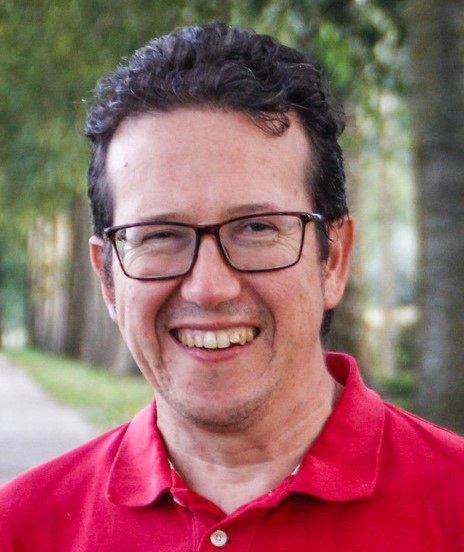
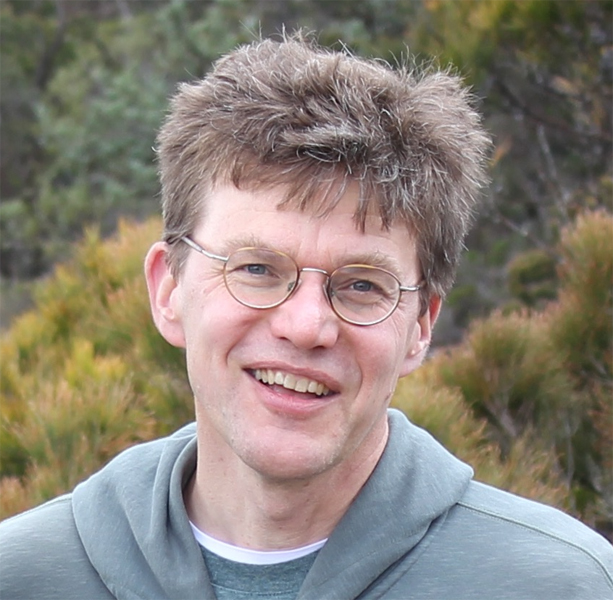
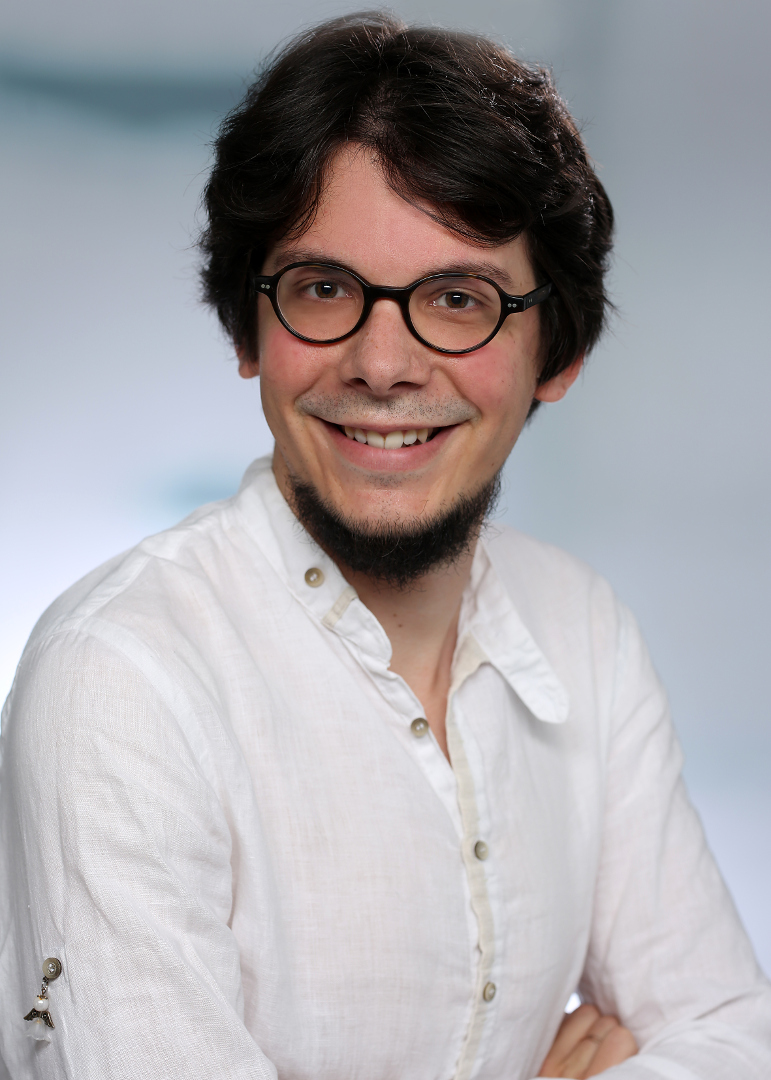
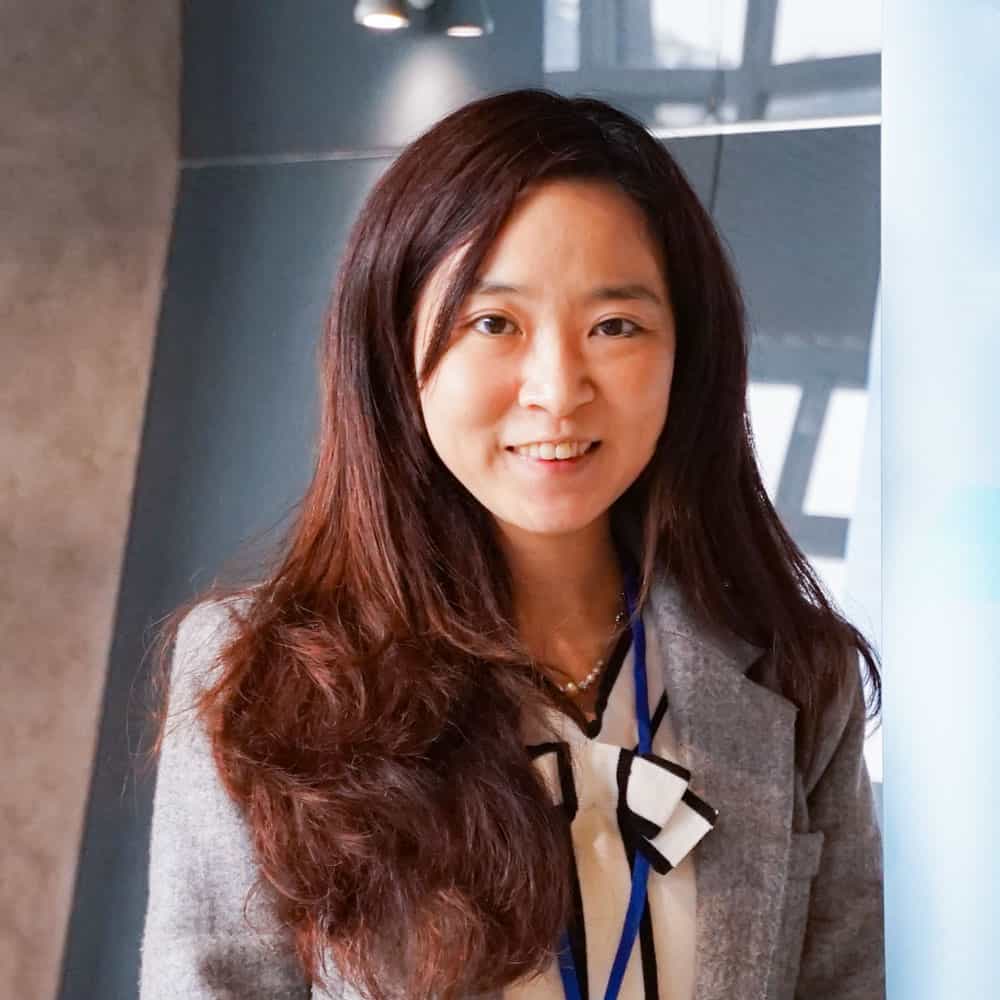
Associate Professor Josiah Poon is affiliated with the School of Computer Science at the University of Sydney. His research focuses on applying data mining and IT techniques to Traditional Chinese Medicine (TCM), particularly analyzing herbal combinations for effective treatments. He collaborates with institutions in China to improve TCM evidence and has contributed to clinical data analysis, medical informatics, and multimodal AI systems. Teaching includes courses such as INFO1003 (Foundations of IT) and INFO9003 (IT for Health Professionals). Current research students are Rina CABRAL (Multimodality Representation), Yan LI (Long Document Comprehension), and Xiaobin LU (Financial Decisions). Research highlights include developing algorithms to quantify TCM efficacy, analyzing complementarity in herbal combinations, and applying machine learning to healthcare data. Notable projects include a randomized controlled trial on pneumococcal vaccination (2021) and a Google-funded multimodal health detection system (2020). Key areas of expertise span TCM informatics, medical data analytics, and AI-driven healthcare solutions. His work bridges Eastern/Western medicine through computational methods, emphasizing evidence-based practices in TCM.
Chris Cornelis is a full-time Professor in fuzziness and uncertainty modelling at Ghent University's Department of Applied Mathematics, Computer Science and Statistics. His research integrates fuzzy logic and rough set theory to advance machine learning methodologies for complex data analysis. Education: M.Sc. in Computer Science, Ghent University (2000) Ph.D. in Computer Science, Ghent University (2004) Research Focus: Cornelis pioneers fuzzy-rough hybrid systems for uncertainty handling in machine learning. His work spans theoretical foundations (e.g., implication operators, granular approximations) and practical applications including emotion detection, medical diagnosis, and imbalanced data classification. Key innovations include FRNN-OWA classifiers and polar encoding for missing values, demonstrating exceptional versatility in bridging abstract mathematics with real-world AI challenges. Publication Trends: Recent work (2023-2025) reveals intensified exploration of topological data analysis (Mapper-based rough sets), advanced granular computing (disjoint/adjacent fuzzy granules), and ethical AI ("No Imputation Without Representation"). His research shows consistent progression from foundational fuzzy-rough theory toward multi-disciplinary applications while maintaining mathematical rigor, particularly in Choquet integration and quantifier-based frameworks. Scientific Awards: No specific awards were documented in the provided sources. Research Support: Cornelis has secured competitive funding including FWO postdoctoral mandates, a Ramón y Cajal contract at the University of Granada, and an FWO Odysseus Type II project at Ghent University. These grants enabled foundational work in fuzzy-rough set theory and its applications to complex data problems. Research Unit: He leads research within Ghent University's Computational Web Intelligence (CWI) unit, focusing on intelligent data analysis systems that leverage fuzzy-rough methodologies for web-scale information processing.
Uli Sauerland is a Professor and Department Head of FB4 Semantics and Pragmatics at the Leibniz-Centre General Linguistics (ZAS) in Berlin since 2017. He holds honorary professorships and research fellowships in Germany and Japan. His research focuses on syntax, semantics, pragmatics, and language acquisition. He has led numerous international research projects and serves on editorial boards of journals like Linguistic Inquiry and Semantics & Pragmatics . Education: 1993: Diploma (M.Sc.) in Mathematics, Universität Konstanz 1998: Ph.D. in Linguistics, MIT 2003: Habilitation in General Linguistics, Universität Tübingen 2018: außenplanmäßiger Professor, Universität Potsdam Research Interests: His work explores formal semantics, pragmatics, and syntax, with a focus on scalar implicatures, presuppositions, and experimental methods. He investigates cross-linguistic phenomena in languages like Japanese, German, and indigenous Brazilian languages. Recent topics include child language acquisition and computational modeling of pragmatic reasoning. Awards: 2018 Honorary Professorship at Universität Potsdam 2014 Humboldt Alumni Fellowship 2011 Japan Society for the Promotion of Science Bridge Fellowship Grants & Leadership: Coordinated DFG SPP 1727 (XPrag.de, 2014-2020) Principal Investigator in EU-funded projects like CHLaSC (2006-2009) and COSY (2016-2019) Organized international conferences including Experimental Pragmatics 2007 and Formal Approaches to Japanese Linguistics 6 Labs & Collaborations: Leads the Semantics and Pragmatics Department at ZAS, fostering interdisciplinary research. Collaborates globally through networks like Euro XPRAG and COST Action A33.
Juan P. Aguilera is a researcher at the Institute of Discrete Mathematics and Geometry at TU Wien, Austria. His research focuses on mathematical logic, particularly in proof theory, set theory, reverse mathematics, and infinitary logics. He actively participates in academic events, including organizing workshops and giving invited talks globally. His research interests span foundational questions in logic, including Gödel logics, determinacy axioms, and structural reflection principles. He contributes to interdisciplinary areas such as the model theory of non-classical logics and applications of infinitary proof systems. Aguilera has been involved in major logic events like the Logic Colloquium 2025 (TU Wien) and co-organized the Philosophical Transactions of the Royal Society special issue on proof theory (2023). He has given talks at institutions like Ghent University, the University of Hamburg, and ITAM (Mexico City). No scientific awards are explicitly listed, but his prolific engagement in academic conferences and editorial work highlights his contributions to the field. He has secured grants and leads collaborative projects, though specific grant details are not provided. He is affiliated with TU Wien's discrete mathematics group and collaborates internationally on logic and set theory research.
Henrik Høeg Müller is an Associate Professor and Head of Department in Spanish Business Communication at the School of Communication and Culture, Aarhus University, Denmark. He is actively engaged in linguistic research focusing on typological differences between Danish and Spanish, particularly in syntax, morphology, and lexical-schematic distinctions. Institution: Aarhus University School: School of Communication and Culture Department: Spanish Business Communication Position: Associate Professor, Head of Department Email: henhm@cc.au.dk His research centers on the structural and typological contrasts between Danish and Spanish, especially in nominal expressions, predicate formation, and lexical vs. syntactic encoding. Key interests include bare nouns, count/mass distinctions, telicity, motion verbs, and schematicity. His work often employs comparative and cognitive linguistic frameworks. The most recent publications reveal a strong trend in analyzing how lexical and syntactic strategies diverge across languages, especially in expressing similarity, kind, and event structure. Topics such as the Danish 'slags', complex predicates, and ambiguous nominal structures highlight his focus on fine-grained syntactic and semantic analysis. These works contribute to broader discussions in typology and cognitive linguistics. Henrik Høeg Müller has served as an editor for Ny Forskning i Grammatik and frequently presents at academic events, including workshops and conferences. He has no listed scientific awards in the provided text. Editorial Role: Editor, Ny Forskning i Grammatik Presentations: Regular lecturer at seminars and conferences on Danish and Spanish linguistics He is involved in academic networks related to Scandinavian and Romance linguistics, contributing to collaborative research and scholarly discourse. No labs or formal research teams are explicitly mentioned.
Alexander Steen is an Assistant Professor (Juniorprofessor) at the University of Greifswald within the Institute of Mathematics and Computer Science. His research focuses on computational logic, automated reasoning, and theoretical computer science, with significant contributions to higher-order logic (HOL) and non-classical reasoning systems. He leads the development of the Leo-III automated theorem prover, a versatile system supporting classical HOL with choice, polymorphic logics, and higher-order modal/deontic logics. Steen's academic journey includes a Dr. rer. nat. (summa cum laude) from Freie Universität Berlin (2018), followed by post-doctoral work at the University of Luxembourg (2018-2021) as a principal investigator for the AuReLeE project on legal reasoning automation. He holds a 2024 nomination for the University of Greifswald Teaching Award and was elected Fellow of the Academy of Sciences and Humanities in Hamburg (2022). Key Research Areas: Higher-Order Logic, Automated Reasoning, Non-Classical Logics, Legal Tech, Formal Methods in AI, Computational Ethics. Major Projects: Leo-III (DFG-funded automated prover), AuReLeE (FNR-funded legal reasoning), MET (modal logic embedding tool). His recent publications (2025-2022) explore diverse applications of HOL in non-classical reasoning, legal formalization, argumentation frameworks, and TPTP infrastructure extensions. Steen actively contributes to AI governance as co-speaker of the GI AI section and deputy member of Greifswald's Senate. He also engages in science communication through works like the 2024 science comic book Was wissen wir schon (What Do We Know?), featuring his automated reasoning research. Scientific Honors: CLAR 2023 Best Paper Award, IRIS 2020 LexisNexis Best Paper Award, CASC-27 LTB Division Winner, Woody Bledsoe Travel Awards (CADE 2018, 2016), GI Junior Fellowship (2018). Advising: Supervises ongoing PhD/MSc/BSc theses in logic-based AI, modal reasoning, and legal tech at University of Greifswald and Freie Universität Berlin.
Ayaka Sugawara serves as Associate Professor at Waseda University's Faculty of Science and Engineering, School of Creative Science and Engineering, with concurrent affiliation at the Global Education Center and Waseda Research Institute for Science and Engineering (2024-2026). Her academic journey includes positions at Mie University (2015-2019) and multiple research appointments. BA (2008) and MA (2010) from The University of Tokyo PhD in Linguistics (2016) from Massachusetts Institute of Technology Dr. Sugawara's research spans formal semantics, pragmatics, and language acquisition with specific focus on quantifier scope interpretation , focus particles , Japanese dialectology , and second language processing . Her experimental work combines cross-linguistic comparison (Japanese/English/German/Persian), neuroimaging techniques (MEG/EEG), and computational approaches to vocabulary assessment. Current investigations examine early English education's impact on first language acquisition and non-literal language processing. Her publication trends reveal consistent interdisciplinary work bridging theoretical linguistics with educational applications, particularly in automated language assessment tools and experimental validation of semantic theories across developmental stages. Recent work demonstrates increasing collaboration with computational linguists and educational technologists. Dr. Sugawara actively contributes to the academic community through: Standing Committee membership in The Linguistics Society of Japan (2021-present) Professional affiliations with Linguistic Society of America and The Japanese Society for Language Studies Her research projects include multiple Japan Society for the Promotion of Science grants examining: Early English education effects on L1 acquisition (2021-2024) Question-under-Discussion mechanisms in ambiguous sentences (2019-2021) Cross-linguistic 'only' comprehension studies (2016-2018) Current internal projects investigate non-literal language processing and pragmatics in L1/L2 acquisition contexts.
Ezer Rasin is a Senior Lecturer in the Department of Linguistics at Tel Aviv University (TAU), where he also leads the TAU Phonological Computation Lab. He holds a PhD in Linguistics from MIT (2018), an MA and BSc in Linguistics and Mathematics from TAU (both prior to his PhD). Before joining TAU, he was a postdoctoral researcher in Leipzig University's IGRA program. His research focuses on theoretical and computational phonology, learnability, and formal linguistics. Key areas include phonological opacity, optimality theory, and the interaction between phonology and morphosyntax. His work bridges empirical phonology with computational modeling, addressing questions about language acquisition and formal grammatical architecture. Recent publications examine challenges to size-based parallel analyses in Hebrew vowel deletion, opacity phenomena in Gua and Akan, and computational approaches to phonological learning. He has contributed to journals like Linguistic Inquiry and Journal of Language Modelling , and co-edited proceedings for NELS and other conferences. Rasin teaches courses on phonological opacity, computational phonology, and the phonology-morphology interface at TAU. His research also involves developing audio databases for endangered languages like Judeo-Baghdadi Arabic, reflecting his commitment to computational methods in linguistic documentation.
Julien Ah-Pine is a lecturer at Laboratoire d'Informatique, de Modélisation et d'Optimisation des Systèmes (LIMOS) under Université Clermont Auvergne , with affiliations at Institut national polytechnique Clermont Auvergne and École des Mines de Saint-Étienne . He also holds a Researcher position at CNRS. Research Interests His work spans machine learning , information fusion , aggregation functions , and multi-criteria decision support , with a focus on complex data types like graphs , functional data , and multi-view datasets . Recent publications emphasize anomaly detection in spectral data streams , online learning , and interpretable AI for industrial applications. Selected Publications 2025 work on OnlineBootKNN introduces a novel framework for real-time spectral anomaly detection, while 2024 research explores multiple kernel methods in functional data classification. Earlier studies cover graph-based clustering , relational data mining , and linguistic network models for NLP tasks. Laboratory & Collaborations Works within LIMOS laboratory at Université Clermont Auvergne, collaborating with institutions like Mines Saint-Étienne and CNRS. Key partnerships include Nicolas Rojas Varela and Engelbert Mephu Nguifo on data stream analysis projects.
Thomas Graf is an Associate Professor in the Department of Linguistics and an Affiliate Professor at the Institute for Advanced Computational Science (IACS) at Stony Brook University. He holds a Ph.D. from UCLA (2013) and an M.A. from the University of Vienna. His research focuses on the intersection of theoretical linguistics and computer science, exploring structural complexity in syntax, morphology, and phonology, and its implications for language processing and acquisition. Graf’s work emphasizes computational constraints on natural language, such as subregular complexity and parsing efficiency, and involves empirical studies across languages like English, Icelandic, and American Sign Language. Education: Ph.D., University of California, Los Angeles (2013) M.A., University of Vienna Research interests include computational syntax and phonology, parsing theory, and the formal characterization of linguistic universals. Key themes involve the computational power of linguistic frameworks (e.g., Minimalist grammars), the subregular hierarchy, and the typological implications of computational constraints. Graf’s recent work investigates how empirical phenomena like syntactic islands arise from complexity limits in natural language. His contributions to computational linguistics include Python tools for Minimalist grammar processing and collaborations in labs like the Computational Linguistics Lab (CompLab) at Stony Brook. He has also received a NSF CAREER grant for research on abstract universals in morphosyntax. Labs/Teams: Active member of the Computational Linguistics Lab (CompLab) at Stony Brook University. Leads the MathLing Reading Group and contributes to NLP research initiatives.
Laura Kovacs is a full Professor at TU Wien's Faculty of Informatics, where she serves as head of the FORSYTE research unit focused on Automated Program Reasoning. She also holds a part-time associate professorship at Chalmers University of Technology in Sweden. As a leading researcher in automated reasoning, she was recently elected President and Chair of the ETAPS steering committee (2025) and has received prestigious awards including ERC Consolidator and Starting Grants. TU Wien, Faculty of Informatics (2016-present) Chalmers University of Technology, Sweden (part-time) Postdoctoral researcher at EPFL and ETH Zurich (2007-2010) FWF Hertha Firnberg Research Fellow (2010-2013) Her research spans automated theorem proving, program analysis, symbolic summation, and computer algebra, with a particular focus on developing theoretical foundations and practical tools for software verification. She is best known as co-developer of the Vampire theorem prover, which recently made history by winning all eight divisions at the CASC competition in 2025. Her recent publications demonstrate strong activity in first-order reasoning, quantifier handling, and security applications, with notable work including the Amazon-funded FOREST project (2020) and QuAT (2023). The 2025 CAV conference awarded her co-authored paper 'The Vampire Diary' a Distinguished Paper Award, highlighting continued leadership in the field. ERC Consolidator Grant 2020 for 'ARTIST: Automated Reasoning with Theories and Induction for Software Technology' Wallenberg Academy Fellowship (2014) ERC Starting Grant (2014) Amazon Research Awards (2020, 2023) Distinguished Paper Award at CAV 2025 Professor Kovacs actively supervises PhD students working on cutting-edge topics in automated reasoning, with recent successful defenses including Márton Hajdu's 'Redundancy, Rewriting, and Induction' (2025) and Sophie Rain's 'Automated Security Analysis of Blockchain Protocols' (2025). She leads the newly established Doctoral College on Automated Reasoning at TU Wien, which received FWF funding for 13 doctoral positions focusing on security and AI applications. As head of FORSYTE, she oversees research in automated program reasoning, working closely with colleagues on projects spanning software model checking, static analysis, and formal methods for distributed systems. Her group has established strong industry connections, particularly with Amazon through the Amazon Research Awards program.
Margaret Lei is a Lecturer at the Department of Linguistics and Modern Languages at The Chinese University of Hong Kong . She holds a PhD in Linguistics and actively contributes to research in language acquisition, syntax, and the intersection of language and numerical cognition. Prior to her current position, she served as a Postdoctoral Fellow and Lab Manager at CUHK's Language Acquisition Laboratory and as a part-time lecturer at HKUST. BEng (Information Engineering) - CUHK PgDip (Psychology) - CUHK MA (Linguistics) - CUHK MPhil (Linguistics) - CUHK PhD (Linguistics) - CUHK Research Interests: Margaret specializes in first and second language acquisition , with particular focus on semantics and syntax in Chinese dialects. Her work explores: • Quantifier acquisition in Cantonese and Mandarin • Cardinal/ordinal number development in L1 Cantonese • Language's role in numerical cognition • Syntactic change in Hong Kong Cantonese • Early grammar in Shanghainese-speaking children • Quantifier scope and aspect interaction Scientific Contributions: Her publications demonstrate expertise in quantification theory , aspect interpretation , and tonal language acquisition . She has received special recognition through the Linguistic Society of Hong Kong's 2017 Outstanding PhD Thesis Award. 2017 : Linguistic Society of Hong Kong Outstanding PhD Thesis Award 2022 : CUHK Faculty of Arts Outstanding Teaching Award Teaching Portfolio: At CUHK, she teaches both postgraduate and undergraduate courses including: • Foundations in Language Acquisition (LING5103A/B/C) • Linguistic Argumentation (LING2007/2008) • Language Acquisition for Speech-Language-Pathology (SLPA5403) Her work extends to interdisciplinary collaboration with the Faculty of Medicine's Speech Therapy Division.
Dr. Angeliek van Hout is a faculty member at the University of Groningen's Faculty of Arts, where she leads the Acquisition Lab within the Center for Language and Cognition Groningen (CLCG). Her academic profile centers on experimental research into first language acquisition in typically developing monolingual children, employing a crosslinguistic perspective to investigate fundamental aspects of language development. Her research expertise spans multiple interconnected domains of linguistic development: Temporal reference (tense and aspect, telicity, event culmination) Nominal reference (definiteness, quantification) Syntactic structures (questions, passives, pronouns) Pragmatic reasoning (scalar implicatures, theory of mind) Dr. van Hout's methodological approach integrates formal linguistic theory with empirical experimentation, examining how children acquire complex linguistic structures across different languages. Her recent work demonstrates particular focus on logical operators and their interpretation in child language, with extensive crosslinguistic comparisons examining how children process disjunction under negation in Dutch, French, Hungarian, and Italian. She investigates the cognitive mechanisms underlying these linguistic phenomena, bridging theoretical linguistics with cognitive science. Her publication record shows consistent productivity with 89 research outputs including 25 articles, 23 conference contributions, and 20 book chapters. Notable recent publications include work on prosodic disambiguation in Dutch, free choice interpretation in French children, and crosslinguistic patterns in quantifier acquisition. Dr. van Hout actively contributes to the academic community through: Supervision of PhD students (4 supervised works documented) Editorial work including the TABU Festschrift for Jack Hoeksema Organizing academic events such as "Novel Semantic Research in Theory, Processing and L1 Acquisition" Presenting research at international conferences including the Boston University Conference on Language Development Her research has practical applications in understanding typical language development trajectories, which she communicates to broader audiences through public engagement activities. She has presented on language development in twins at multiple public events and participated in the NEMO Science Live initiative from 2016-2018, demonstrating commitment to knowledge transfer beyond academic circles. As leader of the Acquisition Lab, Dr. van Hout directs research examining how children develop linguistic competence across various domains, with particular attention to the interface between syntax, semantics, and pragmatics in early language development.
Tania Landes is a Professor at the University of Strasbourg (Unistra) affiliated with the ICube Laboratory UMR 7357 CNRS/Unistra and the PAGE Group (Architectural Photogrammetry and Geomatics). Her work focuses on integrating advanced 3D modeling and geomatics techniques for urban applications. Academic Rank: Professor Institution: University of Strasbourg Research Affiliation: ICube Laboratory UMR 7357 CNRS/Unistra Research Interests : Indoor and outdoor 3D modeling with RGB-D sensors and LiDAR Semantic segmentation of point clouds for BIM (Building Information Modeling) Thermal imaging integration for urban microclimate studies Historical and cultural heritage documentation via photogrammetry Urban tree modeling and vegetation impact on thermal comfort Scan-to-BIM workflows and automation Key Projects include the TIR4sTREEt thermal infrared studies of street trees in Strasbourg and COOLTREES for quantifying urban cooling benefits from vegetation. Her publications emphasize improving 3D reconstruction workflows and modeling accuracy across domains. Scientific Contributions span 15+ years with over 50 publications, covering: Urban heat island mapping (2022 onwards) Historical building modeling (2014-2017) Mobile laser scanning applications (2020 onwards) Kinect sensor calibration for 3D modeling (2015) Microclimate simulation via LASER/F (2016) Archaeological documentation (2011)
Theresia Gschwandtner is a Researcher at TU Wien's Research Division of Visual Analytics (E193-07). Her work focuses on advancing visual analytics methodologies for temporal data, fraud detection, and uncertainty visualization. She leads the Network Lab and contributes to tools like TimeCleanser for data cleansing and NEVA for fraudulent network identification. Her research emphasizes interactive systems for guidance in data analysis, provenance tracking, and enhancing user-centric visualization frameworks. Key research interests include temporal data preprocessing, multivariate time series analysis, and the integration of automated guidance systems into visual analytics platforms. She has collaborated on projects such as Hermes (economic network exploration) and TBSSvis (temporal blind source separation), which combine algorithmic innovation with intuitive user interfaces. Guidance frameworks and user studies are central to her work, exploring how automated support impacts performance and mental state during complex data analysis tasks. She has advised students on theses addressing data quality, cyclical pattern detection, and lighting design visualization. Notable contributions include the Quantifying Uncertainty in Time Series Processing framework and the LightGuider system for interactive lighting design guidance. Her work bridges theoretical advancements with practical applications in healthcare, finance, and engineering domains.