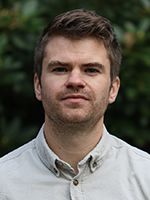
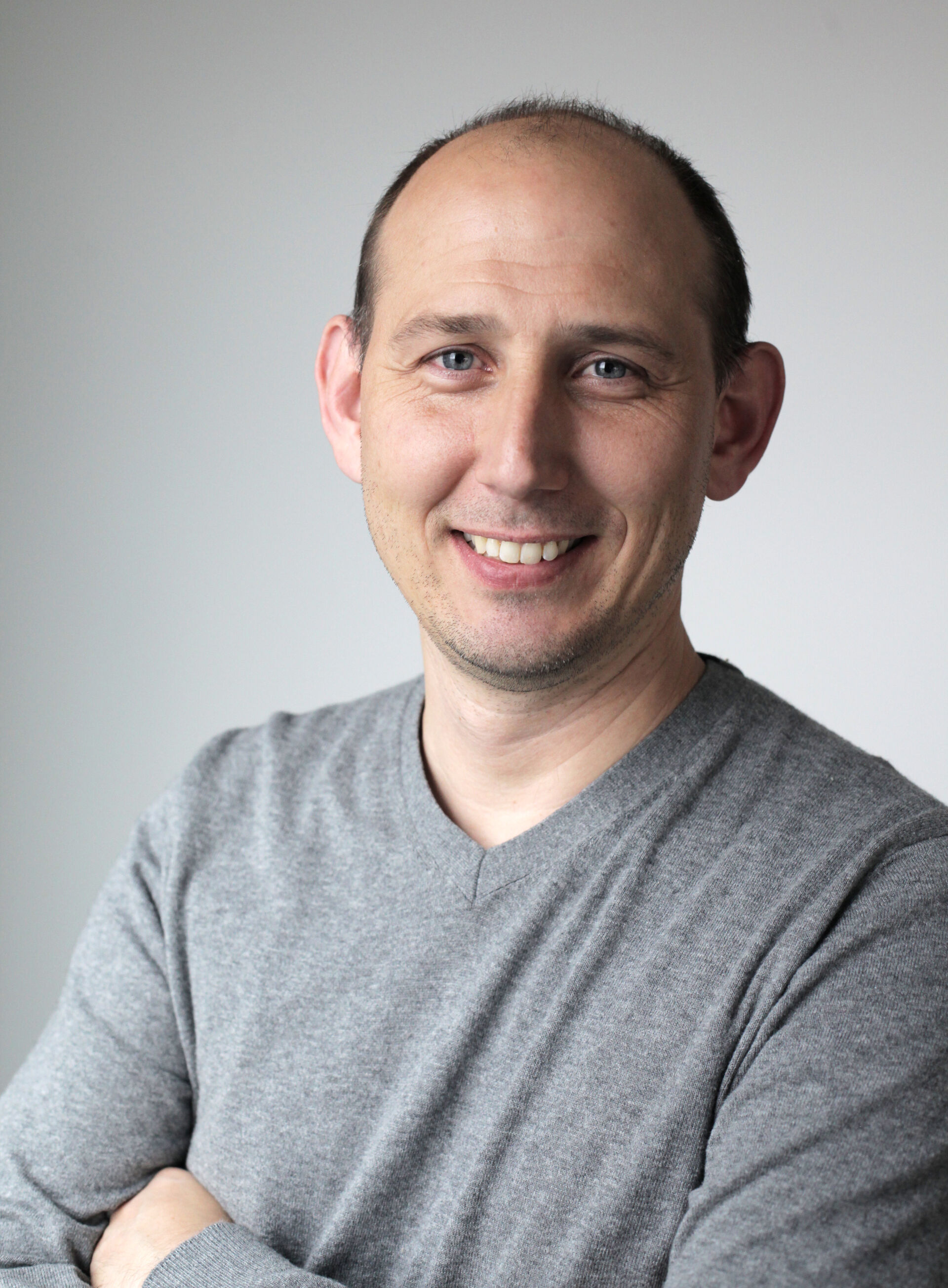
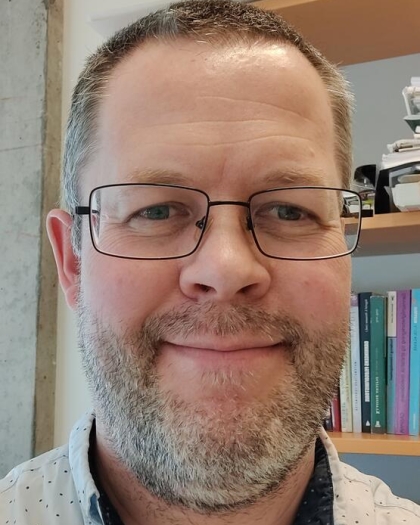
Karthik Shivashankar is a Doctoral Research Fellow in Software Engineering at the University of Oslo's Department of Informatics. His research develops transformer-based NLP methodologies to enhance software engineering processes, focusing on technical debt identification, issue classification, and maintainability optimization. Investigation domains include machine learning applications for task prioritization in development workflows, anti-pattern detection in ML systems, and scalable maintenance solutions. Recent publications demonstrate novel approaches to automating software quality assessment through issue tracker analysis and repository mining. Shivashankar contributes to the Software Engineering (SE) research group with cross-disciplinary applications in educational policy analysis and healthcare AI. His scholarly outputs reflect consistent emphasis on bridging NLP capabilities with practical software engineering challenges.
Odd Petter Sand is a Senior Lecturer at the University of Oslo’s Department of Informatics, specializing in computing and mathematics education. His research focuses on bridging programming, mathematics, and physics through interdisciplinary teaching methods. He holds a Ph.D. in education research from the Centre for Computing in Science Education (CCSE), a center of excellence at the University of Oslo. Previously, he worked as a software developer, upper secondary mathematics teacher, and at the University of Oslo’s IT department (USIT). Education Ph.D. in Education Research (University of Oslo, CCSE) Research Interests Sand explores how computation enhances student understanding in STEM fields, emphasizing teaching design and interdisciplinary connections. His work includes case studies on programming pedagogy, mathematics education, and computational tools in physics education. Publications His recent articles analyze student learning through programming (e.g., Python applications of Taylor expansions) and interdisciplinary approaches in science education. These studies highlight innovative teaching strategies to improve conceptual understanding. Labs/Teams Affiliated with the Computing Education research group (ITU) and the CCSE.
Henrik Hillestad Løvold is a Lecturer at the Department of Informatics , UiT The Arctic University of Norway. His work focuses on computer science didactics , innovative teaching methods, and digital education for students and teachers. Key Roles: Lecturer in Introduction to Computational Programming (INF-1049) and Object-Oriented Programming (INF-1400), developer of continuing education programs for science teachers. Education: Bachelor’s and Master’s degrees from the University of Oslo in Computer Science and Informatics, respectively. Research Interests center on group work in computer science education , modular-based backward teaching , and digital pedagogical tools . He has published extensively on team formation and assessment in software engineering courses and co-authored textbooks like Objektorientert programmering med Python (2024). Recent Publications include studies on collaborative learning strategies, programming education in secondary schools, and workshops on teamwork in software engineering. His work integrates pedagogy , curriculum design , and technology-driven teaching . Contact: henrik.h.lovold@uit.no , Tromso, UiT.
René Karadakic is a Postdoctoral Fellow at the Department of Health Policy and Management, Harvard T.H. Chan School of Public Health, Harvard University. His research is centered on empirical health and labour economics, with a particular focus on healthcare access and health and labour market inequalities. His primary research interests include: Empirical Health Economics Labour Economics Healthcare Access Inequalities Health Inequalities Labour Market Inequalities Econometrics Public Policy Applied Microeconomics He is proficient in programming languages such as R, Python, and MATLAB, which he uses for data analysis and research. His academic background includes a PhD from the Norwegian School of Economics (NHH), as evidenced by his publicly available dissertation. Dr. Karadakic is actively engaged in the academic community, contributing tools like a LaTeX dissertation template to support other researchers. There are no mentions of scientific awards, grants, or students in the provided information.
Isak Roalkvam is a Senior Lecturer in Archaeology at the University of Oslo, specializing in Stone Age studies with a focus on quantitative methods and computational approaches. His research integrates geographical information systems, programming (R and Python), and open research practices to investigate settlement patterns along the Norwegian coast during the Mesolithic period, particularly addressing challenges posed by relative sea-level changes over millennia. Dr. Roalkvam's educational background includes: PhD in Archaeology (2024) from the University of Oslo MSc in Computational Archaeology: GIS, Data Science and Complexity (2019) from University College London Master's degree in Archaeology (2015) from the University of Oslo Roalkvam's research centers on the application of quantitative methods to understand Stone Age settlement patterns, particularly along the Norwegian Skagerrak coast. He specializes in shoreline dating techniques, summed probability distributions of radiocarbon dates, and the relationship between Stone Age sites and sea-level changes. His technical expertise includes developing computational tools (such as the shoredate R package), statistical modeling, and GIS analysis. He is also actively engaged in promoting open research practices within archaeology, as evidenced by his recent publications on open access publishing in the field. Analysis of Roalkvam's publication record reveals a clear methodological trajectory from theoretical development to practical application. His work consistently addresses the complex relationship between archaeological site locations and relative sea-level changes, requiring sophisticated computational approaches. The development of the shoredate R package represents a significant contribution to the field, providing researchers with accessible tools for shoreline dating. More recently, his research has expanded to examine broader issues in archaeological publishing and open science practices, demonstrating his commitment to advancing methodological rigor and transparency in the discipline. Dr. Roalkvam is actively involved in two research groups at the University of Oslo: Materialities – past and present PalaeoTECH – Social approaches to Stone Age technology
Sverre Branders serves as a Lecturer in Biostatistics and PhD student at the University of Inland Norway (INN), affiliated with the Faculty of Applied Ecology, Agricultural Sciences and Biotechnology and the Department of Biotechnology at the Hamar study location. He has held a research fellowship in machine learning and bioinformatics at INN since May 2023. With a molecular biology background, Sverre previously worked as a senior laboratory engineer at INN during 2022-2023 before transitioning to informatics and data science. His technical expertise includes programming languages such as C++, Python, and R. His doctoral research focuses on developing machine learning and bioinformatics algorithms for rapid detection of infection-causing bacteria and antimicrobial resistance. Sverre collaborates internationally with The Advanced Imaging Lab at Harvard and the Department of Physics and Technology at UiT The Arctic University of Norway. As lead developer of the voyager taxonomy software, he contributes to innovative pathogen identification systems. His research spans both environmental applications (biofilm functionality in wastewater treatment) and clinical diagnostics (nanopore sequencing for pathogen detection). He is actively involved in two major projects: MysteryMaster (focused on novel diagnostic solutions for infection and AMR) and Voyager. Sverre is a member of research group B3 - Bioinformatics, bio-discovery and biorefining, where he applies computational approaches to biological challenges.
Mikael Mortensen is a Professor in Fluid Mechanics at the University of Oslo 's Department of Mathematics. His research spans Computational Fluid Dynamics (CFD), turbulent flow modeling, spectral numerical methods, and applications in biomedical flows, turbulent combustion, and space physics. He contributes to the 4DSpace strategic research initiative studying ionospheric instabilities. Primary Affiliation: Department of Mathematics, University of Oslo Collaborations: Center for Biomedical Computing (Simula), KAUST, Chinese Academy of Sciences Research Themes High-performance spectral Galerkin methods ( Shenfun ) Direct Numerical Simulation of turbulence ( spectralDNS ) Space plasma physics and ionospheric turbulence Multiphase flow modeling in industrial contexts Machine learning applications in fluid dynamics Publication Trends Mortensen's recent work focuses on spectral methods for turbulence modeling, plasma instability simulations, and machine learning applications in fluid dynamics. His articles demonstrate expertise in Python-based high-performance computing frameworks for CFD and interdisciplinary applications in space physics and biomedical engineering. Supervision PhD Students: Anna Piterskaya (2019-2025), Tormod Landet (2016-2019), Christopher Friedemann (2018-2020) Master Students: Jacob H. Hudtwalcker, Jacob T.S. Langmoen, Kei Yamamoto, Sverre Vinje Collaborative Initiatives Co-founder of the Kobe-Oslo Partnership (10 MNOK funding from Norwegian Research Council) Organized 15+ international workshops on plasma simulations Active in Python-based scientific computing education
Andreas Forø Tollefsen is an Associate Professor at the Department of Sociology and Human Geography, University of Oslo, and a Senior Researcher at the Peace Research Institute Oslo (PRIO) since 2016. His research focuses on the intersection of peace and conflict studies with migration, political geography, and advanced spatial analysis techniques. He leads the NFR-funded project CONMIG, examining conflict-induced migration through mixed-method approaches, and contributes to the TRUST project analyzing refugee impacts on host communities in the Global South. Academic background includes a Master's and Bachelor's in Geography from NTNU (2008-2010 and 2005-2008 respectively), followed by a PhD from the University of Oslo (2011-2016). He has taught GIS and spatial data analysis at all academic levels, including doctoral courses at the European University Institute and NTNU, and developed specialized training modules for conflict researchers at PRIO. Peace and Conflict Research Migration Dynamics Political Geography Geographic Information Systems (GIS) Spatial Data Analysis Quantitative Methodology His recent publications address conflict- and climate-induced displacement, refugee health outcomes, agricultural landownership in conflict zones, and machine learning applications for violence prediction. Articles demonstrate methodological expertise in integrating GIS, spatial statistics, and mixed methods to analyze micro-level conflict impacts on migration patterns, healthcare utilization, and societal resilience, with field specializations spanning Syria's climate-conflict nexus, South Sudan-Uganda refugee infrastructure, and Ukraine's wartime resistance dynamics. Professionally, Tollefsen has developed GIS training programs for institutions including Statistics Norway (SSB), ETH Zurich, and PRIO. His technical skills encompass R, Python, PostGIS/SQL, ArcGIS/QGIS, and statistical software (STATA/SPSS). He co-developed the PRIO-GRID spatial data framework (2012) and has published in venues like PNAS, JPR, and World Development.
Volker Stolz is an Associate Professor in the Department of Informatics at the University of Oslo, Faculty of Mathematics and Natural Sciences. He is affiliated with the Reliable Systems research group, where his work centers on improving software reliability through formal methods, model transformation, and UML-based modeling. Institution: University of Oslo School: Faculty of Mathematics and Natural Sciences Department: Department of Informatics Research Group: Reliable Systems Contact: stolz@ifi.uio.no | +47 22852438 | Room GA06 9461 His research spans formal verification, concurrency, model-based testing, and programming language semantics. He has made significant contributions to deadlock detection, refactoring equivalence, runtime verification in distributed systems, and data race analysis, often using formal models such as Petri nets and active object languages. The recent publications highlight a consistent focus on software correctness , modular analysis , and automated verification techniques. Trends include the use of behavioral effects, abstract execution, and field calculus for distributed monitoring. His work frequently appears in top-tier venues like Theoretical Computer Science , Lecture Notes in Computer Science , and Journal of Logical and Algebraic Methods in Programming , indicating strong theoretical and practical impact. He collaborates extensively with researchers such as Violet Ka I Pun, Rui Wang, Lars Michael Kristensen, and Martin Steffen, reflecting an active and collaborative research profile. No scientific awards are mentioned in the provided text. There is no information available about student advising or research grants. Volker Stolz is involved in research projects related to model-based testing, formal methods, and reliable software systems, particularly through the Reliable Systems group. His work often involves building theoretical foundations and practical tools for verifying and improving software behavior in distributed and concurrent environments.
Olivier Seynnes is a Professor at the Department of Physical Performance, Norwegian School of Sport Sciences. He leads the muscle-tendon research group and teaches biomechanics, muscle physiology, and neurophysiology. PhD in Human Movement Sciences (2003) Post-graduate Gerontology (2003) MSc by Research in Human Movement Sciences (2000) His research focuses on neuromuscular and tendinous adaptations to exercise, disuse, and ageing. He explores: Training-induced tendon remodeling Hormonal influences on muscle adaptation Deep learning applications in ultrasound analysis Age-related musculoskeletal changes Recent publications (2025) include studies on oral contraceptive effects on tendon adaptation, Maasai jumping mechanics, and eccentric training impacts. His work combines advanced imaging techniques with computational analysis to understand muscle-tendon interactions. He has developed tools like DL_Track_US for automated muscle architecture analysis and contributed to understanding: Spaceflight musculoskeletal effects Collagen supplementation efficacy Vibration therapy applications Range-of-motion training outcomes
Antoine Turquet is a Researcher at NORSAR (Norwegian Seismic Array Research Centre) in Kjeller, Norway, specializing in seismo-acoustic coupling and seismic source characterization. His research bridges geophysics and atmospheric science, focusing on how seismic events generate infrasound waves that propagate through the atmosphere. Dr. Turquet's primary research interests include moment tensor estimation, seismic-to-acoustic coupling mechanisms, and the analysis of infrasound propagation from shallow seismic sources. His work combines observational data analysis with sophisticated numerical modeling to extract source characteristics from complex wavefields. He has particular expertise in analyzing mining-induced seismic events and their acoustic signatures, as demonstrated in his research on the 2020 Kiruna Minequake in Sweden. His recent publications reveal a strong focus on retrieving seismic source characteristics using combined seismic and infrasound data, with particular attention to shallow-depth events. The research shows how local infrasound observations can provide independent constraints on focal mechanisms and depths, while regional infrasound data requires accurate atmospheric models for meaningful interpretation. Dr. Turquet's research is supported by Norwegian funding agencies including the Research Council of Norway through the AIR and MADEIRA projects. His work involves collaboration with international partners across Europe, particularly in France and Sweden, reflecting the global nature of seismic and infrasound monitoring networks. At NORSAR, Dr. Turquet contributes to advancing methodologies for analyzing seismo-acoustic datasets, with applications ranging from nuclear test monitoring to mine safety assessment. His technical expertise spans waveform modeling, inversion techniques, and the integration of multi-disciplinary datasets to solve complex geophysical problems.
Evgueni Dinvay is a Postdoctoral Fellow in the Department of Chemistry at UiT The Arctic University of Norway, specializing in computational methods for quantum systems and fluid dynamics. His research bridges mathematical physics and chemistry through advanced numerical techniques. His primary research interests include multiwavelet-based quantum chemistry , stochastic partial differential equations , and water wave modeling . Key focus areas involve developing high-accuracy algorithms for quantum systems at the basis set limit, analyzing wave propagation in ice-covered waters, and formulating Hamiltonian structures for stochastic surface waves. Recent work emphasizes computational efficiency through the VAMPyR Python library. Publications demonstrate consistent output across theoretical and applied domains, with recent trends showing increased integration of machine learning-inspired optimization (DMRG) in quantum chemistry and rigorous mathematical analysis of stochastic wave systems. The 15 most recent works span computational chemistry (40%), mathematical physics (35%), and fluid dynamics (25%). Dinvay collaborates extensively with international researchers including Luca Frediani (Tromsø), Henrik Kalisch (Bergen), and Sigmund Selberg (Bergen), primarily through the Theoretical and Computational Chemistry research group. Current projects involve multiwavelet implementations for quantum dynamics and modeling ice-sheet responses to moving loads.
Morten Grønnesby is a Lecturer in Computer Science at UiT, Arctic University of Norway in Tromsø, Norway. His work involves contributions to open-source projects and educational tools. Research interests include algorithm development, programming methodologies, and applications of computer science in education. Projects like the Histology learning tool (Python/JavaScript) and C utilities for mathematical problem-solving (e.g., Euler repository) highlight his focus on practical software development and educational technology. No scientific awards or grants are explicitly listed in the provided information. He maintains several GitHub repositories showcasing work in C, Go, JavaScript, and Python, including projects related to dining hall apps (gofood) and bioinformatics analysis tools (Discrete_curve_group_code). No lab affiliations or team details are mentioned in the text.
Konstantin Stadler is the Manager and Lead Researcher of the Industrial Ecology Digital Laboratory at the Department of Energy and Process Engineering, Norwegian University of Science and Technology (NTNU). His role involves consolidating digital infrastructure, establishing data exchange standards, and developing tools for environmental analysis. Education: PhD in Neuroscience from Charité Berlin/FU Berlin. His research focuses on environmental and social consequences of economic activities, particularly through Multi-Regional Input-Output (MRIO) analysis and open-source software development. Research Interests: Environmental impact assessment, carbon and resource footprints, sustainability policies, and critical mineral supply chains. He contributes to projects like EXIOBASE, DESIRE, and CARBON CAP, emphasizing data transparency and policy relevance. Articles Trends: Recent work addresses carbon border mechanisms, marine plastic impacts, and toxicity footprints, reflecting his commitment to integrating environmental and social metrics into policy frameworks. His tools (e.g., Pymrio, MarINvaders) enhance accessibility of complex environmental data. Awards: No explicit awards listed, but recognized for contributions to EXIOBASE and open-source initiatives. Advising/Grants: Led FP7 projects (DESIRE, GLAMURS) and contributed to EU-funded research. Advises on software development and MRIO applications. Collaborates with international teams on sustainability challenges. Labs/Teams: Leads NTNU’s Industrial Ecology Digital Laboratory, focusing on innovative environmental analysis tools and data-driven policy solutions.
Johan Lie is an Associate Professor at the Department of Mathematics , University of Bergen. His email is johan.lie@uib.no . He has contributed extensively to mathematics education through interdisciplinary projects and digital tools.