Dr. Antoni Jaume-i-Capó is a Full Professor in the Department of Mathematics and Computer Science at the University of the Balearic Islands (UIB) , affiliated with the Computer Graphics and Vision and Artificial Intelligence Group (UGiVIA) and serving as Director of the Artificial Intelligence Applications Laboratory (LAIA@UIB) . His work bridges Artificial Intelligence , Computer Vision , and Medical Imaging with applications in Motor Rehabilitation and Explainable AI (XAI) . Research Interests : Artificial Intelligence, Explainable AI, Computer Vision, Human-based Computation, Intelligent Systems for Motor Rehabilitation, Medical Imaging Processing. Teaching : Courses include Algorithmics and Data Structures , Final Degree Projects , and Practical Placements for Informatics Engineering degrees across multiple campuses. Scientific Contributions span 15 recent publications focusing on XAI fidelity metrics , medical image analysis , and crowdsourced diagnostics . These works integrate machine learning for Sickle Cell Disease classification and kinect-based rehabilitation systems . Scientific Awards : Premio al mejor trabajo JENUI 2010 Students : Supervised over 11 PhD/Master’s students, including Gabriel Moyà-Alcover and Pedro Marrero-Fernández. Projects : Leads EU-funded initiatives like EXPLAINME and EUGAIN , alongside regional efforts such as People4Sicklemia .
Robert J. Quinn is Professor of Secondary Mathematics Education at the University of Nevada, Reno within the College of Education and Human Development. He holds office in WRB 3112 (Mail Stop 0280) and teaches core courses including EDSC 453/653 Teaching Secondary Mathematics, EDSC 353 Teaching Secondary Geometry, and CTL 702 Critical Issues in Secondary Education during fall semesters, with spring offerings comprising CTL 721 Evaluation of Classroom Learning and EDSC 459/659 Technology Application in Secondary Mathematics. His educational background includes: Ed.D. in Curriculum & Instruction from University of Nevada, Las Vegas M.A.T. in Mathematics Education from Boston College A.B. in Mathematics/Physics from Boston College Quinn's research centers on innovative mathematics pedagogy through technology integration, manipulatives, problem-solving frameworks, and cooperative learning structures, with specialized expertise in probability and statistics education. His work consistently explores how to make abstract mathematical concepts accessible through hands-on and digital approaches, particularly emphasizing real-world applications in sports analytics and gaming scenarios. The sustained focus on Web 2.0 technologies across his publication history demonstrates an evolving commitment to digital tools in teacher training. Analysis of his 15 most recent publications reveals three dominant research trajectories: (1) Web 2.0 integration in geometry instruction (2012-2014), characterized by empirical studies on blogging and collaborative platforms; (2) pandemic-responsive teacher preparation research (2021-2022), examining instructional modality adaptations; and (3) foundational work in probability education (2024-2025), featuring creative pedagogical approaches like the "Oogox" algebraic journey. His scholarship consistently bridges theoretical frameworks with classroom-ready strategies. His professional recognition includes: 2011: Inaugural Judith S. Bible Distinguished Teaching Award recipient While specific grant funding details and student advising records weren't documented in the source materials, his course load and publication record indicate active mentorship of pre-service mathematics teachers. His research methodology frequently employs qualitative and mixed-methods approaches to investigate teacher cognition and classroom implementation challenges, particularly regarding technology adoption. Quinn maintains strong connections between his scholarly work and practical classroom applications, as evidenced by his continued development of geometry and probability teaching modules.
Maurice Lamb is a researcher at the University of Skövde , affiliated with the Interaction Lab (ILAB) and the School of Informatics . His work bridges digital human modeling (DHM) , virtual reality , and human-robot interaction (HRI) with applications in automotive design and cognitive science . Research interests include: Automated design optimization using simulation-based multi-objective methods Collaborative tools for remote design reviews and CAD integration Cognitive implications of inverse kinematics solvers (FABRIK) in motor planning Impact of XR technologies on motor skill learning and human-agent coordination Methodological challenges in NARS (Negative Attitude toward Robots Scale) application Key projects include PLENUM (Vinnova-funded) and OKAVIM (AFA Insurance-funded), focusing on remote collaboration , ergonomics , and cognitive support in VR/XR . His publications span IEEE , Springer , and Elsevier journals, often co-authored with experts like Francisco Garcia Rivera, Erik Billing, and Dan Högberg.
Chethan Kamath is an Assistant Professor in the Department of Computer Science and Engineering at IIT Bombay, where he is a member of the Theory Group and Trust Lab. His primary research focus is on cryptography, particularly its foundations, with broader interests extending to theoretical computer science. His educational journey includes: PhD from IST Austria (2014-2020) under Krzysztof Pietrzak, with thesis titled "On the Average-Case Hardness of Total Search Problems" Master's in CS from IISc Bangalore (2010-2013) under Sanjit Chatterjee, with thesis titled "Constructing Provably Secure Identity-Based Signature Schemes" Bachelor's in CS from University of Kerala (2005-2009) at TKM College of Engineering, Kollam Dr. Kamath's research interests span the theoretical foundations of cryptography, with particular focus on secure computation, complexity theory, and cryptographic hardness assumptions. His work often bridges theoretical computer science with practical cryptographic applications, exploring the boundaries of what can be efficiently computed while maintaining security guarantees. His research frequently addresses fundamental questions about the relationship between cryptographic primitives and complexity classes, especially the PPAD and TFNP complexity classes. His recent publications demonstrate a consistent focus on foundational aspects of cryptography, with particular emphasis on secure computation (garbled circuits, Yao's protocol), proofs systems (proofs of work, proofs of exponentiation), and complexity-theoretic aspects of cryptographic primitives. A notable trend is his exploration of the connections between complexity classes like PPAD and cryptographic assumptions, as well as his work on verifiable delay functions and their underlying number-theoretic assumptions. His research often employs tools from algorithmic graph theory (treewidth, separators) to analyze cryptographic protocols. His notable scientific achievement includes: Azrieli Fellowship during his post-doc at Tel Aviv University Dr. Kamath actively mentors students and researchers, currently advising several PhD and MS students at IIT Bombay, often in collaboration with Sruthi Sekar. His service to the academic community includes extensive program committee memberships for major conferences including Crypto, Eurocrypt, and TCC, demonstrating his standing in the cryptographic research community. He has co-organized educational events like the "Introduction to Cryptography" school as part of the ACM India Summer School 2025 and the "Theoretical Foundations of Cryptography" school as part of the ACM India Summer School 2024. He leads research activities within the Trust Lab at IIT Bombay, which focuses on theoretical and applied aspects of cryptography and security. The lab actively recruits MS/PhD students and post-docs, with ongoing research in foundational cryptography and its applications to secure computation, verifiable delay functions, and complexity-theoretic aspects of cryptographic security.
Prof. Yossi Bukchin is a Professor in the Department of Industrial Engineering at The Iby and Aladar Fleischman Faculty of Engineering, Tel Aviv University. His research focuses on manufacturing systems, production engineering, and operations research with particular expertise in assembly line design and optimization. His primary research interests include: Assembly systems design Assembly line balancing Facility design Operational scheduling Human factors engineering Warehouse and storage systems Prof. Bukchin's recent work demonstrates a strong focus on puzzle-based storage systems, assembly line optimization, and operations management. His research spans both theoretical developments in scheduling algorithms and practical applications in manufacturing and logistics systems. He has made significant contributions to the understanding of Bucket Brigade systems, puzzle-based storage optimization, and assembly line balancing with mixed-model production. His scholarly output shows evolution from early work on robotic assembly lines to contemporary research on machine learning applications in warehouse systems and advanced optimization techniques for modern manufacturing challenges. Contact information: Email: bukchin@tau.ac.il Phone: 03-6407941 Fax: 03-6407669 Office: Wolfson - Engineering
Michael Dekker is a Professor in the Department of Mathematics at Ferris State University’s College of Arts, Sciences and Education. He earned his PhD and MS in Mathematics from the University of Notre Dame and a BS in Mathematics and Physics from Calvin College. Dr. Dekker specializes in teaching trigonometry, calculus, geometry, proof-writing, and abstract algebra, while advising the Mathematics and Actuarial Sciences Club. Education: PhD, MS (University of Notre Dame); BS (Calvin College) His research focuses on topology, geometry, and recreational mathematics, with specific interests in knot theory, non-Euclidean geometry, and the mathematics of sports. His recent presentations highlight innovations in mastery-based grading and problem-solving strategies. Dr. Dekker’s career spans over 15 years at Ferris State, where he has explored pedagogical tools like Tegrity and organized engaging math colloquia. His work bridges theoretical mathematics with accessible, interactive teaching methods. Contact: MichaelDekker@ferris.edu
Susan Levine is the Rebecca Anne Boylan Distinguished Service Professor in the Departments of Psychology and Comparative Human Development at the University of Chicago. She co-directs the Center for Early Childhood Research and serves as faculty director of the UChicago Science of Learning Center. Her research examines early mathematical thinking, parent-child language interactions, and the impact of math anxiety on learning. Research Focus: Cognitive development, spatial-mathematical connections, and resilience in math learning after brain injury. Scientific Awards: Ann L. Brown Award for Excellence in Developmental Research American Academy of Arts and Sciences member Grants: Funded by NIH, NSF, Heising Simons Foundation, and Overbeck Foundation. Key Contributions: Demonstrated how home math talk influences achievement, linked teacher anxiety to student outcomes, and developed interventions for spatial and numerical cognition.
Zöhre SERTTAŞ is a Lecturer in the Department of Computer Information Systems at Near East University, Northern Cyprus, with contact details zohre.serttas@neu.edu.tr and +90 (392) 223 64 64. Her research focuses on transformative educational technologies, particularly: AI-driven immersive e-learning environments Metaverse-based educational paradigms Gamification and digital game development Mobile applications for special education and elderly/disabled users Cloud forensics and digital evidence preservation Recent publications (2023-2025) demonstrate her leadership in developing simulation-based cultural education tools, ethical AI frameworks for education, and practical implementations like the NEU-LIFE ASSIST mHealth application. Her work bridges technical innovation with pedagogical effectiveness across banking, healthcare, and STEM education domains.
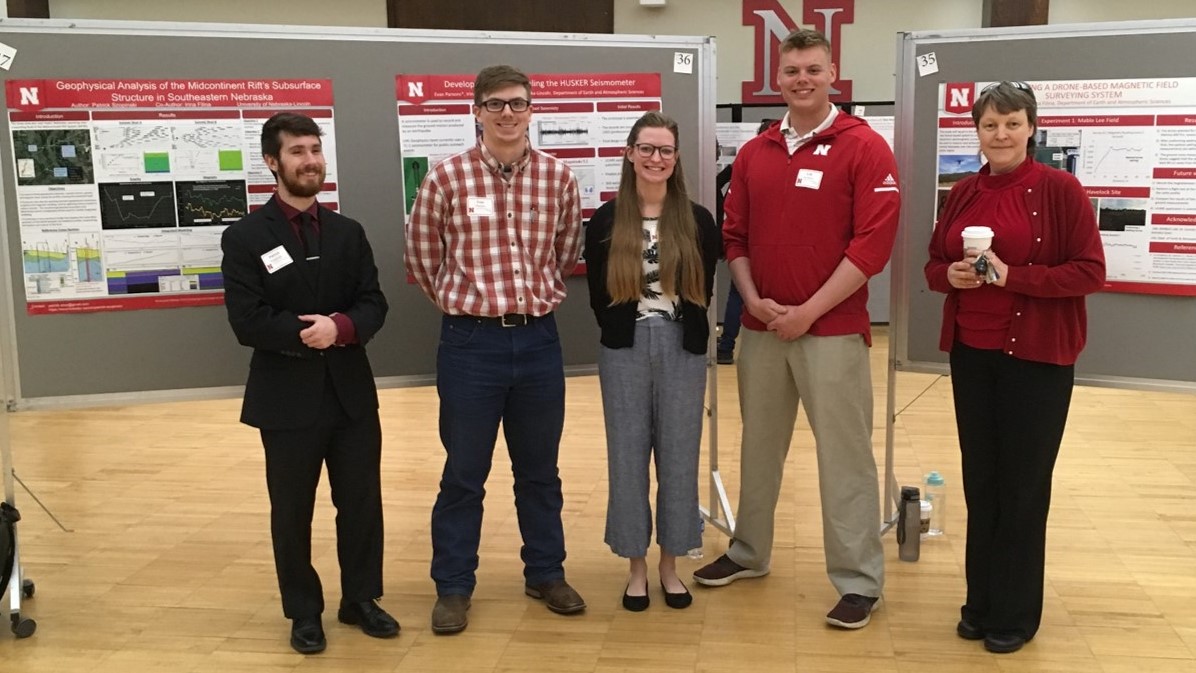
Irina Filina is an Associate Professor in the Department of Earth and Atmospheric Sciences at the University of Nebraska-Lincoln, leading the UNL Geophysics Research Group since 2016. She specializes in integrative geophysical analysis combining seismic, gravity, and magnetic data with geological constraints to study subsurface structures across diverse regions. Education: PhD in Geophysics (2007) from the University of Texas at Austin Industry Experience: 8 years in the petroleum sector before academia Research Interests span: Tectonic evolution of passive continental margins (Gulf of Mexico, Northern Atlantic, Tyrrhenian Sea) Cascadia subduction zone crustal heterogeneities and seismicity Intraplate seamounts in the central Atlantic Nebraska aquifer dynamics via microgravity and seismic surveys Her work leverages public domain datasets and field campaigns (e.g., IODP Expeditions 396/402) to resolve tectonic puzzles and inform environmental monitoring. Students in her group have won Best Student Awards at the Nebraska Academy of Sciences annually since 2017 and presented at AGU, GSA, and AAPG. She teaches Geophysics , Advanced Geophysics , and Exploration Geophysics , emphasizing hands-on learning through projects like Football-Induced Seismicity . Her outreach initiatives include summer camps and school collaborations using drone-based magnetic surveys and seismic demonstrations for K-12 engagement.
Theresa L. Rhett-Davis serves as Clinical Assistant Professor, Vice Chair of the Department of Occupational Therapy, and Director of the Master of Occupational Therapy Program at the University of the Sciences. With over two decades of clinical experience spanning rehabilitation leadership, pediatric practice across school districts and outpatient clinics, and per diem roles in skilled nursing facilities, she bridges academic instruction with active clinical practice through her partnership at The Therapeutic Puzzle, LLC in New Jersey. Education BS in Occupational Therapy, Kean University MS in Training and Organizational Development, Saint Joseph’s University EdD (Doctorate in Education) Research Focus Dr. Rhett-Davis specializes in pediatric sensory processing interventions and interprofessional collaboration models , developing practical applications for therapists and families. Her work emphasizes translating neuroanatomy principles into sensory regulation strategies and creating structured learning experiences for interdisciplinary pediatric teams, directly addressing functional challenges in childhood development. Scholarly Contributions Her 2015 presentations demonstrate a cohesive research trajectory examining evidence-based sensory integration techniques and collaborative practice frameworks in pediatric occupational therapy. Both studies highlight her commitment to improving therapeutic outcomes through educator-clinician partnerships and culturally responsive care approaches. Mentorship & Practice Leadership Directs Master of Occupational Therapy program curriculum and student development Provides clinical mentorship through private pediatric practice Develops in-service training for medical professionals, families, and community agencies Cofounds multidisciplinary practice at The Therapeutic Puzzle, LLC
Heidi Burgiel is a Professor in the Department of Mathematics at Bridgewater State University's College of Science and Mathematics. Her research bridges pure mathematics and visual applications, with significant contributions to geometric visualization, symmetry theory, and mathematical art. Her primary research domains include: Geometric structures: deltahedra, lattices, and fundamental domains Mathematical art: Escher analysis, symmetry in art, and 3D-printed mathematical designs Educational mathematics: origami pedagogy, interactive learning tools, and curriculum development Discrete mathematics: Tantrix graphs and combinatorial geometry Her publications show strong interdisciplinary trends, connecting abstract mathematical concepts with tangible applications in art, education, and technology. Recent works demonstrate increasing focus on 3D printing applications and symmetry visualization. She has led several educational initiatives: Developed interactive applets for engineering mathematics Created origami-based geometry workshops Co-designed first-year courses with embedded academic support Contributed to OpenCourseWare movement Her grants include projects on mathematical vase design and Escher analysis. She frequently collaborates with mathematicians and artists, most notably co-authoring 'Symmetries of Things' with John Horton Conway.
T. Kyle Petersen is Professor and Chair of the Department of Mathematical Sciences at DePaul University's College of Science and Health, where he serves as a full-time faculty member specializing in combinatorics research and education. Education history: AB, Washington University in St. Louis PhD, Brandeis University (2006), supervised by Ira Gessel Research focuses on core and specialized areas of combinatorics: Enumerative Combinatorics : Counting methods and sequence analysis Algebraic Combinatorics : Algebraic structures in discrete mathematics Topological Combinatorics : Geometric and topological approaches Recent publications (2019-2021) demonstrate broad engagement with combinatorial theory and applications—including permutation studies (Sós Permutations), probabilistic card shuffling models, geometric puzzle theory, Coxeter group analysis, and inquiry-based learning frameworks. This work consistently bridges theoretical foundations with educational innovation. Beyond research, Dr. Petersen actively contributes to pedagogical advancement through the Academy of Inquiry-Based Learning, promoting student-centered mathematics education.
David Ehren serves as an Instructor and Director of the MAX Center at Macalester College within the Department of Mathematics, Statistics, and Computer Science. He concurrently holds the position of Coordinator of Quantitative Support specializing in academic assistance and puzzles. His academic credentials include: BA in Mathematics from Macalester College (1987) MS in Mathematics from the University of Wisconsin–Milwaukee (1989) ABD in Math Education from the University of Minnesota Ehren's professional focus centers on mathematics education methodology, cognitive problem-solving frameworks, and game-based learning systems. He dedicates substantial time to direct student engagement in the MAX Center across all mathematical disciplines and their practical applications, emphasizing accessible quantitative literacy. As Coordinator of Quantitative Support, he develops academic assistance protocols and puzzle-based pedagogical tools. His leadership in the MAX Center establishes it as Macalester's primary academic support hub. Outside professional duties, Ehren pursues disc golf, volleyball, and collaborative yard work with his wife and teenage son.
Scott Elliott is an Associate Professor of Creative Writing and English at Whitman College, a small liberal arts institution in Walla Walla, Washington. His academic career spans teaching roles at the University of Houston, Hofstra University, and community engagement programs like The Teachers and Writers Collaborative in New York and Writers in the Schools in Houston. He holds advanced degrees from Vanderbilt University (BA), Columbia University (MFA), and the University of Houston (Ph.D), where his dissertation was a creative work. Vanderbilt University – BA in English UC-Boulder – MA in English Literature Columbia University – MFA in Fiction University of Houston – Ph.D in English Literature with creative dissertation Scott's research and creative work center on American literature across historical periods, writing pedagogy, magical realism, and the interplay between geography and narrative. His publications explore Pacific Northwest ecosystems, environmental conflicts, and the cultural significance of place through novels like Temple Grove and Coiled in the Heart , which intertwine ecological suspense with mythological and societal themes. His literary output has been recognized with the G. Thomas Edwards Award for Excellence in Teaching and Scholarship (2011) and multiple award finalists, including the Flannery O'Connor Award and Washington State Book Award. He founded the Walla Walla Whitman Imaginative Writing Partnership, placing students in public schools, and advises Whitman's blue moon literary magazine. His work has been featured in The New York Times , Antioch Review , and Seattle Times critiques.
Dr. Marcy Zipke serves as Professor of Education in the Department of Elementary & Special Education at Providence College, where she conducts research on literacy development and teacher preparation. Her academic foundation includes a Ph.D. in Educational Psychology from the City University of New York and a B.A. in English from the University of Pennsylvania. Her educational credentials are: Ph.D. in Educational Psychology, City University of New York (2007) B.A. in English, University of Pennsylvania (1996) Dr. Zipke's research centers on metalinguistic awareness as a catalyst for reading comprehension in elementary students, with emphasis on innovative methods like word games and puzzles. She investigates technology integration in teacher education, particularly addressing challenges in hybrid and distance learning modalities, while developing evidence-based strategies for students with disabilities. Her work bridges theoretical linguistics with practical classroom applications. Analysis of her 2018-2024 publications reveals consistent focus on literacy skill development through metalinguistic training, technology-enhanced teacher preparation, and inclusive instructional design. Key trends include adapting pedagogical approaches for pandemic-era education, creating discrete literacy skill builders, and supporting K-12 students with disabilities through technology-enabled content learning. No scientific awards were documented in the provided information. As Principal Investigator for eight research grants—including active projects on hybrid teaching modalities and academic resilience fellowships—Dr. Zipke addresses critical gaps in teacher preparation. Her funded work examines pre-service teacher development during educational disruptions, continuous improvement systems, and technology-supported learning frameworks for diverse learners, with collaborations involving the Rhode Island Department of Education.