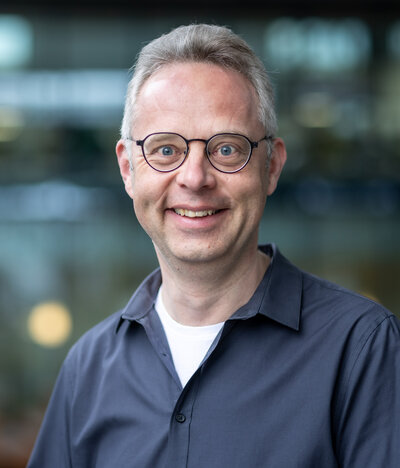
Arjan Frijns is an Associate Professor at Eindhoven University of Technology (TU/e) within the Department of Mechanical Engineering. He leads the Energy Technology group and specializes in micro-thermo fluidics, with a focus on heat and mass transfer at nano- and micro-scales, evaporative cooling, and multi-scale modeling (MD, DSMC, hybrid MD-DSMC, CFD). His work bridges fundamental research and experimental validation, including collaborations with industry and Maastricht University on human thermoregulation. Research Areas: Microscale heat transfer, rarefied gas flows, human thermal comfort, hybrid modeling techniques. Key Collaborations: Department of Human Biology (Maastricht University), Technische Universität Darmstadt, Ghent University/IMEC. His publications highlight innovations in microfluidic device modeling, thermal management systems, and thermoregulation models like ThermoSEM. Recent work integrates machine learning for rarefied gas dynamics, funded by NWO under the RareTrans program. Grants: Netherlands Organization for Scientific Research (NWO) - RareTrans project (HTSM-15376).
Francois Clemens serves as a Research Fellow at the Advanced Engineering Centre within the School of Architecture, Technology and Engineering at the University of Brighton, focusing on experimental thermal systems research. His work centers on advanced heat transfer technologies with practical applications in aerospace and electronics cooling. His academic foundation includes a Master's degree in Physics from Universite de Mons, awarded on 30 January 2021. Clemens specializes in pulsating heat pipe (PHP) technology, conducting rigorous experimental investigations into thermal performance under diverse conditions. His research encompasses polymeric PHP fabrication, gravity effects, bending angle impacts, and fluid dynamics characterization using infrared thermography and high-speed imaging. Current projects explore dissolved gas effects on pool boiling and flat-plate PHP configurations for space applications, demonstrating strong interdisciplinary methodology bridging thermal engineering and materials science. Analysis of his 2023-2025 publications reveals a clear trajectory from fundamental thermal characterization under variable gravity to applied studies on geometric constraints and fluid composition. The research consistently emphasizes experimental validation of polymeric PHPs, with growing focus on real-world deployment challenges in aerospace thermal management systems. No scientific awards are documented in the available records. While collaborative publications indicate active research partnerships, specific details regarding student supervision, grant funding, or dedicated laboratory infrastructure are not provided in current documentation. His work appears integrated within the university's Advanced Engineering Centre framework through multi-institutional research teams.
Shawn Putnam is an Associate Professor in the Department of Mechanical and Aerospace Engineering at the University of Central Florida (UCF). He joined UCF in 2012 after serving as a thermal/materials scientist at the Air Force Research Laboratory. His expertise spans interfacial heat/mass transport, optical diagnostics, and phase-change materials. Putnam holds a Ph.D. in Materials Science and Engineering (UIUC, 2007) and dual bachelor’s degrees in Physics and Applied Mathematics from the University of Minnesota Duluth (2001). His research focuses on advancing thermal management technologies through optical diagnostics for biomolecular binding and interfacial transport. He has pioneered studies on microdroplet evaporation, pulsed spray cooling, and nano-scale thermal phenomena. Awards include the NSF CAREER Award (2017) and Air Force Summer Faculty Fellowships (2015, 2019). Key Research Areas : Interfacial Phenomena, Thermal Diagnostics, Alternative Energy, Biosensors Grants : NSF CAREER Grant for active cooling of extreme heat fluxes Teaching : Courses include Engineering Thermodynamics, Energy Systems, and Intermediate Heat Transfer Lab Work : Develops advanced cooling systems and thermal mapping techniques using quantum dots Recent work explores pulsed sprays for high-power device cooling and curriculum alignment strategies to support transfer students in engineering. His lab integrates experimental and computational approaches to solve complex thermal challenges.
Dr. Wael H. Ahmed is a Professor at the University of Guelph's Department of Mechanical Engineering. His research focuses on multiphase flow analysis for energy, water, and food systems, including thermo-fluid dynamics of mechanical systems. He teaches undergraduate courses such as Fluid Mechanics, Thermodynamics, and Heat Transfer, and graduate courses on phase change heat transfer and two-phase flow. His research lab, the Flow, Energy and Dynamics Solution (FEADS) lab, collaborates with industry to develop sustainable solutions for mechanical systems, addressing fluid-structure interaction challenges. Current projects involve optimizing airlift pumps for aquaculture, biogas production, and CO2 capture. Dr. Ahmed emphasizes hands-on learning, engaging students in real-world engineering problems through 'Learning by Doing' initiatives. Key research areas include multiphase flow dynamics, two-phase flow instabilities, and energy-efficient technologies. He has developed innovative pumping systems and sensors for industrial applications, such as the FloNergia airlift pump commercialized with academic-industry partnerships. His work integrates computational fluid dynamics (CFD), experimental validation, and machine learning for flow pattern identification. Recent projects explore applications in nuclear power plant safety, catalytic converter flow analysis, and sustainable energy systems design.
Dr. Wessel W. Wits serves as a Research Fellow at the University of Twente within the Faculty of Electrical Engineering, Mathematics and Computer Science (EEMCS), specifically affiliated with the Applied Mathematics department and Mathematics of Multiscale Modeling and Simulations group. Concurrently, he holds an R&D Engineer position at the Royal Netherlands Aerospace Centre (NLR), focusing on synergistic industrial-academic research. His expertise centers on advanced thermal management systems and metal additive manufacturing, with foundational work stemming from his 2008 PhD on integrated cooling for electronic systems. Key research domains include: Development of metal 3D printing processes (Laser Powder Bed Fusion) and associated materials Innovative heat transfer devices: heat pipes, thermosyphons, loop heat pipes, pulsating heat pipes, and pumped two-phase loops Physics-based modeling of heat/mass flow in manufacturing systems Dr. Wits actively shapes the field through leadership roles as Associate Member of the International Academy for Production Engineering (CIRP), Associate Editor of the CIRP Journal of Manufacturing Science and Technology, Chair of the EU Pathfinder ThermoDust project, Steering Committee Member of THERMINIC, and Founder of the Dutch Knowledge Center for Heat Pipe Technology. His work bridges material science, engineering design, and performance utilization modeling to advance cooling technologies for electronics and aerospace applications.
Dr. Marco Bernagozzi is a Lecturer in Electric Vehicles at the Advanced Engineering Centre, School of Architecture, Technology and Engineering, University of Brighton. His research focuses on smart thermal management systems for electric vehicles, space applications, and sustainable energy systems. He specializes in loop heat pipes (LHPs) and pulsating heat pipes (PHPs) for efficient thermal control in batteries, power electronics, and spacecraft. Education: PhD in Thermal Management of Electric Vehicles, University of Brighton (2019–2022) MSc in Aerospace Engineering, University of Padova, Italy (2013–2016) BSc in Aerospace Engineering, University of Padova, Italy (2009–2013) His research interests include thermal management in electric vehicles, design and optimization of loop and pulsating heat pipes, integration of smart thermal control systems, and thermal systems for space applications. He also explores hybrid thermal systems for sustainability and lifecycle analysis. His recent work emphasizes reducing energy waste in HVAC through personal comfort systems and sustainable energy storage using molten salts and liquid air. The analysis of his recent publications reveals a strong focus on advancing passive and active thermal management technologies. His work spans electric vehicles, aerospace, and renewable energy, with recurring themes in heat pipe performance, thermal efficiency, and sustainability. He frequently employs experimental and computational methods to optimize thermal systems under real-world and extreme conditions. Scientific Awards: Best Oral Presentation Award at the Joint 21st International Heat Pipe Conference and 15th International Heat Pipe Symposium, Melbourne, Australia Advising and Grants: Dr. Bernagozzi is open to supervising students in thermal management for electric vehicles and space applications. He is actively involved in research projects such as GELL-P, which investigates gravitational effects on blood flow, funded by research councils. His work is supported by collaborations with industry partners including Ricardo, Tata Motors, ESA, and Highview Power. He contributes to peer review for leading journals such as Applied Thermal Engineering , International Journal of Thermal Sciences , and Renewable Energy . Labs and Teams: Dr. Bernagozzi is a core member of the Advanced Engineering Centre at the University of Brighton, where he conducts experimental and computational research on thermal systems. He collaborates with interdisciplinary teams on projects involving aerospace, automotive, and biomedical engineering, including the GELL-P project on space physiology.
Amitav Tikadar is an Assistant Professor in the Department of Mechanical Engineering at the University of Mississippi. His research focuses on thermal management for e-mobility powertrains, micro and macro-scale heat transfer, computational fluid dynamics (CFD), and machine learning (ML). He holds a Ph.D. from Georgia Institute of Technology (2024), an M.S. from the University of South Carolina (2019), and a B.Sc. from Bangladesh University of Engineering and Technology (2015). Education: B.S. Mechanical Engineering, Bangladesh University of Engineering & Technology (2015) M.S. Mechanical Engineering, University of South Carolina-Columbia (2019) Ph.D. Mechanical Engineering, Georgia Institute of Technology (2024) Research Interests: Dr. Tikadar's work emphasizes thermal management solutions for electric vehicle (EV) motors, including flow boiling in microchannel heat sinks, 3D-printed cooling systems, and machine learning-driven thermal performance optimization. His research addresses challenges in high-power-density motor cooling and heat dissipation for e-mobility applications. Publications: Recent work includes studies on flow boiling thermal performance, hybrid heat sink designs, and additive manufacturing for pulsating heat pipes. His articles highlight trends in CFD modeling, ML prediction of thermal behavior, and evaporative cooling innovations for EV components. Awards: Best Paper Award at ITherm Conference Best Poster Award at ITherm Conference Advising & Grants: While specific grants are not listed, Dr. Tikadar has authored/co-authored over 40 publications, reflecting active research engagement. His work aligns with industry needs for sustainable thermal solutions in e-mobility.
Dr. Xuehui Wang is an Assistant Professor of Mechanical Engineering (Thermodynamics) at University College Dublin (UCD), School of Mechanical and Materials Engineering. He holds a PhD from Zhejiang University (2017) and has prior research experience at the University of Nottingham and Imperial College London. His research focuses on thermodynamics, heat transfer, thermal management, and renewable energy systems. He has contributed to projects funded by NSFC, Innovate UK, and EPSRC. Education: PhD in Mechanical Engineering from Zhejiang University (2017). Editorial Roles: Editor for journals like Applied Sciences , Energies , Machines , and Frontiers in Thermal Engineering . Teaching: Coordinates modules on Automotive Engines, Thermodynamics I, and Thermodynamics II. Professional Activities: Session chair at UKHTC 2019 and MIT Applied Energy Symposium. Research Interests: Solar cooling systems, thermoelectric generators, organic Rankine cycles, heat exchanger design, and thermal management for electric vehicles. His work emphasizes energy efficiency, low-GWP refrigerants, and waste heat recovery. Grants & Projects: Involved in NSFC, Innovate UK, and EPSRC-funded initiatives on thermal systems and renewable energy applications.
Anastasios Georgoulas is a Senior Lecturer and Deputy Director of Academic Communication in the Advanced Engineering Centre at the University of Brighton. He serves as Course Leader for Aeronautical/Aerospace Engineering, leading to the program's accreditation by IET and IMechE. His academic roles include leadership in research and education, with a focus on Multiphase Thermofluids and Computational Fluid Dynamics (CFD). Georgoulas holds a PhD in Numerical Simulation of Turbidity Currents from Democritus University of Thrace (2010), alongside advanced degrees in Structural and Hydraulic Engineering. His career includes Marie Curie Fellowships at the University of Bergamo and Caterpillar Inc., and adjunct roles at institutions like the International Hellenic University. Research Interests: Georgoulas' work bridges CFD, Multiphase Flows, Thermofluid Physics, and Heat Transfer across scales. He develops multi-scale models for diabatic/adiabatic flows, with applications in two-phase cooling systems (e.g., heat pipes, pulsating heat pipes) and aerodynamics. His research integrates high-resolution diagnostics for thermal and fluidic characterization. Grants & Funding: Georgoulas has secured £5.7M in funding, including a £408.5k Leverhulme Trust Grant (2022) and £2.9M EPSRC interdisciplinary grant (2022). Notable projects include biomimetic thermal management systems and space applications of heat pipes. Awards & Recognition: He is a Fellow of the HEA, a Full Member of the EPSRC Peer Review College, and part of the European Space Agency's Fluid Physics Facility Definition Team. His work has been highlighted in Nature Communications and earned Best Oral Presentation Awards at international conferences.
Professor Issa Chaer serves as Professor of Thermal Energy Systems and Associate Dean of Research and Innovation for the College of Technology and Environment at London South Bank University. With over 20 years of academic and industrial experience, his research bridges engineering technologies, environmental control, and well-being, yielding over 120 research articles and four books. His educational background includes: BEng (Hons) in Mechanical Engineering (1988-1991) PhD in Enhanced Heat Transfer (part-time, 1996-2000) PGCHE & CLTHE (2009-2010) Chaer's research spans alternative heating/cooling technologies, IoT-based energy conservation, smart memory alloy heat pumps, natural ventilation, trigeneration systems, net-zero decarbonization, and low-carbon skills development. His work leverages nanofluids, magnetic fields, and advanced heat transfer techniques to enhance building energy efficiency and renewable energy integration, with fingerprint areas including Heat Pipes, Nanofluids, and Refrigeration. Recent publications reveal intense focus on photovoltaic cooling via hybrid nanofluids, building retrofit strategies, and magnetic field applications in thermal systems. Key trends include nanofluid-enhanced heat transfer for solar energy systems, smart technology integration in educational buildings, and airborne wind energy solutions for regions like Egypt. His honors include: Senior Fellow of the Higher Education Academy Fellow of the Institute of Refrigeration Chaer actively supervises PhD students (9 completed) with research supported by grants targeting sustainable building technologies and decarbonization. His teaching portfolio covers Thermal Energy Systems, Heat and Mass Transfer, and Building Heat Transfer across multiple engineering disciplines. He leads the Energy, Materials and Environment Research Centre and previously contributed to the UK Centre for Efficient and Renewable Energy in Buildings (CEREB), driving interdisciplinary teams focused on thermal performance optimization and sustainable infrastructure development.
Joel Chapman is an Assistant Professor of Mechanical Engineering at California State University, Northridge. He holds a PhD (2022) and MS (2021) in Mechanical Engineering from Georgia Institute of Technology, an MS in Engineering Management from Old Dominion University (2014), and a BS in Mechanical Engineering from North Carolina State University (2008). Expertise in Thermal and Fluid Sciences Focus on thermal management of electronics via nanoelectrosprayed aerosol jet impingement Collaborated with NASA Goddard Space Flight Center on pulsating heat pipe technology Developed novel Laser Capture Microdissection (LCM) systems His research integrates experimental thermal sciences with aerospace and biomedical engineering applications. Awards include the NASA Space Technology Research Fellowship, ASME’s K-16 Graduate Student Paper of the Year (2020), and honors for Best Graduate Student Poster (IThERM 2017) and Best Paper (IThERM 2018). Member of ASME (Heat Transfer Division, Electronic/Photonic Packaging Division) Member of IEEE (Education Society, Electronics Packaging Society)
Junjie Gu is a Professor in the Department of Mechanical and Aerospace Engineering at Carleton University , with a research focus on energy systems and transport phenomena in micro-scale processes. He holds a Dr.-Ing. degree from Universität Kaiserslautern, preceded by M.Sc. and B.Sc. qualifications from Tianjin University and Hebei University of Technology respectively. Education B.Sc., Hebei University of Technology M.Sc., Tianjin University Dr.-Ing., Universität Kaiserslautern His research spans two-phase heat transfer , direct methanol fuel cells , micro pulsating heat pipes , and renewable energy technologies including solar air conditioning and waste-heat power generation. Recent publications emphasize chemical clustering dynamics, absorption thermodynamics, and energy conversion efficiency. Scientific Contributions : 2006 - Carleton University Research Achievement Award 2007 - PetroCanada Young Innovator Award Gu's work bridges fundamental thermodynamic analysis and applied energy systems engineering, with a focus on sustainable cooling technologies and advanced fuel cell designs.
Franklin Miller is a Professor in the Department of Mechanical Engineering at the University of Wisconsin-Madison, with an additional affiliation in the Nuclear Engineering & Engineering Physics program. His research focuses on cryogenics, superfluid thermodynamics, and sub-kelvin cooling for space science applications. He holds a PhD from MIT (2005) and degrees from West Virginia University (BS 1991, MS 1995). Miller teaches courses on thermodynamics, engineering measurements, and interdisciplinary design projects. His work emphasizes cryogenic systems for space instrumentation, including heat transfer in pulsating heat pipes and superconducting heat switches. Awards include Best Student Paper Awards at International Cryocooler Conferences (2024, 2020) and recognition for contributions to cryogenics and low-temperature physics. His research bridges theoretical modeling and experimental validation, addressing challenges in thermal management for extreme environments. Labs and affiliations include UW-Madison’s cryogenics research group, with emphasis on passive thermal systems and superfluid applications. Ongoing projects involve optimizing heat exchangers, developing novel refrigeration techniques, and advancing cryogenic technology for space exploration.
Nicolas Miche serves as Principal Lecturer at the University of Brighton's School of Architecture, Technology and Engineering, affiliated with the Centre for Regenerative Medicine and Devices and Advanced Engineering Centre. His research centers on thermofluids and propulsion systems, with current emphasis on multiphase thermal management for space and terrestrial applications. Key areas include electric vehicle battery thermal management, pulsating heat pipes under microgravity/hypergravity conditions, waste heat recovery for internal combustion engines, and automotive leak repair systems. Expertise extends to combustion development (2-4 stroke cycles, high-pressure fuel injection), gas turbine secondary flows, and experimental techniques like laser diagnostics and infrared thermometry. Recent publications (2024-2025) demonstrate experimental focus on heat pipe technology for space/vehicle thermal management, analyzing pool boiling phenomena, polymeric heat pipe performance under bending/temperature variations, and microgravity effects on human physiology. Work consistently addresses multiphase flow challenges in extreme environments. No scientific awards are documented in the source material. Miche supervises research in thermal management and propulsion systems, with active involvement in major projects: TITANZ: Net-zero shipping/power generation using ammonia (EPSRC, 2023-2025) GELL-P: Microgravity effects on lower limb perfusion (2023-2024) WHISKIES: Space wound healing platforms (ESA, 2020-2023) TOPDESS: Space-deployable thermal devices (ESA, 2019-2022) He also provides consultancy for aerospace biomedical initiatives like BRITE Body Rocket. Collaborating through Brighton's Advanced Engineering Centre, he works with international teams including Marengo, Georgoulas, and Bernagozzi on ESA/EPSRC-funded thermal-fluid research for space applications and sustainable propulsion.
Mohammadreza Kadivar is a Lecturer in Engineering Simulation at the Department of Mechanical & Manufacturing Engineering, Atlantic Technological University. His research focuses on additive manufacturing, heat transfer optimization, and advanced manufacturing processes. He is affiliated with the PEM (Precision Engineering Materials) and MISHE (Mathematical Modelling for Health & Environment) research centers. Key research areas include additive manufactured tooling, convective heat transfer in rough channels, and nanofluid dynamics. He actively supervises PhD students and offers guidance on funding opportunities through Irish Research Council, SFI, and Marie Skłodowska-Curie Actions. Notable contributions include studies on surface acoustic wave sensors in mould tools, roughness effects in mini-channels, and CFD modeling of turbulent flows. His work aligns with UN Sustainable Development Goals through innovative thermal and manufacturing solutions.