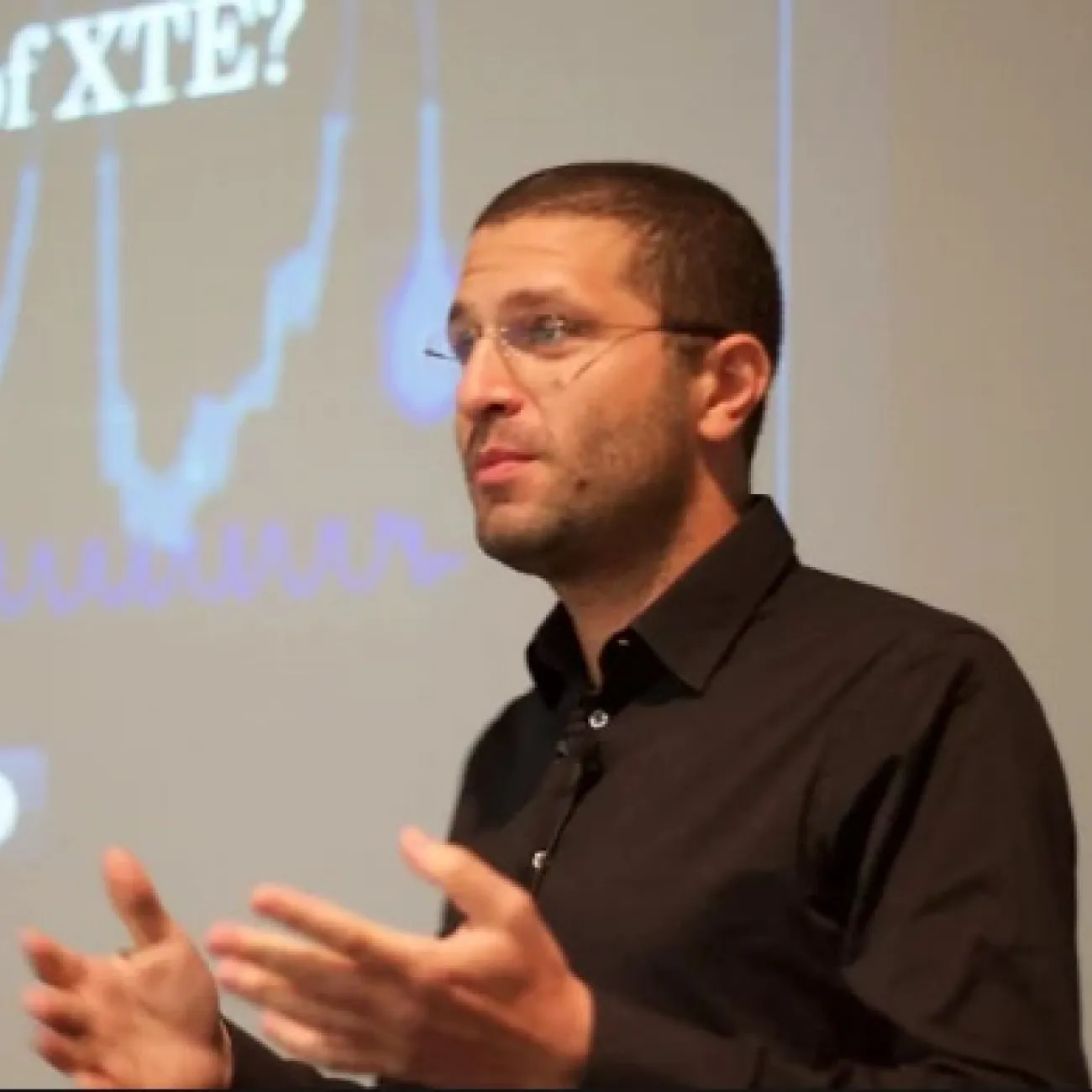
Dr. H.K. Vedantham is a Research Fellow at the Kapteyn Astronomical Institute , part of the Faculty of Science and Engineering at the University of Groningen . His work focuses on radio astronomy and astrophysics, particularly the study of exoplanets, brown dwarfs, and stellar systems through low-frequency radio observations and interferometric techniques. Research Interests: Radio astronomy of exoplanets and sub-stellar objects Stellar mass-loss and magnetic interactions Space weather phenomena Astrometric and radial velocity measurements Publications highlight his contributions to understanding radio emission mechanisms in exoplanetary systems, stellar magnetospheres, and dwarf galaxies. His work frequently involves collaborations using advanced instruments like LOFAR and VLBI networks. Contact: Email: h.k.vedantham@rug.nl Phone: +31 50 36 34073
Eun-Suk Seo is a Professor of Physics and member of the Institute for Physical Science and Technology (IPST) at the University of Maryland. Her research focuses on cosmic ray origins, acceleration, and propagation, with an emphasis on detecting exotic matter like antimatter and dark matter using balloon-borne and spacecraft instruments. She leads the CREAM collaboration and contributes to AMS, BESS, and ATIC projects. Key collaborations include the Alpha Magnetic Spectrometer (AMS) on the International Space Station, the Cosmic Ray Energetics and Mass (CREAM) program, and the Balloon-borne Experiment with a Superconducting magnet Spectrometer (BESS). Her work integrates advanced instrumentation design, such as the ISS-CREAM calorimeter, with numerical modeling to study cosmic ray spectra and interactions. Research interests span cosmic ray propagation mechanisms, spallation effects, and the role of supernova remnants and black holes as particle accelerators. Publications highlight analyses of lithium isotopes, antiprotons, and elemental composition using data from space-based experiments.
Ilaria Caiazzo is an Assistant Professor at the Institute of Science and Technology Austria (ISTA), where she conducts research in high-energy astrophysics, focusing on compact objects such as white dwarfs, neutron stars, and black holes. She earned her Ph.D. from the University of British Columbia and was a Burke-Sherman Fairchild Fellow at Caltech before joining ISTA. Her work integrates theoretical modeling with observational data from major surveys and space missions. B.Sc. in Physics, University of Genoa M.Sc. in Physics, Università degli Studi di Milano Ph.D. in Astrophysics, University of British Columbia Her research interests lie at the frontier of extreme physics in stellar environments. She investigates white dwarf evolution, X-ray polarization from neutron stars, gravitational wave sources, and stellar dynamics in globular clusters. Using data from missions like IXPE, Gaia, and JWST, she explores how compact objects serve as natural laboratories for fundamental physics. Her work often combines multi-wavelength observations with theoretical modeling to understand emission mechanisms, magnetic fields, and stellar evolution. The recent publications reflect a strong focus on observational astrophysics, time-domain surveys, and mission-driven science. Key themes include the use of Gaia and ZTF for stellar dynamics and binaries, IXPE for X-ray polarimetry, and the development of future missions like Colibrì. Her research spans both stellar remnants and broader cosmological implications, including LIGO follow-up strategies and planetary system evolution around dead stars. Ilaria Caiazzo is actively involved in science policy and education. She co-developed a framework for Canadian space mission funding and has taught advanced astrophysics courses. She also organized the Simulating Stars Summer School in Beijing, engaging nearly 100 students. While no formal scientific awards are listed, her leadership in the Colibrì mission and her outreach efforts highlight her impact beyond research. She leads the Colibrì mission concept as Project Scientist—a Canadian-led X-ray telescope initiative aiming for high spectral and timing resolution to probe neutron stars and black holes. She collaborates with international teams, including the IXPE mission scientists, and mentors students in astrophysics and data analysis. Her interdisciplinary work also extends to filmmaking, where she produces science-inspired art through her company Sukiyaki Studio.
Prof. Dr. Sıtkı Çağdaş İnam is a faculty member at Başkent University's Department of Electrical and Electronics Engineering. With a PhD in Physics from Middle East Technical University (2004), his research spans high-energy astrophysics, X-ray astronomy, and neutron star dynamics. His work focuses on timing analysis, spectral modeling, and accretion processes in X-ray pulsars, magnetars, and binary systems. Recent studies include observations of transient X-ray sources using RXTE and Swift satellites, with notable discoveries of glitches and quasi-periodic oscillations. 2022: Spectral analysis of 2S 1417-624 during its outburst 2021: Deep learning applications in voice pathology detection 2020: Comprehensive study of MAXI J1409-619 2019: Magnetar pulse frequency variability He has led multiple projects on X-ray binaries and magnetic field effects in neutron stars, serving on the Turkish Astronomical Association's board. His collaborations extend to international teams analyzing high-energy cosmic phenomena.
Julia Dusk Kennefick serves as Associate Professor and Department Chair in the Physics Department at the University of Arkansas' College of Arts and Sciences. A native Arkansan and University of Arkansas alumnus, she returned to her alma mater in 2003 after completing her Ph.D. at Caltech and postdoctoral work at Ohio State University and Oxford University. Education: B.S. in Physics (1989), University of Arkansas Ph.D. in Physics (1995), California Institute of Technology Research Focus: Dr. Kennefick's work centers on observational astronomy with emphasis on active galactic nuclei (AGN) and quasars . She investigates AGN-host galaxy relationships, conducts deep-space surveys for high-redshift quasars, and develops methods to measure supermassive black hole masses through spiral arm pitch angles. Her recent expansion into studying galaxy outskirts for dwarf galaxies and gamma ray bursts demonstrates her evolving research trajectory across extragalactic phenomena. Publication Trends: Analysis of her 15 most recent publications reveals a dominant focus on the black hole-galaxy connection , particularly how spiral structure metrics correlate with central black hole masses. Her methodological innovations in pitch angle measurement using Fourier decomposition have become influential, while her dual-AGN identification work addresses critical questions about galaxy mergers. The consistent use of multi-wavelength data (optical, infrared, UV) from global observatories underscores her observational approach. Scientific Recognition: Fulbright College Master Advisor Award (2023) Robert C. and Sandra Connor Endowed Faculty Fellowship (2007) National Science Foundation ADVANCE Fellowship (2004-2007) National Physical Science Consortium Graduate Fellowship (1989-1995) Kingsley Foundation Graduate Fellowship, Caltech (1992) Mentorship & Resources: As Master Advisor Award recipient, Dr. Kennefick actively guides student research including gamma ray burst studies. Her observational program leverages major facilities like Hubble Space Telescope, Palomar Observatory, and international telescopes across Chile, Hawaii, and Australia. Fellowship support from NSF and Caltech provided critical early-career resources for her survey work. Collaborative Framework: Leading the Arkansas Center for Space and Planetary Sciences, she coordinates observational campaigns involving international teams. Her research group frequently collaborates with her husband (also Physics Professor at UARK) and institutions including Ohio State and Oxford, while utilizing data from space telescopes like Spitzer and GALEX for multi-spectral analysis.
Inés Pastor-Marazuela is a Rubicon Research Fellow at the Jodrell Bank Centre for Astrophysics, University of Manchester, UK. She specializes in radio astronomy with a focus on Fast Radio Bursts (FRBs) and neutron star research. PhD in Astrophysics from University of Amsterdam (2022) Master's in Physics from Université Paul Sabatier (2018) Her research explores: FRB origins and emission mechanisms Neutron star connections to transients Radio transient detection techniques Multi-wavelength follow-up observations Galactic and extragalactic magnetic fields Statistical analysis of burst populations Recent work involves MeerKAT and Apertif telescope observations, with publications on FRB galactic localization, neutron star bursts, and transient discovery methodologies. Scientific awards: Rubicon Research Fellowship recipient Active in transient detection algorithms and international collaborations like MeerTRAP. No student advisory roles mentioned.
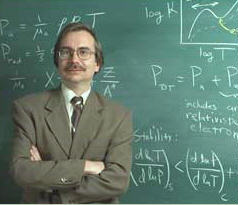
Lorne A. Nelson is a Professor of Physics at Bishop's University, where he joined as an Assistant Professor in 1988 and was promoted to full Professor in 1998. He has served as Chair of the Physics Department during two separate terms (1996-1998 & 1999-2001). His research focuses on the theoretical aspects of stellar evolution, particularly in binary systems containing compact objects such as white dwarfs, neutron stars, and black holes. Nelson received his Ph.D. from Queen's University in 1984. He subsequently held a postdoctoral fellowship at MIT's Center for Space Research, where he conducted pioneering work on brown dwarfs. From 1986-1988, he was a research fellow at CITA (Canadian Institute of Theoretical Astrophysics). Professor Nelson's research interests center on interacting binary stars, Type Ia supernovae, millisecond pulsars, and brown dwarfs. His work provides insights into the formation and evolution of binary systems, with applications to understanding dark matter, testing general relativity, and explaining exotic astronomical phenomena. He employs population synthesis and stellar evolution techniques to develop self-consistent models of binary evolution that can be tested against observational data from instruments like HST, Chandra, and Keck. Analysis of Nelson's publication record reveals a consistent focus on binary stellar evolution across four decades. His work demonstrates progression from foundational studies of brown dwarfs and very low-mass stars to sophisticated modeling of binary millisecond pulsars, cataclysmic variables, and Type Ia supernova progenitors. A recurring theme is the development of theoretical frameworks that connect stellar evolution with observable phenomena, particularly through population synthesis techniques that bridge theoretical predictions with observational constraints. Canada Research Chair in Astrophysics (2002) William & Nancy Turner (Chancellor's) Teaching Award (1996) Invited Contributor to Nature's News & Views (1995) Reinhardt Fellowship from CITA (1999) Invited Review Speaker at multiple international conferences Professor Nelson has advised numerous graduate students who have gone on to successful careers in academia and industry, including Kirk Buckley (NSERC PDF at Berkeley), Chris Burns (Assistant Professor at Swarthmore), and Drew MacCannell (PhD student at UCSD). His research has been supported by significant grants including the Canada Foundation for Innovation, NSERC, and the Ministère de la Recherche, de la Science et de la Technologie of Quebec. Nelson collaborates extensively with researchers at MIT, UCSB, Northwestern, and other institutions worldwide. Nelson leads the Bishop's University Interacting Binary Evolution Server, a valuable resource for the international astrophysics community that provides evolutionary tracks for low-mass interacting binaries. He also co-developed the Elix2 Beowulf cluster in collaboration with the Université de Sherbrooke, creating a high-performance computing environment for theoretical astrophysics research. His team produces detailed animations of binary evolution that serve both research and educational purposes.
Robert J. Nemiroff , University Professor of Physics at Michigan Technological University's College of Sciences and Arts , is a distinguished astrophysicist and Fellow of the American Physical Society. Known for co-creating the Astronomy Picture of the Day (APOD) in 1995 and founding the Astrophysics Source Code Library (ASCL) in 1999, he has significantly advanced open science and public engagement. His research spans gamma-ray bursts, gravitational lensing, and cosmological constraints, with a focus on relativistic effects and observational innovation. Education PhD in Astronomy and Astrophysics, University of Pennsylvania Research Interests Nemiroff's work explores gamma-ray bursts as cosmological probes, gravitational lensing phenomena, and relativistic illumination fronts to orient nebulae. He pioneered CONCAMs , fisheye cameras deployed globally for all-sky monitoring, and investigated unconventional ideas like ultralight energy and dark energy-Higgs connections . His recent studies include Cherenkov radiation coherence and AI-generated astronomical imagery. Scientific Awards NSF CAREER Award (1997) MTU Research Award (2012) MTU University Professor (2021) Exceptional Graduate Mentor Award (2021) Advising and Grants Mentoring eight PhD students, including Bijunath Patla (Harvard) and Lior Shamir (Lawrence Tech), Nemiroff emphasized collaborative research. His NSF-funded projects included deploying CONCAMs at major observatories and developing the ASCL, which now lists 2600+ codes. He also led interdisciplinary efforts to post free online courses like 'Physics X' and 'Astro 101'. Labs and Teams He led the Night Sky Live (NSL) project, creating a global network of fisheye cameras for cloud and transient monitoring. The ASCL, now housed at MTU, remains a critical resource for code transparency. His work often involved partnerships with NASA, Kitt Peak, and institutions in Thailand, Chile, and Israel.
Maria Charisi is an Assistant Professor in the Department of Physics and Astronomy at Washington State University (WSU). She holds a BSc in Physics from Aristotle University of Thessaloniki (Greece) and a PhD in Astronomy from Columbia University. Prior to her current role, she was a NANOGrav Fellow at Caltech (2017-2020) and a VIDA Fellow at Vanderbilt University (2020-2023). She is a research fellow at the Institute of Astrophysics (Foundation for Research and Technology–Hellas, University of Crete). Her research focuses on supermassive black hole binaries (SMBHBs), multi-messenger astrophysics, and gravitational-wave astronomy. She leverages pulsar timing arrays (PTAs), electromagnetic time-domain surveys, and machine learning to study SMBHBs. She is a member of the NANOGrav Collaboration, International Pulsar Timing Array, LISA Consortium, and LSST AGN Science Collaboration. Charisi has been awarded an ERC Starting Grant (2023) and has secured over $234,800 in grants, including telescope time on the Hubble Space Telescope, Chandra X-ray Observatory, and Las Cumbres Observatory. She has mentored numerous students, including graduate and undergraduate researchers, and has been recognized with awards such as the Hartle Award (2016) for best student presentation on Pulsar Timing Arrays. Her teaching roles include instructor for the VIPER Summer School on PTA GW Astrophysics and guest lectures at UC Berkeley and Columbia University. She actively participates in mentoring programs, including Women Mentoring Women at Caltech and initiatives at Columbia University.
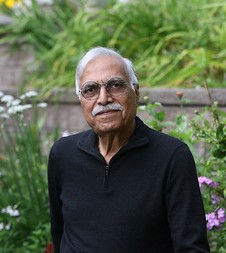
Rajendra Gupta is an Assistant Professor in the Department of Physics at the University of Ottawa. His research focuses on astrophysics, cosmology, and general relativity, with an emphasis on evolving physical constants, the dynamics of the universe, and observations using facilities like the James Webb Space Telescope (JWST). He holds a PhD in Physics from the University of Allahabad, India, and has been affiliated with institutions including the National Research Council of Canada, McGill University, and the University of Manitoba. His research interests include cosmological models beyond the standard framework, analysis of cosmic microwave background (CMB) data, baryon acoustic oscillations (BAO), and dark matter/energy studies. He actively explores how variations in fundamental constants (e.g., gravitational constant, fine-structure constant) impact astrophysical phenomena such as supernova luminosity, quasar spectra, and early universe conditions. His recent publications (2020–2024) investigate topics like CCC+TL cosmology, JWST observations of the early universe, and constraints on varying constants using quasars and gravitational lensing. He also contributes to metrology through experiments like inertial mass measurement with Kibble balances. Dr. Gupta teaches astrophysics at both undergraduate and graduate levels and maintains an active research program analyzing observational data from cutting-edge telescopes and theoretical models. His work bridges theoretical cosmology with experimental astrophysics, addressing longstanding questions like the lithium problem and the faint young Sun paradox.
Professor Diego Altamirano is a faculty member at the University of Southampton, affiliated with the Department of Physics and Astronomy within the Faculty of Physical Sciences and Engineering. His research focuses on high-energy astrophysics, particularly X-ray binaries, black holes, and accreting compact objects. He leads or co-leads multiple research projects funded by the Royal Society and STFC, including studies of black hole X-ray binaries and accretion processes. His work utilizes advanced facilities like NICER, JWST, and XMM-Newton. Professor Altamirano has supervised numerous PhD students in areas such as astrophysics and physics. He holds a Royal Society University Research Fellowship and has published extensively in journals like Monthly Notices of the Royal Astronomical Society and The Astrophysical Journal. His research group collaborates with institutions globally, contributing to cutting-edge studies of accretion disk dynamics and compact object behavior.
Ann Marie Schmiedekamp is a Professor in the Division of Engineering and Science at Penn State University Abington campus. With an h-index of 23 and 2951 citations, she is a prominent researcher in gravitational-wave astronomy and pulsar timing arrays. Her work primarily focuses on using pulsar timing to detect gravitational waves in the nanohertz frequency range. Dr. Schmiedekamp's research interests center around gravitational-wave detection through pulsar timing arrays, particularly with the North American Nanohertz Observatory for Gravitational Waves (NANOGrav). Her expertise spans gravitational-wave background analysis, pulsar timing techniques, statistical methods for signal detection, and the astrophysical implications of gravitational-wave observations. She has made significant contributions to understanding supermassive black hole binaries and cosmic string signatures through gravitational-wave data. Her recent publications (2023-2025) demonstrate a strong focus on the NANOGrav 15-year data set, with multiple papers analyzing different aspects of the gravitational-wave background detection. These works cover spectral index analysis, pulsar selection methods, data validation techniques, and the properties of the detected signal. The research shows a progression from detection to detailed characterization of the gravitational-wave background. 23 h-index with 2951 citations Active participant in NANOGrav collaboration Significant contributions to gravitational-wave background detection Dr. Schmiedekamp serves as Co-Principal Investigator on two major National Science Foundation projects: the NANOGrav Student Teams of Astrophysics Researchers Undergraduate Pathways (STARS-UP) focusing on community college transitions in astrophysics, and the Sustainable Summer Bridges project for underrepresented engineering students. These projects highlight her commitment to education and diversity in STEM fields. She is actively involved in the NANOGrav collaboration, contributing to the infrastructure for undergraduate research in gravitational-wave astronomy. Her work bridges cutting-edge research with educational initiatives, particularly focusing on creating pathways for students from two-year to four-year institutions.
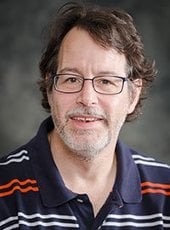
Bradley W. Carroll is a Professor in the Department of Physics at Weber State University. His primary affiliations include academic leadership in astrophysics education and research, with significant contributions to theoretical astrophysics and physics pedagogy. He has co-authored seminal textbooks in astrophysics and developed educational software used in physics instruction globally. Carroll's research spans stellar pulsations, neutron star physics, accretion disk dynamics, and computational astrophysics. He maintains active interests in physics education innovation, particularly through multimedia tools and simulations. His work consistently bridges theoretical astrophysics with practical teaching methodologies, enhancing astronomy education at multiple levels. His publication portfolio demonstrates a strong focus on stellar phenomena, pedagogical advancements, and computational applications. Recent works emphasize integrating technology into physics education while maintaining foundational research in variable stars and compact objects. The interdisciplinary nature of his output connects astrophysics, computational modeling, and educational theory. Carroll actively contributes to academic outreach through public lectures on topics ranging from Archimedes' achievements to modern astrophysics. He maintains collaborations with educational software developers and participates in physics education research conferences.
Mark Wardle is a Professor and Honorary Professor in the School of Mathematical and Physical Sciences at Macquarie University, affiliated with the Astrophysics and Space Technologies Research Centre. He holds a PhD from Princeton University and has held academic positions at institutions including the University of Chicago, Northwestern University, and the University of Sydney. His primary research focuses on theoretical astrophysics, particularly astrophysical fluid dynamics, interstellar medium physics, and phenomena related to the Galactic Centre, including star/planet formation and accretion disc dynamics. Education: BSc(Hons) in Mathematics/Physics (University of Auckland), PhD in Astrophysics (Princeton University). Teaching spans undergraduate to PhD levels in physics and astronomy. Research interests emphasize the physics of accretion discs, star formation processes, and the environment around the supermassive black hole at the Galactic Centre (Sgr A*). Key contributions include studies of synchrotron radiation in molecular clouds, radio pulsar interactions, and multiwavelength observations of Sgr A* variability. Active projects include 'DP24: Cosmic Renaissance' (planet formation around dying stars), 'Earthly Astro-biology' (marine animal classification), and leadership roles in the Macquarie University Planetary Research Centre and MQAAAstro Research Centre. Labs/Teams: Leads interdisciplinary astrophysics teams at Macquarie, collaborating on projects like Galactic Centre dynamics and planetary formation. Involved in observational initiatives using facilities like ALMA, VLA, and JWST.
Olaf Reimer is a Full Professor at the Institute for Astro- and Particle Physics , University of Innsbruck, where he leads research in astroparticle physics and high-energy astrophysics. He is a key member of major international collaborations including H.E.S.S., Fermi-LAT, and the Cherenkov Telescope Array (CTA), focusing on very-high-energy gamma-ray sources such as pulsar wind nebulae, supernova remnants, gamma-ray binaries, and active galactic nuclei. Institution: University of Innsbruck School: Faculty of Mathematics, Computer Science and Physics Department: Institute for Astro- and Particle Physics Position: Full Professor Email: olaf.reimer@uibk.ac.at His research spans cosmic-ray acceleration, nonthermal emission processes, and multi-messenger astrophysics. He has made significant contributions to the understanding of particle acceleration in extreme environments, using data from ground-based and space-borne observatories. His work often integrates theoretical modeling with observational data to probe fundamental physics, including dark matter searches and Lorentz invariance violation. Over the past several years, Reimer has co-authored numerous high-impact publications in journals such as Nature , Science , Astronomy & Astrophysics , and The Astrophysical Journal . His recent work emphasizes the physics of galactic particle accelerators, gamma-ray binaries like Eta Carinae and PSR B1259-63, and the development of future observatories like CTA. The articles reflect a strong focus on time-domain astrophysics, spectral analysis, and multiwavelength campaigns. He has served as an editor for Astroparticle Physics (2013–2024) and Journal of High Energy Astrophysics (2016–2023), demonstrating leadership in the scientific community. He regularly presents at international conferences, including invited and keynote talks on topics such as galactic high-energy accelerators and CTA science prospects. Editor - Astroparticle Physics (2013–2024) Editor - Journal of High Energy Astrophysics (2016–2023) Workshop Chair, Variable Galactic Gamma-Ray Sources VI (2023) Chair, TAUP2023 Plenary Session (2023) Reimer mentors several students and collaborators, including Guillem Marti-Devesa, Ralf Kissmann, and Julia Thaler. He is involved in public outreach, giving lectures on cosmic rays and astrophysics. There is no indication of retirement or former status; he remains an active and leading figure in high-energy astrophysics.