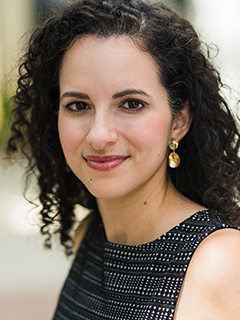
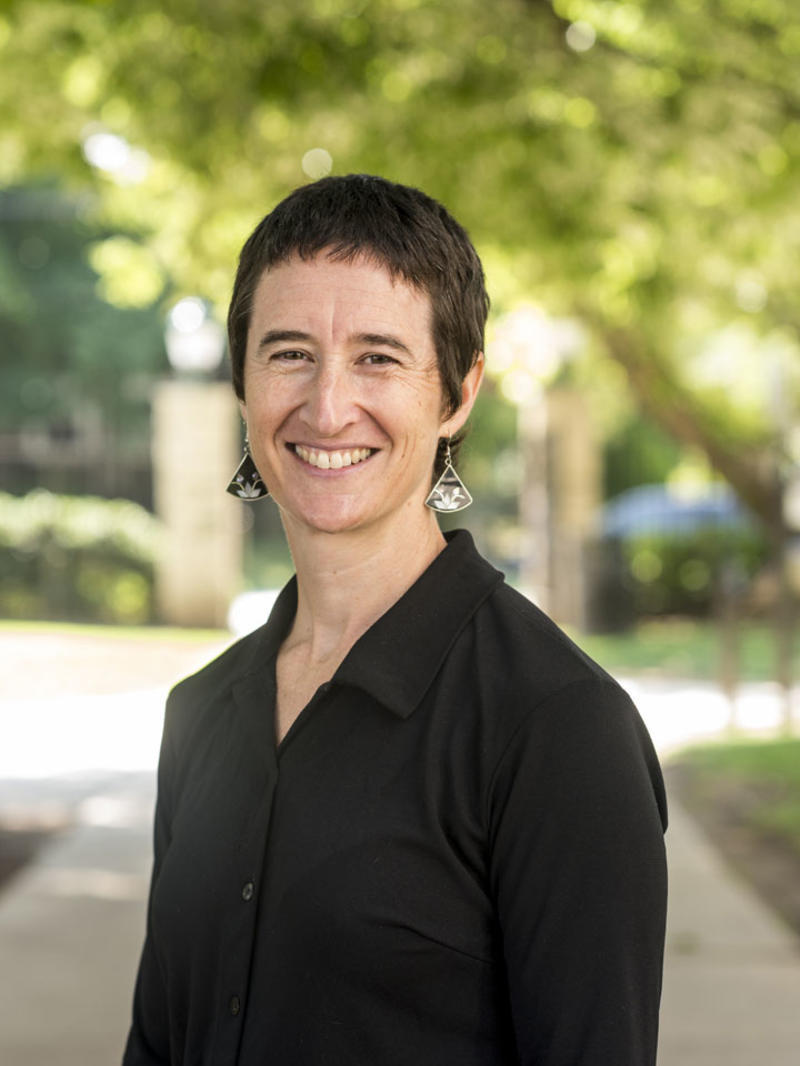
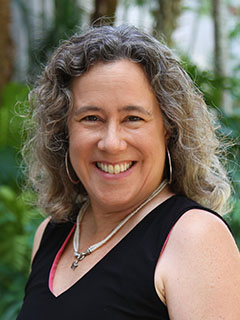
Marysol Quevedo is an Associate Professor at the University of Miami's Frost School of Music, specializing in musicology with a focus on Cuban and Puerto Rican musical cultures. Her research explores intersections between music, politics, and identity in post-revolutionary Cuba and the Caribbean diaspora. Research Themes: Cuban avant-garde music and revolutionary ideology Film music analysis (e.g., Leo Brouwer's scores) Cultural diplomacy through symphonic institutions Puerto Rican music historiography Public ethnomusicology and community engagement Publication Trends: Analyzes Cuban composers' negotiation of socialist values with global artistic movements, emphasizing music's role in ideological narratives through film scores, symphonic programming, and diasporic cultural preservation.
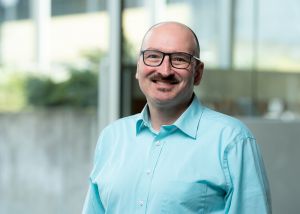
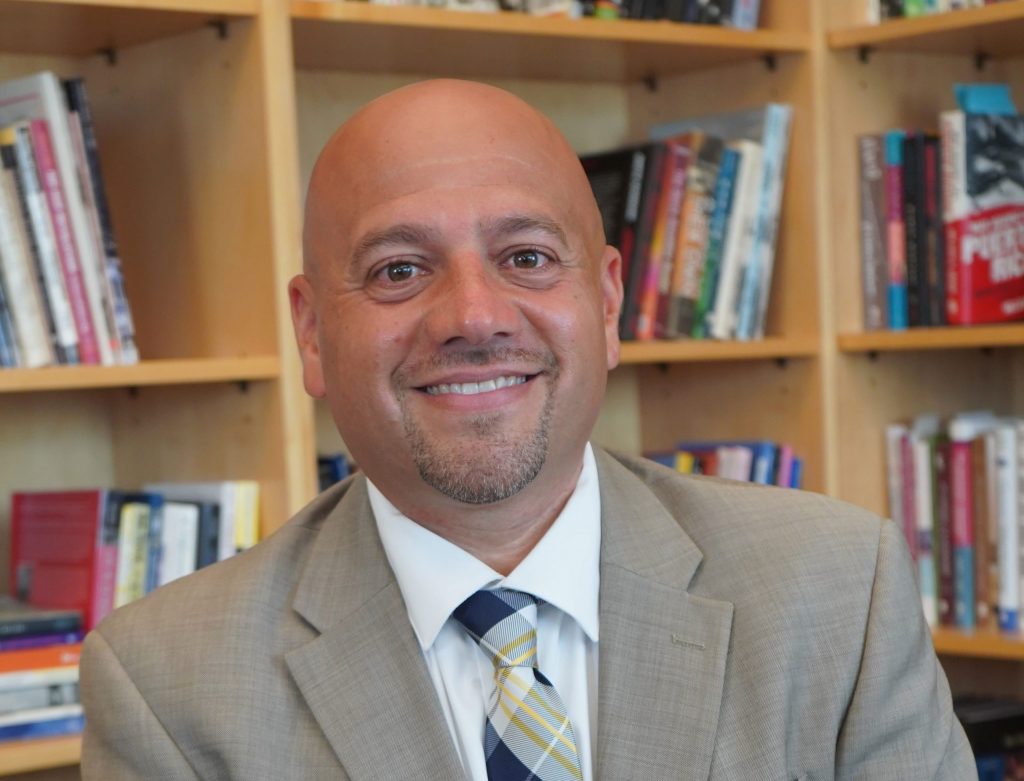
Gustavo J. Bobonis is a Professor in the Department of Economics at the University of Toronto, with affiliations at the Munk School of Global Affairs and Public Policy. He holds a Ph.D. from the University of California, Berkeley (2005) and a B.A. from the University of Puerto Rico at Rio Piedras (2000). He co-directs the Forward Society Lab and is actively involved in research on development, labor, political economy, and economic history. Research Interests: His work focuses on development economics, particularly the impact of public policies on poverty, violence, education, and governance. He employs rigorous empirical methods, including field experiments and quasi-experimental designs, to analyze issues such as intimate partner violence, corruption, clientelism, and human capital accumulation. His research is geographically concentrated in Latin America and Puerto Rico. Recent Research Trends: His recent publications and working papers (2022–2025) demonstrate a strong focus on institutional reform, including anti-corruption audits, domestic violence courts, and education management. He also investigates long-term social impacts of welfare programs and climate adaptation strategies. His interdisciplinary approach bridges economics, public policy, and social science. Scientific Awards: U of T Department of Economics Faculty Award for Excellence in Undergraduate Teaching, 2015 John C. Polanyi Prize in Economic Science, 2009 National Academy of Education / Spencer Foundation Postdoctoral Fellow, 2008 Advising and Grants: While specific student names are not listed, he advises graduate students through the Honours Essay and research workshops. He leads collaborative research projects funded through grants and affiliations with J-PAL and BREAD, often involving large interdisciplinary teams. His work includes randomized evaluations and long-term follow-ups, suggesting sustained funding and research support. Labs and Teams: He co-directs the Forward Society Lab, which likely supports policy-relevant research on social development. He frequently collaborates with economists such as Paul Gertler, Marco Gonzalez-Navarro, Simeon Nichter, and Luis R. Cámara Fuertes. His affiliations with J-PAL and BREAD indicate integration into major global research networks focused on development and poverty alleviation.
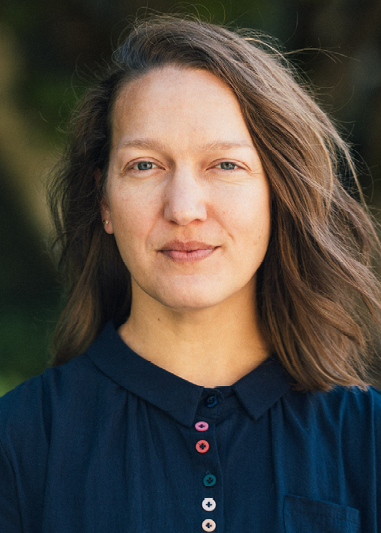
Jose Luis Belmonte Postigo is an active researcher and faculty member at the University of Seville, specifically in the Department of American History within the Faculty of Philosophy, Arts and Humanities. His academic career spans over a decade, with research activity documented from 2010 to the present. He earned his doctorate from the Pablo de Olavide University with a thesis on slavery in Santiago de Cuba (1780-1803), supervised by Dr. Juan Marchena Fernández. Belmonte Postigo's research focuses on the history of slavery in the Spanish Caribbean and Latin America, with particular attention to Cuba, Puerto Rico, Peru, and the broader Atlantic World. His work examines the social, economic, and cultural dimensions of slavery, including enslaved people's resistance strategies, social mobility, and the complex relationships between masters and slaves. He has conducted extensive research on how enslaved individuals navigated systems of power, sought freedom, and maintained cultural practices across the colonial period. His publications reveal a strong interest in the microhistories of enslaved individuals and communities, analyzing how they negotiated their circumstances within rigid colonial structures. Belmonte Postigo has made significant contributions to understanding the regional variations of slavery across the Spanish Empire, particularly examining how local contexts shaped slave societies in different parts of the Caribbean and Latin America. Belmonte Postigo has received recognition for his scholarly work, with a substantial following on academic platforms like Academia.edu where he has 938 followers. He collaborates with scholars across Latin America and Spain, contributing to edited volumes and participating in international research projects focused on slavery and colonial history. In addition to his research, Belmonte Postigo has demonstrated commitment to academic service through peer reviewing and contributing to scholarly journals. His expertise in colonial slavery has positioned him as a key contributor to ongoing scholarly conversations about the legacy of slavery in Latin America and the Caribbean.
Juan Eduardo Wolf is an Associate Professor of Ethnomusicology at the University of Oregon's School of Music and Dance. He holds a PhD in Folklore and Ethnomusicology from Indiana University (2013), alongside degrees in Chemical Engineering and Art Studio from prestigious institutions. His research focuses on music-dance traditions of Afro-descendant and Indigenous communities in Latin America and the Caribbean, exploring decolonial methodologies and cultural equity. He directs the Latin American Studies Program and coordinates the World Music Series, which hosts global music performances. His awards include grants from UO's Center for Latin American and Latinx Studies (2018) and Global Oregon (2018). Wolf teaches courses like Decolonizing Music, Music in World Cultures, and directs World Music Ensembles focusing on Andean and Puerto Rican traditions. His research examines how marginalized groups use music-dance to resist colonial legacies, with fieldwork in Chile, Puerto Rico, and Bolivia. He is a core faculty member in Folklore and Public Culture Programs and advises on Latinx Studies initiatives. Notable publications include Styling Blackness in Chile (2019), analyzing Afro-Chilean music-dance, and Un Tumbe Ch’ixi (2021), integrating Afro-descendant ideas into Andean methodologies. His work challenges colonial frameworks and advocates for socially just music science practices. He performs as a percussionist/guitarist in global ensembles and mentors students through experiential learning.
Verónica Loureiro-Rodríguez is an Associate Professor in the Department of Linguistics at the University of Manitoba's Faculty of Arts. Her research focuses on sociolinguistics, language identity, and code-switching, with special attention to global hip hop and multilingual communities. She holds a PhD from the University of California, Davis, an MA from the University of Colorado at Boulder, and a BA from the Universidade de Santiago de Compostela. Dr. Loureiro-Rodríguez's work examines language attitudes across diverse contexts, including French-English dynamics in Manitoba, Spanish-Valencian bilingual processing, and code-switching in music. She has also explored language use in robotics and cultural hybridity among Puerto Rican and Mexican communities. Her teaching excellence was recognized with the 2021 Faculty of Arts Teaching Excellence Award. Education: PhD (UC Davis), MA (CU Boulder), BA (USC) Awards: 2021 Teaching Excellence Award (Established Faculty) Research Focus: Language policy, digital sociolinguistics, and cultural identity She currently supervises graduate students in Master's and PhD programs, focusing on sociolinguistic methodologies like the matched-guise technique. Her research often intersects with music studies, robotics, and diaspora linguistics.
Elaine M Shenk is a Professor of Spanish and Chair of the Department of Languages and Linguistics at Saint Joseph's University. Her work focuses on sociolinguistic phenomena in language contact settings, emphasizing language ideologies, bilingualism, and policy debates across Puerto Rico and the United States. Education : PhD in Spanish-Linguistics from the University of Iowa; MA in Spanish-Linguistics from the University of New Mexico; BA in Liberal Arts from Eastern Mennonite University. Her research explores the symbolic values and political dimensions of language contact, with a focus on Puerto Rican communities, U.S. legislative discourse, and educational contexts. She examines metaphors in language-status dynamics, sociolinguistic variation in intermediate classrooms, and the historical evolution of language policies in Congressional bills. Recent publications address language ideologies in Puerto Rican migration, metaphors in language debates, and policy frameworks. These works span sub-fields like language legitimation campaigns, bilingual education strategies, and discourses on protectionism versus receptivity in language officialization. Scientific Awards : 2019 Ed Brady SJ Faith in Action Award 2019 Alpha Sigma Nu Teaching Award 2016 Honorable Mention, AATSP Outstanding Scholarly Publication Award Multiple research grants including the Michael J. Morris Grant (2014) Service-learning and curriculum development grants (2012-2010)
Jason G. Irizarry serves as Dean and Professor at the University of Connecticut's Neag School of Education, with affiliations in El Instituto: Institute for Latina/o, Caribbean and Latin American Studies. Holding an Ed.D. from the University of Massachusetts-Amherst, his scholarship centers on urban teacher preparation and Latino/a student experiences. Irizarry's research explores strategies to increase teacher diversity, culturally responsive pedagogies, and youth participatory action research methodologies. His award-winning book The Latinization of U.S. Schools examines successful teaching in shifting cultural contexts. His publications analyze Latinx indigeneity in urban schools, college choice patterns among Puerto Rican students, and educational responses to diaspora communities post-Hurricane María. Current work investigates historical perspectives in Chicanx/a/o and Puerto Rican Studies.
Agnes Lugo-Ortiz serves as Associate Professor of Latin American Literature in the Department of Romance Languages and Literatures at the University of Chicago's Division of the Humanities. Her scholarly profile centers on nineteenth-century Latin American literatures and Caribbean cultural histories within transatlantic frameworks of modernity, with particular emphasis on slavery, visual culture, and archival epistemology. Her educational foundation includes a PhD from Princeton University (1990), followed by teaching appointments at Northwestern University and Dartmouth College before her tenure at Chicago. Her research trajectory examines cultural politics through lenses of national identity formation, anti-colonial projects, and diasporic community reconfigurations, notably through decades of affiliation with the Recovering the U.S. Hispanic Literary Heritage Project. Lugo-Ortiz's current book project "The Plantation Gaze: Slavery and Visual Culture in Colonial Cuba (1727–1886)" interrogates the imbrication of visual culture with plantation slavery, analyzing diverse artifacts from religious performances to medical treatises. Her co-edited volume "Slave Portraiture in the Atlantic World" and co-founding of the Working Group on Slavery and Visual Culture (2016) demonstrate her leadership in visual studies of enslavement, recently expanded through the digital exhibit "Palimpsests: Visual Idioms of Enslavement in the Nineteenth-Century and Their Afterlives". Her scholarly impact is recognized through awards including the Latin American Studies Association Prize for Best Essay in Nineteenth-century Studies and the Premio Alejandro Tapia y Rivera. Prestigious fellowships from Ford Foundation, Mellon Foundation, Franke Institute, and Clark Art Institute have supported her research. As co-founder and co-editor of the anti-colonial digital journal "Categoría Cinco. Revista de Política y Cultura", she actively engages Puerto Rican decolonial politics. Her editorial service spans PMLA and University of New England Press publications, while advisory roles include the Recovering the US Hispanic Literary Heritage Project and Hemispheric Institute of Performance and Politics. She maintains robust institutional engagement through affiliations with Chicago's Center for Latin American Studies, Center for Gender and Sexuality Studies, and Center for Race, Politics, and Culture.
Abigail McEwen is an Associate Professor of Latin American Art in the Department of Art History and Archaeology at the University of Maryland, College of Arts and Humanities (ARHU). She is an affiliate faculty member of the Latin American and Caribbean Studies Center. Education: Ph.D. in Art History, Institute of Fine Arts, New York University (2010) Her research centers on modern and contemporary art in the Americas, with a focus on Cuba and Puerto Rico. She explores transnational abstraction, postwar avant-garde movements, and the intersection of art and political change. Her teaching includes courses on modern Latin American art, transatlantic dialogues, and contemporary Latino art. Recent publications and curatorial projects, such as Revolutionary Horizons: Art and Polemics in 1950s Cuba (2016) and Concrete Cuba: Cuban Geometric Abstraction from the 1950s (2016), highlight her interest in abstraction’s role in political modernity and inter-American artistic networks. In 2022, she co-curated RE•CAST , a sculptural exhibition at the Art Museum of the Americas. Scientific Awards: Metropolitan Museum of Art grant Dedalus Foundation fellowship Graduate School grant at University of Maryland Latin American Studies Association funding Ford Foundation funding She directs the Carillon Art and Activism Community and contributes to initiatives like the Michelle Smith Collaboratory for Visual Culture. Her work appears in publications such as American Art , Art Nexus , and exhibition catalogs.
Tamara L. Mitchell is an Assistant Professor of Spanish at the University of British Columbia, located in Vancouver. She is affiliated with the Department of French, Hispanic and Italian Studies within the Faculty of Arts. Her research focuses on 20th- and 21st-century Latin American literatures and cultures, with a particular emphasis on Mexican and Central American narrative fiction. She explores the intersections of aesthetics, politics, and literary tradition under advanced capitalism, as well as sound studies, political philosophy, and border/diaspora studies. Education: Ph.D., Latin American Literatures, Indiana University (2019) M.A., Spanish Literature, University of Kansas (2009) B.A., English Literature and Spanish, Washburn University (2006) Research Interests: Her work examines postnational literary forms in the neoliberal present, with current projects including a monograph on Novel Distortions: Postnational Form in Mexican and Central American Narrative and a second project on sound and extraction in Mexican literature. She co-edited a special issue on 'Latin American Literary Aurality' and has been commissioned to write a thematic review on Latin American sound studies. Awards and Grants: SSHRC Insight Grant (2024–2029) Dean of Arts Graduate Mentorship Award (2023) Hampton New Faculty Research Grant (UBC) Multiple SSHRC and travel grants Teaching and Mentorship: She teaches courses on Latin American literatures and cultures, and has mentored undergraduate and graduate researchers. Currently not accepting new graduate students. Labs/Teams: Organized conferences and workshops, including The Sounds of Latin American Literature (2022) and co-founded panels on sound studies and Latin American literature at international conferences.
Jaime Rodriguez Matos is an Assistant Professor in the Department of Modern and Classical Languages and Literatures at California State University, Fresno, where he has been employed since 2018. His academic career includes prior roles as Lecturer at Fresno State (2016-2018) and Assistant Professor at the University of Michigan (2007-2016). Education: Ph.D., Spanish and Portuguese, Columbia University M.Phil., Spanish and Portuguese, Columbia University M.A., Spanish and Portuguese, Columbia University B.A., Spanish Language and Literature, University of New Hampshire Rodriguez Matos specializes in Latin American poetry, nihilism, infrapolitics, and temporal theory. His work interrogates the intersections of philosophy and literary form, particularly focusing on the deconstruction of time in works by José Lezama Lima, Eduardo Lalo, and Álvaro García Linera. Current research explores neo-revolutionary rhetoric and anarchic political thought in Latin America. His published and forthcoming articles address themes such as Lacanian critiques of hegemony, the ontologies of the present, and the formless in Caribbean politics. Rodriguez Matos has presented at international conferences including the Latin American Studies Association and the University of California, Irvine Humanities Commons cluster. Selected Publications: Writing of the Formless: José Lezama Lima and the End of Time (Fordham University Press, 2017)
Ralph E Rodriguez is a Professor at Brown University , affiliated with both the American Studies and English departments. His work bridges Latinx literature , Chicano studies , and critical race theory , with over two decades of academic contributions. Education : PhD in English (1997) and BA in English (1992) from the University of Texas and Old Dominion University respectively Research focuses on ethnic expectations in literature , transnational identity , and border relations . Current projects analyze multilingual writers and creative non-fiction narratives. Funded by prestigious institutions like the NEH , Woodrow Wilson Foundation , and Cogut Center for the Humanities , he has published extensively on topics including Chicana/o identity , racial surfaces in graphic art , and assimilation critiques . His teaching awards from Brown, Penn State, and University of Texas highlight his commitment to pedagogy that merges radical love with critical analysis . Collaborations with scholars like Valeria Luiselli and affiliations with the American Studies Association and Latinx Studies Association underscore his influence in interdisciplinary fields. Scientific Awards & Fellowships MLA Best Book Prize (2006) Cogut Center Faculty Fellowship (2014) NEH Younger Scholar (1991) Phi Kappa Phi & Sigma Tau Delta honor society memberships Students engage through courses on Latinx cultural theory , creative non-fiction , and contemporary fiction , reflecting his dedication to community-building in academic environments. His radical love pedagogy emphasizes dialogue, positionalities, and equitable knowledge production across identity markers like race, class, and gender.
Elizabeth Garcia is a Clinical Associate Professor in the Department of Ethnic Studies at the University of Colorado Denver's College of Liberal Arts and Sciences. She teaches courses including Culture, Racism, and Alienation; Chicano/a and Latino/a History; Introduction to Ethnic Studies; and specialized topics in Latina Narratives and Feminisms. Her educational background includes: Ph.D. in Comparative Ethnic Studies from University of California, Berkeley M.A. in Comparative Ethnic Studies from University of California, Berkeley B.A. in American Civilization/Economics from Brown University Dr. Garcia is an interdisciplinary scholar whose work centers on representations of gender, race, and sexuality in Latina women's literature and Latinx Children & Young Adult literature. Her research examines how cultural memory, identity formation, and healing practices manifest in literary works by Puerto Rican and other Latinx women authors. She explores the intersections of feminist theory, diaspora studies, and cultural representation through close literary analysis. Her scholarly output demonstrates a consistent focus on Puerto Rican women's history and contemporary Latinx narratives. The publications reveal a progression from historical analysis of Puerto Rican women's literature to contemporary examinations of gender in Latinx children's and young adult literature. Her recent work shows increasing attention to feminist disobedience, healing narratives, and representations of spirituality in Latinx writing. Dr. Garcia has held previous faculty and administrative positions at Hunter College, Connecticut College, Wesleyan University, and the University of Florida before joining CU Denver. Her current book manuscript in progress, Malcriadas: Feminist Disobedience in Latinx Young Adult and Children's Literature , continues her exploration of gender representation in youth literature.
Professor Lisa Materson is a historian specializing in US women’s and gender history at the University of California, Davis. Her research focuses on women’s roles in social justice movements, particularly African American women’s political activism and anti-colonial solidarity. She was a postdoctoral fellow at Princeton University and a lecturer at Yale University before joining UC Davis. Her recent book Radical Solidarity: Ruth Reynolds, Political Allyship, and the Battle for Puerto Rico's Independence (2024) was named one of Ms. Magazine’s Best Feminist Books of the Year. Her work bridges historical analysis with public scholarship, including co-editing The Oxford Handbook of American Women’s and Gender History and leading projects like the Empire Suffrage Syllabus . Key research areas include Puerto Rican independence movements, African American electoral politics during Jim Crow, and transnational solidarity networks. Education & Early Career: Postdoctoral fellowship at Princeton, lecturer at Yale Public Engagement: Co-founder of the Empire Suffrage Syllabus and Women’s History in the Pacific West projects Collaborations: Co-editor with Ellen Hartigan-O'Connor Materson’s publications span monographs, handbooks, and peer-reviewed articles, emphasizing intersectional approaches to understanding race, gender, and colonialism in US history.
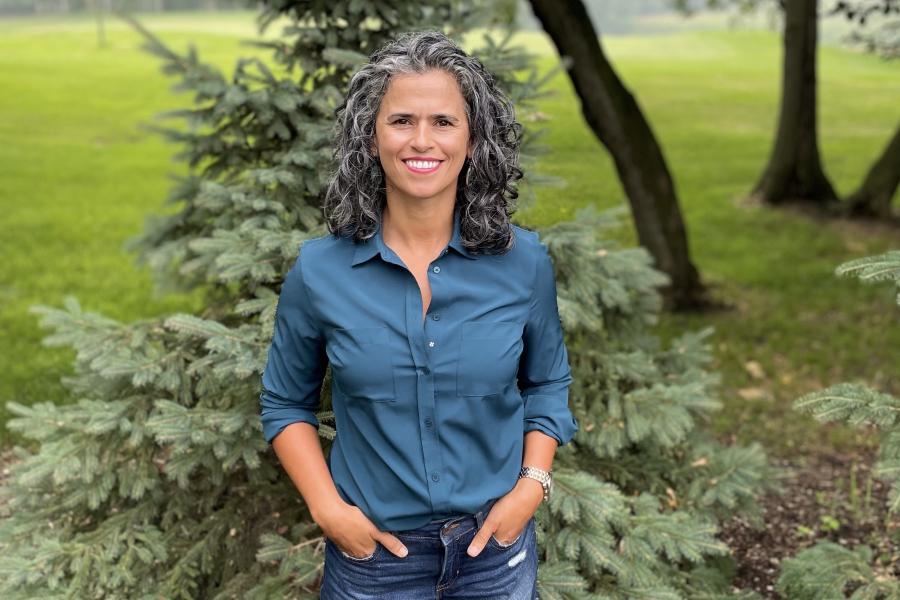
Professor Yolanda Martinez-San Miguel is a Marta S. Weeks Chair in Latin American Studies at the University of Miami 's College of Arts and Sciences , Department of Modern Languages and Literatures . She is an internationally recognized scholar in Colonial Latin American and Caribbean studies, with a focus on postcolonial theory, gender, sexuality, and migration. Ph.D., University of California at Berkeley (1996) M.A., University of California at Berkeley (1991) B.A., University of Puerto Rico, Summa cum Laude (1989) Her research interrogates colonial discourses, archipelagic methodologies, and decolonial frameworks across Caribbean and Latin American contexts. Recent projects include a book on comparative archipelagic studies from 1498-2010. She has co-edited anthologies on trans studies , critical Caribbean thought , and colonial Latin American archives . Scholarly awards include the Henry Rutgers Term Professorship in Hispanic and Latin@ Studies and a Postdoctoral Fellowship in Critical Caribbean Studies (2014-2015). Her teaching emphasizes comparative colonialities , queer Caribbean , and decolonial research methods . Decolonial Caribbean (2025) Queer Archipelagic (2024) Transatlantic Colonial Critique (2023)