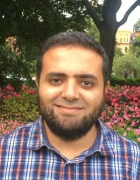
Rida Zia-ul-Mustafa is a Research Fellow at the Department of Mathematics, Physics and Electrical Engineering, Northumbria University. His research focuses on visible light communications (VLC), machine learning applications in telecommunications, and secure 5G mmWave systems. He explores quantum key distribution for VLC systems and develops novel positioning schemes leveraging LED technology. His work integrates physical layer security techniques such as SVD-based encryption with context-aware networking protocols. Recent contributions include machine learning-driven channel allocation for VLC and ambient light mitigation strategies in indoor positioning systems. He has also investigated smart city infrastructure leveraging machine learning-enabled systems. No scientific awards explicitly mentioned in the provided data. His publications span both hardware-oriented optical communications and software-defined networking approaches, with a focus on merging cybersecurity principles with emerging wireless technologies. Advising and grants details not available in current text.
Christian Schaffner is Professor in Theoretical Computer Science at the University of Amsterdam's Informatics Institute and group leader of the Theory of Computer Science (TCS) group. He serves as director of QuSoft, the Dutch center for quantum software, and chairs Quantum.Amsterdam. His research focuses on Quantum Cryptography , Cryptographic Protocols , and Quantum Information Theory , with significant contributions to post-quantum security and quantum-resistant algorithms. His publications span quantum homomorphic encryption, cryptographic protocols in quantum environments, and foundational work in the bounded-quantum-storage model. Key trends include Quantum-resistant cryptographic primitives Homomorphic encryption for quantum data Security in quantum random-oracle models Multi-party quantum computation Timestamping with verifiable delay functions Operational entropy in quantum contexts Scientific awards include NWO Gravitation Grant (2024) for Cyber Security NWO VIDI Grant (2015) Basiskwalificatie Onderwijs (2014) NWO VENI Grant (2010) Schaffner has advised PhD students Yfke Dulek, Stacey Jeffery, Christian Majenz, and Florian Speelman. His research involves collaborations with institutions like CWI Amsterdam, Simons Institute, and QuSoft, with grants from NWO and QuantERA.
Prof. Alanwar Amr is a Professor at the Chair of Cyber-Physical Systems within the TUM School of Computation, Information and Technology at Technical University of Munich (TUM). His research focuses on data-driven reachability analysis, security-assured reinforcement learning, and privacy-preserving estimation techniques using advanced mathematical frameworks like zonotopes. He holds a PhD from TUM and has held prior positions as an Assistant Professor at Jacobs University Bremen and a postdoctoral researcher at KTH Royal Institute of Technology. His work bridges formal verification, control theory, and cybersecurity in cyber-physical systems. Education: PhD in Automation and Control from TUM (under Prof. Althoff) Research Associate at UCLA and Engineer at Siemens/Morpho Research Interests: Data-driven formal verification methods Secure and resilient control systems Privacy-preserving set-based estimation Adversarial attack defense mechanisms His recent publications emphasize advancements in zonotope-based techniques for safety verification, privacy in distributed systems, and AI-driven control systems with formal guarantees. Key contributions include logical zonotopes for boolean function analysis and diffusion-based observers for multi-agent systems. Notable awards include the KTH Postdoctoral Fellowship, Qualcomm Innovation Fellowship finalist distinctions (2017/2018), and a best demonstration award at IPSN 2017. His work addresses critical challenges in autonomous systems, cybersecurity, and privacy in IoT environments.
Peter Schwabe is a scientific director at the Max Planck Institute for Security and Privacy (MPI-SP) in Bochum, Germany, and a part-time professor for cryptographic engineering in the Digital Security Group at Radboud University in Nijmegen, The Netherlands. He has held these positions while leading significant research initiatives in post-quantum cryptography and high-assurance cryptographic implementations. His research interests center on post-quantum cryptography, cryptographic engineering, and high-assurance crypto software. Schwabe's work focuses on developing and verifying cryptographic implementations that are resistant to side-channel attacks while maintaining high performance. He has made significant contributions to lattice-based cryptography, hash-based signatures, and the standardization of post-quantum cryptographic algorithms. His research bridges theoretical cryptography with practical implementation concerns, particularly for resource-constrained environments. Analysis of Schwabe's recent publications reveals a strong focus on post-quantum cryptography standardization, formal verification of cryptographic implementations, and protection against side-channel attacks. His work spans theoretical advances in cryptographic primitives, practical implementations for real-world systems, and tools for verifying the security properties of cryptographic code. A significant portion of his recent work relates to the CRYSTALS-Kyber standard selected by NIST, including formal verification of its security properties and implementation correctness. Schwabe has served as an elected member of the IACR Board of Directors, member of the IACR CHES Steering Committee, and member of the IACR RWC Steering Committee. He is also a member of the advisory boards of Bitmark Inc., PQShield, Neutrality, and SciEngines, demonstrating his influence in both academic and industry cryptographic communities. As an advisor, Schwabe has supervised numerous Ph.D. students working on various aspects of cryptography, including post-quantum cryptography, side-channel resistance, and formal verification of cryptographic implementations. His work on the EPOQUE project (Engineering post-quantum cryptography), funded by an ERC Starting grant from October 2018 to December 2023, demonstrates his leadership in advancing post-quantum cryptographic research. Schwabe leads research efforts at the intersection of formal methods and practical cryptography, with a particular emphasis on creating high-assurance cryptographic implementations that can withstand both theoretical and practical attacks. His work often involves collaboration with international teams across academia and industry to advance the state of the art in cryptographic engineering.
Li-Chiou Chen is a Professor and Interim Dean at the Seidenberg School of Computer Science and Information Systems, Pace University. Her work focuses on cybersecurity policy, user authentication, application security, and interdisciplinary IT auditing education. She leads the CyberCorps program funded by the National Science Foundation and multiple GenCyber initiatives with the National Security Agency. PhD in Engineering and Public Policy, Carnegie Mellon University (2003) MS in Engineering and Public Policy, Carnegie Mellon University (2000) MBA and BBA in Management Information Systems, National Chengchi University (1994, 1992) Her research integrates computational simulations, empirical studies, and educational tool development to address cybersecurity challenges. Current projects include the SWEET (Secure WEb dEvelopment Teaching) framework for secure web development education and policy analysis for biological attack response. She has received multiple Pace University research awards and served as principal investigator for federal grants exceeding $1 million in total funding. Key publications span top journals including Computer & Security , Decision Support Systems , and IEEE Transactions . Her work on DDoS defense economics, BioWar biological attack modeling, and IT auditing curriculum development demonstrates interdisciplinary breadth. Grants: NSF CyberCorps (2021-2026), GenCyber (2022-2024), DoD Cybersecurity Scholarship (2020-2023) Professional Service: Reviewer for Management Science , IEEE Security , and Decision Support Systems . Member of ACM, AIS, IEEE, and Westchester County Cybersecurity Task Force
Russell Impagliazzo is a Professor in the Department of Computer Science and Engineering at the Jacobs School of Engineering, University of California, San Diego, where he conducts foundational research in theoretical computer science. His work centers on Cryptography and Computational Complexity, with seminal contributions including the equivalence proof between one-way functions and pseudorandom generators, the framework of cryptographic "worlds" demonstrating strict inequivalence of primitives (e.g., one-way functions without public-key encryption), and the exponential-time hypothesis (ETH) characterizing problems resisting brute-force speedups. His collaboration with Avi Wigderson established critical links between circuit lower bounds and derandomization, showing that exponential circuit complexity for EXP problems implies P = BPP. Impagliazzo's research trends emphasize structural relationships in complexity classes and cryptographic feasibility, with subfields spanning average-case hardness, pseudorandomness, and fine-grained complexity. His theoretical frameworks remain highly influential in advancing computational hardness assumptions.
Yanping Zhang, PhD, is a Professor in the Department of Computer Science at Gonzaga University, specializing in network security, wireless sensor networks, and bio-computing. Her work bridges cybersecurity, IoT, and telemedicine systems. Ph.D., University of Alabama (2012) M.B.A., Gonzaga University (2023) M.S., University of Alabama (2009) Research focuses on Medium Access Control (MAC) layer optimization in wireless sensor networks, intrusion detection, and cybercrime prevention, with applications in underwater networks, cloud computing, and telemedicine. Recent publications explore secure key distribution, anomaly detection, and health system encryption. Her scientific award highlights include receiving the Outstanding Dissertation Award during her doctoral studies.
Michalis Polychronakis is a Professor in the Computer Science Department at Stony Brook University. He received his BSc (2003), MSc (2005), and PhD (2009) degrees in Computer Science from the University of Crete, Greece, while working as a research assistant in the Distributed Computing Systems Lab at FORTH-ICS. Prior to joining Stony Brook, he was an associate research scientist at Columbia University. His research focuses on computer security, with particular emphasis on system security, network security, privacy, and anonymity. He has made significant contributions to memory safety, software vulnerabilities, malware analysis, and internet censorship measurement. His work spans both theoretical foundations and practical implementations, often resulting in open-source tools that advance the state of the art in security research. Polychronakis's recent publications reveal a clear trajectory toward addressing modern security challenges in cloud environments, container security, and privacy-preserving technologies. His research increasingly focuses on memory safety issues, with multiple papers on protecting against memory corruption vulnerabilities. He has also made substantial contributions to understanding and measuring internet censorship systems, particularly China's Great Firewall. His work often combines static and dynamic analysis techniques to develop practical security solutions. Best Paper Award, 6th International Conference on Malicious and Unwanted Software (MALWARE), 2011 Best Student Paper Award, 14th Information Security Conference (ISC), 2011 Most Influential DIMVA Paper 2004-2008 Award 1st place winner, NYU CSAW 2014 Applied Research Competition 1st place winner, NYU CSAW 2013 Applied Research Competition Professor Polychronakis actively mentors graduate students through the MS Project course (CSE523/524) and has served as advisor for numerous PhD and Master's students. His research has been supported by various grants, though specific details aren't provided in the available documentation. He teaches advanced security courses including Offensive Security (CSE 363), Network Security (CSE 508), and System Security (CSE 509), emphasizing hands-on experience with real-world security challenges.
Dr. Eng. Jan Bolek is an Assistant Professor at the Faculty of Physics, Warsaw University of Technology. His research focuses on optical engineering and holographic technologies. Specializes in holographic pattern recording Works with photomagnetic materials and liquid crystal composites Develops diffraction control techniques His work intersects Optics , Nanophotonics , and Signal Processing with applications in advanced imaging systems. Recent publications demonstrate expertise in spatial light modulator calibration and computational holography optimization. Key contributions include: Wavefront aberration correction techniques Diffraction order suppression methods Self-organized photonic structures
Dr. Tseng Yi-Fan is an Assistant Professor in the Department of Management Information Systems at National Chengchi University (NCCU), Taiwan. He holds a Ph.D. in Computer Science from National Sun Yat-sen University (2014-2018) and has been with NCCU since February 2020. His research focuses on advanced cryptography and information security. Research Interests: Dr. Tseng specializes in post-quantum cryptography, cloud security frameworks, and encrypted data systems. His core innovations include: Quantum-resistant encryption schemes (lattice/isogeny-based) Secure data sharing in cloud/IIoT environments Identity-based cryptographic systems Efficient searchable encryption protocols Blockchain security applications Publication Trends: His 15 most recent articles demonstrate concentrated work in quantum-resistant cryptosystems (7 papers), enhanced encryption for cloud/IoT (6 papers), and advanced searchable encryption (5 papers), with consistent focus on practical cryptographic efficiency. Awards: Academic Research Excellence Award, NCCU (2022) Research Projects: Principal Investigator for NSTC grants including: Post-quantum blockchain security mechanisms (2024-2025) Cryptography for consortium blockchains (2022-2023) Co-investigator for multi-year FinTech security projects (2021-2025) focusing on digital currencies and privacy technologies. Lab Affiliations: Contributes to NCCU's Software Security Lab and IT Innovation Lab, focusing on cryptographic protocol design and security analysis for emerging technologies.
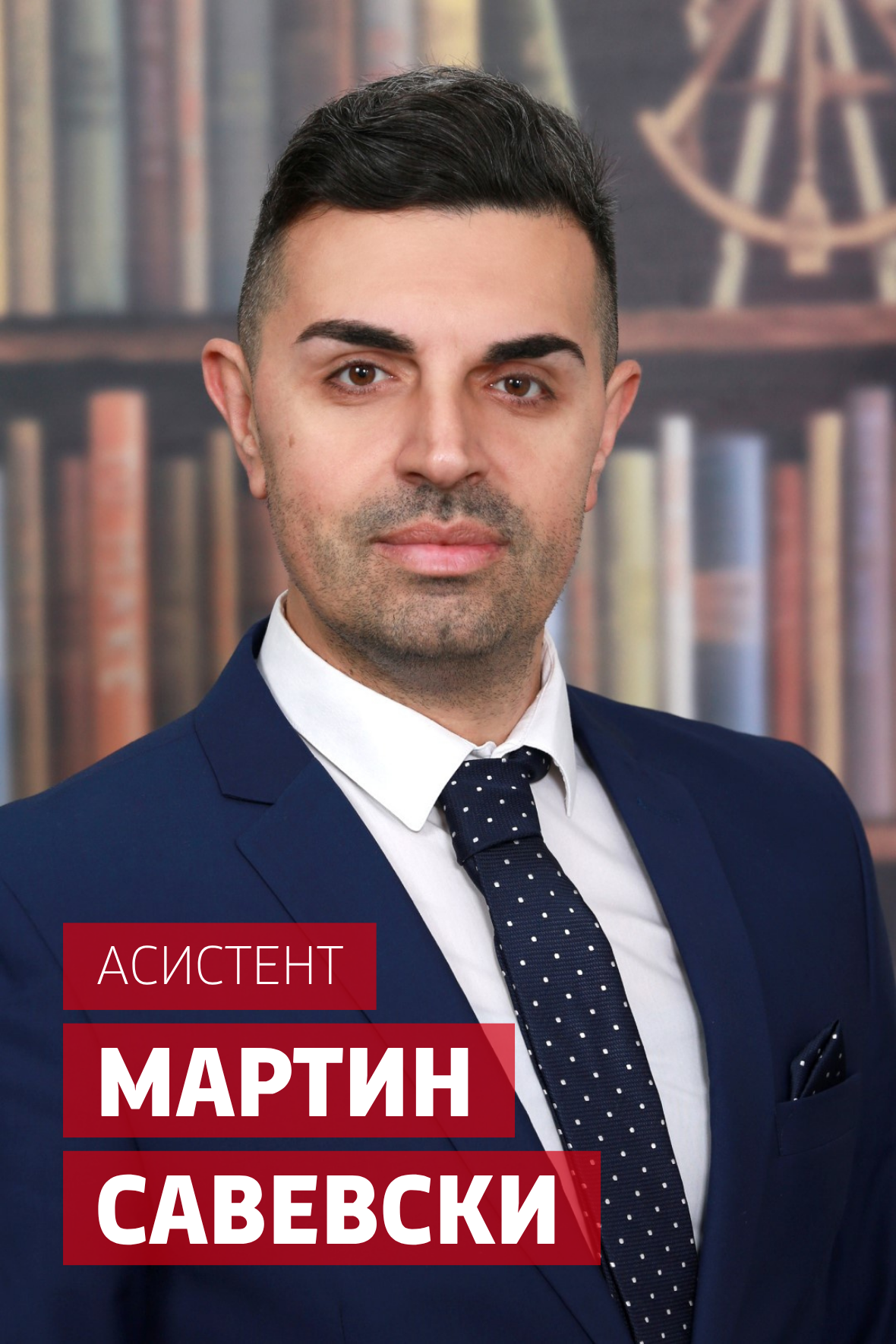
Martin Savevski serves as Associate Professor at International Slavic University's Faculty of Technical Sciences and Informatics, teaching across campuses in Sveti Nikole and Bitola. His academic appointments focus on safety engineering disciplines within technical systems. His educational background includes: Graduate Engineer in Fire Safety (2015-2018) from International Slavic University Master of Science in Security Engineering (2013-2015) from International Slavic University Computer Science degree (2005-2008) from University of St. Kliment Ohridski, Technical Faculty Professor Savevski's research centers on occupational safety engineering with emphasis on technical risk management. His work spans mechanical safety systems, workplace ergonomics, and environmental protection measures. Key investigation areas include industrial ventilation design, radioactive waste handling, and technical diagnostics for safety enhancement. His publications demonstrate consistent focus on practical engineering solutions for workplace hazards. His scholarly output shows strong concentration in occupational safety engineering with recurring themes in risk assessment methodologies, technical system reliability, and environmental protection. Publications increasingly integrate engineering solutions with regulatory compliance frameworks, particularly evident in his recent work on waste management systems and energy safety protocols. Professor Savevski has served as IT Administrator since 2011 while teaching subjects including Technical Mechanics, Thermal Plants, Workplace Safety Assessment, and Safety Engineering. His instructional focus emphasizes practical application of safety principles in technological systems.
Paul R. Prucnal is a Professor of Electrical and Computer Engineering at Princeton University and an Associated Faculty member in the Princeton Materials Institute (PMI). He directs the Lightwave Communications Research Laboratory, where he leads cutting-edge research in photonics, optical communications, and neuromorphic computing. Education: Ph.D., Columbia University, 1979 M.Phil., Columbia University, 1978 M.S., Electrical Engineering, Columbia University, 1976 A.B., Math and Physics, Bowdoin College, summa cum laude, 1974 Professor Prucnal's research focuses on ultrafast optical techniques with applications to communication networks and signal processing. His group investigates several key areas including physical (optical) layer network security, optical code division multiple access (CDMA), nonlinear optical signal processing for ultrafast networks, optical cancellation of RF interference, and the development of photonic neurons that operate a billion times faster than biological neurons. His work bridges the gap between photonics device physics and neural networks, pioneering the field of neuromorphic photonics. His recent publications reveal a strong trend toward neuromorphic photonics and brain-inspired optical computing. The research spans from fundamental optical physics to practical applications in secure communications and ultrafast signal processing, with emphasis on photonic neural networks, optical encryption techniques, silicon photonics implementations, and optical systems that emulate biological neural functions. Scientific Awards: National Academy of Inventors Fellow (2017) The President's Award for Distinguished Teaching, Princeton University (2015) Lifetime Achievement Award for Excellence in Teaching, Engineering Council, Princeton University (2015) School of Engineering and Applied Science Distinguished Teaching Award, Princeton University (2009) Fellow of the OSA (1997) Fellow of the IEEE (1992) Rudolf Kingslake Medal and Prize, SPIE (1990) Professor Prucnal has mentored numerous graduate students including Eric Blow, Eli Doris, Thomas Ferreira de Lima, Yusuf Jimoh, Hyuma Umeda, Yuxin Wang, Ben Wu, Lei Xu, and Jiawei Zhang. His research has been supported through collaborations with government and industrial research laboratories, focusing on next-generation optical signal processing, computing, and communications systems. His lab has produced significant innovations including graphene-based laser neurons and optical implementations of biological neural processing. The Lightwave Communications Research Laboratory offers students opportunities to work on innovative projects at the intersection of photonics, communications, and neural computing. Current research includes developing photonic neurons for machine learning applications, optical security techniques for fiber networks, and neuromorphic photonic systems that emulate visual, auditory, and motor functions found in biological organisms.
Michel Kinsy is an Associate Professor at Arizona State University's School of Computing and Augmented Intelligence and Director of the Secure, Trusted, and Assured Microelectronics (STAM) Center. His work bridges hardware security, cryptographic systems, and efficient computing architectures. Education: PhD in Computer Science from Massachusetts Institute of Technology His research focuses on hardware security , including secure architectures, trusted execution environments, quantum-proof cryptography, polymorphous architectures, and zero-trust computing systems. Recent projects explore privacy-preserving machine learning, zero-knowledge proofs, and homomorphic encryption acceleration. Key publication trends include: Hardware security for post-quantum cryptography (2020-2025) Secure distributed systems (2021-2025) Privacy-preserving machine learning implementations (2018-2025) Root-of-trust mechanisms in edge devices (2019-2023) Cryptographic protocol acceleration (2020-2024) Scientific Recognition: MIT Presidential Fellow CRA-WP Inaugural Skip Ellis Career Award He teaches graduate-level courses in computer architecture, research methodology, and thesis/dissertation advising, with recent offerings including CSE 792 Research , EEE 599 Thesis , and CEN 799 Dissertation . As STAM Center director, Kinsy leads initiatives in secure microelectronics and collaborates with hardware/software co-design teams. His research website provides detailed project information: https://stamcenter.asu.edu
Dr. Jun (Steed) Huang serves as an Adjunct Professor at the Carleton University and coordinates the NSERC Trust Connected Autonomous Vehicle Program. His research spans disciplines like biotechnology, AI, and quantum encryption, with applications in autonomous vehicles, healthcare, and smart cities. PhD (Southeast University) PDF (Concordia University) Dr. Huang's work focuses on 5G-enabled autonomous systems , network security , and multi-disciplinary innovation . His research team develops technologies for vehicular fog computing, energy-efficient IoT, and secure cloud collaborations. Key publication trends include: 5G and D2D communication optimization Machine learning applications in virology and finance Quantum-inspired algorithms and secure cloud frameworks Smart agriculture and environmental monitoring systems Multi-hop network coding and blockchain security His patented technologies have been implemented by organizations such as: Royal Canadian Mounted Police Canadian Space Agency Communications Research Centre Canada Canada Border Services Agency
Willy Susilo is a Professor and Australian Laureate Fellow at the School of Computing and Information Technology, University of Wollongong (UOW). As Head of School since 2015, he leads academic and research initiatives while maintaining active roles as Editor-in-Chief of Computers Standards and Interface and associate editor for IEEE journals. A Fellow of IEEE, IET, ACS, AAIA, and AIIA, he has received numerous accolades including the 2024 Premier's Prizes, 2023 ARC Laureate Fellowship, and UOW's Researcher of the Year (2016) and Supervisor of the Year (2019). Education : Ph.D. and M.Sc. in Computer Science (University of Wollongong, 2001), B.Sc. in Computer Engineering (University of Surabaya, 1994) His research focuses on cybersecurity and cryptography , particularly post-quantum cryptography, blockchain security, and privacy-preserving systems. Recent publications explore lattice-based encryption, federated learning privacy, and blockchain authentication mechanisms, reflecting trends in quantum-resistant algorithms and secure decentralized systems. Scientific Awards : ARC Laureate Fellowship (2023) Researcher of the Year (2016) Supervisor of the Year (2019) Vice Chancellor's Award for Global Strategy (2020) Premier's Prizes (2024) UOW Alumni Award (2024) He supervises multiple higher-degree research projects in areas like lattice reduction algorithms , deepfake detection , and blockchain regulation , and leads significant grants including the ARC-funded Secure Cloud Computing (2024-2029) and Enabling Anonymity for Blockchain (2020-2024). As director of the Institute of Cybersecurity and Cryptology (iC2), he oversees cutting-edge research infrastructure and collaborates across disciplines in AI security and satellite imaging applications.