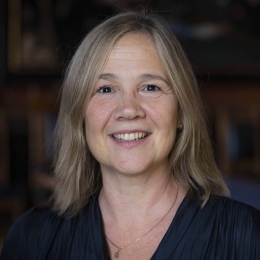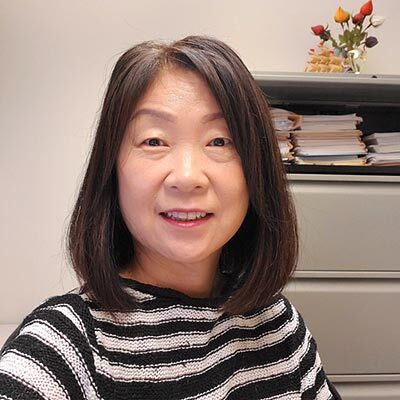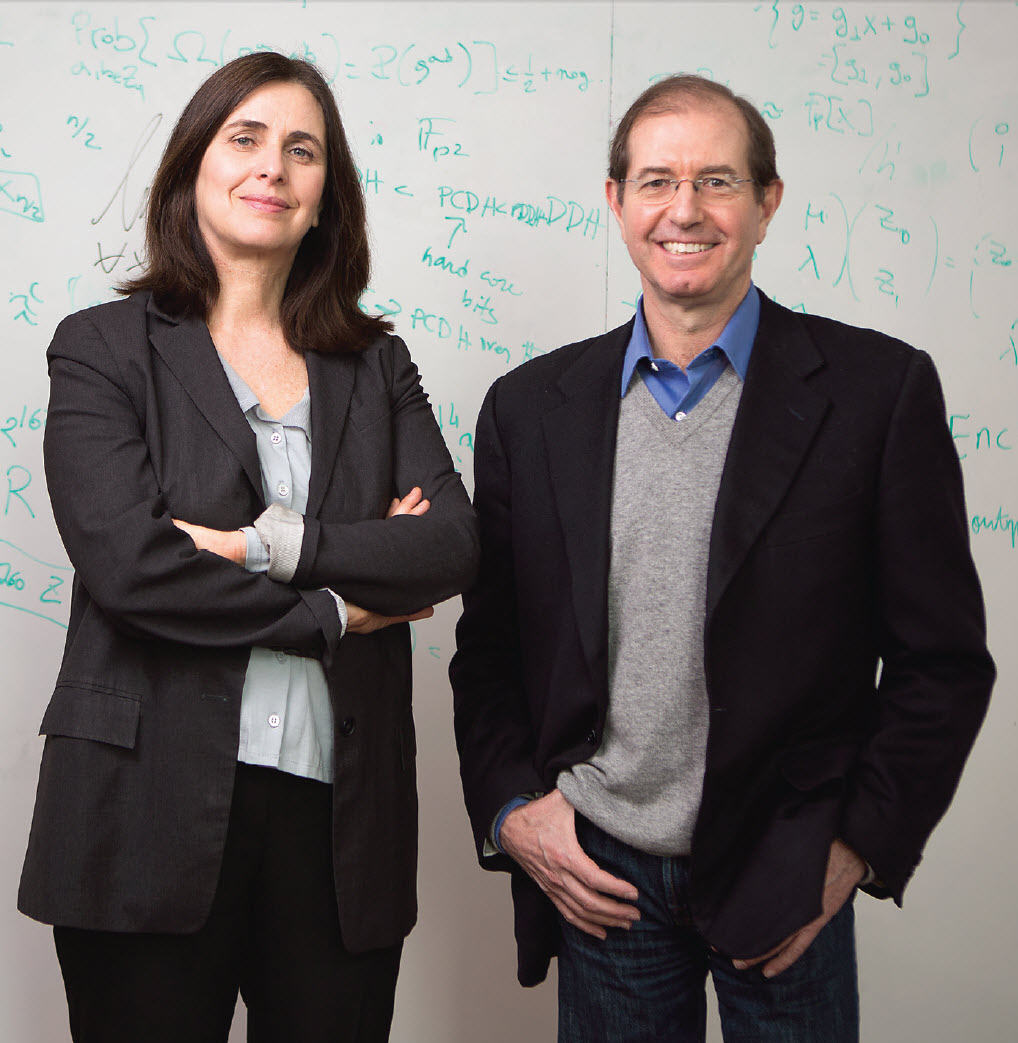
Shafi GoldwasserView profile
Professor
Shafi Goldwasser is a prominent computer scientist holding dual appointments as the RSA Professor of Electrical Engineering and Computer Science at the Massachusetts Institute of Technology (MIT) and as a Professor of Computer Science and Applied Mathematics at the Weizmann Institute of Science in Israel. Her groundbreaking work has fundamentally shaped modern cryptography and theoretical computer science, earning her numerous prestigious awards including the ACM A.M. Turing Award in 2012 (shared with Silvio Micali). Dr. Goldwasser received her B.S. in Mathematics from Carnegie Mellon University (1979), followed by an M.S. (1981) and Ph.D. (1984) in Electrical Engineering and Computer Science from the University of California at Berkeley. Her academic career at MIT began with a Bantrel Postdoctoral Fellowship in 1983, followed by positions as Assistant Professor (1983-1987), Associate Professor (1987-1992), and Professor (1992-present). She also serves as Co-Leader of MIT's Cryptography and Information Security Group (1995-present) and has held a parallel appointment at the Weizmann Institute since 1993. Goldwasser's research has revolutionized theoretical computer science and cryptography through several landmark contributions. She pioneered the concept of zero-knowledge proofs, which allow one to prove the validity of a statement without revealing any information beyond the statement's truth. Her work with Micali on probabilistic encryption established the now-standard definitions of security for encryption and digital signatures. Goldwasser also made fundamental contributions to interactive proofs, multi-prover systems, probabilistically checkable proofs (PCPs), and property testing. Her research has not only transformed cryptography into a rigorous mathematical science but has also had profound implications for computational complexity theory. Analysis of her publication record reveals consistent innovation across decades, with major contributions spanning from foundational work in the 1980s (zero-knowledge proofs, probabilistic encryption) through to contemporary research on delegated computation, code obfuscation, and side-channel attack resistance. Her work consistently bridges theoretical computer science and practical cryptographic applications. ACM A.M. Turing Award (2012) ACM Athena Lecturer Award (2008) Two SIGACT Gödel Prizes (1993, 2001) ACM Grace Murray Hopper Award (1996) RSA Award in Mathematics (1998) Franklin Institute Benjamin Franklin Medal (2010) IEEE Emanuel R. Piore Award (2011) Memberships in all three major US National Academies As an advisor, Goldwasser has mentored numerous graduate students, with Johan Håstad being noted as her first exceptional doctoral student. Her research group at MIT has been instrumental in advancing the field of cryptography and theoretical computer science. Recent work has focused on delegated computation, code obfuscation, and protection against side-channel attacks, addressing emerging challenges in cloud computing and information security. Outside of her academic pursuits, Goldwasser is known to practice "Playback Theater," an improvisational interactive group experience, reflecting her interest in creative expression beyond computer science.