Philip Armour is a Professor and Senior Economist at the RAND Corporation , where he also serves as Director of the Ph.D. Program and the RAND Center for Disability Research. His work integrates labor economics, public policy, and health economics to analyze intersections between government programs and workforce behavior. Research Interests: Focuses on disability policy , retirement decision-making , financial security , and military healthcare systems . Employs empirical analysis of Social Security, Workers' Compensation, and DoD/Veterans Administration programs to understand how policy incentives shape individual choices. Key Contributions: Recent publications examine Social Security appeals barriers for homeless populations, military eye examination policies, and pension crisis reform frameworks. Research funded by SSA, DoD, NIOSH, and CFPB. Education: Ph.D. in Economics, Cornell University M.Sc. in Econometrics, London School of Economics
Dr. Alyssa Kiesow is the Dean of the College of Arts and Sciences at Northern State University and a faculty member since August 2007. She also serves as the Director of the Sponsored Projects Office, supporting grant initiatives and research at the university. Educational Background: Ph.D. in Biological Sciences (Genetics) from the University of South Dakota M.S. from South Dakota State University B.S. from South Dakota State University A.A. from Winona State University Research Focus: Dr. Kiesow's work centers on the genetic structure of animal populations and the epigenetic effects of environmental toxins on embryonic development. Her studies involve marine organisms like sea stars and Xenopus laevis, as well as terrestrial species such as squirrels and bats. Recent projects examine the impacts of toxins on developmental biology and the genetic diversity of wildlife populations. Publications: Her research spans disciplines like genetics, ecology, and toxicology, with a focus on comparative genetics in rodents, marine developmental biology, and policy-driven studies on gender equity in academia. Key themes include hybridization, microsatellite analysis, and environmental health impacts. Service: Dr. Kiesow actively contributes to the South Dakota Academy of Science Executive Committee and mentors undergraduate research projects, as evidenced by her collaborations with students in publications.
Camille Peugny is a Professor of Sociology at the University of Versailles Saint-Quentin-en-Yvelines (UVSQ), where he has been teaching since September 2018. He serves as the Director of the PRINTEMPS laboratory and is a Co-manager of SOSI DEMAIN. Additionally, he acts as a Scientific Advisor to France Stratégie. His academic journey includes being a Lecturer at Paris 8 University and researcher at CRESPPA-CSU from 2009 to 2018, and he completed his Sociology thesis at Sciences Po in 2007 under the direction of Alain Chenu. Professor Peugny teaches several courses including "Ages and Generations in Europe" (Master 1 Sociology), "Sociology of Education" (L2), and "Questionnaire survey" (L2). His research primarily focuses on social stratification and inequality, work and social classes, and youth and generations. He has directed special journal issues including "Emploi, travail, environnement : l'heure des transitions" (Travail et Emploi, 2023) and "Repenser les inégalités entre les générations" (Revue française de sociologie, 2013). His research output demonstrates a consistent focus on social inequality, with particular attention to intergenerational mobility, employment polarization in Europe, and the social conditions of marginalized workers. Recent work has increasingly addressed environmental concerns among different age groups and the impact of the COVID-19 pandemic on youth. His publications reveal methodological diversity spanning quantitative analysis of European datasets, qualitative fieldwork among cleaning women, and theoretical contributions to understanding social reproduction. Director of PRINTEMPS laboratory Scientific Advisor to France Stratégie Co-manager of SOSI DEMAIN Professor Peugny's academic leadership extends to directing significant research projects on employment polarization across European countries and conducting field studies on the working conditions of cleaning women employed by personal services companies. He has supervised numerous research initiatives examining social stratification, political participation among working classes, and intergenerational inequality. As Director of the PRINTEMPS laboratory, Professor Peugny oversees a research environment focused on social inequality, stratification, and mobility.
Professor Alessio D'Angelo is a Professor of Public and Social Policy at the University of Derby , affiliated with the School of Law and Social Sciences within the College of Business, Law and Social Sciences . He serves as co-director of the Centre for Criminology and Social Policy Research and is the Editor of the journal Social Policy and Society . He is an active member of the Social Policy Association (SPA) Executive Committee and convenor of the Social Network Analysis Study Group (SNAG) under the British Sociological Association . His research focuses on social inequalities, migration, diversity, community organizations, and access to public services , with methodological expertise in quantitative, qualitative, and mixed-methods research , particularly in data mapping, visualization, and Social Network Analysis (SNA) . His work is funded by major bodies including the European Commission, ESRC, AHRC , and various public and charitable organizations. His recent publications reveal a strong thematic focus on migration policy in Europe and the UK, welfare chauvinism, migrant education during and after the pandemic, and the sociopolitical integration of migrants . He frequently contributes to high-impact journals and edited volumes, and leads significant research projects involving census data, community networks, and policy evaluation. Policy Press Outstanding Teaching Award (with Nottingham Social Policy team) Professor D'Angelo supervises PhD students and teaches in the MRes Social Sciences program. He is actively engaged in national and international research collaborations with institutions such as the University of Nottingham, University of Padua, Universitat Autònoma de Barcelona , and NGOs. His work bridges academic research with public policy and community engagement, contributing to debates on migration, citizenship, and social justice.
Laura McFarland is an Adjunct Professor in Early Childhood Education at Charles Sturt University’s School of Education. Her expertise lies in promoting mental health and well-being across children, families, and educators through relational and leadership-focused approaches. She holds a PhD in Human Development and Family Relationships from The University of Texas at Austin, complemented by an M.A. and B.A. in Psychology from the same institution. Her research emphasizes systemic solutions to foster mentally healthy early learning environments, including leadership roles in policy implementation and clinical supervision programs. Laura has contributed to national initiatives like the Be You mental health framework and serves on editorial boards for Early Childhood Education Journal and Australasian Journal of Early Childhood . Key achievements include an Australian Government OLT Teaching Citation (2016) and Senior Fellowship of the Higher Education Academy (2019). Her work addresses educator well-being, reflective practice, and workforce sustainability, with recent studies on workplace bullying and cross-national research alliances (WECARE initiative). Publications span holistic well-being measurement tools (e.g., ORICL framework), policy evaluations, and child developmental assessments. She actively bridges research with community practice through collaborative projects and advocacy for equitable childcare funding and educator compensation.
Professor David J. Brennan is currently the Associate Dean, Research, and Professor at the Factor-Inwentash Faculty of Social Work, University of Toronto. He holds leadership roles including the OHTN Endgame Leadership Chair in Gay and Bisexual Men’s Health. His academic journey includes a PhD from Boston College (2007) focusing on HIV treatment optimism and sexual risk behaviors. Dr. Brennan founded and directs CRUISElab, an interdisciplinary research lab addressing health disparities among gay, bisexual, Two-Spirit, and transgender men. Research Interests: His work centers on HIV/STI prevention, LGBTQ+ health equity, community-based interventions, and the psychosocial impacts of digital technologies on health-seeking behaviors. Key areas include resilience among long-term HIV+ individuals, intersectional stigma, and healthcare access barriers faced by marginalized sexual minority groups. Recent Article Trends: His publications (2023-2025) focus on mental health disparities among sexual minority men, digital health interventions, HIV/STI prevention policies, and task-shifting strategies in healthcare delivery. Themes include communal altruism, task-shifting efficacy, and blood donation policy reforms. Awards: Recipient of the 2018 CAHR Excellence in Research Award (Social Sciences), OHTN Chairships, and Fellowships from the Society for Social Work and Research. His work has been funded by CIHR, SSHRC, and OHTN. Leadership & Grants: Leads over 40+ projects including AIDS service organization reforms, LGBTQ+ mental health platforms, and global health equity initiatives. Active in policy advocacy for blood donation reforms and HIV criminalization issues. Teaching: Courses include Practice-Based Social Work Research, LGBTQ+ Mental Health, and HIV policy analysis. Supervises graduate research on topics like queer youth resilience and digital health equity.
Mai Elshehaly is a Lecturer in Computer Science at City, University of London, where she is affiliated with the giCentre in the Department of Computer Science, School of Science and Technology. She focuses on designing, developing, and evaluating visualisation solutions that support data-driven decision-making, particularly for non-technical users in healthcare and public sectors. Her work involves close collaboration with healthcare practitioners, local authorities, and schools to co-design tools grounded in real-world needs. Her research interests center on information visualisation and human-computer interaction , with a strong emphasis on user-centered and co-design methodologies . She investigates how lived experiences of stakeholders can shape visual analytics systems, especially in healthcare quality improvement, population health management, and digital transformation initiatives. Her approach bridges technical innovation with social impact, promoting equitable access to data insights. Her recent publications highlight trends in narrative visualization, integration of lived experience with electronic records (e.g., CLEVER framework), and adaptable dashboards for healthcare (QualDash). These works are published in top venues such as IEEE VIS, IEEE TVCG, and Computer Graphics Forum, reflecting a consistent focus on usability, evaluation, and real-world deployment of visual analytics tools. Department-level achievement award during PhD at Virginia Tech University-level achievement award during PhD at Virginia Tech Mai has secured research funding from the Bradford Institute for Health Research (BIHR), NIHR, and internal university sources including EPSRC doctoral training funds. She has led and contributed to interdisciplinary projects such as the Digital Makers Programme and Connected Bradford, which involve partnerships across academia, healthcare, and local government. While no formal PhD students are listed, she mentors through collaborative research and advisory roles. She is actively involved in applied research through leadership positions: Co-Director of the Digital Makers Programme, Deputy Director of the Workforce Observatory for West Yorkshire, member of the advisory board at the Wolfson Centre for Applied Health Research, and cross-theme visualisation expert at the Yorkshire and Humber Patient Safety Research Centre. These roles underscore her commitment to translating research into practice within health and education systems.
Elaine Mosconi is a Full Professor at the Université de Sherbrooke since 2024, with prior roles as Associate Professor (2017-2024) and Visiting Professor at institutions like Université Lumière Lyon 2 and École Nationale Supérieure des Mines de Saint-Étienne. She holds a PhD in Administration from Université Laval (2014), an MSc in Industrial Engineering from Universidade de Sao Paulo (2003), and a BSc in Library & Information Science (1999). Université de Sherbrooke | Full Professor (2024-), Associate Professor (2017-2024) Université Laval | Visiting Scholar (2019-2023) International collaborations in France, Brazil, USA, Sweden Her research focuses on Digital Transformation , Industry 4.0 , and Collaborative Innovation , with emphasis on organizational value creation through technology adoption and information literacy. She has secured over $1,649,623 in grants from NSERC, CRSH, MITACS, and provincial agencies, including a $5M grant for SME digital transformation programs. Recent articles explore plastic waste circular economy , enterprise social media maturity , and Industry 5.0 workforce adaptation . Her work bridges business intelligence with sustainable supply chain practices. Scientific Awards : Dean's Research Award (2024) ASAC Best Paper in Technology & Innovation Management (2022) Multiple Academic Coach/Mentor of the Year (2019-2021) Nominated for Inspiration Award (Quality of Service) (2017-2018) As a conference organizer and track chair for IAMOT, HICSS, and AMCIS, she leads initiatives in digital transformation frameworks. Her pedagogical projects include developing a data literacy assessment tool for business leaders and co-creating a knowledge management framework for decision performance.
Lendel Narine serves as an Extension Associate Professor within the Youth Programs Department at Utah State University Extension, based at the Logan Campus. His role centers on evaluation and reporting for statewide extension initiatives, focusing on evidence-based program development and impact assessment across Utah's diverse communities through rigorous methodological frameworks. Dr. Narine's educational foundation includes: PhD in Agricultural Education and Communication, University of Florida (2018) MS (M.Phil.) in Agricultural Economics, The University of the West Indies (2013) BS in Agribusiness Management, The University of the West Indies (2010) His research specializes in quantitative evaluation methodologies including competency modeling, outcome metrics, and cost-benefit analysis, with growing emphasis on behavior change mechanisms and diversity-integration frameworks. He applies the Ranked Discrepancy Model extensively for needs assessment in agricultural and youth programming contexts. Analysis of his 2024-2025 publications reveals three dominant research trajectories: food/financial security programming in Utah communities, innovative evaluation frameworks for extension services, and workforce development through emerging technologies like AI. These works consistently employ advanced statistical methods to address critical issues including climate adaptation and health disparities. His award portfolio features 13 major honors including: Distinguished Team Award (2023) Susan Barkman Award for Research and Evaluation (2023) Outstanding Article of the Year (2020) Visionary Leader Award (2020) Best Research Poster (2019) Early Career Service (2021) New Specialist Award (2022) Excellence in 4-H Citizenship Programming (2023) Communication Award: Educational Publication (2022) Florence Hall Award (2022) Innovative Program (2022) Don Dean Felker Financial Management Award (2023) Excellence in Workforce Development Programming (2023) Dr. Narine advises graduate students through ongoing mentorship since 2019 and has evaluated USU Extension's internal funding mechanisms including the mini-grant program. His grant leadership spans civil rights compliance initiatives and Western regional evaluation capacity building projects addressing organizational advancement and diversity metrics. He actively directs multiple extension teams including the Climate Adaptation Intern Program, CORE Professional Development, and Civil Rights Compliance initiatives, while contributing to multi-state collaborations on leadership development and generative AI applications in extension education through the Western Extension region.
Laura Crosswell serves as Associate Professor of Health Communication and Director of the Center for Advanced Media Studies at the University of Nevada, Reno's Reynolds School of Journalism and Media Studies. She holds a joint appointment with the university's School of Medicine, reflecting her interdisciplinary approach to health communication research. Crosswell previously taught at the College of Charleston, Louisiana State University, and Arizona State University before joining UNR. Her research focuses on the intersection of consumerism, persuasive texts, and public health messaging, with particular attention to how commercial interests influence health communication. Crosswell frequently employs advanced eye-tracking technology to examine physiological and psychosocial responses to media content, especially in pharmaceutical advertising and public health campaigns. Her book Politics, Propaganda, and Public Health: A Case Study in Health Communication and Public Trust analyzes Merck's Gardasil vaccination campaign, exploring how corporate interests shape public health messaging. Crosswell's recent publications reveal consistent focus on contemporary health communication challenges, particularly surrounding the COVID-19 pandemic, vaccine hesitancy, and environmental health risks. Her work spans multiple disciplines including communication, public health, psychology, and medical education, often employing innovative methodologies like virtual reality simulations and biometric measurement. Recipient of Organizational Behavior Management (OBM) Innovative Research Award, 2023 Co-author of scholarly book on pharmaceutical marketing and public health trust Regular contributor to journals including Critical Public Health , Public Health Perspectives , and Journal of Environmental Studies and Sciences Crosswell has received recognition for her innovative research approaches that bridge communication theory with practical health applications. Her work examining virtual reality applications in healthcare education demonstrates her commitment to developing new methodologies for training healthcare professionals. With numerous forthcoming publications for 2025, she remains an active contributor to the field of health communication research.
Prof. OSMAN ÇULHA is a Professor in the Department of Gastronomy and Culinary Arts at the Faculty of Tourism, Alanya Alaaddin Keykubat University. He has built a distinguished academic career spanning over 15 years in tourism and hospitality education, with expertise in tourism management and gastronomy. His academic journey began as a Research Assistant at Yaşar University, progressed through lecturer positions at Adnan Menderes University, and led to his current professorship at Alanya Alaaddin Keykubat University. His educational background includes a Doctorate in Tourism Management from Adnan Menderes University (2014), a Master's degree in Tourism Management from Dokuz Eylül University (2008), and a License in Tourism Management Education from Gazi University (2005). Prof. Çulha's research primarily focuses on the intersection of tourism management and gastronomy, with particular interest in food festivals, culinary tourism, and the relationship between local foods and tourism development. His work examines how gastronomic experiences contribute to destination branding, place attachment, and tourist satisfaction. He has extensively studied the Didim International Olive Festival as a case study for understanding how local food events can drive regional tourism development. His research also explores workforce issues in the hospitality industry, including employee motivation, organizational commitment, and the impact of training programs. Prof. Çulha has received recognition for his academic contributions, including the prestigious Academic Golden Pen Award Certificate of the Year in 2025 for his work "Collaborations of Tourism Academies in Türkiye: Topics, Stakeholders, Scope, Benefits and Obstacles." His publications span numerous high-impact journals in tourism and hospitality research, covering diverse topics from underwater diving motivation to the quality dimensions of non-formal vocational tourism education. His scholarly work demonstrates a consistent focus on practical applications of tourism theory to real-world industry challenges. He has served in various administrative capacities, including as Farabi Coordinator and Faculty Board Member at Alanya Alaaddin Keykubat University, and as Deputy Head of Department at Adnan Menderes University. His professional development includes specialized training in occupational health and safety, big data applications, and artificial intelligence in research processes. Prof. Çulha is actively involved in academic service as a referee for multiple tourism journals, including Alanya Academic View Journal, Tourism Research Journal, and International Journal of Hospitality Management. His commitment to advancing tourism education is evident through his editorial contributions to publications such as "Traces of Gastronomy from Past to Present: Research-Based Evidence" and "International Tourism Management."
Dr. Albert Williams is an Associate Professor of Finance and Economics at the H. Wayne Huizenga College of Business and Entrepreneurship, Nova Southeastern University (NSU). He teaches MBA and undergraduate courses in managerial economics, finance, statistics, and international business, both in Florida and internationally in Jamaica and the Bahamas. Education: Ph.D. in Agricultural Economics – University of Georgia, Athens M.A. in Agricultural Economics – University of Georgia, Athens B.S. in Mathematics/Education – University of Calgary A.S. in Mathematics/Economics – St. John's College, Belize City Certification – Six Sigma Green Belt, American Society for Quality Research Interests: Dr. Williams’s research spans a wide range of topics in finance, economics, and behavioral science. His core areas include financial literacy, consumer bankruptcy (especially Chapter 13), dividend performance during recessions, and cross-cultural behavioral studies. He also investigates workplace behavior, age discrimination, and the intersection of finance and psychology. His work often incorporates international perspectives, particularly from Belize, the Bahamas, and Jamaica. Selected Awards: Adjunct Faculty-of-the-Year (2006) – Huizenga College of Business Faculty-of-the-Year (2006, 2007) – Graduate Business Students Association (GBSA) Multiple GBSA Awards for Leadership and Service (2012–present) Advising & Outreach: Dr. Williams has extensive experience in public and academic outreach. He has lectured to students, public officials, and private sector groups in South Florida and the Caribbean on topics ranging from finance and economics to business ethics and competitiveness. His prior roles include serving as CEO of an agricultural marketing company in Belize and as a commodity analyst for Restaurant Services Inc., the purchasing arm of Burger King.
James P. Huguley is an Associate Professor at the University of Pittsburgh School of Social Work and chair of the Race and Youth Development Research Group (RaYDR) at the Center on Race and Social Problems. He directs the Just Discipline Project and Parenting While Black initiatives, focusing on racial and educational justice through research-practice partnerships. His educational background includes a Bachelor's in Secondary Education from Providence College, followed by a Master's in Risk and Prevention and Doctorate in Human Development and Psychology from Harvard University. Dr. Huguley's research examines culturally distinct socialization practices and school-based interventions to improve mental health and academic outcomes for BIPOC youth. He investigates how racial socialization, restorative discipline practices, and family engagement strategies promote resilience in oppressed educational contexts, with particular emphasis on African American communities. His 12 publications (2012-2024) reveal consistent focus on racial socialization mechanisms, school discipline reform, and family-school partnerships. Key trends include meta-analyses on parental socialization impacts, community-engaged studies of restorative justice, and frameworks for culturally responsive educational engagement. Scientific recognition includes: Larry E. Davis Award for Excellence in Community Engaged Scholarship (2022) Distinguished Research Award from AERA (2021) Excellence in Research Award from SSWR (2021) Dr. Huguley secures major funding from IES, HRSA, NSF, Spencer Foundation, Heinz Endowments, and Richard King Mellon Foundation. Current projects include Just Discipline in Schools (2021-2025), Parenting While Black (2021-2023), and Behavioral Health Workforce Training (2021-2025), totaling over $5M in active grants. He leads the RaYDR research collective and serves on advisory boards for the Human Services Center Mon Valley and Office of Child Development, driving community-academic collaborations for systemic change in youth services.
Dr. Amber Dumford is a Professor at the University of South Florida in the College of Education , specializing in Higher Education and College Student Affairs . She holds a Ph.D. in Higher Education (with a cognate in Sociology) from Pennsylvania State University , a M.P.A. from Indiana University Bloomington , and a B.S. in Mathematics from the same institution. Teaches courses in Student Affairs Assessment, College Teaching, and Globalization in Higher Education Currently serves on doctoral dissertation committees Active in research on student engagement, gender issues, and data quality in higher education Reviews for 20+ peer-reviewed journals and serves on editorial boards of top journals Consultant for National Center for Educational Statistics and institutions in US/Canada Research Interests include: Factors influencing student engagement and learning Gender disparities in higher education Arts and engineering education outcomes Creativity in academic settings Quantitative reasoning and assessment Data quality in educational research Food insecurity among diverse college students Publications reflect trends in student engagement , career readiness , data-driven educational practices , and equity in higher education . Her recent works focus on socioecological factors affecting food pantry usage and validity of survey instruments in measuring student behaviors. Service Contributions : Active member of university committees and councils Board member of Research in Higher Education and Journal of College Student Development Statistical modeling consultant for National Center for Educational Statistics Teaching Experience spans traditional mathematics instruction (2002-2014) to higher education seminars and globalization studies at USF. She plans to develop data analytics and institutional research courses.
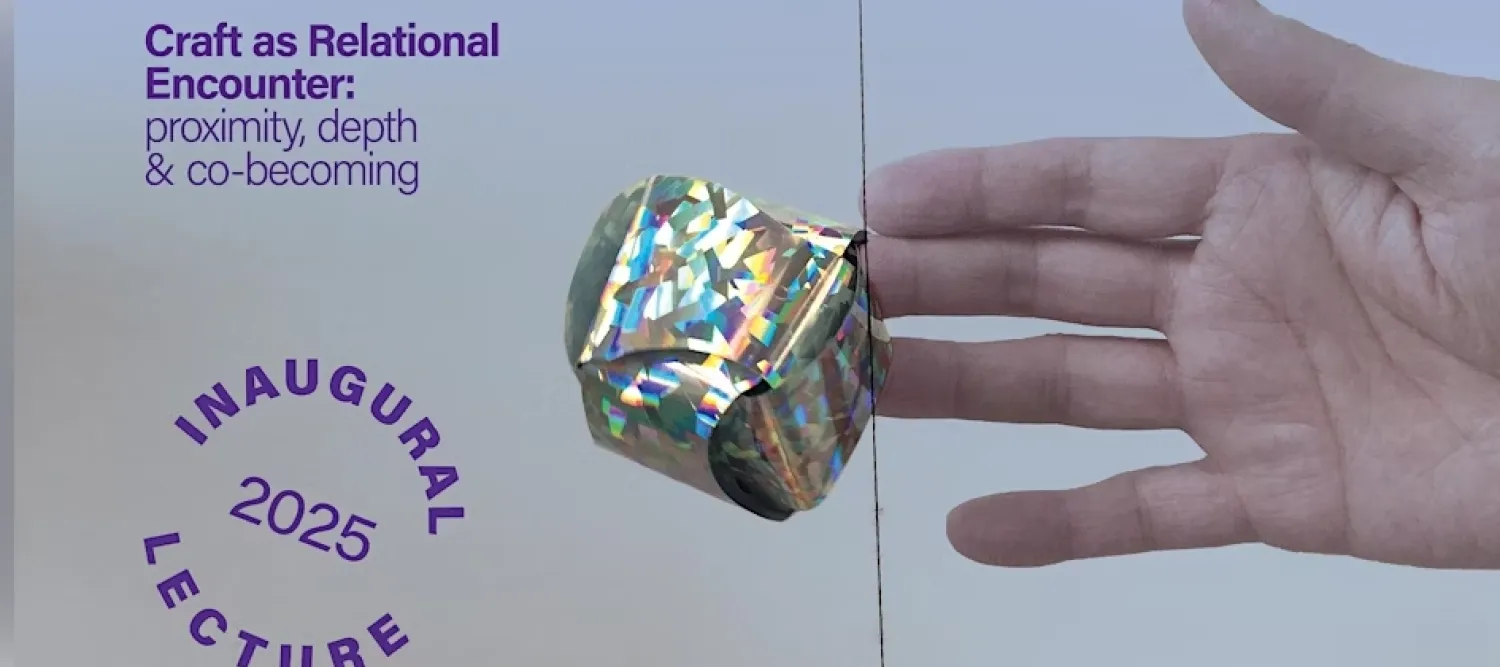
Professor Sarah Kettley is Chair of Material and Design Innovation at Edinburgh College of Art, University of Edinburgh . She leads multidisciplinary teams across social care and health services, championing participatory and co-design methodologies rooted in humanistic psychology. Educated originally in contemporary jewellery and holding a doctorate in computer science, she integrates craft knowledge with wearable technology research, most notably through the ‘ An Internet of Soft Things ’ project that introduces electronic-textile imaginaries to third-sector mental-health communities. Research Interests Craft as Relational Encounter: exploring proximity, depth and co-becoming in design Participatory and co-design methods for marginalised groups (autistic people, visually-impaired researchers, Scottish care workers) Electronic textiles, wearable health technologies and emotional durability Social, cultural and economic value creation in care innovation Recent Publication Trends Between 2023 and 2025 her work focuses on refining and evaluating the Ripple Framework , a generative co-design approach that produces social, cultural and economic value in care settings. Papers cluster around inclusive methodologies, mental-health technology, and craft-led innovation, signalling an integrated vision where material practice, digital technology and care ethics co-evolve. Scientific and Professional Recognition Fellow of the Royal Society of the Arts Founder member, Arcintex international research network Co-chair, RAFT research group, Edinburgh College of Art Research Teams & Networks She co-chairs the RAFT research group at Edinburgh College of Art and is a founding member of the Arcintex network, enabling transnational collaborations in practice-based textile, interaction and health-care research.