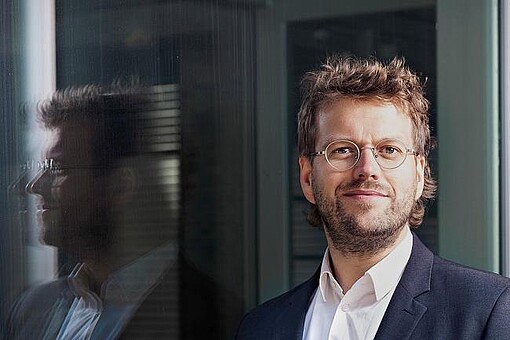
Dr. Ramkrishan Maheshwari is an Associate Professor at the Institute of Mechanical and Electrical Engineering, University of Southern Denmark, specializing in power electronics and motor drive systems. His research focuses on advanced power converter topologies, wide bandgap semiconductors, and renewable energy integration. University: University of Southern Denmark Rank: Associate Professor Research: Power Converters, PWM Techniques, Wide Bandgap Devices Recent work involves small DC-link capacitors, machine learning-based component selection, and hydrogen production systems. His Google Scholar articles highlight innovations in converter design and control algorithms. Awards include the BHJ Foundation Teaching Prize (2023) and a Best Paper Award (ICPEE 2021). He supervises PhD students like M. A. Khan and R. K. Mahapatra and leads projects such as 'Efficient Cost Saving Grid Friendly PtX Converter' funded by Mads Clausens Fond.
Prof. Roland Dittmeyer serves as Professor and Director of the Institute of Micro Process Engineering (IMVT) at Karlsruhe Institute of Technology (KIT). His leadership focuses on advancing Power-to-X (P2X) technologies to convert renewable electricity into synthetic fuels and chemicals, critical for achieving net-zero CO2 emissions by 2050. Research interests center on: Power-to-X (P2X) for synthetic fuels and chemical feedstocks Microstructured reactors offering high efficiency, safety, and load flexibility Decentralized energy systems, including the "crowd oil" concept for building-integrated fuel production Green hydrogen production and derivatives via offshore wind (PtX-Wind project) Dittmeyer coordinates Energy Lab 2.0, Europe's largest renewable energy storage infrastructure, collaborating with DLR and Jülich Research Center. His team secures grants from DFG, Helmholtz Association, EU, and German Federal Ministries. Notable projects include PtX-Wind for grid-independent hydrogen from offshore wind and ProMiSe for efficient on-site hydrogen peroxide synthesis. The IMVT transfers knowledge to industry partners such as Ineratec (KIT spin-off) and Climeworks.
Thomas Ebel is Professor and Head of the Centre for Industrial Electronics at the University of Southern Denmark (SDU) , Institute of Mechanical and Electrical Engineering. A leading expert in power electronics, high-voltage engineering and capacitor technology, he directs large, multi-partner research projects and teaches/supervises at both graduate and PhD levels. Education & Career Path Prof. Ebel holds the academic title Dr. rer. nat. and has been appointed full Professor at SDU. He concurrently serves as Head of Section at the Centre for Industrial Electronics, orchestrating cross-disciplinary research teams and infrastructure. Research Interests Power Electronics & Power Conversion: advanced converter topologies, WBG devices (GaN, SiC), high-frequency magnetics, grid-forming control. Dielectric Materials & Capacitors: polymer and hybrid nanocomposite dielectrics, self-healing metallized film capacitors, aluminium electrolytic capacitors, lifetime modelling and reliability. High-Voltage Engineering & Breakdown Physics: breakdown mechanisms in nanocomposites, corona and partial discharge, insulation coordination. IoT & Data-Driven Monitoring: real-time condition monitoring, digital twins, data-driven RUL estimation for power components. Publication Trends Across 133 research outputs (2018-2025) the dominant themes are (i) construction and reliability of 700 V-class aluminium polymer electrolytic capacitors, (ii) GaN-based power converter optimisation, (iii) hybrid AC/DC microgrid control and harmonic mitigation, and (iv) nanocomposite dielectrics for next-generation capacitors. The 15 most recent articles (2025) reinforce these directions while adding socio-technical energy analytics and green-vehicle powertrains. Scientific Awards Tek Innovation Prize 2023 – awarded for outstanding contributions to power electronics research and industrial innovation. Advising & Funding Prof. Ebel currently supervises ~10 PhD candidates and post-docs including L. Tavares, M. A. Khan, R. Maheshwari, S. Mateen, A. N. Pinky and others. He is Principal Investigator or Head Coordinator of six active projects (2024-2027) valued at >€8 M, spanning ultra-high-efficiency drives, hydrogen-PtX converters, self-healing capacitors and hybrid power-plant concepts. Laboratory & Teams He heads the High-Voltage Power Electronics Laboratory at SDU, equipped with 700 V/200 A capacitor test rigs, GaN/SiC converter prototyping benches, and environmental chambers for accelerated ageing studies. The centre collaborates with 20+ industrial partners and coordinates the international IEA Wind Task 50 on hybrid power plants.
Sebastian Timmerberg is a Professor in the Department of Environmental Engineering at Hamburg University of Applied Sciences. His research focuses on renewable fuels, energy system analysis, and sustainability assessment, particularly in hydrogen production and its role in transportation and industrial applications. Expertise in hydrogen technology and GHG emissions reduction Active in projects like NRL | Wasserstoff in der Kupfererzeugung and Northern German Living Lab Teaching areas: Renewable Fuels, Energy Systems Analysis His research spans hydrogen supply chains, wind energy integration, and economic analyses of hydrogen use in industry. He examines the environmental impact of energy systems through life cycle assessment and cost optimization, with recent work on electricity price signals and demand-side management for sustainable hydrogen deployment. Current projects focus on hydrogen production from renewables, blending hydrogen into existing pipelines, and assessing the feasibility of large-scale hydrogen infrastructure. His publications highlight cross-disciplinary approaches combining energy economics, environmental engineering, and industrial sustainability.
Diana Moreno is a Research Fellow in Sustainable Energy Planning and Management at Aalborg University's Department of Sustainability and Planning, part of The Technical Faculty of IT and Design. She holds a PhD in GIS for Sustainable Energy (2024) from Aalborg University, where she developed the GeoPLAN framework. Her work focuses on integrating geographical information systems (GIS) with energy system analysis to advance district energy, bioenergy, CCUS, and PtX technologies. She collaborates on Danish and international projects addressing energy infrastructure and decarbonization strategies. She also teaches in master’s programs related to sustainability and planning. Education: PhD in GIS for Sustainable Energy, Aalborg University (2024) Research Interests: GIS applications for energy transition Optimization of district heating systems Regional carbon capture and storage (CCUS) strategies Participatory planning for energy systems Key Projects: INNO-CCUS INFRASTRUCTURES (2023–2027): Developing CCUS infrastructure strategies. VALCCAP (2022–2025): Cross-sectoral business models for carbon utilization. CO2 Vision Pool 1 (2022–2023): CO2 capture and storage solutions. Advising & Grants: Supervised projects on municipal energy planning and global heating strategies (e.g., Mongolia). Recipient of funding from Innovation Fund Denmark, Ørsted, and TOTAL E&P Danmark. Labs/Teams: Sustainable Energy Planning Research Group at Aalborg University.
Pourya Forooghi serves as Associate Professor in the Department of Mechanical and Production Engineering at Aarhus University's School of Engineering, Denmark. His active research profile is anchored in the university's heat and fluid flow group, with direct contact available via telephone (+45 93 52 23 03) and email (forooghi@mpe.au.dk). Current activities include conference contributions such as the 2024 ERCOFTAC Symposium lecture on electrolyzer modeling. Research Interests His work spans fundamental and applied fluid dynamics with emphasis on: Turbulent flow over complex rough surfaces (anisotropic, patchy, irregular) Thermohydraulic roughness characterization Data-driven modeling for drag and heat transfer prediction Power-to-X (PtX) energy systems Secondary flows in boundary layers Cryogenic heat transfer (frost formation, evaporators) Publication Trends Analysis of his 2023-2025 publications reveals a dominant focus on roughness effects in turbulent flows using DNS and data-driven methods. Key patterns include hydrodynamic/thermal property characterization of realistic rough surfaces, drag reduction via spanwise forcing, and laminarization techniques in pipe flows. Applications concentrate on energy systems like CO2 heat pumps, PtX electrolyzers, and refrigeration evaporators. Scientific Awards No scientific awards, fellowships, or medals were documented in the provided materials. Advising and Grants The source text contains no explicit information regarding graduate students, postdoctoral advisees, or grant funding activities. His research group involvement suggests likely supervision responsibilities absent specific listings. Laboratories and Teams Forooghi leads computational research within Aarhus University's heat and fluid flow group, utilizing DNS/LES techniques and data-driven frameworks. His work integrates high-fidelity simulations with engineering applications, particularly in energy conversion systems requiring advanced roughness modeling.
Zhenyu Yang is an Associate Professor at Aalborg University's Department of Energy within The Faculty of Engineering and Science. He specializes in control theory, AI-driven automation, and industrial process control, with a focus on offshore energy and water treatment systems. He leads the Offshore Process Control and Cybernetics Research Group and chairs the Mission for Sustainable Fuels, Chemicals, and PtX. His work aligns with UN Sustainable Development Goals related to clean energy and environmental protection. Education: B.Sc., M.Sc., and Ph.D. in Control Theory from Shandong University and Beijing University of Aeronautics and Astronautics. Postdoctoral training at Delft University of Technology and Aalborg University. Completed pedagogic education for assistant professors and interdisciplinary leadership training. Research interests include fault-tolerant control systems, hybrid dynamical systems, AI for process automation, and water treatment technologies. He has supervised 6 PhD students, including M. Kashani. Notable awards include Teacher of the Year 2012 and ABB Best Application Award Finalist 2009. Key projects involve high-temperature heat pumps, offshore produced water treatment automation, and microplastics capture using hydrocyclones. He has authored 198 publications and actively participates in academic committees and international conferences. Collaborations span institutions globally, emphasizing sustainable energy solutions and advanced control systems.
Charlotta Faith-Ell is a Senior Lecturer at Mid Sweden University's Department of Natural Sciences, Design and Sustainable Development in Östersund, holding a PhD in Natural Resources Science from the Royal Institute of Technology. With over 20 years of professional experience, she specializes in sustainable community development research and practice. Her educational background includes: PhD in Natural Resources Science (Royal Institute of Technology) Charlotta's research focuses on Environmental Assessment and Impact Assessment , Sustainable Development within the Green Transition , Cumulative Effects and Systems Analysis , Gender Mainstreaming in Transport Planning , and Power-to-X (PtX) . Her work identifies sustainable land use strategies addressing trade-offs between competing interests like the green transition, emphasizing tools for effective governance of construction, land use, and natural resource management. She examines how practitioners manage conflicting goals through strategic environmental assessments and systems analysis. Her recent publications (2023-2025) reveal strong trends in environmental assessment methodology, sustainable industrial park development in rural contexts, and innovative applications of PtX technologies. Key thematic clusters include hybrid work models in public services, zero-emission building performance, cumulative effects in infrastructure planning, and biological conservation solutions using hydrogen technology. Much of her work addresses rural municipalities' challenges in establishing sustainable industrial parks and competence supply through education. Charlotta actively collaborates through Agora —an arena for developing environmental assessment knowledge—and contributes to major research projects including SPEAK, HSE 2.0, SAKI, VEM, and VOK. Her grant portfolio spans EU and national funding for sustainable development initiatives, with emphasis on practical governance solutions and stakeholder engagement in environmental decision-making. She leads the course Environmental Assessment – Theory and Practice , developing challenge-driven educational approaches for rural university settings. Her teaching integrates gender mainstreaming perspectives and cumulative effects analysis into sustainable development curricula.
Marie Münster is a Professor in Energy System Analysis at the Technical University of Denmark (DTU), affiliated with the Department of Technology, Management and Economics. She holds a M.Sc. in Energy Planning (Aalborg University, 2000) and a PhD in Energy System Analysis (Aalborg University/Risø DTU, 2009). Her research focuses on energy system modeling, renewable energy integration, sector coupling, and green fuels, particularly Power-to-X (PtX) technologies. She leads projects on hydrogen infrastructure, energy policy, and decarbonization strategies, contributing to initiatives like the Danish Climate Council and the ElForsk Advisory Board. Her work spans Energy system modeling frameworks (e.g., Balmorel, EnergyPLAN, STREAM), Climate policy analysis, Maritime and industrial decarbonization, Renewable energy integration, Waste-to-energy strategies. Recent articles emphasize Hydrogen infrastructure planning, Soft-linking energy system models, Shipping sector decarbonization, EU energy transition pathways. She advises PhD students on projects like Environmental sustainability of the green transition, Renewable fuel value chains, Sector coupling modeling. Labs/Teams: Involved in DTU Wind and Energy Systems, Balmorel model development, and interdisciplinary initiatives like the FutureGas project.
Michael Vedel Wegener Kofoed is an Associate Professor at the Department of Biological and Chemical Engineering, Aarhus University, specializing in biomethanation and CO2 utilization technologies. He also serves as a Project Director, focusing on interdisciplinary research at the intersection of chemical engineering and biotechnology. His research interests include biogas process optimization, bio-integrated carbon capture systems, and renewable energy integration. Key areas of focus are methane production pathways, thermophilic microbial reactors, and emission mitigation strategies for industrial and agricultural processes. Recent work explores biomethanation reactor design, flue gas CO2 valorization, and bio-inspired materials for sustainable electronics. He actively disseminates findings through lectures on topics like PtX (Power-to-X) technologies and green gas production scaling. Notable contributions include studies on hydrogen sulfide emission patterns in biogas plants and surfactant-based methane mitigation in livestock facilities. His research frequently addresses challenges in scaling bio-based processes for industrial applications.
Rasmus Bo Bramstoft Pedersen is an Assistant Professor at the Department of Technology, Management and Economics, Technical University of Denmark (DTU), where he conducts research in energy economics, climate policy, and energy system modeling. His work is closely aligned with global sustainability goals, particularly in the areas of renewable energy integration and decarbonization. His research focuses on energy systems engineering , renewable energy integration , Power-to-X technologies , and sector coupling . He employs advanced modeling techniques to analyze energy systems, with a strong emphasis on policy implications and low-carbon transitions. His work contributes to several UN Sustainable Development Goals, especially those related to affordable and clean energy and climate action. His recent publications highlight a consistent trend in modeling complex energy systems, evaluating policy effectiveness, and exploring sustainable configurations of future energy systems. Key themes include soft-linking models for better decision-making, excess heat utilization, and planetary boundary constraints on European energy systems. Scientific Awards: EUBCE Student Award (2018) GERG Young Researchers Award (2017) Advising and Grants: Dr. Pedersen actively supervises multiple PhD students in projects related to renewable fuel value chains, Power-to-X markets, and large-scale energy modeling. He is involved in several funded research initiatives, including the GREAT project and PtX Infrastructure, where he contributes as a supervisor and project participant. Labs and Research Teams: He collaborates closely with Professor Münster and other researchers at DTU, contributing to a vibrant energy systems research group focused on modeling, policy analysis, and sustainable energy transitions.
Amjad Anvari-Moghaddam is a Full Professor at AAU Energy , Aalborg University's Faculty of Engineering and Science. As Vice-Head of Department (Head of Research) and leader of the iGRIDS Research Group , he coordinates the Integrated Energy Systems Laboratory (IES-Lab) . His work focuses on: Renewable/Hybrid Power Systems Planning and Control Microgrids and Active Energy Networks Power Electronic Control & System Optimization Energy Markets and Economic Modeling Operations Research Applications in Energy His recent research trends show strong emphasis on AI applications in energy systems, grid-forming controls for renewable-dominant networks, and decentralized energy markets. He serves as Editor-in-Chief for Academia Green Energy and associate editor for multiple IEEE journals. Scientific recognitions include: World's Top 1% Highly-Cited Researcher (Clarivate, 2020-2023) Stanford's Top 2% Scientists (2020-2023) IEEE Outstanding Leadership & Service Awards He has organized 10+ courses on energy optimization and advanced control systems since 2013, and participates in 35+ research projects including COPPER (electricity grid resilience) and BidX (PtX market strategies).
Julia Gawlick serves as a Researcher at the Chair of Renewable and Sustainable Energy Systems at the Technical University of Munich (TUM), actively contributing to European and global energy transition research. Her work spans energy policy analysis, renewable integration modeling, and sector coupling technologies. Her research focuses on energy and climate policies in European countries , integration of renewables into energy systems , and sector coupling through Power-to-X technologies . Key projects include the Copernicus Project P2X, nuclear fusion integration studies with the Max Planck Institute for Plasma Physics, and Bavarian energy transition scenarios developed with the Munich Chamber of Industry and Commerce. Analysis of her 10 publications (2020-2024) reveals consistent focus on hydrogen system integration (Texas and European contexts), fusion energy system modeling , and renewable transition pathways . Her work demonstrates strong interdisciplinary approach connecting engineering, policy, and economics. As an educator, she teaches Modeling Energy Systems and Integration of Renewable Energies courses. Her projects involve significant collaboration with industrial partners and research institutions including the Max Planck Society and DECHEMA. Her academic background includes both B.Sc. and M.Sc. in Environmental Engineering with Renewable Energy specialization at TUM, where her Master's thesis investigated sediment impacts on hyporheic exchange in gravel beds.
Sina Ghaemi is a Postdoctoral Researcher at Aalborg University's Faculty of Engineering and Science within the Department of Electric Power Systems and Microgrids. His research focuses on advancing sustainable energy infrastructure through optimization techniques and renewable integration, with active collaborations across European energy projects. His work spans Power Engineering (100% fingerprint match) and Energy Systems Engineering (81%), specializing in Load Management , Peak Load reduction , and Techno-Economic Assessment . Key methodologies include robust optimization for port energy storage, Bayesian techniques for aquaculture cooling, and dynamic pricing frameworks for industrial flexibility, all targeting decarbonization of critical infrastructure sectors. Recent publications reveal a concentrated trend toward real-world application of AI in energy systems , with four 2025 outputs addressing Danish grid challenges, port electrification, and aquaculture efficiency. The research consistently bridges theoretical optimization with sector-coupled implementation, emphasizing resilience in renewable integration and market design. Ghaemi contributes to five major funded projects: EVOLVE (Horizon Europe, 2025-2028): Floating energy islands for social welfare optimization EFFORT (Elforsk, 2023-2025): Electrification in Green Port North SWiM (Poul Due Jensen, 2026-2030): Sustainable megacity cooling systems LOCOMUTIVE (Villum, 2023-2024): Value-stacking in industrial clusters ClusterSoutH2 (REACT-EU, 2021-2023): PTX ecosystem in Southern Denmark These initiatives address cross-cutting challenges in sector coupling, offshore wind integration, and industrial symbiosis. His research operates within Aalborg University's Electric Power Systems and Microgrids group, leveraging the university's strategic position in Danish energy transition and collaborating with international partners like Nanyang Technological University on cooling system implementation.
Dr. Kim Germaine Emiel Smolderen is an Associate Professor in the Departments of Internal Medicine and Psychiatry at Yale School of Medicine. She serves as Co-Director of the Vascular Medicine Outcomes (VAMOS) Program and co-founder of the integrated cardiovascular behavioral health program at Yale New Haven Health. Her research focuses on vascular disease, particularly psychological risk factors like depression in peripheral artery disease (PAD), and improving quality of care for cardiovascular populations. She holds a PhD in Health and Medical Psychology from Tilburg University (2009) and completed a postdoctoral fellowship at the Saint Luke’s Mid America Heart Institute. Dr. Smolderen has authored over 120 peer-reviewed articles and leads NIH-funded studies on PAD trajectories and integrated care models. Education: PhD in Health and Medical Psychology, Tilburg University (2009) MSc in Clinical Health Psychology, Tilburg University (2005) Postdoctoral Fellowship, Saint Luke’s Mid America Heart Institute (2012) Research Interests: Dr. Smolderen investigates the interplay between psychological factors (e.g., depression, anxiety) and cardiovascular outcomes, emphasizing patient-centered care and health equity. Her work includes designing multi-center PAD registries (e.g., PORTRAIT, BEST-CLI), studying disparities in carotid artery stenting, and developing thresholds for meaningful health status changes post-intervention. Awards & Recognition: Top Graded Reviewer for Annals of Internal Medicine (2020, 2023) Teacher of the Year Award (2018) American Heart Association’s 2011 Top Scoring Abstract Grants & Leadership: She leads NIH and PCORI-funded initiatives, co-chairs the AHA’s PAD National Action Plan, and serves on editorial boards for Vascular Medicine , Health Psychology , and Psychosomatic Medicine . She co-founded the American College of Cardiology’s cardiovascular psychology workgroup to advance integrated behavioral health standards. Labs & Teams: Directs the VAMOS Lab, focusing on translational research in vascular outcomes and behavioral health integration. Collaborates with teams like the Yale Center for Brain & Mind Health and the Cardiovascular Medicine Division.