Sally LarsenView profile
Senior Lecturer
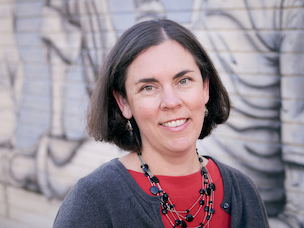
Sally Larsen is a Senior Lecturer in the School of Education at the University of New England (UNE), within the Faculty of Humanities, Arts, Social Sciences and Education. She is an active researcher and educator with a focus on quantitative methods in educational research, particularly longitudinal and multilevel modeling. Education: Ph.D., University of New England, 2022 M.Ed. (Teacher-librarianship), Queensland University of Technology, 2011 B.Ed. (Secondary), University of Queensland, 2004 B.A. (English/French), University of Queensland, 2002 Her research centers on reading and mathematics development across primary and early secondary school, with a strong emphasis on analyzing longitudinal data such as NAPLAN. She investigates growth patterns, predictors of academic development, and the application of behavioral genetics in educational contexts. Her methodological expertise includes structural equation modeling, latent growth curve models, and multilevel analysis. Her recent publications reveal a consistent focus on developmental trajectories in literacy and numeracy, school sector differences, genetic and environmental influences on learning, and methodological rigor in educational measurement. These works appear in top journals such as Developmental Psychology , Child Development , and Behavioral and Brain Sciences . Scientific Awards: Australian Association for Research in Education, Early Career Researcher Conference Paper Award (2023) University of New England, Chancellor’s Doctoral Research Medal (2022) Society for the Scientific Studies of Reading, Taylor and Francis Award (2020) Sally Larsen has contributed to major research collaborations and projects, including the Academic Development Study of Australian Twins (ADSAT). She advises on research methods and statistics and coordinates the Graduate Teaching Performance Assessment. She has presented at leading conferences such as AARE and SSSR and is a member of key academic societies including the Society for Research in Child Development. She is actively involved in translating research into practice, particularly in supporting evidence-based teaching and understanding how genetic research may inform, but not dictate, educational policy and classroom practice.