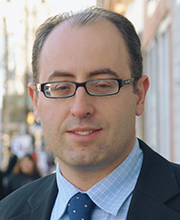
Jino Distasio is a Professor and Acting Dean of Science at The University of Winnipeg, Department of Geography. He teaches Urban Geography, Cultural Geography, and Social Geography, with courses like GEOG-3413 Urban Revitalization and GEOG-3430 Housing and Neighbourhood Planning . His research focuses on housing and neighborhood development, city planning, urban revitalization, homelessness, mental health, and urban transportation. Teaching Areas : Urban Geography, Cultural Geography, Social Geography Key Collaborations : Institute of Urban Studies (U. of Winnipeg), Housing First initiatives, interdisciplinary teams in public health and social policy His recent publications highlight Housing First interventions, urban policy impacts on homelessness, and social determinants of health. Scientific awards and honors were not explicitly mentioned in the provided text.
Richard Jochelson serves as Dean of Law at the Faculty of Law, University of Manitoba (Robson Hall), a position he has held since July 1, 2016. Previously, he taught criminal law for 10 years at the University of Winnipeg. Dr. Jochelson holds a Ph.D. in Law from Osgoode Hall Law School at York University, an LLM from the University of Toronto Faculty of Law, an LL.B. with Gold Medal from the University of Calgary Faculty of Law, and a B.Sc. in Zoology with Distinction from the same institution. He completed his legal training as a clerk at the Alberta Court of Appeal and Court of Queen's Bench before working at a major Canadian law firm. Dr. Jochelson's research program centers on critical issues in criminal justice and constitutional law, with primary interests in police powers jurisprudence, sexual regulation (particularly obscenity and indecency law), jury systems and representativeness, and legal pedagogy. His interdisciplinary approach bridges law with sociology and psychology, bringing empirical and theoretical rigor to legal scholarship. His work consistently addresses social justice concerns, examining how vulnerable populations interact with the justice system and how concepts like risk, precaution, and visibility shape legal decision-making. He has developed a distinctive methodology combining doctrinal analysis with empirical research on judicial behavior and jury decision-making. His recent publications reveal evolving scholarly priorities that respond to contemporary legal challenges. The 2025 article "Morbid Matters" addresses medical assistance in dying within federal corrections, while his 2024 works on youth terrorism cases and agnotology demonstrate expansion into new interdisciplinary territories. His longstanding commitment to police powers scholarship continues with "Ancillary Police Powers in Canada" (2024). The pandemic period saw significant contributions to understanding digital justice, mental health in legal education, and remote court proceedings. His criminal law scholarship maintains focus on jury representativeness, particularly regarding Indigenous inclusion following Bill C-75's elimination of peremptory challenges. Students' Teacher Recognition Award (CATL) - 2018 Dr. Jochelson has secured multiple SSHRC Insight Grants as both Principal and Co-investigator, demonstrating his ability to lead interdisciplinary research teams. His mentorship extends to junior academics and students, with several publications co-authored with emerging scholars. He has built significant research infrastructure, notably assembling nearly 40 interdisciplinary scholars across Canada for Robsoncrim.com, which has elevated the Criminal Law Edition of the Manitoba Law Journal to prominence as one of Canada's preeminent criminal law publications. As Dean of Law, Dr. Jochelson provides leadership in academic governance and legal education innovation. His service includes extensive committee work on academic affairs, workload policy, and hiring/tenure committees. His commitment to universal design principles informs both his teaching approach and administrative leadership, emphasizing accessibility and student-centered pedagogy that allows flexible evaluation methods tailored to individual learning preferences.
Dr. Frank Rudzicz is an Associate Professor in the Faculty of Computer Science at Dalhousie University. His research lies at the intersection of artificial intelligence, natural language processing, and healthcare, with a focus on developing machine learning systems that improve clinical decision-making, patient outcomes, and accessibility in medicine. He holds a BSc from Concordia University (2004), an MEng from McGill University (2006), and a PhD from the University of Toronto (2011). His research interests include Natural Language Processing, Machine Learning, Healthcare, Speech Technologies, Explainable AI, and Fairness in ML. Dr. Rudzicz's recent publications span a wide range of topics, including Alzheimer's detection through speech analysis, surgical outcome prediction, mental health monitoring, privacy in AI, and the application of large language models in clinical settings. His work consistently emphasizes ethical AI, patient privacy, and real-world clinical integration. He has received several awards, including a Best Paper award at EMNLP 2020, a Best Student Paper award at ICASSP 2021, and the ISCA Best Student Paper award in 2013. His research has been published in top-tier journals such as Nature Scientific Reports , JAMA Network Open , IEEE Access , and Frontiers in Human Neuroscience , as well as leading conferences including NeurIPS, ACL, ICML, and Interspeech. Dr. Rudzicz supervises a dynamic research group working on AI for health, with active projects in voice-based diagnostics, ambient clinical documentation, explainable AI for surgery, and wearable-based monitoring for chronic diseases. He collaborates widely across disciplines, including with clinicians, neuroscientists, ethicists, and public health experts. He is also involved in major initiatives such as the Genetics Navigator study and Bridge2AI-Voice, aiming to build ethically sourced, diverse biomedical datasets. His lab actively explores the societal implications of AI in healthcare, including fairness, trust, and resistance to malicious fine-tuning.
Antonio Pascual-Leone is a Professor in the Psychology Department at the University of Windsor's Faculty of Arts, Humanities and Social Sciences. He serves as Director of the Psychological Services and Research Centre (PSRC), also known as the House on Sunset, a state-of-the-art facility dedicated to training clinical psychologists through hands-on experience with child and adult patients facing emotional, psychological, and learning challenges. Active faculty member since at least 2014 Director of PSRC since facility's grand opening in 2017 Recognized for excellence in graduate student mentorship The PSRC under his leadership provides critical community services while maintaining profitability, and was described as "one of the best [training centers] in North America" in 2015 news coverage. Research Focus: Clinical psychology training, psychoeducational assessment methodologies, and mental health service delivery systems. His work emphasizes practical clinician development and addressing gaps in child psychological services through the PSRC's referral-based assessment programs.
Jay Henderson is an Assistant Professor in the Department of Computer Science at Memorial University of Newfoundland, leading the Human-Computer Interaction (HCI) Lab. His research focuses on quantitative HCI, measuring human performance with emerging technologies such as mixed reality and generative AI. He holds a PhD from the University of Waterloo and has held roles including Postdoctoral Fellow at Carleton University and Senior Research Scientist at Huawei Technologies Canada. Education: PhD in Computer Science, University of Waterloo (2021) BSc Hons in Computer Science (minors in Mathematics and Psychology), Mount Allison University (2016) Research Interests: Henderson’s work bridges computer science with psychology and mathematics, emphasizing objective measurement of user interactions. Key areas include mixed reality productivity, generative AI interfaces, gesture-based input, and multimodal feedback systems. His quantitative approach ensures practical insights for technology design. Key Grants & Awards: NSERC Discovery Grant ($155,000 over 5 years) NSERC Discovery Launch Supplement ($12,500) David R. Cheriton Graduate Scholarship ($20,000 over 2 years) Teaching & Supervision: Teaches courses like COMP 4303 (AI for Games) and supervises multiple graduate and undergraduate researchers. Notable supervisees include Daniel Jo (MSc) and Arunav Saha (BSc Honours). Service Contributions: Served on ACM committees including Graphics Interface and CHI Late Breaking Work. Acted as Virtual Chair for ACM ASSETS 2024 and contributed to ACM’s name change policy as a transgender advocate.
Samia Khan is a Professor in the Department of Curriculum & Pedagogy at the University of British Columbia's Faculty of Education, where she also serves as Associate Dean of Research. Her academic work bridges educational technology, science education, and teacher preparation across K-16 contexts. Dr. Khan earned her PhD from the University of Massachusetts. Her educational background informs her interdisciplinary approach to learning sciences and technology integration. Her research centers on how digital technologies transform science learning , with emphases on model-based teaching , visualization tools , and equitable participation in STEM . She investigates simulation technologies, future-state modeling, and strategies to broaden science engagement through interpretive and mixed-methods research. Her work particularly examines teacher epistemologies, scientific reasoning development, and socio-cultural factors in technology-mediated learning environments. Analysis of her recent publications reveals three dominant trends: (1) International comparative studies of science curricula across Southeast Asia, (2) Efficacy of digital tools (PhET, GeoGebra, Symbolab) in conceptual understanding, and (3) Pre-service teacher development in model-based science instruction. Her research spans diverse contexts from Canadian classrooms to Rwandan and Vietnamese educational settings. Dr. Khan's contributions have been recognized through: New Scholar Award from the Canadian Society for Study in Education Prime Minister’s Award of Canada for Teaching Excellence in Science, Technology, and Mathematics As former MET Director (2021-2022) and author of foundational courses ETEC 530/533, she has significantly shaped UBC's educational technology programs. Her Faculty Associate role at the Institute of Resources, Environment, and Sustainability demonstrates cross-disciplinary engagement with sustainability education. Her research appears in leading journals including Journal of Technology and Teacher Education, Computers and Education, and Educational Technology Research and Development, with consistent citation as field-shaping work in educational technology.
Jennifer Lavoie is an Associate Professor at Wilfrid Laurier University's Faculty of Human and Social Sciences, affiliated with the Department of Psychology and Criminology. She specializes in mental health crisis response, policing strategies, de-escalation techniques, and scenario-based training. Wilfrid Laurier University: Faculty of Human and Social Sciences, Psychology and Criminology Departments Research Interests : Her work focuses on integrating virtual reality and scenario-based training to improve police de-escalation skills. She examines violence risk assessment , correctional systems , and housing first programs for homeless individuals with mental illness. Recent studies address big data governance , cyberstalking victimization , and community-driven policing approaches . Publication Trends : Her research spans mental health policy , police training efficacy , and technological integration in crisis management . She explores virtual reality applications and community co-designed interventions , alongside longitudinal studies on stress and coping mechanisms in correctional and psychiatric settings. Scientific Awards : No scientific awards listed in available data. Advising : Actively supervises students in psychology and criminology, with unlisted advisees. Her work bridges academic research and practical policing applications .
Anita Hubley is a Professor at the University of British Columbia's Faculty of Education, Department of Educational and Counselling Psychology, and Special Education (ECPS). She serves as MERM Program Coordinator and directs the Adult Development and Psychometrics Lab. Her work focuses on psychometric test development/validation and quality of life research across adult populations. Education: Ph.D. in Psychology (Human Assessment specialization), Carleton University (1995) M.A. in Psychology (Lifespan Development and Aging), University of Victoria (1991) Pre-doctoral training at Geriatric Assessment Unit (Ottawa) and Neuropsychological Assessment Unit (Ottawa) Her research integrates psychometric theory with practical applications in aging populations, homeless/vulnerably housed individuals, and neuropsychological assessment tools. Key contributions include developing the Memory Test for Older Adults (MTOA), Hubley Depression Scale for Older Adults (HDS-OA), Quality of Life in Homeless and Hard-to-House Individuals (QoLHHI), and Subjective Age Identity Scale (SAIS). Scientific Awards: Killam Teaching Prize (2017) Distinguished Reviewer, Buros Institute of Mental Measurements (2013) She has taught graduate courses in Psychological Assessment, Measurement Principles, Scale Development, and Applied Neuropsychology, emphasizing ethical testing practices and response process research. Her lab's work on test adaptation for marginalized populations has informed international measurement standards.
Jennifer Lynes is an Associate Professor at the University of Waterloo in the Department of Environment and Business, where she co-directs the Sustainability & Financial Management program. She also serves as Chair of REEP Green Solutions and co-founded the North American Sustainable Concerts Working Group. Current roles: Associate Professor, Co-Director (Sustainability & Financial Management), REEP Green Solutions Chair Education background: Marketing and Environmental Studies Her research bridges business and environmental sustainability, focusing on: Social and community-based green marketing Youth environmental engagement programs Residential energy conservation behavior Sustainable tourism and hospitality practices Recent publications analyze: Water efficiency programs and behavioral change Electric vehicle adoption strategies Textile waste management in fashion consumption Sustainable eating behaviors in Canadian universities Scientific recognition includes: Emerald Publishing Group Highly Commended Paper (2014) She teaches courses such as: ENBUS 102: Introduction to Environment and Business ENBUS 309: Applied Social Marketing ENBUS 630: Enterprise Strategies for Social Accountability
Paul Ward is an Associate Professor in the Department of Electrical and Computer Engineering at the University of Waterloo and a faculty fellow at the IBM Centre for Advanced Studies. He holds a PhD (2002) and MASc (1993) from Waterloo and a BScE (1998) from the University of New Brunswick. His research focuses on distributed systems management, dependable systems, autonomic computing, wireless networks, and IoT. Key areas include fault detection in web services, service-oriented networking, and optimization of wireless mesh networks. Ward's publications span computer networks, cognitive science, and sports analytics, reflecting interdisciplinary applications of computational methods. He holds two patents in mobile web services and fault resolution.
Shannon Johnson is an Associate Professor in the Department of Psychology and Neuroscience at Dalhousie University, concurrently affiliated with the Departments of Pediatrics and Psychiatry. She serves as Director of Clinical Training and Co-Director of the Dalhousie Centre for Psychological Health, which provides mental health services to underserved populations while training clinical psychology students. Dr. Johnson holds a BA from Kalamazoo College, MSc and PhD from the University of Victoria, and a Postdoctoral Fellowship from Indiana University. Her research focuses on enhancing well-being through nature connection interventions, understanding resilience mechanisms in pediatric populations, and improving diagnostic practices for neurodevelopmental disorders. She investigates the physical and cognitive benefits of nature exposure, barriers to nature connection, and behavioral change strategies. Her work bridges clinical and environmental psychology, with recent studies examining nature-based interventions for stress reduction, pain adaptation in youth with juvenile idiopathic arthritis, and moral foundations in autistic children. She has pioneered the concept of Indoor Nature Exposure (INE) as a health-promotion framework. Dr. Johnson’s lab collaborates with healthcare providers to develop scalable mental health interventions, particularly for underserved communities. Her training programs emphasize evidence-based practices and culturally responsive care. Key contributions include validating the role of nature in cognitive restoration and challenging clinical biases in autism assessment.
Dr. Laura Pacheco is an Assistant Professor at the School of Social Work at Memorial University. She holds a BSW and MSW from McGill University and a PhD in Rehabilitation Medicine from the University of Alberta. Her research focuses on reproductive justice, intellectual disability and parenting, structural violence against women with disabilities, neurodiversity in aging, and social justice within health and social service systems. She has conducted post-doctoral work on support needs for parents with intellectual disabilities and has been a clinician, advocate, and program coordinator in parenting services for over 14 years. She teaches courses emphasizing critical social work practice, anti-oppression, and disability studies. Her funded research includes studies on neurodiverse aging (2020–2023) and service pathways for parents with intellectual impairments (2018–2021). She is an executive member of the International Association on the Scientific Study of Intellectual Disability (IASSIDD) and has contributed to international workshops and conferences. Her work bridges academic research with community engagement, advocating for systemic equity and inclusive policies.
Ellen J Amster is the Jason A. Hannah Chair in the History of Medicine at McMaster University and holds a joint appointment as Associate Professor in the Departments of Family Medicine and Religious Studies. She is an interdisciplinary historian and qualitative health researcher specializing in global health, bringing together history with health and religious studies. Her work focuses on the history of medicine in the West, the Islamic world, and French empire. Dr. Amster received her B.A. from the University of Chicago and her Ph.D. from the University of Pennsylvania. She has established herself as an expert in the history of public health, Islam and North Africa, France and French empire, maternal and infant health, global primary care, Islamic studies, religion and nonwestern healing systems, colonialism and postcolonial theory, and women's histories and gender. Her research portfolio reveals strong thematic continuity across time periods, with a focus on the intersection of medicine, colonialism, and identity. Recent publications demonstrate increasing engagement with critical race theory in medicine, gender studies, and contemporary social justice issues including analyses of the George Floyd protests. Her work spans history of medicine, medical humanities, and global health policy, with particular attention to Morocco and French colonial contexts. Dr. Amster has secured funding from prestigious sources including the Canadian Institutes of Health Research (CIHR), the Social Sciences and Humanities Research Council (SSHRC), the IIE Fulbright-Hayes program, the Chateaubriand Program of the French Government, and the American Institute for Maghrib Studies. She teaches courses on gender and religion, public health, and Middle East/North Africa for the Department of Religious Studies, the Master of Public Health Program, and the Michael G. DeGroote School of Medicine. Dr. Amster also organizes the Hannah History of Medicine and Medical Humanities Speaker Series and created the History of Medicine and Medical Humanities Research Portal (https://medhumanities.mcmaster.ca/), funded by Associated Medical Services.
Dr. Angelique Jenney is an Associate Professor and the Wood’s Homes Research Chair in Children’s Mental Health at the Faculty of Social Work, University of Calgary. With over 25 years of experience in gender-based violence, child protection, and children’s mental health sectors, she specializes in trauma-informed approaches and simulation-based learning methodologies. Doctor of Philosophy (PhD), Social Work – University of Toronto (2011) Master of Social Work (MSW) – Wilfrid Laurier University (1998) Bachelor of Arts (BA), Psychology Co-op Program – University of Guelph (1995) Her research focuses on child mental health , gender-based violence , trauma across the lifespan , and simulation-based learning . She develops tools to enhance clinical competencies through experiential training, addressing gaps in child protection responses to violence and trauma. Dr. Jenney’s publications highlight innovative practices such as virtual simulations for interdisciplinary education, narrative shelter models for resilience, and trauma-informed interventions with perpetrators. Her work bridges academic research and frontline practice, emphasizing practical knowledge dissemination to parents and policymakers. Faculty Publication Award (2017–2022) Faculty of Social Work Early Career Researcher Award (2021) Teaching Experiential Learning Initiatives Teaching Award (2023) She collaborates with agencies like the Hotchkiss Brain Institute and Mathison Centre for Mental Health Research and Education, contributing to policy development and training frameworks in child welfare.
Dawn Martin-Hill , Professor Emeritus in Indigenous Studies at McMaster University , is Canada’s first Indigenous cultural anthropologist and the founder of McMaster’s Indigenous Studies Program (1992). She also holds the role of Academic Co-Chair of the Indigenous Education Council and has served as Director of Indigenous Studies since 1998. A Mohawk scholar residing at Six Nations of the Grand River, she integrates Indigenous knowledge systems with Western science to address critical issues of water security, health, and sovereignty. Education & Training: PhD, Cultural Anthropology Research Interests: Dr. Martin-Hill’s work centres on traditional ecological knowledge (TEK) , community-driven water security , and Indigenous methodologies . Her flagship program Ohneganos co-creates bilingual tools—apps, VR, water sensors, Indigenous mapping, films, and podcasts—to empower First Nations in monitoring and managing water resources. She explores intersections of climate change, maternal health, mental health, and Indigenous governance . Research Impact: Spanning hydrology, medical anthropology, and digital health, her recent publications address urgent issues such as water insecurity’s impact on maternal mental health , climate-driven hydrological extremes , and digital mental-health tools for Indigenous youth . Collectively, her work advances decolonizing methodologies and supports United Nations Sustainable Development Goals. Scientific Awards & Honours: Inaugural Fulbright Indigenous Canada–U.S. Scholar Award Inaugural Chair, CIHR-IPH Secretariat on Traditional Medicine in Health Research Outstanding Teaching Award, Aboriginal Consortium 2022 University of Oklahoma International Water Prize Oklahoma Universities Water Technologies Award Princeton Book Award for forthcoming Ohneganos volume Funding & Training: Principal Investigator on four Global Water Futures grants that have supported over 30 graduate students and nine Indigenous Studies undergraduates , plus 45 secondary First Nations students receiving McMaster certificates. She has served as co-investigator on CIHR-IPH ARHNets Center funding 80+ First Nations, Métis, and Inuit graduate students . Leadership & Service: Member of the UNESCO Hydrology Committee for Canada , board member of CIHR Institute of Indigenous Peoples’ Health and CIHR Anti-Racism Committee , former Chair of the CIHR College of Reviewers. She spearheaded the McPherson Chair in Indigenous Studies and secured multiple Indigenous student scholarships and bursaries.