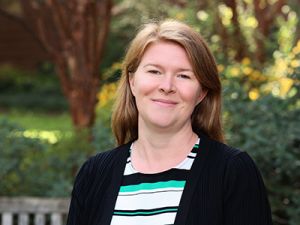
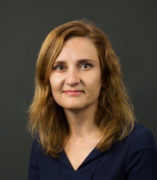
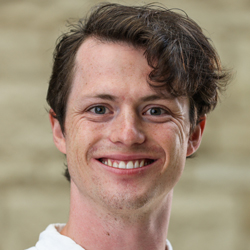
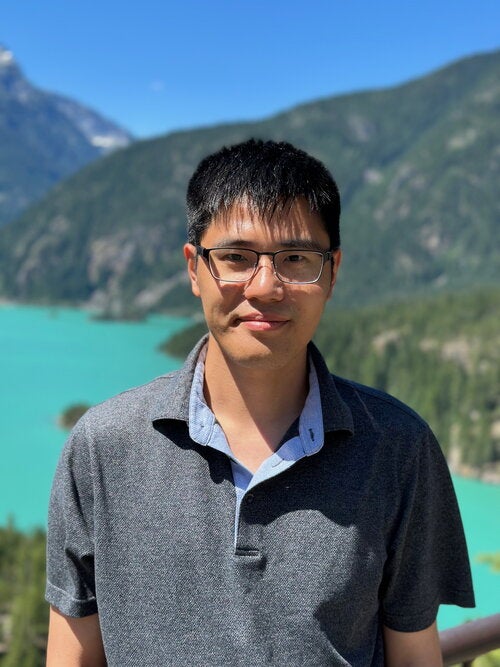
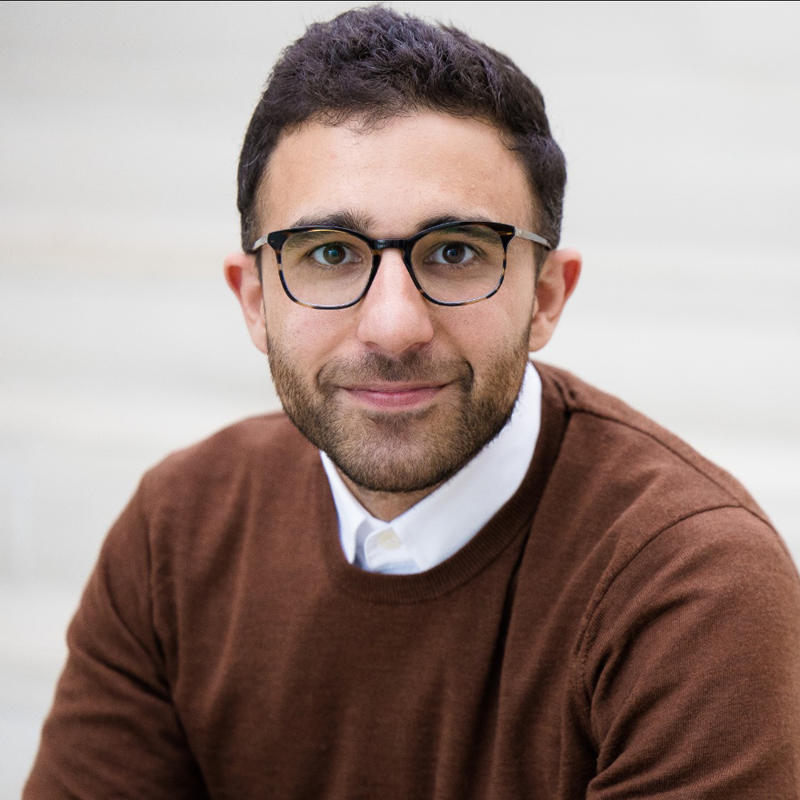
Lauren Lanahan is an Associate Professor in the Department of Management at the Lundquist College of Business , University of Oregon. She holds a PhD in Public Policy from the University of North Carolina at Chapel Hill and a BA from Reed College. Research focuses on the intersection of institutions, innovation, and economic growth. Key projects include analyzing federal R&D spillovers and local government roles in entrepreneurial ecosystems. Awards: Inman Research Scholar (2022–2023), Stewart Distinguished Faculty Award (2022). Active in the Lundquist Center for Entrepreneurship and Insights Research Lab .
Youn-Hee Lim serves as an Associate Professor in the Department of Public Health, Section of Environmental Health at the University of Copenhagen's Faculty of Health and Medical Sciences. Her research focuses on estimating environmental health effects using big data approaches, with particular emphasis on air pollution, noise, and climate impacts on population health. Dr. Lim earned her PhD in Epidemiology/Biostatistics from Seoul National University in 2011 and an MA in Applied Mathematics from the University of Colorado Boulder in 1998. Prior to her current position, she held research faculty positions at Seoul National University (Research Assistant Professor, 2011-2014; Research Associate Professor, 2014-2019) and worked as a Senior Research Data Analyst at Educational Testing Service (1998-2007). Her research program investigates the effects of environmental exposures on cardiovascular diseases and psychiatric disorders through linkage of register-based health data with historical exposure information. She leads multiple cohort studies examining environmental impacts on children's growth and neurocognitive development, as well as cardiovascular, metabolic, and neurodegenerative diseases in women and the elderly. Her work also explores the roles of genetic factors, DNA methylation, and microbiome in environmental health. Dr. Lim's methodological expertise spans biostatistics, exposome analysis, and cohort data analysis. Analysis of Dr. Lim's recent publications reveals a strong focus on air pollution health effects across multiple health outcomes, including mortality, congenital anomalies, neurodevelopmental disorders, stroke, cancer, and neurodegenerative diseases. Her research employs diverse methodologies including systematic reviews, cohort studies across multiple countries (particularly Korea and Nordic countries), and innovative exposure assessment techniques. A notable trend is her investigation of interactions between different environmental stressors and methodological challenges in environmental epidemiology. Dr. Lim has authored or co-authored 233 research outputs, including 223 journal articles, 3 conference abstracts in journals, 3 reviews, 2 letters, 2 book chapters, and 1 comment/debate. Her work has garnered attention from news outlets, social media, and academic readership across multiple platforms. As an active researcher in environmental health, Dr. Lim collaborates extensively across international boundaries, with research outputs picked up by multiple news outlets and blogged about in academic circles. Her work bridges epidemiological methods with practical environmental health applications, contributing significantly to our understanding of how environmental factors influence human health across the lifespan.
Elena Zheleva is an Associate Professor in the Department of Computer Science at the University of Illinois at Chicago (UIC). She leads the EDGES Lab, focusing on unifying causal inference, machine learning, and network analysis to address societal challenges. Her research bridges data science, privacy, and AI fairness, with applications in social networks, health, and policy. She earned her Ph.D. from the University of Maryland in 2011. Research Interests: Dr. Zheleva's work spans data science, machine learning, causal inference, graph mining, and privacy. She develops methods to address biases in relational data, designs personalized privacy tools, and studies network interference effects. Key applications include social media analysis, healthcare informatics, and algorithmic fairness. Publication Trends: Her recent articles emphasize causal inference in networked environments , tackling problems like peer effects, diffusion interference, and bias in ranking systems. She frequently publishes in top-tier venues (e.g., UAI, WWW, KDD), showcasing innovations in experimental design, fairness-aware AI, and graph-based learning. Awards & Honors: NSF CAREER Award (2021) COE Research Award (2021) DCFemTech Award (2017) Best Paper Honorable Mention at ICWSM 2020 Advising & Grants: She mentors 5 Ph.D. candidates and has graduated 13+ students. Her lab secured major grants from NSF, DARPA, Adobe, and Anthem for projects on relational causal inference, COVID-19 attitudes, and privacy-aware systems. Key grants include NSF CAREER, TRIPODS, and DARPA EDIFICE. Leadership: Dr. Zheleva co-organizes workshops (e.g., KDD tutorials on causal inference), serves as associate editor for ACM TIST and DAMI, and is program chair for SDM 2025. She leads the EDGES Lab, fostering collaborations in computational social science and AI ethics.
Neele Engelmann is a postdoctoral researcher at the Max Planck Institute for Human Development , working within the Center for Humans and Machines in Berlin, Germany. She obtained her Dr. rer. nat. in Psychology (2022), M.Sc. (2017), and B.Sc. (2014) from Georg-August-University Göttingen . Her research bridges psychology, philosophy, and law, focusing on causal and moral reasoning, human-AI interaction, and computational modeling. Ph.D. Psychology, Georg-August-University Göttingen (2022) M.Sc. Psychology, Georg-August-University Göttingen (2017) B.Sc. Psychology, Georg-August-University Göttingen (2014) Her research explores causal reasoning in moral judgment , including how statistical and prescriptive abnormality affect causal selection, and how drift diffusion models can explain rule enforcement processes. Recent studies examine human-AI interaction dynamics, particularly how framing (not transparency) reduces cheating in algorithmic delegation, and the computational modeling of moral decision-making in multi-outcome scenarios. Key publication trends include: moral psychology analyses of lying vs. misleading, experimental jurisprudence studies on legal-moral interface, and cognitive modeling of judgment mechanisms. She co-teaches statistics courses for psychology students using Excel and R, and has supervised numerous Bachelor's and Master's projects in causal/moral reasoning and experimental philosophy. Engelmann contributes to the Center for Humans and Machines , conducting interdisciplinary research that connects cognitive psychology with computational modeling and legal reasoning frameworks . Her work spans empirical investigations, theoretical modeling, and methodological innovations like hierarchical drift diffusion analysis.
Zach Wood-Doughty is an Assistant Professor of Instruction in the Department of Computer Science at Northwestern University's McCormick School of Engineering. His research focuses on causal inference, machine learning applications in healthcare, natural language processing, and audio generation. He holds a PhD and MSE from Johns Hopkins University and a BA from Carleton College. Education: PhD in Computer Science, Johns Hopkins University MSE in Computer Science, Johns Hopkins University BA in Computer Science and Mathematics, Carleton College His work bridges theoretical causal methods with practical applications in medical data analysis and audio synthesis. Recent projects include developing causal estimation techniques using large language models and advancing text-to-audio generation systems like Audio-Journey. His publications span topics from demographic analysis on social media to improving patient outcome predictions through machine learning. Research trends in his articles emphasize: Causal inference methodologies in observational studies Healthcare predictive analytics Generative AI for audio and text Algorithmic reliability and interpretability No specific grants or awards are listed, but his work reflects active engagement in funded research areas. His teaching role complements ongoing research contributions to McCormick's academic programs.
Yun Yang is an Associate Professor in the Department of Mathematics at the University of Maryland, College Park . Previously, he held positions as Associate Professor (2022–2022) and Assistant Professor (2018–2022) at the University of Illinois at Urbana-Champaign, and Assistant Professor at Florida State University (2016–2018). He earned a B.S. in Mathematics from Tsinghua University (2011) and a Ph.D. in Statistics from Duke University (2014). His research focuses on Bayesian inference , high-dimensional statistics , machine learning , and optimal transport . Recent work emphasizes applying optimal transport and Wasserstein gradient flows to statistical problems, including regression, clustering, and generative modeling. He also investigates algorithmic scalability and theoretical guarantees for modern statistical methods. Key contributions include advancements in diffusion models for manifold structures, minimax-optimal distribution estimation, and Bayesian model selection via variational approximations. His work bridges theoretical foundations with practical applications in data science and optimization. Service roles include Associate Editorships at Bayesian Analysis (2025–present) and Journal of Computational and Graphical Statistics (2023–present), and Area Chair for AISTATS (2022–present).
Bryan Keller is an Associate Professor of Practice in Applied Statistics at Teachers College, Columbia University. He holds affiliations with the departments of Data, Learning, and Society; Learning Analytics; and Measurement, Evaluation, and Statistics. His academic journey includes a PhD in Educational Psychology from the University of Wisconsin-Madison and prior roles as a high school math teacher and faculty member. His research focuses on quantitative methods in causal inference, treatment effect estimation, and statistical modeling in social sciences. He has secured grants totaling over $4 million, including studies on drug abuse prevention and educational interventions. Education: PhD, Educational Psychology (Quantitative Methods), University of Wisconsin-Madison, 2013 MS, Educational Psychology (Quantitative Methods), University of Wisconsin-Madison, 2010 MA & MAT, Mathematics Education, Binghamton University, 2000–2002 Research Interests: Dr. Keller’s work bridges statistical theory and application, emphasizing causal inference methods like propensity score analysis, variable selection, and experimental design. He develops tools for detecting treatment effect heterogeneity and evaluates methodologies in large-scale observational and experimental datasets. His research often addresses challenges in education, healthcare, and public policy. Grants & Awards: Principal Investigator: $25K AERA Grant for heterogeneous treatment effects (2018) Co-PI: $3.9M NIH grant for drug abuse prevention (2018–2023) 2013 Graduate Student Peer Mentor Award 2012 Genevieve Gorst Herfurth Honorable Mention Teaching & Service: Teaches courses in applied statistics, R programming, and causal inference. Serves on journal review boards (e.g., Journal of Educational and Behavioral Statistics ) and organizes conferences like the Atlantic Causal Inference Conference. Advises over 30 doctoral students across disciplines. Labs & Teams: Collaborates across disciplines, including the STILE for STEM project (NSF-funded) and the Michael J. Fox Foundation initiative on Parkinson’s disease interventions. Leads the MS in Applied Statistics program at Teachers College.
Dr. Yue Ning is an Assistant Professor in the Department of Computer Science at Stevens Institute of Technology, where she conducts cutting-edge research at the intersection of machine learning, graph mining, and data analytics. Her work focuses on social informatics, healthcare, and financial technologies, with an emphasis on developing predictive and generative methods that capture spatio-temporal, dynamic, and interpretable patterns in large-scale datasets. Dr. Ning is affiliated with the Stevens Institute for Artificial Intelligence (SIAI), Center for Research Toward Advancing Financial Technologies (CRAFT), and Semcer Center for Healthcare Innovation (CHI). PhD in Computer Science (2018), Virginia Tech Dr. Ning's research spans several interconnected domains in artificial intelligence. Her work in Graph Neural Networks focuses on designing new architectures for dynamic and heterogeneous graph data, with applications in continual learning and knowledge graph reasoning. In healthcare AI, she develops methods for personalized care, epidemic forecasting, and medical representation learning. Her work on socially responsible AI addresses fairness in finance and medicine, fake news detection, and hate speech identification. She also explores transfer learning and federated learning frameworks for domain adaptation and bias mitigation in imbalanced data scenarios. Analysis of Dr. Ning's recent publications reveals a strong focus on bridging graph neural networks with causal inference for robust event prediction. Her work increasingly integrates large language models with structured graph data for healthcare applications, particularly in medical coding and clinical record analysis. A notable trend is her growing emphasis on fairness and privacy in machine learning systems, reflected in multiple publications on graph fairness, certified unlearning, and bias mitigation in recommender systems. Scientific Awards: NSF CAREER Award (2021-2026) for deep interpretable predictions for multi-scope temporal events NSF CRII Award (2020-2024) for learning dynamic graph-based precursors for event modeling Early Career Award for Research Excellence from Stevens Institute of Technology Research fellowship from NIH-sponsored AIM-AHEAD program Dr. Ning actively mentors PhD and undergraduate students, with several successful PhD graduates including Songgaojun Deng and Chang. Her research is supported by multiple significant grants, including three NSF awards totaling over $1.5 million, NVIDIA GPU grants, and institutional support from Stevens Institute of Technology. She has served as Principal Investigator on projects exploring dynamic graph learning for event prediction, interpretable temporal event modeling, and domain-informed generative frameworks for medical knowledge learning. Dr. Ning leads research within the Stevens Institute for Artificial Intelligence, where she contributes to initiatives in healthcare AI and socially responsible machine learning. Her lab focuses on developing frameworks that integrate domain knowledge with deep learning for applications in healthcare, social science, and finance. Current projects include deep graph learning for dynamic and heterogeneous data, transfer learning for domain adaptation, and machine learning methods for healthcare applications including personalized care and epidemic forecasting.
Gunopulos Dimitrios is a Professor at the National and Kapodistrian University of Athens, Department of Informatics and Telecommunications. His research focuses on data science, machine learning, mobility data analysis, and interdisciplinary applications in urban systems, finance, and high-energy physics. He has contributed to frameworks like INSIGHT for urban traffic management and REMI for heterogeneous data mining. His work spans cloud computing, explainable AI, and spatiotemporal analysis, addressing challenges in real-world systems. Education: Education details not explicitly provided in the text. Research Interests: Dimitrios explores cutting-edge topics such as mobility data science, serverless computing, deep learning for financial forecasting, and causal reasoning. His work bridges theoretical computer science with practical applications in urban infrastructure, healthcare, and sensor networks. Recent efforts include developing algorithms for sparse data handling, fault detection in traffic systems, and counterfactual explainability in AI. Awards: No scientific awards explicitly mentioned in the text. Advising & Grants: No listed advisees or grant details available. His contributions are primarily through collaborative frameworks and conference engagements. Labs/Teams: Involved in projects like INSIGHT for urban data integration and Dione for big data application profiling. Collaborates on heterogeneous data analysis and cloud resource optimization initiatives.
Edoardo M. Airoldi is the Millard E. Gladfelter Professor of Statistics and Data Science and Professor of Finance (by courtesy) in the Fox School of Business and Management at Temple University , where he also serves as Director of the Data Science Center . Previously, he was on the faculty of the Department of Statistics at Harvard University (until 2018) and held visiting appointments at MIT, Yale, and Microsoft Research New England. Education Ph.D. in Computer Science, Carnegie Mellon University M.S. in Statistics, Carnegie Mellon University M.S. in Statistical and Computational Learning, Carnegie Mellon University B.S. in Mathematical Statistics and Economics, Bocconi University, Italy Research Interests Professor Airoldi’s research lies at the intersection of statistical methodology, theory, and large-scale data applications. He is best known for developing rigorous statistical approaches to the design and analysis of experiments on networks, addressing both treatment effects and interference. His work also advances scalable approximate inference techniques suitable for massive datasets and tackles modeling challenges in high-throughput biology, including proteomics and gene regulation. These methodological contributions are regularly applied to problems in computer science, social science, and healthcare, often in collaboration with leading technology firms such as Google, Microsoft, Facebook, LinkedIn, and DE Shaw. Across more than 170 peer-reviewed publications, Airoldi’s recent work (2020-2021) demonstrates strong methodological innovation in causal inference under network interference, stochastic optimization, ensemble learning for link prediction, and principled handling of nonignorable missing data. These articles appear in top venues spanning statistics, machine learning, and general science, underscoring the broad impact of his research. Honors & Awards Outstanding Statistical Application Award, American Statistical Association Sloan Research Fellowship Shutlzman Fellowship, Radcliffe Institute for Advanced Study NSF CAREER Award ONR Young Investigator Program Award IMS Medallion Lecture, Joint Statistical Meetings 2017 Fellow, Institute of Mathematical Statistics (2019) Fellow, American Statistical Association (2020) Advising, Grants & Collaborations While individual student names are not listed in the text, Professor Airoldi’s extensive publication record and leadership of the Harvard Laboratory for Applied Statistics & Data Science (prior to 2018) and now the Temple Data Science Center indicate robust PhD and post-doctoral advising activities. He has been PI or co-PI on major grants from NSF, ONR, and private foundations, and maintains active collaborations with industry partners that provide both funding and real-world data challenges. Labs & Teams At Temple, he directs the Data Science Center within the Fox School, fostering interdisciplinary research across business, engineering, health, and social sciences. Previously, he founded and directed the Harvard Laboratory for Applied Statistics & Data Science , which served as a hub for methodological development and applied projects in technology and finance.
Russ B. Altman is the Kenneth Fong Professor of Bioengineering, Genetics, Medicine, Biomedical Data Science, and (by courtesy) Computer Science at Stanford University. He previously chaired the Bioengineering Department (2007–2012) and led major initiatives like the FDA-supported Center for Excellence in Regulatory Science & Innovation. His research focuses on applying AI, data science, and informatics to drug action mechanisms, pharmacogenomics (via PharmGKB), and protein structure analysis (via the Helix Lab). He is a member of the National Academy of Medicine and has received prestigious awards including the U.S. Presidential Early Career Award and multiple fellowships. Education: AB in Biochemistry (Harvard, 1983), MD (Stanford, 1990), PhD in Medical Information Sciences (Stanford, 1989). Research Interests: Computational methods for drug response prediction, protein structure analysis, and functional genomics. His lab develops tools like PharmGKB and COLLAPSE for pharmacogenomics and structural biology. Recent work includes leveraging social media data for public health surveillance (e.g., opioid epidemic tracking) and AI-driven biomedical data science frameworks. Publications & Awards: Over 700 publications, including high-impact studies in Nature Communications and NPJ Digital Medicine . Awards include the AAAS Fellowship and leadership roles in ISCB and ASCPT. He hosts the Future of Everything podcast and co-founded Personalis (NASDAQ: PSNL). Advising & Grants: Mentored over 50 graduate students and postdocs. Served on FDA Science Board and NIH Advisory Committee. Current roles include Faculty Director of the 100 Year Study of AI (AI100) and Stanford’s Predictives & Diagnostics Accelerator. Labs & Teams: Leads the Helix Research Group and collaborates with the Stanford Institute for Human-Centered AI (HAI). Active in global health initiatives via the Chan-Zuckerberg Biohub and digital health collaborations with UC Berkeley.
Ferenc Huszár is a Professor of Machine Learning at the Department of Computer Science and Technology, University of Cambridge. He joined the department in 2020 after extensive industry experience in machine learning research at Twitter and Magic Pony Technology. His research spans multiple critical areas of machine learning including deep learning optimization, causal inference, probabilistic modeling, and representation learning. Huszár's work explores fundamental questions about why deep networks generalize, the role of optimization algorithms, and mathematical models of emergent behaviors in large language models. His research interests also include unsupervised representation learning, probabilistic foundations of deep learning, and causal inference with a focus on identifiability problems. Analyzing his recent publications (2023-2025), Huszár demonstrates a strong focus on theoretical foundations of machine learning with particular emphasis on causal inference, representation learning, and the mathematical understanding of large language models. His work bridges theoretical insights with practical applications, examining topics ranging from federated learning personalization to mathematical reasoning in LLMs and technical AI safety considerations. Huszár teaches advanced courses including Theory of Deep Learning (R252), Deep Learning and Neural Networks (DeepNN), and Advanced Topics in Machine Learning or Natural Language Processing (R250), where he has covered specialized subjects such as Causal Inference and AI Safety. Beyond academia, he actively contributes to the community through initiatives like Nagymaros AI Retreats for Hungarian high-school students and the Ukraine Math and Science Achievement Fund, which supports Ukrainian students displaced by war.
Dr. Judith Delaney is a Senior Lecturer in the Department of Economics at the University of Bath. Her research focuses on gender disparities in educational outcomes and labor market dynamics, examining how factors like socioeconomic status and geographic accessibility influence educational choices and career trajectories. Her primary research interests include gender differences in STEM participation, the impact of teacher evaluations on student outcomes, economic analyses of minimum wage policies, and the effects of college proximity on application behaviors. She employs quantitative methods to investigate educational inequality and labor economics. Dr. Delaney's recent publications demonstrate a consistent focus on gender and socioeconomic factors in education. Her 2022-2025 works examine graduate degree choices, teacher assessment biases, and spatial determinants of college applications. Earlier research (2020-2021) explored minimum wage compliance, college application behaviors, and STEM persistence patterns.
Xu Shi is an Associate Professor in the Department of Biostatistics at the University of Michigan. Previously, they were a postdoctoral fellow at Harvard's Data Science Initiative. They hold a Ph.D. in Biostatistics from the University of Washington and a B.S. in Mathematics and Applied Mathematics from Zhejiang University, China. Research focuses on statistical methods for administrative healthcare data, including EHR curation, causal inference, and scalable pipelines for distributed healthcare systems. They co-lead the FDA Sentinel Initiative's Causal Inference Core, developing methods to monitor medical product safety. Key areas include EHR harmonization, negative control applications, and addressing unmeasured confounding in observational studies. Publications span causal inference methodologies, vaccine effectiveness, post-stroke outcomes, and synthetic EHR data generation. They emphasize interdisciplinary collaboration, particularly with the FDA and distributed healthcare networks. Education history includes: B.S. in Mathematics and Applied Mathematics (Zhejiang University, China) Ph.D. in Biostatistics (University of Washington) Postdoctoral Fellowship (Harvard University) Labs/Teams: Leadership in the FDA Sentinel Initiative's Causal Inference Core and collaborations with institutions like Partners HealthCare and Veterans Health Administration.
Sascha Riaz is a Full-time Assistant Professor at the European University Institute (EUI), specializing in the Department of Political and Social Sciences . He previously served as a Postdoctoral Prize Research Fellow at Nuffield College, University of Oxford , where he remains an associate member. Riaz holds a Ph.D. in Government from Harvard University (2022). His research focuses on political behavior , particularly in industrialized democracies, with a strong emphasis on immigration , xenophobia , and political violence . Methodologically, he is an expert in causal inference and quasi-experimental research designs , often integrating advances in artificial intelligence for measurement tasks. His work spans topics such as populism , intergroup conflict , and historical political economy , with a regional focus on Germany . Riaz’s recent publications highlight trends in political polarization , refugee policies , and the impact of historical narratives on contemporary political attitudes. His studies frequently employ observational causal inference and experimental methods to address questions of policy effectiveness, social integration, and political accountability.