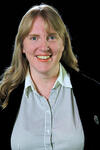
Teruki Kamon is a Professor at Texas A&M University affiliated with the Mitchell Institute for Fundamental Physics & Astronomy. As an active member of the CDF and CMS collaborations, he conducts experimental particle physics research at hadron colliders with focus on dark matter phenomenology. His research centers on testing particle physics models for cold dark matter, with Supersymmetry (SUSY) as a leading candidate. He pioneered SUSY searches in final states involving electrons, muons, and third-generation particles like tau leptons, specializing in: Compressed mass spectrum signatures Vector boson fusion topologies Soft tau lepton analyses Missing transverse momentum techniques Recent publications (2017-2020) demonstrate consistent leadership in LHC-based searches for supersymmetry and new physics, including unique contributions to CMS detector upgrades. His group dominates research on compressed-mass SUSY in vector boson fusion processes. No information regarding awards, student advising, or grant funding was provided in available sources.
Massachusetts Institute of TechnologyUnited States
Gunther Roland is a Professor of Physics and Division Head of Experimental Nuclear and Particle Physics at MIT. His research focuses on emergent properties of strongly interacting matter under extreme conditions, such as those created in high-energy nuclear collisions at the Large Hadron Collider (LHC). He leads the MIT Relativistic Heavy Ion Group, which collaborates with the CMS experiment at CERN to study the Quark-Gluon Plasma (QGP). Education: PhD in Physics from the Institut für Kernphysik, Frankfurt (1993). He joined MIT in 2000, became Associate Professor in 2004, and Full Professor in 2011. Research interests include QGP transport properties, parton propagation, and collision signatures in proton-proton and proton-lead systems. His group is developing advanced calorimeter triggers and online event selection tools for future LHC experiments. Awards: Heraeus Foundation Endowed Visiting Professorship (2023), APS Fellow (2013) Labs/Groups: Relativistic Heavy Ion Group, Phobos Collaboration Future Work: High-luminosity data analysis using Z+jet correlations and advanced detector systems.
Alexandra Gade is a University Distinguished Professor at the Department of Physics and Astronomy in the College of Natural Science , Michigan State University (MSU). She serves as the FRIB Scientific Director and has held leadership roles at both the National Superconducting Cyclotron Laboratory (NSCL) and FRIB. Her research focuses on the structure of exotic nuclei using radioactive isotope beams , with expertise in Coulomb excitation and nucleon knockout reactions . Education: Ph.D. in Physics (Dr. rer. nat.), University of Köln (2002) Diploma thesis, University of Köln (1998) Vordiplom, University of Köln (1995) Her nuclear structure research investigates how neutron-proton asymmetry alters nuclear properties like deformation, excitation patterns, and shell closures. She employs advanced experimental techniques at NSCL/FRIB, including the S800 spectrograph and GRETINA/SeGA gamma-ray detectors , to study exotic nuclei across the nuclear chart. Key projects include proton/neutron removal reactions and intermediate-energy Coulomb excitation , providing insights into nuclear deformation , collective modes , and single-particle orbit modifications . Recent scientific contributions focus on high-profile FRIB experiments , triaxial nuclear shapes , and shell evolution near drip lines . Her work bridges experimental observations with nuclear theory , particularly in refining shell model calculations and reaction models for exotic systems. Scientific Awards: 2023-24 Research Leadership Award (MSU) 2020 AAAS Fellow 2018 William J. Beal Outstanding Faculty Award (MSU) 2017 NatSci Outstanding Faculty Award (MSU) 2015 Zdzislaw Szymanski Prize 2014 GENCO Membership Award (GSI) 2013 APS Fellow 2010 Thomas H. Osgood Excellence in Teaching Award (MSU) 2008 Alfred P. Sloan Fellow 2008 DOE Outstanding Junior Investigator Her research group has trained numerous PhD students and postdoctoral researchers , many of whom hold academic or national laboratory positions. Collaborations include nuclear theorists , instrumentation experts , and international facilities like CERN, Argonne, and Lawrence Livermore National Laboratory.
Professor Emilio Artacho is a faculty member in the Department of Physics at the University of Cambridge, based at the Cavendish Laboratory. He transitioned from the Department of Earth Sciences in 2011, where he was granted a Professorship in 2006. His research focuses on computational simulations of non-equilibrium processes in condensed matter, particularly using first-principles molecular dynamics and density-functional theory. He co-developed the SIESTA program for linear-scaling electronic structure calculations, widely utilized in computational materials science. Artacho’s work spans far-from-equilibrium phenomena in irradiated matter, multiferroics, nanoconfined water systems, and surface chemistry. His contributions include studies of electronic stopping power in materials, 2D electron gas formation at ferroelectric interfaces, and the structural dynamics of water under confinement. His academic roles include adjunct positions at Ikerbasque (Nanogune, Spain) and visiting professorships at institutions like the University of California, Berkeley, and École Normale Supérieure de Lyon. Research interests are anchored in theoretical condensed matter physics, with applications to nanomaterials, radiation effects, and interfacial phenomena. His computational methods bridge quantum mechanics and classical dynamics, enabling insights into complex systems like proton-irradiated solar cells and confined water films.
Alberto Belloni is an Associate Professor at the University of Maryland's Department of Physics. He is a key member of the CMS Collaboration at CERN, contributing to the Hadronic Calorimeter (HCAL) upgrade. His research focuses on high-energy particle physics experiments at the Large Hadron Collider (LHC), particularly Higgs boson studies and detector technology advancements. Education: B.S. from University of Pisa and Scuola Normale Superiore (2002), Ph.D. in Physics from MIT (2007). Teaching responsibilities include courses such as Physics 273 (Waves), Physics 275/276 (Experimental Physics), and advanced quantum/Modern Physics modules. Notable contributions include co-authoring landmark publications on Higgs boson discovery (ATLAS Collaboration, 2012) and precision W/Z boson measurements (2010). His work supports ongoing LHC experiments exploring fundamental particles and interactions.
Wolfgang Lorenzon is a Professor of Physics at the University of Michigan, specializing in experimental particle physics, nuclear physics, and astrophysics. His research spans three major experimental programs: the LUX-ZEPLIN (LZ) dark matter experiment at SURF, the MUSE experiment at PSI for proton radius measurements, and the SpinQuest collaboration at Fermilab studying hadronic physics. He has held significant roles in major collaborations including SeaQuest and HERMES, where he served as Deputy Spokesman from 1997-1998. His educational background includes a Ph.D. (1988) and Diploma (1984), both from the University of Basel. Lorenzon has built a distinguished research career focusing on precision measurements in particle and nuclear physics, with particular expertise in detector development and experimental techniques. Lorenzon's research interests center on fundamental questions in particle physics. His work on the LZ experiment involves developing the in-line radon removal system for the central time-projection chamber, crucial for enhancing the detector's sensitivity to WIMPs. At PSI, he leads the development of liquid hydrogen targets for the MUSE experiment, which aims to resolve discrepancies in proton charge radius measurements. His hadronic physics work with SeaQuest and SpinQuest focuses on understanding nucleon structure through antiquark distributions and polarized Drell-Yan processes. His research bridges theoretical questions with cutting-edge experimental techniques, often requiring innovative detector solutions. Analysis of his recent publications (2023-2025) reveals a strong focus on dark matter detection using liquid xenon technology, precision measurements of nucleon structure, and development of next-generation detectors. His work spans theoretical interpretation of experimental results, detector development, and analysis of fundamental particle interactions. The research shows increasing collaboration across international boundaries, with significant contributions to multiple major experiments simultaneously. Scientific Awards: Fellow of the American Physical Society Lorenzon has mentored numerous graduate students through completion of their Ph.D. degrees, with recent graduates including Haley Reid (2024), Noah Wuerfel and Chami Amarasinghe (2023), Maris Arthurs (2022), Marshall Scott (2020), and Daniel Morton (2019). His current research group includes postdocs, graduate students, and undergraduate researchers. His research is supported by multiple grants from the National Science Foundation (Grant 2110229) and the Department of Energy (Grant SC0019193 and Subcontract 734299), as well as University of Michigan funding. Lorenzon leads a research group with active laboratories at both the Homer A. Neal Laboratory (3265 HANL) and West Hall (357 WH) at the University of Michigan. His team collaborates with international groups at Fermilab, SURF in South Dakota, and the Paul Scherrer Institute in Switzerland. The group maintains strong connections with the LZ collaboration, MUSE experiment, and SpinQuest collaboration, contributing both technical expertise and physics analysis capabilities to these major international efforts.
Micheline B. Soley is an Assistant Professor in the Department of Chemistry at the University of Wisconsin-Madison with an affiliate appointment in Physics. She leads the Soley Research Group, which focuses on developing quantum computing algorithms, tensor-network methods, and quantum control strategies to address fundamental challenges in quantum dynamics and ultracold chemistry. Her research bridges theoretical chemistry, quantum information science, and computational physics. Education: Ph.D. in Chemical Physics, Harvard University (2020) A.M. in Chemistry, Harvard University (2016) Yale Quantum Institute Postdoctoral Fellow (2020-2022) Fulbright Fellow, Max Born Institute (2013-2014) B.S. in Chemistry and Music, Yale University, Magna Cum Laude (2013) Research Interests: Her work centers on three interconnected pillars: (1) Quantum computing algorithms and tensor-network methods for exact quantum dynamics, overcoming dimensionality limitations in chemical simulations; (2) Ultracold chemistry and quantum control, developing schemes to manipulate chemical reactions and analyze ultracold collisions; and (3) Theoretical spectroscopy, creating tools to simulate UV/X-ray pump-probe experiments for mechanistic studies of processes like isomerization and proton transfer. Publication Trends: Recent articles (2023-2025) demonstrate a strong focus on quantum algorithm development (error mitigation, amplitude estimation), tensor-network applications in quantum dynamics and biomolecular simulations, quantum hardware compilation, and fundamental studies of PT symmetry and ultracold collisions. Her work consistently integrates theoretical chemistry with quantum information science. Awards and Fellowships: American Chemical Society Kavli Emerging Leader in Chemistry Award (2023) Institute for Pure and Applied Mathematics Fellow (2021) Yale Quantum Institute Postdoctoral Fellowship (2020) National Science Foundation Graduate Research Fellowship (2014) Fulbright Fellowship (2013-2014) DAAD Graduate Scholarship (2013-2014) Beckman Scholars Fellowship (2012-2013) Phi Beta Kappa (2012) Advising and Group: She mentors graduate students from Chemistry and Physics programs, including Jingcheng Dai (Chemistry), Atharva Vidwans (Chemistry/Physics), and Henry Lin (Physics-Quantum Computing). Former advisees include Preetham Tikkireddi (Quantum Circuits Inc.) and Jaden Coles (Yale PhD). Her group explores quantum computing, tensor networks, ultracold collisions, and PT symmetry.
Jesse Liu is an Assistant Professor of Physics at the New York University College of Arts & Science , joining in Spring 2025. He collaborates with the ATLAS Experiment at CERN and leads the NYU Experimental Particle Physics group. Research Interests: Liu's work bridges fundamental particle physics and detector innovation. He investigates Tau-lepton electromagnetic dipoles via photon collisions at the LHC High-luminosity LHC silicon tracker upgrades Dark matter searches through collider experiments and the BREAD axion detection project Cosmic ray physics using ATLAS data Recent Publications focus on tau magnetic moment measurements, detector thermal stress mitigation, and cosmic ray signature analysis. His work has been featured in Phys. Rev. D , Phys. Rev. Lett. , and JINST . Outreach & Mentorship: Liu actively engages in public science communication through Pint of Science talks The Conversation articles School visits to CERN First-gen student mentorship at NYU CU*iP Contact: Office at 726 Broadway, Room 852, New York City. Email: jesse.liu2@nyu.edu
Peter Matthias Stoffer is an SNSF Eccellenza Professor at the University of Zurich and a Tenure-track scientist at the Paul Scherrer Institute (PSI). His research is currently funded by a SNSF project grant at PSI and an SNSF professorial fellowship, jointly hosted by the University of Zurich and PSI. Previously, he held positions as a University assistant at the University of Vienna (2020-2021), Postdoctoral researcher at UC San Diego (2019-2020), SNSF postdoctoral research fellow at UC San Diego (2017-2018), and Postdoctoral researcher at the University of Bonn (2014-2016). Stoffer's research focuses on effective field theories for physics beyond the Standard Model (SMEFT, LEFT), non-perturbative methods for low-energy hadron physics including dispersion relations and chiral perturbation theory, matching to lattice-QCD schemes, and applications to precision observables such as dipole moments, CP violation, and lepton-flavor violation. His work is particularly relevant to understanding the muon anomalous magnetic moment (g-2) and other precision tests of the Standard Model. The analysis of his recent publications reveals a strong emphasis on renormalization group equations for effective field theories, hadronic light-by-light scattering, and precision calculations related to the muon g-2 anomaly. His work spans both theoretical developments in effective field theory and practical applications to current experimental puzzles in particle physics. Stoffer has received the prestigious SNSF Eccellenza Professorship, which supports outstanding early-career researchers in establishing their own independent research groups. His research group maintains close connections between the University of Zurich and PSI, leveraging the complementary strengths of both institutions.
Didar Dobur is an Associate Professor at the Department of Physics and Astronomy , Faculty of Sciences , Ghent University . His research focuses on Experimental Particle Physics , particularly High-Energy Physics and Collider Studies . He leads projects at the CERN Large Hadron Collider using the CMS detector , investigating New Physics Beyond the Standard Model , including axion-like particles, supersymmetry, and Higgs-top couplings. Current projects: AxiTop , FLAMENCO , Unlocking the charm-Higgs coupling Grants: Research Foundation - Flanders (FWO) , Special Research Fund His recent publications (2023-2025) analyze top quark interactions , Higgs boson decays , and long-lived particle signatures using LHC data. Key subfields include Effective Field Theory , Muon Radiography , and Neutrino Experiments . As a PhD supervisor and promotor , he has guided researchers like Bob Oeyen and Luka Lambrecht in studies of CERN experiments and detector development . Current lab collaborations involve CMS Phase-2 Upgrade and SHiP experiment R&D.
Aneta Iordanova is a Lecturer at the University of Illinois at Chicago (UIC), affiliated with the College of Engineering . She can be contacted at aiorda1@uic.edu , located in SES 2344 . Her research lies at the intersection of Particle Physics , Nuclear Physics , and Quantum Chromodynamics (QCD) , focusing on Heavy-Ion Collisions , Quark-Gluon Plasma , and Experimental Physics . Key trends in her work include measurements of Elliptic Flow , Jet Substructure , Meson Production , and Direct Photon Anisotropy across varying collision energies and rapidities. Dr. Iordanova's publications highlight her expertise in High-Energy Physics , with a focus on Collision Dynamics , Hadron Correlations , and Parton Energy Loss . Her work spans both Relativistic Heavy-Ion and Proton-Proton Collisions , utilizing data from experiments like PHENIX at RHIC.
Mitchell Wayne is a Professor in the Department of Physics and Astronomy at the University of Notre Dame. His research centers on proton-proton collisions at the CMS detector at CERN's Large Hadron Collider, including Higgs boson studies and searches beyond the Standard Model. Honors include American Physical Society Fellowship and multiple teaching awards. His detector R&D focuses on fiber tracking, calorimetry, and Silicon Photomultipliers for CMS upgrades. Awards: Fellow of APS, Joyce Teaching Award (2019), Shilts-Leonard Teaching Award (2002), Kaneb Teaching Award (1999) Student Advising: Supervised 5 PhD students in particle physics and detector development
Dr. Gines Martinez is a Director of Research at CNRS/IN2P3 and Director of SUBATECH laboratory at IMT Atlantique. His research focuses on experimental study of quark-gluon plasma using relativistic heavy ion collisions at ALICE (LHC) and PHENIX (RHIC) experiments. He teaches Experimental Physics of Strong/Weak Interactions at Université de Nantes and electromagnetism/quantum mechanics at IMT Atlantique. Research Interests: Quark-gluon plasma formation, particle production in hadronic collisions, deuteron formation mechanisms, and ultra-relativistic nuclear collisions. Recent Publications: Focus on femtoscopy, flow harmonics, and QCD phase diagram using LHC data. Research reveals insights into nucleosynthesis in hadronic collisions and QCD matter behavior under extreme conditions. Outreach: Featured in Ouest-France and El País, with seminars on physics education in prisons and schools.
Prof. Stanley Lai is a Professor of Experimental Particle Physics at the Institute of Physics, University of Göttingen, Germany, with secondary membership in the Institute of Informatics. He conducts research as a member of the ATLAS experiment at CERN's Large Hadron Collider (LHC), focusing on proton-proton collisions at 13/14 TeV to investigate fundamental particles and electroweak symmetry breaking. His educational background includes: B.A.Sc. from the University of Toronto (1999) M.Sc. from the University of Toronto (2001) Ph.D. from the University of Toronto (2007) Prof. Lai's research centers on precision measurements of the Higgs boson's properties—including quantum numbers and couplings—to deepen understanding of electroweak symmetry breaking. He actively pursues searches for new physics beyond the Standard Model at TeV energy scales, leveraging the unprecedented collision energies of the LHC. His work bridges theoretical predictions with experimental validation through the ATLAS detector. He joined the University of Göttingen in 2015 as a Professor, following his tenure as Akademischer Rat (permanent academic position) at the University of Freiburg (2011-2015) and Postdoctoral Researcher there (2006-2011).
Helen Caines is the Horace D. Taft Professor of Physics at Yale University. She is affiliated with the Department of Physics and actively collaborates with the ALICE and STAR experiments at CERN’s LHC and Brookhaven’s RHIC. Her research focuses on understanding the behavior of nuclear matter under extreme conditions, particularly the Quark-Gluon Plasma (QGP), through experimental and theoretical studies of ultra-relativistic heavy-ion collisions. Dr. Caines holds a Ph.D. in Physics from the University of Birmingham (1996). Her honors include Fellowships from the American Physical Society (2019), the Institute of Physics (UK, 2008), and a notable recognition as the APS CSWP Woman Physicist of the Month in January 2012. Her research interests span experimental nuclear physics, with emphasis on measuring high-momentum particles in collisions and their interactions with the QGP. She has pioneered studies of strangeness production and jet quenching. Her work contributes to decoding the QGP’s properties, such as its equation of state and collective behavior. Recent articles focus on QGP signatures through jet energy loss, photonuclear production, and hypernuclei formation. These studies highlight advancements in understanding the quark-gluon medium’s dynamics and the phase transitions in high-energy collisions. Dr. Caines has been a leader in collaborative experiments at the LHC and RHIC, advancing global efforts in relativistic heavy-ion physics. Her teaching philosophy emphasizes integrating ethical and humanistic perspectives into STEM education.