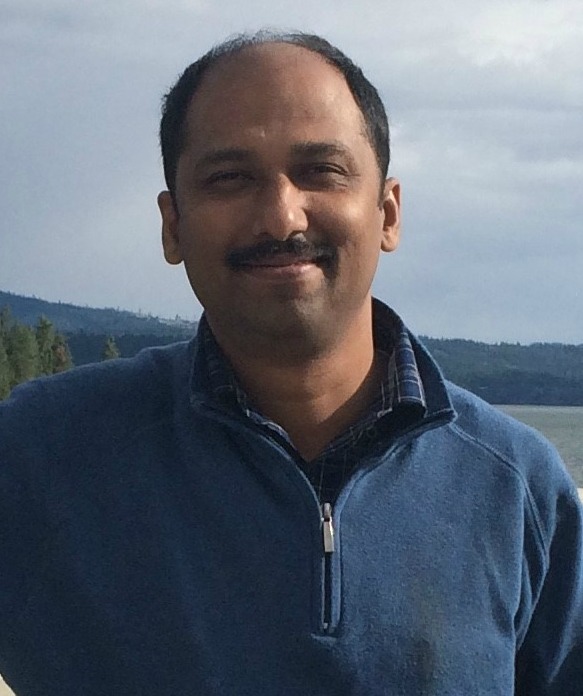
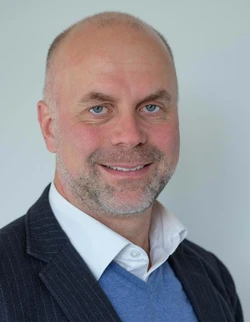
Shimat V. Joseph is an Associate Professor in the Department of Entomology at the University of Georgia 's College of Agricultural & Environmental Sciences . His research and extension programs focus on urban landscape ecology , pollinator ecology , and integrated pest management for turfgrass and ornamental systems. His research projects aim to develop environmentally sustainable strategies for managing pests like ambrosia beetles , rhodesgrass mealybug , and Systena frontalis , with emphasis on reducing non-target impacts. Recent studies explore RNA interference , ethanol lure dynamics , and trap color optimization for beetle monitoring. The Joseph Lab currently supervises six graduate students and collaborates with researchers across multiple institutions. His work addresses pest management challenges in golf courses , ornamental nurseries , and residential landscapes . Key publications from 2025 cover topics in insect behavior , chemical ecology , and environmentally sensitive pest control .
Lisa Elviri is an Associate Professor in Analytical Chemistry at the Department of Pharmacy, University of Parma, Faculty of Sciences. She holds a PhD in Chemical Sciences (Analytical Chemistry) from the University of Parma and has been a tenured researcher since 2004. Education: PhD in Chemical Sciences (Analytical Chemistry, University of Parma); Laurea in Chemistry (University of Parma). Her research spans analytical chemistry , mass spectrometry , biomaterials , 3D printing , and clinical diagnostics . She focuses on developing LC-MS and immunoenzymatic methods, validating techniques for pharmaceutical analysis, and designing chitosan-based scaffolds for tissue regeneration. Recent publications highlight work on Alzheimer’s disease (PCSK9 inhibition, APOE4 genotype studies), 3D-printed medical devices , and biorefinery quality monitoring using spectroscopy. Her teaching includes Analytical Chemistry for 5-year Master’s programs in Pharmacy and Pharmaceutical Chemistry. She has authored 75 international publications, 140 conference communications, and holds an H-index of 26 (Google Scholar). Her office is located at the Science and Technology Campus, Parma.
Tony Schapira is Professor of Neurological Science at University College London (UCL) and Head of the Department of Clinical Neurosciences at UCL Institute of Neurology. He serves as a Consultant Neurologist at the National Hospital for Neurology and Neurosurgery and Royal Free Hospital, and holds additional leadership positions as Vice Dean of UCL Medical School and Director of the Royal Free Campus. His academic appointments include Visiting Professorships at Harvard (2009) and Yale (2010). Education includes: Bachelor of Science (Honours) from King's College London (1976) Bachelor of Medicine/Bachelor of Surgery from Charing Cross and Westminster Medical School (1979) Member of the Royal College of Physicians (1982) His primary research investigates neurodegeneration mechanisms in Parkinson's disease (PD), with emphasis on mitochondrial dysfunction, alpha-synuclein pathology, and GBA1 mutation pathways. His work spans molecular pathogenesis, drug development for disease modification, and clinical phenotyping of at-risk populations. Current projects focus on identifying prodromal biomarkers and developing neuroprotective therapies through international clinical trials. Schapira's recent publications (2024-2025) demonstrate concentrated research in Parkinson's disease mechanisms, mitochondrial biology, genetic risk factors (particularly GBA1 variants), and novel therapeutic approaches. Article themes consistently explore protein aggregation pathways, lysosomal function, metabolic interactions, and clinical trial methodologies. Awards and honors include: Fellow of the Academy of Medical Sciences (1999) Undergraduate Scholarship at Westminster Medical School He has supervised 11 PhD students and one MD candidate, and currently mentors post-graduate and post-doctoral researchers. His department received UCL's 'Excellence in Medical Education' award (2007-2008). Major grants include co-principal investigator roles on: MRC-Wellcome Strategic Award in Neurodegeneration (£6 million) Wolfson Award (£20 million) He directs a research department comprising 3 Readers, a Senior Lecturer, technicians, and academic staff, with facilities for biochemistry, molecular biology, tissue culture, and advanced imaging. The team investigates neurodegenerative disorders including Parkinson's, Huntington's, and Friedreich's ataxia.
Hui Li serves as Chair Professor in the Department of Materials Science and Engineering at South University of Science and Technology of China (SUSTech), a position she has held since October 2015. She concurrently holds adjunct appointments as Extraordinary Professor at North-West University of South Africa and Adjunct Professor at the University of British Columbia. Her academic foundation includes: PhD in Electrochemical Engineering from the University of British Columbia (2006) MSc in Chemical Engineering from Tsinghua University (1990) BSc in Chemical Engineering from Tsinghua University (1987) Prof. Li's research program centers on electrochemical energy conversion with emphasis on hydrogen technologies. Her work spans fundamental electrocatalysis to commercial fuel cell systems, specifically targeting: PEM fuel cell materials and failure analysis Hydrogen production via water electrolysis Novel membrane development for fuel cells Electrochemical synthesis of ammonia and fuels Recent publications reveal a strategic focus on replacing precious metals in catalysts while enhancing durability of hydrogen energy systems. Her team pioneers nanomaterial engineering for oxygen reduction/evolution reactions and develops standardized testing protocols for industrial deployment. Recognition includes: SUSTech Distinguished Scholars award Level A designation in Shenzhen's High-Caliber Personnel Peacock Plan She leads major collaborative initiatives with the US Department of Energy, German Aerospace Center (DLR), and industry partners including Ballard and Hydrogenics. Her Shenzhen Key Laboratory of Hydrogen Energy drives R&D in membrane electrode assemblies and bipolar plate manufacturing. The laboratory maintains active partnerships with national research councils and global energy corporations to accelerate hydrogen technology commercialization.
Dr. Saulius Rudys is a Senior Researcher at the Institute of Applied Electrodynamics and Telecommunications (IAET) within Vilnius University, focusing on electromagnetic engineering and aerospace technology. His work bridges material science with UAV detection systems and radar innovation. Research Interests : Antenna design, dielectric spectroscopy, UAV radar systems, microwave material analysis Projects : Led multiple high-budget UAV detection projects including EU-funded initiatives His recent publications analyze electromagnetic properties of advanced materials and develop counter-UAV systems using marine radar and GNSS antenna arrays. Key themes include: Microwave characterization of ferroelectrics and ferrites UAV detection via FMCW radar Physical layer security for aviation systems Scientific awards highlight his impact in aerospace security: DLR Galileo Masters winner (2013, 2015, 2016) EU SatCom Challenge Prize (2021) Vilnius University Best Applied Work Award (2020) He has contributed to computational electromagnetic analysis and developed methods for dielectric measurements in coaxial lines and waveguides.
Judith Josupeit (Dr. rer. nat.) is a Lecturer at the Faculty of Psychology, Technische Universität Dresden, Germany. She specializes in human factors research within virtual reality environments, focusing on interindividual differences in cybersickness susceptibility and physiological indicators of VR-induced discomfort.
Franco Mazzei is a Full Professor at the Department of Chemistry and Pharmacy Technology , Sapienza University of Rome . He leads the Biosensors Laboratory and specializes in electrochemical and optical biosensors for clinical, food, and environmental applications. Research Interests Development of electrochemical biosensors using voltammetric, amperometric, and impedimetric techniques Optical biosensors based on surface plasmon resonance (SPR) and Raman spectroscopy Application of supramolecular chemistry for protein immobilization Study of nanostructured materials and conductive polymers in sensor development Collaborative projects with the Ministry of Health and EU initiatives (6th Framework Programme, Eurostars) Notable Publications focus on: SPR immunosensors for doping agent detection Gold nanoparticle-based platforms for biofuel cells and H2O2 sensing Supramolecular strategies for antibody immobilization and mycotoxin detection Advanced materials like lignin nanoparticles and polythiophene composites Environmental applications including PFAS monitoring and COD analysis Laboratory Activities include the use of: PGSTAT204 Electrochemical Interface for sensor development Spectroelectrochemical Raman for surface analysis Surface Plasmon Resonance (SPR) systems for biomolecular interactions QCM (Quartz Crystal Microbalance) for immunosensor validation
Mathias FINK is a Professor at ESPCI Paris on the Georges Charpak chair. His research focuses on fundamental wave physics in complex media with major applications in medical imaging, telecommunications, and geophysics. He pioneered time-reversal mirrors for wave focusing and co-founded 6 technology companies. Key Institutions: ESPCI Paris, Collège de France Research Themes: Wave physics, time-reversal techniques, matrix imaging, metasurface design His work spans multi-echo wave systems , ultrasonic therapeutic devices , and adaptive electromagnetic communication systems . Recent publications emphasize 3D matrix imaging in biological tissues and space-time interface dynamics . Scientific recognition includes: First academic elected at Collège de France (2008) Over 400 peer-reviewed publications 70+ patents and 6 start-ups Collaborations extend to Institut des Hautes Études Scientifiques , Langevin Institute , and Hong Kong University of Science and Technology . His team's volcanic imaging work with seismic noise has revolutionized subterranean mapping.
Olivier BRIAT is a Professor at the University of Bordeaux, working within the IMS (Laboratoire de l'intégration, du matériau au système) research laboratory. He leads research in the RELIABILITY research group and is part of the RESS team. His work focuses on energy storage systems, particularly lithium-ion batteries and supercapacitors, with applications in electric and hybrid vehicles. His research interests span multiple areas of energy storage reliability and performance: Lithium-ion battery aging mechanisms and state-of-health estimation Supercapacitor performance degradation and reliability analysis Thermal effects on energy storage systems Electric vehicle powertrain integration Reliability testing methodologies for energy storage components Dr. BRIAT's publications show a strong focus on understanding and modeling the aging processes of energy storage systems. His work particularly emphasizes the impact of operational conditions (temperature, voltage, current profiles) on battery and supercapacitor lifetime. He has developed several methodologies for state-of-health estimation and remaining useful life prediction, with applications in both automotive and aerospace sectors. His research often involves close collaboration with industry partners including STMicroelectronics, Stellantis, GIS ALBATROS / Thales, NXP, CEA Leti, and SEQENS. His scientific contributions include numerous peer-reviewed publications in high-impact journals such as Applied Energy, IEEE Transactions on Industrial Electronics, and Microelectronics Reliability. He has also contributed to patent development in battery state-of-health evaluation methods and completed his HDR (Habilitation à Diriger des Recherches) on energy storage for electric and hybrid vehicles in 2017.
John Ruiz serves as Professor in the Department of Psychology within the College of Science at the University of Arizona, where he directs the Social Risk and Resilience Factors (SuRRF) Lab and holds key leadership roles including Assistant Director of Strategy and Workforce Engagement at the University of Arizona Cancer Center. His research program investigates how social experiences constitute both risk and resilience mechanisms for physical health, with particular emphasis on racial/ethnic and cultural differences in health outcomes. The SuRRF Lab employs diverse methodologies including community cohort studies, ecological momentary assessment, ambulatory physiological monitoring, and laboratory paradigms to examine stress effects on cardiovascular health, social integration as resilience factor, and the mechanisms underlying the Hispanic Health Paradox. Current foci include stress-cardiovascular risk relationships, social vigilance as a modifiable factor, and drivers of ethnic health disparities. Ruiz's scholarly impact is reflected through his editorship of Health Psychology (2023-2028) and leadership roles with the US Preventive Services Task Force (2022-2026), APA Council of Editors (2025-2026), and Behavioral Medicine Research Council. His publication record demonstrates consistent contributions to understanding social determinants of health, with recent work spanning preventive service guidelines, cardiovascular psychophysiology, border health research, and climate-health intersections. Editor-in-Chief of APA's Health Psychology (2023-2028) Chair of APA Council of Editors (2025-2026) Member of US Preventive Services Task Force (2022-2026) President of Behavioral Medicine Research Council Member of APA Presidential Task Force on Psychology and Health Equity As Clinical Director of the SuRRF Lab, Ruiz leads research examining how social phenomena influence health through cardiovascular responses, population health patterns, and sociocultural experiences in daily life. His team investigates conditions including lung cancer, long COVID-19, and health disparities through innovative methodological approaches spanning electronic medical records analysis to acute laboratory paradigms. Current projects include the North Texas Heart Study examining longitudinal effects of social vigilance on atherosclerosis.
Els Henckaerts is a Professor at KU Leuven's Faculty of Medicine, Department of Cellular and Molecular Medicine, where she serves as head of the Trellis Research Group and Virus-Host Interactions and Therapeutic Approaches (VITA) Research Group. She additionally holds leadership roles as division head of the Virology Division Group 4 – Rega and is an active member of the KU Leuven Brain Institute and Leuven Institute for Rare Diseases. Her research integrates virology, molecular biology, and gene therapy with emphasis on adeno-associated virus (AAV) vector development for rare genetic disorders. Current investigations focus on dual AAV intein-based systems for DFNB9 deafness, nanobody-conjugated vectors for enhanced targeting specificity, and preclinical Parkinson's disease therapies. Her work bridges fundamental viral mechanisms with translational applications in inherited sensory and neurodegenerative conditions. Analysis of recent publications reveals dominant themes in AAV vector engineering, analytical characterization methods, and rare disease applications. Key trends include standardization of rAAV production processes, novel conjugation technologies for tissue-specific delivery, and advanced quantification techniques using digital droplet PCR and nanopore sequencing. Henckaerts leads multiple major initiatives including the European Research Alliance for Rare Diseases (2024-2031), an integrated AAV therapy development ecosystem (2025-2030), and the Gene Therapy Innovation Training Network (GET-IN). Her grant portfolio demonstrates significant funding for translational gene therapy projects with clinical endpoints. The Trellis Research Group operates across KU Leuven's Herestraat and Gaston Geenslaan campuses, maintaining specialized facilities for vector production, preclinical testing, and analytical characterization. The team collaborates extensively with clinical partners through the Rega Institute and participates in European consortia focused on rare disease therapeutics.
Akshay Narayan is an Assistant Professor of Computer Science at Brown University. His research focuses on computer systems and networking, particularly on improving specialization for dynamic network environments through novel abstractions. Education: PhD (2022), MS (2019), BSc (2015) from MIT and UC Berkeley His research addresses challenges in network congestion control, dynamic network environments, and systems optimization. He has developed abstractions for managing bandwidth variability and network complexity, with applications in datacenter transport and internet protocols. Recent publications explore topics like eBPF verification, automated reasoning for network architectures, and congestion control algorithm behavior. His work spans SIGCOMM, HotNets, IMC, EuroSys, and NeurIPS conferences. Scientific awards include NSF Graduate Research Fellowship, Irwin Mark Jacobs and Joan Klein Jacobs Presidential Fellowship, Best Artifact at EuroSys 2021, and Best Student Paper at SIGCOMM 2018. Narayan advises PhD students at Brown and serves on program committees for NSDI, SIGCOMM, and HotNets. He teaches courses like CSCI 2680 (Computer Networks) and CSCI 1675 (Designing High-Performance Network Systems).
Andreas Festag is a Professor at the Technical University of Ingolstadt (THI) and a founding representative of Faculty E . His research focuses on Car-2-X communication , Intelligent Transportation Systems (ITS) , and communication-based vehicle safety , with an emphasis on protocol design and performance evaluation of wireless communication systems for traffic efficiency and automation. Education Diploma and Ph.D. in Electrical Engineering, Technical University Berlin Research Activities : Andreas has contributed extensively to vehicular communication systems, including roles at institutions like the Vodafone Endowed Chair for Mobile Communication Systems at TU Dresden, NEC Laboratories Europe, and the Fraunhofer Institute for Transportation and Infrastructure Systems. His work bridges academic research and practical applications in vehicle safety. Scientific Awards and Memberships Rotary Research Prize 2023 (Rotary Club Ingolstadt) Senior Member of the Institute of Electrical and Electronics Engineers (IEEE) He has published over 100 papers in journals, conferences, and workshops, and is affiliated with the research and test center for vehicle safety, CARISSMA .
Mary Beth Scholand, MD is an Associate Professor in the Department of Internal Medicine at the University of Utah School of Medicine, specializing in Pulmonary Medicine. She serves as Director of the Interstitial Lung Disease Clinic at University of Utah Hospital and provides clinical care across multiple University of Utah Health locations including Farmington, South Jordan, Sugar House, and University Hospital. Her educational background includes: B.S. from Northwestern University M.D. from Washington University Internal Medicine Internship and Residency at Barnes Hospital Pulmonary Medicine Fellowship at University of Utah School of Medicine Dr. Scholand's research centers on interstitial lung diseases, with primary focus on idiopathic pulmonary fibrosis (IPF), sarcoidosis, and autoimmune lung diseases. She investigates genetic and phenotypic factors in chronic obstructive pulmonary disease (COPD) and interstitial lung diseases (ILD), while leading clinical trials targeting IPF cures and novel monitoring programs. Her work bridges pulmonary medicine, rheumatology, and oncology through translational research. Analysis of her 15 most recent publications reveals dominant themes in ILD therapeutics, clinical guideline development, and international registry studies. Key trends include antifibrotic drug trials (bexotegrast, pirfenidone), multidisciplinary management frameworks for autoimmune-related ILD, and pandemic-era adaptations in sarcoidosis care. Her research consistently addresses diagnostic challenges, therapeutic innovations, and patient-centered outcomes across pulmonary subspecialties. As Director of the Interstitial Lung Disease Clinic, Dr. Scholand leads a multidisciplinary team managing complex cases through integrated diagnostics and personalized treatment plans. Her clinical trials portfolio demonstrates active grant funding for therapeutic innovations in IPF and ILD, while her guideline contributions to ACR/CHEST and ATS reflect leadership in standardizing global care practices. Patient testimonials consistently highlight her expertise, thoroughness, and compassionate bedside manner, with a 4.9/5 rating from over 457 reviews.
Pinar Okumus serves as Associate Professor in the Department of Civil, Structural and Environmental Engineering at the University at Buffalo's School of Engineering and Applied Sciences. Her research focuses on advancing infrastructure resiliency through low-damage seismic systems, prefabricated concrete structures, and high-performance materials for rapid construction and repair of bridges and buildings. Her academic credentials include: PhD in Civil Engineering, University of Wisconsin, Madison (2012) MS in Civil Engineering, University of Wisconsin, Madison (2008) BS in Civil Engineering, Middle East Technical University (2006) Dr. Okumus' research integrates nonlinear structural analysis, material-scale testing, and in-situ monitoring to develop rapidly deployable infrastructure solutions. Her work emphasizes practical applications of pre-tensioned, post-tensioned, and reinforced concrete components for extreme event resilience, with particular focus on coastal infrastructure vulnerability and seismic retrofitting. The Dr. Okumus Research Group employs advanced methodologies including machine learning for structural assessment and optical fiber technologies for long-term monitoring. Recent publications (2023-2025) reveal strong thematic trends in corrosion effects on coastal infrastructure, 3D-printable cementitious composites for rapid repair, and tessellated structural-architectural systems. Her work increasingly incorporates machine learning for shear strength prediction and crack pattern analysis while maintaining core expertise in post-tensioned systems and seismic retrofit solutions. Research funding is secured through competitive grants from the National Science Foundation and Federal Highway Administration, supporting experimental validation of novel concepts like self-centering shear walls and ultrahigh-performance concrete retrofits. The group actively collaborates with transportation agencies to translate laboratory findings into field applications for bridge and building systems. The Dr. Okumus Research Group operates as an interdisciplinary team investigating structures that enable rapid reoccupation after extreme events. Current projects focus on modular systems with interlocking components, optical sensing integration for tendon force monitoring, and material innovations for climate-resilient infrastructure, maintaining strong connections with industry partners for practical implementation.