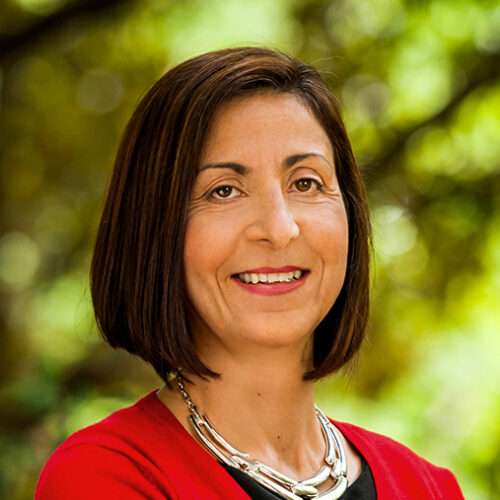
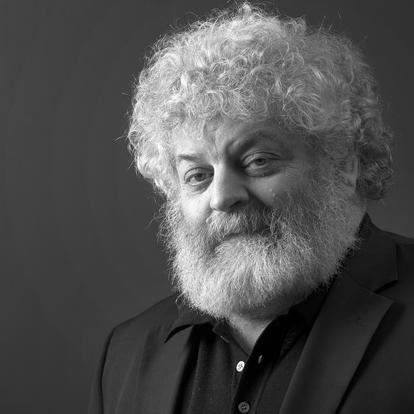
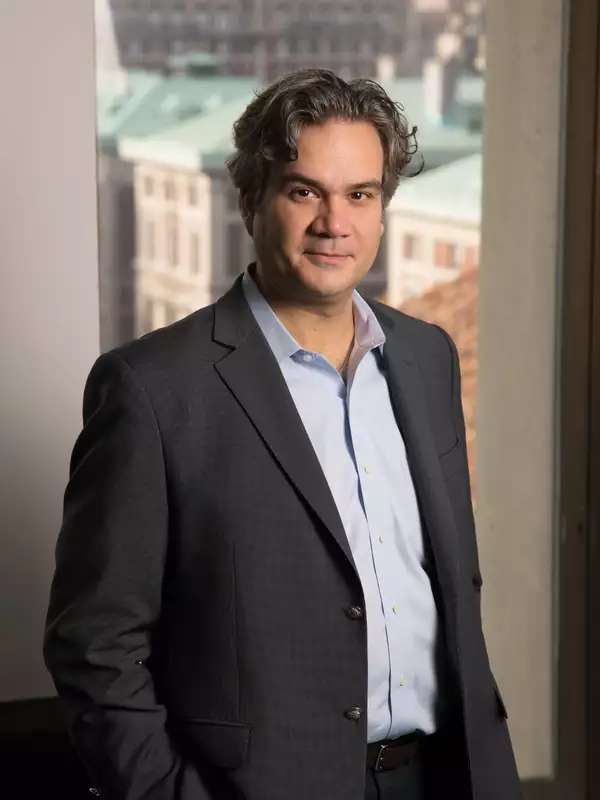
Thomas Richter is a leading academic and Professor at the German Institute for Global and Area Studies (GIGA) , where he serves as Lead Research Fellow and Head of the Research Programme "Accountability and Participation" . His work focuses on the institutional and material determinants of authoritarian rule , executive personalization , and global political economy , particularly in the Middle East and North Africa region. Education: PhD in Political Science (summa cum laude) at the University of Bremen (2008); studies at Eberhard-Karls University Tuebingen and University of Michigan, Ann Arbor. His research explores the interplay of rentier statehood and economic reforms , civil society under authoritarian regimes , and shrinking civic spaces . Recent projects include the Merian Center for Advanced Studies in the Maghreb (MECAM) and the Monitoring System and Transfer Platform Radicalisation (MOTRA) , funded by BMBF and DFG. Richter has published extensively on topics such as anti-Semitism , executive power dynamics , and public opinion on military service in Germany. He has received notable awards, including the Lijphart/Przeworski/Verba Data Set Award (2017) and the Gero Erdmann-Preis für vergleichende Area-Forschung (2022) . His collaborative work spans institutions like the WZB Berlin and Université de Tunis . Richter is also a co-editor of the Perspectives on the Maghreb series with Amsterdam University Press.
Ariel Rubinstein is a prominent Israeli economist and Professor of Economics at Tel Aviv University's School of Economics and the Department of Economics at New York University. Born on April 13, 1951, he has established himself as a leading figure in game theory and economic theory over his decades-long career. His research spans Game Theory, Bounded Rationality, Economic Theory, and Experimental Economics. Rubinstein is particularly renowned for developing the Rubinstein bargaining model, published in 1982, which describes two-person bargaining as an extensive game with perfect information. He also co-authored the highly influential A Course in Game Theory (1994) with Martin J. Osborne, which has been cited over 4,000 times. His recent scholarly output shows continued productivity across multiple subfields of economic theory, with a focus on behavioral aspects of decision-making, implementation theory, and the philosophical foundations of economic modeling. His work often challenges conventional approaches in economics while maintaining rigorous theoretical foundations. Honorary Fellow recognition Author of highly cited textbooks and scholarly articles Creator of educational resources including game theory experiments website Rubinstein maintains an active teaching role at NYU, where he has taught PhD microeconomics courses through 2024. His work extends beyond traditional academic boundaries through his 'Rubinstein's Atlas of Cafes where one can think,' his political commentary, and his engagement with public discourse on economic methodology and social issues. He has created protest materials and written extensively on contemporary political matters, particularly regarding the Israeli-Palestinian conflict. His laboratory focuses on Economic Theory, Bounded Rationality, Game Theory, and Experimental Economics, reflecting his interdisciplinary approach to understanding human decision-making within economic frameworks.
Elena Karahanna is a Professor at the Terry College of Business , University of Georgia. Her research spans Artificial Intelligence , Health Information Technology , and the social and algorithmic implications of digital platforms . PhD in MIS, University of Minnesota (1993) MBA in Business Administration, Lehigh University (1988) BS in Computer Science, Lehigh University (1986) Her work examines how conversational agents and social bots reshape e-commerce and social media, the algorithmic coordination in organizations, and the integration of IT in healthcare systems . She has contributed to foundational theories like the Needs-Affordances-Features (NAF) framework for social media analysis. Recent publications highlight her focus on digital governance (e.g., firm-sponsored online communities), chatbot applications in public health (e.g., pandemic response), and privacy concerns in online social networks. Her research often bridges information systems and marketing (e.g., hyper-privacy and dark web insights). Scientific Awards Terry College of Business Service Award, 2024 INFORMS Information Systems Society President's Service Award, 2023 MIS Quarterly Best Paper Award, 2022 AIS Leo Award for Exceptional Lifetime Contributions, 2020 AIS Fellow, 2012 Karahanna has served as Senior Editor for MIS Quarterly , Information Systems Research , and Journal of AIS . She co-founded the Doctoral Student Corner (2014) and the Senior Scholar Consortium (2004), emphasizing her leadership in academic mentorship. She has taught courses on theory development and business intelligence , and her international teaching includes stints in Hong Kong, Cyprus, Singapore, and Australia .
Gianluca Passarelli is a Full Professor at the Department of Political Science, Sapienza University of Rome. His academic work focuses on Political Science and Comparative Politics , particularly Electoral Systems , Political Parties , and Presidentialization . University: Sapienza University of Rome Department: Department of Political Science Email: gianluca.passarelli@uniroma1.it His research explores preferential voting systems , electoral reform , party transformation , and executive institutional dynamics across Italy, Europe, and the Western Balkans. Recent works analyze the 2020 Italian constitutional referendum , Salvini's League evolution , and democratization processes in the Western Balkans . Key projects include Institutional Settings and Voting Behavior (INSET&VOTE) , Populism and Euroscepticism , and DeDec (Democracy in Decline) . His publications span books like Preferential Voting Systems (Palgrave, 2019) and chapters in major handbooks.
Ivan Franceschini is a Research Fellow at the Department of Asian and North African Studies, Ca' Foscari University of Venice, and a Postdoctoral Fellow at The Australian National University's Coral Bell School of Asia Pacific Affairs. His work focuses on Chinese labor movements, civil society, and political transformations. University: Ca' Foscari University of Venice Department: Department of Asian and North African Studies Email: ivan.franceschini@unive.it Franceschini's research spans labor activism, NGO strategies, and historical narratives in China. His publications in journals like The China Quarterly and Pacific Affairs analyze state-labor relations, digital activism, and garment industry exploitation. He co-edits the Made in China Journal , exploring labor and civil society dynamics. Key article trends include comparative labor studies across China and Cambodia, legal mobilization by workers, and historical reinterpretations such as the Taiping Rebellion. His 2019 work on collective bargaining and 2018 comparative analysis of garment workers highlight systemic labor challenges.
R. Edward Freeman is Stephen E. Bachand University Professor of Business Administration and Olsson Professor of Business Administration at the University of Virginia Darden School of Business. He serves as academic director of the Institute for Business in Society and previously directed Darden's Olsson Center for Applied Ethics from 1986 to 2009. Freeman maintains additional academic appointments as adjunct professor of stakeholder management at Copenhagen Business School, visiting professor at Nyenrode Business School, and adjunct professor of management at Monash University. Freeman's research focuses on stakeholder management, business ethics, and business strategy. His work explores how businesses can create value for multiple stakeholders without tradeoffs. He has developed innovative teaching methods incorporating theater, music, and philosophy into business education, including the popular 'Leadership and Theater' course. His publications reveal a consistent focus on stakeholder theory applications across diverse contexts, from sports ethics and gender equality to sustainable business practices and organizational decision-making. Recent work examines contemporary issues like transgender athletes in sports, sustainable food systems, and ethical leadership in crisis situations. His scientific achievements have been recognized through numerous awards: Seven honorary doctorates from institutions across Europe and Canada Lifetime Achievement Awards from World Resources Institute, Aspen Institute, Humboldt University, Academy of Management, and Society for Business Ethics Multiple teaching awards from Wharton, Carlson School, Darden, and Virginia State Council Freeman has advised numerous global corporations and has served as Co-editor in Chief of the Journal of Business Ethics. His stakeholder theory framework has influenced business practice worldwide and been translated into multiple languages. Beyond academia, he co-founded Stakeholder Media LLC, hosts The Stakeholder Podcast, and is active in music as a co-founder of Red Goat Records.
Dr Harrison Smith is a Lecturer in Digital Media & Society at the University of Sheffield's School of Sociological Studies, Politics and International Relations. He holds a PhD from the University of Toronto’s Faculty of Information, alongside MA and BA degrees in Sociology from Queen’s University, Canada. His research focuses on the political economy of data analytics, particularly in smart cities and consumer surveillance contexts. Education: PhD in Information Studies, University of Toronto (Canada) MA in Sociology, Queen’s University (Canada) BA (Hons) in Sociology, Queen’s University (Canada) Smith’s research examines how data infrastructures shape socio-economic inequality through processes like surveillance, classification, and market segmentation. Key areas include location-based marketing, 5G data infrastructures, and industry consolidation in data analytics. His work critiques how digital technologies reconfigure urban spaces and labor markets, particularly in 'smart city' contexts. Recent publications explore the metaverse's industrial implications, blockchain’s role in dispute resolution, and surveillance practices at music festivals. His teaching includes leading the module SCS2016: The Sociology of the Media. Smith’s expertise bridges media theory, urban informatics, and critical data studies, emphasizing ethical and political dimensions of digital technologies in everyday life.
Nicholas Vincent is an Assistant Professor in the School of Computing Science at Simon Fraser University. His research focuses on Human-Computer Interaction (HCI), Responsible Artificial Intelligence, and Human-Centric Machine Learning. He holds a Ph.D. in Technology and Social Behavior from Northwestern University (2022) and a B.Sc. in Electrical Engineering from UCLA (2016). Education: Ph.D., Northwestern University (2022); B.Sc., UCLA (2016) Affiliations: Simon Fraser University School of Computing Science His work examines the societal implications of AI, including data labor rights, algorithmic governance, and ethical design. Notable contributions include frameworks for measuring attentional agency on digital platforms and studies on collective action in tech contexts. He received the SIGCHI Outstanding Dissertation Award in 2024. Recent publications explore topics like AI ethics, governance of generative models, and Wikipedia's role in content ecosystems. He actively participates in policy discussions through media engagements and conference talks, advocating for public-oriented AI development.
Ian Hawkins is an Assistant Professor at the University of Alabama at Birmingham , focusing on Media Psychology , Intergroup Conflict , and Collective Action . He holds a Ph.D. in Communication and Media from the University of Michigan, with prior M.S. and B.S. in Psychology from Central Michigan University. His research employs social scientific methods to analyze how media representations of marginalized groups shape societal attitudes and policy preferences. Current work explores cross-device news consumption dynamics using eye-tracking to assess attention patterns in headline processing. He publishes in New Media and Society , Journal of Communication , and Psychology of Popular Media . Teaching responsibilities include Mass Communication History and Effects and Social Media Use courses. Contact: ihawkins@uab.edu
Alexander Cooley is the Claire Tow Professor of Political Science at Barnard College, Columbia University, and serves as Vice Provost for Research and Academic Centers. He previously directed Columbia’s Harriman Institute (2015–2021), a leading center for Russian, Eurasian, and Eastern European studies. His research focuses on external actors’ influence in post-Soviet states, kleptocracy, and the decline of American hegemony. Cooley has authored/co-authored eight books, including *Exit from Hegemony* (2020) and *Dictators Without Borders* (2017). He advises international bodies, testifies before Congress, and publishes in *Foreign Affairs*, *Foreign Policy*, and *New York Times*. Educated at Swarthmore College and Columbia University (MA, MPhil, PhD), his work spans global governance, international rankings, and authoritarian resilience. Grants from Open Society Foundations and Carnegie Corporation support his research. Education: BA (Swarthmore), MA/MPhil/PhD (Columbia) Leadership Roles: Harriman Institute Director, Barnard Vice Provost Research Themes: Eurasian geopolitics, authoritarianism, US-Russia military bases, global rankings His recent articles analyze Russia’s post-Soviet influence, America’s declining hegemony, and Central Asia’s adaptation to shifting global powers. Cooley’s work bridges academia and policy, addressing contemporary challenges like kleptocracy and multipolarity through rigorous scholarship and public engagement.
R. Michael Alvarez , Flintridge Foundation Professor of Political and Computational Social Science at Caltech, is a leading scholar in election technology, political methodology, and machine learning applications in social science. Affiliated with the Caltech/MIT Voting Technology Project , the Social and Decision Neuroscience Program , and the Resnick Sustainability Institute , his work bridges technology and democracy. Education: B.A. from Carleton College, Ph.D. from Duke University Academic Career: Caltech faculty since 1992 His research spans: Election Integrity : Monitoring election security, fraud detection, and ballot systems Computational Social Science : Applying machine learning to voter behavior and policy analysis Climate Policy : Examining public attitudes and behavioral interventions for sustainability Online Behavior : Analyzing toxicity in gaming and social media dynamics Key article trends show focus on election forensics (2025 Nature Climate Change study), game toxicity analysis (2025 CHI Play paper), and LLM applications in social science. His students include Jacob Morrier, Mitchell Linegar, and teams of postdocs and undergraduates in Caltech's SURF program. Scientific recognition includes: Google Cloud Research Innovators Class of 2022 Co-editor of multiple academic series including Cambridge Elements in Quantitative Methods
Ye Wang is an Assistant Professor in the Department of Political Science at the University of North Carolina at Chapel Hill since 2022. He previously held postdoctoral and predoctoral research positions at UC San Diego’s School of Global Policy and Strategy (2020–2022). His research bridges political methodology and comparative politics, focusing on statistical tools for policy spillover effects, research transparency, and social learning under non-democratic regimes. He also explores electoral dynamics in contentious political contexts. Ye earned a PhD in Political Science from New York University (2021), with a committee including Nathaniel Beck, Matthew Blackwell, Adam Przeworski, Cyrus Samii, and Joshua Tucker. He holds an MA in Economics from Peking University (2014) and a BS in Mathematics from Fudan University (2011). He withdrew voluntarily from a concurrent PhD in Economics at the University of Wisconsin-Madison (2014–2015). His research interests emphasize causal inference methodologies and their application to understanding political phenomena in non-democratic settings. He develops statistical techniques to address interference in temporal, spatial, and networked data, while also studying how protests and international tensions impact political systems and scientific collaboration. Recipient of the John T. Williams Dissertation Prize (2020), Chiang Ching-kuo doctoral fellowship (2020), and NYU’s MacCracken fellowship (2015–2020). In advising and teaching, Ye has served as a teaching assistant for courses in political methods, comparative politics, and quantitative methods at NYU and the City University of Hong Kong. He has also taught workshops on quantitative methods at Renmin University and contributed to academic seminars at institutions like Yale and Tsinghua. His programming skills include C++, R, Python, GIS, and Stata, complementing his work in methodological research.
Hélène Combes is a CNRS Research Professor affiliated with the Center for International Studies (CERI) at Sciences Po Paris. She directs research on political parties and social movements with a specific focus on Latin America, particularly Mexico. Her work bridges comparative politics, urban studies, and political sociology, examining how spatial organization, class dynamics, and gender intersect in political mobilization. Combes specializes in the relationship between political parties and social movements, with extensive fieldwork in Mexico spanning over 15 years. Her research examines political clientelism, urban protest movements, and the spatial dimensions of political mobilization. She has conducted in-depth studies on the emergence of the Morena party in Mexico and the transformation of social movements into political power, culminating in her 2024 book De la rue à la présidence. Foyers contestataires à Mexico . Her work reveals how working-class communities manage political occupations and how family dimensions shape protest movements in Latin America. Combes has served as director of the journal Critique internationale (2017-2023), is a member of the board of the French Political Science Association (AFSP) since 2017, and serves on the scientific committee of Casa de Velázquez since 2018. Her international recognition is evident through her invited professorships at Columbia University, University of Salamanca, Pablo de Olavide University, University of Mar de Plata, University of Chile, and various Mexican institutions. Currently teaching in the Master's research program in political science, university college, and School of International Affairs at Sciences Po Paris, Combes has previously taught at Beaux-Arts de Paris and University of Dauphine. Her work on Mexican politics has gained particular relevance with Claudia Sheinbaum (whom she followed for 15 years) becoming Mexico's presidential candidate. Combes holds a doctorate in engineering with specialization in climate change and ecology, bringing a transnational perspective to her political analysis.
Jörg Spenkuch is an Associate Professor of Managerial Economics & Decision Sciences at Kellogg School of Management, Northwestern University, where he has been since 2013. He holds a Ph.D. in Economics (2013) and M.A. (2009) from the University of Chicago, and dual B.A. degrees in Economics and Business Administration (2007) from the University of St. Gallen, Switzerland. Education: Ph.D., 2013, Economics, University of Chicago M.A., 2009, Economics, University of Chicago B.A., 2007, Economics, University of St. Gallen B.A., 2007, Business Administration, University of St. Gallen Professor Spenkuch's research bridges political economy and applied microeconomics , with a focus on ideological behavior, strategic decision-making, and social dynamics. His work examines topics like: Political Economy: Campaign finance, electoral accountability, and ideological sorting. Behavioral Economics: Satisficing behavior, memory-driven choices, and strategic voting. Public Policy: School desegregation effects, bureaucratic performance, and immigration-crime linkages. His recent publications analyze: Long-term ideological shifts from 1975 school desegregation (2025 working paper). Memory premiums in decision-making (2025 working paper). Complexity's role in chess strategy (2024 Review of Economic Studies ). Political accountability during natural disasters (2025 American Economic Journal ). Scientific Recognition: MinE Best Paper Award (European Economic Association) Chair's Core Teaching Award Deutschlands "Top 40 unter 40" (Capital magazine) FEEM Award (European Economic Association) Best Paper Award, RGS Doctoral Conference At Kellogg, he teaches Leadership and Crisis Management (PACT-440-5) and Business Analytics (DECS-435-0). His work has been published in top journals like Econometrica , American Economic Review , Quarterly Journal of Economics , and Review of Economic Studies , covering topics from partisan spatial sorting to expressive vs. strategic voting behavior.
Professor Myrto Tsakatika is a distinguished academic in the Department of Politics at the University of Glasgow's College of Social Sciences, where she has been employed since 2007. She holds the position of Professor in Political & International Studies and serves as Undergraduate Programme Director. Her office is located in the Adam Smith Building (R1311 Level 13), a prominent building housing the university's social sciences disciplines. Dr. Tsakatika earned her PhD from the University of Essex and previously taught at the Athens University of Economics. She has held prestigious visiting positions at the University of Trieste, the Juan March Foundation in Madrid, and the Centre Emile Durkheim at SciencesPo Bordeaux, establishing her as a scholar with significant international connections. Professor Tsakatika's research spans several interconnected domains within political science. Her primary focus lies in European Union politics and governance, particularly examining the democratic deficit, new governance modes, and evolving public attitudes toward European integration. More recently, she has developed expertise in radical left parties and populism, with special attention to Southern European cases including Greece, Portugal, Italy, and Spain. Her work often bridges comparative politics with European studies, analyzing how domestic political developments interact with broader European integration processes. She has made significant contributions to understanding SYRIZA's rise and governance in Greece as well as similar phenomena across Southern Europe. Analysis of Professor Tsakatika's recent publications reveals a consistent scholarly trajectory focused on the intersection of European integration, radical left politics, and populism in Southern Europe. Her work demonstrates increasing specialization in comparative analysis of radical left parties, particularly examining their organizational structures, electoral strategies, and governance challenges. The geographical focus remains firmly rooted in Southern Europe while maintaining connections to broader European political dynamics. Her publications appear in high-impact journals and prestigious academic presses, indicating recognition within the political science community. Professor Tsakatika has successfully supervised numerous PhD students whose research aligns with her expertise, including projects on populism's impact on foreign policy, EU peacebuilding, and the democratic deficit in the European Union. Her grant portfolio reflects sustained research activity, including projects funded by the Carnegie Trust, Caledonian Research Foundation, Royal Society of Edinburgh, and European Commission programs such as PADEMIA (2013-2016) and EUROSUD (2018-2024). These grants have supported comparative research on Southern European politics, European integration, and radical left parties. Within the academic community, Professor Tsakatika serves as Associate Editor for South European Society and Politics and as Editor for Politics Politics and International Relations. She teaches undergraduate courses on the Politics of the European Union (POLITIC4020) and postgraduate courses on Global Social Movements (POLITIC 5111), directly connecting her research expertise to her teaching responsibilities.