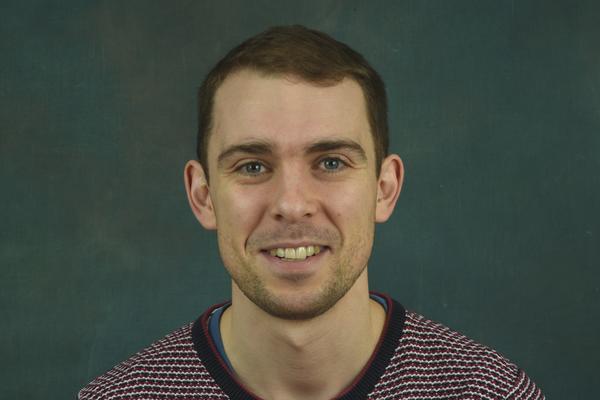
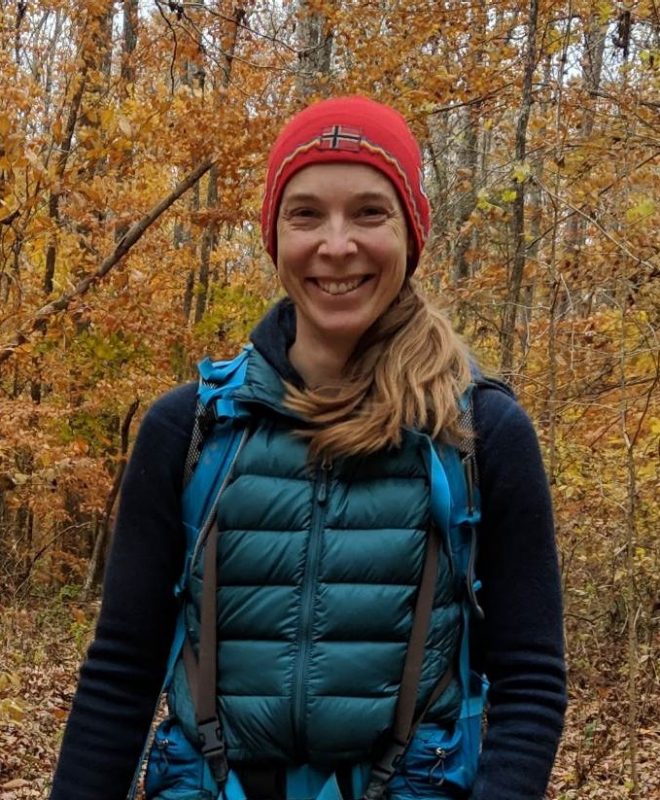
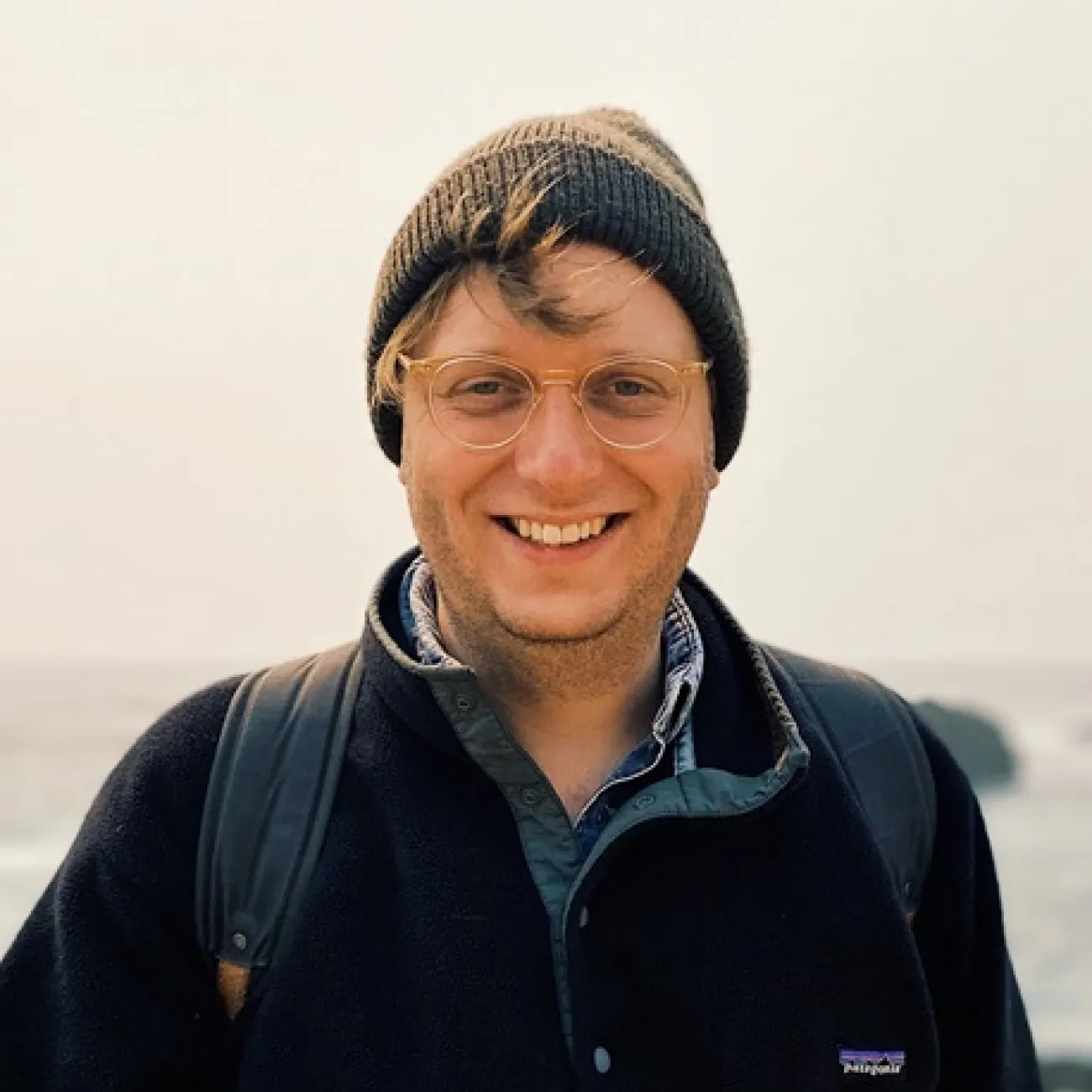
Prof. Paul Mason is a Professor of Petrology and Director of Education in the Department of Earth Sciences at Utrecht University. His research focuses on Archean-Paleoproterozoic Earth systems, greenstone belt geology, and the co-evolution of early life with environmental conditions. He leads projects like the CLIMET initiative investigating Arctic lake methane cycling and the BASE project probing early terrestrial environments in the Barberton Greenstone Belt. Education Programs: Involved in the Earth Sciences and Earth Structure & Dynamics programs. Teaching: Courses include Advanced Petrology, Mineralogy & Petrology, and Geochemical Evolution of the Earth. Research Interests: Mason explores ancient environments through stable isotope geochemistry, microanalytical techniques, and field studies in key regions like South Africa and the Guiana Shield. His work bridges petrology, geochemistry, and geobiology to understand crustal evolution and early Earth processes. Funding & Collaborations: Principal investigator on NWO-funded CLIMET project. Collaborates internationally on projects like BASE and studies of Anatolian magmatism. Labs/Teams: Leads the Petrology research group and participates in interdisciplinary teams studying Arctic lakes and Precambrian iron formations.
Dr. Alexander Bowles is a Glasstone Research Fellow and Junior Research Fellow at The Queen's College, University of Oxford. His research focuses on understanding the evolutionary diversity of life, particularly plants and their relationships with water over geological timescales. Using molecular, computational, and morphological analyses of living and fossil plants, he explores innovations in plant biology and their adaptive significance in past, present, and future environments. Research interests include streptophyte algal evolution, angiosperm origins, drought tolerance mechanisms, and genomic innovations in land plants. His work bridges paleobotany, genomics, and environmental science to uncover how plant adaptations have shaped Earth's ecosystems. Recent studies highlight glacier algal blooms, microbial diversity in extreme environments like Lake Untersee, and the genetic basis of multicellularity in Archaeplastida. Publications span topics from cryogenian-era multicellularity to modern algal responses to climate change. While no specific awards are listed, his contributions to evolutionary plant biology are evident through his active research output. Advising and grant details are not provided in available texts, though his affiliation with The Queen's College and Oxford suggests institutional support for his interdisciplinary work.
Carol Dehler is a Professor and Undergraduate Mentor at the S.J. & Jessie E. Quinney College of Agriculture & Natural Resources, Utah State University, specifically within the Geosciences Department. Her research focuses on Neoproterozoic and Cambrian geological systems, including stratigraphy, isotope geochemistry, and paleoenvironmental reconstructions. Research Interests: Dehler investigates evolutionary escalation in Cambrian biota, oxygen's role in early animal evolution, Bayesian age modeling for chronostratigraphy, and the geobiology of Snowball Earth deposits. Her work connects geological processes to Earth system evolution, biodiversity dynamics, and pre-glacial environmental changes. Publications: Recent studies include high-precision U-Pb detrital zircon dating, carbon isotope stratigraphy of the SPICE and DICE events, and collaborative US-China research on Proterozoic functional biodiversity. She also explores microbialite reefs in the Tonto Group and organic-walled microfossils in Precambrian shales. Methodologies: Utilizes tandem in situ and isotope dilution U-Pb dating, Re-Os geochronology, and LA-ICP-MS geochemical analysis to resolve stratigraphic and tectonic questions across western Laurentia, the Grand Canyon, and Death Valley regions.
Virginia Polytechnic Institute and State UniversityUnited States
Rachel Reid is a Research Assistant Professor in the Department of Geosciences at Virginia Polytechnic Institute and State University (Virginia Tech), located in the College of Science. Her work focuses on integrating isotope geochemistry, paleoecology, and archaeological science to understand environmental and ecological changes across deep time and human history. She specializes in using stable isotopes (carbon, nitrogen, oxygen) from biological materials (e.g., bone, teeth, guano, plant remains) and geological samples (e.g., black shales, carbonate clasts) to reconstruct past climates, dietary patterns, and environmental dynamics. Her research spans multiple disciplines including archaeology, paleontology, and biogeochemistry. Notable areas of focus include: Isotopic analysis of ancient agricultural practices and domestication patterns Environmental reconstruction using bat guano and coprolite records Provenance studies of glacial deposits to understand Neoproterozoic glaciation events Biogeochemical drivers of early eukaryotic evolution and mass extinctions Recent work highlights innovative applications of faecal isotope analysis for both archaeological and modern ecological studies, as well as interdisciplinary approaches to understanding plant evolution and paleoclimates. Her work frequently integrates field data with laboratory-based geochemical analyses and computational modeling. Publications demonstrate a strong focus on: Prehistoric human-environment interactions in East Asia Neoproterozoic ocean chemistry and glacial cycles Trophic level analysis using modern and ancient predator species Root-soil interactions in carbon sequestration Rachel's research bridges earth sciences and life sciences, addressing fundamental questions about Earth's environmental history and human adaptation. She currently holds a primary appointment in the Department of Geosciences at Virginia Tech and collaborates with institutions globally on paleoenvironmental reconstruction projects.
Dr. Richard Stockey is a Lecturer in Palaeobiology at the University of Southampton, affiliated with the School of Ocean and Earth Science. His research focuses on using the geologic record to study marine ecosystem responses to environmental changes, Earth system modeling, and the interplay between climate, oxygenation, and biosphere evolution. He is a member of the Palaeoceanography and Palaeoclimate research group and the Southampton Marine and Maritime Institute. His recent work explores atmospheric oxygen increases during the Neoproterozoic/Palaeozoic, Eocene North Atlantic cooling linked to CO2 declines, and the intrinsic vulnerability of Early Paleozoic marine ecosystems. He actively supervises PhD students in topics like ocean anoxia, mass extinctions, and biogeochemical cycles. Key contributions include studies on continental configuration impacts on ocean oxygenation, Ordovician anoxia events, and the role of Earth system evolution in shaping ancient climate responses. Dr. Stockey is currently accepting PhD applications and collaborates with global research networks.
Elizabeth Turner is a Full Professor at the Harquail School of Earth Sciences at Laurentian University, where she has been faculty since 2005. Her research career spans over 30 years of remote field work in northern Canada, with expertise in Proterozoic to Paleozoic sedimentary systems and their economic potential. Dr. Turner earned her PhD from Queen's University in 1999, following a BSc in Geology (1991) and a BA in Languages (1988), both from the University of Toronto. Prior to joining Laurentian, she worked as a Research Scientist at the Canada-Nunavut Geoscience Office (2001-2005) and completed post-doctoral fellowships at the University of Chicago and University of Alberta. Her research focuses on tectonostratigraphic analysis of Proterozoic to lower Paleozoic sedimentary basins, with particular emphasis on paleobiological, geochemical, paleoenvironmental, sedimentological, and diagenetic evolution across more than a billion years of Earth history. Current projects include geological evolution of Mesoproterozoic, Neoproterozoic, and Paleozoic basins in northern Canada; sedimentary-rock-hosted ore deposits; carbonate facies and stratigraphy; carbonate and siliciclastic diagenesis; and early evolution of eukaryotes. Analysis of her recent publications reveals a strong focus on Precambrian geology, particularly the Mesoproterozoic and Neoproterozoic eras. Her work spans economic geology (particularly Zn-Pb-Cu deposits), paleoenvironmental reconstruction using geochemical proxies, early life evolution, and basin analysis. The research demonstrates interdisciplinary approaches combining field geology, geochemistry, paleontology, and economic geology. 2020 - Geological Association of Canada, Howard Street Robinson Medal for excellence in Precambrian geology 2010 - Canadian Journal of Earth Sciences Best Paper award for her 2009 work on Mesoproterozoic carbonate systems 2001 - PALAIOS Honourable mention for best paper on Neoproterozoic reefal stromatolites 1999 - Best Canadian PhD Thesis in Sedimentary Geology from the Canadian Society of Petroleum Geologists Dr. Turner actively mentors graduate students and post-doctoral fellows, currently supervising PhD student Chaneil Wallace, MSc students Christian Frost and Charlotte Stone, and post-doctoral fellow Jordan Mathieu. Her recently completed students include R. William Scott, Jordan Mathieu (PhD), Philippe Trudel, Quinn Dabros, Melanie Bouchard, and Katherine Hahn (post-doc). Her research has been supported by numerous grants enabling extensive field work in Canada's north and international collaborations, particularly in the Democratic Republic of Congo. Her work involves extensive field research in northern Canada (Nunavut and Northwest Territories), with a focus on carbonate systems and their relationship to mineral deposits. She collaborates with researchers across Canada and internationally, particularly on projects related to Precambrian life evolution and sedimentary-hosted mineral deposits.