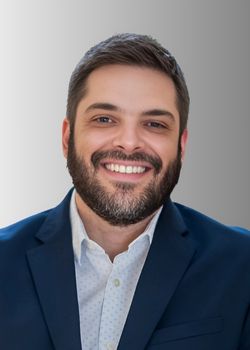
Momar Ndao is an Associate Professor in the Department of Medicine , Faculty of Medicine and Health Sciences , at McGill University . He serves as a Scientist at the RI-MUHC (Glen site) and is affiliated with the Infectious Diseases and Immunity in Global Health Program . His work bridges clinical and translational research in parasitic infections. Research Interests : Diagnostic medical parasitology Vaccine development for helminthic diseases Host-parasite interactions and immunity Proteomic biomarker discovery Emerging pathogens and bioterrorism Publication Trends : His recent work focuses on schistosomiasis vaccines , Chagas disease biomarkers , Leishmania diagnostics , and cryptosporidiosis prevention. He explores cross-species immunity , aptamer-based detection , and One Health approaches to global parasitic disease control. Laboratory Affiliations : National Reference Centre for Parasitology (NRCP) at RI-MUHC Collaboration with Public Health Agency of Canada and McGill University Health Centre
Martin Olivier is a Senior Scientist at the Research Institute of the McGill University Health Centre (RI-MUHC), Glen site, and a Professor in the Department of Medicine at McGill University's Faculty of Medicine and Health Sciences. He specializes in Infectious Diseases and Immunity in Global Health , focusing on protozoan pathogens like Leishmania and Plasmodium (malaria). His work explores how these parasites manipulate host immune responses through biochemical pathways and extracellular vesicles. Institutional Affiliations : RI-MUHC (Senior Scientist); McGill University (Professor) Program : Infectious Diseases and Immunity in Global Health Centre : Centre for Translational Biology Research Highlights : Olivier's lab has uncovered critical mechanisms such as Leishmania 's use of surface proteases to suppress innate inflammation, the role of malaria's hemozoin in inflammation-related pathologies, and the regulatory impact of circadian rhythms on parasite-host interactions. These findings may lead to novel therapies, diagnostics based on exo-biomarkers, and vaccine strategies. Publication Trends (2023-2025): His recent work emphasizes extracellular vesicle dynamics in parasitic infections, circadian regulation of pathogenesis, and genomic diversity in vector-borne pathogens. Collaborative efforts include standardizing EV research methodologies (MISEV2023) and exploring antiparasitic drug development. Labs & Collaborations : Leads research at RI-MUHC's Glen site, affiliated with McGill's Department of Medicine. His team investigates host-pathogen communication, iron metabolism in malaria, and EV-mediated immune modulation across multiple infections.
Lindsay Rogers is an Associate Professor of Teaching in the Department of Biochemistry and Molecular Biology within the Faculty of Medicine at the University of British Columbia. She teaches undergraduate courses in biochemistry and molecular biology and holds additional roles as Faculty in Residence at the Emerging Media Lab and as a Faculty Fellow at UBC Sustainability. Her educational background includes: Bachelor of Science in Biochemistry from Queen's University (2005) PhD in Biochemistry from the University of British Columbia (2011) Dr. Rogers' primary research interests focus on immersive learning technology, where she leads projects aimed at effectively visualizing biochemical systems within interactive 3D environments. Her work bridges the gap between complex biochemical concepts and accessible educational tools through innovative technological approaches. Additionally, she maintains a strong interest in environmental science and environmental health, exploring how molecular understanding can elucidate complex global issues that often have controversial dimensions. Her passion for science education is evident in her statement that she "loves discussing science and interacting with students at all levels." Analysis of her publication record reveals a strong focus on proteomics, particularly phosphoproteomics and protein post-translational modifications. Her early career research centered on host-pathogen interactions, especially involving Salmonella , examining how bacterial effectors manipulate host cell signaling through phosphorylation and ubiquitination. More recently, her work has expanded into environmental health and cancer workforce development for Indigenous populations, reflecting her growing interest in applying biochemical knowledge to broader societal issues. Dr. Rogers serves in multiple educational leadership capacities beyond her teaching role. As Faculty in Residence at the Emerging Media Lab, she contributes to the development of innovative educational technologies. Her position as Faculty Fellow at UBC Sustainability demonstrates her commitment to integrating environmental considerations into academic work. Through her 3D Metabolism project, she has created tools that transform how students interact with complex biochemical pathways.
Dr. Jörg Gsponer is Professor and Head of the Department of Biochemistry & Molecular Biology at the University of British Columbia's Faculty of Medicine, with a joint appointment at the Michael Smith Laboratories in the Faculty of Science. Appointed as Department Head in November 2024 after serving as interim Head since February 2024, he has been at UBC since 2009 and was promoted to Professor in 2021. Dr. Gsponer holds a dual degree in medicine and theoretical biophysics through the Swiss MD-PhD program. His educational background includes an MD from the University of Lausanne (1997), a PhD in Biochemistry from the University of Zurich (2002), post-doctoral training at the University of Cambridge Chemistry Department (2003), and MRC Research Fellow at the Laboratory of Molecular Biology in Cambridge (2006). His research focuses on intrinsically disordered proteins (IDPs) and their connections to cancer and neurodegeneration. Using advanced computational methods, molecular modeling, simulations, and bioinformatics approaches, his lab explores how protein structure and interactions contribute to cellular phenotypes. Recent work has incorporated generative AI tools like AlphaFold to advance protein biochemistry research. The lab has developed several computational tools including MoRFchibi, GraPES, and LIST for predicting protein features and interactions. Dr. Gsponer's research has resulted in numerous high-impact publications, particularly in areas of protein-protein interactions, intrinsically disordered regions, and computational approaches to understanding disease mechanisms. His work shows strong trends toward integrating AI with traditional biochemical approaches to solve complex problems in protein science. Michael Smith Foundation for Health Research Career Investigator Distinguished Achievement Award for Overall Excellence from UBC Faculty of Medicine As Department Head, Dr. Gsponer emphasizes team leadership and delegation, working with an executive team to advance scientific knowledge and innovate in training the next generation of scientists. He has spearheaded initiatives in data science teaching and recruitment in generative AI and nanomedicine. His lab continues to secure research funding for projects exploring protein interactions in disease contexts, with particular focus on cancer and neurodegenerative disorders. The Gsponer Lab maintains strong collaborations across multiple disciplines and institutions, operating within the Centre for High-Throughput Biology (CHiBi) at the Michael Smith Laboratories. The lab environment fosters interdisciplinary research combining computational approaches with experimental validation to address fundamental questions in protein science.
Kapil Tahlan is a Professor in the Department of Biology at Memorial University of Newfoundland, where he leads an active research program focused on microbiology, antibiotics research, and pathogen evolution. His laboratory investigates bacterial biology and metabolism with emphasis on Streptomyces and Mycobacteria species. Dr. Tahlan's research interests span multiple domains of microbial science including biochemistry, molecular biology, omics-based approaches, bioinformatics, and chemical biology. His work primarily focuses on three interconnected areas: Streptomyces research examining production of biologically relevant metabolites in Streptomyces clavuligerus, particularly clavulanic acid Mycobacteria research investigating core biological processes in pathogenic species that cause diseases like tuberculosis Antibiotic resistance mechanisms and strategies to counter resistance machinery in bacteria His publication record shows consistent productivity with numerous high-impact articles in leading journals including Nature Chemical Biology, PLOS One, and Frontiers in Microbiology. His recent work demonstrates increasing focus on metabolomics, genomics, and the intersection of bacterial metabolism with plant-microbe interactions. Dr. Tahlan actively mentors graduate students and postdoctoral fellows, with current supervision of multiple PhD and MSc students working on diverse projects related to antibiotic production, pathogen evolution, and bacterial metabolism. His laboratory has received consistent funding to support this research program. He collaborates with researchers across institutions including Dr. Susan E. Jensen (University of Alberta), Dr. Justin R. Nodwell (University of Toronto), and Dr. Clifton E. Barry, III (National Institutes of Health).
Michelle Scott is a Full Professor in the Department of Biochemistry and Functional Genomics at the University of Sherbrooke's Faculty of Medicine and Health Sciences, with a concurrent appointment in the Computer Science Department. Her academic trajectory shows progressive advancement from Assistant Professor (2011) to Associate Professor (2016), culminating in her current Professorship (2021). She directs an active research program focused on non-coding RNA biology, particularly small nucleolar RNAs (snoRNAs), with emphasis on their roles in ovarian cancer and transcriptomic regulation. Her research interests center on bioinformatic characterization of RNA networks , development of computational tools for RNA-seq analysis (including CoCo and snoDB), and molecular mechanisms of snoRNAs in cancer . Recent work employs low-structure-bias sequencing (TGIRT-seq) to overcome technical limitations in transcriptome analysis, revealing previously undetected non-coding RNAs and non-canonical snoRNA functions. Her group investigates snoRNA roles in alternative splicing regulation, cancer progression (particularly high-grade serous ovarian carcinoma), and nucleolar biology. The 15 most recent publications demonstrate strong focus on methodological innovation in transcriptomics (6 articles), snoRNA functional characterization (5 articles), and cancer genomics applications (4 articles). Key trends include addressing RNA-seq reproducibility issues, developing computational frameworks for multi-mapped read resolution, and expanding the functional landscape of snoRNAs beyond canonical roles. FRQS Senior Researcher Fellowship (2025) RECMUS Award for Supervision Excellence (2021) Tremplin Award for Early-Career Research (2021) Multiple FRQS Junior Fellowships (2017, 2021) Dean's List for Exceptional Performance (2015-2021) Scott has successfully mentored numerous graduate students (including 15 first-author publications by trainees) and secured substantial competitive funding, including a $$1\text{,}525\text{,}000$$ CIHR Project Grant (2021-2026) on proteogenomics approaches to define the human proteome. Her laboratory maintains strong affiliations with the CHUS Research Center and actively participates in the RiboClub network, which she has organized since 2014. Current work focuses on characterizing nucleolar snoRNAs in ovarian cancer and improving transcriptomic annotation frameworks.
Dr. Nicole Hansmeier is an Associate Professor in the Biology Department at Luther College, University of Regina. Her academic career spans multiple institutions and research areas with a consistent focus on understanding infectious disease mechanisms at the molecular level. Dr. Hansmeier's research interests center on the molecular basis of infectious diseases, with particular emphasis on host-pathogen interactions. She applies systems biological multi-Omics approaches and high-end imaging techniques to identify disease pathways and bacterial invasion mechanisms. A significant component of her work involves wastewater-based surveillance to detect and monitor infectious diseases within communities, providing crucial data for public health responses. Analysis of her publication record reveals a consistent focus on Salmonella pathogenesis, host-pathogen interactions, and proteomic methodologies. Her research spans fundamental bacterial physiology, molecular infection mechanisms, and applied public health surveillance techniques, demonstrating both depth in specialized areas and breadth across the infectious disease research spectrum. Dr. Hansmeier's research program is supported by multiple funding agencies including the Canadian Foundation for Innovation, Innovation Saskatchewan, Health Canada, SHRF, NSERC, and Mitacs, reflecting the significance and interdisciplinary nature of her work. She teaches a range of courses from introductory biology to specialized medical microbiology and provides research opportunities through independent study courses. Her laboratory employs advanced proteomic techniques to study pathogen-modified membranes, bacterial metabolism during infection, and host responses to pathogens. This work has important implications for understanding infectious disease mechanisms and developing new diagnostic and therapeutic approaches.
Dr. John G. Marshall serves as Professor in the Department of Chemistry and Biology at Toronto Metropolitan University, leading the Marshall Team research laboratory. His expertise spans proteomics, biochemistry, and molecular diagnostics with significant translational impact. His educational foundation includes: BSc from University of Toronto MSc from University of Waterloo PhD from University of Waterloo Professor Marshall's research develops analytical protein analysis methods for clinical diagnostics, focusing on biomarker discovery and disease detection technologies. His work bridges fundamental biochemistry with real-world medical applications through strong industry partnerships. Professional recognition includes editorial leadership as Editor of Clinical Proteomics, Amino Acids, and Frontier of Molecular Diagnostics, plus editorial board membership for Analytical Biochemistry. He co-founded the Canadian National Proteomic Network to advance national research infrastructure. With 191 publications and over 2,300 citations, his lab maintains active funding evidenced by 40+ patents and partnerships like the TMU-JLABS Toronto incubator network. Graduate students gain hands-on experience in developing diagnostic technologies with commercialization pathways.
Dr. Eduardo Moffa serves as an Assistant Professor of Prosthodontics at the University of Saskatchewan, applying dual expertise as a clinician-scientist to advance oral rehabilitation for edentulous patients through evidence-based dentistry. Education: DDS, MSc, PhD (specific institutions not provided) His research program centers on two synergistic domains: biomaterial-oral interface optimization through salivary protein adhesion studies (using proteomics/mass spectrometry with zirconia/titanium/bioglass), and Candida-related denture stomatitis pathogenesis with conservative antimicrobial treatment development. This translational work bridges biochemistry, materials science, and clinical prosthodontics. With over 970 citations and an h-index of 20, Dr. Moffa demonstrates significant research impact through extensive high-impact publications and international clinical trial collaborations. His grant-funded work focuses on patient-centered outcomes in dental implantology and conventional prosthodontics. Though no formal lab name is specified, his research group investigates oral mucosal protection via bioengineered antimicrobial agents and biomaterial performance enhancement, offering students interdisciplinary training in clinical-translational research methodologies.