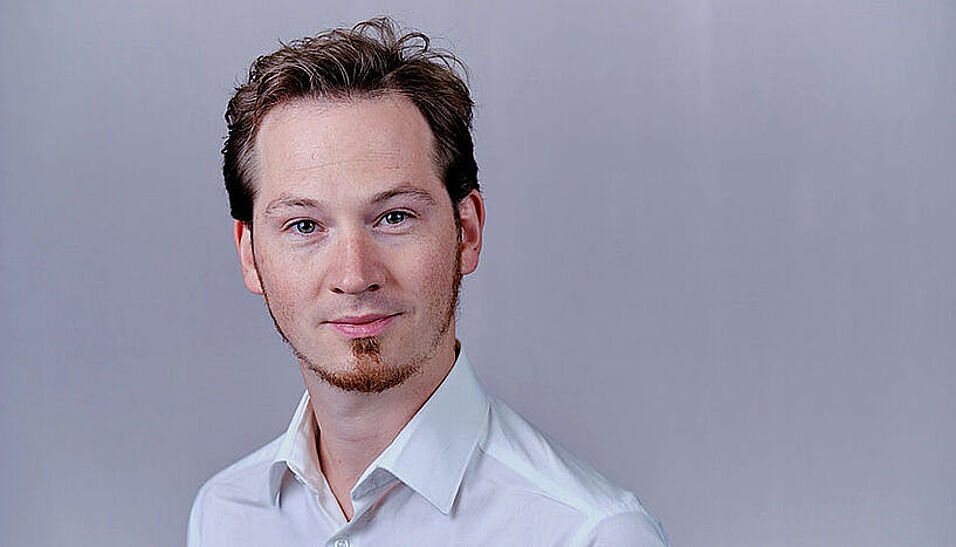
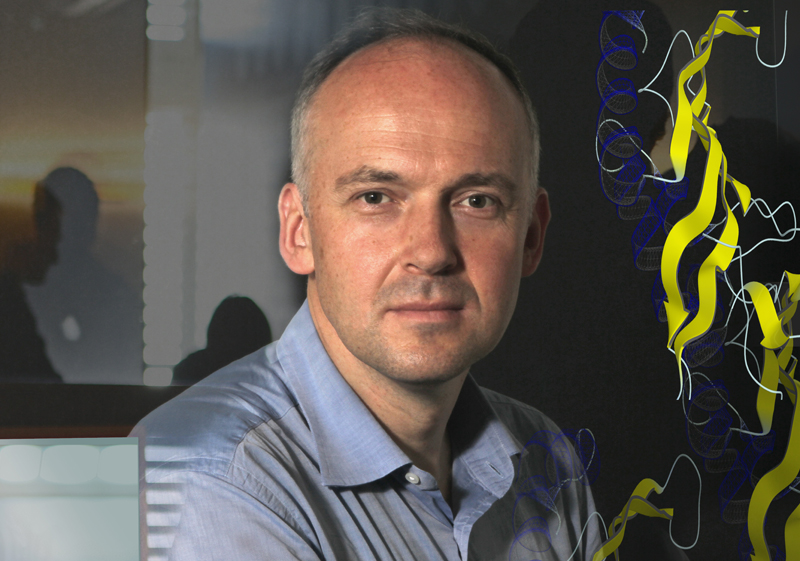
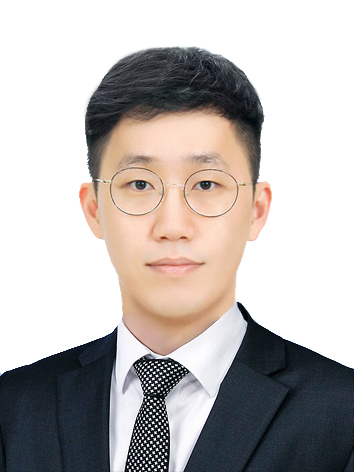
Prof. Dr. Jörg Hackermüller is a computational biologist with expertise in Omics data integration Toxicology Environmental risk assessment Non-coding RNA biology . He serves as Head of the Department of Computational Biology and Chemistry at the Helmholtz Centre for Environmental Research (UFZ) since 2024 and holds a Professorship at the Faculty of Mathematics and Computer Science at Leipzig University since 2021. His research focuses on Developing AI methods for chemical toxicity prediction Multi-omics integration for mechanistic toxicology Data standardization in environmental monitoring Non-coding RNAs as biomarkers in disease and toxicity and has produced 15+ recent publications spanning tools like multiGSEA and deepFPlearn+ . He collaborates with teams across UFZ Leipzig University Novartis Fraunhofer Institute and leads projects like InCeTo and SafePol , integrating exposome research with systems biology.
Benedikt Warth is a Full Professor for Food Chemistry and Exposome Research at the Department of Food Chemistry and Toxicology, Faculty of Chemistry, University of Vienna (since 2022). He coordinates the Austrian node of the ESFRI research infrastructure EIRENE and leads the 'Global Exposomics and Biomonitoring Laboratory' since 2017. His work bridges chemistry and toxicology, focusing on exposomics and metabolomics to assess chemical exposure and its health impacts. Education: PhD in Analytical Chemistry (2012), Master’s in Biotechnology (2009), Bachelor’s in Food Science and Biotechnology (2007) Research interests center on exposomics , metabolomics , and analytical chemistry , particularly for environmental and food-related toxicants. Recent articles highlight advancements in mass spectrometry for exposome-scale analysis, combining targeted and non-targeted approaches, and exploring chemical interactions (e.g., xenoestrogens, mycotoxins, flame retardants) in biological systems. Key trends in his publications include: Development of hybrid LC-MS methods (targeted/untargeted) for sensitive exposomics Integration of AI and cognitive computing for pathway analysis Global biomonitoring of mycotoxins and xenobiotics in vulnerable populations Standardization frameworks for non-targeted analysis (SRT) Notable awards include the 2025 Chemical Research in Toxicology Young Investigator Award , Brigitte Gedek-Science Award , and multiple grants (ERC Consolidator, Erwin-Schrödinger Fellowship). He has delivered over 20 invited talks on exposomics, including sessions at ACS Fall Meetings and international conferences. His laboratory's projects span: Breast cancer exposomics (linking environmental exposures to disease onset) High-throughput sample preparation for exposome-wide studies Systems toxicology of chemical mixtures (e.g., flame retardants, mycotoxins) Development of global metabolomic assays for toxicity prediction
Marylyn D Ritchie, PhD, is the Edward Rose, M.D. and Elizabeth Kirk Rose, M.D. Professor at the Perelman School of Medicine, University of Pennsylvania. She concurrently serves as Director of the Institute for Biomedical Informatics, Vice President for Research Informatics for the University of Pennsylvania Health System, Director of the Division of Informatics in the Department of Biostatistics, Epidemiology, and Informatics, and Vice Dean of Artificial Intelligence and Computing. Education: BS in Biology, University of Pittsburgh at Johnstown, 1999 MS in Applied Statistics, Vanderbilt University, 2002 PhD in Statistical Genetics, Vanderbilt University, 2004 Research Interests Dr Ritchie’s work integrates computational genomics , bioinformatics , pharmacogenomics , and systems genomics to advance precision medicine. She develops statistical and machine-learning approaches to dissect epistasis , genetic epidemiology , and evolutionary computation in large-scale biobanks, with a special focus on cardiovascular disease and Alzheimer’s disease . Her group is also pioneering translational informatics methods that incorporate social determinants of health and fairness metrics into AI-driven clinical decision support. Publication Trends In 2025 alone, Dr Ritchie co-authored more than fifteen high-impact studies spanning vision-language models for 3D CT , multi-omics Alzheimer’s risk prediction , fairness in neuroimaging AI , ancestry-specific pharmacogenomics , and cloud-based polygenic risk score platforms . The collective work highlights a shift from single-omics discovery to integrative, equitable, and clinically actionable models across diverse ancestries. Awards & Honors While specific named awards were not detailed in the text, Dr Ritchie’s endowed professorship and multi-institutional leadership roles signify sustained recognition. Grants & Advising Dr Ritchie leads large NIH, foundation, and industry-funded initiatives that support interdisciplinary teams of postdocs, graduate students, and data scientists. Her lab actively mentors trainees from UPenn’s Cell and Molecular Biology and Genomics and Computational Biology graduate groups. Laboratories & Teams She directs the Ritchie Lab (ritchielab.org), which develops open-source visualization tools such as PhenoGram , PheWAS-View , and Synthesis-View for genome-wide and phenome-wide data exploration. The lab operates within the Institute for Biomedical Informatics and collaborates closely with the Penn Medicine BioBank and multiple clinical departments to translate big-data discoveries into precision medicine workflows.
Simon Arthur is a Professor of Immune Signalling at the University of Dundee, School of Life Sciences, within the Department of Cell Signalling and Immunology. His research focuses on understanding inflammatory processes, particularly the role of innate immune cells in coordinating inflammation and resolving immune responses. He holds a PhD from the University of Oxford (1995) and a BSc from Durham University (1990). Arthur is a Fellow of the Royal Society of Biology (2015) and serves on the editorial board of the Journal of Biological Chemistry . His teaching includes courses on Genetics, Cell Signalling, Immunology, and advanced topics in immunology and cell signalling. He supervises PhD projects on microglial phenotypes in brain ageing and immunomodulatory factors in helminth-host interactions. Arthur leads research projects funded by the Medical Research Council and other agencies, including studies on liver fibrosis, bile acid diarrhoea, and pulmonary fibrosis. Key research themes include cytokine regulation, macrophage function, and the molecular mechanisms underlying chronic inflammation. His work spans from fundamental biology to translational research, aiming to develop therapies for autoimmune and inflammatory diseases. Arthur collaborates internationally and has over 180 publications in high-impact journals.
Prof. Dr. Jörg Schultz serves as a Professor for Bioinformatics at the Faculty of Biology, University of Würzburg, a position he has held since 2003. He is also a Group Leader at the Center for Computational and Theoretical Biology (CCTB) and was a member of the CCTB Managing Board from 2015-2019. His academic journey includes significant roles as Group Leader at the Max Planck Institute for Molecular Genetics in Berlin (2002-2003) and at cellzome in Heidelberg (2000-2002). He completed his PhD studies at EMBL Heidelberg (1996-2000) after conducting his diploma thesis there in 1995-1996, following biology studies at the University of Konstanz (1991-1996). Prof. Schultz's research spans bioinformatics, computational biology, and evolutionary genomics, with notable contributions to protein domain analysis, phylogenetics, and structural bioinformatics. His recent work has focused extensively on plant genomics, particularly studying carnivorous plants like the Venus flytrap to uncover the evolutionary roots of plant carnivory. His research integrates computational methods with biological questions to address fundamental evolutionary patterns and molecular mechanisms across diverse organisms. Prof. Schultz has maintained a prolific publication record since the late 1990s, with his most recent work demonstrating continued innovation in computational approaches to biological questions. His publications reveal a consistent trajectory from foundational work on protein domain evolution (including the development of the SMART database) to current research on plant genomics, molecular evolution, and bioinformatics tool development. His work shows particular strength in bridging computational methodology with biological insight across multiple domains. Among his significant contributions is the development of the ITS2 Database, a widely used resource for phylogenetic analyses, along with various computational tools including ALVIS for sequence alignment visualization, reper for repetitive element analysis, and BCdatabaser for DNA barcoding. These resources have advanced methodological capabilities in the bioinformatics community. As an academic mentor, Prof. Schultz has guided numerous students and researchers through his laboratory at the University of Würzburg, contributing significantly to the education and training of the next generation of bioinformaticians. His leadership roles demonstrate his commitment to advancing computational and theoretical biology as academic disciplines while maintaining strong connections between computational approaches and biological discovery.
Raymond T. Ng is a Professor of Computer Science at the University of British Columbia (UBC) and serves as Director of the Data Science Institute . In addition, he is the part-time Chief Informatics Officer at the PROOF Centre of Excellence for the Prevention of Organ Failures located at St Paul’s Hospital. Since 2016 he has held the prestigious Canada Research Chair in Data Science and Analytics. Education B.Sc. (Hons.) Computer Science, University of British Columbia, 1986 M.Math. Computer Science, University of Waterloo, 1988 Ph.D. Computer Science, University of Maryland, College Park, 1992 Research Interests Professor Ng’s research lies at the intersection of data mining , text mining , health informatics , sensor analytics , and databases . Over the past decade he has focused on two major domains: Genomics & Biomarker Discovery: Developing multi-omics biomarker panels for heart, lung and kidney transplant rejection and COPD exacerbations using transcriptomics, proteomics and metabolomics data. Natural Language Processing: Mining and summarizing conversational text such as emails, blogs and meeting transcripts to generate structured metadata and actionable insights. Scientific Awards Canada Research Chair in Data Science and Analytics (2016-2026) Best Paper Award, ACM SIGMOD 2004 Best Paper Award, ACM SIGKDD 2001 Selected among Best Papers of VLDB ’99 & ’98 Governor General’s Gold Medal, UBC (1986) Research Funding & Leadership Since joining UBC in 1992, Professor Ng has continuously secured major peer-reviewed funding from NSERC, CIHR, Genome Canada, CFI, MITACS and industry partners (Google, IBM, SAP). He leads or co-leads several large-scale initiatives: HEARTBiT multi-marker blood test for cardiac transplant rejection (CIHR 2018-2021) MERIDIAN ocean acoustic data infrastructure (CFI 2018-2021) Pan-Canadian Early Detection of Lung Cancer (Terry Fox 2018-2021) Business Intelligence Network (NSERC 2009-2014) Multiple Genome Canada programs on biomarker translation (2004-2018) Laboratories & Teams Professor Ng directs the Data Science Institute and works closely with the Natural Language Processing Research Group . At the PROOF Centre he heads a multidisciplinary team of statisticians, computer scientists and clinicians advancing computational biomarker pipelines from discovery to clinical implementation.
Zelmina Lubovac is a Senior Lecturer in BioInformatics at the School of Bioscience, University of Skövde. She serves as both a Course Coordinator for multiple undergraduate and graduate courses in bioinformatics and a Programme Coordinator for Master's level programs. Her academic work focuses on the intersection of computational methods and biological applications, particularly in disease analysis and biomarker discovery. Dr. Lubovac's research spans several key areas in bioinformatics and systems biology: Disease module identification in complex biological networks Multi-omics integration (genomics, proteomics, metabolomics) for biomarker discovery Machine learning applications in RNA-seq and other high-throughput biological data Development of bioinformatics software tools for network analysis miRNA analysis in cancer and neurological disorders Her recent publications (2022-2024) demonstrate a strong focus on applying computational approaches to understand disease mechanisms, particularly in pancreatic cancer and multiple sclerosis. She has developed several widely-used bioinformatics tools including MODalyseR, MODifieR, and TFTenricher that facilitate disease module analysis and gene network interpretation. Her work often involves collaborative research with clinical teams to translate computational findings into potential diagnostic applications. Dr. Lubovac has been involved in significant research projects including: BIO-AID (Biomedical AI-driven data analytics): Oct 2020 - Sep 2024 Systems Biology DMDPipe: Mar 2018 - Feb 2021 She actively contributes to both undergraduate and graduate education at the University of Skövde, coordinating multiple courses and programs in bioinformatics and bioscience, with a clear emphasis on preparing students for careers at the intersection of biology and computational science.
Olga Vitek is a Professor at Northeastern University's Khoury College of Computer Sciences, with affiliated faculty status in the Department of Chemistry and Chemical Biology. Her research bridges statistical science and machine learning with mass spectrometry-based proteomics and systems biology, focusing on developing open-source software tools like MSstats and Cardinal for quantitative proteomic analyses and imaging. Education: PhD in Statistics (Purdue University), Postdoc at the Ruedi Aebersold Lab (Institute for Systems Biology) Leadership: Director of the Barnett Institute for Chemical and Biological Analysis Her work emphasizes: Statistical experimental design Signal detection in complex mass spectrometry data Causal inference in biomolecular networks Reproducible computational infrastructure Recent publications highlight advancements in quantitative proteomics , mass spectrometry imaging , and causal modeling , with applications spanning cancer research, immunology, and clinical diagnostics. Notable trends include deep learning integration for image analysis and open-source tool development for scalable, transparent workflows. Scientific accolades: Elected Fellow of the American Statistical Association 2021 Gilbert S. Omenn Computational Proteomics Award NSF CAREER award Chan-Zuckerberg Essential Open-source Software award Senior Member, International Society for Computational Biology
Julia Chamot-Rooke is a Principal Investigator and Researcher at the Institut Pasteur in Paris, France, affiliated with the Department of Structural Biology and Chemistry and the Mass Spectrometry for Biology unit (UTechS MSBio), a joint CNRS service and research unit (USR2000). She leads multiple projects in advanced proteomics and is the PI for the Institut Pasteur in the European Proteomics Infrastructure Consortium providing access (EPIC-XS). Her research focuses on developing innovative methods in top-down proteomics , cross-linking mass spectrometry , and structural proteomics to study intact proteins, post-translational modifications, and protein complexes. Her work has applications in microbiology, infectious diseases, and host-pathogen interactions. She has developed the ProteoCombiner software to integrate proteomics data for improved proteoform characterization. The recent publications reflect a strong emphasis on structural and functional proteomics , particularly in microbial systems and immune interactions. Trends include the use of advanced mass spectrometry techniques (HDX-MS, cross-linking MS, top-down MS) to investigate protein structure, dynamics, and interactions in pathogens and host systems. There is also a growing focus on software and tool development to enhance data analysis and reproducibility in proteomics. Principal Investigator, EPIC-XS at Institut Pasteur Coordinator, Joint Research Activity on Future and Emerging Proteomics Technologies Lead Developer, ProteoCombiner software She supervises PhD students and research engineers and collaborates widely on projects involving bacterial pathogenesis, immune evasion, and structural biology. Her lab is equipped with state-of-the-art Orbitrap mass spectrometers and participates in transnational access programs, providing cutting-edge proteomics services to the European research community.
Torsten Schwede is a Professor for Structural Bioinformatics at the Biozentrum, University of Basel, and serves as Vice President for Research at the same institution. He leads the SPHN Data Coordination Center at SIB Swiss Institute of Bioinformatics. His research focuses on computational structural biology, protein structure prediction, and structural bioinformatics, with contributions to tools like SWISS-MODEL. He has been honored as a Highly Cited Researcher in Biology and Biochemistry (2019–2021). Education: PhD in Protein X-ray Crystallography from Albert-Ludwigs-Universität Freiburg (Germany). Positions include leadership roles in academia and industry (e.g., GlaxoSmithKline). His work emphasizes protein modeling, data management, and integrative structural methods. Collaborations span computational drug design, benchmarking initiatives (CASP), and open-source software development. Scientific contributions include advancements in protein-ligand interactions, homology modeling, and the development of ModelCIF and QMEANDisCo frameworks. He actively participates in global initiatives like the Swiss Personalized Health Network (SPHN) and precision medicine.
Dr. Hajk-Georg Drost is a Senior Lecturer and Principal Investigator in the Division of Computational Biology at the University of Dundee's School of Life Sciences. He leads the Digital Biology Group, focusing on integrating machine learning and high-performance computing with biological research to advance healthcare innovation. Previously, he established a Computational Biology group at the Max Planck Institute for Biology Tübingen (2019-2024) and conducted postdoctoral research at the University of Cambridge's Sainsbury Laboratory. His research explores: Evolutionary transcriptomics and phylotranscriptomic patterns across species Machine learning applications in genomics and proteomics Development of bioinformatics tools (DIAMOND, myTAI) for tree-of-life scale analyses Gene regulatory networks and transposable element dynamics His publications demonstrate a consistent focus on evolutionary constraints in development, with recent work expanding into single-cell resolution analyses of developmental diseases. Awards include: Royal Society Wolfson Fellowship (2024) Fellow, Cambridge Philosophical Society Postdoctoral Affiliate, Trinity College Cambridge He currently supervises PhD students including Stefan Manolache and leads projects funded by the Royal Society and others, focusing on protein alignment infrastructure and developmental disease research. His lab develops open-source software for genomic analyses and maintains active collaborations across Europe.
Sandrine Dudoit is a Professor and Chair of the Department of Statistics at the University of California, Berkeley. She earned her PhD in Statistics from UC Berkeley in 1999 and joined the faculty in 2001. Her research focuses on statistical methodology and computing with applications to genomics, biomedical research, and precision health. She co-founded the Bioconductor Project , an open-source software initiative for biological data analysis, and leads interdisciplinary projects in single-cell transcriptomics and computational biology. Education: PhD in Statistics (UC Berkeley, 1999), M.Sc. in Mathematics (Carleton University, Canada). Research interests include high-dimensional statistical learning, single-cell RNA-Seq analysis, stem cell differentiation in the olfactory system, and statistical computing. She collaborates with biologists like John Ngai to study neuroepithelial regeneration using cutting-edge sequencing technologies. Recent work emphasizes trajectory inference, biomarker discovery, and methodological advances in handling high-dimensional genomic data. Her lab develops tools for normalization, clustering, and differential expression analysis in large-scale biological datasets. She teaches courses on statistical genomics and serves as a leader in UC Berkeley’s Division of Computing, Data Science, and Society (CDSS). Advising: Supervises PhD students in statistical methodology, computational biology, and bioinformatics. Grants: Active in securing funding for interdisciplinary research projects in genomics and data science. Labs/Teams: Core member of the Center for Computational Biology (CCB) and contributes to the Bioconductor community.
David Goodlett is a Professor and Director of the UVIC Genome BC Proteomics Centre in the Department of Biochemistry and Microbiology at the University of Victoria. He holds a BSc and PhD from North Carolina State University (NCSU). His research focuses on host-pathogen interactions, lipid A structure-activity relationships, microbial diagnostics, and proteomics-driven systems biology. Dr. Goodlett leads a lab developing mass spectrometry-based technologies, including lipidomics and MALDI-TOF MS for rapid bacterial identification. Education: BSc, North Carolina State University PhD, North Carolina State University Research Interests: Structural elucidation of lipid A in Gram-negative bacteria for vaccine development Development of mass spectrometry tools (e.g., SAWN, MALDI-TOF) for clinical diagnostics Proteomic profiling of cancer biomarkers and immune response mechanisms Bioinformatics pipelines for cross-linking mass spectrometry (CLMS) Awards & Grants: NIH R01 Grant GM111066-01 (2015) for MS-based bacterial identification Ardgour Symposium Ethos Award (2011) for collaborative research excellence Lab & Collaborations: Led development of the xComb software for cross-linked peptide analysis Partnerships with Deurion for commercializing SAWN technology FiDiPro Finland Distinguished Professorship (2014-2016) for diabetes and ovarian cancer biomarker research Students & Trainees: Current students: Madison Shiyuk, Bo Ren, Linda Nartey, Sophie Culos, Kate McMurray Prior postdocs include Pragya Singh (PhD 2011), Sunhee Jung (PhD 2011), and Scott Heron
Hoseung Song is an Assistant Professor at KAIST (Korea Advanced Institute of Science & Technology), affiliated with the Department of Industrial and Systems Engineering and the Graduate School of Data Science. His research focuses on statistical data science, decision making, and biomedical applications, particularly in areas like change-point analysis, two-sample tests, and spatial clustering. His work bridges theoretical statistics with practical biomedical and healthcare challenges. Research interests include advanced statistical methodologies for analyzing complex biological and healthcare data, such as viral genomics, microbiota associations, and immune cell clustering. He develops scalable algorithms and kernel-based methods to address high-dimensional and non-Euclidean data challenges. Recent work highlights applications in infectious diseases (e.g., HSV-2) and postmenopausal health through association studies and differential analysis. His publications emphasize robust statistical testing frameworks, including permutation-based limitations, batch effect corrections, and graph-based methodologies. These contributions enhance reliability in biomedical research and safety-critical data applications. His lab likely integrates computational statistics with real-world healthcare datasets to drive translational insights.
Dr. Saer Samanipour is a Visiting Professor at the Van 't Hoff Institute for Molecular Sciences, part of the Faculty of Science at the University of Amsterdam. His research focuses on advanced analytical techniques for environmental and biomedical applications, with a strong emphasis on non-targeted analysis, mass spectrometry, and machine learning integration. He leads efforts in developing open-source tools like GcDUO and jHRMSToolBox to enhance data interpretation in complex chemical datasets. Key areas include environmental contaminant detection, chemical exposure assessment via wastewater-based epidemiology, and proteomic analysis of snake venoms. His work bridges computational methods with experimental chemistry to address global challenges in environmental health and toxicology. Primary affiliation: Van 't Hoff Institute for Molecular Sciences Research themes: Non-targeted LC-HRMS workflows, machine learning applications in analytical chemistry, PFAS analysis, and exposome research Software contributions: GcDUO (GC×GC-MS), jHRMSToolBox (HRMS data processing) His publications highlight innovations in data-driven approaches for compound prioritization, toxicity prediction, and method optimization. Recent work explores chemical space exploration and chemometric strategies for complex mixture analysis, with applications to environmental monitoring and forensic science.