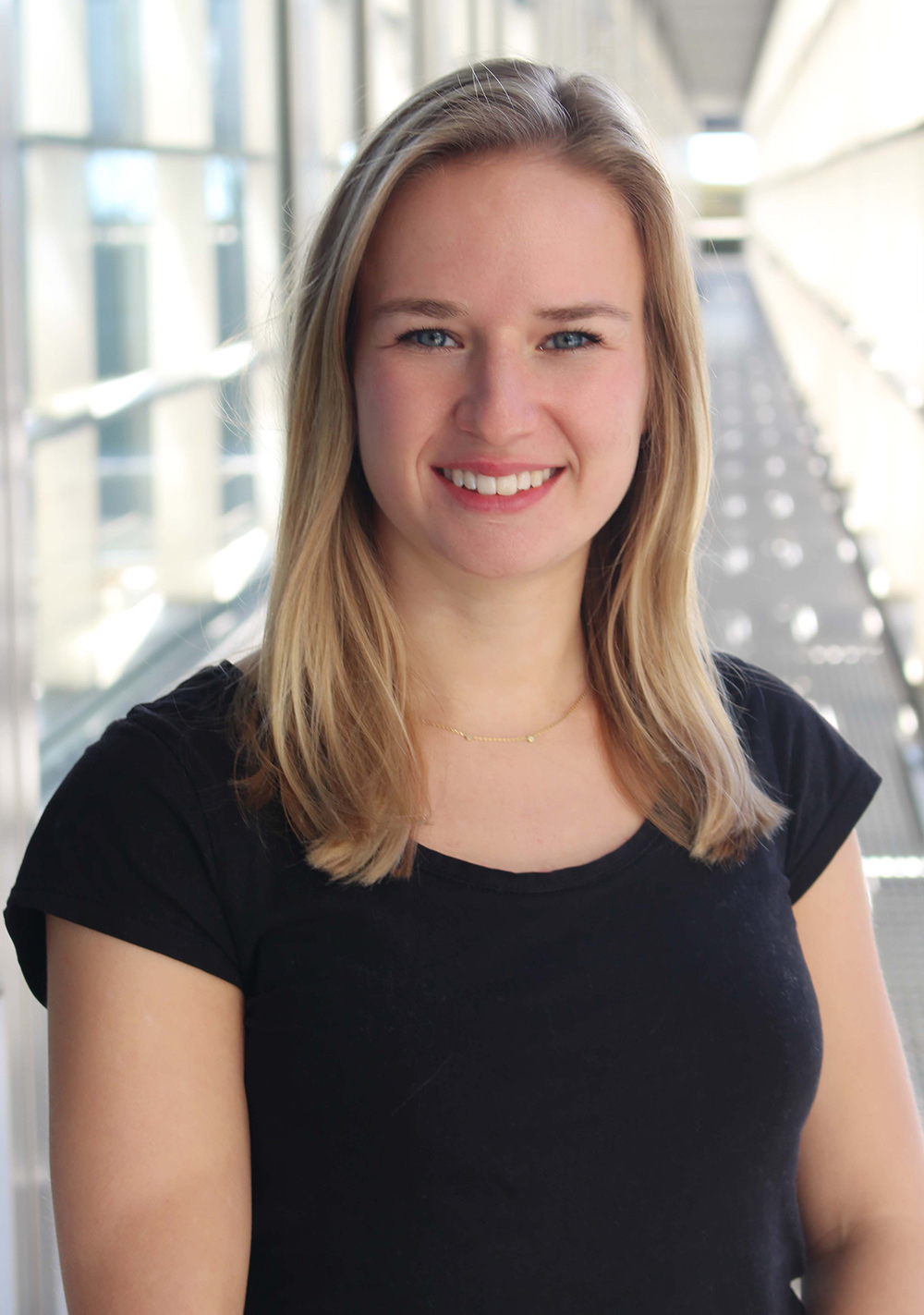
Dr. Cathy Tournier is a Senior Lecturer in the Division of Cancer Sciences at the University of Manchester. Her research focuses on mitogen-activated protein kinase (MAPK) signaling pathways in cancer and neurodegenerative diseases. She holds a PhD in Endocrinology and has held post-doctoral fellowships from institutions including the Howard Hughes Medical Institute and the Lister Institute of Preventive Medicine. Education: BSc (Biochemistry), University of Montpellier, France (1990) MSc (Biochemistry), University of Montpellier, France (1991) PhD (Endocrinology and Cellular/Molecular Interactions), University of Paris XI, France (1996) Research Interests: Tournier’s laboratory investigates MAPK signaling pathways in cancer development and neurological disorders. Key topics include ERK5 and JNK signaling in cell survival, apoptosis, and inflammation-driven carcinogenesis. Collaborations include mouse model development for studying cancer progression and macrophage activation in tumors. Awards: She has received prestigious fellowships such as the Lister Institute Senior Research Fellowship (2001–2006) and Howard Hughes Medical Institute Research Associate (1998–2000). Teaching and Advising: Teaches Cell Signalling (BIOL31441) and supervises dissertation students. Active in undergraduate mentoring and project supervision. Labs/Teams: Her work aligns with research beacons like Dementia@Manchester and the Manchester Cancer Research Centre, focusing on translational signal transduction research.
Angela Steinauer is a Tenure Track Assistant Professor at the École Polytechnique Fédérale de Lausanne (EPFL), Switzerland, leading the Laboratory of Biomolecular Engineering and Nanomedicine (LIBN). She holds academic affiliations within the School of Basic Sciences (SB), specifically in the Institute of Chemical Sciences and Engineering (ISIC) and the Section of Chemistry and Chemical Engineering (SCGC). Her roles include teaching advanced chemistry courses, nanobiotechnology, and supervising doctoral students in the Chemical Biology program. She is also a member of the doctoral program committee for Chemistry and Chemical Engineering. Dr. Steinauer's research focuses on biomolecular engineering and nanomedicine, emphasizing protein engineering, drug delivery systems, and endosomal escape mechanisms. Her work integrates chemical synthesis, biophysical techniques, and molecular biology to develop innovative therapeutic carriers. Key educational milestones include a Ph.D. in Chemical Biology from Yale University (2018) and a B.Sc./M.Sc. in Chemistry from the University of Zurich (2007–2012). Her teaching responsibilities include courses such as Advanced General Chemistry I , Nanobiotechnology , and Chemical Biology Seminar Series . She actively supervises five doctoral students, fostering interdisciplinary research in biomolecular innovation. Her recent publications highlight advancements in peptide delivery mechanisms, protein cage assembly, and stimulus-responsive nanocarriers, reflecting her commitment to bridging fundamental research with translational applications in medicine and biotechnology.
Huaiying Zhang is an Assistant Professor in the Department of Biological Sciences at Carnegie Mellon University, part of the Mellon College of Science. His research focuses on the role of biomolecular condensates in cellular functions and cancer progression, particularly investigating phase transitions in telomere maintenance and cancer cell immortality. He holds a Ph.D. from McGill University and completed postdoctoral research at Dartmouth College, Princeton University, and the University of Pennsylvania. Research interests include engineering synthetic organelles, developing optogenetic tools to manipulate phase separation in live cells, and targeting phase transitions for cancer therapy. His work bridges biophysics, cell biology, and synthetic biology to address fundamental questions in nuclear organization and disease mechanisms. Education: Ph.D., McGill University Postdoctoral Fellowships: Dartmouth College, Princeton University, University of Pennsylvania Publications highlight advances in understanding telomere clustering in cancer cells, nuclear body formation, and applications of phase separation in therapeutic strategies. Collaborative projects emphasize interdisciplinary approaches, combining experimental and theoretical methods. Lab activities focus on biomolecular condensates' material properties, their roles in genomic processes, and translational applications in cancer treatment. The lab actively seeks students and researchers interested in cellular biophysics and disease biology.
Sonia Navas-Martin is a Professor in the Department of Microbiology & Immunology at Drexel University College of Medicine. She holds a PhD from Universidad Autónoma de Madrid (1997). Her research focuses on innate immunity mechanisms during viral infections and neurodegenerative diseases, with emphasis on CNS pathologies and cellular senescence. Education: PhD in Microbiology & Immunology, Universidad Autónoma de Madrid (1997) Research Interests: Dr. Navas-Martin investigates how innate immune pathways contribute to immunopathology in viral infections (e.g., coronaviruses), neuroinflammation, and neurodegenerative diseases like Alzheimer’s. Her work combines molecular biology, immunology, and animal models to identify therapeutic targets. Key areas include: Microglial responses to viral pathogens Role of non-coding RNAs (e.g., miRNAs) in immune regulation Cellular senescence in HIV-associated neurocognitive disorders Cross-talk between TLR signaling and viral replication Publications: Her recent work includes studies on SARS-CoV-2 antiviral strategies, microglial antiviral mechanisms, and HIV-HCV co-infection dynamics. The articles reflect a focus on innate immunity modulation, viral pathogenesis, and translational therapies. Awards: Curator, American Society for Microbiology’s COVID-19 Research Registry Grants & Mentorship: She oversees an NIH-funded neuroimmunology graduate position and mentors students in scientific excellence. Her lab is known for collaborative, open research environments fostering innovation. Labs & Teams: Active in the Institute for Molecular Medicine & Infectious Disease at Drexel, collaborating on coronavirus immunology and SARS-CoV-2 therapeutic development. Her research integrates virology, immunology, and neurobiology to address critical gaps in understanding viral CNS pathogenesis.
Anupama Chembath is a Post-Doctoral Research Associate at Aston University's School of Biosciences within the College of Health and Life Sciences. Her research focuses on protein engineering, molecular biology, and genetic mutagenesis, with notable contributions to armadillo repeat proteins and saturation mutagenesis techniques. She has collaborated internationally on projects such as PRe-ART (Predictive Reagent Antibody Replacement Technology) and applied non-degenerate mutagenesis methods to alpha-helical repeat proteins. Her work bridges biochemical and genetic approaches to understand protein function and structure, including studies on circadian rhythms in plants and yeast pseudohyphal growth mechanisms. Recent advancements include modular binder technologies leveraging next-generation sequencing (NGS) and high-resolution selection in yeast. Award recognition details are not explicitly stated in the provided texts. Her research trends emphasize precision engineering, structural biology, and applications in biotechnology, with publications spanning from 2009 to 2024. Collaborative efforts highlight interdisciplinary approaches to protein design and functional analysis.
Dr. Rolf Brekken is a Professor at UT Southwestern Medical Center, where he serves as the Effie Marie Cain Research Scholar in Angiogenesis Research and Principal Investigator in the Hamon Center for Therapeutic Oncology Research. His laboratory investigates tumor-host interactions with a particular emphasis on extracellular matrix (ECM) and angiogenesis, focusing on pancreatic, breast, and lung tumors. Dr. Brekken received his Bachelor of Arts degree from Luther College in Decorah, Iowa and his PhD from UT Southwestern Graduate School of Biomedical Sciences. His graduate research focused on Vascular Endothelial Growth Factor (VEGF) as a target for therapy of solid tumors. He completed postdoctoral training in the Department of Vascular Biology at the Hope Heart Institute in Seattle, Washington. Dr. Brekken's research interests center on the tumor microenvironment, particularly pathways that drive epithelial plasticity and immune suppression. His laboratory studies how angiogenesis and ECM remodeling are key components of the metastatic cascade, with current projects focused on the function of matricellular proteins (e.g., SPARC and fibulin-5) as regulators of ECM remodeling and angiogenesis. Another major area of study is the development and evaluation of novel cancer therapies with a focus on anti-angiogenic strategies. Analysis of Dr. Brekken's recent publications (2017-2018) reveals a consistent focus on pancreatic cancer biology, particularly examining the tumor microenvironment, ECM remodeling, and angiogenesis. His work frequently investigates specific molecular targets including Axl receptor, discoidin domain receptors, and phosphatidylserine, with applications in both diagnostic approaches and therapeutic interventions. A notable trend is the exploration of combination therapies and mechanisms of resistance to anti-angiogenic treatments. Effie Marie Cain Research Scholar in Angiogenesis Research Dr. Brekken leads the Brekken Laboratory located in the Hamon Center for Therapeutic Oncology Research, where his team conducts robust modeling of pancreatic and breast cancer. His research has significant implications for understanding resistance mechanisms to anti-VEGF therapy and hypoxia-induced tumor progression. The laboratory's work spans from basic molecular mechanisms to preclinical therapeutic applications, with strong translational potential.
Karl Schmid is a W3 Professor of Crop Plant Biodiversity and Breeding Informatics at the University of Hohenheim's Institute of Plant Breeding, Seed Science and Population Genetics within the College of Agricultural Sciences. His research integrates evolutionary genetics, population genomics, and machine learning to address agricultural challenges. Ph.D. in Biology, University of Munich (1996) Postdoctoral Research, Cornell University (1997-1999) Emmy-Noether Research Group, Max Planck Institute of Chemical Ecology (2000-2006) Group Leader, Leibniz Institute of Plant Genetics (2006-2008) Professor of Genetics, Swedish Agricultural University (2008) His research focuses on crop biodiversity conservation, evolutionary genetics of plant pathogens, and breeding informatics applications. Current work leverages deep learning for phenotyping (quinoa panicles, barley genomics) and analyzes pathogen evolution (Exserohilum turcicum in maize). His team actively develops computational tools like GGoutlieR for geo-genetic pattern detection. Recent publications demonstrate strong trends in applying AI to agricultural genomics, particularly in quinoa improvement and pathogen surveillance. His group leads the EU H2020 INVITE project on molecular markers in plant variety protection and organizes international symposia like the 2024 Quinoa Symposium at Hohenheim. Head of Crop Biodiversity and Breeding Informatics Group Principal Investigator, EU H2020 INVITE project Organizer, International Quinoa Symposium 2024
Daan van Aalten is a Professor at Aarhus University, affiliated with the Department of Molecular Biology and Genetics - Neurobiology within the Faculty of Natural Sciences. His research focuses on protein O-GlcNAcylation, a critical posttranslational modification linked to intellectual disability (OGT-CDG). He leads studies using model systems (mESCs, Drosophila, mice) to dissect molecular mechanisms underlying OGT-CDG phenotypes. Notable contributions include defining OGT-CDG as a congenital disorder of glycosylation and identifying therapeutic targets. He has secured major grants, including a Novo Nordisk Foundation Laureate Grant (DKK 50M) and a Villum Investigator Grant (DKK 40M), supporting work on protein modifications and fungal pathogenesis. Key research areas include enzymology, structural biology, and neurobiology. His lab explores O-GlcNAc signaling dynamics, fungal cell wall synthesis, and genetic disorders. Recent studies highlight neurodevelopmental defects in mouse models and human stem cell systems. Collaborative projects with international teams advance drug discovery for fungal pathogens and intellectual disability syndromes. Publications span molecular mechanisms of OGT mutations, enzyme inhibitors, and structural biology. Awards include recognition for his transformative work in glycobiology and neurodevelopment. His lab actively engages in training scientists and welcomes inquiries about OGT-CDG studies via ogtcdg@au.dk.
Susanta Sarkar is a Research Professor at Arizona State University's School of Molecular Sciences, affiliated with the Tempe campus. His email is Susanta.Sarkar@asu.edu. He holds a NIH R01 GM145210 grant as the sole PI ($1.1 million), focusing on MMP1's role in collagen degradation. His research integrates biophysics, enzyme dynamics, and drug development to target matrix metalloproteases (MMPs) in diseases like cancer and neurodegeneration. He employs single-molecule techniques to study enzyme-substrate interactions, aiming to develop precision therapies with minimal side effects. Education : Ph.D. in Physics, University of Oregon (2006) M.S. in Physical Sciences, Indian Institute of Science (2000) Postdoctoral Associate, Cornell University (2008), NIH Research Fellow (2013) Research Interests : MMPs' role in human health, single-molecule biophysics, allosteric modulation, and drug screening for Parkinson’s/Alzheimer’s. His work bridges fundamental biology and translational medicine, funded by NIH. Publications : Recent work includes substrate-specific MMP dynamics, alpha-synuclein interactions, and biofilm inhibition. His 2020 Biophysical Journal study was cover-selected and F1000-recommended. Over 15 publications since 2016 address enzyme activity, thermodynamics, and imaging. Grants & Awards : NIH R01 GM145210 (2022-2026), $2.25 million in total funding. Recognized for innovative methodologies in single-molecule studies. Advising & Training : Supervised 54 trainees, including 3 PhDs securing >$1.5M in grants post-graduation. Emphasizes financial literacy alongside science, with students averaging $30K+ retirement savings. Service : Served on 12 NSF/NIH panels, reviewer for 20+ journals including Nature Communications and Biophysical Journal. Labs/Teams : Integrates personal finance education in group meetings to boost focus and career readiness. Lab focuses on MMPs, antimicrobial biopolymers, and fluorescent nanodiamond imaging.
Professor Vincent Archambault holds a full professorship at the University of Montreal's Faculty of Medicine, Department of Biochemistry and Molecular Medicine, and leads the Cell Cycle Regulation Research Unit at the Institute for Research in Immunology and Cancer (IRIC). His work focuses on molecular mechanisms regulating the cell division cycle, particularly in Drosophila models, with implications for cancer research. Education: B.Sc. in Biochemistry, Université de Montréal (1999) Ph.D. in Cell Cycle Studies, Rockefeller University (2004) Postdoctoral training at University of Cambridge (2004–2009) Research Interests: Cell cycle control, mitotic regulation, cancer biology, protein kinases (e.g., Polo, Greatwall), phosphatase networks (PP2A), and Drosophila model systems. His research identifies therapeutic targets for cancer by studying disruptions in cell cycle pathways. Key contributions include co-discovering Greatwall kinase and its role in mitotic regulation. Over 50 peer-reviewed articles highlight his work on nuclear reassembly, cytokinesis, and phosphatase-kinase interactions. Awards: Maud Menten New Principal Investigator Award (2009) GE Healthcare New Scientist Award (2015) Human Frontier Science Program Fellowship (2005–2009) Grants: Over 15 projects funded by CIHR, CRSNG, and others, totaling millions in research support. Labs/Teams: Leads the IRIC Cell Cycle Regulation Unit, collaborating with teams like Sylvain Meloche and Jean-Claude Labbé.
Alain Trouvé is a Professor at the Center for Mathematics and Their Applications (CMLA) within the Ecole Normale Supérieure de Cachan , France. His research focuses on Shape Spaces , Computational Anatomy , Imaging Processing , and Biological Imaging , with applications in medical and computational fields. He directs the Mathematics Department at ENS Cachan and contributes to neuroanatomical studies through diffeomorphometry techniques. Key roles include membership in the Conseil National des Universités (Section 26) and teaching responsibilities such as courses on Geometry and Shape Spaces and Probability Theory . His work spans from theoretical frameworks (e.g., Hamiltonian modeling of shape evolution) to practical applications like 3D cell imaging and white matter fiber analysis. Publications emphasize interdisciplinary methods, including diffeomorphic registration, varifold-based image analysis, and stochastic shape evolutions. Current projects explore multi-scale modeling of biological systems and AI-driven medical diagnostics. Key Research Themes: Diffeomorphic mappings, computational vision, and functional shape analysis. Teaching: Courses on geometric modeling and probability at undergraduate and graduate levels. Tools Developed: xIV-LDDMM Toolkit for multi-modal biomedical data analysis.
Lynn Cooley is the Dean of the Graduate School of Arts and Sciences and holds the C. N. H. Long Professorship in Genetics at Yale University. She is also Professor of Cell Biology and Molecular, Cellular, and Developmental Biology within the Yale School of Medicine. Her research focuses on cellular mechanisms of gamete development using Drosophila as a model system, particularly studying actin cytoskeleton organization in germline ring canals and somatic muscle development. Education: PhD in Genetics from University of Texas (1984), BA in Zoology from Connecticut College (1976) Her work investigates how intercellular bridges (ring canals) facilitate oocyte growth and maternal mRNA transport. Recent discoveries include novel muscle types in Drosophila ovaries and the role of the Kelch protein in actin dynamics. Cooley’s lab employs genetic, molecular, and imaging techniques to study these processes. Key awards include Fellow of the American Association for the Advancement of Science (2012) and Pew Scholar Award (1991). She has served on committees such as the Genetics Society of America Board and NIH Dev1 Study Section. Her research also explores tissue-specific codon redefinition and the antivirulence properties of antifreeze proteins. Collaborations include work with Andrew Hudson on Drosophila genetics and Joerg Bewersdorf on super-resolution microscopy.
Takashi Gojobori (born October 24, 1951) is a Japanese molecular biologist who serves as Vice-Director of the National Institute of Genetics (NIG) and Professor at the Center for Information Biology and DNA Data Bank of Japan (DDBJ) in Mishima, Japan. He also holds multiple visiting positions including Special Research Consultant at the National Institute of Advanced Industrial Science and Technology (AIST), Visiting Professor at Keio University, Tokyo University, and Tokyo Institute of Technology, and Visiting Research Director at RIKEN. His educational background includes a Ph.D. from Kyushu University (1979), followed by research positions at the University of Texas at Houston (1979-1983), Washington University in St. Louis (1985, 1986), and the Imperial Cancer Research Fund in London (1989). Professor Gojobori's research spans multiple areas of molecular and evolutionary biology. His work focuses on comparative genomics, molecular evolution, viral evolution, and bioinformatics. He has made significant contributions to understanding the rates of synonymous and non-synonymous substitutions, positive selection, horizontal gene transfer, and genome evolution. More recently, he has been investigating the evolution of the brain and central nervous system. His extensive publication record includes 389 peer-reviewed articles as of May 2012, reflecting his broad impact across multiple fields of biological research. His work shows a consistent focus on evolutionary mechanisms at the molecular level, with applications ranging from viral evolution to comparative genomics across diverse organisms including humans, plants, and model organisms like Hydra. Scientific Awards 2009: The Medal with Purple Ribbon from the government of Japan 2007: Academician Member of the Pontifical Academy of Sciences, Vatican 2006: Foreign Honorary Member of the American Academy of Arts and Sciences, USA 2005: Fellow of the American Association for the Advancement of Science (AAAS), USA 2005: Society Prize (Kihara Medal), The Genetic Society of Japan 2004: Society Prize (Motoo Kimura Medal), The Society of Evolutionary Studies, Japan 2004: The Gaetano Salvatore Gold Medal, Statione Zoologica, Anton Dohrn, Italy 1997: Science Award from Japan Science and Technology Corporation (JST), Japan 1995: Science Award from Hitoshi Kihara Memorial Foundation, Japan 1987: Promotion Award from Japanese Society of Genetics, Japan Professor Gojobori has served in numerous editorial capacities, including as Founding Editor of Genome Biology and Evolution, Executive Editor of GENE, and Associate Editor for several major journals. He has also held significant administrative roles including Program Director of the Council for Science and Technology Policy (CSTP) of the Japanese government and Science Officer of MEXT. His contributions to international genomic databases including DDBJ/GenBank/EMBL and the H-Invitational human gene database have been instrumental in advancing global genomics research. As Director of the Center for Information Biology and DNA Data Bank of Japan from 1994-2009, Professor Gojobori led important initiatives in biological data management and analysis. His work continues to influence the field through his leadership roles in international scientific organizations including the International Genetics Federation and CODATA/ICSU.
Kenichi Yokoyama serves as Associate Professor of Biochemistry (2019-Present), Associate Professor of Chemistry (2022-Present), and Associate Professor of Cell Biology (2022-Present) at Duke University. His primary appointment resides in the Department of Biochemistry within the Basic Science Departments, with secondary appointments in the Department of Chemistry under Trinity College of Arts & Sciences and the Department of Cell Biology. Dr. Yokoyama's research focuses on biosynthesis and mechanisms of action of naturally occurring bioactive molecules, particularly antifungals and antibiotics. His lab investigates biosynthetic enzymes and bacterial/fungal producers of bioactive metabolites to discover novel compounds with applications in research and medicine. His specific interests include free-radical mediated enzyme catalysis (metallo-enzymology), cofactor biosynthesis in humans and pathogenic bacteria, natural product biosynthesis and genome mining, and fungal cell wall biosynthesis with antifungal mode of action. His recent publications reveal a strong trend toward ribosomally synthesized and post-translationally modified peptide (RiPP) antibiotics like dynobactins and darobactins that target Gram-negative bacterial outer membranes. His work bridges organic chemistry, biochemistry, molecular biology, and spectroscopy with emphasis on functional and mechanistic characterization of enzymes, small molecule characterization, bacterial/fungal genetics, synthetic organic chemistry, and advanced spectroscopic techniques including NMR, EPR, and fluorescence microscopy. Scientific Awards: ACS Pfizer Award in Enzyme Chemistry (2019) - Recognizing fundamental research in enzyme chemistry by scientists under forty years of age Dr. Yokoyama maintains active grant funding from multiple NIH institutes (NIAID, NIGMS), NSF, and the American Heart Association, totaling over $10 million in current funding. His grants focus on molecular mycology, chitin synthesis inhibition, cell and molecular biology training, peptide antibiotic discovery, and advanced spectroscopy equipment. His lab also mentors students through various NIH-funded training programs including the Tri-Institutional Molecular Mycology and Pathogenesis Training Program and the Cell and Molecular Biology Training Program. The Yokoyama Lab operates at the intersection of enzymology and natural products research, maintaining strong collaborations across Duke's research ecosystem with particular emphasis on translating basic enzymatic discoveries into novel therapeutics for infectious diseases.
Dr. Laura Galazzo is a Lecturer at the Department of Chemistry and Applied Biosciences, ETH Zurich, affiliated with the Institute of Molecular Physical Sciences (IMPS). Her research focuses on biophysical chemistry and molecular dynamics, employing advanced spectroscopic techniques like Electron Paramagnetic Resonance (EPR) to study protein structure, phase transitions, and membrane transport mechanisms. She investigates topics such as liquid-liquid phase separation in proteins, ABC transporter function, and nitroxide radical dynamics in aqueous environments. Dr. Galazzo also contributes to methodological advancements in pulsed dipolar spectroscopy and neural network applications in spectroscopic data analysis. Her work bridges theoretical and experimental approaches, combining computational methods (e.g., ab initio molecular dynamics) with experimental techniques to address complex biological systems. Key areas of study include protein aggregation, conformational changes in large complexes, and the interplay between solvent effects and biomolecular behavior. Recent research highlights include studies on mycobacterial iron uptake mechanisms and the structural dynamics of pro-apoptotic peptides. Dr. Galazzo’s publications reflect a strong emphasis on interdisciplinary approaches, integrating spectroscopy, computational modeling, and structural biology. Her contributions have advanced methodologies for distance measurements in biomolecules and provided insights into fundamental biological processes such as phase separation and membrane-mediated transport. She is actively engaged in promoting sustainable education through initiatives like the EquipSent project, aiming to enhance global access to scientific resources.