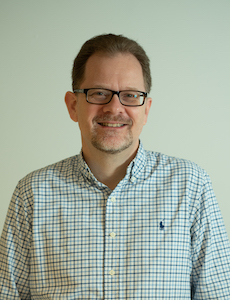
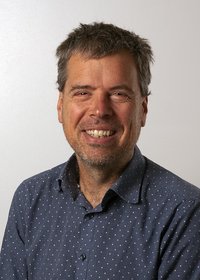
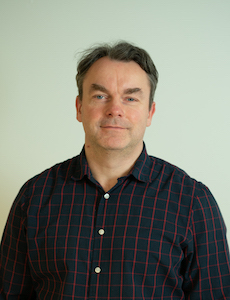
Peter Brodersen is a Professor at the Department of Biology, University of Copenhagen , specializing in Bioinformatics and RNA Biology . His research focuses on RNA modification (m6A), YTHDF proteins, and small RNA pathways in plants. Recent research trends from his group include: (1) molecular mechanisms of ARGONAUTE-small RNA interactions, (2) m6A-YTHDF regulatory systems in plant development, and (3) RNAi-independent roles of DICER-LIKE proteins in antiviral defense. Collaborations span Denmark and international institutions. Publications highlight cross-disciplinary work bridging computational biology and experimental plant genetics. Key subfields include RNA structure, epigenetic regulation, and antiviral immunity.
Thomas J. D. Jørgensen is an Associate Professor and Head of the Research Section of Biomedical Mass Spectrometry at the Department of Biochemistry and Molecular Biology, University of Southern Denmark. He leads an active research group focusing on protein structural dynamics using mass spectrometry and hydrogen/deuterium exchange methodologies. His research interests lie at the intersection of biochemistry, structural biology, and systems biology, particularly in understanding how protein dynamics govern function and dysfunction in diseases such as Parkinson’s and metabolic disorders. He employs advanced mass spectrometry techniques to study conformational changes, protein-protein interactions, and enzyme regulation, with a strong emphasis on lipoprotein metabolism and neurodegenerative disease mechanisms. The most recent articles highlight a consistent focus on protein dynamics in lipid metabolism, conformational diseases, and glycoprotein analysis, utilizing hydrogen/deuterium exchange mass spectrometry (HDX-MS) and related techniques. Themes include allosteric regulation of enzymes, protein unfolding, and structural phenotyping of disease-related aggregates. Member of the evaluation committee at the Swedish Research Council (2015) Chairman of multiple PhD evaluation committees (2014) Editorial and peer-review contributions to the scientific community He currently supervises PhD students and is involved in several major research projects funded by organizations such as the Michael J. Fox Foundation and Novo Nordisk Fonden. His lab, the Thomas J. D. Jørgensen Lab, includes postdoctoral researchers, academic staff, and industrial PhD students, fostering a collaborative and interdisciplinary research environment focused on biomedical mass spectrometry and systems biology.
Professor Guillermo Montoya is a Research Director and Group Leader at the Protein Structure & Function Program of the Novo Nordisk Foundation Center for Protein Research (CPR), University of Copenhagen, Denmark. His work focuses on unraveling cellular mechanisms at the atomic level through advanced methodologies including X-ray crystallography and cryo-electron microscopy. PhD in Chemistry, University of Zaragoza (1989–1993) MSc in Biochemistry, University of the Basque Country (1984–1989) Montoya's research spans Structural Molecular Biology and Genome Integrity , with specific emphasis on: Activation mechanisms of oligomeric kinases CRISPR-Cas12a conformational dynamics Macromolecular complexes in telomere maintenance His publications reveal significant contributions to CRISPR-Cas systems , kinase activation , and DNA/RNA degradation mechanisms . Scientific Awards: EMBO Member (2018) Spanish National Prize in Biomedicine (2009) Multiple Fellowships (EMBO, Marie Curie, FEBS, Marie Curie) Montoya's group integrates structural biology with cell biology to address fundamental questions in genome stability and biomedical applications. His work has been cited over 188 times for studies on CRISPR-Cas endonucleases and has attracted attention from 41 patents.
Ole Nørregaard Jensen is a Professor in Biomedical Mass Spectrometry and Systems Biology at the Department of Biochemistry and Molecular Biology, University of Southern Denmark . His research integrates advanced mass spectrometry, proteomics, and bioinformatics to study chromatin biology, post-translational modifications, and cellular signaling networks. He is actively involved in major research initiatives funded by Novo Nordisk Foundation and Lundbeck Foundation. His research interests include Mass Spectrometry, Proteomics, Posttranslational Modification, Histone Biology, Chromatin Biology, Bioinformatics, Systems Biology, Lipidomics, and Protein Chemistry . He employs cutting-edge techniques such as tandem mass spectrometry and ion mobility spectrometry to analyze protein isomers and dynamic modifications. His work has significant implications for understanding gene regulation, DNA replication, and disease mechanisms. His recent publications demonstrate a strong trend in chromatin dynamics, epigenetics, and integrated omics approaches , combining proteomics with transcriptomics and lipidomics to unravel complex biological systems. His research spans from fundamental molecular mechanisms to translational applications in biomedicine and food science. He has been recognized with several prestigious awards: MCP Lectureship Award Juan Pablo Albar Proteomics Pioneer Award 2019 EliteForsk 2009 prize Knight Order of Dannebrog (Ridder af Dannebrogordenen) Jensen is deeply involved in academic service, including peer review for journals like Nature Communications and Molecular and Cellular Proteomics , organizing conferences, and supervising students. He teaches courses such as Biomedical Mass Spectrometry - Principles and Applications and coordinates the Computational Biomedicine international Master’s program. He leads multiple active research projects, including PLATO and INTEGRA, focusing on health data, imaging, and protein networks. He is a key member of a vibrant research environment in biomedical mass spectrometry at SDU, contributing to both national and international scientific collaborations. His lab is at the forefront of developing and applying novel mass spectrometry methodologies for systems biology.
Daan van Aalten is a Professor at Aarhus University, affiliated with the Department of Molecular Biology and Genetics - Neurobiology within the Faculty of Natural Sciences. His research focuses on protein O-GlcNAcylation, a critical posttranslational modification linked to intellectual disability (OGT-CDG). He leads studies using model systems (mESCs, Drosophila, mice) to dissect molecular mechanisms underlying OGT-CDG phenotypes. Notable contributions include defining OGT-CDG as a congenital disorder of glycosylation and identifying therapeutic targets. He has secured major grants, including a Novo Nordisk Foundation Laureate Grant (DKK 50M) and a Villum Investigator Grant (DKK 40M), supporting work on protein modifications and fungal pathogenesis. Key research areas include enzymology, structural biology, and neurobiology. His lab explores O-GlcNAc signaling dynamics, fungal cell wall synthesis, and genetic disorders. Recent studies highlight neurodevelopmental defects in mouse models and human stem cell systems. Collaborative projects with international teams advance drug discovery for fungal pathogens and intellectual disability syndromes. Publications span molecular mechanisms of OGT mutations, enzyme inhibitors, and structural biology. Awards include recognition for his transformative work in glycobiology and neurodevelopment. His lab actively engages in training scientists and welcomes inquiries about OGT-CDG studies via ogtcdg@au.dk.
Thomas J.D. Jørgensen is an Associate Professor at the Department of Biochemistry and Molecular Biology, University of Southern Denmark. His work focuses on Biomedical Mass Spectrometry and Systems Biology, with a particular emphasis on protein dynamics, lipoprotein metabolism, and structural characterization. Current research involves lipoprotein lipase regulation (ANGPTL3/8, APOC2) and GPIHBP1-heparan sulfate interactions Expertise in Hydrogen/Deuterium Exchange Mass Spectrometry and glycopeptide analysis Scientific Leadership: Active in Ph.D. evaluation committees (Swedish Research Council, 2015; multiple international roles) and peer review activities. Funding Involvement: Participates in major projects including Leducq Foundation grants for triglyceride metabolism research, Novo Nordisk Foundation ONE IDP initiatives, and collaborations with GlyProVac ApS. Research Trends: Publications show strong focus on structural dynamics of lipid metabolism proteins (47% of 2023-2025 work), glycopeptide characterization (100% in 2023), and allosteric regulation mechanisms (100% in DNA repair proteins). Collaborations: International partnerships in cardiovascular biology, Parkinson's disease (Michael J. Fox Foundation), and biopharmaceutical safety. Media coverage includes breakthroughs in lipoprotein structure (2014) and Parkinson's research (2014).
Jørgen Ellegaard Andersen is a Professor and Center Director at the Department of Mathematics and Computer Science, University of Southern Denmark (SDU), and holds the D-IAS Chair at the Danish Institute for Advanced Study (DIAS). He is also a Distinguished Visiting Professor at the California Institute of Technology since 2013, reflecting his international stature in mathematical sciences. University: University of Southern Denmark School: Faculty of Science Department: Department of Mathematics and Computer Science Position: Professor, Center Director, D-IAS Chair Andersen earned his DPhil in Mathematics from the University of Oxford in 1992, with a thesis on Jones-Witten theory and the Thurston Compactification of Teichmüller space. His research lies at the intersection of quantum theory and geometry, focusing on quantum topology, geometric quantization of moduli spaces, topological quantum field theory, low-dimensional geometry, and applications to RNA and protein folding. His work combines deep mathematical rigor with potential applications in quantum computing and biophysics. The trends in his recent publications show a consistent focus on quantization of moduli spaces, topological recursion, mapping class group representations, and quantum Chern-Simons theory. His work often bridges pure mathematics and theoretical physics, with increasing attention to computational and applied aspects in quantum technologies. ERC Synergy Grant ReNewQuantum (EUR 10m, Principal Investigator) Distinguished Visiting Professor, Caltech Andersen leads major research projects such as ReNewQuantum and TopQC2X, securing significant funding from the EU and Danish agencies. He actively supervises PhD students and collaborates with leading mathematicians worldwide, including Maxim Kontsevich and Bertrand Eynard. His work is frequently highlighted in the media for its potential impact on quantum computing and Danish industry. He is a central figure in the Quantum Mathematics center at SDU and collaborates with institutions like MSRI and the University of Hamburg. His research group is part of international networks focused on geometric and topological methods in quantum theory.
Michael Toft Overgaard is a Professor at Aalborg University's Department of Chemistry and Bioscience, affiliated with The Faculty of Engineering and Science. His research focuses on protein science, with particular emphasis on calmodulin mutations linked to cardiac arrhythmias, hibernation physiology in brown bears, and functional peptide characterization. Key projects include investigations into calmodulinopathy mechanisms (funded by the Danish Cardiovascular Academy) and protein valorization through enzymatic hydrolysis (Novo Nordisk Foundation). Notable contributions include identifying calmodulin mutations' effects on neuronal and cardiac function, and elucidating metabolic adaptations in hibernating bears. Recent publications (2023-2025) address calmodulin's role in arrhythmias, hibernation endocrinology, and peptide-based emulsifiers. His work impacts forensic genetics, as seen in the re-evaluation of the Australian infanticide case involving calmodulin mutations. Collaborations span proteomics, cardiovascular research, and wildlife biology, with datasets deposited in PRIDE and Zenodo. Professional activities include external examinations and advisory roles in protein innovation.
Tobias Weidner is an Associate Professor in the Department of Chemistry at Aarhus University. His research focuses on surface chemistry, protein structure analysis, and advanced spectroscopic techniques applied to biomedical and materials science challenges. Key areas include interfacial interactions, nanomaterial coatings, and protein aggregation mechanisms. He has contributed to studies on seed mucilage adhesion, anti-corrosion nanofilaments, and cryo-EM insights into amyloid polypeptides. Education details are not explicitly listed, but his affiliations indicate a strong background in physical chemistry and biochemistry. His work bridges fundamental chemical research with biomedical applications, particularly in material design for medical interfaces and molecular-level understanding of protein behaviors. Recent publications emphasize ultrafast chemical dynamics under UV irradiation and peptide design for tailored surfaces. His projects include the Aeromicrobiology initiative (ongoing until July 2025), exploring airborne microbial interactions with surfaces. No awards or grants are explicitly listed, but his extensive publication record reflects active research collaboration. He leads a lab focused on spectroscopic methods for biomedical and material systems, though specific team composition details are not provided.
Günther Herbert Johannes Peters is a Professor at the Department of Chemistry Physical Chemistry, Technical University of Denmark (DTU). His research focuses on molecular dynamics simulations of enzymes, particularly lipases, and their applications in organic solvents, biopharmaceutical formulation stability, and protein-ligand interactions. He leads projects investigating enzyme stability at gas-liquid interfaces and lipid interactions. Research Interests: Molecular Dynamics Simulations of Enzymes Enzyme Kinetics in Non-aqueous Media Protein Formulation Stability Computational Biophysics Biocatalysis Publications reflect a trend toward integrating computational methods with experimental biophysical characterization, emphasizing enzyme behavior in industrial and pharmaceutical contexts. Notable collaborations span protein engineering, drug delivery systems, and sustainable biocatalytic processes. Current Projects (2024-2027): ENFACE: Predicting enzyme stability at gas-liquid interfaces High-throughput plant protein production and characterization Longstanding Projects since 1999 include Lipase-lipid interactions and Rheology of grafted amphiphilic chains. Advising: Supervises PhD students in enzymology and biomolecular engineering. Over 36 projects managed, including EU-funded initiatives and industry collaborations.
Kasper Harpsøe is a Research Consultant and Data and Computing Facility Manager at the Department of Drug Design and Pharmacology, Faculty of Health and Medical Sciences, University of Copenhagen. He has extensive expertise in computational medicinal chemistry with over 15 years of experience in molecular modeling techniques, particularly focused on G Protein-Coupled Receptors (GPCRs). Harpsøe earned his Ph.D. in Computational Chemistry from The Danish University of Pharmaceutical Sciences in 2006 with research on "Computational Studies on the Allosteric Modulation of AMPA Receptors." He holds a Master of Science in Pharmacy (Cand. Pharm.) from The Royal Danish School of Pharmacy completed in 2001. His international experience includes a three-month traineeship at Schrödinger Inc. in New York and research collaboration with the Carlson group at the University of Michigan. His research expertise spans structure-based design of peptide and small molecule ligands, binding site identification, docking and binding pose evaluation, protein-ligand interactions, conformational analysis, QSAR, sequence analysis, homology modeling, molecular dynamics, and quantum chemistry calculations. Harpsøe has made significant contributions to understanding GPCR structure-function relationships, ligand recognition mechanisms, and G protein coupling specificity. Analysis of his publication record reveals a consistent focus on GPCR molecular pharmacology, with particular emphasis on serotonin receptors, orphan receptors like GPR139, and GABA receptors. His work integrates computational approaches with experimental validation to identify molecular determinants of receptor selectivity and to design novel ligands for therapeutic applications. The research bridges structural biology, molecular modeling, and medicinal chemistry in the context of drug discovery. Harpsøe currently manages the department's Data and Computing Facility, overseeing a GPU Linux cluster and providing computational support for research groups. Previously, from 2014 to 2021, he served as project manager for computational drug design activities within the Gloriam Group, working on multidisciplinary drug discovery projects in collaboration with medicinal chemists, molecular pharmacologists, structural biologists, and data scientists from both academia and industry.
Claus Juul Løland is an Associate Professor in the Department of Neuroscience within the Faculty of Health and Medical Sciences at the University of Copenhagen. His research focuses on neuropharmacology, particularly examining the biochemical effects of substances like cocaine and amphetamines in the brain, addiction mechanisms, and the dopamine reward system. Position: Associate Professor Institution: University of Copenhagen Department: Department of Neuroscience Research Group: Neuropharm and Genetics Location: Blegdamsvej 3B, 2200 Copenhagen N Løland's primary research interests center on understanding drug addiction mechanisms, particularly related to cocaine and amphetamines, with specific expertise in the dopamine transporter system. His work investigates how these substances interact with brain chemistry to produce addictive behaviors, including research on smoking addiction and the dopamine reward system. His laboratory employs advanced biochemical and structural biology techniques to study neurotransmitter transporters at the molecular level. Analysis of his recent publications (2024-2025) reveals a strong focus on membrane protein biochemistry, particularly neurotransmitter transporters. His work combines structural biology approaches (including NMR spectroscopy) with medicinal chemistry to understand how psychoactive substances like cocaine interact with their molecular targets. A significant portion of his recent work involves developing novel detergents for membrane protein stabilization, which is crucial for structural studies of neurotransmitter transporters. Løland leads the Løland-lab at the University of Copenhagen, which maintains an active research program with numerous international collaborations. His work has been featured in major media outlets including TV2 Nyhederne and other Danish news media, particularly around breakthroughs in understanding cocaine's mechanism of action in the brain.
Johan Gotthardt Olsen serves as Assistant Professor and Guest Researcher in the Department of Biology within the Faculty of Science at the University of Copenhagen. His research focuses on the structural and dynamic properties of proteins, particularly intrinsically disordered systems and their biological functions. His primary research interests center on protein conformational dynamics, molecular recognition mechanisms, and the biophysical principles governing intrinsically disordered proteins. Olsen investigates how structural transitions in proteins regulate cellular processes like DNA replication, signal transduction, and enzyme activation, employing techniques spanning NMR spectroscopy, computational modeling, and biophysical characterization. Analysis of his recent publications (2021-2025) reveals a consistent research trajectory examining protein disorder-order transitions, with particular emphasis on molecular recognition in DNA-protein interactions and enzyme regulation. His work frequently combines experimental and computational approaches, resulting in publications in high-impact journals including Nature, Journal of the American Chemical Society, and Nucleic Acids Research. Olsen maintains active collaborations with multiple research groups, particularly with Professor Birthe B. Kragelund's team, as evidenced by co-authorship patterns across his publications. His research group participates in interdisciplinary projects bridging biochemistry, biophysics, and molecular biology, focusing on fundamental mechanisms with potential implications for drug discovery and disease understanding.
Thomas Günther-Pomorski serves as Full Professor at Ruhr-University Bochum and holds a part-time position at the University of Copenhagen's Department of Plant and Environmental Sciences (Section for Transport Biology). His research bridges plant biology and membrane biophysics, focusing on molecular mechanisms of lipid transport. His primary research interests include: Biophysical characterization of membrane proteins Function and dynamics of P4 ATPases in vesicular transport Molecular analysis of P-type ATPases ABC protein roles in sterol transport Plant plasma membrane H⁺-ATPase mechanisms Recent publications (2023-2025) demonstrate advanced methodologies including single-vesicle analysis , fluorescence-based flippase assays , and giant unilamellar vesicle reconstitution . Key trends show increasing focus on lipid-protein interactions , membrane asymmetry , and quantitative sterol analysis with applications in cellular trafficking and plant physiology. Professional activities include organizing the 9th Yeast Lipid Conference (2009) and presenting on lipid pump mechanisms at international venues. His ORCID profile (0000-0002-4889-0829) documents extensive collaborative work across membrane biology disciplines.
Daniel Wüstner is a Professor in the Department of Biochemistry and Molecular Biology at the University of Southern Denmark (SDU), where he leads the Daniel Wüstner Lab under the Bioimaging Research Unit. He also serves on the executive board of the SDU eScience Center, promoting high-performance computing in the natural sciences. His research focuses on the dynamics of sterol and lipid transport in cellular membranes, employing advanced techniques such as fluorescence microscopy, computational modeling, and deep learning-based image analysis. His work particularly investigates intracellular cholesterol trafficking, membrane contact sites, and the molecular mechanisms underlying Niemann-Pick type C disease. He uses model systems including yeast and mammalian cells to dissect pathways involving NPC1/NCR1 proteins and their role in lipid homeostasis. His recent publications highlight the application of cutting-edge bioimaging technologies, including cryo-soft X-ray microscopy and stimulated emission depletion (STED) microscopy, combined with computational tools. Themes across his work include organelle dynamics, lipophagy, and gene therapy approaches for neurodegenerative lipid storage disorders. He has been recognized with the Villum Experiment Grant in 2020 for innovative research involving deep learning and X-ray imaging. His work is supported by major grants from the Carlsbergfondet, Lundbeckfonden, and Fuhrmann Fonden. He actively mentors PhD students and contributes to peer review and academic conferences. His research has significant implications for understanding lipid-related diseases and developing therapeutic interventions. Daniel Wüstner leads a collaborative research environment with academic and industrial partners across Denmark and internationally. His lab integrates wet-lab experiments with computational modeling, fostering interdisciplinary research in bioimaging and systems biology.