Dr. Martin Scanlon is a Professor and Dean of the Faculty of Agricultural and Food Sciences at the University of Manitoba. His work focuses on physical and structural changes in plant materials during food processing, particularly in oilseed-based systems and cereal products. Education: Operative Miller Certificate (with Distinction), City & Guilds (London), England PhD (Food Science), University of Leeds, England BSc Hons (Food Science), University of Leeds, England His research spans modeling process-ingredient interactions, aerated food materials, ultrasonic analysis, and grain-legume science. Recent projects include novel canola oil extraction methods and mitigating acrylamide precursors in wheat. Analysis of his publications reveals expertise in sustainable processing (supercritical CO₂, microemulsions), dough rheology, antioxidant recovery, and bubble dynamics in cereal systems. No scientific awards are explicitly mentioned. Dr. Scanlon is not currently accepting graduate students and has not disclosed specific grant funding or lab affiliations in the provided texts.
Timothy J. Muldoon is a Professor in the Department of Biomedical Engineering at the University of Arkansas, where he has been since 2012. He holds joint appointments in the (ENGR)-Engineering and (BMEG)-Biomedical Engineering programs. B.S. in Biomedical Engineering from Johns Hopkins University (2002) Ph.D. in Bioengineering from Rice University (2009) M.D. from Baylor College of Medicine (2010) Dr. Muldoon leads the Translational Biophotonics and Imaging Laboratory, focusing on multimodal microendoscopy , multiphoton imaging , and light sheet microscopy for cancer detection and treatment monitoring. His work bridges optical spectroscopy , nanotechnology , and microfluidics to develop novel diagnostic tools. Current research includes optical methods for assessing chemoradiotherapy response in colorectal cancer, metabolic imaging of tumor organoids , and point-of-care blood analysis systems . His publications (30+ peer-reviewed articles) and NIH-funded projects demonstrate clinical translation of optical biopsy technologies. National Institutes of Health Academic Research Enhancement Award (R15) - Cancer Imaging NIH Early Career Reviewer Program (2016) Burroughs Wellcome Collaborative Research Grant (2012) Dr. Muldoon teaches advanced courses in Biomedical Microscopy (BMEG 5504) and Biomedical Instrumentation (BMEG 2904), emphasizing optical techniques and physiological measurements . He has received multiple teaching and service awards at the University of Arkansas.
Peyman Karami is a Postdoctoral Researcher at the Laboratory of Biomechanical Orthopedics (LBO) within École Polytechnique Fédérale de Lausanne (EPFL)'s College of Engineering . Research focuses on adhesive hydrogels for cartilage repair and orthopedic applications Investigates biomimetic stimuli (hydrostatic pressure, temperature) in chondrocyte homeostasis Develops ligin-based multifunctional hydrogels for sustainable biomedical applications Expertise in mechanobiology and thermomechanical regulation of tissue-engineered constructs Scientific Contributions: Leads 15+ publications on hydrogel technologies for cartilage regeneration, thermomechanical stimulation effects, and lignin functionalization, including breakthrough work in NIR-light photocuring , malacic trachea repair , and biomimetic temperature gradients . Current Research Trends: Prioritizes injectable adhesive hydrogels , noninvasive tissue repair , and multi-functional biomaterials that couple mechanical and biochemical cues for enhanced regeneration.
Tatiana Segura is a Professor of Biomedical Engineering, Neurology, and Dermatology at Duke University's Pratt School of Engineering, where she also serves as Co-director of the Center for Biotechnology and Tissue Engineering and MPI of the T32 Biotechnology Training grant. Her research focuses on designing biomaterials to promote endogenous repair through geometry design and delivery of genes, proteins, and drugs. She has made significant contributions to the development of microporous annealed particle (MAP) hydrogels and other biomaterial systems for tissue regeneration. B.S. in Bioengineering from University of California, Berkeley (1999) Ph.D. in Chemical Engineering from Northwestern University (2004) Professor Segura's research centers on biomaterials engineering for tissue repair and regeneration. Her lab designs innovative biomaterial interventions that promote brain plasticity after stroke, enable scarless healing in skin wounds, induce tolerance of transplanted skin, and promote constructive immune responses after biomaterial implantation. She pioneered the development of microporous annealed particle (MAP) hydrogels that have become widely adopted in regenerative medicine research. Her work uniquely bridges immunology, materials science, and clinical applications to create therapeutic biomaterials that harness the body's own healing capabilities. Her recent publications demonstrate a strong focus on spatial control of biomaterial properties, with emphasis on void space analysis, immune cell recruitment, and vascularization. The research shows a progression from fundamental biomaterial characterization to increasingly sophisticated therapeutic applications, particularly in stroke recovery and wound healing. Her work integrates proteomics, lipidomics, and advanced imaging to understand the molecular mechanisms underlying biomaterial-mediated tissue regeneration. Senior Member of the National Academy of Inventors (2023) Acta Biomaterialia Silver Medal (2021) Clemson Award for Contributions to Literature (2024) 15 d/e Plenary Award from AICHE Food, Pharmaceutical, and Bioengineering Division (2018) Fellow of the American Institute for Medical and Biological Engineers (2016) Professor Segura actively mentors the next generation of scientists, currently supervising 12 graduate students, 4 postdoctoral scholars, 2 master's students, 16 undergraduates, and other trainees. Her laboratory has been continuously funded since 2008 with multiple NIH grants, including her current role as MPI of the T32 Biotechnology Training grant. She has received substantial support from the NSF (including a CAREER award), American Heart Association, and American Society of Gene and Cell Therapy. Her Segura Lab operates as a multidisciplinary team comprising engineers, biologists, and clinicians working together to translate biomaterial discoveries into clinical applications. The lab's 'MAP' technology platform has enabled numerous collaborations across Duke and other institutions, focusing on brain repair after stroke, scarless skin healing, and immune-modulating biomaterials. The lab maintains strong industry partnerships to accelerate the translation of their biomaterial technologies into clinical use.
Debanjan Sarkar is an Associate Professor of Teaching and Director of Undergraduate Studies in the Department of Biomedical Engineering at the School of Engineering and Applied Sciences, University at Buffalo. He is also affiliated with the Jacob's School of Medicine and Biomedical Sciences, where his full profile can be found. His research focuses on biomaterials and regenerative therapeutics, particularly exploring how engineered materials interact with cells to regulate growth, differentiation, and repair processes. Debanjan holds a PhD and has conducted extensive research in cell-substrate interactions, stem cell fate control, and mechanomorphological guidance of colloidal gels. His work integrates polymer chemistry with biomedical applications, emphasizing biodegradable elastomers, hydrogels, and extracellular matrix mimics for regenerative medicine and tissue engineering. Key research themes include drug delivery systems using novel biomaterials, mechanobiology of endothelial cells, and the design of tunable materials to direct cell behavior. His studies span from fundamental material characterization to translational applications in dentistry and vascular repair. Debanjan leads the Biomaterials and Regenerative Therapeutics Lab, which develops innovative materials to address clinical challenges in tissue regeneration. While no formal advisees are listed, his educational role underscores his commitment to undergraduate training in biomedical engineering principles and practices.
Vinothan N. Manoharan is a Professor in the School of Engineering and Applied Sciences and the Department of Physics at Harvard University. He joined Harvard in 2005 after a postdoctoral fellowship at the University of Pennsylvania and a PhD in Chemical Engineering at the University of California, Santa Barbara. His research bridges colloidal science, biophysics, and materials engineering, focusing on self-assembly processes and advanced imaging techniques.
Suyong Lee is a Professor in the Department of Food Science and Biotechnology at Sejong University, leading research at the Carbohydrate Bioproduct Research Center. His work bridges food science, artificial intelligence, and advanced processing technologies to develop innovative food systems. His research focuses on Artificial intelligence for food systems , Alternative food processing , and Food Texture Design , with particular emphasis on hydrocolloids, oleogels, and plant-based analogues. His laboratory specializes in rheo-processing technologies that integrate machine learning with hyperspectral imaging for non-destructive food analysis. Analysis of his recent publications reveals strong trends in AI-driven food characterization, with 60% of his 2023-2025 work applying machine learning to predict food properties. His research spans from fundamental carbohydrate chemistry to applied product development, particularly in sugar reduction, fat replacement, and gluten-free systems. Over 130 peer-reviewed research papers More than 30 patent applications h-index of 47 with 6548 citations He actively supervises research in food texture engineering and maintains strong industry collaborations, particularly in developing plant-based meat and dairy alternatives using hydrocolloid-based technologies. His laboratory operates cutting-edge facilities for rheological analysis, hyperspectral imaging, and AI modeling of food systems.
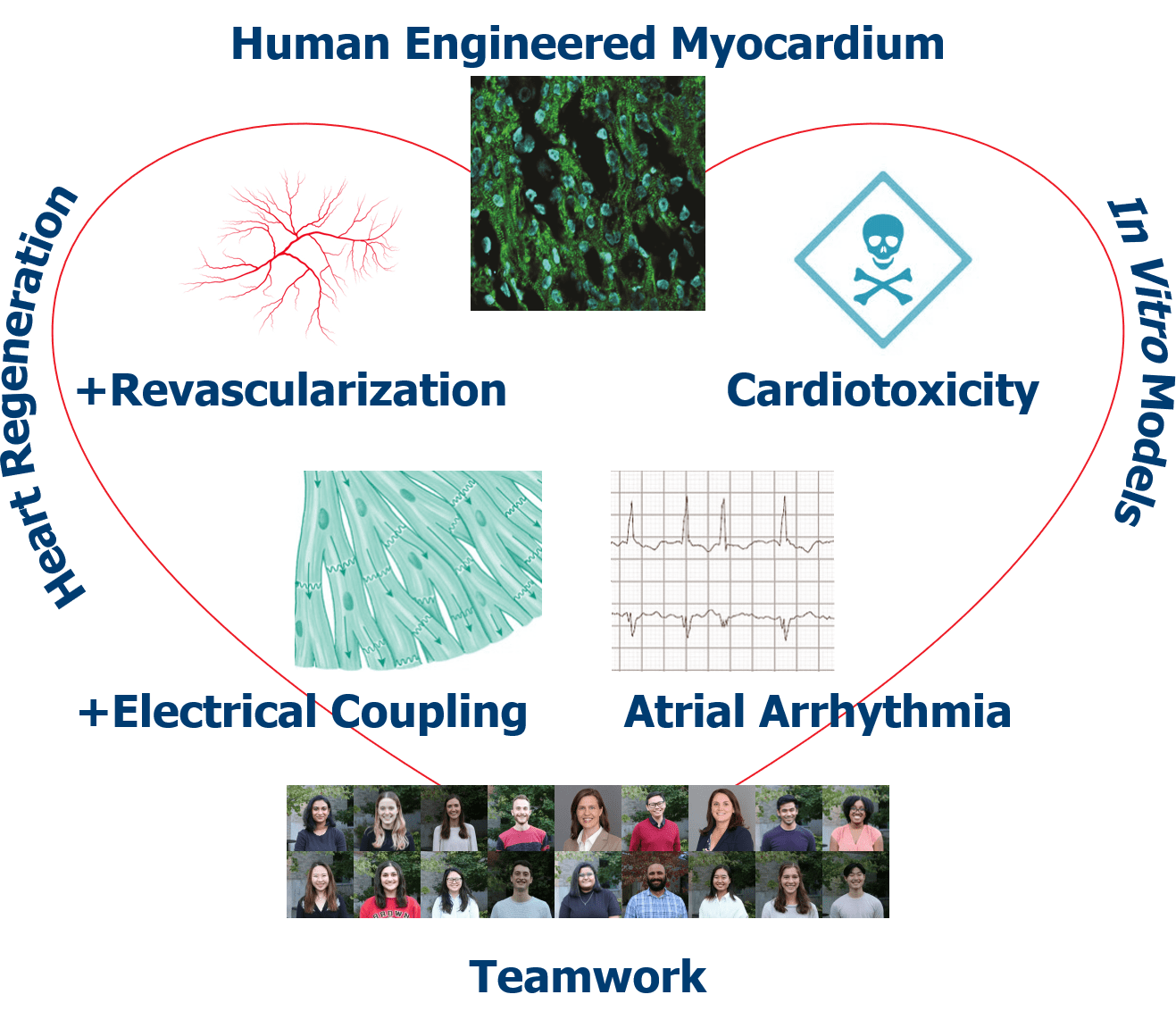
Kareen L.K. Coulombe is an Associate Professor of Engineering at Brown University, affiliated with the Institute for Biology, Engineering and Medicine . She collaborates with researchers from the Department of Medicine and institutions like the University of Edinburgh and ScitoVation, Inc . Education: B.S. in Biomedical Engineering, Summa Cum Laude (University of Rochester, 2001) Ph.D. in Bioengineering (University of Washington, 2007) Her research focuses on cardiovascular regenerative engineering , including: Developing human iPSC-derived cardiac tissues for heart attack therapy Creating anisotropic biomaterial scaffolds to enhance tissue integration Designing in vitro cardiotoxicity testing platforms for pharmaceuticals and environmental chemicals Optimizing electrical coupling between engineered and native heart tissue Recent publications highlight advancements in: Predictive 3D cardiac microtissue models for arrhythmic risk assessment Custom polycaprolactone scaffolds for tailored mechanical properties Immunomodulatory biomaterials that reshape cardiac repair processes Computational strain continuum modeling of cardiac tissue mechanics Scientific Awards: 2023 - Brown University Innovation of the Year 2021 - NSF CAREER Award & Young Innovator Award (BMES) 2019 - Dean’s Award for Excellence in Mentoring 2017-2012 - Rising Star Award & NIH Pathway to Independence K99/R00 Dr. Coulombe mentors students through programs like: Brown Leadership Alliance (undergraduate research) Tougaloo College Partnership (student development) NIH-IMSD Programs (graduate mentoring)
Robin Ras is a Professor and Head of Department at the Department of Applied Physics at Aalto University, where he leads the Soft Matter and Wetting research group. His work focuses on surface science, particularly superhydrophobic and superoleophobic materials, with applications spanning renewable energy, biomedical engineering, and agricultural science. Ras earned his Master's degree in Engineering and Technology from Catholic University of Leuven in 1999, followed by a Doctoral degree from the same institution in 2003. His academic journey has positioned him as a leading researcher in wetting phenomena and nanoscale surface engineering. His research interests center on understanding and manipulating liquid-solid interactions at micro and nanoscales. Ras's work explores how surface topography and chemistry affect wetting behavior, with particular focus on superhydrophobic surfaces, droplet dynamics, and liquid-repellent materials. His group develops innovative approaches for creating surfaces with controlled wettability for applications ranging from self-cleaning materials to advanced biomedical devices. The research trends evident in Ras's recent publications show a strong focus on precision control of liquid-solid interfaces, with increasing attention to underwater applications, molecular-scale surface engineering, and biomimetic approaches. His work bridges fundamental surface science with practical applications in energy, healthcare, and sustainability. Among his notable scientific achievements: Anton Paar Research Award for Instrumental Analytics & Characterization (2018) for Scanning Droplet Adhesion Microscopy invention Academy of Finland Research Fellow (2011-2016) ERC Consolidator Grant (2017) Ras has secured significant research funding including the ERC Consolidator Grant for the SuperRepel project (2017-2022) focused on superslippery liquid-repellent surfaces, and the Academy of Finland project 'Electric Field; an Active Method to Control Phase Change' (2019-2022). His research group actively collaborates with international institutions and industry partners to translate fundamental discoveries into practical applications. The Soft Matter and Wetting research group under Ras's leadership combines experimental and theoretical approaches to investigate surface phenomena. The team utilizes advanced imaging techniques, precision surface fabrication methods, and computational modeling to understand and engineer surfaces with tailored wetting properties. Their work has applications across multiple sectors including renewable energy, biomedical devices, and sustainable agriculture.
Professor Neil Harrison is a Clinical Professor in Neuroimaging at Cardiff University's School of Medicine, leading the Immunopsychiatry Research Group at CUBRIC and the Haydn Ellis Building. He previously established the UK's first Clinical Immunopsychiatry Service in Sussex. His expertise spans neuroimaging, psychiatry, and immunology, focusing on how immune systems interact with brain function in mental illnesses like depression and Alzheimer’s. He holds grants from the MRC, Wellcome Trust, and Janssen Pharmaceutics. Education: PhD in Neuroscience from UCL’s Wellcome Trust Centre for Neuroimaging, psychiatry training at the Maudsley Hospital and National Hospital for Neurology, Queen Square. Research interests include neuroinflammation’s role in mental health, with a focus on translational approaches like wearable technology for early disease detection. He chairs the Psychoneuroimmunology Research Society and advises the Wellcome Trust’s Clinical Interview Committee. Grants and collaborations include work on imaging brain inflammation, chronic fatigue mechanisms, and translational immunopsychiatry. His lab investigates neuroimaging biomarkers and clinical applications of immunological insights in mental health.
Travis B. Thompson, Ph.D. is an Assistant Professor in the Department of Mathematics and Statistics at Texas Tech University, leading the TM4 (Texas Tech Translational and Theoretical Mathematical Modeling and Machine Learning in Medicine) research group. His academic journey includes postdoctoral work at Rice University, Simula Research Laboratory, and the University of Oxford, focusing on mathematics applied to neurodegenerative diseases. Education: Ph.D. in Mathematics from Texas A&M University (2013) Dr. Thompson develops theoretical mathematical models and applies scientific computing and machine learning to study neurological pathologies, particularly Alzheimer’s disease. His work explores complex biological processes on networks, translational healthcare applications, and nutritional security implications. Current research trends integrate neuroimaging data with finite element simulations to model tau progression , amyloid beta dynamics , and glymphatic clearance in age-related diseases. Scientific awards and honors were not explicitly mentioned in the provided materials. Dr. Thompson’s interdisciplinary approach connects computational neuroscience with biomedical engineering , utilizing techniques like diffusion tensor imaging and level set methods to analyze pathological protein spread and brain tissue mechanics . The TM4 research group focuses on network neurodegeneration , personalized medicine , and machine learning diagnostics . Their work spans from microfluidic cancer detection to computational modeling of brain clearance mechanisms , addressing challenges in both neurodegenerative diseases and biomedical engineering through rigorous mathematical frameworks.
Dr. Maneka Malalgoda is an Assistant Professor in the Department of Food and Human Nutritional Sciences at the University of Manitoba's Faculty of Agricultural and Food Sciences. Her research focuses on grain chemistry, processing quality, and the development of healthy grain-based food systems. PhD in Cereal Science, North Dakota State University MSc in Cereal Science, North Dakota State University BSc in Medical & Pharmaceutical Biotechnology, University of Applied Sciences, Austria Dr. Malalgoda's research investigates the physicochemical properties of grain proteins and starches, their functionality in food processing, and the biological activity of grain biomacromolecules. She explores how these components contribute to nutritional value, safety, and structural integrity in bakery applications. Her recent publications highlight advancements in protein-enriched wholegrain bread, ancient grain processing optimization, oat protein health benefits, and pesticide residue impacts on cereal chemistry. Key trends include the use of analytical techniques (HPLC, LC-MS) and the intersection of traditional grains with modern nutritional needs. Dr. Malalgoda teaches courses in food science, including FOOD 4100: Current Issues in Food and Human Nutrition , FOOD 3220: Grains for Food and Beverage , and FOOD 3200: Bakery Science and Technology . She supervises graduate research at the University of Manitoba's Ellis Building facility.
Idalina José Monteiro Gonçalves is a Junior Researcher at the University of Aveiro's Department of Materials and Ceramic Engineering. Her research focuses on sustainable materials, biodegradable polymers, and advanced food packaging solutions. She leads and collaborates on projects like NET4MAT (EU-funded) and FAIST (PRR Agenda), addressing microbial resistance and eco-friendly manufacturing. With extensive supervision experience, she has guided 32 bachelor students, 14 MSc graduates, and 9 PhD candidates. Current advisees include Ana Cerqueira (Post-Doc) and PhD students Carolina S. Martins, Elisângela Maria Tavares Gonçalves, and Gabriela de Jesus Campos. Her work emphasizes circular economy principles, developing bio-based composites from agricultural byproducts (e.g., potato, coffee cascara, locust bean gum). Key projects include PLASTICOLIGHT (low-density plastic additives) and POTATOPLASTIC (biodegradable bioplastics from potato waste). She contributes to CICECO, the Aveiro Institute of Materials, advancing innovations in renewable materials and 4D printing technologies. Publications highlight advancements in nano-reinforced food packaging, antioxidant bioplastics, and organocatalytic methods for sustainable material synthesis. Her research bridges academic and industrial needs, promoting Portugal’s footwear and food packaging sectors through FAIST’s smart factory initiatives.
Jean-François Masson is a Full Professor in the Department of Chemistry at the Faculty of Arts and Sciences, Université de Montréal. He directs research in instrumentation, surface chemistry, and plasmonic materials, developing innovative biosensors for medical diagnostics and analysis. His work bridges analytical chemistry, nanotechnology, and artificial intelligence to create portable diagnostic devices. Position: Full Professor, Department of Chemistry Institution: Université de Montréal Research Focus: Plasmonic biosensors, surface chemistry, medical diagnostics Contact: jf.masson@umontreal.ca | 514 343-7342 Masson earned his BSc in Chemistry from Université de Sherbrooke in 2001, followed by a PhD in Analytical Chemistry from Arizona State University in 2005. He completed postdoctoral training at Georgia Tech before joining Université de Montréal's Chemistry Department in 2007. His research focuses on developing spectroscopic instruments for biomolecule analysis in medical samples through biosensors. He studies nano- and microstructure properties to enhance instrument sensitivity and surface chemistries to improve analysis selectivity in biological fluids. His plasmonic technology uses surface plasmon resonance at the intersection of analytical chemistry, nanotechnology, and artificial intelligence, employing gold thin films on chips that change color to detect the presence of antibodies like those for COVID-19. His publication trends show a consistent focus on surface plasmon resonance applications, with increasing emphasis on portable diagnostic devices, clinical applications, and integration with artificial intelligence. His work spans fundamental plasmonic material science to practical medical diagnostics, particularly in chemotherapy monitoring and infectious disease detection. 7 patents filed or granted for innovations in instrumentation, surface chemistry, and plasmonic materials License granted to Rose Street Labs (2005) Numerous research grants from NSERC, FRQNT, CIHR, and other major funding agencies Professor Masson has supervised over 20 graduate students (PhD and MSc) since joining Université de Montréal. His research has attracted significant funding, including multiple NSERC Discovery Grants, FRQNT team projects, and collaborations with hospitals for clinical validation of his diagnostic technologies. He leads several major research initiatives including projects on plasmonic optophysiology, chemical biology of sugars, and portable sensors for inflammation markers. His research is conducted through multiple units including the Thin Film Physics and Technology Research Group (GCM), the Neural Signaling and Circuitry Research Group (SNC), and the Interdisciplinary Research Center on Brain and Learning (CIRCA). He also contributes to the Oncopole, a research, development, and investment hub accelerating cancer fight efforts.
Claire Gaiani is a full Professor at the University of Lorraine, leading the Laboratoire d'Ingénierie des Biomolécules (LIBio). With an ORCID iD: 0000-0003-0434-8453 , she focuses on sustainable food ingredient development from agroresources and food-waste, specializing in the formulation of bioactive compounds (probiotics, glycans, PUFA, flavonoids) into functional powders through industrial-academic collaborations. Habilitation to supervise research (2012, University of Lorraine) PhD in Food Science (2006, University of Lorraine) Engineer (M.Sc.) from ENSAIA (2002, University of Lorraine) Her research combines atomic force microscopy (AFM), XPS analysis, and industrial partnerships (Nestle, Arla Foods) to optimize dairy and plant-based powder properties. Recent work explores cryogel monoliths for probiotic delivery, plant seed gums as structuring agents, and maltodextrin surface characterization. Key scientific contributions include: Over 140 peer-reviewed papers (90% Q1 Food Science/Chemistry/Biophysics) 2 book editions ( Engineering Plant-Based Food Systems , 2023; Atomic Force Microscopy for Food Research , 2023) 10 book chapters 2 patents (FR2807932A1, FR2112358A) 65 international lectures (17 invited) Honors include: 2023 Grand Prix en Sciences Lorraine-Luxembourg 2015 IUF junior member (5-year term) 2011 Marcel Loncin Prize 2014 NIZO Dairy Conference keynote She supervises 9 postdocs and 15 PhD students, and serves on the European Bioencapsulation Research Group board. Her work drives innovations in powder rehydration, probiotic encapsulation, and sustainable food systems through the Agria Grand Est association.