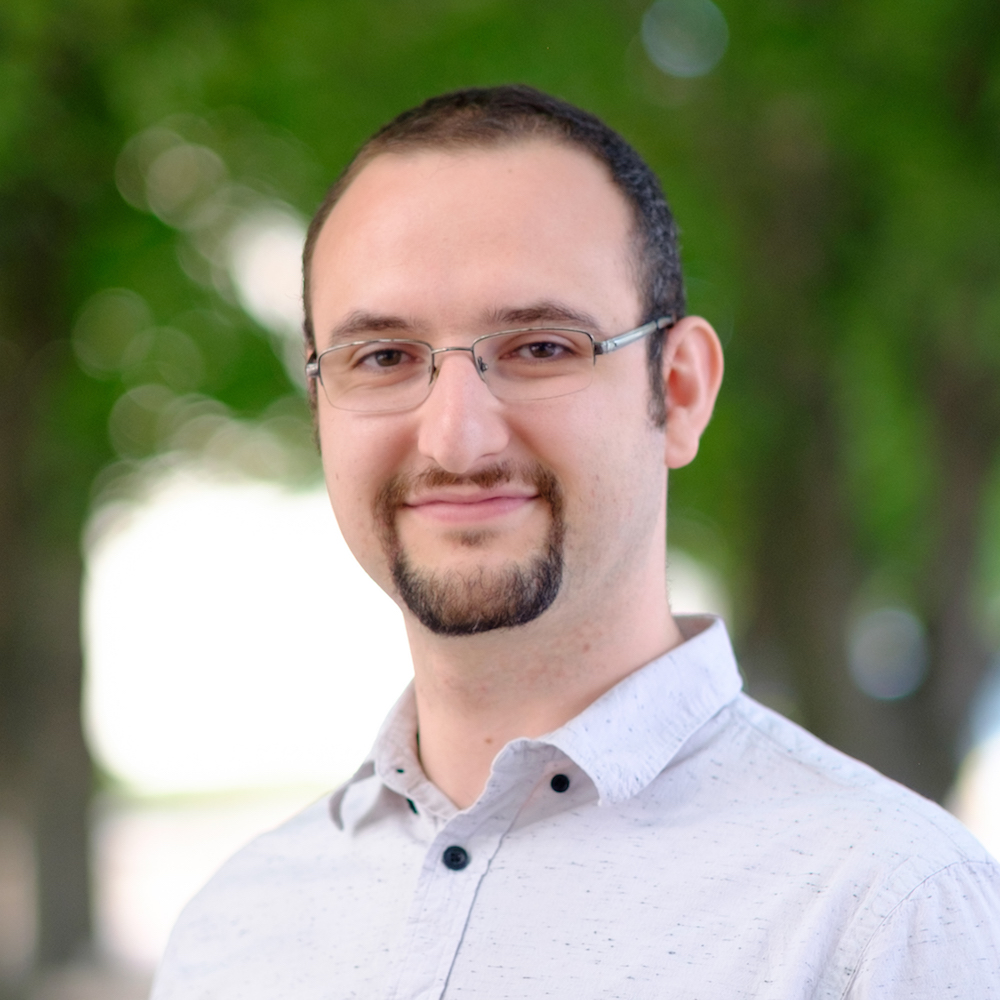
Onur Varol is an Assistant Professor at Sabanci University's Computer Science Department and leads the VIRAL Lab, which focuses on computational social science, network science, and machine learning. He has affiliations with the Center of Excellence for Data Analytics. His research spans social bot detection, misinformation analysis, and online behavior modeling.
Barış Ethem Süzek is an Associate Professor in the Department of Computer Engineering at the Faculty of Engineering, Muğla Sitki Koçman University. His academic career spans institutions including Middle East Technical University (BS), Johns Hopkins University (MS), and George Mason University (PhD) in Computational Biology. He specializes in bioinformatics and computational biology, focusing on protein informatics, genetic analysis, and machine learning applications in medical research. Education BS: Middle East Technical University - Computer Engineering (1997) MS: Johns Hopkins University - Computer Science (2000) PhD: George Mason University - Computational Biology (2012) His research integrates bioinformatics with molecular dynamics, particularly in host-pathogen interactions, regenerative medicine, and genomic data analysis. He has developed machine learning tools for viral interaction prediction and variant analysis systems. His work with UniProt and cancer Biomedical Informatics Grid projects demonstrates expertise in large-scale biological data integration. Scientific awards include Collaboration, Outstanding Achievement, and Change Agent Awards from the cancer Biomedical Informatics Grid, plus multiple patent recognitions for biomedical systems. He has supervised numerous graduate students in bioinformatics, computational genetics, and forensic biology projects.
Prof. Tanju Kadir is a distinguished academic at Marmara University, Faculty of Dentistry , where he has served as Professor since 2007. He holds the Head of Department position in the Department of Basic Medical Sciences and contributes to infection control as Chair of the Infection Control Committee. His career spans roles from Research Assistant (1988–1995) to Lecturer (1995–1996) and Assistant/Associate Professor (1996–2007). His research focuses on oral microbiology , particularly Candida albicans virulence, antimicrobial agents , and periodontal therapy . He has extensively studied Er:YAG laser applications , probiotics , and denture-associated biofilms . His recent work explores IoT-based infection control in dental clinics and sub-therapeutic antiseptics in microbial resistance. Prof. Kadir has supervised 7 theses and co-authored over 93 WoS-indexed publications , including 2025 studies on hexetidine-induced virulence gene expression and 2023 trials on probiotic adjuncts. He contributes to academic governance as a Senate Member (2021–2024) and participates in peer review for journals like BMC Oral Health and Probiotics and Antimicrobial Proteins . His editorial roles and book chapters solidify his influence in oral immunology and microbiome research .
Assoc. Prof. Dr. Zihni Onur UYGUN serves as an Associate Professor in the Department of Biochemistry at Ege University's Faculty of Medicine, Turkey. His research pioneers electrochemical biosensor technologies for advanced medical diagnostics, focusing on label-free detection systems integrating nanomaterials and molecular recognition elements. His academic journey includes: PhD in Medical Biochemistry (Ege University, 2016-2020) PhD in Biotechnology (Kafkas University, 2025) Postdoctoral Research (Clarkson University, USA, 2023-2024) Postdoctoral Research (Koç University, Turkey, 2022-2023) MS in Medical Biochemistry (Ege University, 2014-2016) MS in Chemistry (Çanakkale Onsekiz Mart University, 2010-2012) BS in Biochemistry (Ege University, 2005-2010) Dr. UYGUN's research focuses on nanobioelectrochemical systems for disease diagnostics, specializing in impedimetric biosensors , CRISPR-dCas9 technology , and molecularly imprinted polymers . His work targets cancer biomarkers (prostate, liver), infectious diseases (HIV), and inflammatory conditions (Crohn's disease) through non-invasive sampling methods. His publication trend (2022-2025) reveals strategic evolution toward AI-integrated point-of-care diagnostics using MXenes, MOFs, and machine learning. Recent work emphasizes saliva/urine-based detection and mobile health integration , with significant contributions to CRISPR-based DNA sensing and environmental contaminant monitoring. Scientific recognition includes: Leaders in Innovation Fellowship (2017) He actively secures TÜBİTAK funding including the 2218 Post-Doctoral Research Grant and 2250 Graduate Scholarship Program. His projects span chemical detection technologies and medical biosensor development, with collaborations at Koç University and Clarkson University. Dr. UYGUN leads translational research in electrochemical diagnostics, evidenced by 29+ publications and an h-index of 16 (Google Scholar). His laboratory specializes in impedimetric sensor fabrication and nanomaterial functionalization , currently developing systems for HIV detection, prostate cancer screening, and fertility assessment through paper-based colorimetric platforms.
Zafer AYDIN is an Associate Professor at the Computer Engineering Department of Abdullah Gul University. He obtained his B.Sc. and M.Sc. from Bilkent University (Turkey) and his Ph.D. from Georgia Institute of Technology (USA). His research focuses on machine learning applications in bioinformatics, health informatics, and industrial problems. PhD: Georgia Institute of Technology (2008) Postdoc: University of Washington (2008-2011) Previous: Assistant Professor at Bahcesehir University (2011-2014) Research Interests include protein structure prediction, medical imaging analysis, network security, and financial data modeling. His work spans both fundamental bioinformatics research and practical industrial applications. Scientific Awards : 2nd in T0 phase of Respiratory Viral Dream Challenge (2016-2017) 1st in both question 1 and 2 prediction tasks of COVID-19 DREAM Challenge (2020-2021) Teaching includes undergraduate courses in Bioinformatics, Machine Learning, and Algorithms, and graduate courses in Deep Learning and Pattern Recognition.
Sevinç AKÇAY is a Lecturer at the Department of Molecular Biology and Genetics in the Faculty of Arts and Sciences at Kırşehir Ahi Evran University , Turkey. She holds a PhD (2016) and MSc (2012) in Molecular Biology from the University of Pittsburgh , and a BSc (2008) in Biology from Ankara University . Research Focus: Genetics, Molecular Biology, and Bioinformatics, with emphasis on elastin gene mutations , cancer genomics , and computational disease modeling . Key Projects: Investigated Tiochlorosid and Malathion effects on cancer cell lines; led studies on epigenetic mechanisms and ferroptosis in cancer . Teaching: Offers courses in Genetic Engineering , Epigenetics , and CRISPR Technologies at both undergraduate and graduate levels. Collaborations: Works with international researchers like Zsolt Urban (University of Pittsburgh) and Emine Güven (Düzce University) on computational biology and genetic disorders.
Selçuk KORKMAZ is an Associate Professor in the Department of Biostatistics at Trakya University Faculty of Medicine. His interdisciplinary research bridges computational methods with biomedical applications, focusing on machine learning approaches for biological data analysis. Educational Background: Bachelor's Degree (2008): Ege University Faculty of Science, Department of Statistics Master's Degree (2011): Ege University Faculty of Medicine, Department of Biostatistics and Medical Informatics Doctoral Degree (2016): Hacettepe University Faculty of Medicine, Department of Biostatistics Dr. Korkmaz's research primarily focuses on machine learning applications in biostatistics, with particular emphasis on epigenetics, proteomics, and computer-aided drug design. His work demonstrates strong interdisciplinary connections between computational methods and clinical applications. He has developed novel approaches for biological assembly evaluation and protein-protein interface analysis during his visiting scientist position at the RCSB Protein Data Bank (University of California, San Diego) from April 2015 to March 2016. His recent publication trend shows a strong focus on developing computational tools (particularly R packages) for biomedical data analysis, with significant contributions in protein data bank interfaces, chemical database access, and biological variation analysis. His work spans multiple disciplines including bioinformatics, medical imaging analysis, and drug discovery applications. Dr. Korkmaz has served as an Assistant Professor at Trakya University since 2017 and was promoted to Associate Professor in 2021. Prior to this, he worked as a Research Assistant at Hacettepe University Faculty of Medicine Department of Biostatistics from June 2012 to November 2016.
Prof. Dr. Nilüfer YURTAY is a distinguished faculty member at Sakarya University's Faculty of Computer and Information Sciences, Department of Computer Engineering. Her academic career spans over three decades, beginning as a Research Assistant in 1992 and advancing to her current position as Professor. Current Courses: Computer Engineering Design, Optimization, Medical Statistics and Medical Informatics, Graduation Projects, Data Mining Applications, and Specialization Areas Previously Taught: Discrete Operational Structures, Data Mining, Applied Engineering Experience Training Professor YURTAY's research spans multiple domains of computer science with a focus on practical applications. Her work demonstrates consistent excellence in machine learning, data mining, and artificial intelligence, particularly applied to medical informatics, traffic safety analysis, and assistive technologies for visually impaired individuals. She has made significant contributions to feature selection algorithms, metaheuristic optimization techniques, and medical diagnosis systems. Her publication record reveals a strong trajectory of high-impact research, with recent works focusing on real-time object detection (AYOLO), traffic accident analysis using decision trees, binary chaotic optimization algorithms, and voice-assisted systems for visually impaired students. These publications appear in reputable journals including IEEE ACCESS, Applied Sciences, and Engineering Science and Technology. Professor YURTAY has supervised numerous graduate students, guiding research in data mining applications in healthcare, Turkish text-to-speech synthesis, pattern recognition in bioinformatics, and demand prediction for ATMs. Her academic leadership extends to developing educational resources, including her textbook 'Ayrık İşlemsel Yapılar' (Discrete Operational Structures). Her research group maintains active projects in medical informatics, traffic safety analysis, and assistive technologies, reflecting her commitment to solving real-world problems through computational methods. Professor YURTAY's work bridges theoretical computer science with practical applications that address societal challenges in healthcare, transportation, and accessibility.
Elif Çiğdem Keleş is an Assistant Professor and Head of the Department of Biostatistics and Medical Informatics at Yeditepe University's Faculty of Medicine. She also holds affiliations with the university's Institute of Health Sciences. Her academic roles include doctoral and master's level instruction in biostatistics, medical informatics, and public health. Education: PhD in Statistics, Marmara University, Institute of Social Sciences (2007-2011) MSc in Statistics, Yildiz Technical University, Institute of Science (2003-2006) BSc in Statistics, Yildiz Technical University, Faculty of Arts and Sciences (1999-2003) Her research integrates biostatistics , medical informatics , and genetic epidemiology . She focuses on advanced statistical methods for clinical data, including genetic polymorphisms in diseases (e.g., cardiovascular disorders, cancer, neurodegenerative conditions), epidemiological modeling, and public health interventions. Her publications emphasize practical applications in Turkish population studies, predictive modeling, and interdisciplinary collaborations across dentistry, oncology, and neurology. She has supervised master's and doctoral theses, contributing to academic development in statistical methodologies. Though specific grants are not detailed, her involvement in multidisciplinary projects is evident through co-authored research spanning IVF outcomes, genetic risk factors, and clinical trial design. Administratively, she leads departmental initiatives and participates in institutional accreditation processes, enhancing curriculum standards in medical education.
Erdem Türk is an Assistant Professor in the Department of Computer Engineering at the Faculty of Engineering, Muğla Sıtkı Koçman University. He completed his PhD in Bioinformatics in 2024 and currently holds significant administrative positions including Engineering Faculty Deputy Dean and Computer Engineering Department Vice Chair since 2024. His academic career has been entirely at Muğla Sıtkı Koçman University, where he has progressed from undergraduate studies through to doctoral completion. His educational background includes: Bachelor's Degree in Computer Engineering (2009-2014) Master's Degree in Informatics Systems Engineering (2014-2019) Doctorate in Bioinformatics (2019-2024) Dr. Türk's research primarily focuses on applying computational methods to biological problems, with particular emphasis on protein-protein interaction prediction using machine learning techniques. His work bridges computer science and biology, developing algorithms for virus-host interaction prediction, genomic variant analysis, and clinical decision support systems. He has established a strong research trajectory in bioinformatics with publications in high-impact journals like PLOS ONE and Frontiers in Molecular Biosciences. Analysis of his publication record reveals a clear progression from foundational work in protein interaction prediction to increasingly sophisticated applications in viral infection prediction and clinical genomics. His most recent work demonstrates integration of machine learning with biological domain knowledge, particularly in host-pathogen interactions and uncovering clinically significant genomic variants. Dr. Türk actively contributes to the academic community through multiple administrative roles including membership on the Engineering Faculty Quality Committee, participation in the Artificial Intelligence Upper Committee, and serving on the Disabled Students Unit Coordination Board since 2020. He teaches core computer science courses including Programming Fundamentals, Data Structures and Algorithms, and specialized Bioinformatics Algorithms. His research is supported by several TÜBİTAK projects where he serves as a scholar, including completed projects on adenovirus host specificity prediction and whole-exome sequencing variant detection, plus an ongoing project developing genetic analysis kits for CAR-T cell therapies in leukemia treatment.
Hüseyin Cumhur Tekin is an Assistant Professor at the Department of Bioengineering, Izmir Institute of Technology, focusing on microfluidic systems and biomedical device development. His work integrates magnetic levitation , biofabrication , and laboratory-on-chip technologies. Research Themes : Magnetic levitation for cell culture, portable biosensors, and wearable health monitoring systems. Recent Publications highlight innovations in serum creatinine detection , 3D cellular assembly , and hybrid diagnostic platforms (2023-2025). Collaborations involve interdisciplinary teams in biomedical engineering and clinical diagnostics.
Volkan Atalay is a Professor in the Department of Computer Engineering at Middle East Technical University (METU), Ankara, Turkey. His research focuses on machine learning applications in bioinformatics, data stream analysis, and drug discovery. He has held leadership roles including Vice President for Research at METU (2010–2016) and chaired the Department of Computer Engineering (2007–2008). Education: Ph.D. in Computer Science from Université Paris Descartes (1993), followed by postdoctoral work at Virginia Tech (2004–2005). Research Interests: Machine learning for bioinformatics (drug-target interaction prediction, protein function annotation), data stream clustering algorithms, and deep learning applications in drug discovery. Key projects include CROssBAR (biomedical knowledge graphs) and DEEPScreen (drug-target interaction prediction tools). Recent publications (2020–2023) emphasize hybrid deep learning models, data fusion for energy forecasting, and open-source protein annotation benchmarks. Awards include the Best Poster Award at GLBIO 2017 for iBioProVis visualization work. Current grants: SmartHome Consortium (data stream analytics) and projects on biomedical relation curation. Labs/Teams: Leads the Cancer Systems Biology Laboratory and collaborates with international consortia like the CAFA challenge.
Sefer Baday is an Assistant Professor at Istanbul Technical University's Informatics Institute, Department of Informatics Applications , holding a PhD from the University of Basel (2013). His interdisciplinary research bridges computational biology, structural bioinformatics, and drug discovery. Education: PhD (Computational Biology, University of Basel), MA (Computational Sciences, Koç University), Licence (Chemical Engineering, Bogazici University) Positions: Assistant Professor (2015–present, Istanbul Technical University); Research Assistant (2014–2015, University of Cambridge; 2009–2014, University of Basel) Research Interests: Focus on computational modeling of biological systems, including: Mechanistic studies of ion channels (Ryanodine receptors) Machine learning for molecular docking acceleration Force field optimization for drug interactions Peptide engineering for therapeutic applications Antiviral and anticancer drug development Plant nutrient transport mechanisms Publication Trends : Recent work (2021–2025) emphasizes molecular docking , CHARMM force field , machine learning , and drug repurposing , with applications in cardiovascular disease , cancer , and virology . Earlier studies (2007–2016) focused on protein folding , ammonium transport , and biomaterials . Projects : Leading six funded initiatives, including: GPX4 Ligand Recognition (2025–2027, BAP) Ryanodine Receptor Inhibitors (2020–2023, TUBITAK) Enzalutamide Resistance (2017–2020, TUBITAK) Alzheimer's Enzyme Inhibitors (2017–2020, BAP) Stapled Peptide Linkers (2016–2017, TUBITAK) Collaborations span institutions like University of Cambridge, University of Basel, and Koç University, with co-authors in Turkey, Switzerland, and Germany. Methodologies include molecular dynamics simulations , machine learning , and CHARMM force field development. Techniques : Expert in computational approaches to protein structure-function relationships, ligand binding, and nanomaterial design, with applications in drug discovery and regenerative medicine.
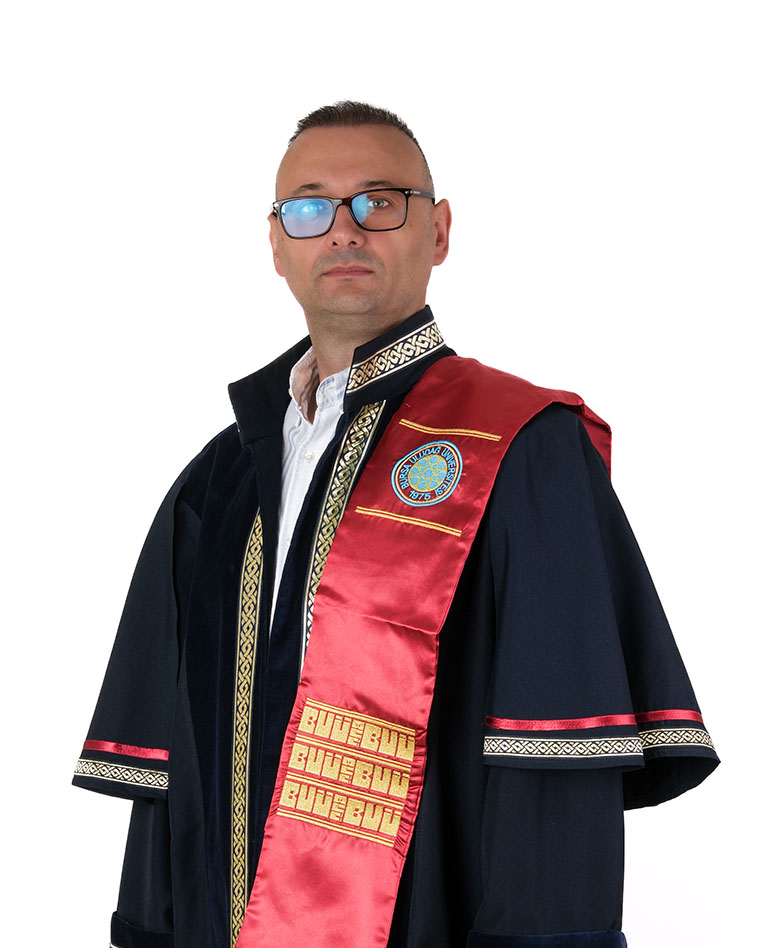
GÖKHAN OCAKOĞLU is a full Professor in the Faculty of Medicine at Bursa Uludag University , where he leads the Department of Biostatistics . His academic career spans over two decades, with postgraduate training completed at Uludağ University's Health Sciences Institute (MSc 2006, PhD 2011). As a methodological expert in medical statistics, he contributes to interdisciplinary research across oncology, nephrology, and public health domains. Graduate of Anadolu University's Statistics Department (2003) Doctorate in Biostatistics (2011) Full Professor status (2022) His research focuses on biostatistical modeling in clinical contexts including: Inflammation and nutrition-based prognostic scoring systems AI applications in medical diagnostics Statistical shape analysis of anatomical structures Health literacy and patient decision-making Survival analysis in chronic diseases Recent publications demonstrate methodological expertise in: Retrospective cohort studies Comparative outcome analysis Medical imaging statistics Machine learning prediction models Translational medical research
Assoc. Prof. Dr. Sibel Uzuner is a faculty member at the Department of Food Engineering , Izmir Institute of Technology . Her research focuses on innovative food technologies (high hydrostatic pressure, pulsed electric field, ozone, UV, ultrasound), bioprocessing modeling , algal biotechnology , and food waste valorization . She leads projects such as 'Production of modified MAH-PBS/Chlorella composite films' (TUBİTAK) and 'Enzymatic saccharification of hazelnut shells' (METU Research Fund). Supervised PhD student Buse Dogan on vinasse-based bio-plastic production Supervised Büşra Nur Esen (2023) on pectinolytic enzyme production Key research trends include bioplastic production from industrial effluents , enzymatic processing of agricultural waste , and non-thermal preservation of traditional beverages . Her work has resulted in multiple patents for bioprocessing equipment and bioactive extraction methods. Recent projects focus on machine learning applications in microbial inhibition and scale-up approaches for industrial food technologies.