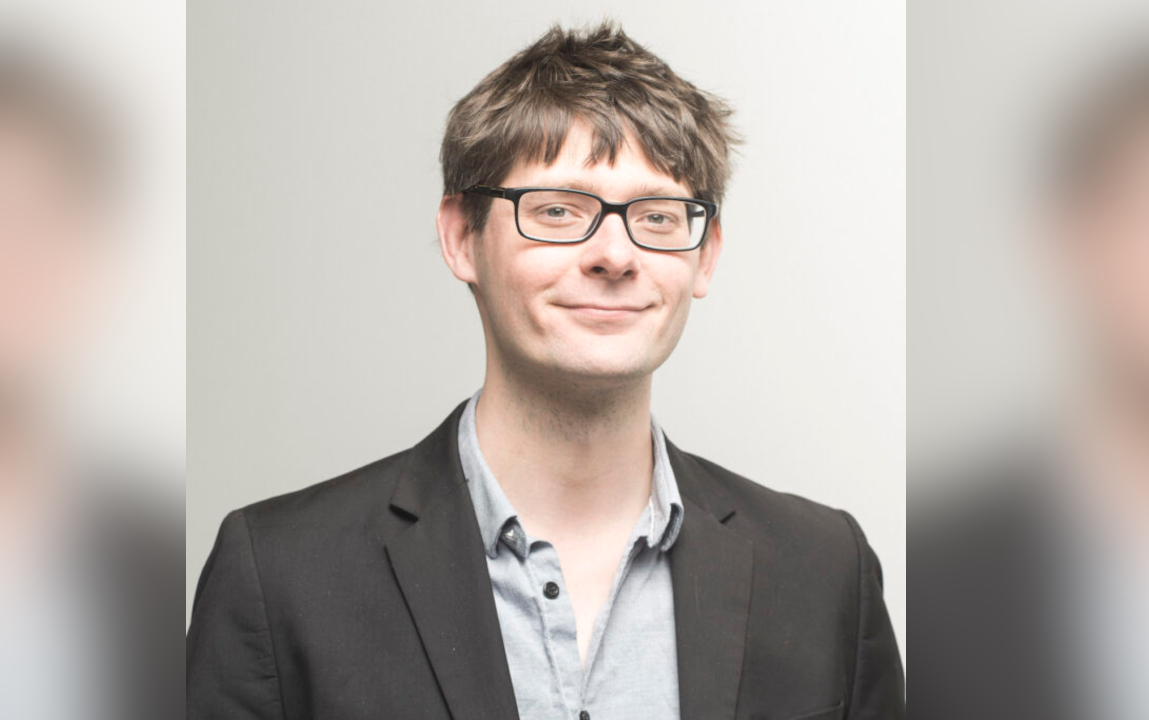
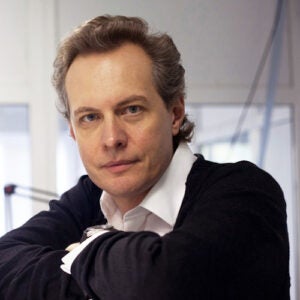
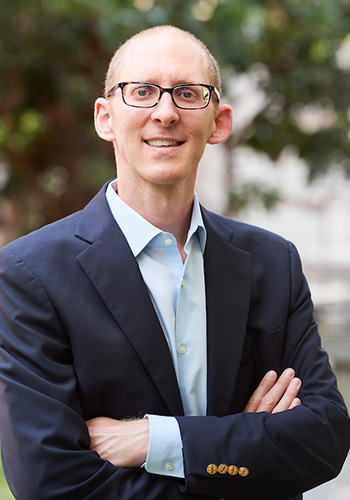
John Gales is an Associate Professor in Civil Engineering at York University, leading research on structural fire resilience and human evacuation dynamics. His work integrates fire science, materials engineering, and behavioral studies to enhance building safety in contexts ranging from urban infrastructure to wildfire zones. His recent publications analyze structural performance in fires, wildfire building codes, and applications of AI in fire safety engineering. Research consistently addresses equity considerations, particularly gender diversity in engineering education.
Dr. Berker Bilgin is an Assistant Professor in the Department of Electrical & Computer Engineering at McMaster University. His research focuses on next-generation electric motor drive technologies, including acoustic noise reduction, power electronics, and sustainable electrification. He leads projects sponsored by Fiat Chrysler Automobiles (FCA) and Automotive Partnership Canada (APC), and co-founded a university spin-off company. He teaches courses such as Electric Motor Drives and Switched Reluctance Machine Design. Research Focus: Electric motor drives (46% of global electricity demand), hybrid-electric powertrains, and transportation electrification. His work emphasizes high-efficiency, low-cost solutions and acoustic noise modeling for high-power-density applications like traction motors. He has 10 patents and authored a textbook on Switched Reluctance Motor Drives. Publications Trends: Recent work spans advanced motor designs, acoustic noise mitigation, and thermal/structural modeling of electric machines. Key themes include switched reluctance motor optimization, PWM control strategies, and multi-physics design approaches. Awards: Patented inventions in switched reluctance technology, textbook authorship Grants: FCA/APC-funded hybrid-electric powertrain development Labs/Teams: McMaster University spin-off company for technology commercialization
Gretchen C. Daily is the Bing Professor of Environmental Science and Senior Fellow at the Woods Institute for the Environment at Stanford University, with a courtesy appointment at the Freeman Spogli Institute for International Studies. She is affiliated with the Center for East Asian Studies and the Biology department. Her research focuses on ecosystem services, biodiversity conservation, and the integration of environmental science with policy and economics. She leads the Woods Research Natural Capital Project, emphasizing practical solutions for sustainable development. Her work spans global issues, including China’s ecological policies, tropical agroecology, and urban nature’s role in human well-being. Education details are not explicitly listed, but her academic roles suggest advanced training in ecology and environmental policy. Her research interests prioritize translating ecological knowledge into actionable policy frameworks, such as Gross Ecosystem Product (GEP) metrics and equitable access to urban green spaces. She collaborates with international institutions to address biodiversity loss, climate resilience, and sustainable land use. Recent publications emphasize interdisciplinary approaches to conservation, including the socioecological impacts of urbanization, payment for ecosystem services, and the interplay between agricultural practices and biodiversity. Her work often bridges science and decision-making, highlighting the need for equitable and evidence-based environmental governance. She has contributed to major initiatives like the Natural Capital Project and studies on China’s ecological compensation policies. Her advisory and grant activities are tied to large-scale environmental projects, though specific student names or grant details are not provided. She is part of interdisciplinary teams addressing global challenges such as tropical deforestation, coral reef restoration, and climate-smart agriculture. Her research often involves fieldwork in regions like Costa Rica, Colombia, and China, reflecting her global perspective on environmental sustainability. Labs/Teams: Core member of the Woods Institute’s Natural Capital Project, collaborating with the Center for East Asian Studies on policy analyses in China. Engages in international networks for biodiversity governance and ecosystem service valuation.
Chao Li is a Principal Research Fellow at the University of Cambridge's Faculty of Mathematics, specializing in AI-driven healthcare solutions. His research focuses on precision medicine through image-based AI and multi-omics integration, with applications in neurological disease modeling, surgical oncology, and clinical AI safety. He leads the Centre for Mathematical Imaging in Healthcare , advancing translational AI for personalized medicine. Research Themes: Image-based AI for precision mental health AI in surgical and interventional oncology Multi-omics approaches for disease characterization Evaluation of AI innovations for clinical translation Publications highlight advancements in multimodal fusion for diagnostics, histology-molecular marker integration, and neuroimaging analytics for mental health. His work bridges computational mathematics with clinical challenges, emphasizing real-world healthcare impact. Labs/Teams: Active member of the Centre for Mathematical Imaging in Healthcare , collaborating across departments to develop AI tools for clinical deployment.
Richard L. Hasen is Professor of Law and Political Science at UCLA School of Law and Director of the Safeguarding Democracy Project. An internationally recognized election law expert, he researches voting rights, campaign finance, legislation, and disinformation's impact on democratic processes. Research analyzes judicial decision-making in election cases, campaign finance deregulation, voting access barriers, and legal remedies against electoral subversion. Recent work emphasizes disinformation's corrosive effects on democracy and proposes regulatory interventions. Publications dominate election law scholarship with recent books including 'Cheap Speech' (2022) on disinformation and 'Election Meltdown' (2020) on electoral integrity. Articles demonstrate increasing focus on democratic resilience, platform governance, and constitutional safeguards against election subversion. National Law Journal's 100 Most Influential Lawyers (2013) Top 100 California Lawyers (2005, 2016) Blawg 100 Hall of Fame (2015) Green Bag Exemplary Legal Writing Award (2018) Scribes Book Award Honorable Mention (2016) NYT Top Books on Disinformation (2022) Directs the Safeguarding Democracy Project, addressing electoral integrity through research and policy advocacy. Regularly contributes legal analysis for major media outlets and maintains the influential Election Law Blog.
Hongwei An is a Senior Lecturer at the University of Western Australia (UWA), affiliated with the School of Engineering's Civil, Environmental and Mining Engineering Department and the UWA Oceans Institute. He holds a PhD from UWA and an ME from Dalian University of Technology. His research focuses on fluid dynamics, coastal engineering, and offshore infrastructure stability, with notable contributions to scour mechanics, sediment transport, and wave-current interactions. Education: PhD in Civil Engineering, University of Western Australia (20xx) Master of Engineering (ME), Dalian University of Technology (20xx) Research Interests: Dr. An’s work centers on fluid-structure interactions, local scour around marine structures, and the dynamics of oscillatory flows. He investigates topics like pipeline stability in coastal environments, wave modeling under ambient currents, and the environmental impacts of offshore renewable energy systems. Grants & Collaborations: Lead investigator in the ARC Research Hub for Transforming Energy Infrastructure (2021–2026) Industry partnerships: Inpex Operations Australia, MMA Offshore, Fugro Australia Labs/Teams: Active member of the UWA Oceans Institute, collaborating on projects related to marine growth stabilization, sediment dynamics, and offshore energy infrastructure resilience.
Michele Graff is an Assistant Professor at the Jimmy and Rosalynn Carter School of Public Policy, part of Georgia Institute of Technology's Ivan Allen College of Liberal Arts. Her research focuses on energy policy, climate justice, and administrative barriers in social welfare programs. She teaches undergraduate and graduate courses on environmental policy and politics. Her work examines spatial disparities in energy assistance access, the intersection of housing costs and energy burdens, and the impacts of utility disconnection policies. Graff advocates for equitable energy transition frameworks and has analyzed how the pandemic exacerbated energy insecurity among marginalized groups. Key themes in her research include racial disparities in energy access, the design of effective energy assistance programs, and leveraging interdisciplinary methods to address climate policy challenges. Her articles highlight systemic issues like asset tests reducing program participation and propose solutions to reduce administrative burdens. While no formal awards are listed, her contributions to energy justice research have informed policy discussions on federal and state levels. Graff collaborates with stakeholders to bridge academic research and practical implementation, emphasizing the need for data-driven approaches to energy inequities.
Valery Fokin is a Professor of Chemistry at the University of Southern California (USC), Department of Chemistry. His research focuses on organic synthesis with applications in chemical biology, particularly in click chemistry, antidote development, and bioconjugation. He holds a Ph.D. from USC (1998) and has contributed extensively to the design of novel synthetic methods and bioactive molecules. His work spans drug discovery, catalysis, and the development of reagents for toxicology applications. Notable contributions include advancements in azide-alkyne cycloaddition (CuAAC) and sulfur fluoride exchange (SuFEx) reactions, which have broad implications in medicinal chemistry and materials science. His lab explores strategies to create efficient organophosphate antidotes and antimicrobial agents targeting drug-resistant pathogens. Publications highlight innovations in microdroplet chemistry, enzyme reactivation mechanisms, and the synthesis of heterocyclic compounds. Fokin’s research bridges academic and industrial collaboration, as seen in studies on cannabinoid-derived drug potential and scalable synthesis methods. His team actively pursues applications in drug delivery and tissue-specific targeting. While no specific awards or grants are listed, his prolific publication record reflects sustained contributions to chemical biology. His advising and lab activities emphasize interdisciplinary approaches to solving biomedical challenges through innovative organic synthesis.
Fredrik Søren Berg is a Research Fellow at the Department of Philosophy, Classics, History of Art and Ideas, University of Oslo, specializing in cultural heritage conservation and sustainable building practices. His work intersects historic architecture preservation with energy efficiency and climate change adaptation. Research Trends: His recent publications focus on energy performance in historic buildings, climate risks to cultural heritage, and interdisciplinary approaches to conservation. Key themes include stave churches, life cycle analysis, and geo-hazard assessments. Other Affiliations: Associated with the Faculty of Humanities and contributes to research groups on International and Nordic modernism.
Adam J. Lee is a Professor of Computer Science and Vice Provost for Undergraduate Studies at the University of Pittsburgh's School of Computing and Information. He holds a PhD (2008) and MS (2005) from the University of Illinois at Urbana-Champaign, and a BS (2003) from Cornell University. His research bridges computer security, privacy, and distributed systems, focusing on systems that enable secure cross-domain interactions while preserving user privacy. Notable work includes studies on IoT privacy, cryptographic access control, and user perceptions of privacy in smart environments. Education: PhD in Computer Science, University of Illinois at Urbana-Champaign, 2008 MS in Computer Science, University of Illinois at Urbana-Champaign, 2005 BS in Computer Science, Cornell University, 2003 Research Interests: Explores secure distributed systems, privacy-preserving technologies, and user-centric design for IoT. Recent efforts include tangible privacy controls for smart devices, context-aware messaging agents, and formal analysis of cryptographic enforcement architectures. Supported by NSF and DARPA grants, including an NSF CAREER Award in 2013. Recent Work: Focuses on balancing utility and privacy in sensing systems, with contributions in ephemeral communication, auto-response agents, and privacy-aware smart voice assistants. Recent studies address user perceptions of temporal data redaction and trusted platforms. Awards: NSF Career Award (2013) ACM CSCW 2022 Best Paper ACM DIS 2022 Best Paper Advising & Grants: Advises PhD students in privacy and security research. Active in grant-funded projects on access control, cloud security, and health technology interventions. Collaborates with the Institute for Cyber Law, Policy, and Security on policy-relevant cybersecurity issues. Teaching: Courses include Discrete Structures for Computer Science and Computer and Network Security , emphasizing foundational theory and practical applications. Known for curriculum development in privacy-aware systems and ethical computing practices.
Jill Duerr Berrick is the Zellerbach Family Foundation Professor at UC Berkeley's School of Social Welfare and a Professor II at the University of Bergen's Department of Government. Her research focuses on improving child welfare systems, particularly foster care and family poverty interventions. She emphasizes integrating service users' perspectives into policy and practice. Education: Ph.D. Social Welfare, UC Berkeley (1990) M.S.W., UC Berkeley (1987) B.A. History, UC Santa Cruz (1983) Research Interests: Systems of Care for Children/Families/Older Adults Family Policy Child and Family Poverty Child Abuse and Neglect Foster Care Reform Cross-National Child Protection Systems Her work examines global child protection frameworks, including a forthcoming Oxford Handbook of Child Protection Systems analyzing 50 countries. Advocacy & Campus Involvement: Co-founder of Berkeley Hope Scholars supporting foster care alumni Lead advocate for eliminating foster care fees for birth parents Chair of the School of Social Welfare's undergraduate program Collaborations: Works with Prof. Marit Skivenes on global child protection typologies and public attitudes across Norway and the U.S.
Toni Aira Foix is a Senior Lecturer and Academic Director at the UPF Barcelona School of Management (Universitat Pompeu Fabra). He holds multiple leadership roles including Director of the Master's Degree in Political and Institutional Communication, Director of the Agbar Chair of International Studies, and Head of the Academic Area at the School of Management. His academic career spans teaching in Communication, Political Science, and Management disciplines across UPF and the Universitat Oberta de Catalunya. Educationally, he has advanced training in Social and Legal Sciences, Communication, and Journalism. His research focuses on political communication dynamics, institutional messaging strategies, spin doctor analysis, and the interplay between media and governance. Notable areas include crisis communication, electoral strategies, and the evolving role of political advisors in modern democracies. His prolific publication record includes over 12 articles and 24 books/chapters addressing topics like vaccine race politics, far-right social media tactics, and Afghanistan's multidimensional crisis. He actively participates in international conferences and contributes to media discussions on political communication trends. His work bridges academic research with practical governance challenges, emphasizing sustainable growth and institutional communication excellence. Aira Foix has advised on media strategy for public institutions and has been involved in impactful projects like the 'Horizonte ODS' series focused on UN Sustainable Development Goals communication. His interdisciplinary approach integrates political science, media studies, and management principles to address contemporary governance challenges.
Dr. Ansgar Wohlschlegel is an Associate Professor of Economics at Swansea University, affiliated with the Faculty of Humanities and Social Sciences and the School of Social Sciences. His expertise lies in Applied Microeconomics, Law & Economics, and Industrial Organization. Prior to Swansea, he held academic positions at the Universities of Portsmouth, Bonn, and Aachen, and worked in the private sector at PricewaterhouseCoopers. His research focuses on the economic analysis of legal systems, including enforcement agency incentives, legal procedure design, and tort law impacts. He employs applied game theory, empirical methods, and laboratory experiments. Notable real-world applications include policy projects for the Food Standards Agency and contributions cited in Westminster debates. His teaching spans Microeconomics specializations like industrial organization, contract theory, and the economics of crime, alongside introductory economics courses. His recent publications address topics ranging from bank regulation to litigation incentives, reflecting a blend of theoretical rigor and policy relevance. Dr. Wohlschlegel is actively involved in postgraduate supervision and maintains research links via ORCID and Google Scholar.
Dr. Agathoklis Giaralis is a Senior Lecturer in Structural Engineering within the Department of Civil Engineering at the School of Engineering and Mathematical Sciences, City, University of London. He earned his PhD in Civil & Environmental Engineering from Rice University, USA, in 2008, following an MSc and a 5-year Diploma (Ptychion) in Structural Engineering from Aristotle University of Thessaloniki, Greece. He is a Fellow of the Higher Education Academy, UK. PhD, Civil & Environmental Engineering, Rice University, USA (2008) MSc, Seismic Design of Structures, Aristotle University of Thessaloniki, Greece (2004) Ptychion (5 yr Diploma), Civil/Structural Engineering, Aristotle University of Thessaloniki, Greece (2003) Dr. Giaralis's research is centered on nonlinear stochastic dynamics and time-frequency signal analysis , applied to critical areas such as earthquake engineering , seismic structural design and assessment , structural health monitoring (SHM) , and passive vibration control . His work is pioneering in the development and application of inerter-based vibration control systems, such as the Tuned Mass-Damper-Inerter (TMDI), for enhancing the resilience of structures. He also explores compressive sensing and low-power wireless sensors for sustainable SHM, as well as digital twinning and machine learning in wind engineering. His recent research has significant implications for offshore wind turbines and urban wind comfort. An analysis of his 15 most recent publications reveals a consistent and cutting-edge research trajectory focused on the optimization and application of inerter-based devices for structural control. The work spans from developing analytical tuning formulas for TMDIs to conducting experimental validation on shaking tables and exploring novel applications in offshore wind turbines and composite floors. A strong emphasis is placed on performance-based design , uncertainty quantification , and practical implementation for real-world infrastructure. His scientific contributions have been recognized by prestigious awards, including the Fulbright Exchange Student Program scholarship for his PhD studies and a Fellowship from the Higher Education Academy . He is also a member of several leading professional organizations such as the American Society of Civil Engineers (ASCE) and the Society for Earthquake and Civil Engineering Dynamics (SECED). Dr. Giaralis is actively involved in research funding and academic mentorship. He has secured significant grants from Innovate UK and the EPSRC to support his work on machine learning-based design and optimal inerter configurations. He supervises a cohort of PhD students whose theses focus on advanced topics like adaptive control of bridge joints, inerter-based energy harvesting, and seismic assessment using digital twins. He also leads the Smart Structures and Structural Health Monitoring Research Unit , driving collaborative research in smart infrastructure technologies.
Barry Jordan is the Vice Dean for Faculty and Academic Affairs and the John B. Milliken Professor of Law and Taxation at the USC Gould School of Law. His research focuses on business law, tax law, and law and economics, with notable publications in Stanford Law Review , Virginia Law Review , and Journal of Political Economy . He teaches courses on corporate finance, tax policy, and law and economics, and has held prior positions at the University of San Diego School of Law and UC Berkeley School of Law. Education: Graduate of Cornell University and Stanford Law School (Managing Editor of the Stanford Law Review ). Awards include the Thorsnes Prize for Excellence in Teaching (twice), Herzog Endowed Scholar designation, and recognition as a “Favorite Faculty Member” by USD Law’s Public Interest Law Foundation. Research interests emphasize regulatory entrepreneurship, corporate governance, and taxation’s impact on innovation, particularly in the sharing economy. His work explores topics like empty voting in derivatives markets, anti-takeover defenses, and cross-jurisdictional tax policies. He frequently contributes to legal debates through amicus curiae briefs and policy analyses. Grants and advising: No specific grants listed, but his academic leadership roles suggest institutional support. No listed students, but extensive teaching and mentorship implied through awards like the Thorsnes Prize. Labs/teams: Led the Center for Corporate and Securities Law at USD and co-directed the graduate tax program. At USC, oversees faculty and academic affairs, implying leadership in institutional academic teams.