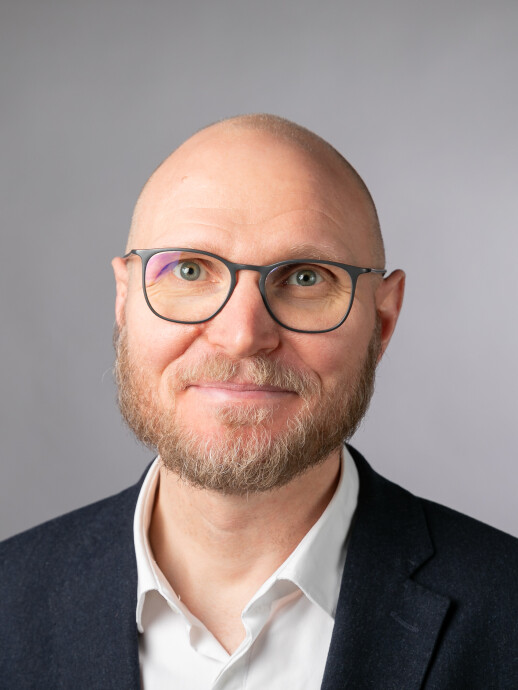
Mika Viljanen is a Professor of Private Law at the Faculty of Law , University of Turku . His work intersects legal theory , socio-legal studies , and doctrinal law , with a focus on artificial intelligence , financial regulation , and private law (torts and contracts). He teaches core private law modules and leads the Faculty Willem C. Vis Moot Court team. Key Affiliations : University of Turku (Faculty of Law), ETAROS Project, FLAIG Project Research Trajectory : From his 2008 dissertation on quantifying tort damages to contemporary studies on AI regulation and global value chain liability , his scholarship bridges traditional private law with emerging technologies and economic systems. Recent projects include ETAROS (AI and Law) and FLAIG (Financial Regulation). Publications Spotlight : His 2023-2025 works explore AI governance , robot safety regulation , and human rights in EU AI frameworks , reflecting his commitment to interdisciplinary analysis.
Annamaria Westregård is an Associate Professor and Senior Lecturer at Lund University's Department of Business Law, where she also serves as Head of Department and Director of Third Cycle Studies. Her research focuses on Labour Law and Business Law, particularly addressing challenges in the gig economy, workplace privacy, and social security systems. Department of Business Law, Lund University Lund University Centre for Business Law (ACLU) Her work examines the legal classification of gig workers, collective bargaining in digitalized economies, and the intersection of personal privacy with employment rights. Projects include analyses of sickness benefits regulation, drug testing programs, and social dumping risks in EU cross-border employment. Recent publications highlight trends in gig economy regulation, employment law adaptation, and privacy rights. She has secured grants from institutions like IFAU, Forte, and HSFR for interdisciplinary research involving collaborations with Karolinska Institutet and other experts. Westregård supervises PhD students, participates in conferences (e.g., Privacy@Work), and contributes to media discussions on gig economy developments. She is also involved in the Lund Human Rights Research Hub.
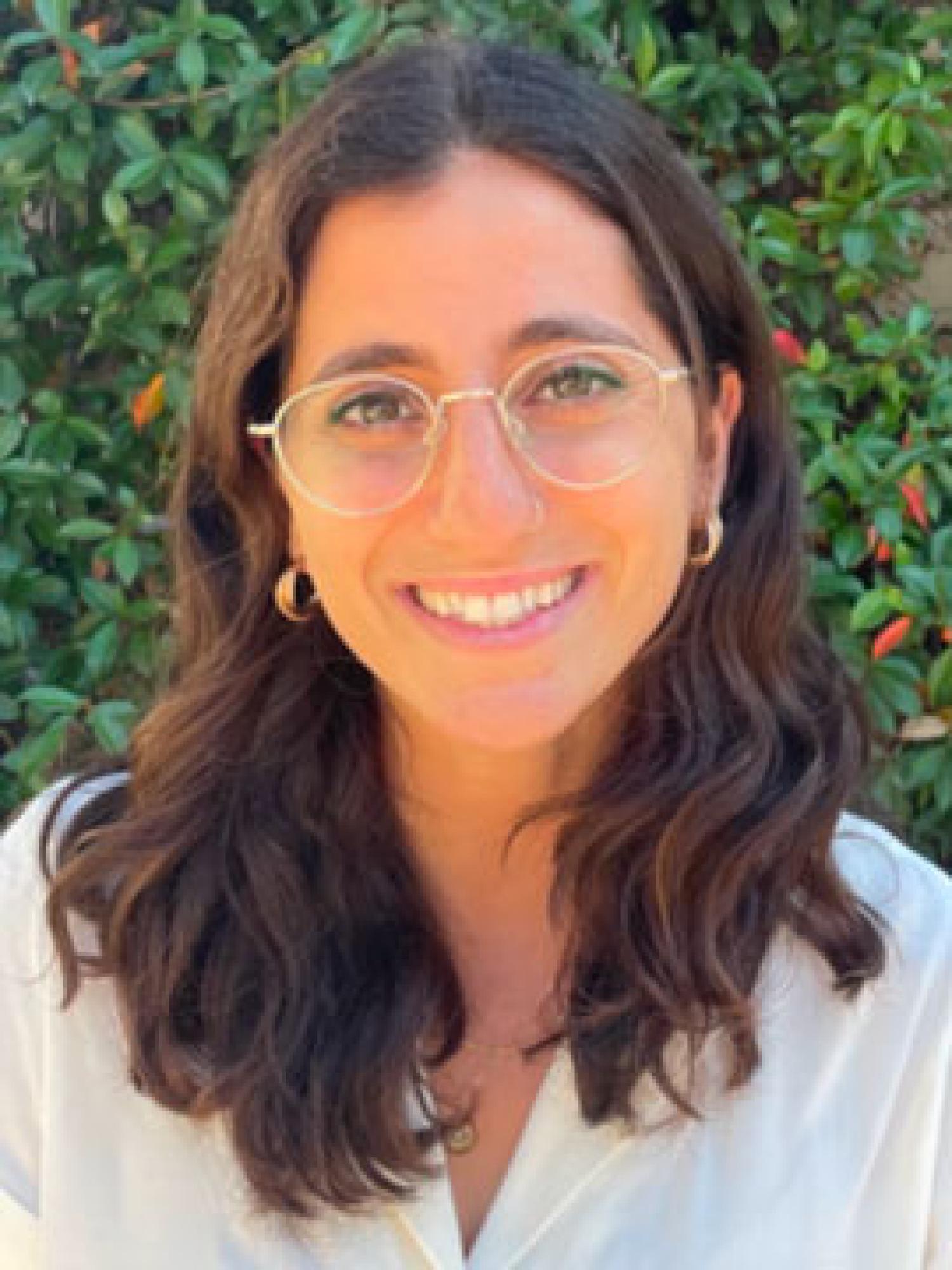
Maria Monica Wihardja serves as a Visiting Fellow and Co-coordinator of the Media, Technology and Society Programme at ISEAS–Yusof Ishak Institute while holding an Adjunct Assistant Professor position at the National University of Singapore. Her career bridges academic research and high-impact policy engagement, including former roles as World Bank Economist in the Poverty and Equity Global Practice and senior advisor to Indonesia's Presidential Executive Office on strategic economic reforms. Her educational background features: PhD in Regional Science, Cornell University MPhil in Economics, Cambridge University BA in Applied Mathematics-Economics, Brown University Wihardja's research integrates economic analysis with sociotechnical systems, focusing on digital transformation's impact on labor markets, food security, and democratic processes. She examines how technological disruption creates both opportunities for inclusion and risks of inequality, particularly through studies of platform economies, electoral disinformation, and sustainable agro-food systems. Her methodology combines quantitative econometrics with policy-oriented field research, often leveraging large-scale datasets from government and private sector partnerships. Analysis of her recent publications reveals three dominant research trajectories: (1) Digital economy effects on labor market polarization and inclusion, (2) Food system resilience through agricultural modernization, and (3) Geopolitical dimensions of supply chain reconfiguration. These intersect with her policy engagement in ASEAN economic integration frameworks and Indonesia's G20 presidency initiatives. Her scientific recognition includes: Nikkei Asian Scholar 2023 award Wihardja actively shapes regional discourse through editorial roles at East Asia Forum and Center for Indonesian Policy Studies. Her grant-funded work frequently involves World Bank partnerships and Indonesian government collaborations, particularly on stunting prevention and food policy reforms. Current projects examine deepfake impacts on electoral integrity and sustainable financing mechanisms for green transitions. She leads the Media, Technology and Society Programme at ISEAS, coordinating interdisciplinary research on digital governance and Southeast Asian technology policy. The programme partners with regional think tanks, government agencies, and private sector stakeholders to develop evidence-based policy responses to technological disruption.
Professor Dragan Jovcic is the Chair in Engineering at the University of Aberdeen's School of Engineering , where he has been a faculty member since 2004 and a full professor since 2012. Concurrently he serves as Director of the Aberdeen HVDC Research Centre , a role he has held since 2015. Education: PhD in Electrical Engineering, University of Auckland, 1999 Diploma Engineer in Control Systems, University of Belgrade, 1993 Postgraduate Certificate in University Teaching, University of Ulster, 2003 Research Interests: Professor Jovcic’s research centres on high-power electronics and HVDC transmission systems , with particular emphasis on the development of DC transmission grids that will enable large-scale integration of offshore wind energy . His work spans DC/DC converters , DC circuit breakers , modular multilevel converters (MMC) , flexible AC transmission systems (FACTS) , and advanced power system modelling and control . The overarching goal is to underpin the transition from fossil-fuel generation to renewable-dominated power systems, especially in the North Sea and European contexts. Publication Trends: Recent publications (2020-2023) reveal a strong focus on DC protection technologies —notably circuit breakers and energy absorbers—and on modelling methodologies for HVDC grids and offshore wind integration. The works address both theoretical advances (phasor and state-space models) and experimental validation (kV-level prototypes), reflecting a balanced portfolio of fundamental research and practical demonstration. Scientific Awards & Recognition: IEEE Fellow (2021) IEEE PES Distinguished Lecturer (since 2015) IET Fellow (2019) and Chartered Engineer (2018) Research Funding & Supervision: With over £5.5 million in external research income, Professor Jovcic is principal investigator or work-package leader on numerous EU Horizon Europe and EPSRC projects. He has supervised 9 PhDs to completion and is currently mentoring 2 PhD students and 2 post-doctoral fellows . Major grants include the €35 million PROMOTioN project on multiterminal DC networks and the €4 million MoWiLife project on wide-bandgap power electronics. Laboratory & Facilities: The Aberdeen HVDC Research Centre hosts a 0.9 kV DC grid demonstrator , 30 kW thyristor- and IGBT-based DC/DC converters , and 5 kV, 2 kA DC circuit breaker test benches , providing a world-class platform for experimental research and student training.
Holger Schüttrumpf serves as a Professor at RWTH Aachen University, leading the Chair and Institute of Hydraulic Engineering and Water Management. His institutional presence is evidenced by active contact details and departmental affiliation within the university's engineering framework. His research spans critical domains in water systems engineering, with primary focus areas including: Hydraulic Engineering (core infrastructure design and analysis) Water Management (resource allocation and sustainability) Fluid Dynamics (theoretical and applied flow mechanics) Environmental Hydraulics (ecosystem interactions) River Engineering (flood control and channel morphology) Coastal Engineering (shoreline protection and marine structures) No scientific awards or honors are documented in the provided institutional materials. Similarly, details regarding graduate student supervision, research grants, or collaborative projects remain unspecified in the available public profiles. The institute operates under his leadership as a central unit for hydraulic research within RWTH's engineering ecosystem, contributing to the university's broader research initiatives in sustainable infrastructure as reflected in their institutional communications.
Christos Gatzidis serves as Executive Dean of Bournemouth University's Faculty of Science and Technology since October 2023, overseeing six departments including Computing and Informatics, Creative Technology, and Psychology. Previously Deputy Dean (2021-2023) and Head of Creative Technology Department (2016-2021), he was appointed Professor in Creative Technology in November 2019. The Faculty leads five REF Units of Assessment and secures funding from AHRC, NIHR, and Innovate UK for research spanning digital healthcare, gaming technologies, and cultural heritage applications. His educational qualifications include: PhD in Information Science, City University London (2010) PG Cert in Research Degree Supervision, Bournemouth University (2010) MA in Computer Animation, Teesside University (2003) BSc (Hons) in Computer Studies (Visualisation), University of Derby (2002) Professor Gatzidis specializes in computer graphics with research spanning virtual reality, serious games, and digital healthcare applications. His work bridges technical innovation and practical implementation, particularly in mindfulness prototypes for healthcare and stroke rehabilitation systems. Current projects focus on the multidisciplinary application of gaming technologies in medical contexts, emphasizing user experience and therapeutic outcomes through collaborations with industry partners. His publication record (2014-2025) demonstrates evolving expertise from foundational computer graphics research in terrain generation and deformation to applied work in healthcare, cultural heritage, and music education. Key trends include virtual reality for therapeutic mindfulness, usability studies in mobile gaming, and digital cultural presentation techniques, reflecting a trajectory toward socially impactful technological solutions with strong industry translation. No scientific awards are documented in the provided information. He has supervised PhD students and secured competitive research funding, including two Innovate UK Knowledge Transfer Partnerships. His principal investigator role in a virtual reality mindfulness prototype project exemplifies his approach to translating academic research into practical industry solutions, with current focus on expanding knowledge exchange activities to support the University's civic engagement mission. As Executive Dean, he leads faculty-wide research strategy across six departments, fostering interdisciplinary collaborations particularly in digital healthcare and cultural heritage. His personal research integrates computer graphics expertise with clinical applications through partnerships with healthcare providers and technology companies, driving innovation in therapeutic VR systems and educational gaming platforms.
Noelle Hurd is a Professor of Psychology at the University of Virginia and co-Director of Diversity, Equity, and Inclusion Initiatives (co-DDEI). She leads the Promoting Healthy Adolescent Development (PHAD) Lab, focusing on marginalized youth development through intergenerational relationships and systemic oppression disruption. Her research integrates clinical and community psychology to address adolescent development, racial discrimination, and mental health disparities. Key interests include natural mentoring as protective factor, anti-racist frameworks, and leveraging community strengths to counteract systemic barriers for Black and Latinx youth. Her work emphasizes youth agency in social justice movements and resilience through familial and community support networks. Recent publications (2023-2025) reveal concentrated exploration of natural mentoring dynamics across marginalized populations, with methodological diversity spanning qualitative analyses of immigrant youth experiences and longitudinal studies of college adjustment. Recurring themes include anti-immigration policy impacts, youth-led anti-racism initiatives, and the intersection of discrimination with mental health outcomes. Dr. Hurd's scientific contributions have earned significant recognition: William T. Grant Scholar and Spencer/National Academy of Education Postdoctoral Fellow Rising Star Award (Association for Psychological Science, 2015) Outstanding Professor Award (UVA Psychology, 2017) Faculty Excellence in Diversity, Inclusion, and Equity Award (2021) Fellowships in American Psychological Association and Society for Community Research and Action As PHAD Lab director, she mentors emerging researchers in community-engaged scholarship funded by NIH, NSF, William T. Grant Foundation, and Institute of Education Sciences. Her team examines mentoring relationships, discrimination mechanisms, and intervention development for youth thriving in oppressive contexts. The PHAD Lab operates as an interdisciplinary research collective developing evidence-based approaches to dismantle systemic barriers through youth-adult partnerships and natural mentoring frameworks.
Professor Ayman S. Mosallam holds dual appointments in Civil & Environmental Engineering and Materials & Manufacturing Engineering Technology at the University of California, Irvine (UCI). He serves as the Director of the UCI Structural Engineering Testing Hall and CEO of Smith-McCoy & Associates Engineering Firm. A globally recognized expert in sustainable building systems, his work emphasizes innovative composites, seismic rehabilitation, and affordable housing solutions like 3D sandwich panels and solar technologies. Education: Ph.D., Structural Engineering, Catholic University of America (1990) M.S., Civil Engineering, Catholic University of America (1985) B.S., Structural Engineering, Cairo University (1978) Research Focus: Advanced composites for infrastructure, hybrid systems for earthquake engineering, and eco-friendly construction. Key projects include the Sauvie Island Steel Bridge (feather-weight sandwich composites) and Schuyler Heim Bridge (hybrid decking). Current initiatives involve a diagnostic system for military bridge health monitoring with Boeing and TACOM, and a collision protection system using honeycomb technology funded by Ohio DOT. Awards: Fellow, American Society of Civil Engineers (ASCE) Top 2% Civil Engineering Researchers (2019-2020) Leadership & Outreach: Founded Egypt Green Building Council, developed the Green Pyramid Rating System, and advises the World Bank on energy-efficient construction. Serves on editorial boards for Composites: Part B Journal and ASCE manuals. Industry Links: Collaborates with Alpha Star Corps, Boeing, and the U.S. Army TACOM. Active in developing practical solutions for infrastructure resilience and sustainability through partnerships with academia and industry.
Xiaoze Pei is a Professor in the Department of Electronic & Electrical Engineering at the University of Bath, affiliated with the Institute for Advanced Automotive Propulsion Systems (IAAPS) and the Electronics Materials, Circuits & Systems Research Unit (EMaCS). His research focuses on superconductivity applications in electric systems, cryogenic power electronics, and DC network technologies for aerospace and renewable energy integration. Key projects include leading initiatives such as Towards Zero Emissions Electric Aircraft through Superconducting DC Distribution Network and HSTEA - Aerospace R&I , addressing challenges in electric propulsion, fault current limiters, and cryogenic power converters. His work contributes to UN Sustainable Development Goals related to clean energy and sustainable transport. Expertise: Superconducting fault current limiters (SFCL), DC circuit breakers, cryogenic power systems. Current roles: Principal Investigator (PI) on multiple UK and EU-funded projects. Collaborations: Extensive work with industry partners and academic institutions on electric aircraft, hydrogen control systems, and e-mobility technologies. Recent research emphasizes high-current cryogenic DC circuit breakers, superconducting air-core motors for aircraft, and topology optimization for power electronics. He actively supervises doctoral students in these areas and has published over 90 peer-reviewed articles. Labs/Teams: Leads research within EMaCS and collaborates with teams specializing in power electronics, cryogenics, and aerospace propulsion.
Dr. John Hastings is a Professor in the Department of Computer Science at Dakota State University, part of the Beacom College of Computer & Cyber Sciences. With nearly 35 years of experience, he specializes in teaching and curriculum development in computer science, combining academic rigor with industry insights from his roles as an AI/ML engineer, team leader, and business owner. Education: Ph.D., Computer Science, University of Wyoming M.S., Computer Science, University of Wyoming B.S., Computer Science, University of Wyoming Research interests include machine learning, AI applications in natural language processing (LLMs), generative AI, computer vision, ecological/environmental AI, AI in games, and gamification in education. Recent publications focus on cybersecurity challenges, AI ethics, and insider threat detection. His work has been recognized with awards such as the AAAI’s Innovative Applications of Artificial Intelligence (IAAI) Award and an International IPM Award for Excellence related to the CARMA AI tool. Teaching emphasizes active learning and practical skills, including courses on programming, data structures, AI, and cybersecurity. He advocates for gamification in education to enhance student engagement and success.
Gianfranco Anfora is a Full Professor at the University of Trento, affiliated with both the Department of Civil, Environmental and Mechanical Engineering and the Center Agriculture Food Environment (C3A), where he serves as Deputy Dean. His research focuses on agricultural entomology, biological control, and sustainable pest management. Key expertise areas include integrated pest control, semiochemicals, and viticulture-related challenges. Anfora teaches courses on biopesticides, vine protection, and eco-sustainable management of invasive species. His research emphasizes vibrational communication in pests like Halyomorpha halys and Drosophila suzukii, exploring non-chemical control strategies such as sterile insect techniques and biological control agents. Collaborative projects include classical biological control programs targeting invasive species in vineyards and果园. Anfora’s work often bridges ecology and applied pest management, addressing climate and landscape impacts on agricultural practices. Recent studies highlight innovations in vibrational mating disruption, substrate-borne signaling, and radiation effects on pest behavior. His contributions aim to balance productivity, environmental sustainability, and regulatory compliance within agri-food systems. No scientific awards are explicitly mentioned, but his extensive publication record reflects significant contributions to entomological and agricultural research.
Mateja Durovic is a Professor of Law and Technology at King’s College London, holding roles as Deputy Director of the Centre for Technology, Ethics, Law and Society (TELOS) and Academic Director of the Executive programme on Consumer Law. He previously served as Assistant Professor at City University of Hong Kong (2015-2017). His academic credentials include a PhD and LLM from the European University Institute, an LLM from the University of Cambridge, and an LLB from the University of Belgrade, graduating as top of his class. Research focuses on consumer law, contract law, and the intersection of law with new technologies. He has published in leading journals such as the European Review of Private Law and collaborates with institutions globally. His work addresses digital vulnerabilities, smart contracts, EU consumer directives, and online commercial practices. He is a visiting professor at universities in Europe and Asia and advises international organizations like the European Commission and the United Nations. Professional affiliations include the European Law Institute and Society of Legal Scholars. His contributions have been cited by the Court of Justice of the European Union and UK Law Commission. He leads King’s Cybersecurity Centre and Centre for Data Futures, advancing interdisciplinary research in digital technologies, cybersecurity, and participatory data infrastructure.
Alfons Oude Lansink is a Professor and Chairholder in Business Economics at Wageningen University, Netherlands. He holds adjunct professorships at Universitas Padjadjaran (Indonesia) and the University of Florida (USA), and serves on the Dutch Ministry of Agriculture's CDM committee and Rabobank's scientific advisory board. His academic career spans roles as director of Wageningen School of Social Sciences (WASS) and Secretary-General of the European Association of Agricultural Economists. Education: MSc and PhD in Agricultural Economics from Wageningen University Leadership: Head of Business Economics group since 2003 His research focuses on dynamic technical and economic efficiency , sustainable performance of food supply chains , and economics of plant health . Recent work examines climate adaptation strategies, circular economy applications, and cross-border agri-food innovation dynamics using advanced econometric models. Key projects include MINDSTEP (modeling farm decisions), Closing the Loop (insect-based agriculture), and Food Pro-tec-ts (transboundary food technologies). Publications address topics like: Technical efficiency in dairy and arable farming Economic impacts of climate change on agriculture Corporate social responsibility in food manufacturing Policy evaluation for biogas and organic farming He serves as: Secretary/Treasurer of agricultural economics journal foundation Advisor to Universitas Padjadjaran (Indonesia) on policy and PhD supervision Editorial board member of Agronomy Journal and European Review of Agricultural Economics
Professor Jason Hall-Spencer is a globally recognized marine biologist at the University of Plymouth and a full professor at the University of Tsukuba (Japan), with an adjunct role at Xiamen University. His research focuses on ocean acidification, invasive species (e.g., lionfish), and climate change impacts on marine ecosystems. He pioneered the use of underwater CO2 seeps as natural analogues for climate change studies, a methodology now adopted globally. His work has influenced policies to protect deep-water corals and Arctic reefs, and he leads projects like RELIONMED to combat lionfish invasions in the Mediterranean. Education: Studied Applied Marine Biology at Heriot-Watt University, completed a PhD on coralline algae at Millport Marine Station, and conducted fieldwork across Europe, Asia, and the Pacific. His career includes discovering UK deep-water coral reefs and Arctic reefs, leading to their legal protection. Research Interests: Ocean acidification effects on marine organisms, invasive species management, CO2 seep dynamics, coral reef ecology, and marine conservation. His work combines field experiments, policy advocacy, and community engagement to address global marine challenges. Grants and Collaborations: Secured €1.7M from the EU Life Programme for lionfish control and a $400K grant on plankton dynamics. Collaborates with organizations like the Marine Biological Association and international researchers on projects such as the Ocean Organ to visualize CO2 impacts. Labs/Teams: Leads the Marine Conservation Research Group at Plymouth, coordinating initiatives like RELIONMED and influencing global marine policies through partnerships with governments and NGOs.
Tamar Kodish is an Assistant Professor in Clinical Psychology and Neuroscience at the University of Colorado. Her research focuses on improving access to mental health services for marginalized youth, particularly youth of color, addressing disparities in depression, anxiety, and suicide prevention. She holds a PhD from the University of California Los Angeles (2022). Her work employs implementation science frameworks to study mental health service delivery in healthcare, educational, and digital contexts. Current projects include a text-messaging intervention pilot for college students of color, in collaboration with UCLA’s ALACRITY Center. Future directions emphasize school-based suicide prevention, peer support models, and engagement strategies for underserved youth. Research themes include racial/ethnic disparities in mental health care, digital mental health innovation, and culturally responsive interventions. Methodological strengths lie in mixed methods and community partnerships. No scientific awards are explicitly listed, though her work aligns with equity-focused initiatives. Advising and grants are not detailed in the provided text.