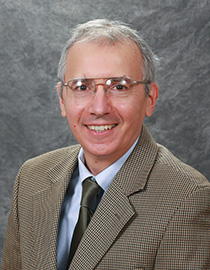
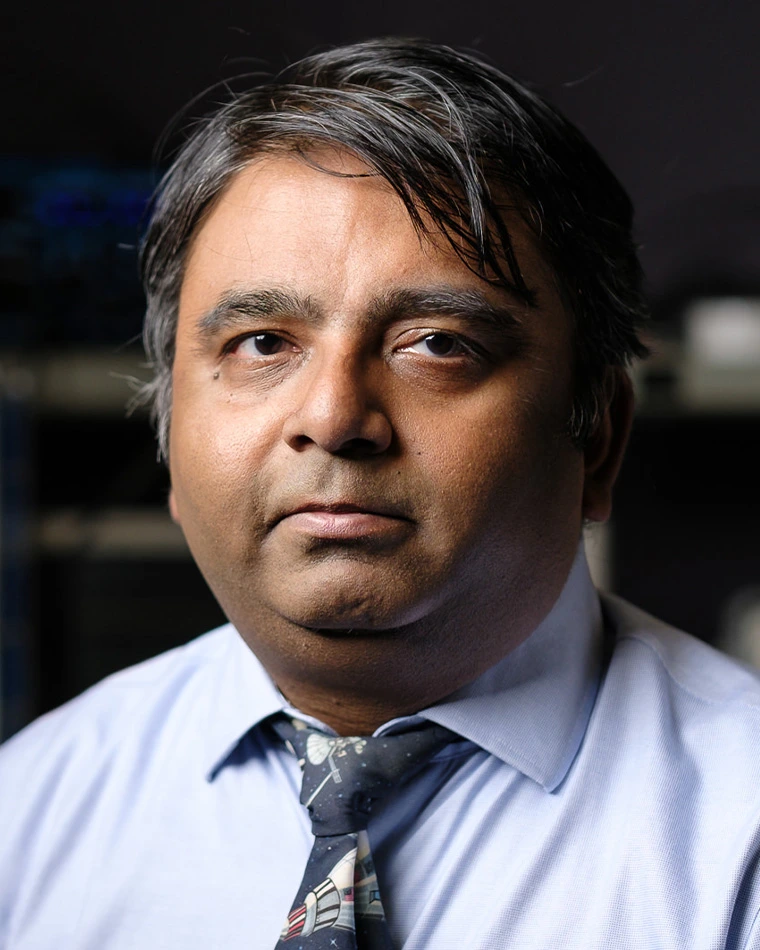
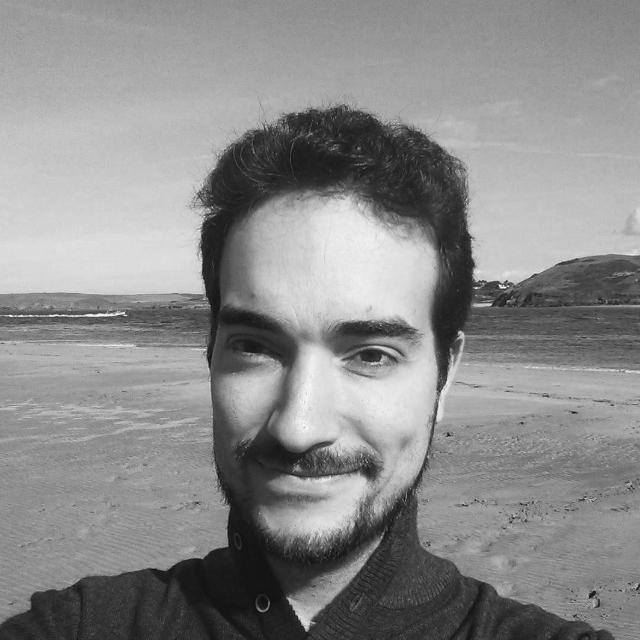
Tom Fletcher is a Lecturer in the Department of Mechanical Engineering at the University of Bath, affiliated with IAAPS. His research focuses on hydrogen powertrains, fuel cells, and low-carbon transport solutions. He has expertise in hybrid vehicle thermal management, fuel cell degradation mechanisms, and transmission control. Current projects include Virtual Sensing for Fuel Cell Degradation Management and the HEIDI Drivetrain Initiative funded by Innovate UK. Research Interests: Hydrogen combustion and fuel cells in vehicles Systems-level development of fuel cell hybrid vehicles Thermal management in hybrid systems Low-carbon propulsion technologies Key Projects: Virtual Sensing for Fuel Cell Degradation Management (Royal Society, 2025-2026) KTP with ZeroAvia (Innovate UK, 2023-2026) HEIDI: Hydrogen Electric Integrated Drivetrain Initiative (Innovate UK, 2023-2025) Advising & Grants: Accepting PhD students in hydrogen combustion and fuel cells. Involved in 6 active research projects across automotive and energy sectors. Labs/Teams: Member of IAAPS (Innovative Automotive and Propulsion Systems) at the University of Bath.
Min Pan is a Professor of Intelligent Machine Systems at the University of Bath, affiliated with the Department of Mechanical Engineering and institutes like the Institute for Mathematical Innovation (IMI). She holds a UKRI Future Leaders Fellowship and has received prestigious awards including the Royal Academy of Engineering Fellowship and the Leverhulme Trust Fellowship. Her research focuses on intelligent machine systems, dynamic systems modeling, control, and robotics, with a strong emphasis on fluid power control and soft robotics. She earned her PhD in Mechanical Engineering from the University of Bath in 2012 and has since contributed to over 80 publications, many featured on journal covers like Advanced Science and Advanced Materials Technologies . Her work is funded by UKRI, EPSRC, and Innovate UK, among others. She collaborates with academic and industrial partners to advance applications in energy-efficient hydraulic systems, soft actuators, and self-healing materials. Min actively supervises doctoral students and leads projects such as the A New Analytical Framework for Dexterous Soft Robotic Manipulators and Hydraulic Pressure Ripple Energy Harvesting . Education: PhD in Mechanical Engineering (University of Bath, 2012) Awards: Donald Julius Groen Prize (2014), Royal Society funding, and multiple fellowships. Research Interests: Bioinspired robotics, energy-efficient fluid systems, soft actuators, and material science for advanced applications. Her work bridges fundamental analysis with practical innovations, addressing challenges in sustainability and industrial efficiency.
Prof Carl Sangan is a Professor of Sustainable Propulsion and Power at the University of Bath’s Department of Mechanical Engineering, serving as Director of Research and Deputy-Director of the IAAPS Research Institute. He specializes in gas turbine engineering, focusing on experimental and theoretical modeling of flow and heat transfer in rotating disc systems. His work bridges academic research with industry applications, particularly with Siemens and Safran Aircraft Engines. Education: MEng (Hons) in Aerospace Engineering, PhD in Turbomachinery, followed by postdoctoral research and a University Prize Fellowship in Gas Turbine Engineering (2012). Academic roles include Lecturer (2014), Senior Lecturer (2017), Reader (2020), and Professor (2022). Research interests span gas turbine efficiency, optical methods for cooling system analysis, and innovations in shaft sealing. Key areas include hot-gas ingestion modeling, compressor cavity heat transfer, and film cooling of turbine blades. His projects are primarily EPSRC-funded but closely integrated with industry. 2021 ASME Turbomachinery Best Paper Award 2020 ASME Fellow Teaching Excellence: 2016 and 2022 University Awards Advising: Open to doctoral students in gas turbine technologies, fluid dynamics, rotating systems, and thermal imaging. Active in 15 research projects, including leadership roles in EPSRC and Innovate UK initiatives like HyFIVE and KTP collaborations with industry. Labs/Teams: Core member of IAAPS, leading turbine cooling and hydrogen storage projects. Collaborates internationally on additive manufacturing and CO₂ cooling systems.
Dr. Aykut Tamer is a Lecturer in the Department of Mechanical Engineering at the University of Bath, affiliated with the IAAPS and Centre for Integrated Materials, Processes & Structures (IMPS). He holds a PhD in Aerospace Engineering from Politecnico di Milano (2015), and MSc and BSc degrees from Middle East Technical University (2011, 2007). His research focuses on rotorcraft dynamics, vibration control, and aeroelastic stability, with applications in novel aircraft architectures and hydrogen integration. He is an Associate Editor at the Journal of Aerospace Engineering and coordinates the Mechanical Engineering Research Staff. Dr. Tamer’s research interests include predicting novel aircraft behaviors, improving human-machine interaction in VTOL aircraft, and enhancing aeroelastic stability through nonlinear dynamics analysis. His work combines experimental and numerical methods, with recent contributions to vibration attenuation in helicopters and structural analysis of additive-manufactured materials. He has held external roles as a Research Associate at Imperial College London (2019–2023) and a Research Fellow at Politecnico di Milano (2015–2019), and previously worked as a Loads and Aeroelasticity Engineer at Turkish Aerospace (2007–2011). He teaches advanced helicopter dynamics and aerospace design projects, emphasizing practical applications of theoretical concepts. Dr. Tamer actively supervises doctoral students and offers funded PhD opportunities in rotorcraft performance. His research spans multidisciplinary topics such as laser powder bed fusion, Lyapunov stability analysis, and urban air mobility comfort assessment.
Behrad Vatankhahghadim is a Visiting Professor in the Department of Aerospace Engineering at Universidad Carlos III de Madrid. His research spans multiple disciplines, including Aeronautics, Astronomy, Mechanical Engineering, and Physics, with a focus on spacecraft dynamics, magnetic attitude control, and electrodynamic tether systems. Research Focus: Spacecraft formation flight, deployment dynamics, and space debris mitigation using Lorentz forces and electrodynamic tethers. Projects: Researcher on E.T.COMPACT (2024–2027) and E.T.PACK-F (2022–2025), both funded by the European Commission Research Executive Agency. His recent publications (2016–2025) emphasize nonlinear deployment mechanics, hybrid control systems, and innovative solutions for space sustainability. Key subfields include solar sail stability, flexible multibody dynamics, and orbital energy harvesting. No formal scientific awards or student advising details are provided in the available data.
Abderezak Lashab is an Assistant Professor at Aalborg University's Department of Electric Power Systems and Microgrids within the Faculty of Engineering and Science. He specializes in microgrid technologies, photovoltaic systems, and power electronics. His research focuses on enhancing the stability, efficiency, and resilience of energy systems, particularly in renewable energy integration, smart grids, and electric vehicle infrastructure. Key projects include the HECATE initiative exploring hybrid electric regional aircraft distribution technologies. Affiliations: AAU Energy, Microgrids Research Group Research Interests: Microgrid control strategies, photovoltaic system optimization, battery storage solutions, and cybersecurity in energy networks. His work emphasizes practical applications such as disaster-resilient mobile microgrids and EV charging infrastructure sustainability. Publications (82+): Focus on advanced control algorithms, power electronics, and renewable energy systems. Recent trends highlight grid stability under high PV penetration and smart grid resilience. Grants: HECATE project (2023-2025) funded by Horizon JU Innovation Action Labs/Teams: Active contributor to AAU's energy research groups, collaborating on projects involving hybrid electric systems and IoT-enabled cybersecurity.
Paul Cizmas is a Professor in the Department of Aerospace Engineering at Texas A&M University, part of the College of Engineering. He holds a Ph.D. from Duke University (1995) and a Dipl.-Ing. from the Polytechnic Institute, Bucharest (1984). His research focuses on propulsion systems, computational fluid dynamics (CFD), unsteady aerodynamics, and aeroelasticity, with a strong emphasis on reduced-order models and thermal management in turbomachinery. He has authored influential books like Aerothermodynamics and Jet Propulsion (Cambridge University Press, 2022). Dr. Cizmas leads research on sonic boom reduction, turbulence modeling, and combustion mechanisms. His work integrates advanced numerical methods, such as proper orthogonal decomposition (POD), to enhance computational efficiency in simulating complex flows. He has contributed to the development of the UNS3D CFD solver, validated through AIAA workshops. Awards include the Boeing Research and Technology Performance Award (2018) and the Herbert H. Richardson Faculty Fellowship (2009). Education: Ph.D., Duke University, 1995 Dipl.-Ing., Polytechnic Institute, Bucharest, 1984 Awards: Research and Technology Performance and Innovation Award (Boeing, 2018) Structures and Dynamics Committee Best Paper Award (ASME, 2011) Herbert H. Richardson Faculty Fellow Award (Texas A&M, 2009) His advising and grants focus on CFD applications in propulsion, with collaborations spanning academic and industrial partners. He directs the Computational Fluid Dynamics for Aerospace Applications group, advancing methodologies for low-boom aircraft design and multiphase flow dynamics. His lab develops open-source software tools for turbulence modeling and reduced-order simulations.
Dr. Quentin Michalski is a Research Fellow at the School of Engineering, RMIT University. His research focuses on advanced propulsion systems, particularly thermal management of rotating detonation rocket engines, combustion dynamics, and detonation wave analysis. He has supervised a Master's/PhD project titled 'Thermal Management of a Rotating Detonation Rocket Engine' since March 2021. His work integrates experimental and computational methods to optimize gas composition, combustion efficiency, and thermal performance in aerospace applications. Key research areas include solid propellant combustion, constant-volume combustion systems, and fluid dynamics in propulsion contexts. His studies often address challenges such as cyclic ignition stability, pressure gain combustion, and material durability under extreme thermal conditions. While no formal awards are listed, his contributions to detonation-based propulsion have been published in journals like Journal of Propulsion and Power and Combustion and Flame . Dr. Michalski’s work also explores additive manufacturing for thermal protection systems and the application of advanced diagnostics like speckle-based background oriented schlieren for flow visualization. Though no specific lab or team affiliations are detailed, his projects emphasize interdisciplinary collaboration in aerospace engineering and energy systems.
Assoc Prof Tai Kang is an Associate Professor at the School of Mechanical and Aerospace Engineering, Nanyang Technological University (NTU), Singapore. He holds a B.Eng. (First Class Honours) from the National University of Singapore and a Ph.D. from Imperial College London. He has been a faculty member at NTU since 1995 and held a concurrent appointment with the Singapore-MIT Alliance (2001-2004). His research focuses on design optimization, computational intelligence, compliant mechanisms, and critical infrastructure resilience. Education: B.Eng. (First Class Honours) in Mechanical Engineering, National University of Singapore, 1990 Ph.D. in Mechanical Engineering, Imperial College London, 1995 Research Interests: Design automation and optimization Genetic algorithms and evolutionary computation Topology and shape optimization Compliant mechanisms and soft robotics Critical infrastructure vulnerability analysis Machine learning applications in engineering His work spans theoretical advancements in optimization algorithms to practical applications in aerospace systems, manufacturing, and infrastructure resilience. He has published over 70 peer-reviewed papers and co-authored a book on Probability Collectives. His research group has developed novel methodologies for compliant mechanism design, cooling system optimization, and flat pattern unfolding for 3D structures. Grants & Advising: Supervised 19 graduate students and co-authored numerous funded projects in mechanical design optimization, energy systems, and infrastructure resilience. Collaborates with industry partners on projects like offshore wind turbine substructures and fuel cell-powered marine vessels. Labs/Teams: Active in the Design Optimization Lab and Critical Infrastructure Resilience Research Group at NTU.
Professor John Carlton is a Professor of Marine Engineering at City, University of London, where he leads postgraduate maritime studies. He is also affiliated with the International Institute for Cavitation Research. Prior to his academic role, he held senior positions at Lloyd's Register, including Global Head of Marine Technology and Head of the Technical Investigation Department. BA (Hons) Mathematics, Open University, 1976 Professional qualifications in Mechanical Engineering (IMechE, 1969) and Marine Engineering (CMarEng, 1990) Honorary Doctor of Science (DSc), City, University of London, 2006 His research focuses on ship propulsion hydrodynamics, cavitation dynamics, and future ship powering systems. He has made significant contributions to understanding marine propeller behavior, propeller-rudder interaction, and machinery condition monitoring. His work integrates theoretical, computational, and full-scale experimental methods. The recent publications highlight a strong trend toward advanced sensing technologies (e.g., fibre optic sensors) for monitoring cavitation, structural integrity, and machinery health. His research spans hydrodynamics, acoustics, materials science, and sustainable propulsion, reflecting a multidisciplinary approach to marine engineering challenges. Denny Gold Medal (IMarEST), twice awarded Stanley Gray Award for Marine Technology, twice awarded Honorary Doctor of Science, City, University of London (2006) Fellow of the Royal Academy of Engineering (2011) 109th President of IMarEST (2011–2012) Professor Carlton has supervised numerous industry research projects and contributed to international standards. He is actively involved in advising on alternative propulsion systems and has led research initiatives in nuclear propulsion feasibility and risk assessment for merchant ships. He chairs the Royal Academy of Engineering’s Working Group on Alternative Ship Propulsion. He is a key member of the International Institute for Cavitation Research and collaborates with industry partners on structural health monitoring, cavitation erosion, and propulsion efficiency. His work bridges academic research and practical marine engineering applications.
Andres Barrado Bautista is a Full Professor in the Department of Electronic Technology at the School of Engineering, Carlos III University of Madrid (UC3M). He leads research within the Electronic Power Systems Group (GSEP), focusing on power electronics, energy conversion, and their applications in aerospace, electric vehicles, and renewable energy systems. His work bridges theoretical modeling and practical implementation, with a strong emphasis on high-efficiency DC-DC converters, fuel cell integration, and smart energy management. PhD in Electrical Engineering (specific date not provided) His research interests center on power electronics for energy systems, including modeling and control of DC-DC converters, fuel cells, batteries, and supercapacitors. He has made significant contributions to the development of advanced converter topologies for photovoltaic systems, electric propulsion in aerospace, and hybrid electric vehicles. His work integrates system-level black-box modeling, small-signal analysis, and real-time digital control, often applied to complex embedded and distributed power architectures. The recent publications (2020–2025) highlight a strong trend in high-performance power converters for space applications (e.g., electrospray thrusters), biomedical devices (e.g., wireless pacemaker charging), and renewable integration. The articles reflect expertise in magnetic component modeling, converter stability, and advanced control techniques, with frequent publication in IEEE Transactions journals. He has supervised numerous theses and leads a wide portfolio of research projects funded by national agencies (AEI, CAM), EU programs, and industry partners such as Airbus, Siemens, CIEMAT, and SENER. Convertidor CC-CC reductor y elevador, método de conversión CC-CC, y planta fotovoltaica que incorpora dicho convertidor (2019) Convertidor y método de conversión bidireccional de corriente continua a corriente continua sin aislamiento galvánico (2019) Active control procedures for the connection of very capacitive loads using SSPCs (2017) Active control procedures for the connection of very capacitive loads using SSPCs (2014) Método y dispositivo de transformación de corriente continua en corriente alterna (2014) Método y sistema de alimentación de una carga constituida por una pluralidad de cargas elementales, en particular de LED (2013) He has secured substantial research funding as principal investigator on projects such as SMARTGREENERGY, ECOSIVE, and several initiatives related to hydrogen-powered drones and space propulsion. He also actively collaborates on projects involving intelligent modular converters, energy storage, and electromagnetic compatibility. His lab, the Electronic Power Systems Group, works on both simulation and experimental validation of power electronics systems, with applications ranging from microsatellites to electric transportation.
Jekan Thanga is an Associate Professor in the Department of Aerospace and Mechanical Engineering at the University of Arizona’s College of Engineering, with a joint appointment in Electrical and Computer Engineering and status as a Member of the Graduate Faculty. He is the Head of the Space and Terrestrial Robotic Exploration (SpaceTREx) Laboratory and leads the NASA-supported ASTEROIDS Laboratory, focusing on innovative robotic systems for space and planetary exploration. Dr. Thanga earned his B.A.Sc. in Engineering Science (Aerospace) from the University of Toronto and his Ph.D. in space robotics from the University of Toronto Institute for Aerospace Studies (UTIAS). He completed a postdoctoral fellowship at MIT’s Field and Space Robotics Laboratory (FSRL) and gained industry experience at MDA Space Missions, working on the Canadarm and Orbital Express programs. His research is centered on autonomous robotic systems, including CubeSats, swarms, and sensor networks, for exploring extreme environments such as asteroids, lava tubes, and planetary surfaces. He employs multi-disciplinary optimization and bio-inspired neuro-evolutionary methods to design high-performance, unconventional robotic systems. His work spans propulsion, power, communications, and control, with applications in interplanetary missions, on-orbit servicing, and lunar/asteroid resource utilization. The 15 most recent publications highlight a strong trend toward autonomous systems for lunar and planetary construction, swarm-based exploration, inflatable and deployable structures, propulsion innovation (including solar thermal and steam systems), and cislunar surveillance. His team is advancing technologies for the Lunar Ark concept, lava tube exploration, debris avoidance, and in-situ construction using robot swarms and AI-driven design. Popular Mechanics Breakthrough Award (2016) Tech Briefs Top 5 Award, Aerospace/Defense (2017) HeroX CubeSat Challenge Winner (2017) MBR Mars Settlement Challenge Winner (2018) NASA RASCAL Winner and Finalist (2021) NASA BIG Competition Top 10 and Collaboration Award (2020) ASEE Teaching Award (2019) Subject Matter Expert Fellowship, US Special Forces SOFWERX (2019) Multiple Best Student Paper and Presentation Awards (2017–2021) Dr. Thanga has graduated over 60 students who now hold leadership roles in aerospace, defense, and IT. He is the Engineering PI on two CubeSat missions: the US Air Force-funded SWIMSat and AOSAT-1, a CubeSat centrifuge laboratory. His lab, SpaceTREx, fosters interdisciplinary collaboration and student-centric research, securing significant grants from NASA, NSF, and DoD. The lab is equipped with clean rooms, vacuum chambers, 3D printers, and air tables to support design, integration, and testing for extreme environments.
Mario Merino Martínez is a Full Professor of Aerospace Engineering at Universidad Carlos III de Madrid (UC3M), leading the Plasmas and Space Propulsion Team (EP2). His research focuses on advanced electric propulsion systems, particularly electrodeless plasma thrusters (EPTs), magnetic nozzles, and plasma modeling. He holds an ERC Starting Grant (ZARATHUSTRA) to develop next-generation space propulsion technologies and has pioneered numerical tools like PWHISTLER and EP2PLUS for plasma simulation. Merino's work integrates experimental and computational approaches, collaborating with institutions like MIT, ONERA, and Airbus. He has published over 100 peer-reviewed articles on topics such as magnetic nozzle dynamics, ECR thruster optimization, and plasma-wave interactions. His group's experimental lab includes a 1.5m-diameter vacuum chamber with advanced diagnostic systems for thruster testing. Award-winning educator, Merino teaches aerospace courses in English, including a popular edX MOOC ('The Conquest of Space'). He supervises 6 ongoing PhD theses and has advised numerous students on plasma physics and propulsion. Beyond academia, he co-founded 'La Facultad Invisible' to improve STEM education and participates in initiatives like the ST3LLAR lab with SENER Aerospace. Awards: ERC Starting Grant (ZARATHUSTRA), H2020 MINOTOR Project Lead Grants: €3.5M+ funding from EU, Spanish Ministry, and private sector Labs: EP2 Plasma Lab (UC3M), ST3LLAR Collaboration His current projects aim to revolutionize space travel via electrodeless thrusters, addressing challenges in plasma detachment, wave energy absorption, and scalability for deep-space missions.
Rauno Cavallaro serves as Associate Professor in the Department of Aerospace Engineering at University Carlos III of Madrid, where he conducts research in aeroelasticity, aircraft design, structural optimization, airborne wind energy systems, and sustainable aviation technologies including hybrid-electric and hydrogen propulsion. His work bridges theoretical aerodynamics with practical aircraft design, focusing on novel configurations like joined-wing systems and delta kites for renewable energy applications. Cavallaro's research portfolio centers on minimizing aircraft environmental impact through innovative configurations. He has pioneered minimum induced drag theorems for nonplanar wing systems and developed advanced aeroelastic models for flexible wings. Current investigations target hydrogen-powered regional aircraft, distributed electric propulsion architectures, and airborne wind energy harvesting systems, with emphasis on noise reduction, emissions mitigation, and structural efficiency. His publication record shows consistent focus on sustainable aviation solutions since 2021, with increasing emphasis on hydrogen propulsion and airborne wind energy. Recent works integrate computational fluid dynamics with structural optimization to address dynamic stall phenomena in delta kites and optimize strut-braced wing configurations for reduced noise and emissions, reflecting industry's shift toward zero-carbon aviation. Cavallaro leads significant research initiatives including INDIGO (European Commission, 2023-2026) on low-emission aircraft technologies and CETACEO with Airbus (2023-2025). He has supervised doctoral research on delta kite aerodynamics for airborne wind energy and aerostructural optimization of next-generation aircraft, demonstrating strong mentorship in sustainable aviation technologies. As a core member of UC3M's Aerospace Engineering Research Group, he contributes to experimental testbed development including visual motion tracking systems for airborne wind energy validation and participates in collaborative projects with European aerospace leaders like Airbus and CIRA on hydrogen propulsion and digital aircraft design frameworks.
Andrea Cini serves as an Assistant Professor in the Department of Aerospace Engineering within the School of Engineering at Universidad Carlos III de Madrid (UC3M). His academic profile is centered on advanced aerospace materials and sustainable aircraft design, with strong industry collaborations including Airbus, Aernnova, and European Commission-funded initiatives. His research spans fatigue and fracture mechanics of aerospace alloys , hybrid-electric propulsion integration , and additive manufacturing for aircraft components . Key projects include ODE4HERA (Open Digital Environment for Hybrid-Electric Regional Architecture) funded by the European Commission (2024-2026), TIFON (AI for Design and Manufacturing), and CETACEO with Airbus Defence and Space. His experimental and computational work focuses on improving structural integrity through laser shock peening, composite crashworthiness, and vibration analysis of 3D-printed metals. Dr. Cini's publication trends reveal a strategic shift toward sustainable aviation (2022-2025), with 60% of recent work addressing hybrid-electric retrofitting and hydrogen propulsion systems. Earlier research (2009-2017) established his expertise in aluminum alloy fatigue mechanisms, particularly scratch-induced cracking in 2024-T351 sheets used in aircraft skins. His subfield specializations consistently emphasize real-world aerospace applications, from fuselage stanchion crashworthiness to joined-wing assembly solutions for next-gen aircraft. Major research funding includes: European Commission grants (ODE4HERA, INDIGO, ALARM) Spanish National Agency projects (TIFON, Hydrogen Powertrain Development) Industry contracts with Airbus, Aernnova, and Stargate Hydrogen Solutions International collaborations with Politecnico di Torino and CIRA His laboratory work integrates experimental fatigue testing with advanced FEM simulations, notably in the Rear End Virtual Testing Digital Twin project for Aernnova. Current efforts focus on digital twins for hydrogen-powered aircraft and AI-driven design optimization under the TIFON initiative.