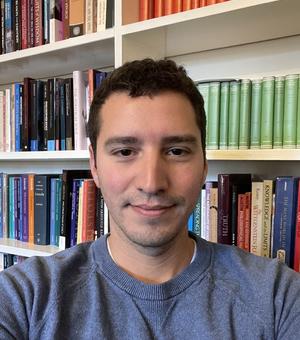
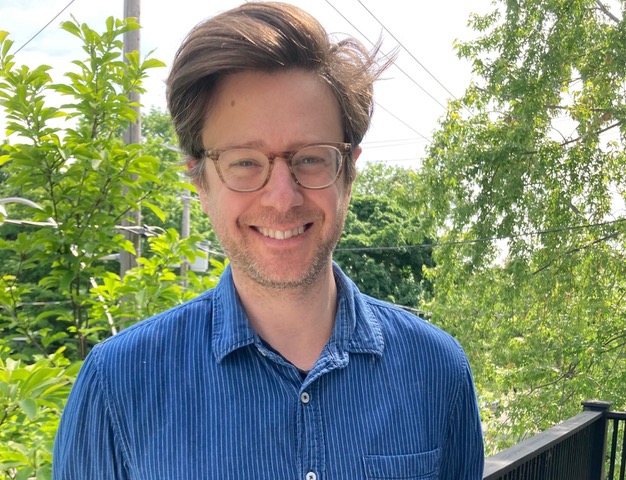
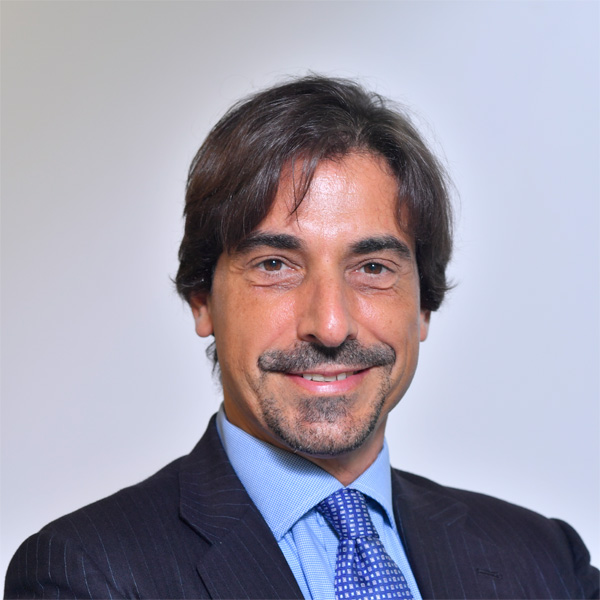
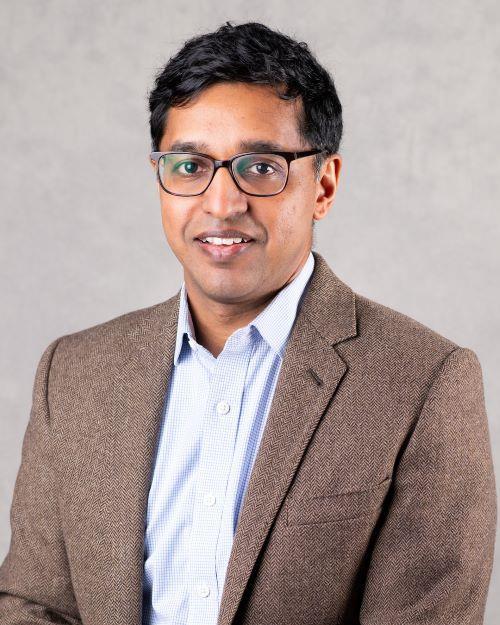
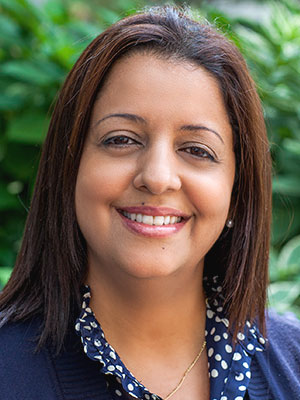
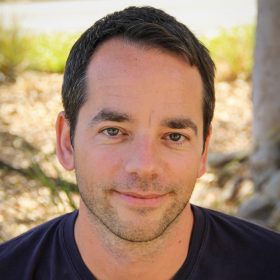
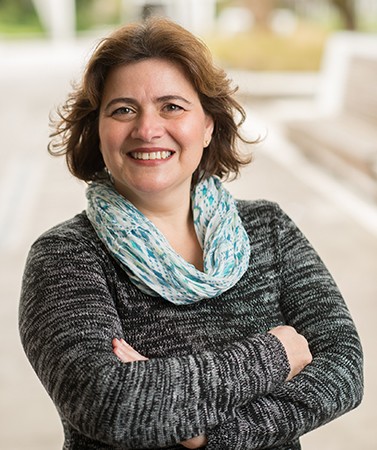
Professor Daniel A. McFarland at Stanford University's Graduate School of Education holds courtesy appointments in Sociology and Organizational Behavior, with over two decades of academic service (2000-Present). As Director of the Stanford Center for Computational Social Science (2012-2016, 2018-2020) and Chair of Social Sciences (2023-Present), he bridges educational systems with computational sociology. His research spans Scientific innovation dynamics Adolescent social structures Computational methods Knowledge diffusion Recent publications in Social Networks and American Sociological Review examine tie fitness metrics, interdisciplinary career progression, and epistemic constraints. With 81 total publications, his work synthesizes material, cultural, and institutional network effects. Awards include the Gould Award (American Journal of Sociology) and Bessel Award (Humboldt Foundation). As Doctoral Dissertation Advisor for Taylor LiCausi and Nick Sherefkin, and Master's Program Advisor for Jason Zhang, he fosters next-generation scholarship. His computational sociology courses (EDUC 317, SOC 317W) integrate network methods and data science.
Simon Shogry is an Associate Professor in the Faculty of Philosophy at the University of Oxford and a Tutorial Fellow at Brasenose College. He specializes in Ancient Philosophy, with a focus on Stoicism, Hellenistic ethics, and epistemology. His research explores topics such as Stoic moral psychology, the rationality of perception, and the interplay between logic and ethics in ancient thought. Shogry earned his Ph.D. from Princeton University’s Program in Classical Philosophy and holds a B.A. from Claremont McKenna College. Before joining Oxford, he held postdoctoral and lecturing positions at Princeton University, the University of Pennsylvania, and the College of New Jersey. His research interests include Stoic and Epicurean ethics, ancient logic, and moral psychology. He has published extensively on figures like Seneca, Epictetus, and Chrysippus, with a recent monograph Stoic Eros (CUP, 2024). His work bridges ancient philosophical debates with contemporary epistemology and ethics, emphasizing the relevance of Hellenistic thought to modern discussions. Shogry teaches undergraduate courses on ancient philosophy and ethics at Oxford. His scholarship is accessible via his personal webpage, Google Scholar, and PhilPeople profiles.
Keir Moulton is an Associate Professor and Graduate Chair in the Department of Linguistics at the University of Toronto. He holds a PhD from the University of Massachusetts, Amherst, and a BA (Honors) from the University of Toronto. His research focuses on the syntax-semantics interface, experimental linguistics, and formal approaches to clause structure and anaphora. He has conducted extensive experimental work on pronoun resolution, ellipsis, and binding theory, with a particular interest in exploring how structural constraints influence language processing. His academic career includes roles as co-editor of NELS 34 and contributions to major linguistics conferences such as SALT and WCCFL. Moulton's recent work examines topics like underspecified pronoun interpretation, Korean VP anaphora, and the cognitive processing of syntactic structures. His methodologies blend formal theoretical analysis with experimental techniques, including eye-tracking studies and acceptability judgments. Key research areas include: experimental syntax-semantics interaction, binding theory, ellipsis resolution, and the typology of clausal complementation. He has published over 50 articles in journals like Language , Linguistic Inquiry , and Journal of Cognitive Science , as well as book chapters and edited volumes. Moulton’s work has been supported by grants from the Social Sciences and Humanities Research Council (SSHRC) of Canada. His teaching focuses on graduate courses in syntax, semantics, and experimental methods.
Paolo Guenzi serves as Associate Professor in the Department of Marketing at Bocconi University and SDA Bocconi School of Management. He directs SDA Bocconi's Department of Marketing and Commercial Excellence Lab while teaching in Executive MBA programs and leading specialized sales management courses for global corporations. His academic foundation includes a Marketing degree and Ph.D. in Business Economics from Bocconi University, augmented by IMD's International Teachers Programme (2006). B.Sc. Marketing, Bocconi University Ph.D. Business Economics, Bocconi University ITP Certification, IMD (2006) Guenzi's research pioneers three interconnected domains: sales management innovation, digital transformation of sales forces, and relationship marketing optimization. He investigates how sales leadership drives team performance, the mechanics of commercial excellence frameworks, and strategic integration between marketing and sales functions—particularly in business-to-business contexts where digital disruption demands new organizational capabilities. His recent publications reveal accelerating focus on digital solution selling methodologies and crisis-responsive sales adaptations following global events like the COVID-19 pandemic. The work demonstrates how non-monetary motivators and empowering leadership enable sales organizations to navigate digital transformation while maintaining performance—evident in his 2024 Journal of Personal Selling & Sales Management study on digital solution sellers. As Director of SDA Bocconi's Commercial Excellence Lab, Guenzi leads interdisciplinary teams collaborating with multinational corporations to develop evidence-based sales frameworks. His executive education initiatives—including the 'Competenze per vendere' program—translate this research into actionable strategies for sales leaders managing complex B2B relationships and digital channel integration.
Gabriel Uzquiano is a Professor of Philosophy at the University of Southern California (USC), holding tenure in the Department of Philosophy. His academic journey includes roles as Lecturer at the University of Oxford (2006–2011), where he was also a Fellow and Tutor at Pembroke College. Previously, he served as Associate Professor at The Ohio State University (2005–2006) and Assistant Professor at the University of Rochester (1999–2005). He earned his Ph.D. from MIT’s Department of Linguistics and Philosophy in 1999. Uzquiano’s research focuses on Philosophical Logic , Philosophy of Logic and Mathematics , Metaphysics , and Philosophy of Language . His work explores topics such as mereology, modal systems, semantic paradoxes, and the foundations of mathematics. Notable contributions include addressing Russell’s paradox, analyzing plural quantification, and developing frameworks for modal metaphysics. His publications span prestigious journals like Philosophical Studies , Journal of Philosophical Logic , and Mind , with a monograph The Mereology of Classes (Cambridge, 2024) and co-edited volume Absolute Generality (Oxford, 2006). His articles often intersect formal logic with metaphysical questions, particularly in resolving paradoxes and clarifying ontological commitments. Uzquiano has held visiting appointments at institutions like the University of St Andrews (2014–2019). His work reflects a rigorous engagement with both technical logic and broader philosophical inquiries, emphasizing the interplay between formal systems and conceptual analysis.
Dilip Ninan is an Associate Professor in the Department of Philosophy at Tufts University, affiliated with the School of Arts and Sciences. He holds a PhD from MIT, a BPhil and MSc from the University of Oxford, and a BA from the University of Western Ontario. Prior to Tufts, he was a postdoctoral research fellow at the University of St Andrews (2015–2018). His research focuses on formal semantics, philosophy of language, metaphysics, and epistemology, with notable work on de se attitudes, personal identity, and epistemic modality. He co-directs the Linguistics Minor at Tufts and teaches courses in semantics, philosophy of language, and modal logic. Notable awards include the Philosopher’s Annual recognition for his 2018 paper 'Quantification and Epistemic Modality' and a 2020–2021 research fellowship at the Paris Institute for Advanced Study. His publications span journals like Philosophical Review , Mind , and Philosophers' Imprint , addressing topics such as assertion norms, branching time semantics, and taste predicates. He has also served as Editor-in-Chief of Linguistics and Philosophy (2019–2024).
Ansaf Salleb-Aouissi is a Senior Lecturer in the Department of Computer Science at Columbia University’s Fu Foundation School of Engineering and Applied Science. She holds affiliations with the Foundations of Data Science and Health Analytics centers. With a PhD from the University of Orleans, France (2003), she pursued postdoctoral training at INRIA Rennes before joining Columbia as an Associate Research Scientist in 2006. She transitioned to her current role in 2015 after serving as an adjunct professor in Computer Science and Data Science from 2014–2015. Her research focuses on machine learning applications in healthcare, education, and infrastructure systems. Key areas include medical informatics (e.g., preeclampsia prediction, genetic associations in pregnancy), educational data mining (intelligent tutoring systems, bootcamp design), and power grid reliability. Notable achievements include winning the NIH Maternal Morbidity Data Challenge and developing tools like LogicLearner for logic education. She has contributed to projects such as analyzing CDC pregnancy data and optimizing the New York City power grid. Her work bridges theoretical machine learning with real-world applications, emphasizing interpretability, bias mitigation, and collaboration across disciplines. She has published extensively in venues like JMLR, TPAMI, and ECML, addressing topics from counterfactual explanations to ensemble learning with missing data.
Thomas C Henderson is a tenured Professor at the School of Computing within the College of Engineering at the University of Utah. His research focuses on autonomous systems , computational models , and intelligent machine systems , with specific interests in biosystem simulation, distributed systems, and adaptive algorithms. He has contributed to Bayesian sensor networks , UAS traffic management , and probabilistic logic frameworks for intelligent agents. Current academic appointments since 1989 Adjunct roles in Biomedical Engineering Active in IEEE committees (2024-2025) Research trends in recent publications emphasize autonomous aircraft coordination , probabilistic reasoning , and multi-sensor integration . Key subfields include lane-based airspace modeling, reinforcement learning for UAS, and pseudogradient navigation techniques. His work has received recognition through a Best Paper Award (IEEE 2008) and the US Air Force Summer Faculty Fellowship . Strategic deconfliction protocols Dynamic data-driven applications Structural health monitoring systems He actively mentors undergraduate research through courses like Deep Learning Capstone and Senior Capstone Design . Current grants include "Deep Learning in AI and Robotics" (2024-2029) and "Robust Reasoning using Geometric SAT/PSAT" (2022-2023).
Peter Fritz is a Professor in Philosophy at the Dianoia Institute of Philosophy within the Faculty of Theology and Philosophy. His research focuses on metaphysics, modal logic, and formal ontology, with particular emphasis on higher-order metaphysical systems, propositional contingentism, and the interplay between modal operators and ontological structure. He has contributed extensively to debates on modal semantics, metaphysical grounding, and the foundational limits of set theory through a modal lens. His educational and professional background is not explicitly detailed in the provided texts, but his academic output spans over two decades with significant contributions to analytic metaphysics and formal philosophy. Notable themes include the nature of existence, ontological commitments in modal contexts, and the expressive power of higher-order logics. Fritz’s work often bridges formal logic and metaphysical inquiry, as seen in his exploration of propositionally quantified modal logics, the structure of metaphysical grounding, and the application of modal frameworks to resolve paradoxes in naive set theory. His scholarship frequently engages with foundational questions in metaphysics, epistemology, and the philosophy of language. No scientific awards, grants, or advising roles are listed in the provided materials. His affiliations include the Dianoia Institute of Philosophy and the Faculty of Theology and Philosophy, where he has held academic positions.
Pekka Töytäri is a Visiting Professor at the Department of Industrial Engineering and Management at Aalto University. He holds a Doctoral degree in Engineering and Technology from Aalto University (2015) and a Master's degree in Engineering and Technology from Helsinki University of Technology (1989). His research focuses on business models, ecosystems, value innovation, and digital transformation. He has contributed to projects such as 'MIDAS: Mastering the Next Industrial Revolution' and the EU-funded 'ATARCA/Töytäri' initiative. Key research areas include business ecosystems, value-based pricing, service innovation, and blockchain applications in decentralized markets. His work emphasizes organizational capabilities, institutional foundations of business models, and strategic alignment in industrial contexts. He has published extensively on topics like collective action signaling, inter-organizational collaboration, and digital transformation in asset-intensive industries. Recent projects highlight his engagement with autonomous systems, smart service adoption, and blockchain-based data markets. His contributions bridge theory and practice, addressing challenges in implementing value-based strategies and overcoming institutional barriers in industrial markets. Media appearances include discussions on value creation and ethical business practices.
Sam Cumming is a Professor in the Department of Philosophy at the University of California, Los Angeles. His research spans philosophy of language, semantics, and the philosophical analysis of film and narrative structures. With a Ph.D. from Rutgers University (2007), he has established himself as a significant contributor to contemporary debates in linguistic reference, truth conditions, and nominalist approaches to semantics. Dr. Cumming's research interests focus on foundational questions in the philosophy of language, particularly concerning reference, truth, and meaning. His work examines how language connects to reality through semantic content, with special attention to problematic cases like fictional entities, indefinite descriptions, and reportative constructions. He has made notable contributions to understanding the semantics of film, exploring how cinematic techniques create coherent narrative viewpoints and convey meaning through visual representation. His interdisciplinary approach bridges analytic philosophy with cognitive science and film studies, revealing how linguistic structures parallel audiovisual cognition in storytelling. Analysis of Cumming's publication record reveals a consistent trajectory from formal semantic theory toward broader applications in narrative and film. His early work focused on technical aspects of reference and indefinites, while more recent publications demonstrate increasing engagement with moral philosophy in narrative contexts and the cognitive foundations of film perception. A unifying thread throughout his career is the examination of how meaning is constructed across different representational systems, whether linguistic or audiovisual. His articles frequently address the relationship between semantic content and cognitive processing, suggesting an underlying interest in how humans make sense of complex representational structures. Dr. Cumming actively mentors graduate students, as evidenced by his students Gabe, Rory, and Koby Leff who have presented research at academic conferences. His advising appears focused on the intersection of philosophy of language with film and narrative studies, guiding students through technically rigorous analyses of cinematic representation and narrative structure. While specific grant information isn't provided in the available materials, his sustained publication record in prestigious journals suggests successful research funding throughout his career.
Professor Peter Schroeder-Heister is a prominent faculty member at the University of Tuebingen, working within the Faculty of Science, Department of Computer Science at the Wilhelm-Schickard-Institute. He maintains an active research program focused on foundational aspects of logic and reasoning, particularly through his development of proof-theoretic semantics. Schroeder-Heister's research interests center on the proof-theoretic basis of inference, with special emphasis on systems of formal logic and general reasoning systems based on inference rules for atomic sentences. His work extends from proof theory toward interactive approaches like dialogical and game-theoretic semantics. He explores philosophical questions related to logic, the historical development of modern logic, and connections between cognitive science, meaning, and deduction. His research has significantly shaped contemporary understanding of logical consequence and the semantics of logical constants. His recent publications reveal consistent focus on proof identity, the intensional aspects of proofs, and the relationship between structural rules and logical validity. A notable trend across his work is the examination of how proof-theoretic approaches can provide foundations for logical constants beyond traditional model-theoretic semantics. His research shows increasing engagement with historical perspectives on logic, particularly through his editorial work on Karl Popper's logical writings, while maintaining rigorous technical development of proof-theoretic concepts. Schroeder-Heister has secured significant research funding through multiple collaborative projects, including the current DFG-funded project 'Being Logical: On Possible Ways to Expand our Understanding of Logicality' (2024-2027). Previous projects include 'Falsity and Refutations' (2018-2022), 'Beyond Logic - Hypothetical Reasoning' (2015-2019), and 'HYPOTHESES' (2012-2015), demonstrating sustained research productivity and international collaboration. His academic contributions extend to organizing major conferences and editing significant volumes in the field, including the proceedings of the conference celebrating 50 years of Dag Prawitz's 'Natural Deduction' and the first collection devoted to proof-theoretic semantics.
John Collins is a Professor of Philosophy at the University of East Anglia, where he is the Head of the School of Philosophy within the School of Politics, Philosophy and Area Studies. His research interests include the philosophy of language, the philosophy of linguistics, the concept of truth, the philosophy of science, and the philosophy of cognitive science. His recent publications cover topics such as polysemy and roots, world and truth in conflict, the status of indefinites, and the disunity of personal taste.
Roberta Ballarin is an Associate Professor in the Department of Philosophy at the University of British Columbia (UBC), affiliated with the Faculty of Arts. She holds a Ph.D. from the University of California–Los Angeles (UCLA). Her current roles include Director of Graduate Studies in the Department of Philosophy. Education: Ph.D. in Philosophy, University of California–Los Angeles (UCLA) Research Interests: Ballarin’s work spans metaphysics and philosophy of language, with a focus on the sources of necessity, the distinction between origin and definition, and alternative forms of actualism in metaphysics. In philosophy of language, she advances a novel interpretation of names as a subspecies of honorific titles, exploring their semantic and ontological roles. Her research also intersects with philosophy of logic, addressing modal systems, validity, and the interplay between logical frameworks and metaphysical concepts. Publications Trends: Her articles reflect a sustained engagement with modal logic, the nature of necessity, and the philosophical implications of linguistic structures. Recent work (2019) redefines names through honorific titles, while earlier contributions (2004–2017) critically analyze historical figures like Kripke, Carnap, Quine, and Prior, alongside debates in metaphysical foundations and causal logic. Advising & Grants: While no specific advisees or grant details are listed, her role as Director of Graduate Studies suggests active involvement in mentoring students and academic administration. Courses taught include Symbolic Logic, Philosophy of Language I, Introduction to Metaphysics, and advanced topics in 20th-century philosophy. Labs/Teams: As a philosophy professor, her primary contributions are textual and theoretical. She collaborates through academic publishing networks and leads research seminars within the Department of Philosophy.
Andrew Bacon is a Professor of Philosophy at the University of Southern California's Department of Philosophy. His research focuses on metaphysics, epistemology, philosophy of language, and philosophical logic, with notable contributions to higher-order logic, vagueness, and metaphysical definability. He authored Vagueness and Thought (2018) and A Philosophical Introduction to Higher-order Logics (2023). His work explores fundamental concepts like property composition, logical necessity, and mathematical modality. Research Highlights: He investigates foundational questions in metaphysics, such as the nature of fundamental properties and their definability. His papers include Logical Combinatorialism , The Broadest Necessity , and collaborations with Kit Fine on modal topics. He has also addressed semantic paradoxes and decision theory in infinite contexts. Awards: Recipient of the 2016 Marc Sanders Prize in Metaphysics for Relative Locations , and the APA Article Prize (2012/2013) for Quantificational Logic and Empty Names . His work appears in top journals like Philosophical Review , Journal of Philosophical Logic , and Philosophical Studies . Teaching: Teaches courses including Philosophy of Physics: Space and Time , Higher-order Logic , and Modal Logic , emphasizing the intersection of formal methods with metaphysical inquiry.