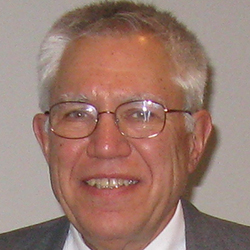
David Boyce is an Adjunct Professor of Civil and Environmental Engineering at Northwestern University's McCormick School of Engineering. His expertise spans metropolitan transportation planning, urban travel forecasting models, and transportation network analysis. He holds a BS from Northwestern University, an MCP from the University of Pennsylvania, and a PhD in Regional Science from the University of Pennsylvania (1965). BS: Civil Engineering, Northwestern University (1961) MCP: City and Regional Planning, University of Pennsylvania (1963) PhD: Regional Science, University of Pennsylvania (1965) His research focuses on integrating transportation networks with land use, discrete choice theory, and entropy-based methods. Notable contributions include work on the TAPAS traffic assignment model and user-equilibrium route choice problems. Boyce has authored over 50 publications, emphasizing network equilibrium models, historical analyses of transportation theory, and policy applications. His articles highlight advancements in urban travel forecasting, multi-class models, and algorithmic solutions for traffic assignment. Recent work explores the historical foundations of transportation science and computational impacts on planning practices. Robert Herman Lifetime Achievement Award (2003) Fellows Awards from ASCE (2009), INFORMS (2003), and RSAI (2002) Boyce has advised on large-scale transportation projects and contributed to interdisciplinary teams advancing regional science. His research bridges theoretical models with practical urban planning challenges, emphasizing sustainable infrastructure and policy innovation.
Ravi Reddy Manumachu is an Assistant Professor in the School of Computer Science at University College Dublin (UCD), Ireland. He holds a B.Tech from IIT Madras (1997) and a PhD in Computer Science from UCD (2005), specializing in high-performance heterogeneous computing and energy-efficient systems. His research focuses on optimizing performance and energy efficiency in modern heterogeneous platforms like clouds, grids, and supercomputers through novel models and algorithms. Key contributions include functional performance/energy models, energy-prediction frameworks, and extensions like Heterogeneous MPI and ScaLAPACK for heterogeneous clusters. He has published over 69 articles in top journals/conferences, with recent works addressing data transfer energy measurement, scalable allreduce algorithms (SUARA), and portable programming models (OpenH). Professional roles include Assistant Professor at UCD (2023–present), SEAI Research Fellow (2022–2023), and prior industrial experience at Ansys, Siemens, and IONA Technologies. He has certifications in university teaching, GDPR, and research integrity. Languages include English (fluent), Telugu, and Hindi. Research trends emphasize bi-objective optimization (performance-energy), hardware heterogeneity challenges, and scalable communication algorithms for deep learning. His work addresses energy non-proportionality in CPUs and GPU-CPU interactions, with practical solutions for real-world applications like matrix operations and gene sequencing.
Dr Stevie Martin is a Senior Lecturer at the TC Beirne School of Law, The University of Queensland. His research focuses on human rights law, medical ethics, and public law, with a particular emphasis on assisted dying legislation, protest rights, and climate change liability. He holds a PhD in Law and has authored a monograph on Assisted Suicide and the European Convention on Human Rights (Routledge, 2021). Dr Martin is actively involved in interdisciplinary research addressing contemporary legal challenges in health, environment, and governance. He regularly publishes in leading journals including Medical Law Review , Cambridge Law Journal , and Journal of Medical Ethics . His recent work explores the intersection of human rights and emerging legal issues such as abortion rights post-Roe v. Wade, pandemic resource allocation ethics, and the legal accountability of governments in climate change contexts. Dr Martin is available for academic supervision and collaborates with international scholars on projects related to European human rights jurisprudence and public policy. He has contributed to policy debates through analyses of UK parliamentary bills, such as the Illegal Migration Bill 2022–23, and has examined colonial legacy issues in Northern Ireland and the Chagos Islands. His scholarship frequently bridges doctrinal legal analysis with ethical and socio-political dimensions, emphasizing the practical implications of legal frameworks in diverse contexts.
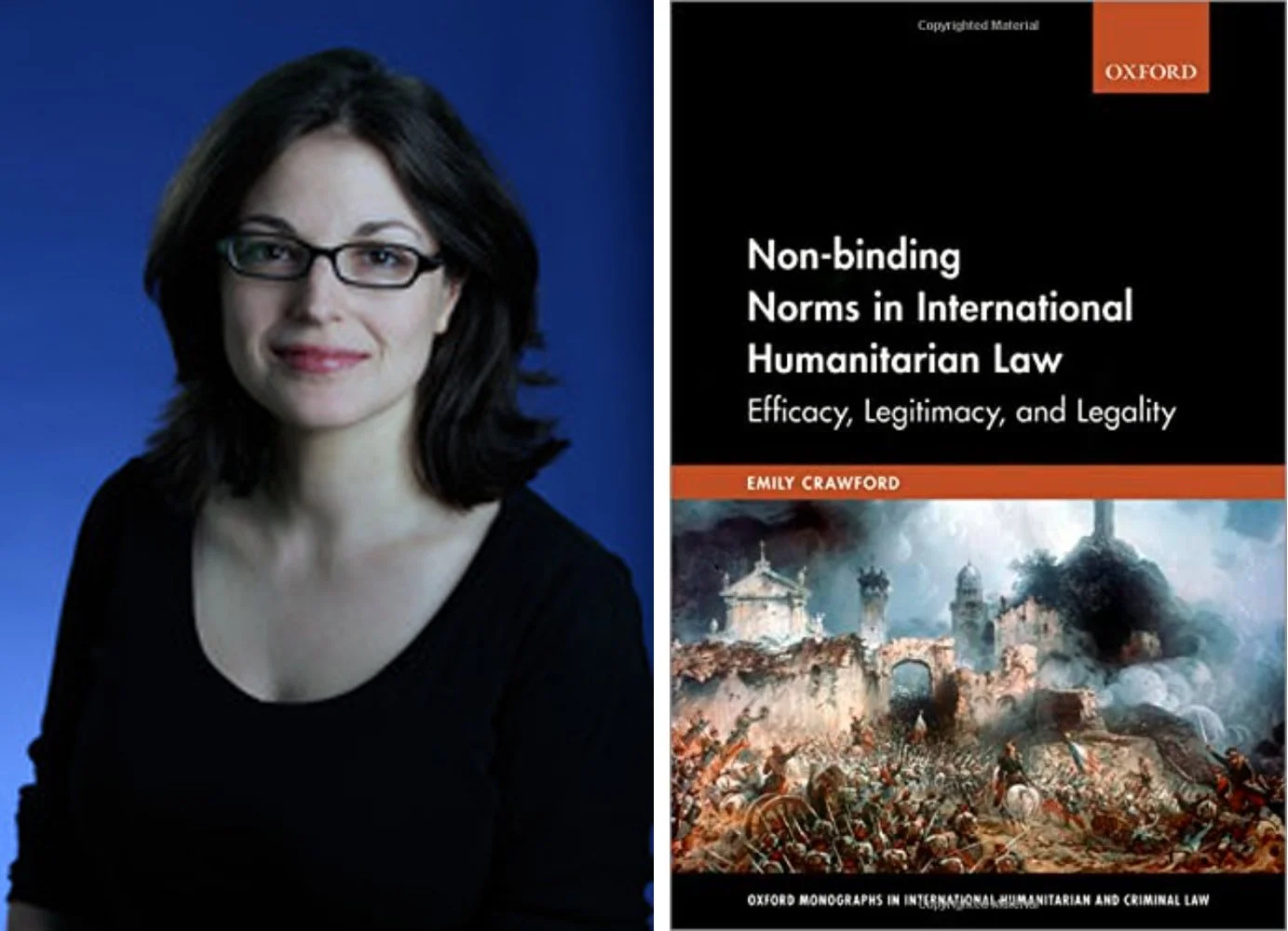
Professor Emily Crawford is a leading academic in international law at the University of Sydney Law School. She holds a BA (Hons), LLB, PhD from UNSW, and a GradCertEdStudies in Higher Education. Her primary affiliations include the Sydney Centre for International Law and the Sydney Law School's international law program. Her research focuses on international humanitarian law (IHL), international criminal law, and the efficacy of non-binding norms in shaping legal frameworks. Notable works include three monographs on IHL and co-authored textbooks like Public International Law . She was awarded the 2023 Max Planck-Cambridge Prize for International Law. Recent research explores legal terminology's role in warfare, cultural representations of international law in institutions, and state practice analysis. She has delivered over 50 conference presentations globally, including at the International Law Association and ICRC forums. Her teaching spans advanced international law topics, and she actively participates in legal reform initiatives. She co-curated the At the Vanishing Point exhibition examining international law's material culture. Grants include studies on gender analysis at the Khmer Rouge Tribunal and warrior identity under modern IHL.
Garry A. Gabison is a Senior Lecturer (Reader) at the Centre for Commercial Law Studies (CCLS), Queen Mary University of London, where he serves as Director of the Regulation and Compliance Programme and Deputy Director of Graduate Studies. He holds dual qualifications in law (JD) and economics (PhD), with expertise spanning law and economics, competition law, intellectual property, and innovation policy. His research focuses on patent strategies, AI-driven legal challenges, and regulatory frameworks in digital markets. He has taught at institutions including Georgia Tech, NYU, and Yale, and previously worked at the European Commission’s Joint Research Centre and the American Antitrust Institute. Education: PhD/MPhil/MA in Economics (Yale University, 2004–2012) Juris Doctor (University of Virginia, 2012) Bachelor’s in Economics & Mathematics (University of Virginia, 2002) Postgraduate Certificate in Academic Practice (Queen Mary, 2021) Research Interests: Dr. Gabison’s work addresses cutting-edge issues such as AI inventorship in patent law, antitrust in pharmaceutical markets, and regulatory responses to digital platforms. He has authored over 40 journal articles and policy reports, including studies on reverse payment settlements, FRAND licensing, and blockchain regulation. His recent work explores liability frameworks for AI systems and the economic implications of intellectual property doctrines in global markets. Professional Activities: He has presented at conferences including the European Association of Law and Economics and the UK-Sino Conference, and co-authored influential reports for the European Commission on innovation policy and venture capital ecosystems. His teaching includes advanced modules on law and finance, regulatory compliance, and US constitutional law. Advising & Grants: Currently supervising PhD student Grace Yajie Gao. Research has been supported by EU-funded projects on digital innovation and entrepreneurship. Labs/Teams: Active in CCLS’s Institute for Global Law, Economics, and Finance, contributing to interdisciplinary research on legal and regulatory challenges in emerging technologies.
Rebecca Moosavian is an Associate Professor in Law at the University of Leeds' School of Law, part of the Faculty of Social Sciences. She specializes in media law, intellectual property law, and constitutional law, with a focus on privacy rights, free expression, and legal critiques of governmental actions such as the Iraq War and pandemic measures. Her research integrates critical legal theories to analyze law's role in shaping knowledge and power dynamics. Education includes an LL.B (Hons), Legal Practice Certificate, Postgraduate Certificate in Academic Practice, and MPhil. Professional memberships include the Society of Legal Scholars and Socio-Legal Scholars Association, where she serves on the executive board of the latter. Research interests center on Article 8 (privacy) and Article 10 (free expression) conflicts, particularly in misuse of private information cases involving photography and image rights. She also examines constitutional issues such as executive power in wartime and pandemic governance, employing proportionality analysis and critiques of legal language's idiosyncrasies. Recent articles focus on privacy vs free speech tensions, pandemic proportionality, and SLAPP litigation. While no awards are listed, her work engages deeply with public interest law, gender politics, and legal reform. She supervises postgraduate researcher Christopher Robinson and leads the LLB (Graduate Programme). Affiliated with the Centre for Business Law and Practice and Centre for Law and Social Justice, her scholarship bridges legal theory and societal impact.
Wulf Gaertner is a Professor of Economic Theory at the School of Business Administration and Economics, University of Osnabrück. He leads the microeconomics subject group and is actively engaged in teaching and research in theoretical and experimental economics. University: University of Osnabrück School: School of Business Administration and Economics Department: Economic Theory Academic Rank: Professor His research interests lie at the intersection of economics, philosophy, and psychology, with a focus on social choice theory, distributive justice, behavioral and experimental economics, and decision-making under risk. He investigates how psychological insights inform economic behavior and whether normative principles like fairness and equity are upheld in real-world choices. The body of recent publications reveals a strong trend toward integrating empirical methods—particularly questionnaire-based experiments—with classical social choice and welfare economics. His work spans theoretical developments and cross-cultural empirical investigations, examining perceptions of equity, burden sharing, and moral uncertainty. Themes such as procedural justice, capability theory, and the application of Arrow’s impossibility theorem across disciplines recur throughout his scholarship. Notable academic contributions include delivering lectures at institutions like the London School of Economics and Humboldt Universität, authoring the widely used textbook A Primer in Social Choice Theory , and contributing authoritative entries on Amartya Sen and John Rawls. He has also honored leading scholars through laudations for honorary doctorates awarded to Amartya Sen and Reinhard Selten. While no formal list of students is provided, Gaertner has collaborated extensively with researchers such as Yongsheng Xu, F. Cowell, L. Schwettmann, and J. Jungeilges. His research has been supported through academic affiliations and publications, though specific grant details are not mentioned. He is affiliated with the Institute of Empirical Economic Research (IEW) and contributes to the LaER Economic Research Seminar. He has no listed email, awards, or part-time status, and there is no indication of retirement or emeritus status. All evidence points to an active, full-time faculty member at the peak of his academic career.
Desara Dushi is a postdoctoral researcher specializing in the intersection of law, technology, and human rights . Her work primarily addresses cybercrime , online child protection , and data governance , with a focus on EU legal frameworks such as the GDPR and AI Act. She is affiliated with the Law, Science, Technology & Society group and has contributed to interdisciplinary projects like ALTEP-DP and CoHuBiCoL . Ph.D. in Law from the University of Bologna (2019). Current projects: Regulating AI, GDPR compliance automation, and child safety in digital spaces. Active in international conferences and policy discussions, including the IAIL 2022 workshop. Her research explores how emerging technologies challenge legal norms, particularly in law enforcement , privacy , and human rights . She has published extensively on topics like AI-generated abuse material , facial recognition , and cybercrime prosecution . Recent publications highlight trends in AI regulation (2024-2022), data protection (2024), and child safety (2024-2019). Her work often combines legal analysis with technological insights to propose policy solutions. Co-organizer of the 2023 Re-articulating data? conference. Speaker on facial recognition ethics (2022) and emerging tech regulation (2022). Contributor to EU-level debates on automated decision-making (2022).
Magnus Ulväng is a Professor of Criminal Law at the Department of Law, Uppsala University . He holds a JD and a doc (doctoral degree), and has served as Associate Professor (2006) and Professor (2010 onwards) . He has been a Visiting Researcher at the University of Edinburgh and the Max Planck Institute in Freiburg. Education: Bachelor of Laws (1997), Doctor of Laws (2005) Professional Roles: Prosecutor, District Attorney, Academic Council member, Royal Swedish Academy of Sciences His research focuses on Criminal Law, Legal Philosophy, Sentencing Principles, and Presumption of Innocence . Recent publications analyze topics like European Criminal Law, Humanitarian Principles in Punishment, and Voluntary Intoxication in Criminal Responsibility . He has contributed extensively to journals and books on these subjects. He has received several awards, including the Heijne's Grand Juristic Prize (2014) , von Bahr Scholarship for Best Thesis (2005) , and the Teacher of the Year award (2006) . He has supervised multiple PhD candidates, including Johan Bucht, Erik Svensson, and Gustaf Almqvist.
Adam Martin is an Associate Professor in the Department of Agricultural and Applied Economics at Texas Tech University's College of Agricultural Sciences & Natural Resources. His research bridges Political Economy , Austrian Economics , and Institutional Analysis , focusing on economic development, entrepreneurship, and the role of institutions. Political Economy Research Fellow, Free Market Institute Board Scholar, Foundation for Economic Education Judge, Carl Menger Essay Contest His work examines: Institutional evolution and market processes Epistemological foundations of economics Philosophical intersections with political theory Applications to pandemic policy and civic education Recent scholarship emphasizes interdisciplinary approaches to institutional analysis, polycentric governance, and critiques of mainstream policy frameworks. Articles span topics from Tocquevillian self-governance to Hayekian epistemology, blending Austrian theory with public choice and historical perspectives. Scientific contributions recognized through fellowships and advisory roles include: Leadership in the Society for the Development of Austrian Economics Advocacy for market-based development Methodological innovations in economic philosophy Dr. Martin advises graduate students and contributes to academic discourse through publications, conferences, and educational initiatives.
Leonard A. Kahn currently serves as the Dean of the College of Arts and Sciences and Professor of Philosophy at Loyola University New Orleans. He also holds the ex officio position of Gerald N. Gaston Distinguished Professor in Religion & Science. Prior to joining Loyola, Kahn taught in the Department of Philosophy at the U.S. Air Force Academy in Colorado Springs, Colorado, and served as the 2021-2022 Donald and Beverely Freeman Fellow at the U.S. Naval Academy's Stockdale Center for Ethical Leadership. Kahn completed his DPhil at Oxford University (Magdalen College) under the supervision of Derek Parfit and Roger Crisp. His academic journey includes being a Post-Doctoral Research Fellow at the University of Calgary, a Visiting Scholar at both the Yale University Center for Bioethics and the Hastings Center for Bioethics, and a Visiting Lecturer at the University of North Carolina at Chapel Hill and the University of Reading in the UK. His primary research focuses on moral theory and applied ethics , particularly the ethics of technology and just war theory . Kahn's teaching portfolio spans political philosophy, philosophy of law, philosophy of mind and action, feminist philosophy, and both decision and game theory. He has taught courses including Ethics, Making Moral Decisions, Philosophy of the Human Person, Seminar: Matters of Life and Death, Philosophy and Feminism, Seminar: The Ethics of War, Global Ethics, and Ethics and Artificial Intelligence. Analysis of Kahn's 15 most recent publications reveals a consistent focus on applied ethical dilemmas across multiple domains. His work spans military ethics (particularly just war theory and autonomous weapons systems), technology ethics (especially AI and cybersecurity), medical ethics, and political philosophy. A recurring theme throughout his scholarship is the application of consequentialist frameworks to contemporary ethical challenges, with particular attention to how theoretical principles translate to real-world decision-making in complex situations. Donald and Beverely Freeman Fellow at the U.S. Naval Academy's Stockdale Center for Ethical Leadership (2021-2022) Editor of John Stuart Mill's On Liberty (Broadview Editions, 2014) While specific information about his advisees is not provided in the available materials, Kahn's extensive teaching experience across numerous philosophy courses suggests significant mentorship of undergraduate students. His position as Dean of the College of Arts and Sciences at Loyola University New Orleans places him at the center of academic administration, where he oversees faculty development, curriculum design, and strategic planning for the university's liberal arts programs. Kahn's research appears to be supported through academic fellowships such as his Naval Academy appointment, though specific grant details are not mentioned in the provided materials. Kahn maintains active scholarly engagement through his editorial work (including co-editing Consequentialism and Environmental Ethics with Avram Hiller and Ramona Ilea) and contributions to edited volumes on topics ranging from autonomous vehicles to medical deportation. His professional affiliations include connections with major bioethics centers (Yale, Hastings) and military education institutions (U.S. Naval Academy, U.S. Air Force Academy), reflecting the interdisciplinary nature of his work at the intersection of philosophy, technology, and public policy.
Juan Luis Fuentes Osorio serves as a University Professor in the Department of Criminal Law, Philosophy of Law, Moral Philosophy and Philosophy at the University of Jaen, Spain. His academic work is anchored within the Criminal Law, Criminology, Democracy and Fundamental Rights research group, where he contributes to interdisciplinary scholarship at the intersection of legal theory and societal protection mechanisms. He earned his PhD from the University of Jaen in 2003 with the dissertation "The anticipation of criminal protection and preparatory acts of crime," supervised by Dr. Guillermo Portilla Contreras. This foundational work established his expertise in criminal law theory and preparatory acts doctrine. His research spans Criminal Law, Criminology, Environmental Criminal Law, Corporate Criminal Liability, and Hate Speech regulation. He critically examines the tension between theoretical legal frameworks and practical enforcement challenges, particularly regarding environmental protection mechanisms and corporate accountability structures. His scholarship consistently addresses the philosophical underpinnings of criminal responsibility while engaging with contemporary issues like digital hate speech and ecological crime. Analysis of his 2021-2025 publications reveals three dominant thematic clusters: environmental criminal law effectiveness (focusing on enforcement gaps and sanction proportionality), corporate criminal liability (examining penalty determination for legal entities), and hate speech regulation (analyzing legal boundaries in digital spaces). His work demonstrates methodological rigor through comparative legal analysis and empirical assessment of judicial practices. Within the Criminal Law, Criminology, Democracy and Fundamental Rights research group, he collaborates on projects exploring the constitutional dimensions of criminal justice and the protection of fundamental rights within democratic frameworks. His institutional affiliation provides the foundation for sustained scholarly contributions to Spanish and European criminal law discourse.
Agnieszka McPeak is an Associate Professor of Law and Associate Dean for Academic Affairs and Program Innovation at Gonzaga University School of Law . She joined Gonzaga in 2020, following prior teaching roles at the University of Toledo College of Law and Duquesne University School of Law , and a Westerfield Fellowship at Loyola University New Orleans College of Law . J.D. , magna cum laude , Tulane University B.A. , with honors, University of California at Santa Cruz Her research focuses on the intersection of law and technology , particularly social media , ethics , privacy , and innovation economies . Key themes include digital evidence , platform liability , and professional responsibility in tech-driven legal contexts. Her recent articles address gig economy regulations , deepfake authentication challenges , platform immunity , and ephemeral data in litigation . Her work has influenced legal opinions , including New York’s highest court redefining social media discovery standards. Frederick N. and Barbara T. Curley Professor of Commercial Law (chair) She has presented at national symposia on topics like deepfakes , data minimization , and social media ethics , reflecting her expertise in tech-integrated legal scholarship .
Laura Lorello is a Full Professor in Jurisprudence at the University of Palermo (UNIPA), affiliated with the Department of Law. She actively teaches Constitutional Law and Public Law courses across multiple campuses, including Trapani and Agrigento. Her office hours are held weekly at the Department of Law, where she engages with students and scholars. Academic Rank: Professor Department: Department of Law Primary Campus: Trapani campus Lorello specializes in Constitutional Law, with a focus on political participation, gender equality, legislative processes, and regional governance. Her research explores the intersection of constitutional principles, judicial review, and social rights, including equal opportunities and the role of legislative committees. Recent publications highlight trends in regional legislative frameworks, gender equality jurisprudence, and normative quality assessments. Lorello has contributed extensively to debates on same-sex unions, labor rights, and the constitutional implications of public health policies. As of 2025, no scientific awards or student advisement records were explicitly documented in the provided texts. Her work remains central to Italian constitutional discourse.
Neve Gordon is Professor of International Law and Human Rights at Queen Mary University of London's School of Law. He serves as Vice President of the British Society for Middle East Studies and is a board member of the International State Crime Initiative. His research examines human rights frameworks in conflict zones, with particular focus on Israel-Palestine dynamics, mechanisms of state control, and the ethics of violence in international law. Gordon's research centers on human rights paradoxes in subjugation contexts, the legal history of human shielding, and biospatial politics of occupation. His interdisciplinary approach connects international law with political geography and ethics of violence, analyzing how legal categories like 'human shields' reshape warfare ethics. Recent publications demonstrate sustained focus on Gaza conflict dynamics, legal justifications for military actions, and institutional complicity in human rights violations. Trends reveal deepening examination of healthcare targeting, academic repression, and genocide frameworks within occupation contexts. Awards include: Marie Curie Fellowship Fellow of the Academy of Social Sciences (2024) He regularly supervises doctoral candidates and has received research funding including Marie Curie grants. Gordon directs projects on virtual war games and hospital bombings, collaborating with international research networks.