Devid Maniglio is an Associate Professor at the Department of Industrial Engineering, University of Trento. His research focuses on bioengineering, biomaterials, and tissue engineering, with a particular emphasis on bioprinting, surface modification, and functional materials. He has contributed to advancements in silk fibroin and hydrogel-based systems for medical applications. Research Interests Bioengineering for personalized medicine Biomaterials and surface engineering 3D bioprinting and tissue regeneration Molecular imprinting and biosensors Drug delivery and cell encapsulation Teaching Diagnostic and therapeutic technologies for personalized medicine Engineered materials for precision medicine Fundamentals of biomedical technologies Functional surfaces laboratory Labs & Collaborations Devid Maniglio is affiliated with the Functional Surfaces Laboratory at the University of Trento, collaborating with researchers such as Stefano Rossi and Flavio Deflorian. His work integrates interdisciplinary approaches in biomedical engineering and sustainable medical technologies.
Arle Kõrkjas is a doctoral student and part-time lecturer at the University of Tartu's Institute of Pharmacy, Faculty of Medicine. He has been actively working since 2017 in pharmaceutical technology research with focus on ultrasound-enhanced electrospinning of nanofibers for biomedical applications. PhD in progress since 2018 Lecturer in Pharmaceutical Technology since 2022 His research systematically explores nanofiber fabrication using ultrasonic electrospinning , with applications in bone tissue engineering and wound healing . Publications demonstrate technical innovations in gradient structure formation and multilayered assemblies through process parameter optimization. Active in Estonian Pharmaceutical Society and European electrospinning symposiums , his work contributes to biomedical device development through advanced material processing. Current projects include multifunctional 3D bioprinted constructs for bone regeneration (PRG1903, €577,200 funding).
Gerli Silm serves as a Lecturer in Educational Research at the University of Tartu's Faculty of Social Sciences, Institute of Education, a position she has held since February 2023. Previously, she worked as a Specialist of Educational Science and Junior Research Fellow at the same institution since 2015, demonstrating a steady progression in her academic career. Her educational background includes a Doctor's Degree in Educational Research (2022) from the University of Tartu with dissertation titled "Test-Taking Motivation in Low-Stakes and High-Stakes Testing Contexts," supervised by Margus Pedaste, Karin Täht, and Olev Must. She earned her Master's Degree in Psychology cum laude (2015) and Bachelor's Degree in Psychology (2012), both from the University of Tartu. Dr. Silm's research primarily focuses on educational psychology, particularly test-taking motivation across different assessment contexts, inclusive education practices, and the effectiveness of digital learning materials. Her work bridges psychological theory with practical educational applications, examining how motivation affects test performance and how educational technologies can enhance learning outcomes. She has made significant contributions to understanding how students approach assessments in both low-stakes and high-stakes environments. Her publication portfolio reveals a consistent research trajectory centered on assessment methodologies, with numerous articles analyzing the relationship between test-taking effort and performance, meta-analytic reviews of measurement approaches, and investigations into inclusive education effectiveness. Her recent work shows increasing focus on digital learning environments and their impact on educational outcomes, particularly through projects like DigiEfekt. Dr. Silm is actively involved in multiple research projects funded by the Estonian Ministry of Education and Research, the Education and Youth Board, and the European Commission. Her current research focuses on evidence-based curriculum development, educational analytics, and the effectiveness of inclusive education in Estonian general education settings. She has participated in significant research initiatives including the DigiEfekt project examining digital learning materials' impact, the WATCHME project on workplace-based e-assessment technology, and various studies on inclusive education effectiveness. Her collaborative work spans multiple disciplines within educational research, consistently contributing to both theoretical understanding and practical applications in educational settings.
Lampropoulos Andreas is an Assistant Professor at the Department of Structural Engineering, School of Civil Engineering, National Technical University of Athens (NTUA). His research focuses on Ultra High Performance Fibre Reinforced Concrete (UHPFRC), seismic strengthening techniques, and sustainable construction materials. Specializations: Seismic Retrofitting, Composite Materials, Aerogel Concrete, Geopolymer Composites Projects: Numerical modeling of UHPFRC applications, experimental studies on fiber orientation, and development of low-cost strengthening solutions Contact: andlampropoulos@mail.ntua.gr His recent publications highlight advancements in UHPFRC for seismic upgrades, aerogel-based concrete with enhanced thermal insulation, and geopolymer composites. Key trends include material optimization for dynamic loads, environmental resilience, and sustainable construction practices. He is affiliated with the Laboratory of Reinforced Concrete at NTUA, contributing to earthquake engineering and structural durability research.
Cindy J Nowinski, MD, PhD is a Research Professor in the Departments of Medical Social Sciences (Outcome and Measurement Science, Determinants of Health, Implementation Science) and Neurology (Ken and Ruth Davee Department) at Northwestern University Feinberg School of Medicine. She is affiliated with the Institute for Public Health and Medicine (IPHAM) - Center for Patient-Centered Outcomes and the Northwestern University Clinical and Translational Sciences Institute (NUCATS). Dr. Nowinski earned her BS (1982), MA (1986), and PhD (1991) from Loyola University of Chicago, followed by an MD (2000) from Northwestern University Feinberg School of Medicine. Trained as both a clinical psychologist and physician, she brings a unique interdisciplinary perspective to her research. With over 20 years of experience, Dr. Nowinski is a leading expert in developing patient-reported outcome measures and performance-based cognitive assessments for children and adults. Her research focuses on improving health and healthcare quality through standardized outcome measures, with particular emphasis on cognitive aging, neurological conditions (dementia, multiple sclerosis), and digital assessment technologies. She has played central roles in major national initiatives including Neuro-QoL, PROMIS, NIH Toolbox, Mobile Toolbox, and MyCog. Her recent publications reveal a strong emphasis on smartphone-based cognitive screening tools for primary care implementation, machine learning optimization of assessment algorithms, and validation of remote cognitive testing methods. This work demonstrates her commitment to translating research into practical clinical tools that improve early detection of cognitive impairment. Dr. Nowinski has received the Innovations Award from NorthShore University HealthSystem (2007) and holds numerous leadership positions including: Member, Digital Measures: Alzheimer's Disease and Related Dementias Working Group, Digital Medicine Society (2022-Present) Member, Clinical Practice Special Interest Group Working Group on PROMs as Screening Tools, International Society for Quality of Life Research (2020-Present) Associate Editor, Quality of Life Research (2018-2021) Guest Editor, Frontiers in Pediatrics (2019-2022) She maintains active involvement in multiple professional societies including PROMIS Health Organization, Alzheimer's Association ISTAART, Digital Medicine Society, and International Society for Quality of Life Research. Her research is conducted through collaborations focused on implementing digital cognitive assessment tools like MyCog and Mobile Toolbox in diverse clinical settings, with special attention to underserved communities.
Professor G L Sivakumar Babu is a distinguished academic in the Department of Civil Engineering at the Indian Institute of Science (IISc), Bangalore, where he has served as Professor since 2009, after progressing from Assistant Professor (1996-2003) to Associate Professor (2003-2009). His career spans over three decades with significant contributions to geotechnical engineering research and practice. He also serves as associate faculty with the Center for Infrastructure, Sustainable Transportation and Urban Planning (CiSTUP) and the Centre for Sustainable Technologies. His educational background includes: PhD in Geotechnical Engineering, Indian Institute of Science, Bangalore (1991) ME in Soil Mechanics and Foundation Engineering, Anna University, Madras (1987) B.Tech. in Civil Engineering, Sri Venkateswara University, Tirupati (1983) Prof. Sivakumar Babu's research focuses on risk and reliability applications in geotechnical engineering, geosynthetics and reinforced soil structures, environmental geotechnology, fibers in geotechnical engineering, earthquake geotechnical engineering, and geotechnics for disaster mitigation. His work integrates probabilistic methods to address uncertainties in soil behavior, with applications in buried pipes, foundations, slopes, retaining walls, and reinforced structures. He has significantly contributed to guidelines for soil nailing in highway engineering published by the Indian Roads Congress. His extensive publication record (over 100 journal papers and 100 conference papers) demonstrates a strong trend toward reliability-based design approaches across multiple geotechnical domains. Recent work shows increasing focus on municipal solid waste management, landfill engineering, pavement engineering with geosynthetics, and radioactive waste disposal facilities. His research consistently applies probabilistic and reliability methods to traditional geotechnical problems, bridging theoretical advances with practical engineering solutions. While specific awards aren't detailed in the provided text, his professional recognitions likely include honors related to his contributions in geotechnical engineering and reliability analysis. Prof. Sivakumar Babu has undertaken numerous consultancy projects spanning soil investigation, soil reinforcement and nailing, pavement design, geosynthetics applications, slope stabilization, and machine foundations. His industry engagement demonstrates the practical impact of his research, with projects for organizations including KSIIDC, MSIL, various sugar companies, INDAL, BPCL, IIMK, and government infrastructure projects. His international collaborations include work as a Humboldt Fellow in Germany (1999-2000) and as a Visiting Scholar at Purdue University (1995-1996), which significantly influenced his research direction toward probabilistic modeling in geotechnical engineering.
Krister Larsson is a Professor of Practice and Docent at the Department of Technical Acoustics, Chalmers University of Technology. He also serves as a senior consultant at Efterklang (AFRY) and has held previous roles at SP and RISE, where he managed acoustics labs and conducted senior research. His expertise spans building acoustics , community noise , and machine noise , with significant contributions to noise reduction in urban environments and lightweight structures. Research Interests : Larsson focuses on acoustic modeling , vibroacoustic systems , thermoacoustic devices , and noise control in transportation infrastructure . His work bridges theoretical acoustics and practical applications, including sound classification standards, noise barriers, and sustainable urban planning. Scientific Awards : While no awards are explicitly listed, his extensive publication record and leadership roles in acoustics research groups underscore his professional impact. Teaching & Affiliations : He teaches foundational and advanced courses in the ACE program and Master's program in Sound and Vibration . His career includes collaborations with research institutions (SP, RISE) and industry (AFRY).
Takanori Suzuki is a Professor at the Graduate School of Accountancy, Faculty of Commerce, Waseda University. He has held this position since April 2011, following his role as Associate Professor from April 2009. His academic career at Waseda University spans over two decades, during which he has also served as Visiting Associate Professor, Visiting Assistant Professor, and Researcher at various institutes within the university. Dr. Suzuki's educational background is impressive and interdisciplinary: Ph.D. in Social Sciences (Interdisciplinary) from Waseda University MA in Social Sciences (Interdisciplinary) from Waseda University Master of Engineering from Tokyo Institute of Technology Bachelor of Engineering from Tokyo Institute of Technology Dr. Suzuki's research focuses on the intersection of accounting, internal control systems, and organizational behavior. His work particularly examines how self-reporting mechanisms, information systems, and monitoring technologies can be designed to optimize internal control and performance evaluation. His research bridges theoretical frameworks from agency theory with practical applications in accounting and auditing. He has made significant contributions to understanding how organizations can balance short-, medium-, and long-term performance objectives while maintaining effective internal controls. His publications reveal a consistent focus on internal control systems, self-reporting mechanisms, and the interface between accounting information systems and organizational behavior. Over the past two decades, his research has evolved from foundational work on monitoring technologies to more complex analyses of multitasking in organizational settings and the strategic use of self-reporting in compensation contracts. A notable trend in his recent work is the examination of how digital transformation impacts accounting information systems and human resource management. Dr. Suzuki has received recognition for his scholarly contributions: Management Science Research Encouragement Award from the Japan Management Association (December 2005) As an educator, Dr. Suzuki has supervised numerous graduate students and has been actively involved in curriculum development, particularly in courses related to accounting information systems, internal control, and model analysis of accounting and auditing. His research projects have often involved collaboration with other scholars through various research groups including the Intellectual Property Valuation Study Group and the Contract Theory Research Group. He has also served as a referee for academic journals including "Management Accounting" published by the Japan Management Accounting Association and "Industrial Management" from Waseda University's Institute of Industrial Management. Dr. Suzuki is affiliated with several research institutes at Waseda University, including the Accounting Research Institute and the Institute of Business Administration. His current research focuses on economic models of optimal management discretion in accounting reporting and the role of self-reporting systems in corporate internal control from a game-theoretic perspective.
Dr. Debarshi Sen is an Assistant Professor in the Department of Civil Engineering at Southern Illinois University Carbondale (SIU), specializing in structural engineering. His research focuses on structural dynamic systems, infrastructure monitoring and resilience, and the application of statistical and machine learning techniques in monitoring and seismic response control. Education: Ph.D. in Civil Engineering (2018), Rice University, Houston, TX M.S. in Civil Engineering (2013), Indian Institute of Technology Kharagpur, India B.S. in Civil Engineering (2011), Indian Institute of Technology Kharagpur, India Research Interests: Dr. Sen's research integrates advanced computational techniques with structural engineering challenges. His work spans: Development of dynamic systems for infrastructure monitoring Application of machine learning algorithms for structural health assessment Seismic response control and regional fragility assessment Innovative approaches using crowdsourced data and mobile sensing for bridge monitoring Publications Overview: Dr. Sen has an extensive publication record, including over 20 journal articles and numerous conference presentations. His recent work focuses on leveraging AI and machine learning for bridge condition assessment, with significant contributions to crowdsourced mobile sensing technologies. His research also explores experimental and analytical studies on seismic protection systems, particularly using negative stiffness devices. Labs and Teams: Dr. Sen is affiliated with the Structural Engineering research group at SIU and maintains collaborations with institutions such as MIT (as a Research Affiliate since 2020) and Lehigh University (as a Postdoctoral Research Associate from 2020-2022).
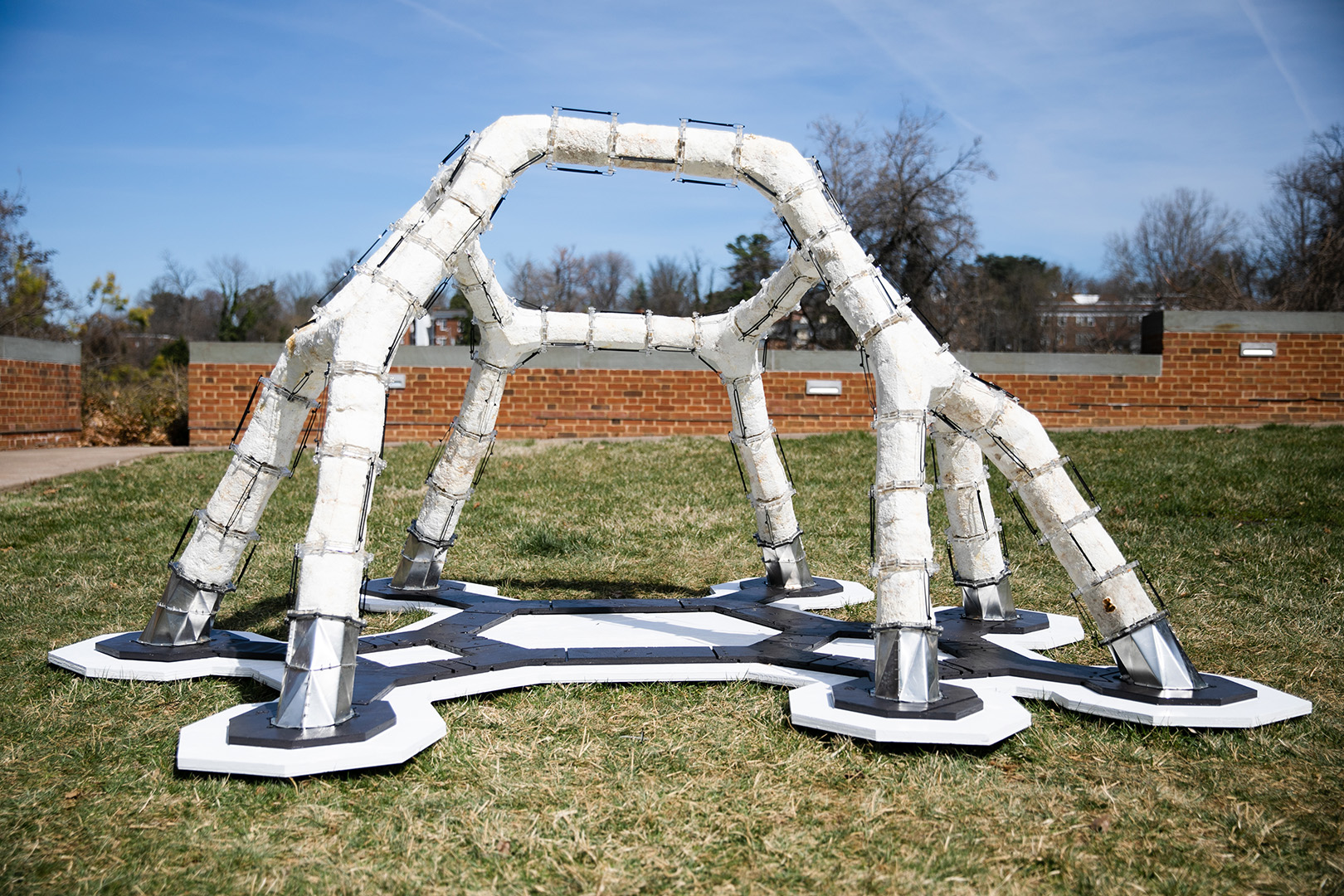
Ali Ghazvinian is an Assistant Professor of Architecture at Texas Tech University's Huckabee College of Architecture, specializing in Advanced Building Technology and Design. He holds a Ph.D. in Architecture from Penn State University, an M.S. in Architecture from the University of Tehran, and a B.S. in Civil Engineering from the University of Tehran. Education: Ph.D., Architecture, Penn State University M.S., Architecture, University of Tehran B.S., Civil Engineering, University of Tehran His research investigates the interplay of form, matter, and performance in architecture through sustainable materials innovation. Focusing on mycelium-based composites and lightweight structures, he develops novel fabrication techniques that integrate biological processes with architectural design. His work bridges material science, computational design, and structural engineering to advance eco-friendly construction solutions. Recent publications (2019-2024) demonstrate consistent innovation in mycelium composites, covering material properties, structural implementations, and sustainable fabrication. Key contributions include load-bearing spatial structures, reclamation of waste materials, and computational design frameworks that optimize bio-composite performance. Scientific Awards: AIA Upjohn Research Initiative SOM Foundation Prize Distinguished Doctoral Researcher Medal at Penn State University Dr. Ghazvinian has secured competitive research grants including the AIA Upjohn Research Initiative and SOM Foundation Prize. His interdisciplinary collaborations with biologists, material scientists, and engineers have produced exhibited works like the Biomaterial Building Expo (University of Virginia, 2022) and publications in the Journal of Architectural Education and Journal of Green Building. His research utilizes Texas Tech's Digital Fabrication Lab and focuses on advancing mycelium composite applications through bio-welding, additive manufacturing, and structural testing, positioning him at the forefront of sustainable architectural material innovation.
Wendiam Sawadgo is an Assistant Professor & Extension Economist at Auburn University's Department of Agricultural Economics & Rural Sociology. His research focuses on agricultural marketing, soil health economics, conservation practices, local food systems, technology adoption, and risk management. Ph.D. in Economics, Iowa State University B.S. in Economic Sciences, Washington State University His recent research explores agri-food system transformations, trade policy impacts, and sustainable agricultural practices. Articles span topics including biochar economics, cover crop policies, and market volatility linkages between energy and agriculture sectors. Based in Comer Hall at Auburn University, he serves statewide as an extension economist. His work combines empirical analysis with policy evaluation, particularly in the Midwest's agricultural context.
Assoc. Prof. Dr. Songül KESEN is a leading academic in Food Chemistry and Plant Oil Technology at Gaziantep University 's Naci Topçuoğlu Vocational School. With a doctorate in Food Engineering from Çukurova University (2014), she has published extensively on olive oil composition, aroma profiling, and food adulteration detection. PhD in Food Engineering (2014), Çukurova University MSc in Food Engineering (2001), Gaziantep University Her research focuses on food authenticity , chromatographic analysis , and bioactive compounds in plant oils . She pioneered studies on aroma-active molecules in Turkish olive oils and microencapsulation of olive oil . Key articles (2025–2014) explore fatty acid variation , GC-MS olfactometry , and nutritional impacts of processing . She has received 8 TÜBİTAK Publication Incentive Awards (2013–2018) for her contributions. Scientific Awards TÜBİTAK UBYT Award 2018 (x2) TÜBİTAK UBYT Award 2017 (x2) TÜBİTAK UBYT Award 2014 (x3) TÜBİTAK UBYT Award 2013 Advising PhD Student: Saad Ibrahim Yousif (2018) Master's Student: Keveser Batmanlı (2022)
Michael Hicks is a Professor at Delft University of Technology (TU Delft) in the Civil Engineering & Geosciences school, specializing in Geo-engineering . His research focuses on geotechnical risk assessment, soil variability, and advanced numerical methods like the Material Point Method (MPM) to model slope failures, earthquake simulations, and soil-structure interactions. Editorial board member for Géotechnique , Georisk , and Computers and Geotechnics (2019) Keynote speaker at workshops on slope failure modeling (2018) Active in public engagement about flood risk management (2017–2018) His work addresses challenges in soil heterogeneity, dynamic boundary conditions, and reliability-based design for infrastructure. Notable contributions include developing probabilistic MPM frameworks and machine learning tools for CPT data interpretation, with applications in earthquake resilience and radioactive waste repository safety. Recent publications highlight innovations in 3D slope stability analysis, nonlocal soil deformation modeling, and thermomechanical interface behavior under cyclic loading. Collaborations span academia and industry, focusing on improving numerical accuracy and understanding failure mechanisms in geotechnical systems.
Kemal Celik is an Assistant Professor of Civil Engineering at New York University Abu Dhabi (NYUAD) and holds a Global Network Assistant Professor appointment at New York University Tandon School of Engineering. He directs the AMBER Lab , focusing on sustainable construction materials and building energy efficiency. PhD in Civil and Environmental Engineering from University of California, Berkeley (2015) MS and BS in Civil Engineering from Istanbul University His research spans multi-scale material characterization, 3D printing of cementitious composites, carbonation processes for CO2 sequestration, and hybrid simulation methods for daylighting optimization. Current trends include lunar regolith simulants for space construction and low-carbon cement technologies. Scientific Awards: Outstanding Graduate Student Instructor Award, UC Berkeley (2013-14) Outstanding Paper Award, SCMT3 Conference, Kyoto (2013) UC Berkeley Conference Grant Ministry of National Education of Turkey Scholarship TUBITAK Fellowship
Vincenzo Maria Sglavo is a Full Professor of Materials Science and Technology at the Department of Industrial Engineering , University of Trento , Italy. He coordinates the Doctoral Program in Industrial Innovation (M.D. 45/2013) and has held academic appointments at The Pennsylvania State University (Postdoctoral Fellow, 1993-1994) and as Adjunct Professor there (2001). His career spans over three decades, including roles as Assistant Professor (1989-1999) and Associate Professor (1999-2018) at the University of Trento. Education: Master’s in Materials Engineering (cum laude), University of Trento (1988) Research Interests focus on glasses and ceramics , with expertise in fatigue and fracture mechanics , chemical strengthening , high-strength ceramics , flash and cold sintering , solid oxide fuel cells (SOFC/SOEC), and 3D printing of inorganics . His work bridges fundamental material behavior and industrial applications, particularly in energy, construction, and biomedical fields. Recent publications highlight innovations in ultrafast high-temperature sintering for ceramics, 3D-printed alumina , alkali-activated limestone for construction, and plasma-assisted ammonia synthesis . He explores entropy-stabilized composites, glass joining techniques, and iron speciation effects in aluminosilicates. Scientific Awards include the AIMAT Prize (1996) AIAS Prize (2000) Outstanding Reviewer Award, Scripta Materialia (2019) Pfeil Award (2022) Nanomaterials 2023 Best Paper (Second Award) Fellow, European Ceramic Society (2023) Advising and Grants: He has advised 34 PhD students and over 100 Master’s theses , managing 50+ research projects funded by NATO, the EU, MUR, and private companies. His editorial roles include Associate Editor for the Journal of the American Ceramic Society and Frontiers in Ceramics . Labs and Teams: He collaborates with institutions like the Joint Research Centre (EC) , Universidade de San Carlos , and Instituto de Cerámica y Vidrio . His work integrates academic research with industrial consultancy, addressing technical challenges in ceramics, glass, and sustainable materials.