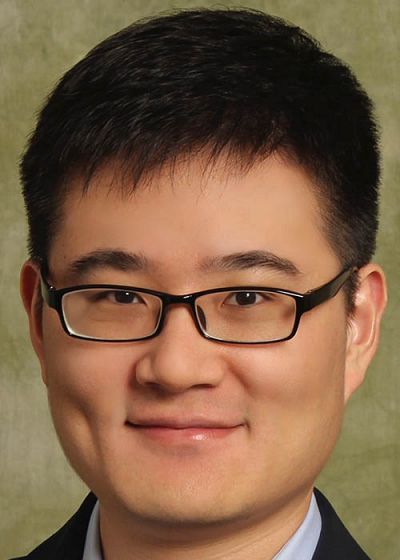
Pierre Maier is a Researcher at the University of Duisburg-Essen , affiliated with the Faculty of Computer Science and the Information Systems and Integrated Information Systems department. His research explores the intersection of information systems and software languages, with a focus on multi-level modeling (MLM), natural language generation (NLG), and the application of large language models (LLMs) in organizational problem-solving. Maier's work investigates automation techniques to enhance the usability of multi-level software languages and addresses challenges in transitioning from traditional two-level languages. He supervises theses on topics like Machine Learning-Assisted Domain Modeling , LLM-Driven Semantic Matching , and Flexible Modeling , reflecting his interest in bridging conceptual modeling with AI advancements. His recent publications analyze the integration of generative language models with UML, the evolution of low-code platforms, and the role of multi-level modeling in improving software artifacts. Maier teaches courses in Object-Oriented Modeling , Robotic Process Automation , and Data Integration , combining technical rigor with practical applications for enterprise environments.
Pedro Henrique Luz de Araujo is a member of the Faculty of Computer Science affiliated with the Research Group Data Mining and Machine Learning . His work focuses on Natural Language Processing , Language Modeling , and Behavioral Learning , particularly in Brazilian legal text domains. He has contributed to advancements in named entity recognition , hate speech detection , and specification-driven AI systems . Active in 2022-2025 with publications in PLoS ONE and top NLP conferences Organized the KONVENS 2024 conference Research emphasizes LLM calibration , multimodal classification , and domain-specific datasets His recent publications show expertise in large language models (2025: persona effects; 2024: specification overfitting, text-guided image clustering), NER techniques (2024), and legal document processing (2023: multimodal classification; 2020: VICTOR dataset, LeNER-Br).
James Martin is a Professor of Computer Science at the University of Colorado at Boulder and a Fellow in the Institute of Cognitive Science. He holds a B.S. in Computer Science from Columbia University and a Ph.D. in Computer Science from the University of California at Berkeley. His research focuses on computational semantics, particularly how languages convey meaning to humans and computers, with a specific emphasis on metaphor processing and non-literal language analysis. He co-authored the widely used textbook Speech and Language Processing (3rd edition in progress), and his work extends to applications in healthcare and education through projects like the TalkMoves dataset analyzing classroom discourse. Current research includes cross-document event coreference resolution, AMR parsing tools (e.g., X-AMR), and AI-driven educational systems via the Institute for Student-AI Teaming (iSAT). Education History: Bachelor of Science in Computer Science, Columbia University Doctor of Philosophy (Ph.D.) in Computer Science, University of California, Berkeley Research Interests: Natural Language Processing (NLP) and Computational Linguistics Metaphor Analysis in Language and AI Semantic Parsing and Knowledge Representation AI Applications in Healthcare and Education Dialogue Systems and Classroom Discourse Analysis Recent Work Trends: His 2023-2024 publications emphasize multimodal NLP, cross-document semantic analysis (e.g., event coreference resolution), and AI tools for education (e.g., TalkMoves application for teacher feedback). NSF-funded National AI Institutes collaborations highlight strategic technology development. No scientific awards explicitly listed, though his textbook and research contributions are widely recognized in the field. Currently not actively recruiting PhD students. Labs/Teams: Core contributor to NLP initiatives at University of Colorado, particularly in semantic parsing and educational AI through iSAT. Involved with projects like the TalkMoves dataset and AMR annotation tools (CAMRA, X-AMR).
Farhad Nooralahzadeh is affiliated with the ZHAW School of Engineering at Zurich University of Applied Sciences (ZHAW), where he holds a Researcher position within the Intelligent Information Systems department. His primary role involves leading and co-leading key projects such as DataGEMS (Horizon Europe), Reliable Multi-lingual Open Data Exploration, and INODE4StatBot.swiss. He has contributed to advancing natural language processing (NLP) and open data exploration systems. Education: Not explicitly stated in the provided text. His research focuses on multilingual NLP applications, knowledge graph systems, and AI-driven data exploration tools. Recent work includes evaluating prompt engineering techniques for knowledge graph question answering and developing bilingual open data exploration frameworks like StatBot.Swiss. Projects emphasize cross-lingual data accessibility and automated SQL translation from natural language queries. Notable contributions include peer-reviewed publications in Frontiers in Artificial Intelligence and the Association for Computational Linguistics conference. He actively collaborates with institutions like the EU Horizon programs and maintains an ORCID profile (0000-0002-9053-0894). His work bridges theoretical AI advancements with practical applications in data management and linguistic diversity, positioning him as a key figure in intelligent information systems research.
Dr. Daniel Lewis Wuebben is an Assistant Professor at the Comillas Pontifical University's School of Engineering (ICAI), affiliated with the Institute for Research in Technology (IIT). He holds a Ph.D. in Literature from the City University of New York Graduate Center and has prior faculty experience at the University of California Santa Barbara and the University of Nebraska Omaha. His research bridges Energy Humanities, Climate Science Communication, and Ecocriticism, with a focus on public engagement with energy transitions and critical utopian studies. He leads the WIRESEED 360 project, exploring immersive technologies like XR/VR for science communication. Key contributions include analyzing energy justice in South American policy, framing climate discourse in Bill Gates and Greta Thunberg's messaging, and developing theoretical models for extended reality applications. He has presented at 28 international conferences, published 10+ first-author articles, and holds an H-index of 5. Awards include a Marie Curie Fellowship (2020) and ANECA's Contratado Doctor recognition. His work emphasizes citizen energy communities, critical energy utopias, and interdisciplinary approaches to science dissemination. Wuebben is involved in the ISGAN Academy and Communications Working Group, focusing on global smart grid advancements. He co-founded the XR Journalism Lab, advancing immersive journalism training. His research integrates humanities perspectives with technical challenges, addressing societal dimensions of energy transitions through public engagement and policy analysis.
Zhaohan Xi is an Assistant Professor in the School of Computing at Binghamton University, SUNY, focusing on AI security/privacy and clinical AI in the context of large language models (LLMs). His research spans cybersecurity strategies, healthcare applications, and advanced AI techniques like graph learning and AutoML. He holds a PhD from Pennsylvania State University, with a visiting scholar stint at Stony Brook University's Computer Science Department. Education: PhD: Pennsylvania State University (2020–2024) Visiting Scholar: Stony Brook University (2023–2024) Master’s: Lehigh University (2016–2018) Bachelor’s: Nanjing University of Aeronautics and Astronautics (2012–2016) Research interests include: AI Security/Privacy: Backdoor attacks, adversarial defense, and LLM vulnerabilities Clinical AI: Cardiologist-level diagnostics, drug repurposing, and ECG analysis Cybersecurity: Threat hunting, red/blue teaming, and threat intelligence Graph Learning: Knowledge graphs, GNNs, and decision-making systems Recent publications emphasize LLM robustness (e.g., standardized testing benchmarks), adversarial knowledge extraction (e.g., stealing knowledge graphs via APIs), and cybersecurity applications (e.g., LLMs as threat intelligence tools). His work bridges theoretical AI security with practical healthcare and defense systems. Notable awards include ICLR Notable Reviewer (2025) and Binghamton’s Outstanding Service and Support Award (2025) . He has served as a NSF panelist (AI/cybersecurity) and reviewer for venues like ARR/EMNLP, ACL, and KDD. Internships include roles at Sony AI (2024), Microsoft (2023), and Uber (2022), focusing on AI research and software engineering. No advising details or grants are explicitly mentioned in the provided texts.
Ryan Anthony Marinelli is a Doctoral Research Fellow at the Department of Informatics, Faculty of Mathematics and Natural Sciences, University of Oslo, specializing in digital security with a focus on AI-cybersecurity intersections. His work addresses critical vulnerabilities in emerging technologies while contributing to institutional research objectives in secure computing. Marinelli's research spans AI Security , Adversarial Machine Learning , and Responsible AI Development , examining prompt injection attacks, knowledge leakage in large language models, and cryptographic deployment challenges. His methodology integrates causal tracing , reinforcement learning , and chain-of-thought analysis to develop detection frameworks and optimization strategies for real-world security applications. Analysis of his 2023-2025 publications reveals concentrated expertise in LLM security assessment, with recurring themes of societal risk mitigation and ethical AI development. His work demonstrates technical depth in homomorphic encryption optimization and password leakage evaluation, while maintaining strong connections to practical cybersecurity implementations through IEEE conference contributions and arXiv preprints. As part of UiO's Department of Informatics research ecosystem, Marinelli collaborates across multidisciplinary teams including cybersecurity specialists and AI researchers. His affiliation with the Faculty of Mathematics and Natural Sciences positions him within Norway's leading hub for digital security innovation, though specific laboratory structures aren't detailed in the source material.
Karin Stolpe is a Senior Associate Professor at Linköping University's Department of Behavioural Sciences and Learning (IBL), affiliated with the Division of Learning, Aesthetics, Natural Science (LEN). Her work focuses on science and technology education, particularly addressing AI integration in classrooms, teacher professional development, and cognitive aspects of programming instruction. Her research explores topics like AI ethics in education, multimodal learning strategies, and the role of metaphors in teaching abstract concepts. Current projects include investigating AI literacy for educators and analyzing spatial gestures in programming lectures. She contributes to the Technology and Science Education Research (TESER) unit, emphasizing evidence-based teaching methods. Recent publications highlight her work on technology teachers' pedagogical content knowledge, ethical challenges posed by AI tools in STEM classrooms, and visual programming's role in interdisciplinary learning. Her articles often bridge cognitive semiotics with educational practice, offering frameworks for modernizing curricula and enhancing teacher preparedness for technological advancements.
Professor Tao Xiang holds the position of Professor of Computer Vision and Machine Learning at the University of Surrey, where he is also a Distinguished Chair. He leads the Body Behaviour Group at Samsung AI Centre, Cambridge. His research focuses on computer vision, including video surveillance, activity analysis, and sketch-based recognition, alongside machine learning domains like zero-shot learning and domain generalization. He has published over 160 papers (h-index 60) and secured £3.9M+ in grants. Key affiliations include the Faculty of Engineering and Physical Sciences and the Centre for Vision, Speech and Signal Processing (CVSSP). His work spans generative models for sketches, 3D shape retrieval from VR sketches, and virtual try-on systems. Notable contributions include the FS-COCO dataset for scene sketches and advancements in temporal action detection via vision-language prompting. Research interests emphasize cross-modal tasks (e.g., SBIR/FG-SBIR), domain adaptation, and transformer-based vision models. Collaborations with industry (Samsung AI) and foundational contributions to datasets (e.g., VR sketch collections) underscore his interdisciplinary impact. Future work includes creative object generation (PartCraft), explainable AI for sketches, and scalable generative models.
Christina Schneegass is a researcher at Delft University of Technology's Faculty of Industrial Design Engineering, specializing in Human-Centered Design and Perceptual Intelligence. She holds a Ph.D. in Media Informatics and Human-Computer Interaction from Ludwig-Maximilians University Munich, alongside M.Sc. and B.Sc. degrees in Applied Cognition and Media Sciences from the University of Duisburg-Essen. Her work focuses on cognitive processes in Human-Computer Interaction (HCI), particularly in educational technology, cognitive augmentation, and neurotechnology. She has explored topics like AR-enhanced TV experiences, chatbot response delays, and haptic interface design. Her research emphasizes balancing technological innovation with cognitive enhancement, leveraging neurotechnologies to understand user perception. She teaches courses such as Cognitive and Psychological Design and Cognitive Ergonomics . Schneegass collaborates on projects like Dark Haptics (2025) and Broadening the Mind (2024), advancing interactive system design and neurotechnology applications.
James Allan is a Distinguished Professor and Associate Dean of Research & Engagement in the Manning College of Information and Computer Sciences at the University of Massachusetts Amherst. He joined the Computer Science Department in 1994 and has been a Professor since 2008. He also directs the Center for Intelligent Information Retrieval (CIIR) and holds a part-time joint appointment as a GI-CoRE Affiliated Professor with the Faculty of Information Science and Technology at Hokkaido University, Japan. Dr. Allan received his PhD and MS in Computer Science from Cornell University in 1995 and 1991, respectively, and an AB in Mathematics from Grinnell College in 1983. Prior to his academic career, he spent five years as a systems programmer/analyst at Dickinson College and co-founded a startup selling email software in the 1980s. Professor Allan's research focuses on information retrieval, with particular emphasis on interactive information retrieval systems, automatic information organization, and evaluation methodologies. His work explores how novelty can be incorporated into retrieval algorithms, techniques for querying across languages, and methods for recognizing controversial or misleading information in text on the internet. His recent work has expanded into understanding large language models for information retrieval tasks, including mechanistic analysis of ranking LLMs and explainability in search results. His research has significant implications for improving user experience in search systems and addressing challenges in misinformation detection. Dr. Allan has received numerous prestigious awards, including Best Paper awards at SIGIR in 2001 and 2006, a Best Student Paper from CHIIR in 2017, and Best application paper from ECIR in 2019. He received the SIGIR Test of Time Award for a 1998 paper on event detection and tracking and the ECIR Test of Time Award for a 2009 paper on topic models in IR. In 2021, he was elected to the SIGIR Academy and elevated to Fellow of the ACM. He has served on the CRA Board of Directors since 2018, including as Treasurer. As Associate Editor of ACM's Transactions on Information Systems (TOIS) and Elsevier's Information Processing and Management (IPM), and as a member of the editorial board of Foundation and Trends in Information Retrieval, Dr. Allan has significantly shaped the field. He has served on organizing and program committees for major conferences including SIGIR, CIKM, and WSDM, and chaired the SIGIR organization. His leadership extends to directing the CIIR, which has been instrumental in shaping the International Conference on the Theory of Information Retrieval (ICTIR). The Center for Intelligent Information Retrieval (CIIR), which Dr. Allan directs, is a leading research center focused on advancing information retrieval technologies. The center has been at the forefront of research in interactive information retrieval, cross-lingual information retrieval, and novel evaluation methodologies. Under his leadership, CIIR researchers have made significant contributions to understanding user behavior in search systems and developing more effective and transparent retrieval algorithms.
Professor Ian Harris is a faculty member in the Department of Computer Science at the University of California, Irvine (UCI), affiliated with the School of Information and Computer Sciences. His research focuses on secure hardware/software systems, natural language processing for security, and AI-driven solutions for cybersecurity challenges. He holds a B.S. (1990), M.S. (1992), and Ph.D. (1997) in Computer Science from the Massachusetts Institute of Technology and UC San Diego, respectively. His work spans AI/ML, natural language understanding, cybersecurity, and privacy. Key projects include developing cyber test ranges for IoT security, detecting social engineering attacks via scam signatures, and creating empathy-driven conversational models for mental health support. Notable achievements include UCI's fourth-place finish in the eCTF competition (2022) and the Embedded Security Team's 11th global ranking (2024). He also contributes to diversity initiatives in tech, emphasizing equitable access to STEM fields. Recent publications highlight advancements in adversarial AI defense (e.g., jailbreak attack detection) and distributed LLM inference systems for mobile devices. His research bridges theoretical computer science with practical applications in embedded systems security and healthcare technology.
Weitong Cai is a Visiting Professor at Queen Mary University of London's School of Electronic Engineering and Computer Science. He specializes in teaching advanced topics like Deep Learning and Computer Vision at the postgraduate level. His research focuses on computer vision applications, including video moment retrieval, image segmentation, and cross-modal learning. He has contributed to advancements in temporal feature refinement, semantic localization, and robust image super-resolution techniques. Research Interests: His work bridges theoretical machine learning methodologies with practical applications in multimedia systems and dynamic scene analysis. Key areas include: Video moment retrieval using hybrid learning frameworks Camouflaged object segmentation via prompt-agnostic methods Multi-domain adaptation in video analysis Efficient screen content coding Publication Trends: Recent work emphasizes mitigating modality imbalance in cross-modal tasks (2025), improving temporal localization accuracy (2024), and robust image processing under complex degradations (2020-2019). His research spans both foundational algorithms and real-world applications like RGB-D SLAM in dynamic environments. Advising & Grants: No specific grants or advisee名单 listed. Active in collaborative research with industry through the School's qTech Programme. Labs/Teams: Participates in the School's Computer Vision and Machine Learning research groups, contributing to the qTech innovation ecosystem.
Dr. Jat Singh is a Research Professor at the University of Cambridge's Department of Computer Science and Technology (Computer Laboratory), leading the Compliant and Accountable Systems research group. His interdisciplinary work bridges computer science and law, focusing on technology's legal and regulatory compliance, governance of AI/ML systems, and ethical data practices. He co-chairs the Trust & Technology Initiative and is a Fellow of the Alan Turing Institute. Education: PhD in Computer Science (Distributed Systems & Security) from the University of Cambridge, with prior legal studies. Professional background includes roles in IT services, a medical IT startup, and consulting, emphasizing governance-intensive sectors like healthcare and judiciary. Research interests include accountability in AI, IoT compliance, data justice, and ethical algorithmic systems. Notable projects include RAInS (accountability in AI), legally-compliant IoT frameworks, and data governance in modern slavery contexts. His work explores transparency, fairness, and auditability in technology. Scientific Awards: EPSRC Fellowship and Alan Turing Institute Fellowship. Active in tech-policy advising, collaborating with governments, regulators, and civil society. Teaching: Leads the Technology, Law & Society module in the Advanced Computer Science MPhil. Supervises student projects on algorithmic accountability, security, and societal impacts of technology. Labs/Teams: Heads the Compliant & Accountable Systems Group and contributes to the Trust & Technology Initiative, advancing interdisciplinary research on technology's societal implications.
Daniel Bates is a Senior Research Associate at the University of Cambridge's Department of Computer Science and Technology. His research focuses on Computer Architecture and Machine Learning, emphasizing co-optimization of hardware and software. Key projects include the Loki manycore processor (with 128 cores fabricated in 2018) and the Muntjac RISC-V multicore processor, designed for simplicity and extensibility. Bates explores energy-efficient machine learning optimizations like dynamic gating and network architecture search. He teaches courses including Part IA Algorithms, Part IB Computer Architecture, and Part II Advanced Computer Architecture. His supervision style prioritizes student feedback and clarity, offering tailored support and prompt communication. Bates has contributed to over a dozen peer-reviewed publications since 2013, addressing topics from neural network security to embedded system optimization. His work bridges theoretical research and practical hardware implementation, with a focus on open-source contributions like the Muntjac processor. He actively collaborates with industry through the University's research initiatives, emphasizing real-world applications of computer architecture advancements.