Paweł W. Woźniak is a Professor and Head of Research Unit at TU Wien, with prior roles including Associate Professor at Chalmers University of Technology, Assistant Professor at Utrecht University, and Postdoctoral Fellow at the University of Stuttgart. Current: Professor & Head of Research Unit, TU Wien Former: Associate Professor, Chalmers University of Technology Former: Assistant Professor, Utrecht University Former: Postdoctoral Fellow, University of Stuttgart Education PhD in Human-Computer Interaction, Chalmers University of Technology (2016) Research Interests focus on the intersection of technologies, sport, and wellbeing. He investigates everyday experiences of physical activity to design technologies that enhance wellbeing, with expertise in personal informatics, multi-surface interactions, sensory augmentation, and the ethical implications of interactive systems. His work includes building devices for sports, exploring VR for emotional regulation, and understanding user apprehensions about AI and mixed reality. Scientific Awards include paper recognitions at CHI, MobileHCI, and EICS, alongside leadership roles in academic conferences. Leadership involves heading a research unit at TU Wien and organizing workshops in HCI.
Bin ZHU is an Assistant Professor of Computer Science at Singapore Management University's School of Computing and Information Systems. Previously worked as a Postdoctoral Researcher at University of Bristol under EPSRC Visual AI Program Grant with Prof. Dima Damen. PhD in Computer Science (2021) - City University of Hong Kong MSc and BSc from Zhejiang University and Southeast University Research focuses on Human Centered Multimedia Computing with key areas: Cross-modal retrieval and Multi-modal Large Language Models Egocentric Video Understanding and Generative AI AI for Healthcare and Wellness Informatics Digital Transformation through Multimedia Systems Active in publishing at top venues (ICCV, CVPR, AAAI, ACM MM) with specialization in Visual Instruction Fine-Tuning and Adapter Modules. Recent work includes HD-EPIC dataset development and Dual-LoRA framework for efficient multimodal adaptation. Contact: binzhu@smu.edu.sg | bin.zhu@smu.edu.sg
Lizhong Chen is a Professor in the School of Electrical Engineering and Computer Science at Oregon State University and a core AI faculty member in the Collaborative Robotics and Intelligent Systems (CoRIS) Institute. He leads the STAR Lab which focuses on computing systems and AI applications with emphasis on computing efficiency across various computing platforms from embedded devices to supercomputers. Ph.D., Computer Engineering, University of Southern California, 2014 M.S., Electrical Engineering, University of Southern California, 2011 B.S., Electrical Engineering, Zhejiang University, 2009 Chen's research focuses on efficient computer systems (GPUs, accelerators, HPCs, IoT devices) and their applications in machine learning and natural language processing, especially large language models. His work spans machine learning accelerators, GPU architecture, AI-assisted design for computer architecture, and energy-efficient computing systems. He has made significant contributions to NoC (Network-on-Chip) power-gating research and developed the Agate simulator for simulating NoC power-gating. His recent publications (2023-2025) show a strong focus on large language models, particularly for simultaneous translation tasks, Kolmogorov-Arnold networks, and efficient model architectures. His work bridges computer architecture design with AI applications, creating synergies between hardware efficiency and machine learning performance. Scientific Awards: NSF CRII Award (2016) NSF CAREER Award (2018) Best Paper Nomination at IEEE NAS (2018) Best Paper Runner-up Award at HPCA (2020) Chu Kochen Award from Zhejiang University IEEE HPCA Hall of Fame (2020) Chen has served as an Associate Editor of IEEE Transactions on Computers and as program committee member for top computer system and machine learning conferences. He is the founder and organizer of the Annual International Workshop on AIDArc (AI-assisted Design for Architecture). His research is supported by multiple grants from NSF, NIH, Department of Energy, and the Northwest-AI-Hub supported by the CHIPS and Science Act. He teaches courses in computer architecture, high-performance computing, and specialized topics in AI accelerators and GPU architecture. As director of the STAR Lab, Chen leads research on computing efficiency across the spectrum from embedded and mobile devices to supercomputers and data centers. The lab's recent focuses include machine learning accelerators, GPU architecture, applications of AI in architecture designs, and improving the computing efficiency of machine learning and natural language processing models.
Zhichao Xu is a researcher at AWS Bedrock AI, specializing in understanding language models' mechanisms and applications. He holds a PhD in Computer Science from the University of Utah, advised by Prof. Vivek Srikumar and Prof. Bei Wang. His work focuses on deep learning methods in NLP and Information Retrieval, including retrieval-augmented generation, in-context learning, and decoding techniques. Education: PhD in Computer Science, University of Utah (2020-2024) MS in Computer Science, Rutgers University (2018-2020) BS in Applied Statistics, Shanghai University of Finance and Economics (2014-2018) Research Interests: Zhichao explores the intersection of NLP and IR, emphasizing robust and interpretable systems. Key areas include: retrieval-augmented generation, LLM compression, ethical AI, and explainable recommendation. His work bridges theoretical advancements with practical applications in search, dialogue, and fairness. Papers Trends: Recent publications highlight innovations in model architectures (e.g., CSPLADE for sparse retrieval), safety evaluation of compressed LLMs, and novel applications of state space models for text reranking. He also contributes to foundational surveys like the A Survey of Model Architectures in Information Retrieval . Awards: Distinguished Paper Award at ISSTA 2023 Honorable Mention at SIGIR-AP 2023 Teaching & Service: Taught Machine Learning, Data Mining, and Discrete Structures at the University of Utah. Served as a reviewer for top conferences (ACL, EMNLP) and journals (TOIS). Active in organizing workshops on LLM interpretability and fairness.
Dr. Hussain Ahmad is an Assistant Professor (Lecturer) at the School of Computer and Mathematical Sciences, University of Adelaide, Australia. His research focuses on Cyber Security, Software Engineering, and Generative AI, with a particular emphasis on industry-driven innovation and real-world applications. He collaborates with prestigious institutions such as the Department of State Development South Australia, Defence Science and Technology Group Australia, and Cisco. Dr. Ahmad completed his PhD at the University of Adelaide, where he explored enhancing C2 network security, software vulnerability management, and scalable microservice architectures. He has led over 15 R&D projects, resulting in 12 peer-reviewed publications in top-tier venues like CORE A* and A-ranked conferences. His teaching philosophy integrates industry relevance, continuous feedback, and cutting-edge content, ensuring students gain practical skills aligned with modern IT demands. He advises students on research projects and maintains a strong focus on cloud-native systems, self-adaptive frameworks, and AI applications. Key contributions include frameworks like Smart HPA for resource-efficient auto-scaling and Co-Evolutionary Defence for Active Directory systems. His work bridges academia and industry, addressing challenges in cyber situational awareness, DevOps practices, and large-scale system resilience.
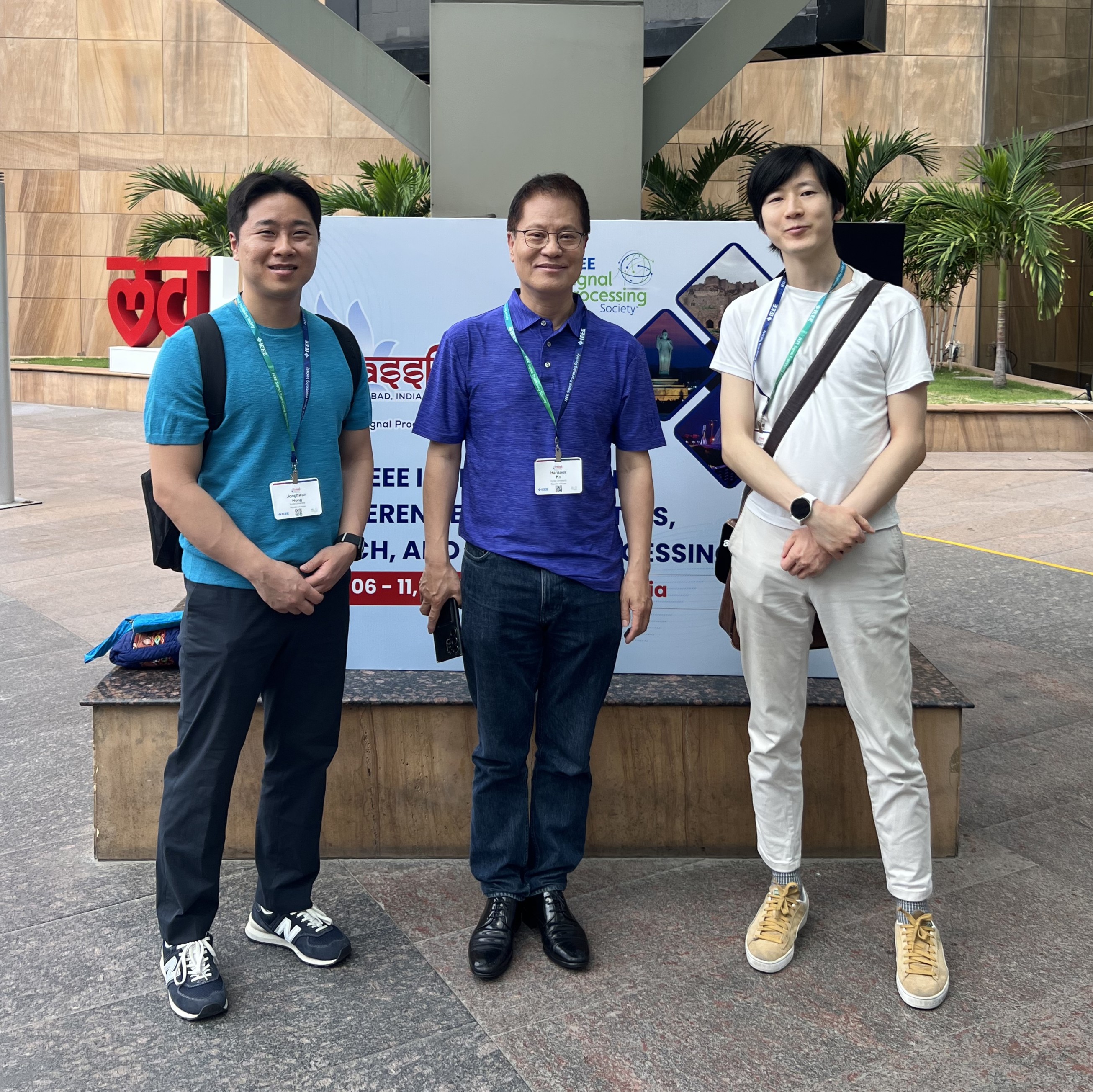
Hanseok Ko is a Professor and Newton-Bennett Endowed Chair of Engineering at The Catholic University of America's College of Engineering, Physics, and Computing. Internationally recognized for his expertise in artificial intelligence, signal processing, and intelligent systems, he leads the Multimodal AI Laboratory and has authored over 700 publications with 83 patents. His work bridges acoustics, speech, and image processing with human-machine interaction for robotics and healthcare. Ph.D. in Electrical Engineering, The Catholic University of America M.S. in Systems Engineering, University of Maryland, College Park M.S. in Electrical and Computer Engineering, The Johns Hopkins University B.S. in Electrical Engineering, Carnegie-Mellon University Dr. Ko's research emphasizes secure and efficient AI systems, including innovations in red-teaming large language models and streamlined scene graph generation architectures. His recent work aligns with Catholic University's strategic focus on principled artificial intelligence development. At ICASSP 2025, he presented two groundbreaking papers while serving as a member of the IEEE SPS Conference Board and General Chair for IEEE ICASSP 2024. His leadership extends to establishing an interdisciplinary AI research center at Catholic University. Fellow of the International Speech Communication Association (2023) Fellow of the Institution of Engineering and Technology (2014) IEEE Signal Processing Society Distinguished Lecturer (2025–2026) Former President of the Acoustical Society of Korea Over his career, Dr. Ko has supervised 43 Ph.D. and 110 M.S. graduates. His lab's research is funded by national agencies and industry partners, focusing on multimodal signal processing, generative-AI, and applications in robotics and healthcare.
Leona Chandra Kruse is a Professor at the Department of Information Systems, University of Agder. Her research explores the intersection of technology and human experience in the digital age, focusing on designing systems for support, enjoyment, and security. Research areas: Human-Computer Interaction, Digital Transformation, Design Science Research Editorial roles: Senior Editor (European Journal of Information Systems), Special Issue Editor (Decision Support Systems) Conference leadership: Program Chair for WI 2025, Track Chair for ICIS 2025 Her work examines both legacy and emerging technologies including decision support systems, digital companions, non-fungible tokens (NFTs), and immersive environments. She investigates innovative applications such as virtual wine tasting and digital offering design for hybrid experiences. Recent research trends include: Temporal awareness in hybrid work environments Token economy applications in creative industries AI ethics and human-AI collaboration Phygital experience design Crisis informatics during VUCA situations Scientific recognition includes: AVA Research Award for Young Researchers (2024) CHIRA Best Paper Honorable Mention (2024) European Journal of Information Systems Article of the Year (2018, 2024) SIGBIT Best Paper on Web3 (2023) Academic service includes: Executive Committee, AIS Special Interest Group in Pragmatism Doctoral Consortium Chair, DESRIST 2024 Program Chair, DESRIST 2021 Special Issue Editor for top journals
Aditya Sharma is a researcher at the University of California Santa Barbara , focusing on Natural Language Processing , Computer Vision , and Artificial Intelligence . His work bridges vision-language models, medical AI evaluation, and knowledge graph reasoning. PhD : Advancing AI Understanding in Language & Vision (UCSB, 2024) Research Interests: • Vision-Language Models for geometric reasoning and mixed reality • Medical LLM evaluation and hallucination reduction • Temporal knowledge graph reasoning and multimodal systems Article Trends: Recent publications emphasize vision-language integration (e.g., GeoCoder, OCTO+), LLM reliability in medical contexts (MedHELM), and temporal reasoning (TwiRGCN). He explores applications in dark web security , healthcare diagnostics , and energy-efficient computing .
Keungoui Kim serves as an Assistant Professor in the Science, Technology, and Policy program within the Humanities, Arts, and Social Sciences Division at Underwood International College, Yonsei University. His research integrates social science theory with advanced computational methodologies to address complex policy challenges through interdisciplinary frameworks. Dr. Kim's scholarly focus spans Science and Technology Policy, Computational Social Science, and Applied Artificial Intelligence, with particular expertise in network theory and evolutionary economic geography. His work examines innovation systems, technological capability development, and sustainable mobility transitions using cutting-edge AI techniques including graph convolutional networks and prompt engineering. The Social Science and Applied Artificial Intelligence (SAAI) Lab he directs pioneers methodological integration between social science foundations and computational approaches. His recent publications demonstrate significant interdisciplinary breadth, with 2024-2025 works spanning innovation management (patent quality, firm performance), sustainable mobility business models, and specialized AI applications for legal document interpretation and urban transportation systems. Key methodological contributions include station-specific spatial feature integration in graph networks and domain-adapted prompt engineering for technical legal domains. Dr. Kim leads multiple major research initiatives: Quantum Science Collaboration (2025, KE-QSTCC): Advancing Korea-Europe R&D networks in quantum technology Naver WEBTOON Project (2025-2028, IRKOM): Analyzing global content domination strategies STI Policy Research (2025, KISTEP): Examining policy responses to technological hegemony STP Frontier Research (2025-2028, Yonsei): Developing AI methodologies for policy analysis Energy Policy Study (2025, Korea Energy Agency): Assessing US policy shift impacts He directs the Social Science and Applied Artificial Intelligence (SAAI) Lab, which develops computational frameworks combining social theory with statistical modeling and AI to address pressing societal challenges in technology governance and sustainable development.
Nicolas Boulle is an Assistant Professor in Applied Mathematics at Imperial College London's Department of Mathematics within the Faculty of Natural Sciences. His research focuses on the intersection of numerical analysis and deep learning, particularly in discovering mathematical models (e.g., partial differential equations) from data and developing theoretically grounded numerical techniques. Education: DPhil (PhD) in Numerical Analysis from the University of Oxford (2018–2022) Research interests include numerical analysis, operator learning, machine learning, and their applications in solving complex mathematical problems. His work emphasizes data-driven methods for Green’s functions and the development of rational neural networks for enhanced accuracy in deep learning. Recent publications explore topics like dynamic mode decomposition, Koopman operators, and large language models' behavior. He advises PhD students and visiting researchers on projects involving operator learning and neural networks. Boulle contributes to open-source projects such as GreenLearning (for PDE Green’s functions) and RationalNets (rational activation functions in neural networks), hosted on GitHub.
Hans-Georg Fill is a full professor in business informatics at the University of Fribourg, where he leads the Digitalization and Information Systems Group within the Faculty of Management, Economics and Social Sciences. He plays a central role in the Smart Living Lab, a joint initiative of EPFL, HEIA-FR, and the University of Fribourg, focusing on digital transformation and information systems. Prior to his current role, he held academic positions at the University of Bamberg and the University of Vienna and was a visiting scholar at Stanford University, Karlsruhe Institute of Technology, and École Nationale Supérieure des Mines. Research Interests: His primary research lies in conceptual modeling, particularly meta modeling, semantic information systems, and the application of blockchain and smart contracts in enterprise contexts. He also investigates the integration of virtual and augmented reality into enterprise modeling and explores deviceless interaction with information systems. A growing focus of his recent work is the role of large language models (LLMs) in enhancing modeling processes, knowledge representation, and automated enterprise model generation. Publication Trends: His recent publications (2023–2025) reflect a strong emphasis on the intersection of AI and conceptual modeling. Key themes include the application of LLMs in modeling, blockchain-based modeling languages, augmented reality for enterprise systems, and semantic technologies. He frequently publishes in top-tier venues such as ER, CAiSE, EMISAJ, and HICSS, often in collaboration with PhD students and international researchers. Scientific Awards and Recognition: Nominated for Best Paper Award at HICSS'51 (2018) Nominated for Best Paper Award at Modellierung 2016 and 2018 LexisNexis Top 10 Paper Award nomination (2016) Advising and Grants: He advises numerous PhD and Master’s students, including Charuta Pande, Benedikt Reitemeyer, Fabian Muff, and Simon Curty. His research is supported through institutional affiliations and collaborative projects such as the Smart Living Lab. He has also contributed to editorial leadership as co-department editor of BISE and supporting editor-in-chief of EMISAJ. Labs and Teams: He leads the Digitalization and Information Systems Group at the University of Fribourg and is a key contributor to the Smart Living Lab, a multidisciplinary research environment focused on digital innovation in living spaces and enterprise systems.
Dirk H.R. Spennemann is an Associate Professor in Cultural Heritage Management at Charles Sturt University, affiliated with the School of Agricultural, Environmental and Veterinary Sciences and the Gulbali Research Institute. He holds a PhD from the Australian National University and an MA from Johann Wolfgang Goethe Universität, and is a registered postgraduate supervisor. His academic base is at the Albury/Wodonga campus, where he lectures in Cultural Resource Management and Historic Ecology at both undergraduate and postgraduate levels. Research Interests: Dirk is an internationally recognized leader in Micronesian history and heritage, with extensive fieldwork across the Indo-Pacific. He is a pioneering figure in the emerging field of heritage futures , which applies futurist theories to explore how cultural heritage may evolve in contexts such as space exploration, robotics, digital materiality, and generative AI. His work critically examines the interplay between heritage values, management processes, and public engagement. He also investigates sensory and intangible heritage, digital heritage, and the cultural appropriation of Indigenous Australian motifs. His recent publications (2023–2025) reveal a strong trend toward interdisciplinary research at the intersection of heritage, technology, and sensory experience. Topics include the use of social media for citizen science, AI bias in digital content, sensory methodologies for heritage documentation, and the ephemeral heritage of political elections. These works demonstrate a consistent focus on contemporary and emergent forms of heritage, often employing innovative digital and mixed-methods approaches. Partnership Stewardship Award for Cultural Resources, Pacific West Region, US National Park Service (2001) Governor's Humanities Award for Excellence in Research and Publication, Commonwealth of the Northern Mariana Islands (2004) CSU Vice-Chancellor's Award for Teaching Excellence (1995) CSU Vice Chancellor's Award for Research Excellence (1996) Dirk has supervised numerous postgraduate students and has been involved in significant research collaborations with institutions such as the US National Park Service, UNESCO, and the Pacific Islands Museums Association. He has conducted training workshops on conservation techniques and provided technical advice on cultural resource management across the Pacific and Alaska. His research has been supported by extensive publication output—over 400 peer-reviewed papers, 24 books, and 100+ technical reports—and he maintains active engagement with policy and public discourse through media contributions. He is also involved in external advisory roles for heritage preservation in the Marshall Islands and Palau. Dirk leads or contributes to research teams focused on sensory heritage, digital heritage, and heritage futures. His recent datasets and collaborative projects indicate an active research group exploring generative AI, urban cultural landscapes, and multisensory experiences. His work bridges academic research, professional practice, and public engagement, positioning him at the forefront of contemporary heritage studies.
Douglas C. Schmidt is the inaugural Dean of the School of Computing, Data Sciences & Physics at William & Mary, a newly launched academic unit set to begin operations in fall 2025. With over 30 years of experience as an internationally recognized computing expert, he leads efforts to integrate computing, data sciences, and physics into a unified, forward-looking school focused on preparing students for a data-driven world. Dr. Schmidt's academic journey began at William & Mary, where he earned B.A. and M.A. degrees in Sociology, followed by M.S. and Ph.D. in Computer Science from the University of California, Irvine. This interdisciplinary background enables him to bridge liberal arts with technological innovation, advocating for 'humane technologies' that blend ethical reasoning with technical excellence. His research spans decades and focuses on software frameworks, middleware for cyber-physical systems, model-driven engineering tools, and, more recently, prompt engineering techniques to improve large language models. His work has resulted in over 700 publications, co-authorship of more than 10 books, and development of widely used open-source software. Although specific articles are not listed, his scholarly output reflects sustained contributions across software engineering, intelligent systems, and national defense applications. Dr. Schmidt has held significant leadership roles, including Director of Operational Test and Evaluation (DOT&E) for the Department of Defense, Cornelius Vanderbilt Professor of Engineering at Vanderbilt University, Associate Provost for Research, and Co-Director of the Data Science Institute. He also served on the Air Force Scientific Advisory Board and as a Program Manager at DARPA, demonstrating deep engagement with national security and public policy. Throughout his career, he has advanced digital learning, research innovation, and interdisciplinary collaboration. His leadership at William & Mary aims to expand doctoral programs, increase research grant funding, and build a school that unifies computing, data, and physics under a human-centered mission. He has maintained long-term research affiliations with Carnegie Mellon University’s Software Engineering Institute and has also worked in the private sector with companies like Prism Technologies and Zircon Computing. Dr. Schmidt is a sought-after speaker and educator, as evidenced by his Tack Faculty Lecture, 'Surfing the AI Wave: A Human-Centered Approach to Innovation and Ethics.' His vision emphasizes ethical innovation, interdisciplinary integration, and preparing students to lead in emerging technological landscapes.
Adu A. Baffour is an Instructor in the Division of Computing, Analytics, and Mathematics at the School of Science and Engineering, University of Missouri-Kansas City (UMKC). He is actively contributing to teaching and research in emerging areas of artificial intelligence and machine learning. His primary research interests include: Computer Vision Deep Learning Prompt Engineering TinyML These areas reflect his focus on efficient AI systems, particularly in vision-based applications and innovative model prompting techniques suitable for edge computing environments. Mr. Baffour's work intersects with modern challenges in deploying lightweight neural networks and leveraging large language models through effective prompting strategies. Though no publications are listed in the provided text, his technical interests suggest active engagement in applied AI research. He has not been noted to have received any scientific awards at this time. There is no information available regarding student advisement, grants, or leadership in research teams or laboratories.
Dr. Armin Alimardani is a Senior Lecturer in Law and Emerging Technologies at the School of Law, University of Wollongong (UOW), where he has been employed since January 2022. His interdisciplinary research sits at the intersection of law, technology, science, and philosophy, with a focus on the social, ethical, and legal impact of emerging technologies such as artificial intelligence (AI), brain-computer interfaces, neuroscience, and genetics. He actively contributes to the UOW AI Expert Group, advising the University on AI policies, and has developed innovative courses including 'Law and Emerging Technologies' (LLB3309) and 'Artificial Intelligence and the Law' (LLB3373). His educational background includes a PhD from UNSW Sydney (2015-2019). Prior to joining UOW, he worked with the Faculty of Transdisciplinary Innovation at UTS developing ethics and AI teaching materials, and with the Australian Neurolaw Database Project archiving and analyzing Australian court cases involving neuroscience. Dr. Alimardani's research spans several critical domains at the intersection of law and technology: Law and Emerging Technologies, with particular focus on AI applications in legal contexts Neurolaw and the use of neuroscience in criminal proceedings and sentencing Legal implications of brain-computer interfaces and neurotechnology Genetic genealogy and its legal ramifications Ethical frameworks for AI deployment in high-risk settings The future of the legal profession in the age of automation His research demonstrates a consistent pattern of examining how emerging technologies challenge traditional legal frameworks and processes, particularly in criminal law contexts. He has conducted empirical studies on AI performance in legal education and practice, neuroscience applications in sentencing, and the ethical implications of using genetic data in criminal justice. Scientific Awards and Recognition Faculty of Business and Law Award for Outstanding Contribution to Teaching and Learning (OCTAL) (2021) Fellow, Wollongong Academy for Tertiary Teaching & Learning Excellence (WATTLE) (2021) Vice Chancellor's Award for Outstanding Contribution to Teaching and Learning (OCTAL) - Nominee (2022) PhD Excellence Award, School of Law, Society & Criminology, UNSW Sydney (2020) Monash Criminology Postgraduate Prize, ANZSOC Postgraduate Conference (2018) Best Presentation Award, Law, Technology and Innovation Junior Scholars Forum (2017) Dr. Alimardani serves as a supervisor for PhD and Master's students, with current research projects examining topics such as the impact of digitalization on the right to health care, feminist approaches to deepfake image-based sexual abuse, and AI's role in patent law. His collaborative projects include work with the University of Brawijaya on AI in sentencing and with UNSW Sydney colleagues to build research and educational tools using natural language models. In 2024, he expanded his scholarly reach by consulting for OpenAI projects. He is actively involved in public discourse on law and technology issues, having appeared as an expert on ABC Radio, 9NEWS, WIN TV, and The New Daily. His research has been picked up by 6 news outlets, blogged about, and referenced in Wikipedia pages, demonstrating significant impact beyond academia.