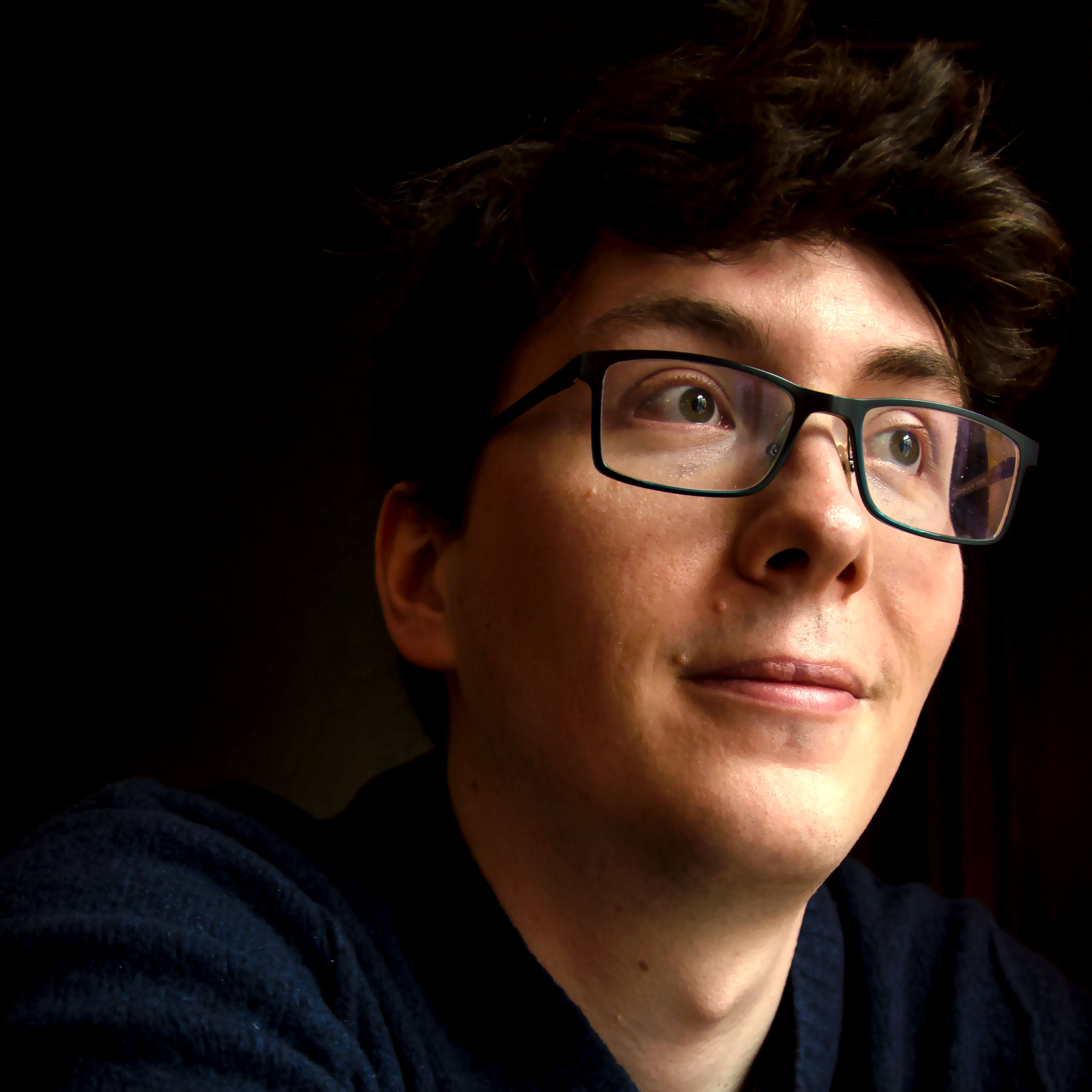
Christian Rupprecht is an Associate Professor at the Department of Computer Science, University of Oxford, specializing in computer vision and machine learning. His research focuses on unsupervised learning, 3D reconstruction, and visual understanding. His work includes contributions to conferences such as GCPR'25, ICCV'25, and CVPR'25, with papers spanning topics like correspondence estimation, animal pose modeling, and synthetic data generation. He leads projects within the prestigious Visual Geometry Group (VGG). Notably, his paper VGGT received the Best Paper Award at CVPR'25. His research integrates deep learning and geometric modeling, emphasizing robustness and generalization in visual systems. Best Paper Award at CVPR'25
Johan Taflin is a Lecturer at the University of Burgundy, affiliated with the Institute of Mathematics of Burgundy (IMB) under the Faculty of Science. His research focuses on complex dynamics in several variables and pluripotential theory, with significant contributions to attracting sets, equidistribution, and moduli spaces of dynamical systems. He has led the ANR DynAtrois project since 2025 and oversees the new Master of Mathematics program launching in 2025. Research Interests: Complex dynamics in projective spaces and several variables Pluripotential theory and its applications Dynamical systems, attractors, and moduli spaces Interdisciplinary links with mathematical physics and algebraic geometry Publications Trends: His work spans complex dynamics, including studies on blenders, postcritically finite maps, and equidistribution toward Green currents. Key subfields include holomorphic endomorphisms, algebraic geometry, and mathematical physics. Leadership: He directs the ANR DynAtrois project (2025–2030) and manages the Dijon Master of Mathematics program, which emphasizes fundamental and applied mathematics with ties to artificial intelligence.
Ruth Fong is a Teaching Professor at the Department of Computer Science, Princeton University , where she teaches foundational and advanced AI/ML courses (COS324, COS126) while leading the Looking Glass Lab in explainable AI research. She collaborates closely with the Visual AI Lab and Professor Olga Russakovsky . Education: PhD in Visual Geometry Group, University of Oxford (advised by Andrea Vedaldi , funded by Rhodes Trust and Open Philanthropy ) MSc in Neuroscience, University of Oxford (with Rafal Bogacz , Ben Willmore , and Nicol Harper ) AB in Computer Science, Harvard University (with David Cox and Walter Scheirer ) Research Focus: Pioneering Explainable AI and ML Fairness , with emphasis on post-hoc model understanding, interpretable-by-design architectures, and human-AI interaction frameworks. Her work spans computer vision, self-supervised learning, and neuroscience-inspired methodologies. Publication Trends: Recent papers (2023-2025) analyze interactive explanations , concept salience , and gender artifacts in vision datasets . Earlier work (2017-2020) established foundational techniques in extremal perturbations , backpropagation saliency , and neural network interpretability . Scientific Awards: Princeton Engineering Council Teaching Award (2025) Keller Center Summer Course Development Grant (2025) CHI Honorable Mention Paper Award (2023) Open Philanthropy AI Fellowship (2018) Rhodes Scholarship (2015) Advising: Directly mentored 10 Princeton undergraduates on IW/senior theses projects spanning generative AI , medical imaging fairness , and interactive visualization tools . Grants include Princeton SEAS and Open Philanthropy funding for the Looking Glass Lab. Lab & Team: Leads the Looking Glass Lab with 6 graduate/postgraduate members including Rawand Aziz , Matthew Barrett , and Ben Wachspress . Collaborates with faculty across Princeton and Oxford.
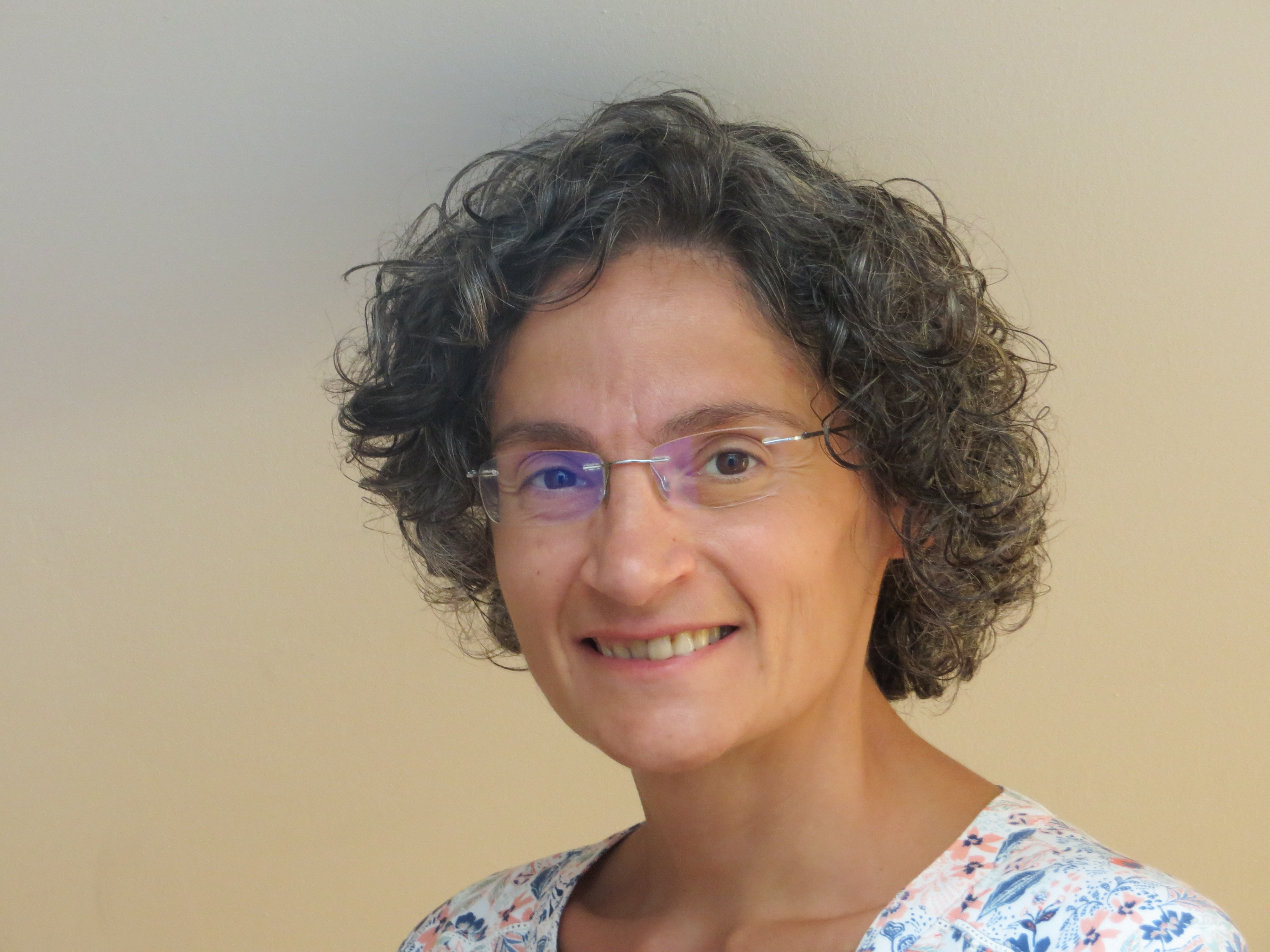
Christine Vespa is a Professor at Aix-Marseille Université affiliated with the Institute of Mathematics (I2M) in Marseille. Her research lies at the intersection of Algebra , Algebraic Topology , and Category Theory , focusing on polynomial functors , functor homology , and stable homology of group families. Education Habilitation à diriger des recherches (HDR), Université de Strasbourg, 2013. Thesis: Foncteurs polynomiaux et homologie stable à coefficients polynomiaux . Jury: William Dwyer, Vincent Franjou, Hans-Werner Henn, Nick Kuhn, Birgit Richter, Lionel Schwartz. Doctorat en Mathématiques, Université Paris 13, 2005. Thesis: La catégorie F_quad des foncteurs de Mackey généralisés pour les formes quadratiques sur F2 . Director: Lionel Schwartz. Research Interests Her work explores structural properties of polynomial functors and their applications in homology stability. She connects abstract category-theoretic frameworks with concrete algebraic and topological problems, such as stable homology for automorphism groups of free groups and orthogonal groups. Recent preprints address PROP structures , analytic exponential functors , and Jacobi diagrams , highlighting her engagement with algebraic topology and category theory. Article Trends Christine Vespa's publications and preprints emphasize algebraic topology and category theory . Recent trends include analyzing partition PROPs , exponential functors , and Jacobi diagrams in the context of stable homology. Earlier works delve into Hochschild homology , automorphism groups , and generalized Mackey functors , showcasing her contributions to homological algebra and representation theory. Advising Antoine Feltz (2020–2024): Foncteurs polynomiaux sur les catégories FI_d . Arthur Soulié (2015–2018): Foncteurs de Long-Moody et homologie stable des groupes de difféotopie . Andrea Cesaro (2012–2016): Pre-Lie algebras and operads in positive characteristic , co-supervised with Benoit Fresse. Labs & Teams She is a member of the Analyse, Géométrie, Topologie research group at I2M. She has organized academic events, including the 2014 Strasbourg workshop on Mac Lane's cubic construction and the 2015 Strasbourg Masterclass on Topological K-theory.
Yvain Bruned is a Professor of Mathematics at Université de Lorraine, Nancy, France, where he leads research in singular stochastic partial differential equations and related fields. He serves as Principal Investigator for the ERC Starting Grant LoRDeT (2023-2028), which focuses on advancing the theory of decorated trees and Hopf algebraic structures for solving singular SPDEs and dispersive PDEs at low regularity. Previously, he was a Lecturer at the University of Edinburgh (2019-2022) and completed postdoctoral work at Imperial College London and University of Warwick under Martin Hairer. His educational background includes: PhD in Mathematics (2012-2015), UPMC (Paris 6), on "Singular KPZ type equations" under Lorenzo Zambotti Master 2 in Probability and Statistics, ENS Cachan / Rennes 1, with honors Master 1 in Mathematics, ENS Cachan, with honors Bachelor in Mathematics and Computer Science, University of Rennes 1, with honors Student at ENS Cachan Brittany extension (2009-2013) Classes Préparatoires in Mathematics and Physics (2007-2009) Bruned's research centers on singular stochastic partial differential equations, with particular focus on Regularity Structures, renormalization theory, and their connections to Hopf algebras. His work bridges theoretical mathematics with applications in quantum field theory, wave turbulence, and numerical analysis. He has developed novel approaches using decorated trees to handle renormalization procedures for singular SPDEs and has extended these methods to dispersive PDEs with random initial data. His research program aims to establish existence and uniqueness results for quasilinear and dispersive SPDEs while developing algebraic tools through deformations of Hopf algebras. His extensive publication record demonstrates consistent contributions to the field of singular SPDEs, with a clear trajectory from foundational work on Regularity Structures to more recent applications in dispersive PDEs and numerical methods. The publications reveal a strong collaborative network with leading researchers in stochastic analysis, mathematical physics, and algebra. His work shows increasing sophistication in handling renormalization procedures through algebraic structures, with recent papers exploring connections between different mathematical frameworks. His major scientific recognition includes: ERC Starting Grant LoRDeT (2023-2028) Bruned actively supervises a large group of researchers, currently advising 4 PhD students and 2 postdoctoral researchers at Université de Lorraine, with several former PhD students having completed their degrees at the University of Edinburgh. His ERC grant has enabled him to organize multiple international workshops in Nancy, fostering collaboration between researchers in singular SPDEs, algebraic structures, and numerical analysis. The grant also supports the development of software platforms for decorated trees and their Hopf algebraic structures. As Principal Investigator of the ERC LoRDeT project, Bruned leads a vibrant research team based at the Elie Cartan Institute of Lorraine, which includes postdocs, PhD students, and visiting researchers. The team regularly organizes specialized workshops on topics including operads, symmetries for quantum field theory, and normal forms for singular dynamics, creating a dynamic research environment that bridges multiple mathematical disciplines.
Houman BOROUCHAKI is a Professor at the University of Technology of Troyes (UTT), France, with over 20 years of academic leadership. He has served as Head of the Automatic Mesh Generation and Advanced Methods (GAMMA3) project team since 2008 and previously led the Laboratory of Mechanical Systems and Concurrent Engineering (LASMIS) (2005-2007). His work bridges academic research and industrial applications through collaborations with INRIA , French Petroleum Institute (IFPEN) , Dassault Aviation , and others. Research Interests: A pioneer in adaptive meshing , he focuses on finite element methods , geometric modeling , and numerical simulations . His innovations underpin mesh generation algorithms , 3D triangulation software , and industrial applications in metal forming, composite simulation, and subterranean modeling. Scientific Trends: His recent work emphasizes metric-based meshing , high-order geometric validity , and parallel processing for mesh generation , with applications in petroleum reservoirs, aviation surfaces, and nanomaterials. His Google Scholar profile reflects 25+ years of contributions to meshing and simulation. Teaching: With 22 years of experience, he teaches courses on meshing , numerical analysis , geometric modeling , and computer graphics at UTT, covering undergraduate to PhD levels. Labs & Teams: He leads the interdisciplinary GAMMA3 team and has contributed to LASMIS (mechanical engineering), L2n (CNRS-UMR 7076) (nanomaterials), and LIST3N (computer science).
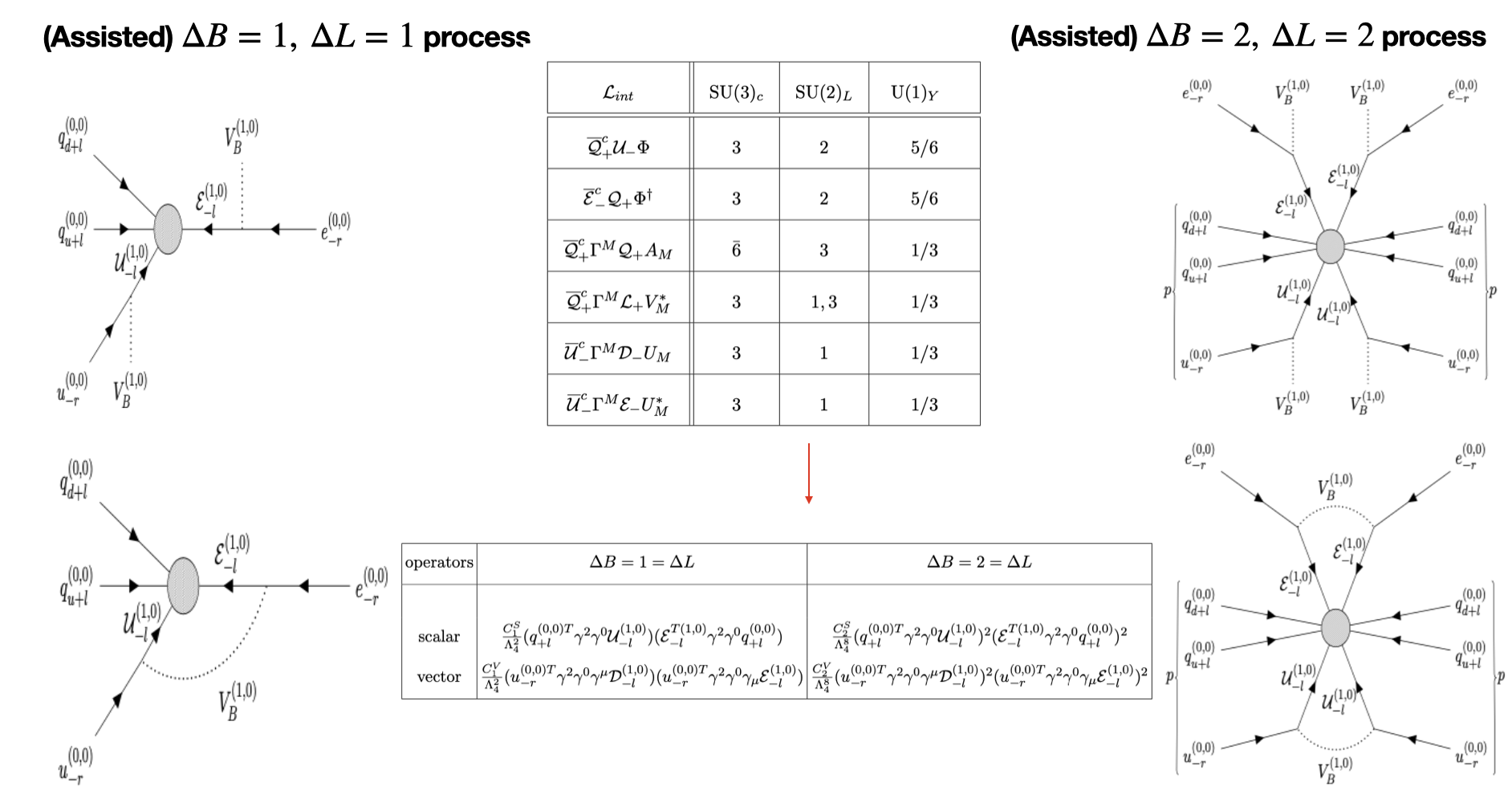
Dr. Mathew Arun Thomas is an Assistant Professor at the Indian Institute of Science Education and Research Thiruvananthapuram (IISER-TVM), specializing in Theoretical Particle Physics. His research focuses on phenomena beyond the Standard Model, including Baryon Number Violation, Extra Dimensions, Effective Field Theory, and Flavour Physics. Education: BSc (Hons) from St. Stephen's College, University of Delhi; MSc and PhD in Physics and Astrophysics from the University of Delhi (supervised by Prof. Debajyoti Choudhury). Postdoctoral work at the Indian Institute of Science (supervised by Prof. Sudhir K Vempati). His recent work explores Dark Matter-assisted Baryon Number Violation processes, such as Hydrogen-antihydrogen oscillation and Proton decay suppression, using six-dimensional orbifolded torus models. He also investigates constraints on Randall-Sundrum models from charge lepton flavour violations and phenomenology of low-energy Flavour Physics. The 15 most recent publications span neutrino oscillations, dark matter phenomenology, warped geometry models, and collider signatures, reflecting his expertise in connecting high-energy theory with experimental observables. Scientific Awards: INSPIRE Faculty Fellowship. He has mentored students like Akshay Anilkumar and Krishnanand N, contributing to projects on Flavour Violations and Cosmological Bounce models. He teaches courses including Quantum Field Theory and Scientific Computation, with a 2023 Mechanics course for 330 students.
Thomas Boddaert is an Assistant Professor at the Institut de Chimie Moléculaire et des Matériaux d'Orsay (ICMMO), Université Paris-Saclay . His research focuses on organic photochemistry , synthesis of constrained β-amino acids , and conformational studies of peptide-based foldamers . He leads the photochemistry theme and instrumental platform in the CP3A Organic Synthesis group and manages collaborations with industry partners like Diverchim. PhD in Organocatalysis (Aix-Marseille University, 2009) Postdoctoral research: Manchester University (2010), Rouen University (2010-2012) HDR (2021) for PhD supervision qualification His research includes: Photochemical domino reactions for sulfur heterocycles Peptide foldamer design with cyclobutane motifs Asymmetric synthesis using N-heterocyclic carbenes (NHCs) Visible-light photocatalysis Recent publications demonstrate expertise in: Light-initiated cascade synthesis of alkylidenecyclobutanes (2024) Thia-Paternò-Büchi reaction applications (2024, 2022) Conformational analysis of oxetin oligomers (2018) Fluorinated β-peptide folding studies (2015) Awards: Thieme Chemistry Journals Award (2019) Emergence@international scholarship (INC/CNRS, 2020) Teaching and administrative roles: Co-responsible for L3 Organic Photochemistry Head of L2 Organic Chemistry courses Manager of the Villebon – Georges Charpak Institute chemistry program Member of Paris-Saclay University advisory commission (2021–) He supervises 6 Paris-Saclay PhD students , 2 foreign PhD students , and 2 postdoctoral researchers , with notable projects on: Photochemical post-functionalization of thietanes (2024–) Domino reactions for sulfur heterocycles (2023–) Light-controlled kinase inhibitors (2021)
Nicolas Riviere is a Professor at INSA Lyon in the Department of Mechanical Engineering, working within the Laboratory of Fluid Mechanics and Acoustics (LMFA - UMR 5509). He is part of the "Fluides complexes et transferts" (Complex Fluids and Transfers) group and the Environment team. His teaching activities primarily focus on fluid mechanics at the Mechanical Engineering Department of INSA Lyon, covering: General balances (mass, momentum, energy) Aerodynamics Compressible flows Numerical simulation of flows Free surface hydraulics Prof. Riviere's research centers on free surface hydrodynamics, with applications to natural and industrial risks. His work takes an experimental approach, utilizing the laboratory's channel facilities, particularly the channel intersection installation. His research spans river floods with compound beds, urban flooding, sanitation networks, torrential flows, and flow-obstacle interactions. He has developed a strong interdisciplinary focus, co-leading the "Baignades en Rivières Urbaines" studio with Oldrich Navratil from University Lyon 2 and the EVS Laboratory. His publication record demonstrates consistent contributions to the fields of fluid mechanics and environmental hydraulics, with recent work focusing on open-channel flows, urban flooding phenomena, vegetation-flow interactions, and experimental techniques for studying complex hydraulic phenomena. His research often bridges theoretical fluid mechanics with practical environmental applications. Prof. Riviere has received recognition for his work in environmental fluid mechanics, with numerous publications in high-impact journals in hydraulic engineering and fluid mechanics. He has supervised multiple PhD students and research projects related to environmental fluid mechanics and has collaborated with various institutions on interdisciplinary research projects addressing water-related challenges. The laboratory where he works, LMFA, provides extensive experimental facilities including wind tunnels, hydrodynamic channels, and advanced measurement techniques such as PIV (Particle Image Velocimetry), LDV (Laser Doppler Velocimetry), and other state-of-the-art instrumentation for fluid flow analysis.
Guido Pintacuda is a CNRS Research Director and Head of the Lyon High-Field NMR Center (CRMN) at École Normale Supérieure de Lyon since 2019. His work centers on advancing solid-state NMR methodologies with ultra-fast magic-angle spinning (MAS) to achieve atomic-level resolution in complex biomolecular and materials systems that are intractable to conventional techniques. Educational background: Undergraduate studies (1992-1997) and PhD in Sciences (1998-2002) at Scuola Normale Superiore in Pisa, Italy; postdoctoral research at Karolinska Institutet (2001-2004) and Australian National University (2004). Research interests focus on pushing NMR frontiers through high-field instrumentation and fast MAS (up to 160 kHz), with dual objectives: (i) biomolecular structure determination for membrane proteins, amyloid fibrils, and viral assemblies; (ii) solid-state NMR of paramagnetic materials like battery cathodes and catalysts. His innovations include proton detection in fully protonated proteins and DNP-enhanced sensitivity. Recent publications (2021-2024) show heavy emphasis on proton-detected NMR under fast MAS for structural biology, alongside growing work in paramagnetic materials. Key trends include method development for μs–ms dynamics, miniature rotor protocols for membrane proteins, and collaborations with Bruker for 150+ kHz probe technology. Scientific awards: ERC Consolidator Grant (P-MEM-MAS, 2015-2021) Sackler Prize (2017) ISMAR Fellow (2020) Mentoring and grants: Principal investigator for major projects including ERC (2.5 M€), ANR CTRbyNMR (384 k€), and EU PANACEA (5 M€, co-coordinator). Actively mentors PhD student Clément Ollier and postdocs (Z. Sun, S. Medina-Gomez) at ENS Lyon and international schools. Labs and teams: Directs CRMN (UMR 5082 CNRS/ENS Lyon/UCBL), a world-class NMR facility with unique high-field equipment. Leads a research group developing 150+ kHz MAS probes in partnership with Bruker Biospin and maintains strong ties to the University of Delaware (T. Polenova) and European networks.
Fanny Kassel is a CNRS Research Director at the Institute of Advanced Scientific Studies (IHES), focusing on geometric, dynamical, and spectral aspects of discrete subgroups of Lie groups. Her work connects discrete group actions on homogeneous spaces with geometric structures on manifolds, such as pseudo-Riemannian and projective geometries, and higher Teichmüller-Thurston theory. Her research spans topics like convex projective geometry, Anosov representations, and pseudo-Riemannian hyperbolic spaces. She has been recognized with the CNRS Bronze Medal (2015), an ERC Starting Grant (2016), and the Mathematics Medal of the French Academy of Sciences (2024). She actively organizes workshops and contributes to editorial boards, including Mathematics of the IHES and Gazette de la SMF . Her recent publications highlight advancements in convex projective geometry, spectral theory, and discrete group dynamics. Awards and grants underscore her influence in geometric group theory and related fields.
François Baccelli is a Research Director at INRIA Paris and Visiting Professor at Télécom Paris, leading the ERC Advanced Grant NEMO project on network mathematics. He holds a Doctor Honoris Causa from Heriot-Watt University and is a Member of the French Academy of Sciences. His career spans key roles including head of the Simons Center on Communication, Information and Network Mathematics (2012–2019), and faculty positions at École Polytechnique (1991–2003) and the University of Texas at Austin (2012–2021) as Simons Math+ECE Chair. Education: PhD in Applied Mathematics from Université Paris-Sud (1983), advised by Erol Gelenbe. Graduate of Télécom Paris (1977). Research Interests: Baccelli’s work bridges applied probability, stochastic geometry, and network dynamics with applications to telecommunications. He pioneered spatial stochastic networks, stochastic geometry modeling of wireless systems, and max-plus algebra for discrete-event systems. His contributions include foundational theories on queuing networks, Palm probabilities, and latency-constrained system design. Awards & Recognition: 2024 Blackwell Prize (INFORMS Applied Probability Society). 2014 ACM Sigmetrics Achievement Award. 2014 IEEE Stephen O. Rice and Leonard G. Abraham Prizes. Collaborations: Co-founder of the LINCS joint laboratory (INRIA/IMT/Nokia Bell Labs/Sorbonne/SystemX), fostering interdisciplinary research in communications and networks. Supervised numerous graduate students who now lead academic and industrial research globally. Labs & Teams: LINCS laboratory and ERC NEMO project, focused on network mathematics and large-scale system dynamics.
Pierre Alliez is a Senior Researcher and Team Leader at Inria Sophia Antipolis – Méditerranée, leading the TITANE project-team. He holds roles such as President of the Inria Evaluation Commission and Scientific Coordinator of the Inria-DFKI partnership. His research focuses on Geometry Processing, including mesh compression, surface reconstruction, and optimal transportation. Alliez has authored numerous scientific publications and book chapters, receiving accolades like the Eurographics Young Researcher Award (2005) and ERC grants (IRON, TITANIUM). His academic activities include supervising over 50 PhD students and postdoctoral researchers, and leading projects like GRAPES (Learning and Processing Shapes) and BIM2TWIN (digital twin construction). He has served on editorial boards for Computer Graphics Forum and ACM Transactions on Graphics , and organized major conferences like Pacific Graphics and Eurographics. His work bridges computational geometry, computer graphics, and applied mathematics, with practical applications in 3D printing, cultural heritage, and urban modeling. Education: No specific educational details provided, but has authored a textbook on Polygon Mesh Processing (AK Peters, 2010). Research Interests: Geometry Processing, Mesh Generation, Surface Reconstruction, Optimal Transport, and 3D Data Analysis. Grants & Projects: ANR Pisco, ERC IRON, BIM2TWIN, GRAPES, and collaborations with industries like Dassault Systèmes and Dorea Technology. Labs/Teams: Leads the TITANE team at Inria, contributing to software like CGAL and advancing open-source tools for geometric processing.
Professor Petros Elia is a faculty member at EURECOM, holding the position of Professor within the Department of Communications systems. He specializes in Information Theory , Coding Theory , Caching , Distributed Computing , and Wireless Networks , with additional research in Biometrics . His work focuses on advancing theoretical foundations and practical applications in distributed systems and wireless communication efficiency. He received a prestigious ERC Consolidator Grant for his DUALITY project (2016) and a four-year Fulbright Scholarship (1993-1997). He is also a recipient of the Newcom++ Network of Excellence Distinguished Achievement Award (2008-2011) and the Best Student Paper Award at SPAWC 2011, awarded to his advisee Arun Singh. His research explores cutting-edge topics such as tessellated distributed computing , hypergraph decomposition , and topology-aware caching , with recent contributions presented at venues like the IEEE International Symposium on Information Theory (ISIT 2025). His work bridges theoretical advancements with real-world applications in wireless networks and distributed systems. Education: Supported by his Fulbright Scholarship, he pursued studies in the U.S. during 1993-1997. Grants: ERC Consolidator Grant (2016), and others. Advising: Mentor to Arun Singh , whose work earned a student paper award. He actively contributes to teaching Mobile Communications at EURECOM and remains a key figure in advancing the field through interdisciplinary collaborations and leadership in the Communication Systems department.
Tilmann Wurzbacher is a Professor at the University of Lorraine, affiliated with the Department of Mathematics, Computer Science, and Mechanics. His research focuses on geometric methods in mathematical physics, including multisymplectic geometry, supermanifolds, complex Kähler manifolds, and infinite-dimensional analysis. He has contributed to the development of multisymplectic structures for classical field theories and collaborates on foundational questions in supergeometry. His recent publications emphasize multisymplectic geometry, supermanifolds, and infinite-dimensional structures, with applications to geometric quantization, conservation laws, and Hamiltonian systems. He has co-authored works on co-moments, Lagrangian submanifolds, and singular superspaces. Wurzbacher actively organizes seminars and workshops, including the weekly LieGA seminar and international workshops on multisymplectic geometry. He participates in CNRS-funded networks such as the 80Prime Project "GraNum" and the GDGR "GDM".