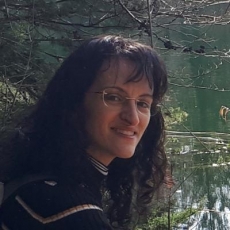
Ian Wanless is a Research Professor at the School of Mathematics, Monash University. He specializes in combinatorics, with a focus on Latin squares, graph theory, and matrix permanents. His work bridges theoretical mathematics and applications in information technology, such as coding and experimental design. Wanless leads collaborative projects funded by the Australian Research Council, including studies on combinatorial structures and hypergraph matchings. He has authored over 120 peer-reviewed articles, with recent work addressing quantum states, Latin square properties, and quasigroup isomorphisms. Key Awards: Australian Mathematical Society 2009 Medal Collaborations: Global partnerships with institutions in the US, Europe, and Asia His research emphasizes universal solutions to combinatorial puzzles, such as Sudoku and the four-color theorem, while prioritizing theoretical rigor over direct applications.
Dr. Zsofia Kraussl is a Senior Lecturer in Finance and Technology at Bayes Business School (formerly Cass) at City, University of London. She holds a PhD in Information Systems Management from the Free University Amsterdam (2011). Her research focuses on digital transformation in finance, valuation fundamentals, and socio-economic impacts of data as an asset class, with empirical work on marketplace lending and digitization effects. She also investigates higher education curriculum design and performance metrics, having developed an MSc program in Digital Transformation in Finance at the University of Luxembourg. Additionally, she is a visiting scholar at UC Berkeley’s Center for Studies in Higher Education (CSHE). Education: PhD in Information Systems Management, Free University Amsterdam (2011) Her research interests span innovation in finance, digital infrastructure for sustainability, and blockchain applications like tokenization of sukuk. She actively contributes to interdisciplinary studies at the intersection of finance, technology, and education. Recent work includes AI-driven market regime forecasting and differential privacy in smart contracts. Advising and grants focus on curriculum development and digital finance initiatives. Her work often involves collaborations across academic disciplines and industry partners to address emerging trends in financial technology and educational policy. Labs/teams: Collaborates with the CSHE at UC Berkeley and leads interdisciplinary projects at Bayes Business School focusing on digital finance innovation and higher education frameworks.
Dionisios Sakkas is a Researcher at Yale University's Yale School of Medicine, specifically within the Department of Obstetrics, Gynecology & Reproductive Sciences. He holds a PhD from Monash University (1990). His research focuses on reproductive medicine, embryology, and assisted reproductive technologies, with particular emphasis on improving IVF outcomes through genetic screening and non-invasive diagnostic methods. Key areas include preimplantation genetic testing (PGT-A), aneuploidy detection, and optimizing embryo selection protocols. His work also explores the role of sperm factors in embryonic development and innovative applications of artificial intelligence in reproductive diagnostics. Recent studies investigate the clinical efficacy of PGT-A on live birth rates, comparisons between cell-free DNA and trophectoderm biopsy techniques, and validation of home-based semen analysis protocols. He has contributed to ethical discussions around embryo sex selection and published comparative analyses of carrier screening panels in reproductive medicine. His research integrates interdisciplinary approaches from biotechnology and clinical practice to advance fertility treatment strategies. While no specific grants or awards are listed in the provided text, his extensive publication record (over 48 publications) demonstrates sustained contributions to reproductive science. Collaborative projects involve multi-center studies and international teams addressing challenges in IVF efficacy and genetic counseling practices.
Prof Dr Grega Strban is Full Professor of Labour and Social Security Law and Head of the Labour and Social Law Department at the Faculty of Law, University of Ljubljana, where he previously served as Dean (2018-2022) and Vice-Dean for Economic Affairs (2010-2018). He maintains a dual academic affiliation as Senior Research Associate at the Department of Public Law, University of Johannesburg. His institutional leadership extends to heading the Faculty of Law's research program group since 2014 and coordinating the EU MoveS project on workers' mobility and social security coordination. Strban's research focuses on Labour Law, Social Security Law, and European Union Law with particular expertise in cross-border social security coordination, healthcare rights, and the impact of digitalization on social systems. His scholarly approach integrates comparative legal analysis with practical policy development, examining how social security systems adapt to demographic shifts, labor mobility, and technological disruption. Recent work explores the tension between solidarity principles and individual responsibility in welfare systems, alongside the legal challenges of long-term care provision in aging societies. His publication record demonstrates consistent engagement with evolving social law paradigms, particularly evident in his 15 most recent articles spanning 2021-2024. These works reveal three dominant thematic clusters: (1) cross-border healthcare coordination and reverse discrimination issues in EU law; (2) adaptation of social security systems to digital labor markets and mobility patterns; and (3) conceptual evolution of social rights frameworks toward universal dignity-based protection. The publications strategically bridge theoretical legal analysis with concrete policy recommendations for national and supranational institutions. Scientific Recognition Alexander von Humboldt Fellow (continuous since 2010) Three-time recipient of Faculty of Law's Most Echoed Researcher Award (2020, 2021, 2023) Roger Dillemans Award for Excellence in Social Security (KU Leuven, 2004) Best Young Lawyer of the Year 2000 in Slovenia Strban's advisory impact extends through multiple high-level appointments including membership on the European Committee of Social Rights (Council of Europe), presidency of the Slovenian Association for Labour Law and Social Security, and vice-presidency roles in both the International Society for Labour and Social Security Law (Geneva) and the European Institute of Social Security (Leuven). His practical influence manifests in national policy through leadership of the Permanent Arbitration Court for collective labor disputes at Triglav Insurance and membership on Slovenia's Strategic Council for Health. Current research infrastructure includes coordination of the EU MoveS project and ongoing collaboration with the Max-Planck Institute for Social Law and Social Policy where he serves as external expert following his Humboldt Fellowship.
Dr. Pantelis Sopasakis is a Lecturer in the School of Electronics, Electrical Engineering and Computer Science at Queen's University Belfast, Northern Ireland. His research focuses on developing efficient numerical optimization algorithms and model predictive control (MPC) methodologies for uncertain systems, with applications in autonomous vehicles, smart infrastructure networks, and advanced manufacturing. He leads projects on embedded optimization solvers, GPU-accelerated MPC, and stochastic control for systems like water networks and microgrids. His work emphasizes real-time implementation and safety-critical applications in robotics and energy systems. He teaches postgraduate and undergraduate courses in control theory and signals, and is actively involved in supervising PhD students in areas like parallel algorithms and MPC for uncertain systems. Key achievements include the development of the Open-Source Optimization Engine , widely used for embedded MPC. Research interests span distributed embedded intelligence, intelligent uncertain-aware MPC, and biomedical applications of control systems. He collaborates internationally on projects involving risk-averse control, multi-agent systems, and circular economy applications. His interdisciplinary work bridges optimization theory, robotics, and energy systems, with a focus on scalable and real-time solutions. Teaching includes modules on control systems fundamentals and advanced MPC concepts, supported by his textbook Control Systems: An Introduction . Dr. Sopasakis has contributed to over 50 publications, with recent work on conformal prediction for stochastic control, distributed collision avoidance, and thermodynamical material networks. He participates in conferences and editorial activities, and has organized events like the 2025 IEEE UK and Ireland Robotics Conference. His research group is part of the Energy, Power, and Intelligent Systems and Control clusters at Queen's.
Prof. Dr. Frank Dietrich is a W3 Professor of Practical Philosophy at the Heinrich Heine University Düsseldorf since 2012. He serves as Spokesperson of ELSA-AG and Board Member of Stem Cell Network NRW , and acts as Commissioner for Students with Disabilities since 2022. His research spans political philosophy , ethics , and medical ethics , with particular focus on distributive justice , secession , and AI ethics . Education : Diploma in Social Sciences (Political Science), Gerhard Mercator University Duisburg (1994) Doctorate in Philosophy, Gerhard Mercator University Duisburg (2000) Habilitation in Philosophy, University of Leipzig (2008) Research Interests include: Political Philosophy : Territorial rights, democratic boundary problems, collective self-determination Ethics : Autonomy, parental authority, freedom of expression in digital networks Medical Ethics : Organ allocation, Xenotransplantation, disability rights Migration/Climate : Ethical implications of climate-induced migration, asylum rights Publications (selected) cover AI & Ethics , Journal of Social Philosophy , Migration and Climate Change , and Medical Resource Rationing . Scientific Awards : Fellowship at Alfried Krupp Wissenschaftskolleg Greifswald (2007/08) Board member of Stem Cell Network NRW (since 2021) Commissioner for students with disabilities (2022) Grants & Projects include DFG-funded research on Bioethics (2012/13), MLP Corporate University CFP training (2010-2020), and University of Mainz Medical Ethics program.
Bill Buchanan is a Professor at the School of Computing Engineering and the Built Environment, Edinburgh Napier University, and a member of the Centre for Algorithms, Visualisation and Evolving Systems. His work spans Information Visualization , Software Systems , Cybersecurity , and AI , focusing on innovative solutions for complex data challenges. Research Interests: Information visualization for hierarchical data, cybersecurity frameworks, machine learning in industrial IoT, and post-quantum cryptographic systems. Projects: Supervised PhD projects on visualizing overlapping classification hierarchies and biological network inference. Currently leads research in AI-driven human-robot interaction and secure Dockerized architectures. Publications: 15+ recent works on quantum agents, GANs for anomaly detection, homomorphic encryption, and advanced cryptographic techniques. Collaborations: Engages with biologists, AI researchers, and cybersecurity experts across institutions.
Kazuhiro Ogata is a Professor in the School of Information Science at Japan Advanced Institute of Science and Technology (JAIST). He actively teaches courses such as i116 Basic of Programming, i217 Functional Programming, and i219 Software Design Methodology, indicating a strong commitment to computer science education and curriculum development. Institution: Japan Advanced Institute of Science and Technology (JAIST) School: School of Information Science Position: Professor Email: ogata@jaist.ac.jp Research Laboratory: http://www.jaist.ac.jp/~ogata/lab/ His research interests center on programming languages, software design methodology, formal methods, and compiler construction. He emphasizes formal verification using theorem proving and rewriting logic, particularly with tools like Maude. His work bridges theoretical computer science with practical software engineering and education, focusing on correctness, design patterns, and language semantics. The analysis of his recent publications reveals a consistent focus on formal specification, verification of software systems, and educational tools for programming. His work spans functional programming, concurrent systems, and distributed algorithms, often using rewriting logic as a unifying framework. He integrates formal methods into both research and teaching, promoting rigorous software development practices. No scientific awards are explicitly mentioned in the provided texts. Kazuhiro Ogata advises students through his laboratory at JAIST and has developed structured course materials that suggest active mentorship. While specific grant information is not available, his sustained research output and tool development imply ongoing project funding. He contributes to academic outreach through summer schools and educational frameworks. He leads a research laboratory focused on formal methods and programming language design, fostering a collaborative environment for students and researchers. The lab develops tools for teaching and verifying software systems, emphasizing correctness and educational impact.
Gert Witvoet is a part-time Assistant Professor at the Mechanical Engineering Department of Eindhoven University of Technology (TU/e) , specializing in motion control for scientific applications. He is also a Senior Scientist at TNO Technical Sciences since 2012, working on optomechatronic control systems in space, astronomy, and Big Science projects. Research Focus: Motion control, feedback control, and injection locking in fusion plasmas Teaching: Coordinating Control Engineering and Motion Control Tuning courses Collaborations: TNO, DIFFER, and FOM Rijnhuizen His research explores the intersection of nuclear fusion and control technology, with a particular emphasis on stabilizing plasma instabilities in tokamak devices. He has contributed to projects like TROPOMI , LISA , and ITER , focusing on precise control mechanisms for high-tech systems. Recent work involves free-space optical communication systems, where he develops control algorithms for accurate pointing mechanisms in satellite-ground communications. His article trends highlight expertise in reset control , feedback stabilization , and dynamic noise budgeting . 2008: Best Junior Presentation (BJP) Award 2020: Best Paper Recognition at IEEE AMC2020 At TU/e, Witvoet supervises research projects and collaborates with industry partners via the Mechatronics Academy. His grants include TNO and FOM Rijnhuizen funding for fusion control systems. He works with the Control Systems Technology Group and contributes to the Learning, Identification and Control of High-Tech Systems research area.
Drew A. Torigian is a Professor of Radiology at the Perelman School of Medicine, University of Pennsylvania, with extensive contributions to medical imaging research. His work focuses on developing advanced methodologies for PET/CT image analysis, disease quantification, and anatomical segmentation through innovative applications of deep learning and computer vision techniques. Dr. Torigian's research interests span multiple critical areas in medical imaging including quantitative image analysis, PET/CT applications, deep learning in medicine, radiation therapy planning, and anatomical segmentation. His work has significantly advanced the field of medical image analysis through the development of novel algorithms for disease quantification without explicit object delineation, standardized anatomic space frameworks, and attention-based neural networks for medical image interpretation. His recent publications demonstrate a strong trend toward integrating artificial intelligence with medical imaging, particularly in developing gaze-guided neural networks, geographical attention mechanisms, and hybrid transformer-convolutional architectures for improved medical image analysis. These works consistently address critical challenges in radiology including disease quantification, anatomical segmentation, and the development of clinically interpretable AI models. Dr. Torigian has received recognition through his substantial publication record in top-tier medical imaging venues including Medical Image Analysis, IEEE Transactions on Biomedical Engineering, and leading medical imaging conferences. His research has been consistently funded through various mechanisms supporting innovation in medical imaging technology. Through his mentorship and collaborative research, Dr. Torigian has contributed to advancing the field of medical imaging with practical applications in radiation therapy planning, disease quantification, and the development of standardized methodologies for image analysis. His work bridges the gap between computer science innovation and clinical radiology applications.
Yuxuan Sun is a Researcher at Tsinghua University's Department of Electronic Engineering and a visiting researcher at Imperial College London's Intelligent Systems and Networks (ISN) group. She earned a B.S. in Telecommunications Engineering from Tianjin University (2015) and a Ph.D. in Information and Communication Engineering from Tsinghua University (2020). Her research focuses on mobile edge computing, edge learning, and federated learning, with applications in vehicular networks and wireless systems. She has received the Best Student Award from Tsinghua-Intel (2018) and holds roles as an Assistant Editor-in-Chief for IEEE Transactions on Green Communications and Networking and a reviewer for top journals like IEEE TWC and TVT. Her work emphasizes optimizing computation offloading, scheduling policies, and energy efficiency in edge environments. Notable contributions include studies on distributed task replication for vehicular edge computing and mobility-aware federated learning frameworks. She has been recognized with travel grants (e.g., IEEE Comsoc at GLOBECOM 2019) and has collaborated on projects like the 'MEET' framework for green 6G networks. Education: B.S., Tianjin University, Telecommunications Engineering (2015) Ph.D., Tsinghua University, Information and Communication Engineering (2020) Awards: Best Student Award (2018) Grants: IEEE Comsoc Student Travel Grant (GLOBECOM 2019) Her research spans edge computing frameworks, federated learning in constrained environments, and semantic communication for 6G systems. She leads collaborative efforts in labs like Tsinghua's Information Processing and Communications Lab and contributes to industry-academia partnerships.
Masoud Daneshtalab is a Professor at Mälardalen University, leading the Heterogeneous System research group (HERO). He previously held roles as a European Marie Curie Fellow at KTH Royal Institute of Technology (2014) and as a university lecturer and group leader at the University of Turku, Finland (2012-2014). His research focuses on interconnection networks, hardware/software co-design, deep learning acceleration, and evolutionary optimization. He specializes in fault-tolerant DNN accelerators, time-sensitive networking (TSN), and embedded systems. His work bridges theoretical advancements with practical implementations, emphasizing reliability and efficiency in edge computing and AI applications. Research interests include: Network-on-Chip (NoC) architectures and congestion prediction Fault resilience in deep neural networks (DNNs) Optimization of federated learning and homomorphic encryption for edge AI Integration of TSN with 5G and automotive systems Hardware acceleration techniques for computational efficiency Recent publications emphasize advancements in robust AI architectures, fault tolerance mechanisms, and TSN-based communication protocols. His work often addresses practical challenges in deploying machine learning models on resource-constrained devices. He actively contributes to interdisciplinary projects in autonomous systems, healthcare monitoring via FMCW radar, and neural architecture search for embedded applications. Labs/Teams: Leads the HERO group at Mälardalen University, focusing on heterogeneous computing systems and real-time embedded systems.
Xiaoyu Sun is a Lecturer in the School of Computing at Australian National University (ANU), specializing in Software Engineering with a focus on Mobile Software Engineering and Intelligent Software Engineering. She holds a PhD from Monash University (2023) and a Bachelor's degree in Computer Science from Beijing Normal University (2016). Her research emphasizes applying static code analysis, dynamic testing, and NLP techniques to enhance software security and reliability, particularly in Android systems. Current projects include tools for detecting compatibility issues and privacy leaks in mobile apps. Her research interests span code generation frameworks (e.g., A^3-CodGen), security management in open-source projects, and AI-enhanced software development practices. Collaborations with tech giants like Bytedance and Alibaba highlight her industry engagement. Xiaoyu is Co-Investigator in the Tech4HSE project (2025-2027), developing AI-based monitoring systems for workspace safety. She has published in top venues including ICSE, ASE, and IEEE Transactions on Software Engineering. Her work bridges academia and industry, addressing challenges in mobile app security, code reuse efficiency, and developer toolchain innovation. Ongoing efforts focus on AI-driven solutions for software engineering tasks and fostering transparent privacy practices in open-source AI applications.
Associate Professor John Pye leads research in high-temperature solar-thermal systems and industrial decarbonisation at the Australian National University's School of Engineering. He holds a BE/BSc (University of Melbourne) and a PhD (University of New South Wales) focused on solar thermal modelling. His work bridges engineering innovation and sustainability, with a focus on green steel production, CSP technologies, and hydrogen applications. As a Visiting Scholar at Sandia National Laboratories, he advanced solar thermal testing methodologies. Educations: Bachelor of Engineering (Mech.) and Bachelor of Science (University of Melbourne, 1997) PhD in System Modelling of Compact Linear Fresnel Reflectors (UNSW, 2008) His research interests include solar thermal energy systems, concentrated solar power (CSP), and hydrogen-based industrial processes. Notable contributions include system-level optimisation of CSP plants, techno-economic analysis of green steel production, and solar-thermal beneficiation of iron ore. His work often integrates AI for optimisation and free/open-source engineering software. Recent publications focus on solar thermal applications in steelmaking, particle-based CSP systems, and hydrogen plasma metallurgy. Projects include the Gen3 Liquids Pathway for CSP and solar-driven thermochemical processes. Collaborations span industry and academia, addressing decarbonisation challenges in steel production and energy storage. Supervises research in solar thermal engineering and low-carbon technologies, contributing to Australia's role in zero-emissions commodity production. Active in policy submissions related to green energy and manufacturing frameworks.
Silvia Marconi is a Researcher at the Department of Methods and Models for Economy, Territory, and Finance at Sapienza University of Rome. She teaches the Basic Mathematics Course for Economics and Finance students and coordinates doctoral tutoring services. Her academic background includes a PhD in Mathematical Models and Methods for Technology and Society from Sapienza University. Her research spans applied mathematics with focus areas in: Biomedical modeling of cardiovascular and pulmonary systems Computational approaches to stem cell therapy and tissue regeneration Image processing techniques for digital forensics Signal processing and frequency analysis Marconi's recent publications demonstrate strong interdisciplinary collaboration, particularly in developing computational models for medical applications. Her work frequently combines mathematical theory with clinical problems, especially in cardiology and medical device simulation. The research outputs show consistent focus on developing numerical solutions for physiological systems. She has held multiple research positions including at the National Research Council (CNR) and has collaborated on projects investigating cardiovascular modeling, stem cell behavior, and image processing algorithms. Her teaching experience includes courses in Mathematical Analysis for Engineering programs at both undergraduate and doctoral levels.