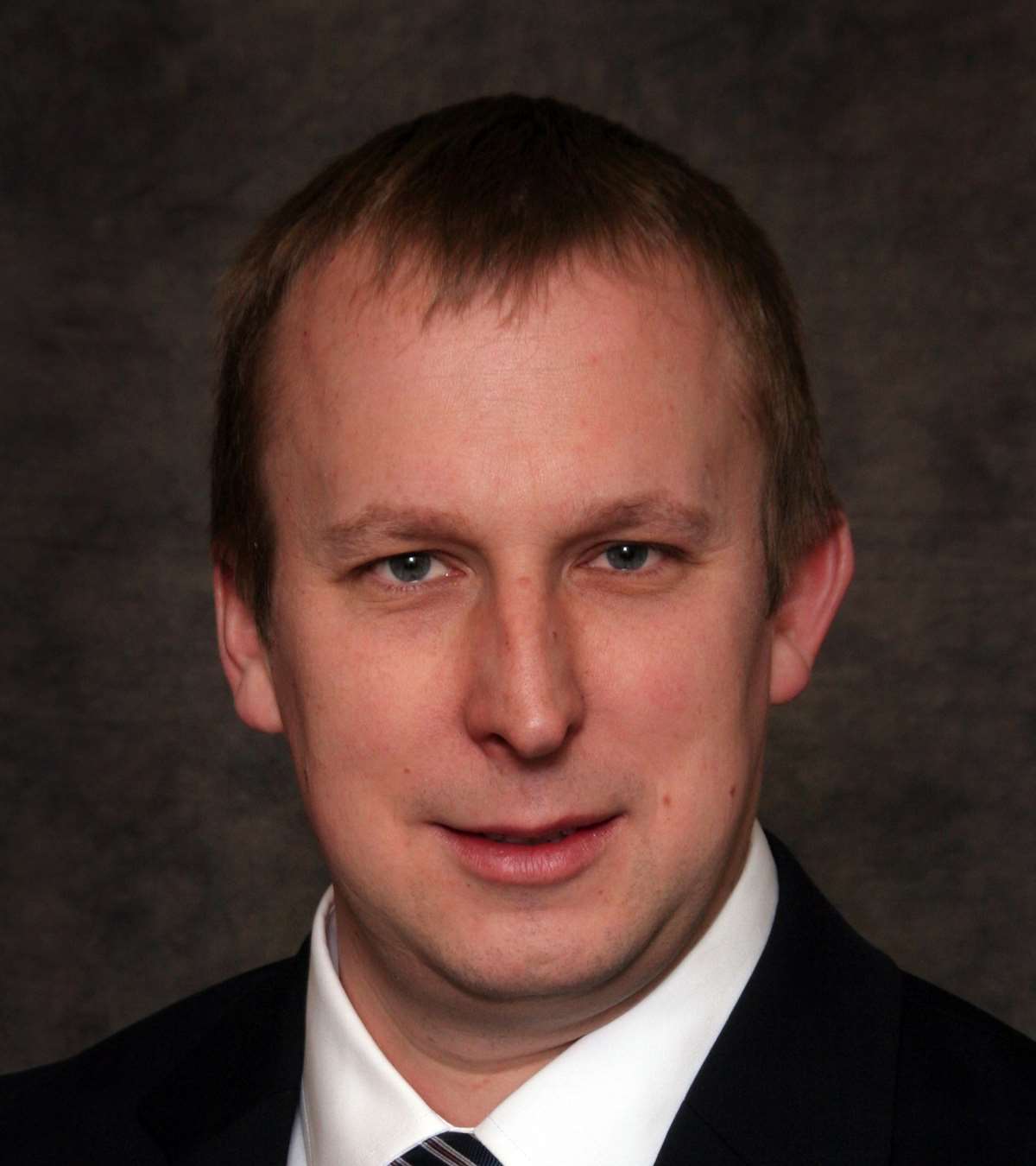
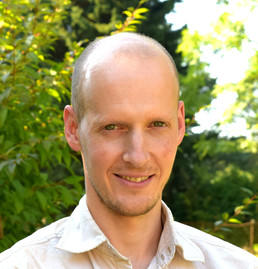
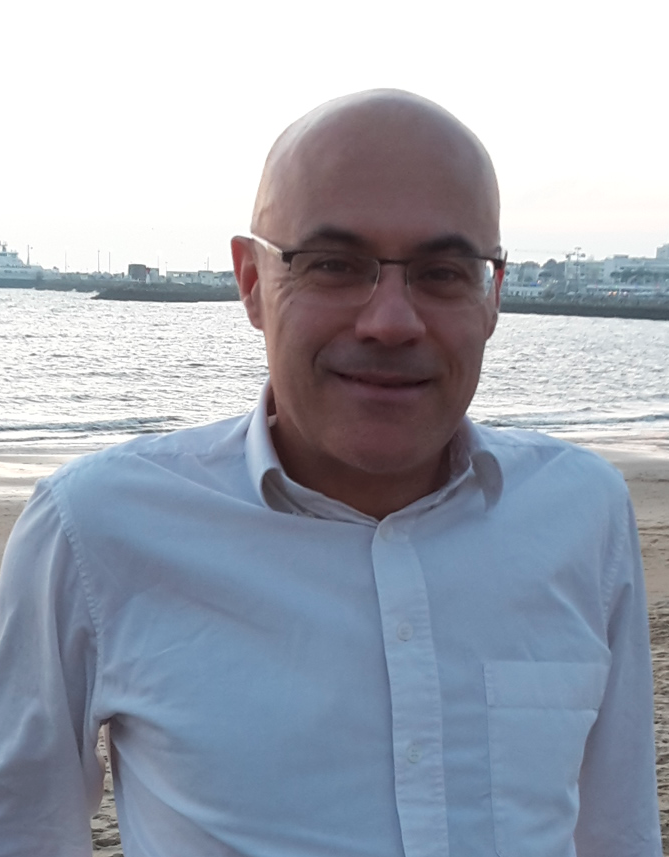
Nathan A. Ledeboer is a Professor at the Medical College of Wisconsin (MCW) and holds dual roles as Medical Director for both the Clinical Microbiology and Molecular Diagnostics Laboratories. He oversees assay development, laboratory operations, and consults on diagnostic testing for infectious diseases. His research focuses on rapid molecular diagnostic technologies, host response to infections, AI-driven imaging, respiratory virus epidemiology, and antimicrobial resistance. Ledeboer’s work bridges clinical practice and innovation, emphasizing translational research to improve diagnostic accuracy and patient outcomes. His research interests include molecular techniques for infectious disease detection, host-pathogen interactions, and leveraging digital tools for medical diagnostics. Notable contributions include sepsis diagnostics, pharyngitis biomarker studies, and home-based respiratory virus testing. He collaborates on large-scale pathogen identification projects and evaluates diagnostic technologies’ clinical and economic impacts. Recent publications highlight advancements in sepsis diagnostics, pharyngitis pathogen analysis, and antimicrobial resistance. His work frequently addresses gaps in clinical decision-making and the integration of novel technologies into emergency care. Ledeboer’s leadership in laboratory medicine ensures cutting-edge practices are implemented to enhance patient care standards.
Hubert Brückl is a Professor and Head of the Department for Integrated Sensor Systems at the University for Continuing Education Krems. He holds a PhD and habilitation in Physics from the University of Regensburg and has held key roles at institutions like the Technical University of Darmstadt, IFW Dresden, and the AIT Austrian Institute of Technology. His research focuses on thin films, magnetism, sensors, and micro/nanotechnology, with significant contributions to machine learning applications in materials science. Brückl's scientific career includes leadership in over 15 funded research projects, such as the development of AI-based corrosion monitoring systems and advanced magnetic sensors. He has authored numerous publications in high-impact journals, including Nature Scientific Reports , Physical Review Applied , and IEEE Transactions on Magnetics . His work spans interdisciplinary areas, combining physics, engineering, and data science to create innovative sensor technologies. Current projects emphasize AI-driven predictive modeling of materials properties and high-precision magnetic sensor fabrication. Brückl's lab integrates cutting-edge facilities for nanotechnology and sensor development, collaborating with industry partners like Siemens and aerospace firms. His research addresses challenges in sustainable materials, biomedical diagnostics, and industrial monitoring systems.
Qiong Zhang is an Assistant Professor jointly appointed in the Psychology Department and Computer Science Department at Rutgers University. Her research bridges human learning and machine learning, focusing on comparing human memory systems with AI solutions and informing intelligent machine design through cognitive insights. She holds a Ph.D. from Carnegie Mellon University's Machine Learning Department under the School of Computer Science and completed postdoctoral training at Princeton University. Education: Ph.D., Machine Learning, Carnegie Mellon University (School of Computer Science) Postdoctoral Training, Princeton University Her research investigates cognitive constraints in memory systems and their neural bases. She employs computational modeling, behavioral experiments, and neural imaging to explore how memory optimizes performance under constraints. Recent work includes an NSF-funded project on external cue benefits/detriments in memory search. Her lab's findings aim to enhance memory interventions and inform AI design. Grants and funding include support from the National Science Foundation and Rutgers Brain Health Institute. She explores interdisciplinary topics like episodic memory in storytelling (comparing humans and LLMs), and cognitive resource modeling during memory encoding.
Ben Wu, Ph.D., is an Associate Professor in the Department of Electrical & Computer Engineering at Rowan University’s Henry M. Rowan College of Engineering. He holds a B.S. from Nankai University (2008) and a Ph.D. from Princeton University (2015). His research focuses on photonics, including photonic neuromorphic computing, free-space optical communication, and optical imaging. Dr. Wu’s work emphasizes high-speed, low-latency photonic systems for applications in communication and artificial intelligence. He leads the Ben Wu Lab, which explores photonic neural networks, lidar signal processing, and secure optical communication systems. His research has been supported by grants from organizations like the National Science Foundation and NEC Laboratories America. Notable awards include the 2018 Inspira Health Award. Dr. Wu actively advises graduate students and postdoctoral researchers, with openings for scholars interested in optics, photonics, and wireless communication. His lab collaborates on projects such as noninvasive 3D medical imaging and secure key distribution systems.
Luis Romero Ben is a Researcher at the Department of Automatic Control, Universitat Politècnica de Catalunya (UPC). His work focuses on advanced monitoring and control systems for water distribution networks, emphasizing real-time leak detection, data-driven methodologies, and sensor network optimization. He is affiliated with the IRI (Institut de Robòtica i Informàtica Industrial) research institute. Key projects include: FUSAGUA (CSIC Project): Real-time sensor fusion for water leak monitoring (2025–). RUBIES (European Project): Pollution-based control of urban drainage systems (2021–). Research interests revolve around: Hydraulic modeling and state estimation (e.g., Unscented Kalman Filters). Graph-based and machine learning techniques for anomaly detection. Optimal sensor placement using genetic algorithms and clustering. Comparative analysis of model-based vs. data-driven approaches. Publications highlight contributions in leak localization algorithms, network resilience strategies, and interdisciplinary methods bridging physics-based models with modern data science.
Gordon Kindlmann is an Associate Professor of Computer Science at the University of Chicago, affiliated with the Systems Group research community. His work bridges computational imaging science and visualization theory, focusing on biomedical applications and machine learning integration. He leads projects in diffusion MRI analysis, surgical planning tools like SlicerDMRI, and theoretical advancements in visualization design. Research Interests: Biomedical Image Analysis Scientific Visualization Theory High Performance Computing Medical Imaging Algorithms Machine Learning Applications Recent Articles Trends: His work emphasizes cardiovascular modeling (e.g., aortic dissection prediction) and visualization validation techniques. Recent collaborations include optimizing visualization tools for scalability and accuracy in threaded data exploration. Awards: None explicitly listed in provided text. Grants/Advising: Involved in CDAC Discovery Grants (2019) and actively supports student research, though specific advisees are not listed here. His lab develops open-source tools like Diderot for tensor field visualization. Labs & Teams: Member of the Systems Group, a collaborative environment advancing systems research, programming languages, and software engineering.
Dr. Christian Vogt Dr. Christian Vogt is a Lecturer at the Department of Information Technology and Electrical Engineering within the Center for Project-Based Learning at ETH Zürich. His research focuses on IoT systems, embedded electronics, and wearable technology with applications in agriculture, healthcare, and urban computing. He specializes in energy-efficient sensor networks, flexible electronics, and real-time data transmission systems. Research Interests Vogt's work bridges hardware innovation and software optimization, emphasizing practical implementations through project-based learning. Key areas include: IoT and Wireless Sensor Networks Low-power embedded machine learning Wearable biomedical devices Flexible/stretchable electronics Ultra-wideband and radar-based sensing Publications Recent work highlights energy-efficient livestock monitoring systems using LoRa, battery-free sensor nodes powered by human body energy, and real-time gesture recognition with novel sensors. His research often involves interdisciplinary collaborations between computer science, electrical engineering, and biomedical applications. Affiliations ETH Zürich - Center for Project-Based Learning Department of Information Technology and Electrical Engineering Contact: christian.vogt@pbl.ee.ethz.ch
Nan Bernstein Ratner is a Distinguished University Professor in the Department of Hearing and Speech Sciences at the University of Maryland, College Park. She is actively involved in multiple campus units including the Neuroscience and Cognitive Neuroscience (NACS) program where she serves as Director of Graduate Studies, the Language Sciences Center (LSC), the University of Maryland Developmental Sciences Field Committee, and the Bahá'í Chair for World Peace International Advisory Board. Dr. Bernstein Ratner holds the following educational credentials: BA in Child Study, Linguistics from Tufts University (1974) MA in Speech-Language Pathology from Temple University (1976) Ed.D in Applied Psycholinguistics from Boston University (1982) Her primary research focuses on fluency development and disorders (particularly stuttering), psycholinguistics, and the role of adult input and interaction in child language development. Bernstein Ratner's work spans both typical speech and language development in infants and children as well as childhood communication disorders including autism, seizure disorders, and late talkers. She is deeply committed to evidence-based practice in communication disorders and the role of information literacy in clinical decision-making. Her research also examines the impact of sports-related concussion on children's language skills and the development of speech and nonspeech predictors of later language development. Analysis of her recent publications reveals a strong emphasis on stuttering research, language sample analysis methodology, child language development, and the application of computational approaches to speech and language disorders. Her work increasingly incorporates considerations of linguistic diversity and bias-free assessment, particularly for children who speak non-mainstream dialects of American English. There's also a clear trend toward leveraging technology and computational linguistics to enhance clinical practice and research in communication sciences. Dr. Bernstein Ratner has received numerous prestigious awards for her contributions to the field: Fellow of the American Speech, Language and Hearing Association (ASHA) Fellow of the American Association for the Advancement of Science (AAAS) (2014) Distinguished Researcher award from the International Fluency Association (2006) Professional of the Year by the National Stuttering Association (2016) Board-recognized Specialist in Child Language Disorders As an advisor, Dr. Bernstein Ratner has mentored numerous doctoral students who have gone on to successful careers in academia and clinical practice. She has secured significant grant funding from organizations including the National Institute on Deafness and Other Communication Disorders (NIDCD) and the National Science Foundation (NSF) to support FluencyBank, a project of TalkBank that tracks fluency development across various populations. More recently, she has received NIH TALK initiative funding to examine predictors of recovery from late-talking in early childhood and to study growth in writing skills across diverse student populations. She is currently accepting doctoral students and emphasizes the importance of prior discussions with potential mentees. Dr. Bernstein Ratner co-manages FluencyBank with Brian MacWhinney of Carnegie-Mellon University. This initiative, jointly funded by the NIDCD and NSF, tracks fluency development in typical children, those who stutter, late-talking children, and children raised bilingually. Her lab website at http://languagefluency.umd.edu/ provides additional information about her research activities and current projects, including the Atypical Disfluency Project and investigations into how autism affects understanding in multitalker environments.
Christian Schroer is a Professor at the University of Hamburg and Leading Scientist at DESY, Germany's national laboratory for particle physics and photon science. He serves as Co-Spokesperson of the Cluster of Excellence 'Understanding Written Artefacts' (UWA) and Head of the High Performance Lab. His research focuses on X-ray microscopy, X-ray optics, and synchrotron radiation applications across physics, chemistry, and cultural heritage preservation. He holds a doctoral degree in mathematical physics and has held academic positions at TU Dresden and RWTH Aachen University. Education & Career: PhD in Physics (1995), University of Cologne Postdoctoral Fellowships: University of Maryland (USA), Research Center Jülich Professor at TU Dresden (2006–2014), University of Hamburg (since 2014) Research Interests: X-ray imaging techniques, synchrotron and free-electron laser applications, nanotechnology, and cultural heritage projects like tomographic analysis of enclosed cuneiform tablets. His work bridges physics, materials science, and interdisciplinary collaborations. Key Projects: Leadership of PETRA III scientific programme and conceptual design of PETRA IV Development of X-ray ptychography and multi-beam imaging Cultural heritage projects involving high-resolution tomography Labs & Teams: Directs the High Performance Lab at DESY and co-founded Helmholtz Imaging, a platform for advanced imaging strategies in data science.
Prof. Daniel Göhring is a professor in the Department of Computer Science at the Free University of Berlin, leading the Autonomous Cars Lab and part of the Dahlem Center for Machine Learning and Robotics. His research emphasizes robotic perception, object tracking, and real-time planning under computational constraints, with a focus on autonomous vehicles and cooperative systems. Education: Bachelor's/Master's in Robotics (exact program unspecified) PhD in Computer Science at Humboldt University Berlin Postdoctoral Research at International Computer Science Institute (ICSI), Berkeley, CA Research Interests: Daniel's work integrates machine learning and sensor technologies like LiDAR and cameras to address challenges in autonomous driving. Key areas include SLAM algorithms, trajectory prediction, cooperative perception, and real-time systems. He explores how limited sensor data and computational resources can be optimized for dynamic traffic environments. Grants and Projects: Leader of the Autonomous Cars Lab Involved in EU-funded projects such as H2020 HIVEOPOLIS and KIS-M (AI-based mobility systems) Past projects include CRTX (recycling optimization), Open.Make (open hardware), RoboFish (biological swarm analysis), and SAFARI Awards: Best Poster Award at IAAS Workshop 2024 Best Paper Award at ICAIR-CACRE 2019 Teaching: He has taught courses such as Image Processing, Robotics, and Advanced Robotics. Recent semesters include modules on self-supervised learning, autonomous vehicle research, and continuous learning software projects. Labs and Teams: Daniel heads the Autonomous Cars Lab and collaborates with the BioRobotics Lab, focusing on interdisciplinary projects like 'Robots Communicating with Fish' and 'Open Hardware for FAIR Robotics.'
Assoc. Professor Qinghua Guo holds a position at the University of Wollongong's School of Electrical, Computer and Telecommunications Engineering. He earned his PhD from City University of Hong Kong (2008) and has been affiliated with the University of Wollongong since 2019. His research focuses on signal processing, communications, radar systems, machine learning, and optical sensing, with notable contributions to graphical models and Bayesian inference. Prof. Guo is recognized as a top 2% influential scientist globally (Stanford University) and a leader in Electronics and Computer Science (Research.com). He serves as an Associate Editor for IEEE Transactions on Signal Processing and IEEE Wireless Communications Letters, among other roles. His teaching spans undergraduate to postgraduate levels, including specialized subjects in engineering and information sciences. His recent research emphasizes integrated sensing and communication systems, federated learning, and secure beamforming in 5G/6G networks. He has supervised over 30 PhD and Master’s students in areas like MIMO systems, signal processing for IoT, and quantum sensing. Key funded projects include AFDM-SCMA (2025–2028) for IoT connectivity and Grant-Free Multiple Access for LEO satellite networks (2023–2027). His work bridges theoretical advancements with practical applications in robotics, energy systems, and defense technologies.
Luc Jaulin is a Professor at the University Bretagne Occidentale and affiliated with Lab-STICC (UMR 6285) and ENSTA Bretagne. His research focuses on robotics, control systems, underwater navigation, and interval analysis. He leads projects in autonomous systems, such as robotic exploration (Robex) and underwater vehicle control. He has extensive teaching experience in robotics, including courses on mobile robotics, Kalman filtering, and nonlinear control. His work integrates theoretical methods with practical applications, emphasizing reliable state estimation and set-based approaches. Education and Affiliations: Professor at University of Western Brittany (ENSTA Bretagne) Laboratory: Lab-STICC, UMR 6285 Participates in the Master SDS program at Angers, focusing on robotics and automation research. Research Interests: Autonomous robotics and underwater vehicle navigation Interval analysis and set-membership methods Control systems and real-time algorithms Robot localization and SLAM Algorithm development for marine robotics Advising and Grants: Supervised over 100 students in robotics-related stages and theses. Contributed to projects like ANR ElectroKarst (underwater exploration) and Robotic Spacecraft design. Collaborates with industries (e.g., Thales, FORSSEA Robotics) and academic institutions globally. Labs and Teams: Core member of Lab-STICC and the Robex (Robotics Exploration) team, focusing on innovative robotics solutions.
Hans van der Kwast is an academic affiliated with IHE Delft Institute for Water Education since 2012. He previously worked as a researcher at the Flemish Institute for Technological Research (VITO) between 2007 and 2012, focusing on spatial dynamic environmental modeling. His teaching emphasizes Free and Open Source Software (FOSS) and open data for professionals in the Global South, fostering innovative entrepreneurship. At IHE Delft, he coordinates eLearning support for partners and leads research on spatial data infrastructure (SDI), Citizen Observatories, and remote sensing for water productivity. He is a QGIS Certified Lecturer, developing OpenCourseWare, online courses, and training programs in GIS, remote sensing, and hydrological modeling. He initiated the GIS OpenCourseWare platform and authored the book QGIS for Hydrological Applications . He contributes actively to the QGIS and FOSS4G communities, serves on the Dutch QGIS User Group board, and developed the PCRaster Tools plugin for QGIS. His YouTube channel, with over 17k subscribers, provides tutorial videos on GIS and remote sensing. His research spans water resource management, climate change impacts, and environmental modeling, with a focus on tropical regions. He has collaborated on projects addressing nitrogen dynamics in rivers, floodplain inundation mapping, and uncertainty analysis in remote sensing-derived evapotranspiration estimates. Van der Kwast’s work integrates technology and education to enhance capacity building in water management, particularly leveraging open data and collaborative platforms. His contributions bridge academic research with practical training, emphasizing sustainability and innovation in developing contexts.
Dr. İsmail Bayezit serves as an Assistant Professor in the Department of Aeronautical Engineering at Istanbul Technical University (ITU), Turkey, with active research since 2007. His work bridges aerospace and marine engineering domains, focusing on unmanned systems and control technologies. With an h-index of 8 and 321 Scopus citations across 33 research outputs, he has secured 6 major research projects including VTOL system development and marine craft autonomy initiatives. His research fingerprint reveals dominant expertise in Quadcopter Engineering (100%), Motion Control (81%), and Unmanned Aerial Vehicle systems (80%). He specializes in advanced control methodologies including extremum-seeking control, LQR techniques, and distributed control strategies. Current work extends into AI-integrated navigation systems and energy-optimized flight performance, with significant crossover applications in marine craft control and underwater acoustics. Recent publications (2024-2025) demonstrate three converging trends: optimization of electric multirotor performance through energy-aware control, neural network-assisted navigation for GPS-denied environments, and cross-domain applications of control theory to both aerial and marine systems. His work increasingly integrates artificial intelligence with traditional control frameworks while maintaining strong experimental validation through physical prototypes. Bayezit has supervised 21 students and led 6 research projects from 2017-2025, including EU-funded initiatives on VTOL systems and national projects on UAV education sets. His project portfolio shows consistent progression from fundamental control theory (2017-2019) toward applied AI integration (2023-2025), with recent work focusing on autonomous marine craft instrumentation and next-generation UAV performance optimization.
Associate Professor Duy Ngo leads research in 5G/6G wireless networks at the University of Newcastle's School of Engineering. His work focuses on wireless resource allocation, interference management, and network optimization, with applications in vehicular networks and IoT systems. Awarded the Vice-Chancellor's Research Award (2015) and Teaching Excellence Award (2017), he develops algorithms for full-duplex systems and energy-efficient communications. Current projects include cell-free massive MIMO, LEO satellite communications, and federated learning implementations. His innovations in road safety communications include low-delay multi-hop transmission protocols for vehicular networks.