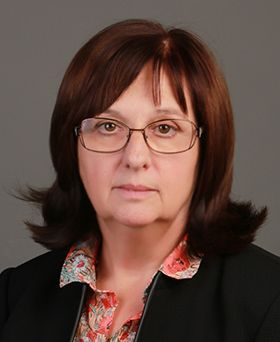
Anikó Csébfalvi is a full professor at the Department of Civil Engineering, Faculty of Engineering and Information Technology, University of Pécs. She specializes in structural optimization, heuristic methods, and stability analysis of elastic structures, with a focus on discrete and continuous optimization of space trusses. Her research integrates hybrid metaheuristic algorithms, such as ANGEL, for engineering applications in structural design and project scheduling. Education: MSc (1978), PhD (1996), CSc (1996), Habilitation (2011) from institutions including Budapest University of Technology and Economics and the University of Pécs. Research: Structural optimization (sizing-shaping-topology), heuristic modeling, stability analysis, resource-constrained project scheduling, and elastic-plastic collapse constraints. Her 15 most recent articles (2004–2012) demonstrate expertise in hybrid metaheuristics, discrete-continuous truss optimization, and financial engineering. She serves as a thesis supervisor in the Marcell Breuer Doctoral School and collaborates internationally on structural mechanics topics. Scientific contributions include memberships in CEACM, ISSMO, and editorial roles for journals like Pollack Periodica and Structural and Multidisciplinary Optimization .
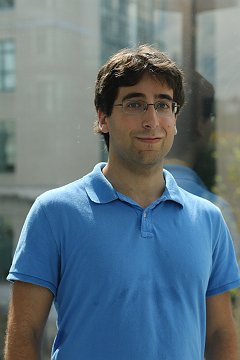
Umut A. Acar is a Professor at the Computer Science Department , Carnegie Mellon University , and an Amazon Scholar. His research focuses on bridging formal methods with systems , algorithms , and AI , aiming to integrate safety and performance in parallel computing. His research spans multiple domains: Quantum Computing : Developing optimization techniques for quantum circuits (e.g., Quartz , Atlas ). Self-Adjusting Computation : Advancing dynamic algorithms and incremental programming frameworks (e.g., Diderot , MPL ). Concurrency & Parallelism : Designing efficient scheduling mechanisms and disentanglement strategies. Recent publications highlight his work on parallel functional programming , quantum simulation , and cache coherence optimization . Notable awards include Best Paper (QCE 2025) , Distinguished Paper (POPL 2024) , and the Intel Award (2022) . He advises PhD students like Pengyu Liu and Mingkuan Xu , and has mentored alumni now at institutions such as NYU , Google , and Inria . His lab collaborates on projects like Diderot (AI/ML) and MPL (parallelism management).
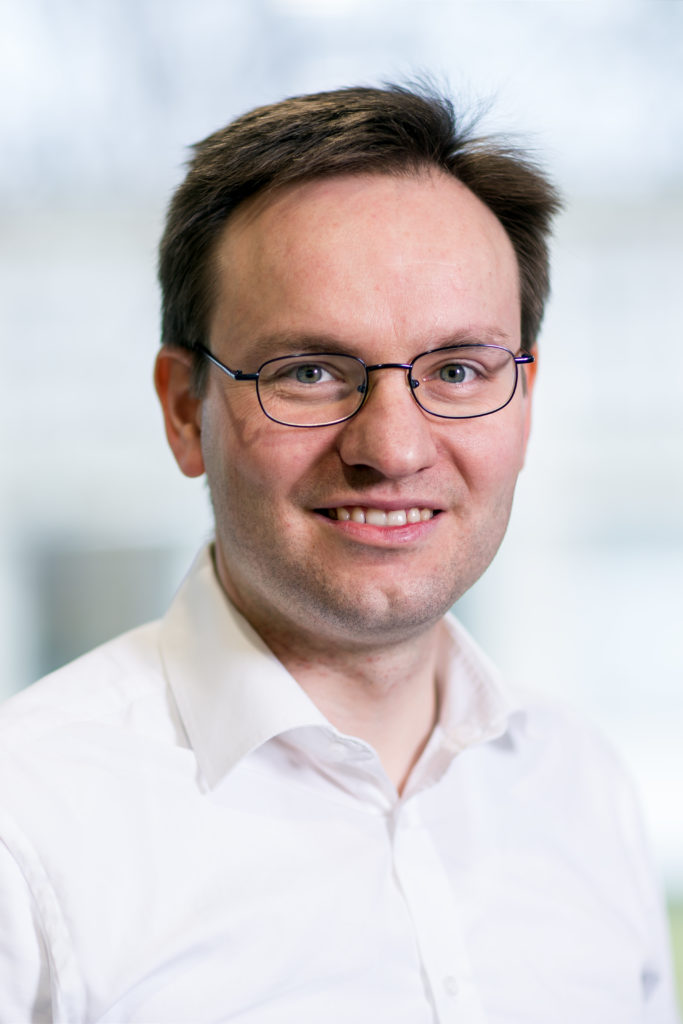
Stefan K. Muller is the Gladwin Development Chair Assistant Professor in the Computer Science Department at Illinois Institute of Technology. He previously served as a Postdoctoral Researcher at Carnegie Mellon University from 2018-2020 following completion of his PhD there under advisor Umut A. Acar. His academic journey began with an AB from Harvard University in 2012 under Stephen Chong. Dr. Muller's research centers on programming language techniques to improve correctness and efficiency of software, particularly in parallel computing domains. His work spans language and type system design, static resource analysis, and parallel computing methodologies. He leads the Responsive Parallelism research project which extends implicit parallelism models to handle features of consumer software like user interaction and responsiveness requirements. His publication record shows consistent output in top-tier venues including PLDI, POPL, ICFP, and SPAA, with recent work focusing on graph types, responsive parallelism, and resource-aware GPU programming. His research has been supported by NSF grant CCF-2107289. Current advisees include Marelle León (BS), Godha Pallavi Bhogadi (MS), and Alex Friedman (PhD) Former students have gone on to positions at Apple, Amazon, Bloomberg, American Express, and PhD programs at UPenn Teaching responsibilities at Illinois Tech include graduate courses CS534 (Types and Programming Languages), CS536 (Science of Programming), CS440 (Programming Languages and Translators), and CS443 (Compiler Construction). Previously at CMU, he taught Principles of Functional Programming.
Dr. Andrea Guerrieri is an Associate Professor at the University of Applied Sciences and Arts Valais-Wallis - School of Engineering , specializing in Reconfigurable Computing, Electronics Design Automation (EDA), and Post-Quantum Cryptography . His work focuses on accelerating FPGA compilation through tools like DynaRapid and optimizing security protocols via Dynamatic , with technologies adopted by industry leaders including Intel, AMD-Xilinx, and CERN . He holds a BSc in Industrial Systems and a MSc in Engineering from HES-SO, and teaches courses in Digital Design and Embedded Hardware. BSc HES-SO in Industrial Systems (2019) BSc HES-SO in Computer and Communication Systems (2017) MSc HES-SO in Engineering (2021) Guerrieri’s research bridges High-Level Synthesis (HLS) and Reconfigurable Architectures to enhance FPGA performance for both terrestrial and space applications . His 2025 publications highlight advancements in heterogeneous computing , energy-efficient PQC , and rapid compilation frameworks . Notably, his 2024 work on DynaRapid achieved 20× speedup in C-to-FPGA implementation. Key scientific contributions span dataflow circuit optimization , dynamic scheduling , and automated code transformations . His 2023 book Applications Enabled by FPGA-Based Technology and 2021 textbook System-on-Chip Design with Arm established foundational references in embedded systems. Awards include Best Paper at FPL 2024 , Outstanding TPC Member at DAC 2024 , and IEEE Senior Membership (2021) . 2024: Best Paper Award (FPL), Outstanding Short Paper Award (HPEC) 2023: H-Saber publication on PQC optimization 2021: IEEE Senior Member recognition As Chair of Onboard Computing for the CHEESE-NASA SSERVI consortium, he leads international collaborations with ETH Zurich, University of Geneva, California State University , and companies like NVIDIA, Arm, and NASA . His projects include the Innosuisse-funded DyReCte initiative (2019–2021) for reconfigurable cryptoengines in nanosatellites.
Andrea Guerrieri serves as an Associate Professor at the School of Engineering, University of Applied Sciences and Arts Western Switzerland Valais (HES-SO Valais-Wallis), specializing in reconfigurable computing and electronics design automation. His research has established significant industry impact through tools like DynaRapid and Dynamatic, with technology adopted by major semiconductor companies including MIPS, Intel, and AMD-Xilinx. BSc HES-SO in Industrial Systems - System-on-Chip specialization BSC HES-SO in Computer and Communication Systems - Digital Design specialization MSc HES-SO in Engineering - Embedded Hardware and Firmware specialization Professor Guerrieri's research focuses on reconfigurable computing, electronics design automation (EDA), and security, with particular emphasis on FPGA design, high-level synthesis, and post-quantum cryptography implementations. His work bridges the gap between theoretical computer architecture and practical hardware implementations, with strong applications in space technology and embedded security systems. His recent publications demonstrate increasing focus on energy-efficient implementations for space applications and quantum-resistant cryptographic systems. Analysis of his 15 most recent publications reveals a clear research trajectory toward optimizing FPGA implementations for post-quantum cryptography and space applications. His work consistently addresses the performance bottlenecks in high-level synthesis while maintaining practical applicability for industry partners like NASA, CERN, and major semiconductor companies. The recent surge in best paper awards (three in 2024 alone) reflects growing recognition of his contributions to efficient FPGA compilation techniques and cryptographic implementations. Scientific Awards: Best Paper Award at FPL 2024 Best Paper Award at HPEC 2024 Best Paper Award at ISFPGA 2020 Outstanding Short Paper Award at IEEE HPEC 2024 Outstanding TPC Member Award at DAC 2024 IEEE Senior Member (2021) Multiple Best Paper nominations (FCCM 2022, FPL 2022, HiPEAC 2022) Professor Guerrieri actively participates in international research projects including the DyReCte project (2019-2021) on dynamically reconfigurable cryptoengines for nano-satellites. He currently chairs the Onboard Computing topic for the Swiss consortium CHEESE affiliated with NASA SSERVI and collaborates extensively with industry partners including AMD-Xilinx, NVIDIA, Arm, NASA, and CERN, as well as academic institutions like ETH Zurich and University of Geneva. His current research focuses on developing next-generation EDA tools and reconfigurable computing platforms for both terrestrial and space applications. His laboratory work centers around FPGA-based prototyping and validation, with specialized facilities for space applications testing. Professor Guerrieri leads a research team that includes Andres Upegui, Quentin Berthet, Laurent Gantel, and Gabriel Da Silva Marques, focusing on practical implementations of reconfigurable architectures for security and space applications.
Dr. Barry Hayes is a Senior Lecturer (Associate Professor) in Power Systems Engineering at University College Cork (UCC), Ireland. He leads a research team focusing on grid integration of sustainable energy technologies and future power system operation/planning. Previously held roles include Lecturer at University of Galway (2016-2018) and Marie Sklodowska-Curie Research Fellow at IMDEA Energy (2013-2016). Holds a PhD in Electrical Power Systems Engineering from University of Edinburgh (2013). Research interests include smart grids, distribution network management, demand-side flexibility, non-intrusive load monitoring, and energy communities. Active in IEEE standards development (P2030 smart grid interoperability) and serves as Associate Editor for IEEE Transactions on Energy Markets, Policy and Regulation. Has secured €1.03M SFI grant (2024-2029) for disruptive energy tech research, plus other grants including €506K from Disruptive Technologies Innovation Fund. Supervised PhD students in power systems and energy markets. Collaborates with Irish energy industry and international partners through MaREI Centre. Publications emphasize grid integration challenges, P2P energy trading, and smart meter applications. Notable recognition includes Elsevier's Most-Cited Article award (2022). Engages in public science communication via RTÉ and advises community-owned renewable energy projects.
Rakesh Nandi is a Research Fellow at the Aviation Studies Institute (ASI) of Singapore University of Technology and Design (SUTD). He previously held a research fellowship under Dr. Shrutivandana Sharma at the Engineering Systems and Design (ESD) school at SUTD. His work focuses on optimizing and analyzing air traffic networks, with projects such as Network Capacity and Network Collaboration under Professor Peter Jackson. Rakesh earned his Ph.D. in Mathematics from National Institute of Technology Raipur (2020) and an M.Sc. in Applied Mathematics from Guru Ghasidas University (2013). His research interests span queueing systems , stochastic modeling , numerical optimization , and network modeling/scheduling . He collaborates on projects requiring advanced computational and analytical methods for discrete-time queueing systems. His recent publications (2018–2022) emphasize queueing theory applications, stochastic processes, and optimization in discrete-time systems. Key topics include D-BMAP/G/1 queues, GI/D-MSP queue analysis, and N-policy control strategies. While no scientific awards are listed, Rakesh demonstrates active research in operations research and applied mathematics. He has no documented advisees or grants mentioned. He contributes to interdisciplinary teams at ASI and ESD, focusing on aviation systems and network efficiency.
Fredrik Kjolstad is an Assistant Professor of Computer Science at Stanford University. His research focuses on compilers, programming models, and systems for sparse computing, with an emphasis on separating algorithms from data representation. He leads efforts in developing compilers like TACO, Simit, and Legate Sparse to optimize sparse tensor algebra and distributed computations. Kjolstad's work spans compiler design, hardware-software co-design, and programming languages for high-performance computing. His research group aims to enable portable applications across diverse data representations and architectures. Notable projects include the TACO compiler for sparse tensor algebra, the Simit programming language for physical simulations, and the Copy-and-Patch compilation technique for fast runtime code generation. He has also contributed to distributed systems like Legate Sparse and hardware accelerators such as Onyx. Kjolstad has received prestigious awards including the NSF CAREER Award and the MIT EECS PhD Thesis Award. His publications cover topics like sparse tensor compilation, compiler optimization, and agile hardware design. He advises multiple PhD students and collaborates with researchers like Kunle Olukotun and Alex Aiken. Key areas of impact include efficient sparse data processing, compiler-driven hardware design, and scalable distributed computing frameworks. His work bridges theoretical compiler techniques with practical system implementations, aiming to simplify and accelerate complex computational tasks.
Joachim Arts is a Full Professor at the University of Luxembourg in the Faculty of Law, Economics and Finance , Department of Economics and Management. He is affiliated with the Luxembourg Centre for Logistics and Supply Chain Management (LCL) and holds visiting positions at MIT Sloan School of Management and Eindhoven University of Technology. His research focuses on operations research applications in supply chain management, logistics, maintenance optimization, and business analytics, often collaborating with companies like ASML and Philips. He has published extensively in top journals such as Operations Research and European Journal of Operational Research . Dr. Arts holds a European Doctoral Dissertation Award (EURO) and a Veni Career Grant from the Netherlands. His work emphasizes practical applications, including inventory systems, maintenance scheduling, and sustainability in supply chains. He previously served as an Assistant Professor at TU Eindhoven and a visiting scholar at MIT. His research bridges theoretical models with real-world industry challenges. Awards : European Doctoral Dissertation Award (201?), Veni Career Grant (201?) Visiting Appointments : MIT Sloan, TU Eindhoven Key Focus Areas : Lost sales inventory systems, condition-based maintenance, green logistics, and service parts optimization His recent work explores profitability-sustainability trade-offs in chemical value chains and dynamic supply mode selection for emission reduction. He leads initiatives in data-driven maintenance strategies and multi-echelon inventory systems.
Mahmoud Amin is a Professor in the Department of Electrical & Computer Engineering at Manhattan College. He holds a Ph.D. from Florida International University and has over 70 publications in professional journals and conferences. His research focuses on power systems, smart grid security, and sustainable energy systems. He has secured grants totaling over $2 million, including the Intel FPGA University Program Grant and the Typhoon HIL award. He advises numerous students and leads research projects involving advanced power electronics and grid integration. Amin is a Senior Member of IEEE and active in multiple technical committees. Education: B.Sc. in Electrical Power & Machines Engineering, Helwan University (Cairo, Egypt) M.S. in Electrical Power & Machines Engineering, Helwan University Ph.D. in Electrical Engineering, Florida International University Research Interests: His work emphasizes power systems reliability, renewable energy integration, and advanced control techniques for sustainable energy applications. He has developed laboratory-scale testbeds for power electronics and smart grid research. His projects include hardware-in-loop realizations and cybersecurity mitigation strategies for smart grids. Grants & Awards: $2M grant for energy storage in renewable power systems (KSA Ministry of Education) $20K Typhoon HIL award for HIL402 emulator development Intel FPGA Grant ($8K, 2016) 7x24 University Challenge Award (2019) Professional Activities: Amin chairs Manhattan College's ABET committee and serves on editorial boards for IEEE Transactions. He advises student chapters of IEEE and robotics clubs. His leadership includes the NSF-funded Engineering Scholars Training and Retention (STAR) Center. Labs & Infrastructure: He oversees the power laboratory in Leo 305, equipped with advanced testbeds for power electronics and machine drives. Recent upgrades include $35K in equipment for experimental validation of smart grid technologies.
Ted Ralphs is a Professor of Industrial and Systems Engineering at Lehigh University’s Rossin College of Engineering. He serves as co-founder and director of the Computational Optimization Research at Lehigh (COR@L) Laboratory, and chairs the INFORMS Computing Society. His research focuses on large-scale computation and optimization, bridging theoretical and practical applications through high-performance computing and mathematical techniques. Ralphs holds a Ph.D. in Operations Research from Cornell University and advanced degrees in Mathematics and Applied Mathematics from Carnegie Mellon University. His expertise spans Supply Chain Management, Grid Computing, Mathematical Optimization, Financial Engineering, and Algorithm Development. He teaches courses in computational methods, discrete optimization, financial optimization, and algorithms in systems engineering. Ralphs has received notable honors including the 2021 Rossin College Outstanding Doctoral Student Advising Award and election as an INFORMS Fellow in 2023. His research contributions include advances in bilevel optimization, decomposition methods, and open-source optimization software (e.g., COIN-OR’s Cbc solver). He has led collaborative projects such as a Naval grant-funded initiative with the University of Pittsburgh on bilevel optimization. Ralphs’ work emphasizes scalable algorithms and their real-world applicability in energy markets, logistics, and combinatorial problems.
Derek J. Sinnott is a Researcher at the RIKON Sustainable Architecture & Built Environment Research Centre, focusing on sustainable construction, digitalization, and circular economy principles. His work develops frameworks for material passports and lean-agile construction methodologies. Research addresses: Dynamic material tracking systems Integration of Scrum and Lean Construction principles Takt planning optimization Regulatory compliance in construction Recent publications establish conceptual frameworks for sustainable material management and analyze Last Planner® System implementations in residential projects.
Saad Mubeen is a Full Professor of Computer Science at Mälardalen University, Sweden, affiliated with the School of Innovation, Design and Engineering and the Division of Networked and Embedded Systems. He holds a Master's in Electrical Engineering (Embedded Systems) and a PhD in Computer Science and Engineering from Mälardalen University (2014), with a Docent title (2018) focused on vehicular embedded systems. His research emphasizes predictable embedded systems, timing analysis for real-time communication, and component-based software design. Key areas include model-driven development for automotive systems, integration of TSN/5G networks, and fault-tolerant industrial architectures. He has led projects on end-to-end timing analysis in distributed systems, ROS 2 verification, and cognitive edge-cloud scheduling. Publications span 2021–2025, focusing on real-time systems, network protocols (TSN, AVB, 5G), and industrial automation. Notable work includes frameworks for TSN configuration, fault diagnosis tools using NETCONF, and scheduling algorithms for heterogeneous edge-cloud environments. His contributions address critical challenges in timing predictability, security, and resource optimization for cyber-physical systems. Education contributions include problem-based learning modules for vehicular software engineering. He is actively involved in bridging academia and industry through collaborative research on next-generation automotive and industrial systems.
Geert Heijenk is a Full Professor at the Digital Society Institute, specializing in the Design and Analysis of Communication Systems. His research focuses on Intelligent Transport Systems, Autonomous Vehicles, and vehicular networking. He has been actively publishing since 1990, with over 220 research outputs, including peer-reviewed articles, conference contributions, and books. Key research interests include adaptive cruise control algorithms, vehicular network protocols, energy efficiency in communication systems, and cooperative driving systems. His work bridges theoretical contributions (e.g., network scheduling algorithms) with practical applications (e.g., smart traffic systems). Awards: 6 Best Paper Awards (2021, 2016, 2011, 2008, etc.) Grants/Advising: Supervised 10 academic works, including PhD/Master’s theses. He is actively involved in collaborative projects and has delivered invited talks on topics like infrastructure support for vehicular networks and geocast scheduling in mmWave systems. Labs/Teams: Leads research groups exploring vehicular communication, green networking, and intelligent transport systems integration.
Summary Role & Affiliation: Mahmut Taylan Kandemir is a Professor in the Department of Computer Science and Engineering at Pennsylvania State University. He is a member of the Microsystems Design Lab and has held roles such as Graduate Program Coordinator. His research focuses on optimizing compilers, runtime systems, embedded systems, and storage technologies. Education: B.S. and M.S. from Istanbul Technical University (Computer Engineering), Ph.D. from Syracuse University (Computer Science). Research Interests: Kandemir’s work spans compiler optimization, energy-efficient architectures, non-volatile memory systems, and cloud storage. His research has been funded by NSF, DARPA, and industry partners like Intel and Microsoft. Articles & Contributions: Over 150 journal papers and 650+ conference publications, covering topics like compiler-driven storage efficiency, 3D NAND SSD optimization, and approximate computing frameworks. Awards: NSF Career Award, Penn State Premier Research Award, IEEE Fellow, and multiple best paper awards. His contributions include compiler tools and storage systems for high-performance computing. Advising & Grants: Advised 32 Ph.D. and 20 M.S. students. Active in program committees for conferences like MICRO, ISCA, and HPCA. Current grants focus on cloud resource management and emerging memory technologies. Labs & Collaborations: Leads projects in collaboration with Argonne National Lab, NVIDIA, and Intel. His work bridges academia and industry, addressing challenges in multicore and embedded systems.