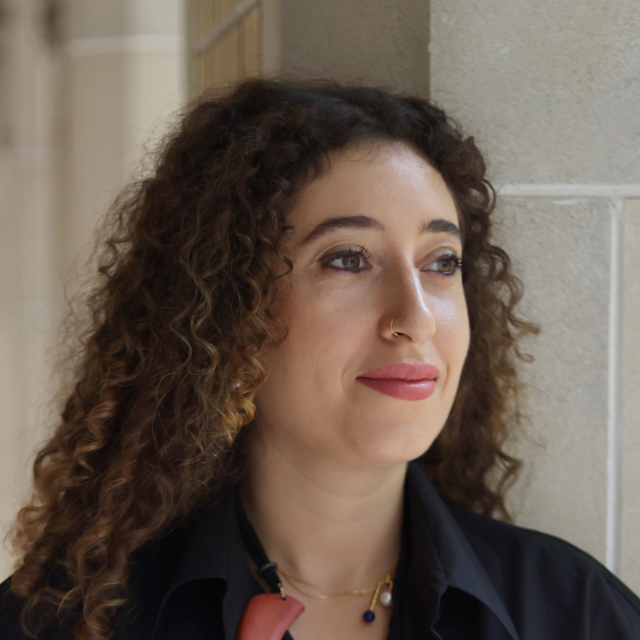
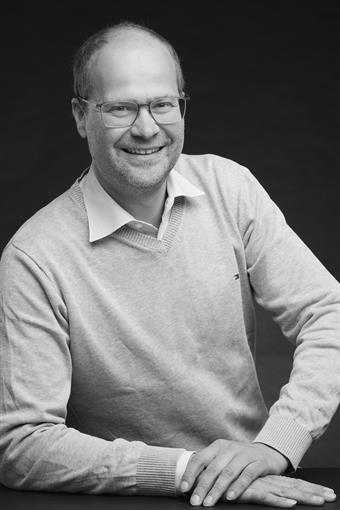
Olga Fernández López is an Associate Professor at the Department of History and Theory of Art, Universidad Autónoma de Madrid, and holds a PhD in Geography and History (History of Art) from Universidad Complutense de Madrid (UCM). She collaborates with institutions including Intermediae (Matadero Madrid), CA2M Madrid, and Andalusian Center for Contemporary Art Seville. PhD Curating Contemporary Art, Royal College of Art (2017) PhD in History of Art, UCM Master’s in Cultural Management, Fundación Ortega y Gasset Her research focuses on: History of exhibition models and curatorial practice Contemporary art in Spain and Latin America Visual culture and political philosophy Museum decolonization Recent publications explore: Urban curatorial practices (2016-2021) Postwar European visual culture (2019) Decolonial exhibition strategies (2020) Scientific awards include: Salvador de Madariaga grant (2020) for research at Columbia University Key projects: PUBLISHERS: Publics of Contemporary Art (2019-2021) European Forum for Advanced Practices (2019-2022) Decentralized Modernities: Cold War Art (2018-2020)
Francisco Javier Murillo Torrecilla is a Professor of Research Methods and Evaluation in Education at the Autonomous University of Madrid (UAM). He serves as Director of multiple educational journals ( REICE , Revista Iberoamericana de Evaluación Educativa , Revista Internacional de Educación para la Justicia Social ) and leads research groups like 'Educational Change for Social Justice' (GICE) and the Ibero-American Research Network on School Change and Effectiveness (RINACE). His work focuses on Education for Social Justice , School Segregation , and Educational Leadership . He holds degrees in Mathematics and Education Sciences, and a PhD in Education Sciences from Universidad Complutense de Madrid. With 5 research sexenios and over 200 publications, his citations exceed 25,000 (h-index: 84) in Google Scholar. He has led 25 competitive research projects, including the 'Network of Excellence' RILME (EDU2017-90606-REDT). Coordinated UNESCO's Latin American Laboratory for Educational Quality Evaluation (LLECE) Former Director of Spain's Centre for Educational Research and Documentation (CIDE) Director of UAM's UNESCO Chair in Education for Social Justice and Institute DEMOSPAZ His research projects on social justice in education include five consecutive Spanish State Program grants (2010-2021) and books like La investigación sobre eficacia escolar (2005). He has consulted for UNESCO, OECD, and governments in Latin America.
Lana Salman is an Assistant Professor in the Department of Political Science at the University of Toronto . A scholar of international development and urban politics, her research focuses on everyday statecraft, social reproduction, and urbanism in the Middle East and North Africa. PhD, University of California, Berkeley (City and Regional Planning, Global Metropolitan Studies) MUPP, American University of Beirut Her research explores how urban populations negotiate citizenship and state formation through: Land access and infrastructure development Microfinance institution operations Post-revolutionary governance practices Transdisciplinary north-south comparative analysis Current projects include: Tunisia State-Making: Ethnographic study of urban poor communities' role in statecraft Brussels-Beirut Comparison: Analysis of social workers' roles in refugee resettlement and urban displacement
Dr. Florian Urmetzer serves as Associate Teaching Professor and founding Director of the Ecosystems, Platforms & Strategy (EPS) Research Group at the University of Cambridge's Institute for Manufacturing (IfM). His expertise centers on strategy formulation tools for business ecosystems and platforms within manufacturing and services sectors. He teaches the Business Ecosystem Strategy course and leads IfM Engage consultancy projects for clients including IBM, ATOS, ABN-AMRO, CEMEX, Pearson Education, Leonardo rescue helicopters, and the NHS. Urmetzer holds a distinction MSc in Network Centred Computing and PhD from the University of Reading's School of Systems Engineering. His doctoral research developed real-time usability evaluation methods for distributed collaborative environments. Academically, he has been a visiting researcher at Barcelona Supercomputing Center and Politecnico di Milano. His research investigates industrial ecosystems from strategic and managerial perspectives, encompassing supply chains, digital platforms, and business ecosystem dynamics. This work has been published in leading journals including Journal of Business Research, European Journal of Information Systems, and Journal of Service Research. Analysis of his recent publications reveals dominant trends in technological sovereignty, platform ecosystem governance, and manufacturing relocation strategies. Prior to Cambridge, Urmetzer gained extensive industry experience as a consultant at Accenture in Zürich, Senior Researcher at SAP labs, and roles at Volkswagen AG, Gartner Inc., and IBM. He currently leads the EPS Research Group, which develops frameworks for organizations navigating complex industrial ecosystem dynamics.
Christian Geisler Asmussen serves as Professor of Strategic and International Management at Copenhagen Business School's Department of Strategy and Innovation. His research investigates competitive advantage, globalization, and multinational enterprise organization through formal modeling, game theory, and theories of the firm, with current emphasis on foreign location choices and global corporate social responsibility. Appointed after earning his PhD from CBS in 2007, he maintains active contributions to international business scholarship and executive education. His research portfolio centers on: Organization and Expansion of Multinational Firms Internalization Theory Game Theory applications Corporate Social Responsibility frameworks Foreign location decision-making Global CSR implementation challenges Analysis of his recent publications reveals a strategic evolution toward integrating sustainability into multinational operations, with 2024-2025 works examining global cities' role in reducing liability of foreignness, modular value chain design, and CSR orchestration mechanisms. His scholarship consistently applies game-theoretic approaches to multinational strategy while addressing emerging challenges in global governance and ethical operations. Recognition for his scholarly impact includes: Barry M. Richman best dissertation award Haynes Prize Tietgen Prize JIBS Decade Award Professor Asmussen supervises Cand.Merc. Master Theses and CEMS Business Projects while teaching Strategy, Contemporary Issues in International Business, Macroeconomics, and PhD-level Strategic Management. His external engagements include providing Strategic Risk Management training for Saxo Bank (2024) and serving as external accreditor for Cyprus' Higher Education Quality Assurance Agency (2024-2025).
Nathaly Carolina Pinto Torres is a Doctoral Researcher at Aalto University's Department of Design, working on critical design interventions for marginalized communities. Since 2020, she has led the "Emergencia de Educación en la Amazonía Ecuatoriana" project, collaborating with indigenous students and Confeniae to develop pictographic communication systems challenging social exclusion. Her research spans: Participatory design with indigenous communities Gender justice in education during crises Epistemic justice in plurinational contexts Visual resistance strategies in Amazonian regions Postcolonial educational frameworks Design for socio-environmental transformation Publication trends show focus on: Visual communication systems for marginalized groups Crisis-driven educational design Decolonial methodologies Intersectional analysis of exclusion Epistemic justice in academia Collective resilience building Scientific recognition includes: Best Demo Award (2021) SENESCYT International Graduate Scholarship (2019) Netherlands Fellowship Programmes (NFP) (2010)
Heather M.-L. Miller serves as an Associate Professor in the Department of Anthropology at the University of Toronto Mississauga (UTM), currently on academic leave for the 2025-2026 term. Dr. Miller's educational background includes a PhD from the University of Wisconsin-Madison (1999) alongside MA, MSc, and BA degrees, though specific institutions for the latter are not detailed in the provided materials. PhD, University of Wisconsin-Madison, 1999 MA (institution and year not specified) MSc (institution and year not specified) BA (institution and year not specified) Her research specializes in South Asian archaeology, with emphasis on prehistoric and historic complex societies. Key areas include ancient technology, material culture analysis, social organization, regional interconnections, and agricultural systems. Current projects focus on medieval Islamic trade routes in northwestern Pakistan, particularly through the Caravanserai Networks Project which examines economic and social aspects of historical travel routes. Analysis of Dr. Miller's recent publications reveals a strong focus on the Indus Civilization and South Asian archaeology, with increasing attention to medieval periods. Her work integrates archaeological evidence with historical texts to explore trade networks, technological practices, and socio-economic organization, demonstrating an interdisciplinary approach that bridges anthropology, history, and material science. Scientific Awards: No specific awards or honors are mentioned in the provided information. Dr. Miller mentors graduate students, including Rachele Andrea Bianchi. Her research is supported by competitive grants from the Social Sciences and Humanities Research Council of Canada (SSHRC) and the Connaught Foundation at the University of Toronto, enabling fieldwork in Pakistan and database development for historical trade routes. She is an active member of the Trent University Archaeology Research Centre (TUARC) and the Centre for South Asian Studies at the University of Toronto. Her field research involves collaboration with the Directorate for Archaeology and Museums of the Northwest Frontier Province (NWFP) in Pakistan and international scholars, fostering cross-border academic partnerships.
Nando Sigona is Professor of International Migration and Forced Displacement and Director of the Institute for Research into Superdiversity (IRiS) at the University of Birmingham, UK. He serves within the School of Geosciences Human Geography and Spatial Planning in the Urban Geography department, where he leads significant research on migration policy and forced displacement. His research spans critical areas including undocumented migration, the migration-citizenship nexus, naturalisation and denaturalisation processes, Romani politics and anti-Gypsyism, EU asylum systems, Brexit impacts on European mobility, and child and youth migration. Sigona's work is characterized by its policy relevance and theoretical innovation in understanding contemporary migration governance. His recent publications demonstrate a clear trend toward examining the intersection of migration enforcement, digital platforms, and labor markets, particularly evident in his 2025 research on migrant food delivery riders in Birmingham. His scholarly output spans foundational theoretical works like The Oxford Handbook of Superdiversity (2022) to urgent contemporary analyses of migration enforcement in the gig economy. Sigona has received significant research funding including Horizon Europe support for the I-CLAIM project (Improving the living and labour conditions of irregularised migrant households in Europe), where he serves as co-Investigator and Scientific Director. His work has been published across leading journals including Sociology, Social Anthropology, Antipode, Journal of Ethnic and Migration Studies, and Ethnic and Racial Studies. Founding editor of Migration Studies (Oxford University Press) Lead editor for Global Migration and Social Change book series (Bristol University Press) Director of the Institute for Research into Superdiversity (IRiS) His recent blog posts and media commentary reveal active engagement with contemporary policy debates, particularly regarding Labour's immigration enforcement strategies targeting migrant workers in the gig economy. Sigona's research team has documented a 79% increase in immigration raids in Birmingham since Labour came to office, based on Freedom of Information data (FOI2025 07429).
Prof. Dr.-Ing. Ralf Beck serves as Professor for Control and Regulation Technology and Automation Technology at Hochschule Düsseldorf University of Applied Sciences within the Faculty of Electrical Engineering & Information Technology. His academic responsibilities span multiple degree programs including BEng Electrical Engineering, BEng Industrial Engineering, and MSc Electrical Engineering and Information Technology. His educational background includes Mechanical Engineering studies at TU Braunschweig (1998-2004), followed by doctoral research at RWTH Aachen's Institute of Control Engineering where he earned his Dr.-Ing. in 2010 with a dissertation on predictive energy management for hybrid vehicles. Prior to his current professorship, he held progressive roles at FEV Europe GmbH from 2009-2018, culminating as Senior Project Manager for Vehicle and Powertrain Electronics. Beck's research focuses on control engineering systems with particular emphasis on automation technology, regulation systems, and model-based development approaches. His work bridges theoretical control methodologies with practical automotive applications, especially in hybrid vehicle energy management, multi-robot systems, and intelligent air path control. The Modellfabrik Fab21 serves as his primary experimental platform for model-based development applications. His publication record since 2005 demonstrates consistent contributions to control engineering, particularly in hybrid vehicle systems, emission control optimization, and calibration methodologies. Recent work shows increasing focus on distributed robotics and intelligent transportation systems, reflecting evolving research directions while maintaining core expertise in control theory applications. As an educator, Beck teaches foundational and advanced courses including Electrical Engineering III, Control and Regulation Technology, Model-Based Development, Technical Mechanics, and Advanced Control Engineering at the Master's level. His teaching integrates theoretical concepts with practical laboratory applications through the university's Moodle platform, emphasizing hands-on implementation of control algorithms and system modeling techniques.
Terje Andreas Eikemo is a Professor at the Department of Sociology and Political Science , Norwegian University of Science and Technology (NTNU) , and Head of the CHAIN research center . His work focuses on the intersection of social inequality , public health , and global policy , emphasizing how socioeconomic factors like education , income , and welfare systems influence mortality , chronic diseases , and mental health . He combines theories from sociology , epidemiology , and medicine to address health disparities across diverse contexts, including pandemics , climate change , and migration . 2009: Prize for Young Researchers in the Humanities 2010: SINTEF Prize for Outstanding Research 2014: NTNU Star Program Eikemo has published extensively in top journals like The Lancet and BMJ Open , with research themes spanning social determinants of health , policy interventions , and global health equity . His work includes GBD studies , European Social Survey analyses , and refugee health assessments. He serves as Editor-in-Chief of the Scandinavian Journal of Public Health and collaborates with international bodies like WHO and UNESCO .
Dr. Damian Mazurek, M.A., is a researcher at the Department of Rural Geography and Local Development, Institute of Geography and Spatial Organization (Polish Academy of Sciences). He holds a Master's degree in Geography from Maria Curie-Skłodowska University (2015), specializing in regional development and geoinformatics. Research Focus: Application of GIS in regional development analysis, methodological approaches to identifying regional specializations, and spatial planning for rural areas. Key Contributions: Co-author of 15+ publications (2017-2025) addressing peri-urban dynamics, small town typologies, waste management systems, and digital accessibility in rural Poland. Notable work includes mapping suburban zones using diagnostic indicators and analyzing Wi-Fi distribution patterns. Collaborative Projects: Regular contributor to cross-border initiatives like the PL-SK 2007-2013 program and co-PI on National Science Centre (NCN) grants. Active participant in international conferences (IGU, European Geographical Society).
Dawn Martin-Hill , Professor Emeritus in Indigenous Studies at McMaster University , is Canada’s first Indigenous cultural anthropologist and the founder of McMaster’s Indigenous Studies Program (1992). She also holds the role of Academic Co-Chair of the Indigenous Education Council and has served as Director of Indigenous Studies since 1998. A Mohawk scholar residing at Six Nations of the Grand River, she integrates Indigenous knowledge systems with Western science to address critical issues of water security, health, and sovereignty. Education & Training: PhD, Cultural Anthropology Research Interests: Dr. Martin-Hill’s work centres on traditional ecological knowledge (TEK) , community-driven water security , and Indigenous methodologies . Her flagship program Ohneganos co-creates bilingual tools—apps, VR, water sensors, Indigenous mapping, films, and podcasts—to empower First Nations in monitoring and managing water resources. She explores intersections of climate change, maternal health, mental health, and Indigenous governance . Research Impact: Spanning hydrology, medical anthropology, and digital health, her recent publications address urgent issues such as water insecurity’s impact on maternal mental health , climate-driven hydrological extremes , and digital mental-health tools for Indigenous youth . Collectively, her work advances decolonizing methodologies and supports United Nations Sustainable Development Goals. Scientific Awards & Honours: Inaugural Fulbright Indigenous Canada–U.S. Scholar Award Inaugural Chair, CIHR-IPH Secretariat on Traditional Medicine in Health Research Outstanding Teaching Award, Aboriginal Consortium 2022 University of Oklahoma International Water Prize Oklahoma Universities Water Technologies Award Princeton Book Award for forthcoming Ohneganos volume Funding & Training: Principal Investigator on four Global Water Futures grants that have supported over 30 graduate students and nine Indigenous Studies undergraduates , plus 45 secondary First Nations students receiving McMaster certificates. She has served as co-investigator on CIHR-IPH ARHNets Center funding 80+ First Nations, Métis, and Inuit graduate students . Leadership & Service: Member of the UNESCO Hydrology Committee for Canada , board member of CIHR Institute of Indigenous Peoples’ Health and CIHR Anti-Racism Committee , former Chair of the CIHR College of Reviewers. She spearheaded the McPherson Chair in Indigenous Studies and secured multiple Indigenous student scholarships and bursaries.
Jelena Mirkovic serves as Principal Scientist at USC Information Sciences Institute (USC/ISI) and Research Associate Professor at the University of Southern California's Thomas Lord Department of Computer Science. She has held faculty positions at USC since 2010, progressing from Research Assistant Professor to her current role as Research Associate Professor since 2017, while also serving as Project Leader at USC/ISI. Her educational background includes: PhD in Computer Science from UCLA (2003) MS in Computer Science from UCLA (2000) B.Sc. in Computer Science from University of Belgrade, Serbia (1998) Mirkovic's research spans network security, human-centered attacks, and cybersecurity experimentation infrastructure. Her work focuses on critical security challenges including botnets, denial-of-service attacks, IP spoofing, vulnerability scanning, and user-centric privacy. She has pioneered methodologies for security experiments and led major infrastructure projects including the DETER testbed and SPHERE (Security and Privacy Heterogeneous Environment for Reproducible Experimentation). Analysis of her recent publications reveals consistent innovation across multiple security domains. Her work demonstrates strong technical depth in DDoS defense systems (particularly DNS protection), binary vulnerability analysis, privacy-preserving systems, and security experimentation infrastructure. A notable trend is her focus on bridging theoretical security concepts with practical implementation through large-scale testbeds and real-world data analysis. Her significant scientific achievements include: IEEE Senior Member distinction Best paper award at IEEE COMSNETS 2023 for DNS DDoS defense research Mirkovic has secured substantial research funding as Principal Investigator or Co-PI on numerous grants from NSF, DHS, and other agencies. Current major projects include SPHERE (Security and Privacy Heterogeneous Environment for Reproducible Experimentation), DISCERN (Datasets to Illuminate Suspicious Computations), and modernizing DeterLab education infrastructure. She has successfully led multiple REU sites focused on cybersecurity education and workforce development. She directs the STEEL (Security Research Lab) at USC/ISI, which develops innovative security solutions through interdisciplinary research in network security, human factors in security, and cybersecurity experimentation infrastructure. The lab emphasizes practical implementations that address real-world security challenges while advancing theoretical understanding of security systems.
Nina Vollenbroker serves as Associate Professor of Architecture and Director of the Architectural Design PhD programme at University College London's Bartlett School of Architecture. A registered architect in the UK (ARB) and Germany (Architektenkammer NRW), she also acts as editor for Architectural Research Quarterly since 2020 and serves on the Society of Architectural Historians’ advisory committee on accessibility. Her educational background includes a PhD in Architectural History from UCL, along with multiple UCL degrees: Master of Architecture (2005), Certificate (2004), Master of Science (2002), Diploma (2001), and Bachelor of Architecture from Oxford Brookes University (1997). Vollenbroker's research centers on the intersection of deafness, disability, and architectural design, challenging normative spatial paradigms through historical and contemporary lenses. Her current Paul Mellon Centre-funded project "Hide and Speak" examines the first purpose-built deaf schools in 19th-century Britain, revealing how architecture actively shaped cultural understandings of deafness. She extends this work through "Deafening Architectural Modernism," which re-evaluates Adolf Loos's contributions through the lens of his hearing loss, demonstrating how sensory experience fundamentally informs spatial design. Her broader research encompasses migration studies, gendered domestic spaces, and critical examinations of architectural exclusion. Her recent publications span architectural history, disability studies, and material culture, with significant contributions to edited volumes on deafness in architecture (University of Illinois Press, 2025), mobile home-making (Brill, 2025), and the American West (Routledge, 2025). These works consistently demonstrate her methodological approach of centering marginalized perspectives within architectural discourse. Wilhelm Award from Pioneer America Society for outstanding research in material cultures studies Paul Mellon Centre Mid-Career Fellowship Royal Institute of British Architects Research Award British Academy Research Fund Award Vollenbroker supervises doctoral students in architectural design while securing major research funding from bodies including the Arts and Humanities Research Council, British Academy, and Royal Institute of British Architects. Her international collaborations include work with the Lebanese NGO Biladi on migration studies and knowledge-exchange programs funded by The Council for British Research in the Levant. She regularly convenes major conference sessions, including at the Society of Architectural Historians and Architectural Humanities Research Association conferences, and presents at institutions worldwide including Columbia University, Yale University, and Heidelberg University. Her research group actively engages with disability advocacy organizations and architectural practitioners to translate historical insights into contemporary inclusive design practices, particularly through her editorial work on special journal issues addressing disability and architecture.
Roel C.G.M. Loonen is an Associate Professor at the Unit Building Physics and Services within the Department of the Built Environment at Eindhoven University of Technology (TU/e), Netherlands. He holds joint appointments with EAISI High Tech Systems and EIRES Research groups, focusing on building performance simulation and energy systems. His work bridges academic research with practical applications through collaborations with SMEs in the building industry. Loonen received his BSc and MSc (cum laude) in Building Services from Eindhoven University of Technology, followed by a PhD in 2018 with a dissertation on 'Approaches for computational performance optimization of innovative adaptive facade concepts.' His educational background has positioned him as a leading expert in building performance simulation and sustainable building technologies. His research interests center on developing and applying modeling and simulation strategies to support decision-making for designing buildings that combine high indoor quality with minimal environmental impact. Key areas include adaptive facades, building-integrated renewable energy systems, and energy-efficient building envelopes. He specializes in creating and validating new building performance simulation models to advance innovative building technologies. His recent publications demonstrate a strong focus on practical applications of building performance simulation, with emphasis on residential energy efficiency, photovoltaic systems, and occupant-centered approaches to building design. The work shows increasing integration of machine learning techniques with traditional building simulation methods, particularly for sensitivity analysis and optimization of building performance. REHVA Young Scientist Award (2021) Best PhD supervisor award from Department of the Built Environment, TU/e (2018) First prize - REHVA International student competition (2011) Smart daylight control for optimal building performance (NWO Take-off award, 2018) Best paper award (2021) Loonen actively supervises PhD and Master's students, evidenced by his Best PhD Supervisor Award in 2018. He manages multiple research projects including Sustainable Summer Comfort (2024-2027), Modeling Innovative Use Scenarios for Future Domestic Comfort (2023-2026), and Just Prepare (2022-2026), with funding from sources including the Dutch Research Council (NWO). His professional service includes being a board member of the Dutch-Flemish IBPSA affiliate and co-chair of IBPSA World's website committee, plus reviewing for 35 academic journals. He leads research within the Building Performance group, focusing on creating practical tools and methodologies that bridge the gap between theoretical building performance models and real-world implementation in the construction industry. His work particularly emphasizes the integration of occupant behavior and practices into building performance models, recognizing that human factors are critical to achieving sustainable building performance in practice.