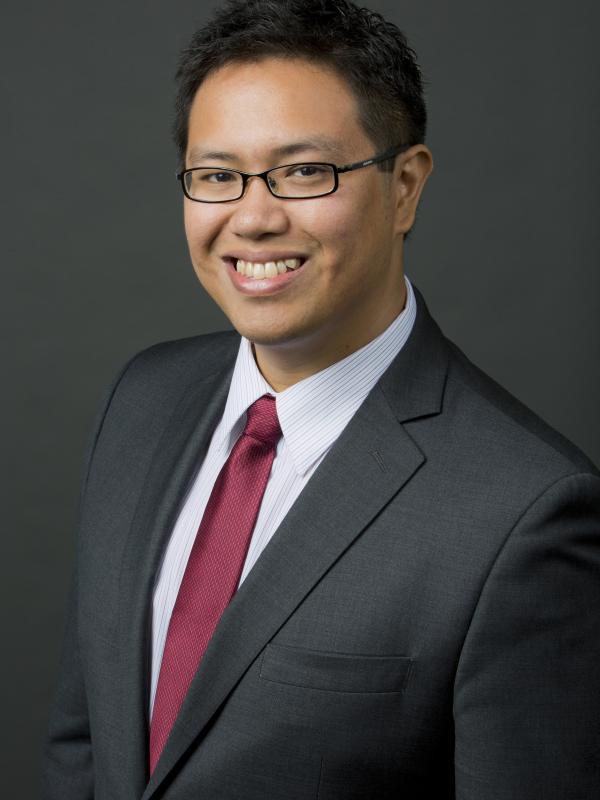
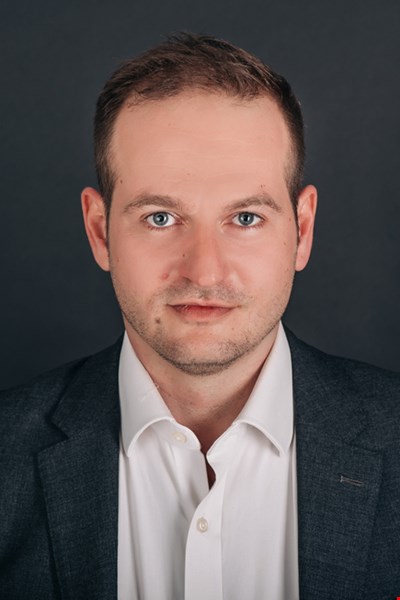
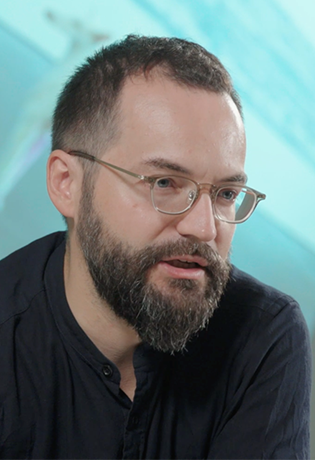
Dr. Julian Limberg is a Senior Lecturer in Public Policy at the Department of Political Economy, King’s College London. He previously held a post-doctoral position at Ludwig Maximilian University of Munich and earned his PhD in Political and Social Sciences from the European University Institute. His research focuses on public policy and political economy, particularly inequality dynamics, tax policy, and environmental governance. Education: PhD in Political and Social Sciences (European University Institute), Post-doctoral Research (Ludwig Maximilian University). Affiliations: Public Policy and Regulation Research Group, Quantitative Political Economy Research Group, Global South Research Group. His work examines the causes and consequences of progressive taxation, climate policy effectiveness, and public perceptions of fiscal fairness. Recent studies include the impact of dedicated climate ministries on emissions reduction and the link between financial sector growth and tax policies. Limberg is also engaged in projects analyzing how technological changes influence tax preferences and the societal consequences of major tax cuts for the wealthy. Key articles highlight his contributions to understanding taxation trends, climate policy implementation, and the interplay between economic shifts and fiscal strategies. He collaborates across disciplines, bridging political science and economics to address contemporary governance challenges.
Jose Miguel Abito ("Mike") is an Associate Professor in the Department of Economics at The Ohio State University (OSU), serving as Director of Undergraduate Studies. He holds a PhD from Northwestern University, with prior roles including Assistant Professor at the Wharton School, University of Pennsylvania, where he won a teaching award. His research focuses on applied microeconomics, particularly industrial organization, regulation, and environmental economics. He examines topics such as regulatory incentives, consumer misinformation effects, and antitrust methodologies in sectors like electricity, extended warranties, and infant formula. Education: PhD in Economics from Northwestern University (Evanston, IL), graduate studies in Econometrics and Mathematical Economics at Toulouse, France, and undergraduate studies in Singapore. Research Interests: Mike explores how regulatory frameworks impact market efficiency, consumer welfare, and firm behavior. Recent work analyzes renewable energy market design, electricity procurement dynamics, and demand spillovers in welfare programs like WIC. His methodologies bridge theoretical models and empirical analysis to address complex policy questions. Professional Activities: Currently serves as a University Senator (2023-2026), member of the Salmon P. Chase Center Academic Advisory Committee, and faculty advisor for the Quantitative Finance Club at OSU. Previously involved in inclusive teaching initiatives at Wharton. Awards: Recognized with a teaching award during his tenure at Wharton School. Grants & Advising: Advises on projects related to infant formula markets, wage dynamics, and environmental policy. Engaged in collaborative research on green jobs, regulatory auditing frameworks, and productivity analysis.
Apostolos Fasianos is a Lecturer in Economics at Brunel University London, specializing in macroeconomic implications of household financial behavior. Prior roles include economist positions at the Hellenic Ministry of Finance (2017-2020) and Central Bank of Ireland (2016-2017) , with collaborative research spanning the Bank of England and Reserve Bank of New Zealand . PhD in Economics, University of Limerick MSc in Economic Development, University of Glasgow MPhil in Economics, University of Athens Research focuses on household finance , housing economics , monetary policy , and economic inequalities . Recent work explores AI-enabled technological shocks on UK labor markets via Bayesian VAR modeling and textual patent analysis. Publications span topics like wealth inequality , housing market asymmetries , and financialization trends . Selected publications highlight interdisciplinary approaches, merging macroeconomic theory with empirical analysis of crises (e.g., Covid-19 ), housing markets, and historical financial trends. Key methodologies include textual analysis , VAR modeling , and spatial econometrics . Active in policy analysis, Fasianos represented Greece in international forums such as the EPC - Ageing Working Group and OECD Working Party 1 . Current projects include a 2023-2024 BRIEF AWARDS grant on AI’s macroeconomic impacts.
Mushtaq Khan is a Professor in the Department of Economics at SOAS University of London . His research focuses on governance, corruption, industrial policy, and structural transformation in developing countries, with particular emphasis on Bangladesh, Nepal, and Nigeria. Research Interests : Corruption and Anti-Corruption Strategies Political Settlements and Governance Industrial Policy Design Climate Adaptation and Public Health Systems Policy Contributions : His work addresses challenges such as collusive contracting in energy sectors, doctor absenteeism in rural healthcare, and dual-use climate projects as anti-corruption tools. Advising : He has supervised theses on industrial policy in Nigeria, economic transformation in Rwanda, and federalism in Nepal.
Ruth Mostern is Associate Professor of History at the University of Pittsburgh and Director of the Institute for Spatial History Innovation (ISHI). She is Vice-President and President-Elect (2025-2026) of the World History Association and leads the award-winning World Historical Gazetteer project. Education Ph.D. in History, University of California, Berkeley, 2003 Research Interests Mostern is an interdisciplinary historian specializing in world, Chinese, environmental, and spatial history. She investigates long-term human–environment interactions at continental and millennial scales, focusing on how societies organize space, resources, and risk. Her work integrates GIS, digital gazetteers, and environmental science to reconstruct historical geographies of empire, water management, and ecological change. Current projects include: Place: A Global History – a study of itineraries, gazetteers, and databases as technologies of spatial knowledge. The Medieval Climate Anomaly and the Global Medieval Era – cultural adaptations to climate change c. 950-1250 CE. Research Trends Her recent publications span digital environmental humanities, historical GIS, Song-dynasty political economy, and pre-industrial Asian political ecology. A dominant theme is the coupling of state power with environmental transformation, exemplified by her 2021 book The Yellow River: A Natural and Unnatural History (Yale), winner of the 2023 Joseph Levenson Prize. Awards & Honors Joseph Levenson Prize, Association for Asian Studies, 2023 NEH Digital Humanities Advancement Grant, 2023-2025 Digital Humanities Awards 2021 – Best DH Tool (World Historical Gazetteer) Fudan University Fellowship for Studies of Chinese Civilization, 2019 NEH Humanities Connections Implementation Grant, 2018-2020 Chiang Ching-kuo Foundation Summer Institute Grant, 2015-2016 NSF Collaborative Research Grant, 2013-2015 ACLS Digital Innovation Fellowship, 2011-2012 Advising & Grants Mostern welcomes graduate students interested in environmental, global, Asian, or digital history. She has directed multiple externally funded projects, including the NSF-funded Center for Historical Information and Analysis and NEH-supported initiatives on water in Central Asia and global historical gazetteers. Labs & Teams She directs the Institute for Spatial History Innovation (ISHI) at the University of Pittsburgh, a hub for interdisciplinary research integrating spatial technologies with historical inquiry. ISHI hosts the World Historical Gazetteer , providing open tools and datasets that link knowledge about historical places across world regions.
Roles and Affiliations: Professor David Levinson is a Professor of Transport in the School of Civil Engineering at the University of Sydney since 2017. He holds adjunct faculty status at the University of Minnesota's Department of Civil, Environmental, and Geo-Engineering (since 1999–2016). He previously directed the Accessibility Observatory and the Networks, Economics, and Urban Systems (NEXUS) research group. He is a member of The Net Zero Institute and leads the TransportLab research group. Education: PhD 1998 in Urban and Regional Planning from the University of California, Berkeley. Research Interests: Focuses on transportation networks, urban systems, accessibility analysis, and policy. Key themes include spatial equity, transport economics, and the co-evolution of land use and transport infrastructure. His work emphasizes data-driven approaches to urban mobility challenges, including modeling transport networks and evaluating infrastructure impacts on accessibility and equity. Grants and Projects: Recent grants include Design of micro-decisions in automated transport (2022, ARC) and Reducing pedestrian crashes through better intersection design (2021, Australian Road Safety Innovation). Collaborates internationally on projects like the Accessibility Observatory. Labs and Teams: Leads the TransportLab and collaborates with the NEXUS group. Active in interdisciplinary research, including urban analytics and transport policy.
Kevin E. Davis is the Beller Family Professor of Business Law at New York University School of Law and Faculty Director of the Hauser Global Law School Program. He joined NYU in 2004, serving as Vice Dean for Global Affairs from 2012 to 2017. His research focuses on law's role in economic development, anti-corruption regulation, and legal system performance measurement. Davis holds a BA in Economics from McGill University (1990), an LLB from the University of Toronto (1993), and an LL.M. from Columbia University (1996). His academic contributions include over 50 articles, four edited volumes, and the monograph Between Impunity and Imperialism (2019). He has held visiting appointments at institutions worldwide, including Cambridge University and the University of the West Indies. Key awards include the 2018 Distinguished Article Prize from the American Law and Economics Review. Teaching focuses on contracts, law and development, and secured transactions. His work bridges legal theory with practical challenges in global governance, finance, and anti-corruption policy.
You-il (Chris) Park is an Associate Professor of Accounting at the University of Hawaii at Manoa’s Shidler College of Business, serving as Co-Chair of the Hawaii Accounting Research Conference (HARC) and Hawaii Accounting Research Doctoral Institute (HARDI). He holds the Accuity LLP Accounting Faculty Fellowship and coordinates the Accounting Ph.D. program. His research focuses on archival, economics-based studies examining how accounting standards, regulations, and corporate governance influence financial reporting, capital markets, and managerial decisions. Professor Park holds a Ph.D. in Business Administration (Accounting) from Duke University’s Fuqua School of Business, an M.A. in Economics from Duke University, and a B.S. in Management with Highest Honor and an Accounting Certificate from Georgia Institute of Technology’s Scheller College of Business. Prior to academia, he worked as an internal auditor at Georgia Power & Southern Company and as a computer programmer in the Republic of Korea Air Force. His research interests span topics such as IFRS impact on macroeconomics, credit rating affirmations, audit quality, and data analytics in operational efficiency. His work appears in top journals like The Accounting Review and Contemporary Accounting Research. Professor Park has received numerous accolades for teaching excellence, including the Presidential Citation for Meritorious Teaching (2025), Shidler College Professor of the Semester awards (2022–2025), and multiple nominations for the Board of Regents Medal for Teaching. His professional service includes roles as a doctoral consortium fellow and reviewer for prestigious journals. He actively contributes to academic communities through HARC and HARDI, fostering research collaboration and mentoring doctoral students. His curriculum development includes courses such as Accounting Capstone and Ph.D. seminars, emphasizing practical and theoretical mastery.
Atsuko Tanaka is an Associate Professor in the Department of Economics at the University of Calgary. Her research focuses on labor markets, health economics, and public policy, particularly examining topics such as female labor supply, skill investment, and pension reforms. She holds a Ph.D. in Economics from the University of Wisconsin-Madison (2013), alongside advanced degrees from Cornell University and the University of Tokyo. Education Ph.D. Economics, University of Wisconsin-Madison (2013) M.S. Economics, University of Wisconsin-Madison (2010) M.S. Applied Economics and Management, Cornell University (2007) B.A. Agricultural Economics, University of Tokyo (2004) Research Interests Tanaka’s work explores how health shocks, financial constraints, and policy interventions influence labor market outcomes. She investigates topics such as post-educational skill accumulation via college loans, strategic medical treatment choices under reimbursement reforms, and the macroeconomic effects of pension system transitions. Her research combines rigorous econometric methods with real-world administrative data to inform evidence-based policy. Awards and Grants SSHRC Connection Grant (2022, co-PI: Apostolos Serletis) National Science Foundation Extreme Science Grant (2021) SSHRC Insight Development Grant (2016) Susan Jane Blake Kocin Award, University of Wisconsin-Madison (2011) Grants and Collaboration Her research has been supported by major grants, including SSHRC and NSF funding. She collaborates with scholars on projects like analyzing physician behavior under reimbursement reforms, auditing firm dynamics, and international aid allocation strategies. Her work bridges theoretical models with empirical evidence to address complex socio-economic challenges.
Chad E. Hart is a Professor in the Department of Economics at Iowa State University (ISU), specializing in agricultural economics and international trade policy. His research focuses on WTO agricultural commitments, crop insurance, biofuel policy, and commodity market dynamics. Hart holds a Ph.D. (1999) and B.S. (1991) in economics from ISU and Southwest Missouri State University, respectively. He has served in roles at ISU’s Center for Agricultural and Rural Development (CARD) and the Food and Agricultural Policy Research Institute (FAPRI), examining trade policies and energy-agriculture intersections. Hart has received notable awards, including the CALS Dean’s Citation (2020) and Exemplary Faculty Mentor Award (2016). His work bridges academic research and practical extension, addressing issues like trade disputes, commodity pricing, and agricultural sustainability. Hart’s insights frequently inform USDA outlook reports and policy analyses, with a focus on Iowa’s agricultural economy. Labs/Teams: Active in CARD and FAPRI, contributing to interdisciplinary research on agricultural policy and market dynamics.
Wei Xiong is the Hugh Leander and Mary Trumbull Adams Professor in Finance and Professor of Economics at Princeton University, affiliated with the Department of Economics and Bendheim Center for Finance. His research centers on behavioral finance and capital market imperfections with a focus on China's financial system and commodity markets. His educational background includes: Ph.D. in Finance from Duke University (2001) B.S. in Physics from University of Science and Technology of China (1993) Research Interests: Professor Xiong's work fundamentally explores behavioral finance and capital market imperfections , pioneering studies on speculative bubbles , heterogeneous beliefs in asset pricing , and financing frictions . His recent scholarship critically examines the financialization of commodity markets , belief distortions during financial crises , and the unique institutional dynamics of China's hybrid economy , where state and market forces interact. Publication Trends: Xiong's 48 publications in top-tier journals reveal an evolving trajectory from classical behavioral finance (2001-2013) toward contemporary China-focused systemic analysis (2017-2025). Recent works integrate cryptocurrency economics, real estate risk management, and policy design in emerging markets, demonstrating methodological rigor through structural modeling and empirical analysis of large-scale financial datasets. Scientific Awards: 2012 Smith Breeden Award (first prize) for the best non-corporate finance paper published in Journal of Finance 2013 NASDAQ OMX Award for the best asset pricing paper presented in Western Finance Association Meetings Professional Activities: As NBER research associate and former Management Science finance editor (2009-2011), Xiong bridges academia and policy. He co-founded VoxChina.org to foster China-world economic dialogue and co-edited The Handbook of China’s Financial System (Princeton University Press). His keynote addresses at major conferences—including the 2024 Chinese Economists Society meeting on “Information Discovery in a Hybrid Economy”—demonstrate sustained policy influence. Labs and Initiatives: Xiong leads Princeton's Bendheim Center for Finance research initiatives and directs VoxChina.org, which produces influential policy analyses on China's economy. His recent work includes the NBER-commissioned study on commodity market risks and ongoing projects examining big tech lending models and data privacy impacts on digital finance.
Professor Matthew Treherne is a leading scholar in Italian literature at the University of Leeds, where he holds the position of Professor of Italian Literature in the School of Languages, Cultures and Societies within the Faculty of Arts, Humanities and Cultures. He currently serves as Pro-Dean for Research and Innovation, and co-directs the Leeds Centre for Dante Studies. His research bridges medieval and Renaissance literature with contemporary issues such as finance, ecology, and technology. PhD in Italian Literature, University of Cambridge (2007) Diploma in Management Studies, Judge Business School, University of Cambridge (2000) M.Phil in European Literature (Distinction), University of Cambridge (1999) BA in Modern and Medieval Languages (First-class), University of Cambridge (1997) Matthew Treherne's research focuses on Dante and late-medieval religious culture, with a strong emphasis on the liturgical imagination and theological discourse in poetry. He explores how Dante’s work can inform modern debates on the ecological crisis, financialisation, and time. His interdisciplinary approach integrates theology, philosophy, and cultural studies. He leads the project The Cultural Life of Money and Finance , which investigates how the humanities can shape financial futures. His recent publications include Dante’s ‘Commedia’ and the Liturgical Imagination and co-edited volumes on Dante’s theology. His recent scholarly articles and chapters show a consistent engagement with Dante’s theological and poetic structures, Tasso’s religious poetry, and the role of art and liturgy in early modern culture. Themes such as sacramentality, time, vision, and interdisciplinarity recur across his work, reflecting a deep commitment to understanding literature as a living, ethically engaged practice. University Teaching Fellowship Developmental University Teaching Fellowship Faculty of Arts Development Teaching Prize Treherne has supervised numerous PhD students and fosters research-led teaching, notably through projects like Discover Dante and the Leeds Dante Podcast . He has led major research initiatives, including the AHRC-funded Dante and Late Medieval Florence , and collaborates widely across disciplines and institutions. He is also active in public engagement, contributing to BBC Radio 4’s In Our Time and curating podcast series such as Conversations on Dante and Arts and Humanities Futures . He co-leads the Cultural Life of Money and Finance project with Invisible Flock, blending humanities research with creative practice.
Dr. Damien Charrieras is an Associate Professor at the School of Creative Media , City University of Hong Kong, where he serves as Program Leader for the Master of Art in Creative Media and deputy program leader for the PhD in Creative Media. His work bridges cultural studies, new media theory, and the intersection of financial technologies with artistic practices through the ACIM Laboratory for Interventions in Speculative Finance . Doctoral research on digital artists' trajectories in Montreal FRQSC Postdoctoral Fellowship at McGill University Research spans game engine design , datafication of creativity , blockchain in art , and post-anthropocentric creative processes . With over HK$3.14M in grants as Principal Investigator, he explores situated digital creativity in urban contexts, critical worldbuilding pedagogy , and the mediation of technical systems in cultural production. His publications in Cities , Organized Sound , and Human Relations analyze the reconfiguration of artistic practices through software infrastructures and automation paradigms. Scientific awards include: FRQSC Postdoctoral Fellowship
Deval Desai serves as Reader in International Economic Law at the University of Edinburgh's Edinburgh Law School, a position he has held since 2020 after serving as Lecturer from 2020-2023. His academic career includes research positions at Harvard Law School and the Geneva Graduate Institute. Dr. Desai also brings extensive practical experience from a decade working with the World Bank on rule of law and governance in sub-Saharan Africa, as well as advising the United Nations on rule of law issues. Dr. Desai's educational background includes an MA in History and French Literature from Oxford University, followed by legal training at City University/BPP Law School (PGDipL and PGDipLP), and advanced law degrees (LLM and SJD) from Harvard Law School. At Harvard, he held prestigious fellowships including the Byse Fellowship, Program on Negotiation Next Generation Fellowship, and Institute for Global Law and Policy Fellowship. MA (Oxon), History and French Literature PGDipL, PGDipLP, City University/BPP Law School LLM, Harvard Law School SJD, Harvard Law School Dr. Desai's research centers on law and development, administrative law and regulation, theories of the state, and patterns of knowledge and authority across the Global North and South. His work examines institutional reform processes, particularly how expertise and knowledge operate within rule of law initiatives. His interdisciplinary approach draws from legal and social theory, development studies, international relations, and performance studies, as evidenced in his monograph Expert Ignorance (Cambridge University Press). His recent work focuses on fiscal sociology, administrative law in the Global South, and the politics of social welfare provision. Dr. Desai's publications span leading journals in law, political science, and development studies, revealing a consistent focus on the intersections between legal institutions, governance, and development. His work demonstrates increasing engagement with comparative methodologies and critical perspectives on knowledge production in global governance. Recent articles show particular attention to fiscal policy, welfare systems, and responses to global crises like the Covid-19 pandemic, with comparative studies between India and European contexts. Dame Muriel Spark Medal (2024, Royal Society of Edinburgh) Chancellor's 'Rising Star' Award (2023, University of Edinburgh) Member of the Young Academy of Scotland Fellow of the Royal Society of Arts Fellow of the Young Academy of Europe Dr. Desai has secured significant research funding from diverse international sources, including a £2.1 million Swiss National Science Foundation Sinergia grant titled 'Reversing the Gaze: Towards Post-Comparative Area Studies' where he serves as PI. He also leads projects funded by the British Academy, University of Edinburgh's Big Ideas Accelerator, Scottish Funding Council, and Foreign, Commonwealth, and Development Office. His commitment to mentoring is evident through his recognition with the Susan Manning Award for Inspiring Mentor and his leadership in establishing programs like the Global Scholars' Academy at the Geneva Graduate Institute and the Global Justice summer school at CEU. As editor-in-chief of the Cambridge University Press book series 'Elements in Legal Theory and the Global South' and serving on multiple editorial boards, Dr. Desai plays a significant role in shaping scholarly discourse. His current research projects examine 'loss' in legal institutions guiding transitional processes, constitutional implications of fiscal arrangements in fragile contexts, and social welfare provision in India and Italy.
Professor Tatsuhisa Tamura is affiliated with the Faculty of Law at Waseda University , specializing in Public Law . His academic career spans over two decades, with a focus on local government law, administrative law, and economic regulation. Research Interests include: Public Law : Constitutional frameworks and local governance structures. Disaster Relief Law : Legal systems for JSDF deployment in crises. Economic Regulation : Impacts of deregulation on administrative law. Civic Accountability : Judicial control mechanisms like resident litigation. Policy Reform : Decentralization and carbon-neutral governance. Recent Publications (2015–2020) address municipal financial systems, citizen litigation frameworks, and disaster response protocols. His work emphasizes balancing efficiency with democratic control in shrinking societies. Grants & Projects include: 2025–2029: Sustainable Public Official Law (JSPS Grant). 2019–2022: Civil Defense Systems in Large-Scale Disasters . 2017–2021: Legal Regulation of Local Government Enterprises . 2021–2025: Comparative Studies on Personnel Administration . Teaching involves courses like Local Government Law and Administrative Law at Waseda’s Graduate School of Law. He also contributes to public policy debates on carbon neutrality and judicial transparency.