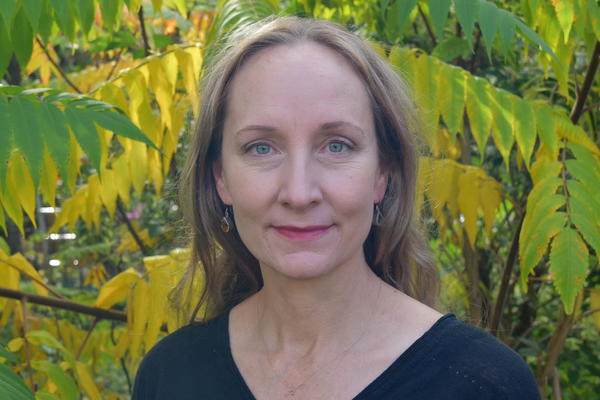
Jiatao Gu is an Assistant Professor in the Department of Computer and Information Science (CIS) at the University of Pennsylvania, with a part-time role as Staff Research Scientist at Apple (MLR). He holds a Ph.D. in Electrical and Electronic Engineering from the University of Hong Kong (2018) and a B.Eng. in Electronic Engineering from Tsinghua University (2014). His research focuses on generative machine learning and AI agent interaction with the physical world, emphasizing multi-modal systems spanning language, images, videos, and 3D. Key themes include efficient modeling , flexible architecture design , and scalable decision-making frameworks . 2025: ICLR paper on DART framework 2024: TMLR work on GFlowNet alignment 2023: NeurIPS research on diffusion stability 2022: ACL papers on speech translation Recent publications explore diffusion models for text-to-image synthesis, 3D reconstruction, and efficient sampling techniques. His work addresses fundamental challenges in attention mechanisms, entropy collapse, and multi-stage distillation while advancing non-autoregressive translation and vision-language reasoning . Prospective students can apply through his recruitment process at UPenn. Prior affiliations include Meta AI (FAIR Labs) and academic collaborations with institutions like New York University's CILVR Lab.
David Henderson is the Director of the Cyclone Testing Station (CTS) in the School of Engineering and Physical Sciences at James Cook University, Australia. He has over two decades of experience as a research engineer specializing in the performance of low-rise buildings under extreme wind conditions. He previously served as the CTS Research Fellow and Manager, and was seconded as a Postdoctoral Researcher at the University of Western Ontario, Canada, working on full-scale house testing under simulated wind loads. His work bridges engineering research, disaster assessment, and policy development. David's research focuses on wind engineering, structural resilience, and disaster mitigation. His key interests include cyclonic wind loading, internal and external pressure dynamics in buildings, fatigue failure of structural connections, and the vulnerability of housing to severe wind events. He has conducted post-disaster surveys across Australia and Canada, assessing damage from cyclones, tornadoes, and earthquakes. His research has direct applications in building codes, retrofitting strategies, and community risk reduction. The recent publications highlight a strong trend in understanding and mitigating wind-induced damage to residential structures, particularly through full-scale testing, modeling of pressure dynamics, and fragility assessment of roofing systems. His work spans experimental, theoretical, and policy-oriented domains, with a growing emphasis on climate change adaptation and community resilience. Topics such as internal pressure design, load sharing in roof frames, and retrofitting for wind resistance are central to his contributions. 14 research awards (specific names not listed) Active member of Standards Australia code committees Invited speaker at national and international conferences Media contributor on storm damage and building safety David has led multiple research projects funded by councils and agencies focused on extreme wind mitigation, data systems (SWIRLnet), and community risk reduction. While formal student supervision is not explicitly listed, he collaborates extensively with researchers such as John Ginger, Korah Parackal, and Daniel Smith. He has contributed to major studies involving wind load testing, housing vulnerability modeling, and climate adaptation planning. David is a key figure in the Cyclone Testing Station, leading its full-scale testing program and contributing to the development of software for controlled load and measurement systems. His team conducts wind risk assessments for communities and large installations, incorporating terrain analysis and retrofitting evaluations. The CTS serves as a national resource for wind engineering research and disaster resilience innovation.
Larry A. Fahnestock is a Professor in the Department of Civil and Environmental Engineering at the University of Illinois Urbana-Champaign and serves as Associate Dean for Facilities and Capital Planning in The Grainger College of Engineering . He holds a BS in Civil Engineering (1996), MS in Civil Engineering (1998), and PhD in Civil Engineering (2006) from Lehigh and Drexel Universities. His career at Illinois includes roles as Chair of the Structures Group (2018-2021), Director of the Newmark Structural Engineering Laboratory (2022-2025), and Siess Faculty Scholar (2022-present).
Demetrios M. Cotsovos is an Associate Professor at the School of Energy, Geoscience, Infrastructure and Society, Heriot-Watt University. His research focuses on structural concrete behavior under static and dynamic loads, including seismic, impact, and blast scenarios. He holds a PhD from Imperial College London (2005 Unwin Award) and has extensive experience in numerical modeling, experimental testing, and structural assessment. Education: PhD in Civil and Environmental Engineering (Imperial College London), MSc in Structural Design and Analysis (National Technical University of Athens), BEng in Civil Engineering (University of Patras). Research interests include: constitutive modeling of structural materials, nonlinear finite element analysis, fiber-reinforced concrete performance, and seismic design methodologies. Notable contributions involve developing FE tools for predicting structural responses under high-rate loading and investigating the impact of steel fibers and infill walls on structural integrity. He manages specialized equipment such as drop-test rigs and high-capacity load frames (up to 3000kN). Awards include the 2005 Unwin Award for doctoral research. His work aligns with UN Sustainable Development Goals related to resilient infrastructure and climate action. Collaborations include projects on railway infrastructure dynamics and litigation support for structural integrity assessments. He has supervised multiple research projects and contributed to international conferences, producing over 70 peer-reviewed publications.
Jinming Zhang is a Professor at the University of Illinois at Urbana-Champaign , affiliated with the College of Education and the Educational Psychology department. He also holds appointments in Statistics and the Center for East Asian and Pacific Studies . His research focuses on advanced statistical methodologies for educational and psychological measurement. Research Interests: Dr. Zhang specializes in multidimensional item response theory (MIRT) , dimensionality assessment , large-scale assessments , generalizability theory , and test security . His work addresses critical challenges in psychometric modeling, including bias correction, item compromise detection, and standards alignment for English Language Learners (ELL). Notable Contributions: He developed the DETECT procedure for dimensionality analysis and pioneered real-time item monitoring systems for computerized adaptive testing (CAT) security. His empirical studies span applications to the National Assessment of Educational Progress (NAEP) and Law School Admission Test (LSAT) analysis.
Professor Li Tian (b. 1982) is a full professor and PhD supervisor at the Department of Civil Engineering, School of Civil Engineering, Shandong University. He serves as Director of the Shandong Green Building Intelligent Construction Center and was selected into Shandong University's Youth Scholar Future Plan (2017-2022). His research focuses on seismic and wind resistance of civil infrastructure, with 38 SCI publications and 56 patents (26 inventions). Research Interests Structural Earthquake and Wind Resilience Vibration Control Systems Smart Material Applications Multi-hazard Structural Analysis Long-span Transmission Tower Dynamics Publications Overview His 15 most recent works (2018-2019) demonstrate expertise in seismic/wind vulnerability of power infrastructure, vibration control devices (particularly SMA-TMD systems), and multi-hazard structural analysis. Key contributions include probabilistic seismic demand modeling, bidirectional damping mechanisms, and collapse failure simulations. Scientific Awards Multiple Shandong Electric Power Science and Technology Progress Prizes (2018, 2015) Shandong University Teaching Awards (2017, 2012, 2014) National and Regional Academic Paper Prizes Academic Engagement He actively participates in structural engineering societies, serves on NSFC review panels, and acts as reviewer for over 30 journals including Engineering Structures and Earthquake Engineering and Engineering Vibration .
Dr. Spencer Quiel is an Associate Professor of Structural Engineering at Lehigh University's P.C. Rossin College of Engineering and Applied Science. His research focuses on structural resilience to extreme loads such as fire, blast, and progressive collapse, with particular emphasis on bridges, tunnels, and building systems. He has secured over $1.5 million in grants from NSF, USDOT, and others, and his work is published in leading journals like Engineering Structures and Fire Safety Journal. Prior to academia, he worked at Hinman Consulting Engineers, contributing to structural designs for hazard resistance. He holds a PhD from Princeton University (2009) and a BS from Notre Dame (2004), supported by a DHS Fellowship during his doctoral studies. Dr. Quiel teaches undergraduate courses in engineering statics and civil engineering design, as well as graduate-level structural fire engineering. He currently serves as Vice Chair of the PCI Blast Resistance and Structural Integrity Committee and contributed to ASCE standards on fire loads and structural fire engineering. His research group focuses on experimental testing, numerical modeling, and large-scale infrastructure resilience. Education: PhD, Civil Engineering, Princeton University (2009) Professional Affiliations: ASCE, AISC, PCI Licenses: Professional Engineer (PA, VA) Key Projects: World Trade Center collapse studies, tunnel liner resilience, thermal energy storage systems His research interests span structural fire effects, blast-resistant design, progressive collapse frameworks, and innovative cladding systems. Recent work includes developing fire-resistant tunnel liners and thermal energy storage solutions using concrete matrices. He also investigates multi-hazard simulation methods for tall buildings using real-time hybrid techniques.
Samuel Kortum is the James Burrows Moffatt Professor of Economics at Yale University and currently serves as Chair of the Department of Economics. He holds affiliations as a Research Associate at the National Bureau of Economic Research (NBER) and is a Fellow of the Econometric Society. Kortum's academic career includes roles at Boston University, the University of Minnesota, and the University of Chicago before joining Yale in 2012. His research focuses on international economics, including climate policy, trade dynamics, innovation, and economic growth. Education: B.A. from Wesleyan University (1983), Ph.D. in Economics from Yale (1992). He has received prestigious awards such as the Frisch Medal (2004) with Jonathan Eaton for their seminal work on trade and technology, and the Onassis Prize (2018). His editorial contributions include serving as editor of the Journal of Political Economy (2008–2012). Research Interests: Kortum's work spans international trade, macroeconomics, climate policy design (e.g., carbon leakage solutions), and the interplay between innovation and economic growth. He has developed dynamic models analyzing global trade patterns, technology diffusion, and firm-level trade behavior. His recent work explores climate policy mechanisms to mitigate carbon leakage while maintaining competitiveness. Key Contributions: He co-authored foundational papers like Technology, Geography, and Trade (2002) and pioneered frameworks linking trade to technological progress. Current projects address optimal carbon taxation, border adjustments, and unilateral climate policies.
Dr Levingshan Augusthus Nelson is a Lecturer at The University of Salford's School of Science, Engineering & Environment, affiliated with the Centre for Future Engineering. He holds a PhD in Structural Engineering from the University of Cambridge (2012) and a BSc Eng (Hons) in Civil Engineering from the University of Moratuwa (2006). His research focuses on robustness of structures, retrofitting, sustainable materials, and quasi-brittle fracture mechanics. He has received awards including the Clancy Prize (2023), Research into Practice Award (2022), and Lundgren Research Award (2010). Teaching includes courses like Tall Building Design and Civil Engineering Surveying . He supervises PhD students and contributes to UN Sustainable Development Goals related to resilient infrastructure and sustainable cities. Recognitions include roles as an ICE Chartered Professional Reviewer, EPSRC Peer Review College member, and editorial roles in journals like Masonry International . His research outputs span advanced analytical models for FRP-concrete interfaces, scaling laws for progressive collapse studies, and innovative masonry arch bridge assessment methods. Key projects include KTP collaborations with industry and studies on geomechanical effects in shale production.
Valerio De Biagi is an Associate Professor in the Department of Structural, Geotechnical and Building Engineering (DISEG) at the Polytechnic University of Turin, Italy. He is a member of the Interdepartmental Center SISCON (Safety of Infrastructures and Constructions) and serves as Vice Coordinator of the PhD program in Civil and Environmental Engineering. He also acts as the Partnership Agreement Coordinator with STRADA DEI PARCHI, reflecting his strong engagement with industry and infrastructure safety. Research Interests: Structural robustness and progressive collapse Natural hazards (rockfalls, avalanches, debris flows) Structural health monitoring and damage modeling Reliability and risk assessment of civil infrastructure Mechanics of granular materials (snow) His recent research output shows a strong trend toward probabilistic risk assessment, experimental and numerical modeling of impact events, and the development of resilient structural systems. He frequently applies advanced computational methods, including finite element analysis and generative AI, to simulate extreme loading scenarios and infrastructure response. Scientific Roles: Effective Member, SISCO - Italian Society of Building Science (2019–present) Guest Editor, Applied Sciences (2020–present) Evaluator for Swiss National Science Foundation (MINT 2023, COST 2022) Advising and Grants: He actively supervises multiple PhD students across several cycles and leads numerous funded research projects, including competitive national grants (PRIN), PNRR initiatives, and commercial research contracts with public infrastructure agencies. His projects focus on structural safety assessment, development of monitoring protocols, and risk mitigation strategies for bridges, tunnels, and rockfall-prone areas. Labs and Teams: He leads research teams focused on structural complexity, natural hazard interaction, and granular material mechanics. His work involves experimental campaigns, field surveys, and back-analyses of real-world structural failures.
Professor Geraldine Wright is the Hope Professor of Entomology at the University of Oxford's Department of Biology. She holds roles as Section Director of Graduate Studies (Admissions & Progression) and Professorial Fellow at Jesus College. Her research focuses on insect sensory systems, nutritional regulation, and pollinator health, with emphasis on honeybees and bumblebees. Key themes include chemical sensation mechanisms, learning processes linking sensory cues to food, nutrient intake regulation, and plant-insect interactions. Research spans four levels: chemical sensation, learning, feeding regulation, and ecological impacts of plant compounds. Explores how pesticides and toxins affect pollinator behavior and physiology. Develops methods to deliver essential nutrients to invertebrates via engineered microorganisms. Her work integrates neurophysiological, behavioral, and ecological approaches to address threats to pollinators, including pesticide exposure and nutritional stress. Recent studies highlight the role of sterols in bee health and the design of biopesticides safe for pollinators. Publications emphasize the interplay between diet, neurobiology, and environmental challenges faced by insects. Her lab's findings inform strategies to mitigate declines in pollinator populations through targeted nutritional interventions and toxin mitigation.
Professor Konuralp Girgin is a distinguished academic in the Department of Civil Engineering at Istanbul Technical University, where he has served as a Professor since 2014, following his promotion from Associate Professor (2007-2014) and Assistant Professor (1999-2007) positions. His academic journey at ITU began with his doctoral studies in Civil Engineering completed in 1989, followed by work as a Research Assistant from 1988-1999. His educational background includes: Doctorate (PhD) in Civil Engineering from Istanbul Technical University (1989-1996) Master's Degree in Structural Engineering from Istanbul Technical University (1987-1989) Licence in Civil Engineering from Istanbul Technical University (1982-1986) Professor Girgin's research focuses on structural mechanics, with particular expertise in reinforced concrete structures, earthquake engineering, and structural analysis methods. His work bridges theoretical developments with practical applications in civil engineering, especially in the areas of structural safety assessment and seismic design. He has made significant contributions to understanding slenderness effects in reinforced concrete frames, torsional behavior of structures, and buckling analysis of complex structural systems. His publication record demonstrates expertise across multiple sub-disciplines of structural engineering, with particular strength in finite element methods, structural stability, and seismic performance evaluation. Among his notable recognitions: Outstanding Reviewer Award from Elsevier Journals (2017) Prof. Dr. Dr. hc. Önder Öztunalı Science Award from Istanbul Culture University (2007) Professor Girgin has supervised numerous graduate students, with 30 theses in progress noted in his profile. His research has been supported by significant projects including TUBITAK-funded initiatives on collapse safety of structures, earthquake resistance design, and more recently, software development for fiber-reinforced concrete applications. He has contributed to important technical reports that have influenced Turkish building codes and standards. His scholarly activities extend to professional service, including membership in TMMOB-IMO since 1986, and active participation in multiple international research collaborations such as the LESSLOSS project on risk mitigation for earthquakes and landslides.
Paolo Castaldo is a Full Professor in the Department of Structural, Building and Geotechnical Engineering (DISEG) at the Polytechnic University of Turin, where he also serves as Deputy Director of the Department and Scientific Director of several national research projects. He is actively involved in teaching at both the undergraduate and PhD levels and is a member of the University Open Access Commission. His research interests include: Earthquake Engineering Structural Safety and Reliability Seismic Isolation using Friction Pendulum Systems (FPS) Reinforced Concrete Structures Bridges and Viaducts Numerical Modelling and Simulation Castaldo's recent publications focus on seismic performance, safety assessment, and reliability of isolated and reinforced concrete structures, often involving nonlinear finite element analysis and probabilistic evaluation. His work frequently addresses practical applications in bridge engineering, structural robustness, and retrofitting of existing infrastructure. Among his scientific contributions are leadership roles in PRIN-funded research projects such as 'Life-long optimized structural assessment and proactive maintenance with pervasive sensing techniques' and 'Data Fusion Based Digital Twins for Structural Safety Assessment'. He also leads commercial and departmental agreements involving structural safety assessments for public infrastructure. He supervises several PhD students, including Gabriele Neri, Guglielmo Amendola, Gaspar Andres Auad Alvarez, and Elena Miceli, guiding research on seismic reliability, impact mitigation in isolated structures, and robustness of concrete frames. His research is applied in real-world contexts, including collaborations with the ReLUIS Interuniversity Consortium and the Department of Civil Protection, as well as with the Archaeological Park of Paestum and Velia for structural assessment of historical sites.
Nur Yazdani is a Professor of Civil Engineering at the University of Texas at Arlington , affiliated with the College of Engineering. Her research focuses on structural engineering, non-destructive evaluation (NDE), fiber-reinforced polymer (FRP) composites for infrastructure, and hazard mitigation in coastal and wind/flood-prone regions. Bridge Engineering Concrete Durability Fire and Corrosion Resilience Machine Learning for Structural Prediction Her recent work emphasizes machine learning models for concrete strength prediction, flood mitigation in residential coastal buildings, and hybrid applications of CFRP/GFRP laminates for retrofitting bridges and concrete components. She leads the NSRI Lab , addressing infrastructure resilience through experimental and numerical studies. Scientific Awards : NSF RET Program Evaluation She integrates interdisciplinary education into her research, including collaborations with biology and architecture in classroom implementations for bridge deck evaluation and coastal resilience.
Foad Kiakojouri is a Research Fellow at the Department of Structural, Building and Geotechnical Engineering (DISEG), Politecnico di Torino, where he actively contributes to research and teaching. He is affiliated with the Doctoral School (SCDOTT) and serves as a course collaborator and teaching assistant across multiple programs, including PhD, Master’s, and Bachelor’s levels in Civil and Environmental Engineering and Architecture. His research focuses on structural robustness , progressive collapse , and protective structures under extreme loading conditions such as blast, impact, fire, and seismic events. His expertise spans computational engineering, structural safety, and sustainable infrastructure, aligning with UN SDGs 9 and 11. His recent publications highlight a strong trend in progressive collapse assessment , retrofitting techniques , and numerical modeling of structural response under dynamic loading. The works emphasize both theoretical frameworks and practical applications in civil infrastructure resilience. Scientific Recognition: Guest Editor, Sustainability (2022–present) Member of National Research Group (PRIN) on structural robustness (2025–2027) Advising and Grants: Foad Kiakojouri supervises two PhD students: Francesco Pimpinella and Elahe Zeinali Miankooh, whose research focuses on flexible rockfall barriers and impact-induced collapse. He is involved in competitively funded research, including the PRIN project A quantitative framework for structural robustness assessment . Labs and Research Projects: His work is centered on advanced computational and experimental studies within DISEG, focusing on: Progressive collapse under fire, blast, and impact Performance of metallic sandwich panels and stiffened plates Strengthening techniques to mitigate structural collapse Protection of critical structural members