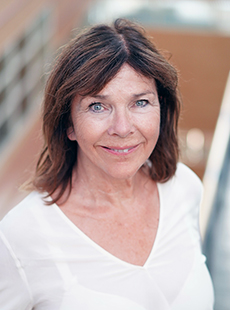
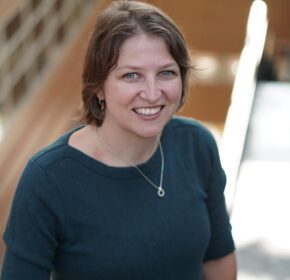
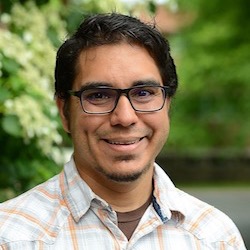
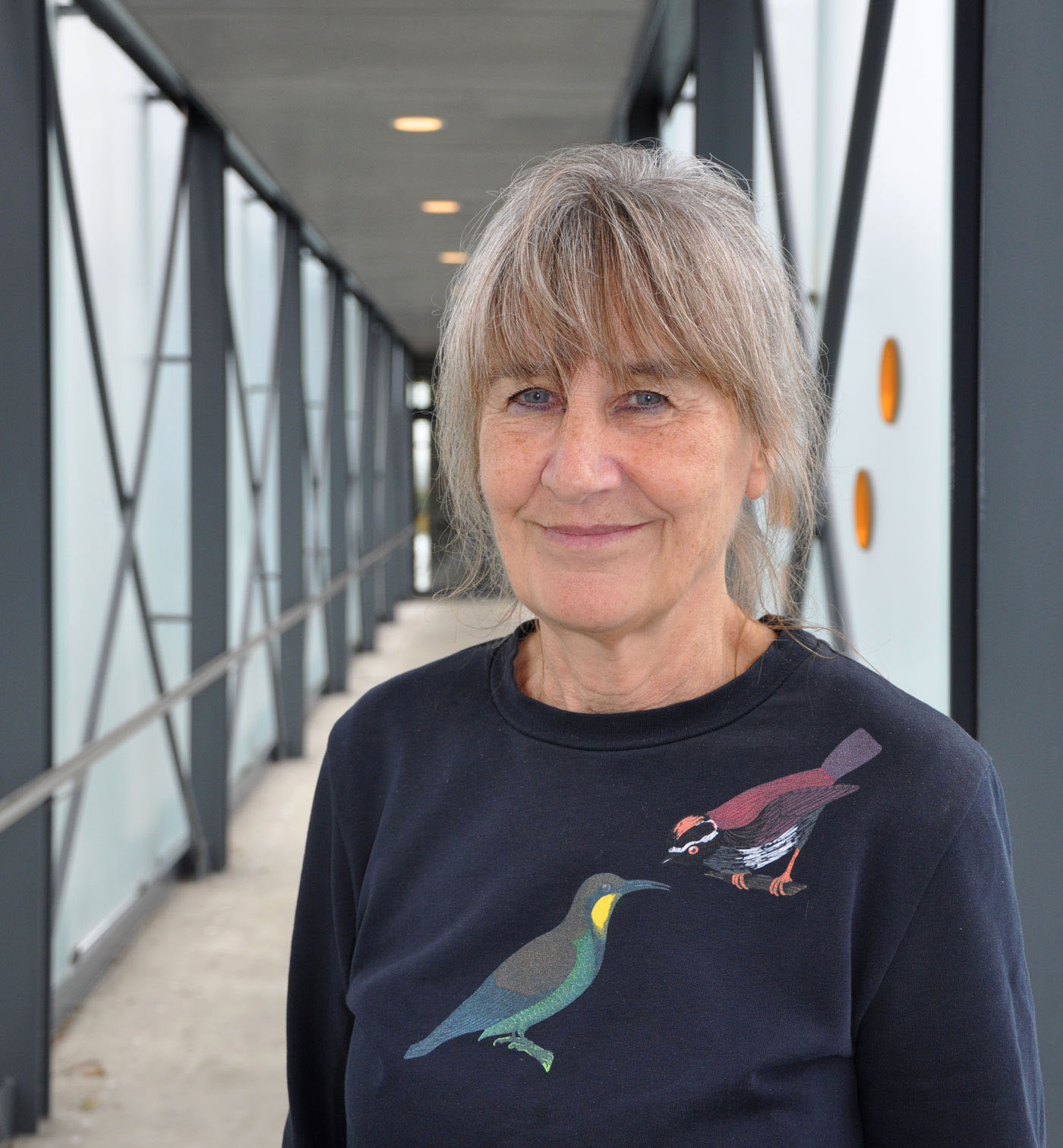
Yulia Rodina is a Professor of Linguistics and Language Acquisition at UiT The Arctic University of Norway, affiliated with the Department of Language and Culture. She leads the AcqVA-Nor research group and directs the Flere språk til flere initiative. As Deputy Chair of the HSL Faculty Research Ethics Committee, she oversees ethical standards in research. Her research focuses on multilingualism, second/third language acquisition, and language attrition using experimental psycholinguistic methods. Key themes include grammatical gender, morphosyntax, and cross-linguistic influence in languages like Russian, Norwegian, Bosnian, and Serbian. She investigates heritage language development in children across Norway, Germany, and the UK, and explores language variation and change in Norwegian dialects. Rodina teaches courses in Second Language Acquisition, Multilingualism, and Varieties of English. She supervises MA theses on topics such as gaming's role in vocabulary acquisition and syntactic development in bilingual children. Her work is supported by projects funded through the Arctic MSCA, RCN, and EU initiatives like AcqVA Aurora and MultiGender. She collaborates with international teams on studies like the MAP project (Heritage Russian in Spain) and CLIMAD (cross-linguistic influence in multilingualism). Her labs include AcqVA, PoLaR, and C-LaBL, focusing on acquisition, variation, and attrition processes.
Anne Waldrop is a Professor at Oslo Metropolitan University, affiliated with the Faculty of Teacher Education and International Studies, specifically within the Department of International Studies and Interpreting Education and the Development Studies program. Her academic work is deeply rooted in social anthropology with a strong regional focus on South Asia, particularly India. Institution: Oslo Metropolitan University Faculty: Faculty of Teacher Education and International Studies Department: Department of International Studies and Interpreting Education Research Group: Development, Power and Inequality (UMU) Waldrop's research centers on urban anthropology, with particular attention to power dynamics, caste systems, class structures, and slum communities in India. Her work extensively examines women's movements, political activism, and gender politics within the South Asian context. She has developed a specialized expertise in studying grassroots political participation among women in urban slums, documenting how class consciousness, neighborhood relations, and resistance strategies operate in marginalized communities. Her methodological approach often involves deep ethnographic engagement, as evidenced by her work on gaining access to middle-class women in urban India. Analysis of Waldrop's recent publications reveals a consistent focus on Indian urban sociology, with particular attention to gendered experiences of political participation, economic inequality, and social mobility. Her work bridges anthropological theory with practical political analysis, examining how structural inequalities manifest in everyday life. The research demonstrates a longitudinal perspective, with some studies following communities for decades to understand patterns of vulnerability and resistance. Her methodological contributions to urban anthropology, particularly regarding research access in complex social settings, have strengthened qualitative approaches in the field. Waldrop has made significant contributions to public discourse through numerous dissemination activities, including encyclopedia entries for Store norske leksikon on topics like women's rights in India and caste systems. She regularly engages with contemporary issues through media appearances and panel discussions, such as her commentary on major protests following a doctor's murder in India and analyses of India's economic growth alongside persistent social inequalities. Her academic service includes editorial work and participation in scholarly conferences focusing on urban crises and social transformation. Professor Waldrop leads research within the Development, Power and Inequality research group (UMU), where she examines structural inequalities through the lens of urban anthropology. Her work connects local experiences in Indian slums to broader theoretical frameworks about power, resistance, and social change. She has established OsloMet as a significant center for South Asian urban studies, fostering international collaborations with scholars across the region. Her research methodology emphasizes long-term engagement with communities, allowing for nuanced understandings of how political consciousness develops (or fails to develop) in contexts of extreme inequality.
Kirsti Klette is Professor at the Department of Teacher Education and School Research within the Faculty of Education at the University of Oslo. She serves as Centre Director at the Nordic Centre of Excellence Quality in Nordic Teaching (QUINT), launched in autumn 2018. Her academic career spans over two decades, beginning as Associate Professor at Lillehammer University College in 1994, then at the University of Oslo Faculty of Education in 1998, and becoming full Professor in 2002/2004. She held a Visiting Fulbright Professorship at Stanford University (2007-2008) and has directed numerous national research programs including UTDANNING 2020 (2009-2014). Professor Klette's research focuses on classroom teaching and learning through video methodology, instructional quality, and teacher education. Her work examines the relationship between teaching practices and student outcomes across Nordic educational contexts. She leads major projects including Linking Instruction and Student Achievement (LISA), Linking Instruction and Student Experiences (LISE), and the Synthesizing Research on Teaching Quality (SYNTEQ). Her methodological expertise in video research has established her as a leading figure in educational research methodology. Analysis of her recent publications (2022-2024) reveals consistent focus on classroom observation systems, teacher education coherence, and Nordic educational practices. Her work spans multiple subject areas including mathematics, social studies, and language arts, with particular attention to how instructional quality can be measured and improved. She frequently collaborates with international researchers, contributing to global understanding of teaching quality across different educational systems. Professor Klette has made significant contributions to educational policy and practice, particularly in teacher education reform and classroom observation methodology. Her research bridges educational theory and classroom practice, with implications for teacher preparation, professional development, and educational assessment systems.
Astrid Marie Jorde Sandsør is a Professor at the Department of Special Needs Education, Faculty of Education, University of Oslo, and will serve as Vice Dean of Research at the Faculty of Education from January 2025-2029. She maintains strong affiliations with the Nordic Institute for Studies of Innovation, Research and Education (NIFU), where she has worked as a researcher, and serves as a principal investigator at CREATE - Centre for Research on Equality in Education. Her additional institutional roles include membership in the Young Academy of Norway, the Council of The Frisch Centre in Oslo, and affiliations with CESifo Research Network and the Institute for the Study of Labor (IZA). Dr. Sandsør earned her Doctorate in Economics from the University of Oslo in 2016 and her Master in Economics from the same institution in 2010. Her academic trajectory shows a consistent focus on empirical research in education economics, with early work examining small-group instruction effects and evolving toward comprehensive studies of educational inequality, early childhood interventions, and educational policy evaluation. Her research interests center on understanding and addressing educational inequality through rigorous empirical analysis. Sandsør investigates how socioeconomic background, genetic factors, and institutional arrangements interact to shape educational outcomes across the lifespan. Her work on universal early childhood education examines long-term effects on achievement gaps, while her research on admission systems analyzes mechanisms of access to higher education. She has made significant contributions to understanding gender differences in language learning, the impact of teacher density norms, and the effectiveness of interventions for at-risk students. Her methodological approach combines administrative data analysis, randomized field experiments, and causal inference techniques to produce policy-relevant findings. Analyzing her recent publication record reveals a strong focus on the intersection of genetics, environment, and educational outcomes, alongside persistent examination of socioeconomic inequality in education. Her work demonstrates increasing methodological sophistication, moving from descriptive analyses to experimental and quasi-experimental designs that establish causal relationships. The geographic focus remains predominantly Norwegian, leveraging the country's rich administrative data systems while contributing comparative insights to international literature on educational inequality and policy effectiveness. Through her position at NIFU and the University of Oslo, Sandsør has led numerous government-commissioned evaluations of educational policies, including assessments of teacher density norms, the teacher specialist scheme, and admission systems to higher education. Her research has directly informed Norwegian educational policy debates, particularly regarding equitable access to quality education and evidence-based interventions for reducing achievement gaps. She maintains active engagement with policymakers through expert testimony, commissioned reports, and public dissemination of research findings.
Astrid Elisabeth Kure is an Assistant Professor at the Department of Languages, Literature and Culture, Østfold University College. Her research focuses on English didactics, digital skills in education, and qualitative analysis of teaching practices. She coordinates courses like English for Teachers 2 (grades 5-10) and contributes to the national 'Competence for Quality' teacher training program. Her PhD project, part of the LISE video-project, examines digital skill development in Norwegian secondary classrooms over 8 years. Collaborations include the Norwegian Directorate of Education and the RIDE research group. Key publications analyze students' technology use in English classrooms, revealing gaps between digital ambitions and classroom realities. Her work bridges theory and practice, emphasizing foundational digital competencies over advanced tool usage.
Tatjana Juliana Shannon Schnellinger is a PhD candidate in the Language and Linguistics program at NTNU’s Department of Language and Literature. Her research focuses on contact languages, pragmatic variation, multilingualism, and gesture studies. She is supervised by Prof. Susanne Mohr (NTNU) and Prof. Susanne Mühleisen (University of Bayreuth). Education: She holds a BA and MA in English Studies, African Studies, and Egyptology from the University of Cologne. She has worked as a research assistant in the CRC 1252 project on Tima’s split ergativity and as a live speaker at the Rautenstrauch-Joest-Museum. PhD Project: Her dissertation examines how language and culture interact in Afro-Surinamese communities, focusing on gesture-speech synchronizations in impolite discourse. Key topics include the Cut-Eye gesture and the Kiss-teeth pragmatic marker. Methodologies include ethnography, elicitation tasks, and video analysis. Outreach: She co-presented at conferences such as ‘Sustainable linguistics: theories and methods’ (2023) and ‘Poetics and Linguistics Association conference’ (2024). She is an associated member of the SOCIAL and SCRUTINY projects. Labs/Teams: Collaborations include the Collaborative Research Centre CRC 1252 and participation in the ‘Sustainable cruise tourism in Norway (SCRUTINY)’ project.
Mari Johanne Wikhaug Andersen is an Associate Professor at the Department of Language, Literature and Culture, Oslo and Akershus University College of Applied Sciences (HiOA). Her academic work focuses on multilingualism in vocational education, Norwegian as a second language, and teacher agency within educational policy frameworks. She holds a master's degree (2014) and recently completed a doctoral project (2024) exploring multilingualism in Norwegian vocational classrooms through linguistic ethnography. Her research integrates sociolinguistic theory with practical classroom dynamics, addressing challenges such as anglonormativity, monolingual policy constraints, and teacher-student interactions in linguistically diverse settings. Key areas include curriculum implementation in vocational education, language policy enactment, and strategies for supporting multilingual learners in technical programs like hairdressing and mechanics. Andersen has published extensively on teacher perspectives, policy gaps, and pedagogical innovations in multilingual vocational contexts. Recent work emphasizes the role of vocational teachers as policy actors negotiating between national language mandates and classroom realities. Her findings highlight systemic barriers to multilingual inclusivity and propose actionable frameworks for enhancing teacher agency in diverse classrooms. Teaching responsibilities include courses on second language pedagogy, multilingualism in education, and Norwegian for vocational educators at bachelor's and master's levels. She actively supervises master's students in applied linguistics and teacher education programs.
Marcos Caballero serves as Associate Professor at both the University of Oslo's Center for Computing in Science Education and Michigan State University. His work bridges physics education research with computational science instruction across educational levels from high school to graduate programs. His educational background includes: B.S. in Physics from University of Texas at Austin (2004) M.S. in Physics from Georgia Institute of Technology (opto-microfluidics research) Ph.D. in Physics Education Research from Georgia Tech (2011, first PER-focused doctorate there) Postdoctoral research at University of Colorado Boulder Caballero's research investigates how computational tools and science practices shape physics learning, employing both cognitive and sociocultural theoretical frameworks. Key projects examine measurement uncertainty assessment, computational literacy development, and equity in graduate admissions. His work spans micro-level analyses of student coding comprehension to macro-level studies of computing's impact across degree programs, with significant contributions to transforming upper-division physics curricula toward active learning environments. His recent publications (2021-2024) reveal concentrated focus on measurement uncertainty assessment instruments , computational thinking frameworks , and holistic graduate admissions reform . These works demonstrate increasing methodological sophistication through NLP applications and large-scale educational data analysis, while maintaining practical relevance for physics classroom transformation. Caballero co-founded Georgia Tech's Physics Education Research group and currently leads UiO's Center for Computing in Science Education and Michigan State's Physics Education Research Lab . His international partnership for computing in science education drives cross-institutional curriculum development, focusing particularly on integrating computational practices into core physics instruction while addressing equity challenges in STEM education.
Adriana Gerarda Bus is a Professor at the University of Stavanger, Faculty of Arts and Education, and a leading researcher at the National Centre for Reading Education and Research. Her work bridges early literacy, digital media, and educational intervention, with a strong focus on how digital picture books can support children's language and reading development. Her research interests include early literacy, digital literacy, multimedia learning, bilingual and multilingual reading, home literacy environments, and educational technology. She investigates how digital enhancements in e-books influence story comprehension and vocabulary acquisition, particularly among young and language-minority children. Her work often employs meta-analytic methods to synthesize evidence across studies. The most recent articles highlight a consistent trend: exploring the efficacy, design, and accessibility of digital picture books across diverse contexts. Themes include screen vs. paper reading, multilingual access, nudging strategies to promote reading, and interventions like Bookstart. Her publications appear in high-impact journals such as AERA Open , Learning and Instruction , and Review of Educational Research . Building a Stronger Case for Independent Reading at School (2024) Nudging to Stimulate Reading in Primary and Secondary Education (2023) Efficacy of digital picture book enhancements... (2023) Free access to multilingual digital books... (2023) A Comparison of Children’s Reading on Paper Versus Screen: A Meta-Analysis (2021) She has received no explicitly mentioned scientific awards in the provided text. Her advising activities are not detailed, but she frequently collaborates with PhD students and early-career researchers. She has been involved in grant-funded projects related to digital literacy, Bookstart evaluations, and cross-cultural studies of reading interventions. She is affiliated with the National Centre for Reading Education and Research, a key hub for literacy research in Norway. Her team engages in both experimental and meta-analytic studies, often in collaboration with international partners from the Netherlands, the U.S., Poland, and Zambia. Future work appears to focus on expanding digital access for multilingual families and refining digital book designs for optimal learning outcomes.
Harald Eikaas is a Norwegian conductor and academic leader currently serving as Dean of the Faculty of Performing Arts at the University of Stavanger. His career spans conducting, music education, and artistic production, with notable collaborations including the Bergen Philharmonic Orchestra and Ålesund Symfoniorkester. Positions: Dean, Conductor, Music Educator Institution: University of Stavanger (Faculty of Performing Arts) Specialties: Church music, orchestral performance, educational concert programming Research and Artistic Focus centers on conducting practices, church music education, and symphonic outreach for youth audiences. His work emphasizes interdisciplinary collaboration and cultural preservation through performances like Henry Purcell's opera Dido & Aeneas and liturgical concerts in Volda kyrkje. Publications and Performances highlight his diverse roles: from directing educational concerts for grades 4-6 to producing contemporary compositions by Luca Francesconi. His projects often blend classical repertoire with modern interpretations, such as Haydn's Skapelsen and NRK broadcasts of symphonic arrangements. Collaborations include partnerships with artists like Stefan Östresjö and institutions like the Swedish Navy Music Corps, demonstrating his commitment to bridging academic and performance-based music traditions.
Ove Edvard Hatlevik is a Professor at the Faculty of Education and International Studies , Department of Primary and Secondary Teacher Education at Oslo Metropolitan University. His research focuses on Teacher Professional Digital Competence , ICT integration in education , Psychometrics , and Critical Health Literacy . He leads the Teacher Education for a Future in Flux (TEFF Academy) and Teacher Education Panel Study (TEPS) projects, while previously managing initiatives such as Developing ICT in Teacher Education (DiCTE) and Literacies for Health and Life Skills . Email : ove-edvard.hatlevik@oslomet.no Office : Pilestredet 42, Oslo (Q6007) His recent publications explore: AI applications in thesis categorization (2025) Gender differences in early childhood education outcomes (2025) Job satisfaction dynamics in teaching (2024) Digital distraction management in teacher training (2024) Professional digital competence in technology-rich classrooms (2024) Systematic reviews on digital competence dimensions (2023) Key thematic areas include: Algorithmic thinking in mathematics education Long-term impacts of ECEC quality Digital divide in adult education Assessment of critical health literacy ICT access barriers in education centers Psychometric properties of educational tools
Tian Li is an Adjunct Associate Professor at the Department of Energy and Process Engineering, Faculty of Engineering, Norwegian University of Science and Technology (NTNU). Based at the Varmeteknisk building on the Gløshaugen campus, Dr. Li is affiliated with the ComKin Group and has been actively involved in numerous research projects focused on biomass conversion and combustion technologies since 2011. Dr. Li's research primarily focuses on: Biomass gasification and combustion technologies Computational Fluid Dynamics (CFD) modeling of energy conversion processes Multiphase flow and reaction kinetics in thermochemical processes Turbulence modeling in combustion systems Development of simulation tools for bioenergy applications Over the past decade, Dr. Li has led or contributed to multiple significant research projects funded by the Norwegian Research Council and industrial partners, including BioCarbUp, GASPRO, GrateCFD, GAFT, BioCarb+, CenBio, and GasBio. These projects have focused on optimizing biomass conversion processes for sustainable energy production. Dr. Li's publication record shows consistent contributions to high-impact journals in the energy and combustion fields, with a strong emphasis on computational modeling approaches. The research demonstrates expertise in developing and validating models for biomass conversion processes, with applications ranging from industrial-scale biomass furnaces to fundamental particle-level phenomena. Dr. Li has developed significant expertise in various computational tools and programming languages: Software: OpenFOAM, ANSYS Fluent, ANSYS ICEM CFD, Star-CD, MFiX, CHEMKIN, LOGEsoft, LabVIEW Programming: C/C++, Python, Fortran, Matlab Through participation in major research centers like CenBio (Bioenergy Innovation Centre), Dr. Li has contributed to advancing Norway's bioenergy research capabilities and fostering collaboration between academia and industry in the sustainable energy sector.
Geir Inge Hausvik is an Associate Professor at the Department of Information Systems, University of Agder. His research focuses on digital transformation in healthcare, information quality management, and e-health services. He is affiliated with the CeDiT (Centre for Digital Transformation) and Centre for e-health research groups. Key areas of expertise include healthcare service innovation, socio-technical systems design, and the practical impact of information systems research. Research Interests: His work addresses challenges in healthcare digitalization, including online screening tools, post-COVID service innovation, and smartphone adoption among older adults. He explores theoretical frameworks such as boundary spanning and Bourdieusian analysis to understand practical impacts of research. Recent studies examine AI ethics in academic writing and mediating roles in healthcare quality assurance. Publications: Over 15 peer-reviewed articles since 2015, including studies on EHR affordances (2017), information quality lifecycle (2021), and post-pandemic digital service acceleration (2025). He co-edited conference proceedings for DESRIST 2021 and contributed to influential journals like Information Systems Journal. Affiliations: Leads academic programs in Information Systems, including B.Sc. and M.Sc. courses. Active in international conferences (e.g., Hawaii International Conference on System Sciences, AMCIS). Engaged in collaborative research initiatives like the Centre for Digital Transformation. Key Contributions: Advocates for sociotechnical systems resilience beyond crisis response, investigates smartphone usage disparities among seniors, and evaluates generative AI's implications for academic integrity.
Angela Rieck is a Senior Lecturer in Early Childhood Education at the Department of Education, ICT and Learning at Østfold University College, Norway. She holds a Master's degree in Early Childhood Education (2017) and a Bachelor's degree in Drama and Theatre Communication (2014), both from Oslo and Akershus University College. Her academic interests focus on children’s play, aesthetic experiences, and learning processes, particularly for children aged 0-3 years. Rieck has extensive practical experience, including 21 years in kindergarten roles such as educational leader and drama educator. Her research emphasizes toddler science (småbarnsvitenskap), exploring how aesthetic and sensory experiences shape early learning. She co-leads the Regional Arrangements for Competence Development (REKOMP) project, promoting partnerships between kindergartens and higher education institutions. Rieck teaches courses like Children’s Development, Play and Learning and Bachelor Thesis in the Early Childhood Education program. Rieck’s publications span academic articles and book chapters on topics such as bodily interactions in early childhood, pedagogical documentation ethics, and aesthetic learning processes. She actively contributes to podcast discussions on aesthetics and play. Her work bridges theoretical frameworks with practical pedagogical innovations, emphasizing interdisciplinary approaches to early childhood education.
Robin André Rolfhamre is a Professor in the Department of Classical Music and Music Education at the University of Agder, Faculty of Fine Arts. His work bridges performance, pedagogy, and research, with a focus on Early Modern music (c. 1400–1700) and its contemporary relevance. His research interests include: Early Modern Music and Performance Practice Music Pedagogy and Digital Education Rhetoric and Performativity in Music Organology and Tone Production Interdisciplinary Approaches to Musicology Historically Informed Performance (HIP) His recent publications reflect a strong trend toward digital music education, the social dimensions of early music, and the philosophical underpinnings of performance. He explores how rhetoric shapes musical expression, how digital tools can enhance conservatory training, and how performance functions as a form of democratic and social engagement. His work often combines historical analysis with contemporary pedagogical and ethical reflection. Scientific awards received: Agder Academy of Sciences and Letters’ Research Prize for Young Researchers Vest-Agder County Council’s Artist Scholarship The Norwegian Arts Council’s Artist Scholarship (Diversestipend) He is an elected member of the Agder Academy of Sciences and Letters and has supervised Master’s and PhD students. He has led significant projects such as the SERVICE project on digital learning in music education and is the organiser of the REMP (Reconfiguring Early Modern Performance) research group. He is also involved in the Arts in Context research platform and the Research Group for Song Lyrics. He is actively engaged in performance as a lutenist and guitarist, is a composer and producer, and serves as a Pyramid Historical Strings Artist, performing on Lauri Niskanen instruments.