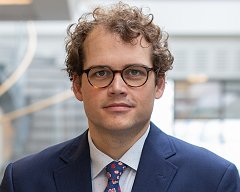
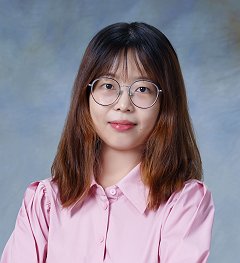
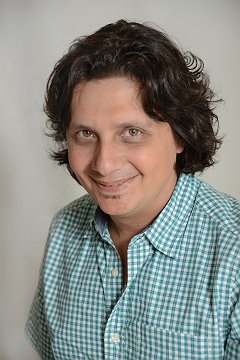
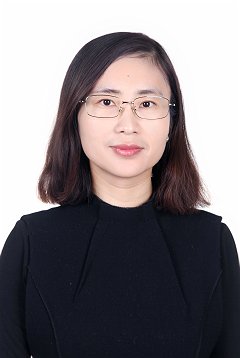
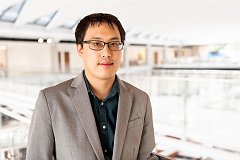
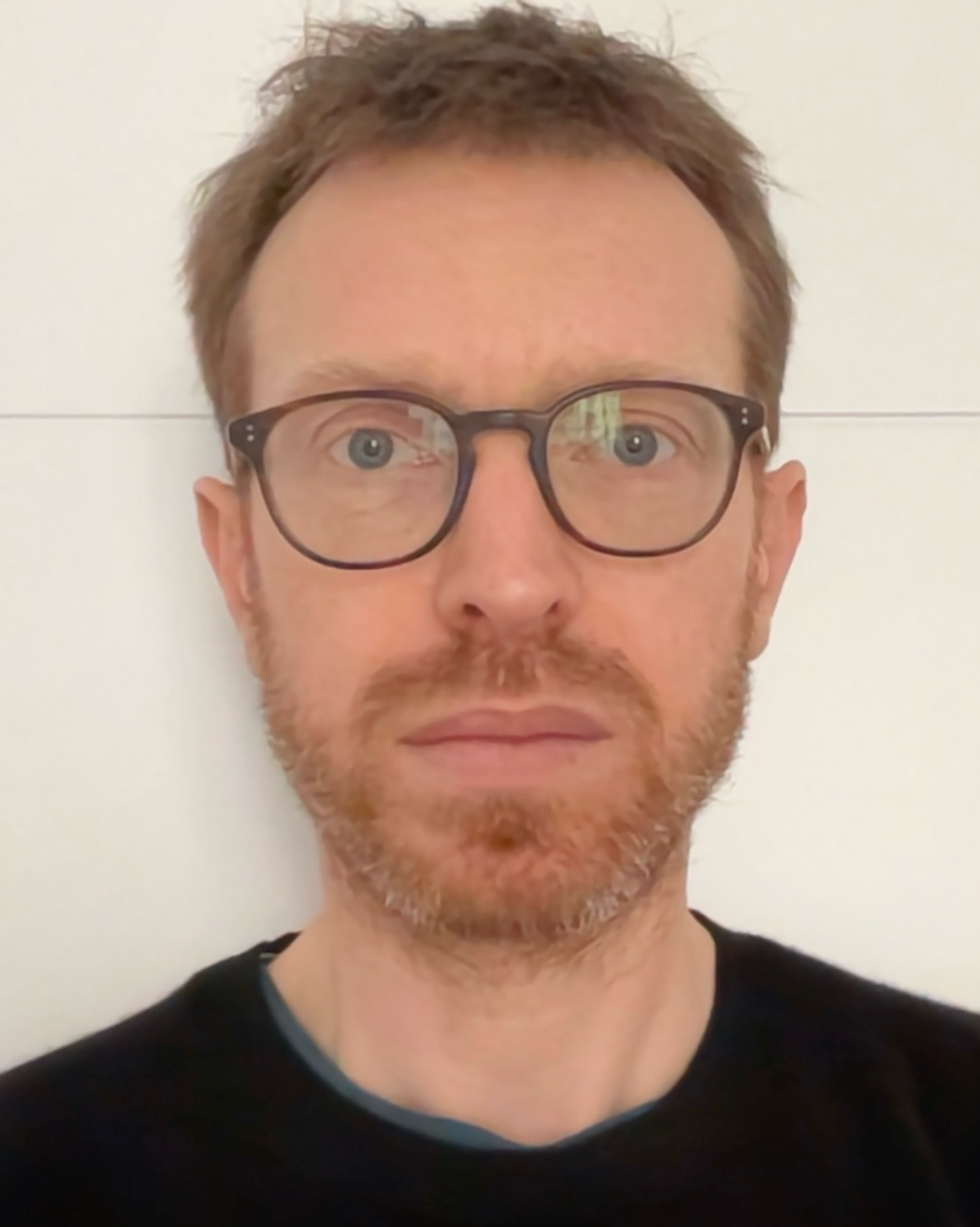
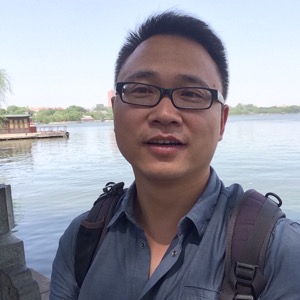
Benoit Baudry is a Professor in Software Technology at Université de Montréal, Canada, with previous affiliation at KTH Royal Institute of Technology in Sweden. His research focuses on automated software engineering with emphasis on practical execution-based approaches. Baudry's core research interests include: Software testing : Automated test generation, mocking, and improvement techniques Software diversity : Runtime protection through variant execution and WebAssembly transformations Randomization : Fuzzing and chaos engineering for robustness validation DevOps : Supply chain analysis and dependency management in Maven ecosystems Analysis of his 15 most recent publications (2022-2025) reveals strong emphasis on: Software supply chain security and dependency management (6 publications) Test automation and mock generation techniques (4 publications) WebAssembly compilation and security (3 publications) Software-art interdisciplinary research (2 publications) His work consistently combines empirical analysis with tool development across Java and WebAssembly ecosystems. Baudry actively contributes to the academic community through program committees (ASE, ESEC/FSE, ICSE, ICST) and keynote presentations. He leads research in software diversity through his Software Diversity Lab .
Chuanyi Li is an Assistant Professor at the Software Institute, Nanjing University, affiliated with the State Key Laboratory for Novel Software and Technology. His office is located in Room 917, Fei Yimin Building, 22 Hankou Road, Gulou District, Nanjing, China. Education: Ph.D. in Computer Science, Nanjing University (2012-2017), supervised by Professor Bin Luo Visiting Scholar at Southern Methodist University, Dallas, Texas (2016-2017), collaborating with Associate Professor Liguo Huang B.Sc. from Nanjing University (2008-2012) Research Focus: Dr. Li's work bridges Software Engineering, Natural Language Processing, and Business Process Management. He specializes in applying NLP and machine learning techniques to software engineering challenges including code summarization, program repair, code completion, and software maintenance. His research emphasizes empirical validation and practical tool development for real-world software systems. Publication Trends: Recent work (2021-2025) demonstrates strong focus on large language model applications in software engineering, including code generation, program repair, and benchmarking. Publications frequently involve empirical comparisons, dataset creation, and efficiency optimization techniques for code-related tasks. Professional Service: Active contributor to top software engineering venues (ASE, ICSE, ESEC/FSE) as author and committee member. Recent roles include Program Committee membership for ICSE 2025 Research Track and SANER 2025 Research Papers track.
Dr. Venetia Bridges serves as Associate Professor in the Department of English Studies at Durham University and Co-Director (Early Career Researchers) for the Institute of Medieval and Early Modern Studies (IMEMS). She joined Durham in 2017 after lectureships at the Universities of Leeds and Surrey. Her research investigates medieval text transformations across languages and cultures, challenging anachronistic nationalism through frameworks emphasizing multilingualism and transnational connections in the high Middle Ages (c.1100-1350). Dr. Bridges completed undergraduate studies in Medieval Literature at Oxford and earned her PhD at Cambridge under Professor Philip Ford. Between 2012-2015, she held a Postdoctoral Research Fellowship at the Centre for Medieval Literature (York and Southern Denmark). Her scholarly trajectory reflects deep engagement with interdisciplinary medieval studies across European institutions. Her research centers on book history, gendered hermeneutics, and translation practices, with current projects examining twelfth-century literature's persistence in late medieval England and modern misappropriations of the medieval period. She actively challenges national frameworks in medieval studies, advocating for global perspectives that recognize interconnected literary cultures across England, France, and beyond. Recent publications (2021-2024) demonstrate sustained focus on Alexander the Great and Troy narratives, manuscript materiality, and Latin-vernacular interactions. Her scholarship consistently analyzes how classical stories transformed across Europe through multilingual manuscript evidence, with particular attention to gender dynamics, intellectual contexts, and the sensory experience of medieval readers. No scientific awards were mentioned in the provided text. Dr. Bridges supervises three research postgraduate students: Beth Clancy, Helen Lawson, and Matthew Gan. She collaborates with Professor David Lawton, Dr. Laura Chuhan Campbell, and Dr. David Petts on the 'global medieval' initiative, developing interdisciplinary methodologies that bridge literary studies, archaeology, and modern languages to counter nationalist interpretations of the medieval world. As an active IMEMS member, she co-directs early career researcher programs and contributes to Durham's medieval research ecosystem through cross-departmental collaborations focused on multilingual manuscript cultures and the global dimensions of medieval European literature.
Elena Carpi serves as Associate Professor of Spanish Language and Translation at the University of Pisa's Faculty of Economics within the Department of Foreign Languages and Literatures. Holding a PhD in Iberian Studies, she combines academic expertise with extensive professional experience as a literary translator and conference interpreter. Her research program centers on historical linguistics with specialized applications in tourism communication, economic discourse, IT terminology, and intercomprehension among Romance languages. She investigates lexical evolution in Spanish across philosophical, artistic, and commercial domains, particularly during the Enlightenment era, focusing on discourse patterns and translation challenges in specialized contexts. Analysis of her 2014-2019 publications reveals consistent exploration of 18th-century Spanish vocabulary development in economic, philosophical, and artistic texts. Her work demonstrates methodological emphasis on corpus linguistics, discourse analysis, and cross-linguistic comparison, with particular attention to translation dynamics between Spanish and Italian in specialized domains.
Max S. New is an Assistant Professor in Computer Science & Engineering at the University of Michigan, specializing in Programming Languages , Gradual Typing , Secure Compilation , and Category Theory . He is affiliated with the MPLSE research community . Education: PhD in Computer Science (Northeastern University, 2020) Postdoctoral: Wesleyan University (with Dan Licata) His research bridges programming language theory with category theory and formal verification. Key contributions include intrinsic verification of parsers using dependent Lambek calculus, gradual type theory with parametricity, and denotational semantics for gradual typing using synthetic guarded domain theory. His work explores language interoperability , compiler intermediate languages , and stack-based effects through relative monads. Recent publications focus on verified parsing frameworks, automata formalism in linear logic, and category-theoretic models of graduality. He actively contributes to POPL , PLDI , and OOPSLA program committees and serves as a mentor in academic workshops. Max advises PhD students including Eric Giovannini (2021-) Steven Schaefer (2023-) Eric Bond (2023-) Yuchen Jiang (2023-) Jesse Slater (2024-, co-advised with Xinyu Wang) and teaches courses in Category Theory and Compiler Construction .
Xiang Chen is an Associate Professor at the Department of Software Engineering, School of Artificial Intelligence and Computer Science, Nantong University, China. He received his B.Sc. degree from Xi'an Jiaotong University in 2002 and his M.Sc. and Ph.D. degrees in computer software and theory from Nanjing University in 2008 and 2011 respectively. He is an editorial board member of Information and Software Technology and serves as a program committee member for prestigious conferences including FSE 2026 and ASE 2025. Chen is also a senior member of the China Computer Federation (CCF) and active in various academic committees. Chen's research focuses on empirical software engineering, mining software repositories, and software testing and maintenance, with particular emphasis on applying AI techniques to software engineering problems. His work spans large language models for software engineering, security vulnerability analysis, code change representation, and regression testing. He has published over 110 papers in top-tier journals and conferences including IEEE Transactions on Software Engineering and ACM Transactions on Software Engineering and Methodology. His recent publications demonstrate a strong trend toward integrating AI techniques, particularly large language models, with traditional software engineering practices. The research spans code generation evaluation, deep learning framework testing, vulnerability detection, and automated program repair, showing a consistent focus on improving software quality through innovative testing and analysis techniques. ACM SIGSOFT Distinguished Paper Award (ICSE 2021) ACM SIGSOFT Distinguished Paper Award (ICPC 2023) Top 1% CNKI Highly Cited Scholar (2024) Top 2% Scientist by Stanford University (2023-2025) NASAC 2019 Prototype Competition First Prize Chen has successfully advised numerous graduate and undergraduate students who have gone on to prestigious institutions including Nanjing University, Tsinghua University, and Zhejiang University. Many of his students have won national programming competitions and received scholarships. His research group, smartSE, actively works on projects funded by the Natural Science Foundation of China and various provincial research programs. Chen also serves as a reviewer for top journals including IEEE Transactions on Software Engineering and ACM Transactions on Software Engineering and Methodology.
Fang Liu is an Assistant Professor at the School of Computer Science & Engineering, Beihang University, China. She has made significant contributions to the field of software engineering, particularly in the intersection of artificial intelligence and software development practices. Dr. Liu received her Ph.D. in Computer Science from Peking University (Sep. 2017 - Jul. 2022), supervised by Prof. Zhi Jin and Prof. Ge Li. Prior to that, she earned her B.S. in Computer Science from Chongqing University (Sep. 2013 - Jul. 2017). Her research interests focus on AI for Software Engineering, including program understanding and generation, program repair, and applications of Large Language Models to software development tasks. Dr. Liu teaches Compiler Technology as a compulsory course at Beihang University (Fall 2024) and Programming in Cangjie Language as an elective course (Spring 2025). Her recent publications demonstrate a clear trend toward leveraging large language models for various software engineering tasks, with a particular emphasis on code editing, program repair, and code translation. Her research spans both theoretical advancements in model architectures and practical applications to real-world software development challenges, with numerous publications in top-tier venues like ASE, ICSE, and FSE. Distinguished Paper Award at ICPC'20 for "A Self-Attentional Neural Architecture for Code Completion with Multi-Task Learning" Dr. Liu actively participates in the software engineering research community as a program committee member for major conferences including ASE, FSE, and ICSE. Her work has significant implications for improving developer productivity, software quality, and the integration of AI technologies into the software development lifecycle.
Diego Garbervetsky is an Associate Professor at the Computer Science Department, School of Sciences, University of Buenos Aires, and a Researcher at ICC/CONICET. He also serves as Director of the Institute of Research in Computer Sciences (ICC). His academic career spans multiple roles in software engineering research and education. His educational background is not explicitly stated in the provided texts, but his current position reflects extensive academic achievement. Garbervetsky's research focuses on static analysis techniques for Java-like programs and Smart Contracts, automated program verification , program understanding , and validation . His specific interests include program understanding, testing and verification of programs featuring rich protocols, static analysis for program verification, and automatic symbolic resource analysis (gas consumption, dynamic memory, energy, etc.). His research has significant implications for blockchain technology, particularly in smart contract verification. Analysis of his recent publications reveals a strong trend toward smart contract security and verification , with multiple papers on modal abstractions, predicate abstractions, and tools like VeriSol for Solidity smart contracts. His work bridges formal methods with practical software engineering challenges, particularly in the blockchain domain. His scientific contributions include the development of multiple research tools: Contractor: Automated tool for behavior validation Contractor.NET: Visual Studio extension for .NET validation JConsume2: Compositional analysis for Java heap memory Consume.Net: Compositional analysis for .NET heap memory BudaPest: Automated software verifier VInTime: Verification suite for Real Time systems Garbervetsky has supervised numerous PhD students including Daniel Wappner, Javier Godoy, and Alexis Soifer, with former students now working at companies like Microsoft, Veritran, and Dialpad. He has served on program committees for major conferences including ICSE, FSE, ASE, and ISSTA, demonstrating his standing in the software engineering research community. His service includes chairing workshops and serving on artifact evaluation committees, showing his commitment to research quality and reproducibility. He currently teaches Software Engineering 2 at the University of Buenos Aires, having previously taught courses in algorithms, automatic software validation, program analysis, programming paradigms, and computer organization.
Professor Dan Hao is a distinguished faculty member at the Institute of Software, School of Computer Science, Peking University, where he has established himself as a leading researcher in software engineering. His extensive service to the academic community includes membership on the Steering Committee for The International Conference on Automated Software Engineering (ASE) since 2021, The ACM SIGSOFT International Symposium on Software Testing and Analysis since 2025, and The International Systems and Software Product Line Conference (SPLC) from 2018-2022. He has served as Program Co-Chair for multiple major conferences including ISSTA 2027, ICSME 2025, ICST 2023, SANER 2022, and ASE 2021. Professor Hao received his Bachelor's degree from Harbin Institute of Technology in 2002 and completed his Ph.D. at Peking University in 2008, followed by post-doctoral research at the same institution until 2009. His academic journey reflects a deep commitment to advancing software engineering research and education in China. Professor Hao's research primarily focuses on software testing and debugging, program comprehension, and software maintenance. His work has significantly contributed to compiler testing, fault localization, regression testing, and automated program repair. He has pioneered approaches in compiler auto-tuning, test-case prioritization, and history-guided testing techniques. His research bridges theoretical foundations with practical applications, addressing real-world challenges in large-scale software systems, particularly in online service environments. His publication record demonstrates a consistent trajectory of high-impact research in top-tier software engineering venues. Professor Hao's work shows increasing integration of machine learning techniques with traditional software engineering problems, particularly evident in his recent publications on LLM applications for code generation, neural theorem proving, and contrastive learning for vulnerability detection. His research maintains strong connections between theoretical rigor and practical applicability in industrial settings. ACM SIGSOFT Distinguished Paper Award for PDCAT: Preference-Driven Compiler Auto-Tuning at FSE 2025 Distinguished Paper Award for Formalizing, Mechanizing, and Verifying Class-Based Refinement Types at ECOOP 2024 ACM SIGSOFT Distinguished Paper Award for History-Guided Configuration Diversification for Compiler Test-Program Generation at ASE 2019 ACM SIGSOFT Distinguished Paper Award for History-driven Build Failure Fixing: How Far Are We? at ISSTA 2019 As an advisor, Professor Hao has mentored numerous graduate students, currently supervising 9 Ph.D. students and 7 Master's students. His former students have gone on to prestigious positions at institutions including King's College London, Tianjin University, Fudan University, and major technology companies like Huawei and China Construction Bank. His academic leadership extends through editorial roles as Deputy Editor-in-Chief of Software Testing, Verification and Reliability (STVR) and membership on the editorial boards of several premier journals including ACM Transactions on Software Engineering and Methodology, ACM Computing Surveys, and Empirical Software Engineering. Professor Hao leads a vibrant research group at Peking University's Institute of Software, focusing on cutting-edge problems at the intersection of traditional software engineering and artificial intelligence. His team actively collaborates with both academic institutions and industry partners to address practical challenges in software development and maintenance processes.
Abhishek Tiwari is an Associate Professor of Software Engineering at the Maersk Mc-Kinney Moller Institute, University of Southern Denmark, where he was promoted from Assistant Professor in September 2025. His academic journey includes positions as Senior Researcher at Software Institute, USI Lugano (2024), Senior Researcher at University of Passau (2022-2023), and Research Fellow at National University of Singapore (2020-2021). He completed his PhD in Software Engineering at University of Potsdam, Germany in 2019 under supervision of Prof. Dr.-Ing Christian Hammer. His research focuses on the intersection of programming languages and software engineering, with particular expertise in static program analysis, language-based security, information flow control, and automated program repair. His work has significant practical applications in Android security and privacy, addressing critical challenges in information flow analysis, vulnerability detection, and program repair. His research has evolved from foundational work on Android security mechanisms like PendingIntent analysis and anti-theft frameworks to more recent sophisticated approaches for information flow security repair and multilingual program analysis. Trends in his publication record show a consistent focus on Android security challenges, with increasing sophistication in analysis techniques from 2017 through 2025. His work spans theoretical foundations of program analysis while maintaining strong practical relevance to real-world Android security issues. Recent publications demonstrate growing interest in multilingual program analysis and formal specification challenges. ACM SIGSOFT Distinguished Paper Award (MOBILESoft 2023) Dr. Tiwari actively contributes to the academic community through program committee service for major conferences including ASE (2024, 2025), ICSE (2025), and ISSTA (2022-2024). His teaching portfolio includes Advanced Software Engineering Methodologies (2024), Automated Program Repair (2022-2023), and Mobile Security (2022) courses. He has received research funding from prestigious sources including Deutsche Forschungsgemeinschaft (DFG), German Federal Ministry of Education and Research, and EIT Digital for projects related to programming principles for privacy, SmartPriv, and SMAPPER.
August Shi is an Assistant Professor in the Department of Electrical and Computer Engineering at The University of Texas at Austin. His research focuses on software testing, particularly regression testing, with emphasis on improving reliability with respect to flaky tests and increasing testing speed without compromising quality. Dr. Shi obtained his PhD in Computer Science from the University of Illinois at Urbana-Champaign in 2020. Prior to that, he earned a B.S. in both Computer Science and Electrical and Computer Engineering from The University of Texas at Austin in 2013. Dr. Shi's research interests center on software testing and regression testing , with a particular focus on addressing challenges related to flaky tests . His work aims to make regression testing both more reliable (by tackling issues with flaky tests) and faster (without sacrificing testing quality). His research spans multiple aspects of software testing including test prioritization, test scheduling, flaky test detection and repair, and optimization of continuous development processes. Dr. Shi's publication record shows a consistent focus on flaky tests and regression testing across multiple top-tier software engineering conferences including ASE, ICSE, ISSTA, and ESEC/FSE. His research has evolved from foundational work on test suite reduction and mutant generation to more recent innovations in flaky test classification, debugging, and repair. A notable trend is his increasing application of machine learning techniques to testing problems, particularly in his 2024-2025 publications. Dr. Shi actively contributes to the software engineering research community through committee service on major conferences including ASE, ICSE, ISSTA, and ESEC/FSE, where he has served on program committees for Research Papers, NIER tracks, and Tool Demonstration tracks. Dr. Shi is currently seeking PhD students to work on projects related to his research interests in software testing. He has supervised or co-supervised multiple student projects presented at major software engineering conferences, demonstrating his commitment to mentoring the next generation of researchers.
Martin Klotz is a Researcher at the Institute for German Language and Linguistics, Humboldt University of Berlin, affiliated with the Collaborative Research Center (SFB1412) and the Research Unit for Emerging Grammars (RUEG). His work focuses on corpus linguistics, computational linguistics, and digital humanities infrastructure. He holds an MSc in Cognitive Systems (2019, University of Potsdam) and a BA in German Linguistics & Computer Science (2015, Humboldt University). Key research interests include corpus architectures, historical and parallel corpora, language modeling for non-standard varieties, and research software engineering. He contributes to projects like the RUEG corpus and FALKO learner corpus, emphasizing multilingual and multimodal corpus development. His publications span corpus design, software tools (e.g., Annatto), and analyses of heritage languages. He actively organizes academic events, such as the 2021 DGfS short working group on contrastive corpus methodology. He participates in lab collaborations like Deutsch Diachron Digital and contributes to open-source corpus tools. His work bridges computational methods with linguistic theory, focusing on dynamic language systems.
Joseph Le Roux is an Associate Professor at the University of Paris 13, affiliated with the LIPN laboratory. His research focuses on Natural Language Processing (NLP), Machine Learning (ML), and their applications to optimization problems. He has supervised multiple PhD students, including Yash Kankanampati, Nicolas Floquet, and Francesco Demelas, among others. Le Roux's work emphasizes dependency parsing, attention mechanisms, and optimization techniques in NLP. His research has been published in top venues such as NAACL, ICML, and EMNLP. He also contributes to academic service, including roles as an Action Editor for ARR and a member of the TAL journal's editorial board. His teaching responsibilities include courses on neural networks, generative models in NLP, and programming for AI. He co-manages the Data Science hub at LIPN and leads research projects like SemiAmor (ANR CE23-2023-0005) and ParSiTi (ANR-16-CE33-0021). Le Roux's academic contributions span over two decades, with a PhD in 2007 and an HDR (Habilitation) in 2024. His lab collaborations include work on XMG, a metagrammar compiler, and projects addressing challenges in social media NLP and MIP solving via ML.
Chunsheng Yang is an Associate Professor in Chinese Studies at the University of Connecticut. He holds a Ph.D. in Chinese Linguistics from The Ohio State University (2011), along with MA degrees in Chinese Linguistics (2009) and English Linguistics (2005), and a BA in English (2000) from the University of Science and Technology of China. His research focuses on second language acquisition, Mandarin prosody, and technology-enhanced language teaching. Key research interests include L2 Mandarin pronunciation pedagogy, speech perception models, telecollaborative language learning, and the application of digital tools like WeChat and iPads in education. He has authored/co-authored seminal works such as The Acquisition of Second Language Mandarin Prosody (2016) and edited volumes on Chinese L2 pronunciation (2021). Yang's work bridges experimental linguistics and pedagogical practice, with studies on tonal acquisition, affricate articulation, and compliment response pragmatics. His projects investigate how L1 tonal backgrounds influence L2 Mandarin proficiency and explore innovative teaching strategies through virtual exchanges and rhythm metrics analysis.
José L. Abellán is a Ramón y Cajal Fellow (Tenure-Track Associate Professor) and European R3 researcher at the University of Murcia's Department of Computer Engineering and Technology. He leads the EcoArTech research group and holds a Ph.D. in Computer Science from the University of Murcia (2012). His career includes postdoctoral positions at Boston University and previous faculty roles at Universidad Católica de Murcia. Dr. Abellán's research focuses on architectural enhancements for GPU systems and customized accelerators targeting machine learning and fully homomorphic encryption applications. His work spans hardware/software co-design, microarchitectural extensions for privacy-preserving computation, and efficient parallel processing. His extensive publication record demonstrates consistent contributions to GPU architecture, processing-in-memory, hardware acceleration for cryptography, and graph neural networks. Recent work has appeared in top computer architecture venues including MICRO, ASPLOS, and HPCA. Awards and Honors HiPEAC Paper Awards (2019, 2020, 2023, 2024) Best Paper Award at IPDPS 2011 Top Picks in Hardware and Embedded Security 2024 European R3 Certificate (2024) Dr. Abellán leads the EcoArTech research team and serves as Associate Editor for ACM Transactions on Architecture and Code Optimization (TACO) and Frontiers in Electronics. He is a Senior Member of IEEE and active in the HiPEAC European network.