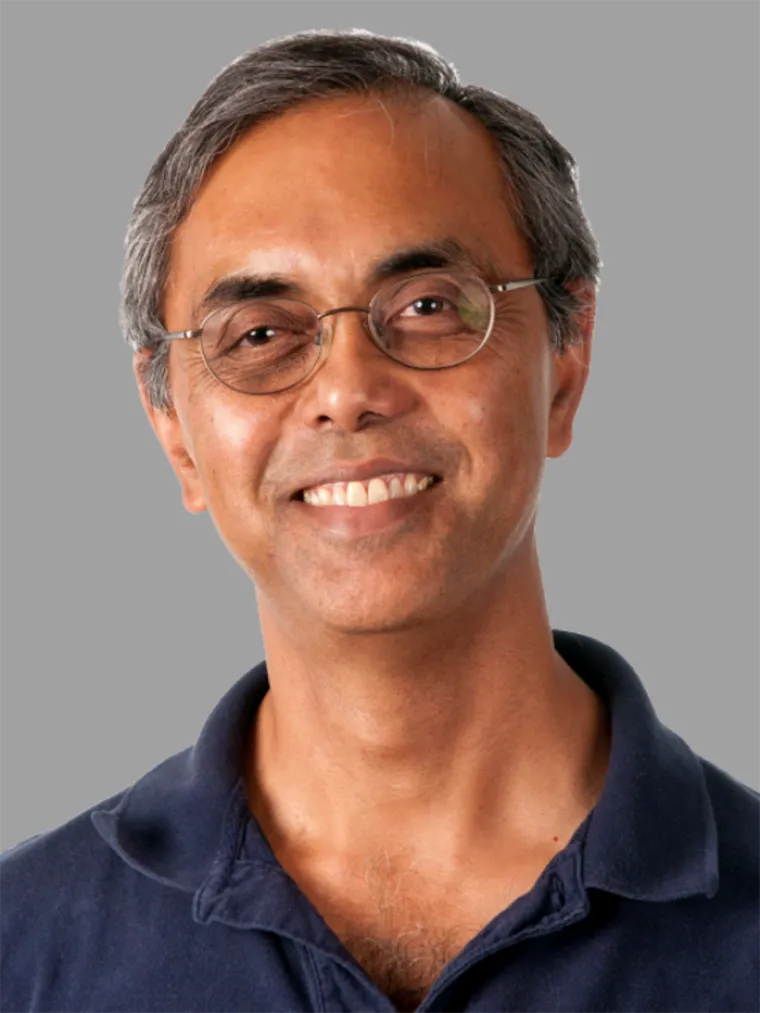
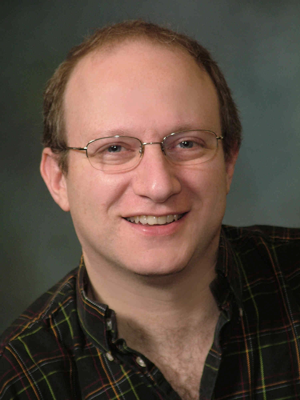
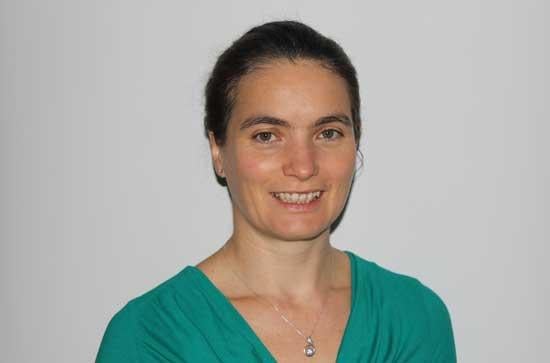
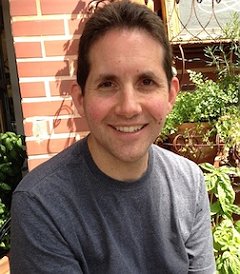
Saumya Debray is a Professor at the Department of Computer Science , University of Arizona , with research interests in Compilers , Program Analysis and Optimization , and Programming Language Implementation . Their work bridges theoretical and applied computer science, focusing on security implications of program transformations and compiler-assisted system optimization. Education: Ph.D., The State University of New York at Stony Brook (1986). Contact: Office: GS 735 | Phone: 520-621-4527 | Email: debray@cs.arizona.edu. Research Themes: Debray’s research spans three decades, with core contributions in: JIT Compiler Analysis: Bug localization, dynamic code generation, and exploitation frameworks. Code Obfuscation & Stylometry: Evading detection through optimization-based obfuscation. Malware Analysis: Deobfuscation techniques, taint analysis, and dynamic defense modeling. Binary Rewriting: Energy optimization, code compaction, and kernel specialization. Their work intersects compiler design , cybersecurity , and system optimization , with applications in executable analysis , malware detection , and undergraduate CS education .
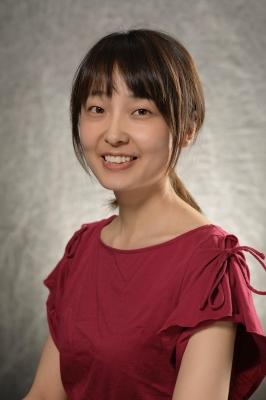
Callie Hao is an Assistant Professor in the Department of Electrical and Computer Engineering at the Georgia Institute of Technology since 2021, holding the ON Semiconductor Junior Professorship. Her research bridges hardware efficiency and algorithmic innovation with significant industry and federal recognition. Education: Ph.D. in Electrical Engineering, Waseda University (2017) M.S. and B.S. in Computer Science and Engineering, Shanghai Jiao Tong University Research Focus: Dr. Hao pioneers software/hardware co-design for edge AI, specializing in hardware-efficient machine learning algorithms, FPGA-based reconfigurable computing, graph neural networks, and electronic design automation (EDA). Her work emphasizes neural architecture search, high-level synthesis optimization, and memory-efficient systems for embedded and IoT applications, driven by the philosophy that "1 + 1 > 2" for transformative efficiency gains. Publication Impact: Her 15 most recent publications (2023-2026) reveal a strategic shift toward machine learning-driven EDA tools, with 60% focused on high-level synthesis frameworks and 40% on graph neural network acceleration. Key trends include simulation speed breakthroughs (LightningSim), automated accelerator generation (GNNBuilder), and cryptographic hardware innovations (Cryptonite), predominantly published in top-tier venues like MICRO, ICCAD, and DAC. Awards & Recognition: NSF CAREER Award (2024) and Intel Rising Star Faculty Award (2023) Best Paper Awards at MLCAD 2024 and GLSVLSI 2021 ON Semiconductor Junior Professorship (2025) and Sutterfield Family Early Career Professorship (2022) DAC-SDC competition championships (2018-2020) Mentorship & Funding: Dr. Hao advises 8+ Ph.D. students in the Sharc Lab, with Rishov Sarkar winning the Oscar P. Cleaver Award and Qualcomm Innovation Fellowship. Her research is funded by DARPA (2021) for ultra-light video intelligence systems and supported by industry awards from Amazon and Sony. She actively serves on program committees for DAC, ICCAD, and DATE conferences. Lab Leadership: As director of the Sharc Lab (Software/Hardware Co-design lab), she cultivates interdisciplinary research at the intersection of FPGA design, machine learning, and EDA, requiring expertise in Verilog/HLS, GNNs, and compiler technologies while maintaining strict focus on real-world hardware implementation.
Henry Hoffmann is a Professor and Liew Family Chair in the Department of Computer Science at the University of Chicago. His research focuses on self-aware computing systems that adapt to meet goals like power efficiency, performance, and security. He leads the SEEC project and has contributed to advancements in computer architecture, embedded systems, and quantum computing. Hoffmann received the PECASE (2019), DOE Early Career Award (2015), and was inducted into the Samsung Hall of Fame for discovering vulnerabilities in SmartTVs. He holds a PhD from MIT (2013) and has co-founded Config Dynamics (2019). His work bridges control theory, machine learning, and traditional computer systems to create adaptive solutions for modern computing challenges. Education: PhD in Electrical Engineering and Computer Science from MIT (2013), SM (2003), and B.S. (1999) with highest honors from UNC Chapel Hill. Professional experience includes roles at Tilera Corporation and MIT Lincoln Laboratory. Research Interests: Self-aware systems, adaptive resource management, quantum computing optimization, and cybersecurity. His SEEC framework enables systems to autonomously adapt to constraints like energy and performance. Recent work explores applying adaptive techniques to AI/ML models for energy-efficient inference and security. Awards: Over $19M in research funding, 100+ publications, and leadership roles in NSF Expedition EPiQC (quantum computing). Named Chair of UChicago CS Department (2023-2024). Labs/Teams: Systems Group, EPiQC (quantum computing), and CERES (unstoppable computing systems). Current students include Jerry Ding and Ryien Hosseini. Notable alumni include Yi Ding (now faculty at Purdue) and Nikita Mishra.
Jishen Zhao is an Assistant Professor in the Department of Computer Science and Engineering at the University of California, San Diego (Jacobs School of Engineering). His research focuses on computer architecture, non-volatile memory systems, and deep learning acceleration. Dr. Zhao has published extensively in top venues including ISCA, MICRO, ASPLOS, and IEEE Transactions. He collaborates with researchers at UCSD and beyond to advance systems for emerging applications in AI and autonomous vehicles. Dr. Zhao's primary research areas include persistent memory systems, hardware/software co-design for deep learning, and safety-critical computing. He develops techniques for crash consistency, memory disaggregation, and efficient neural network deployment. His work on autonomous vehicles addresses scenario generation and perception-aware system design. Recent projects explore LLM applications for software engineering and hardware verification. Analysis of Dr. Zhao's 2024-2025 publications reveals a strong shift toward AI-integrated systems research. He applies large language models to tasks like RTL verification and software issue localization while continuing to innovate in memory systems for serverless computing. There is growing emphasis on safety-critical systems for autonomous vehicles and energy-efficient neural network training using novel hardware architectures. Information about Dr. Zhao's scientific awards, advising activities, grants, and laboratory facilities was not available in the provided documentation.
Cyrille Artho is an Associate Professor in the Division of Theoretical Computer Science at KTH Royal Institute of Technology, actively contributing to research in formal methods, software testing, and cybersecurity. His work spans model checking, smart contract security, and concurrent systems verification, with significant contributions to tools like Java Pathfinder and Modbat. PhD from ETH Zurich (2005) with dissertation on multi-threading fault detection Teaches Software Safety and Security, Software Engineering Fundamentals, and supervises degree projects His research focuses on developing formal techniques for safety-critical systems, particularly in blockchain security and distributed applications. Recent work emphasizes smart contract verification, anomaly detection in microservices, and trusted execution environments for secure cloud analytics. The 15 most recent publications reveal a strong trend toward blockchain security (6 articles), formal verification of distributed systems (5), and novel testing methodologies (4), with increasing integration of machine learning for vulnerability detection. As chair of the FTSCS workshop series and contributor to major conferences like ASE and ICST, Artho has significantly shaped the formal methods community. His leadership in organizing workshops demonstrates commitment to advancing safety-critical systems research. Principal investigator for C3.ai DTI Cyber Safety Cage for Networks project Develops Modbat framework for model-based API testing Active in Digital Futures research initiative at KTH
Mehmet Esat Belviranli is an Assistant Professor in the Computer Science Department at the Colorado School of Mines, where he directs the High Performance Systems and Software Lab (HyperSys). His research focuses on increasing resource utilization in heterogeneous architectures through runtime systems, scheduling algorithms, and performance modeling, with publications in top venues including MICRO, PPoPP, and SC. Education: Ph.D. in Computer Science, University of California, Riverside (2016) M.S. in Computer Science, Bilkent University (2009) B.S. in Computer Science, Bilkent University (2006) Belviranli's research spans heterogeneous architectures, runtime systems, performance modeling, parallel programming, autonomous computing, deep learning acceleration, cyber-physical systems, and edge-cloud platforms. His work develops analytical models and programming abstractions to address resource management, scheduling, and security challenges in diversely heterogeneous systems, with applications in edge computing, autonomous systems, and machine learning acceleration. Recent projects emphasize real-world constraints and security implications. His publication trends reveal increasing focus on edge-cloud resource management (e.g., HARNESS), security vulnerabilities in heterogeneous systems (e.g., MC3), and deep learning acceleration under resource constraints. Key themes include memory contention modeling, scheduling for cyber-physical systems, and concurrent DNN execution, reflecting a shift toward practical deployment in security-sensitive edge environments. Scientific Awards: U.S. Air Force Research Lab Summer Faculty Fellowship Award (2022) U.S. Air Force Research Lab Summer Faculty Fellowship Award (2021) Oak Ridge National Laboratory Significant Event Award (2019) Best Paper Finalist, IEEE HPEC 2018 Outstanding Paper Award, DATE 2024 Belviranli mentors Ph.D. students Ismet Dagli (MLCommons Rising Star 2024, CGO'24 SRC finalist) and Justin Davis (DATE'24 Outstanding Paper Award winner). He has secured $2M+ in funding from NSF, DoE, and SRC, including an NSF-SaTC grant on mobile security (2024), a DoE grant on superconductive systems (2023), and an NSF FuSe grant on graphene nanoribbons (2023), often leading multi-institutional teams from Rochester, Virginia, Arizona, and Minnesota. The HyperSys Lab develops ecosystems for high-performance heterogeneous systems, with recent projects including HARNESS for edge-cloud resource management and MC3 for mobile SoC security. The lab has received equipment donations from Google Coral.ai and Xilinx, and collaborates with national labs on security challenges and next-generation semiconductor technologies.
Aybars Tuncdogan is a Reader in Digital Innovation and Information Security at King’s Business School, King’s College London. He holds affiliations with the King’s AI Institute, King’s Cybersecurity Centre (Informatics), and King’s Cybersecurity Group (War Studies). A Fellow of the Higher Education Academy, he also serves on the editorial review board of Industrial Marketing Management . Education : PhD in Management, Rotterdam School of Management, Erasmus University MPhil in Business Research (Distinction), Erasmus University Bachelor’s in Business Management & Computer Science (Honors), Earlham College Research Interests : His work focuses on three pillars of digital innovation: generation (crowdsourcing, AI), marketing (digital brand personality, sales ambidexterity), and protection (information security, corporate espionage). He integrates psychology (individual differences, social identity) and computer science (machine learning/AI) frameworks. Publications Trends : Recent work addresses cybersecurity challenges in retail, AI ethics in healthcare, and interdisciplinary innovation. He frequently publishes in top-tier journals like Journal of Management and Scientific American , blending academic rigor with practitioner impact. Awards & Contributions : 2015 Best Paper Award (shared) Edited books including Oxford Handbook of Individual Differences and Strategic Renewal Teaching & Pedagogy : Develops innovative teaching methods like inquiry-based learning to foster student creativity. Taught modules on digital marketing, consumer behavior, and research methods. Labs/Teams : Contributes to cybersecurity initiatives at King’s, focusing on AI-driven defense mechanisms and organizational cyber resilience strategies.
Kenneth Ross is a Professor in the Computer Science Department at Columbia University in New York City. His primary appointment is within the Department of Computer Science, with affiliations including the Foundations of Data Science Committee. His work bridges theoretical database research and practical system implementation. His research focuses on database systems with particular expertise in query processing, query language design, data warehousing, and architecture-sensitive database system design. Additional research spans computational biology, especially analysis of large genomic data sets. Current projects include Linear Algebra Operators in Databases for machine learning workloads and Repeats and Somatic Mutation analysis in genomics. His work consistently addresses the intersection of hardware capabilities and database system design. Ross leads the Database Research Lab at Columbia, which has produced significant work on query optimization, GPU database processing, and hardware-conscious database systems. His recent publications demonstrate strong focus on adapting database systems to modern hardware including GPUs, SIMD processors, and persistent memory. His scientific recognition includes: Packard Foundation Fellowship Sloan Foundation Fellowship NSF Young Investigator Award Distinguished Faculty Teaching Award (2008) Ross actively advises undergraduate engineering students (juniors with last names P-Z) and has taught foundational courses including Introduction to Databases and Programming and Problem Solving for over two decades. His teaching portfolio shows consistent engagement with both theoretical concepts and practical implementation challenges in computer science education.
Alexander Summers is an Associate Professor at the Department of Computer Science , University of British Columbia . He joined UBC in March 2020 after serving as a Senior Researcher (Oberassistent) at ETH Zurich from 2014-2020. His research bridges Programming Languages , Formal Methods , and Software Engineering , with a focus on automated verification tools for heap-based and concurrent programs. MSc Joint Mathematics and Computer Science, Imperial College London (2004) PhD Computer Science, Imperial College London (2009) Postdoc, ETH Zurich (2009-2014) Summers leads the Prusti Project , developing deductive verification tools for Rust, and contributes to the Viper Project for intermediate verification languages. His work addresses challenges in: Memory safety and concurrency verification Ownership models and aliasing control Automated reasoning with SMT solvers Resource-oriented programming specifications Debugging verification condition quantifiers Formal validation of verification infrastructure His research has been recognized with a Amazon Research Award and ACM SIGPLAN Distinguished Paper Awards . He teaches courses like Advanced Software Engineering and Program Verifiers and Program Verification , and supervises graduate students in formal verification and Rust-related research.
Monica Lam is the Kleiner Perkins, Mayfield, Sequoia Capital Professor in Stanford University's School of Engineering and holds a courtesy professorship in Electrical Engineering. She leads the Stanford Open Virtual Assistant Laboratory and has pioneered work in virtual assistants, privacy protection, and compiler design. Her research includes the Almond virtual assistant, privacy-preserving IoT systems, and the ThingTalk programming language. She co-authored the seminal 'dragon book' on compilers and co-founded Tensilica (now part of Cadence). Education: Bachelor of Science (Honors), Computer Science, University of British Columbia, 1980 Master of Science, Computer Science, Carnegie Mellon University, 1982 Doctor of Philosophy (PhD), Computer Science, Carnegie Mellon University, 1987 Research Interests: Dr. Lam's work focuses on conversational AI with privacy guarantees, compiler optimization for parallel computing, and open-source virtual assistant ecosystems. She is a leader in decentralized systems, having developed frameworks like SociaLite for large-scale graph analysis and Musubi for mobile social networking without centralized platforms. Article Trends: Recent publications emphasize multimodal interactions, multilingual dialogue systems, and LLM-driven applications in areas like question answering, persuasive chatbots, and adaptive assistants. Her work bridges foundational AI research (e.g., semantic parsing) with real-world deployments (e.g., privacy-compliant IoT). Awards & Honors: Member of the National Academy of Engineering ACM Fellow Popular Science's Best of What's New Award (Security, 2019) Advising & Grants: Lam oversees the Open Virtual Assistant Initiative, a collaborative project to build open-source semantic models. Her NSF CNS grant (CNS Core) focuses on federated privacy systems. She has advised over 50 students in AI and systems research, though specific names are not listed in the provided texts. Labs & Teams: Directs the Stanford Open Virtual Assistant Laboratory, collaborates with the Stanford NLP group, and maintains ties to industry through former startup Tensilica's legacy in embedded processors.
Rosemary Monahan is a Professor in the Department of Computer Science at Maynooth University and an affiliate of the Hamilton Institute. She holds BSc and MSc degrees from University College Dublin and a PhD from Dublin City University. As Maynooth University's institutional lead for ADAPT (SFI Research Centre for AI-Driven Digital Content Technology), she focuses on advancing software dependability through formal methods and AI integration. Her research interests include safety-critical systems, dependable software, formal verification, and computational thinking education. She co-founded the VerifyThis competition series and leads projects such as MAIVV (Modular AI Verification and Visualisation) funded by SFI, and VALU3S (Verification and Validation of Automated Systems) funded by Horizon 2020. She has secured over €2.5M in EU funding for the Erasmus Mundus programs in dependable software systems. Monahan’s educational contributions include pioneering computational thinking resources (CoCoA and InSPECT projects) and teaching modules on software verification and rigorous software processes. She supervises PhD students in data science and advanced networks and collaborates with institutions like INRIA, Microsoft Research, and Amazon Web Services. Her professional roles include editorships in journals like Science of Computer Programming and leadership in conferences like iFM and FMICS. She actively promotes gender equality in computing through initiatives like INGENIC and TechMate toolkits.
Mathias Payer is an Associate Professor at EPFL's School of Computer and Communication Sciences (IC), leading the HexHive Laboratory . His work focuses on software security, particularly addressing memory corruption and type violations through binary analysis and compiler-based techniques. He contributes to research in secure system design, fault isolation, and fuzzing methodologies. Current PhD students : Di Bartolomeo Luca, Feng Zhiyao, Hofhammer Florian, Lyu Tao, Mao Philipp Yuxiang, Zhang Chibin, Zheng Han Past EPFL PhD students: Badoux Nicolas Daniel, Bhattacharyya Atri, Hazimeh Ahmad His research explores software security in areas like: Protecting applications from vulnerabilities Binary exploitation and mitigation Compiler-driven security hardening Strong sanitization and privilege separation Memory corruption detection The HexHive group develops tools and frameworks for: Automated fuzz driver generation Gradual compartmentalization State inference for feedback optimization Secure cell architectures Recent publications highlight advancements in: Fuzzing hybrid approaches (e.g., DUMPLING, MendelFuzz) Memory safety validation (QMSan, Pacmem) Compiler-assisted defenses (Gradient, Type++)
Todd Millstein is a Professor in the Computer Science Department at the University of California, Los Angeles (UCLA), and served as Department Chair from 2022–2025. He is also an Amazon Scholar and a co-founder and former Chief Scientist of Intentionet (now at AWS). His research focuses on making software systems more reliable, particularly through network verification and programming language techniques. He pioneered the Batfish network configuration analyzer, which is used by AWS, Oracle Cloud, and dozens of companies, and received the ACM SIGCOMM Networking Systems Award (2025) for this work. His recent publications span probabilistic programming, network reliability, and interactive program verification, including papers at PLDI 2024 (on bit blasting probabilistic programs), NSDI 2024 (on behavioral testing of BGP), and HotNets 2024 (on network layering). Todd has received prestigious awards such as an NSF CAREER Award , a Microsoft Research Outstanding Collaborator Award , and multiple best paper awards at PLDI, OOPSLA, and SIGCOMM. He has advised Ph.D. students like Ana Brendel and Poorva Garg , and teaches courses such as CS30 (Principles of Computing), CS231 (Types and Programming Languages), and CS239 (Current Topics in PL and Systems). His professional roles include Program Chair for OOPSLA 2014 and ECOOP 2018, and committee member for numerous conferences including PLDI , SPLASH , and LAFI .
Torsten Grust is a Professor of Computer Science at the University of Tübingen, leading the Database Systems research group since 2008. Previously, he held professorships at TU München and TU Clausthal. He earned his M.Sc. (Diploma) and Ph.D. in Computer Science from Universität Konstanz in 1994 and 1999, respectively. His research focuses on database languages, query and programming language technology, and scalable processing of non-relational queries. He bridges database and programming language research, emphasizing mutual benefits between the fields. **Education:** Ph.D. in Computer Science, University of Konstanz (1999) M.Sc. (Diploma), Computer Science, University of Konstanz (1994) Visiting Scientist, IBM Silicon Valley Laboratories (2000) **Research Interests:** Design and optimization of database languages Query compilation and execution engines Integration of functional programming with SQL Query provenance and debugging **Awards and Honors:** ACM SIGMOD Reproducibility Award (2021) University of Tübingen Teaching Award (2021/22) Winner of Dyalog 2019 APL Program Solving Competition Member of the VLDB Endowment Board of Trustees (2022–2027) **Advising & Grants:** Guided numerous students, including alumni such as Alexander Ulrich, Benjamin Dietrich, and Christian Duta Recipient of grants supporting research in query compilation, provenance analysis, and database language design **Labs & Teams:** Leads the Database Systems research group at University of Tübingen Collaborates with the National Institute of Informatics (Tokyo) on query and programming languages
David I. August is a Professor of Computer Science at Princeton University, affiliated with the Department of Electrical Engineering. He earned his Ph.D. from the University of Illinois at Urbana-Champaign in 2000. His research focuses on compilers and computer architecture, emphasizing synergistic design between compilers and microarchitecture. He leads the Liberty Research Group, which explores topics such as automatic parallelization, memory profiling, and speculative execution. August joined Princeton in 1999 as a lecturer, advancing to full professor in 2012. He has served as program chair for MICRO 2009 and on committees for ISCA, PLDI, and ASPLOS. His notable accolades include the IEEE Fellow designation, Best Paper Awards at PLDI and CGO, and teaching awards from Princeton's School of Engineering. His work spans compiler optimizations, hardware-software co-design, and security architectures like TrustGuard. Recent research includes GPU scheduling (GhOST), memory profiling frameworks (PROMPT), and instruction prefetching (PDIP). He advises over 20 graduate students, many now leading roles at tech companies and academia. August teaches courses such as COS-126 (Intro to CS), COS-375 (Computer Architecture), and graduate seminars. His projects often bridge theory and practice, with tools like NOELLE and Liberty Research Group initiatives advancing compiler infrastructure and parallelism extraction.