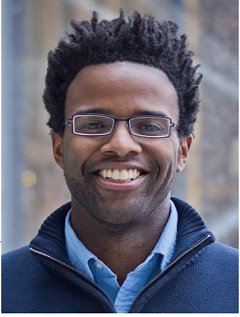
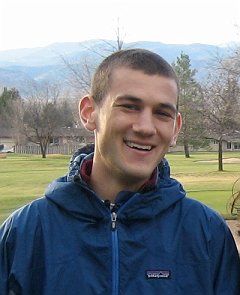
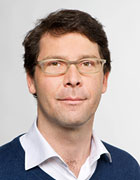
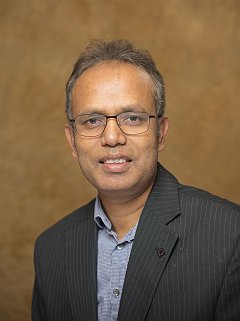
Michael Carbin is the Jamieson Career Development Assistant Professor of Electrical Engineering and Computer Science at the Massachusetts Institute of Technology (MIT) and leads the MIT Programming Systems Group. His research focuses on programming systems that address system uncertainty to enhance performance, energy efficiency, and resilience, particularly in environments involving neural networks , approximate computing , and unreliable hardware . His work spans probabilistic programming , quantum computing , and machine learning systems . Articles highlight contributions in pruning neural networks , quantum data structures , and compiler optimization , reflecting trends in deep learning , formal verification , and language-driven systems . Scientific Awards : MIT Frank E. Perkins Award (2020) Sloan Research Fellowship (2020) Facebook Research Award (2019) NSF CAREER Award (2018) Best Paper Awards at OOPSLA (2013, 2014) He has advised numerous graduate students and postdocs including Eric Atkinson, Cambridge Yang, and Charles Yuan, and served on program committees for conferences like POPL, OOPSLA, and ICLR. His group collaborates with institutions such as MIT CSAIL and explores applications in quantum algorithms and probabilistic inference .
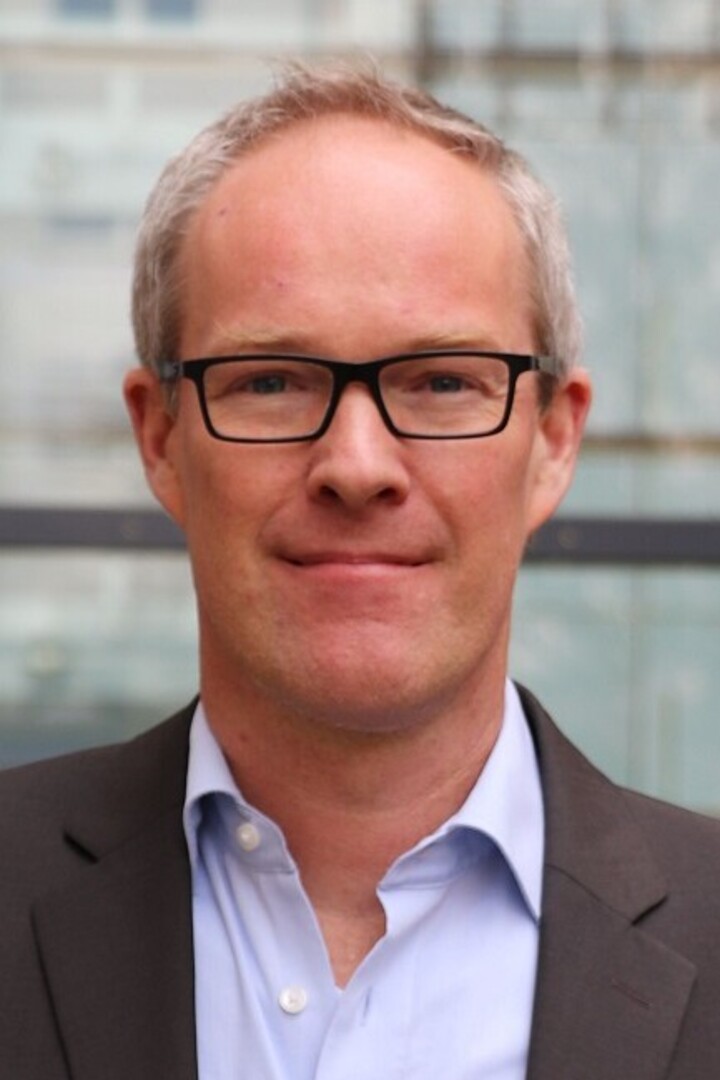
Prof. Stefan Müller is a Professor at the Institute for German Language and Linguistics , part of the Faculty of Languages and Literature at Humboldt University. His research focuses on syntax, formal grammar theories (especially Head-Driven Phrase Structure Grammar), and computational linguistics. He leads the CoreGram Project , developing cross-linguistic grammars using HPSG formalisms. His work includes analyses of German syntax, constituent order, anaphoric binding, and register phenomena. He is also involved in open-access publishing initiatives through Language Science Press . Contact: St.Mueller@hu-berlin.de . Education and academic background details are not explicitly stated in the provided text, but his professional trajectory indicates deep expertise in theoretical linguistics. His research spans multiple languages including German, Mandarin, and Persian, with a focus on grammar implementation and syntax-semantics interfaces. Key contributions include the Head-Driven Phrase Structure Grammar Handbook (2024), analyses of headless nominal structures in German (2022), and exploration of large language models' theoretical implications (2024). He actively engages in interdisciplinary projects bridging formal grammar and computational methods.
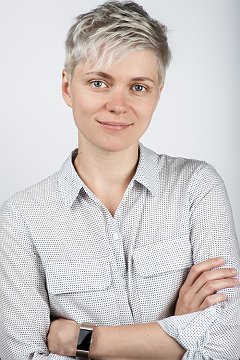
Prof. Laura Leal-Taixé is a Professor at the Technical University of Munich (TUM) in the Department of Informatics, leading the Dynamic Vision and Learning group. She holds the Rudolf Mößbauer Tenure Track Assistant Professorship, promoted to W3 Associate Professorship in 2022. Her research focuses on computer vision and machine learning, particularly video analysis, multi-object tracking, and autonomous driving applications. Education: B.Sc./M.Sc. in Telecommunications Engineering (Technical University of Catalonia, UPC) Ph.D. in Information Processing (Leibniz University of Hannover, Germany) Postdoctoral Research at ETH Zürich (Switzerland) and TUM Research Interests: Laura’s work addresses challenges in video analysis, including motion analysis, semantic segmentation, and integrating social dynamics into urban traffic modeling. Her project socialMaps , funded by the Sofja Kovalevskaja Award, explores decoupling vehicle and pedestrian traffic using dynamic maps. Her research combines optimization techniques, deep learning, and sensor data for real-world applications like autonomous systems. Recent Trends: Her publications highlight advancements in multi-object tracking, 3D LiDAR segmentation, and trajectory forecasting, emphasizing neural networks and geometric approaches. Collaborations with industry and academia underscore her work’s practical impact. Awards: 2017 Sofja Kovalevskaja Award (€1.65M, Humboldt Foundation) 2017 DAAD Australia-German Joint Research Grant Travel grants from Women in CV, CVPR Doctoral Consortium, and Vodafone Foundation Labs & Projects: Leads the Dynamic Vision and Learning group at TUM, focusing on vision-based AI for autonomous systems and environmental monitoring. Active in developing datasets like DynamicEarthNet for semantic change analysis.
Nate Foster is a Professor of Computer Science at Cornell University and currently serves as the Associate Dean for Research in the Ann S. Bowers College of Computing and Information Science. He is also a Visiting Researcher at Jane Street and served as a Visiting Professor at École Polytechnique Fédérale de Lausanne during the 2023-24 academic year. His research uses ideas from programming languages to solve problems in networking, databases, and security. BA in Computer Science, Williams College (2001) MPhil in History and Philosophy of Science, University of Cambridge (2008, all work completed in 2003) PhD in Computer and Information Science, University of Pennsylvania (2009) Foster's research focuses on developing languages and tools that make it easy for programmers to build secure and reliable systems. His current work centers on the design and implementation of languages and tools for programmable networks, particularly using the P4 language. His past work includes bidirectional languages (also known as 'lenses'), database query languages, data provenance, type systems, mechanized proof, and formal semantics. His research group at Cornell has made significant contributions to network verification, software-defined networking, and formal foundations for programmable data planes. Analysis of Foster's recent publications reveals a strong focus on network verification and programming language foundations for networking. His work consistently applies formal methods to practical networking problems, with a particular emphasis on the NetKAT and P4 languages. Over the past five years, his research has evolved toward more complex network verification techniques, including infinite state verification, active learning of network models, and dependently-typed approaches to network programming. His work bridges theoretical computer science with practical networking systems, making formal methods accessible to network engineers. ACM Fellow (2025) ACM SIGPLAN Robin Milner Award (2023) ACM SIGCOMM Rising Star Award (2018) NSF CAREER Award (2013) Alfred P. Sloan Fellowship (2012) Multiple distinguished paper awards across top conferences including POPL, PLDI, and SIGCOMM Foster has advised numerous PhD and Master's students who have gone on to prominent positions in both industry and academia, with many continuing work in programming languages and networking. He has led multiple significant research grants including an NSF CAREER Award and has been involved in the P4 Language Consortium, serving as Chair of the P4 Language Governing Board. His work has been supported by various organizations including NSF, DARPA, and industry partners like Intel and Jane Street. Foster is also active in the programming languages research community, serving on numerous program committees and as Vice Chair of DARPA's Information Science and Technology (ISAT) study group. Foster leads a vibrant research group at Cornell focused on programming languages for networks, with collaborators from academia and industry. His group has developed several influential tools and frameworks including NetKAT, Petr4, and KATch. They maintain strong connections with the P4 community and work closely with industry partners to ensure their research has practical impact on real-world networking systems.
Andreas Geiger is a Professor and Head of the Department of Computer Science at the University of Tübingen, Germany. He leads the Autonomous Vision Group (AVG) within CyberValley and is a core faculty member of the Tübingen AI Center. His roles also include PI in the ML in Science Excellence Cluster and the CRC Robust Vision, as well as ELLIS Fellow and coordinator of the ELLIS PhD program. He specializes in machine learning models for computer vision, robotics, and autonomous systems, with applications in self-driving cars, VR/AR, and scientific document analysis. Educational background: While not explicitly detailed, his positions imply a Ph.D. in Computer Science or related field. His work spans interdisciplinary collaborations with institutions like ETH Zürich, Microsoft, and the University of Bonn. Research focuses on 3D scene understanding, Gaussian splatting, generative models, and reliable autonomous systems. Notable contributions include the KITTI dataset and foundational work in neural radiance fields. Awards include the Sage 10-Year Impact Award (2024), ERC Starting Grant (2019), and IEEE PAMI Young Researcher Award (2018). Key projects include the Scholar Inbox paper recommender platform, ReSim (reliable world simulation), and advancements in 3D scene generation (e.g., UrbanCAD, PrITTI). His lab maintains a strong focus on open-source tools and datasets, such as the CARLA Route Generator. Grants and funding include support from Vector Stiftung (MINT innovation program) and EU initiatives like the ML in Science Cluster. His team collaborates internationally, with recent work presented at CVPR, SIGGRAPH, and NeurIPS.
Professor Christian Bizer is a leading figure in web-based systems and data integration at the University of Mannheim , where he chairs Information Systems V: Web-based Systems . His research focuses on integrating data from multiple sources using large language models and LLM-based agents, with applications in product data extraction and DBpedia knowledge graph construction. He co-founded the DBpedia project and initiated the WebDataCommons initiative. Current research areas: Entity matching, schema matching, table annotation, information extraction, data discovery Key projects: WebMall benchmark, WInte.r integration framework, Schema.org analysis His work applies to e-commerce data integration and knowledge graph construction, with empirical studies on schema.org adoption. He supervises PhD students including Alexander Brinkmann and Ralph Peeters. Scientific Awards: Best Paper at iiWAS 2024 SWSA Ten-Year Award at ISWC 2019 Yahoo FREP Award 2015 Semantic Web Challenge winners Teaching includes courses on web data integration, web mining, large language models, and data mining for master's programs. He leads the DWS PhD colloquium and team projects on LLM agents for data integration.
Nadia Polikarpova is an Associate Professor in the Department of Computer Science and Engineering at the University of California, San Diego . She earned her PhD from ETH Zurich in 2014 under Bertrand Meyer , followed by postdoctoral research at MIT CSAIL with Armando Solar-Lezama . Her academic contributions have been recognized with prestigious awards including the 2020 Sloan Fellowship , 2020 Intel Rising Stars Award , and 2020 NSF CAREER Award . Polikarpova's research focuses on program synthesis , program verification , and type systems . She leads the Programming Systems group at UCSD and contributes to the IFIP Working Group 2.8 on Functional Programming since 2022. Her work spans foundational research and practical tools, including projects like Synquid , SuSLik , and Laurel that combine formal methods with machine learning for code generation. Her recent publications in venues like OOPSLA , NeurIPS , and ICFP reveal trends in AI-assisted programming , live programming environments , and formal verification . She has advised numerous PhD and Master’s students including Shraddha Barke , Zheng Guo , and Tristan Knoth , many of whom have moved to prominent academic and industry positions. Notable artifacts from her lab include tools like ColDeco for spreadsheet inspection and Superfusion for eliminating intermediate data structures. 2020 : Sloan Fellow 2020 : Intel Rising Stars Award 2020 : NSF CAREER Award 2021 : Distinguished Paper at POPL 2023 : Distinguished Artifact at PLDI 2023 : Distinguished Paper at OOPSLA Polikarpova actively contributes to academic service, serving on program committees for PLDI , POPL , and OOPSLA , and co-chairing the OOPSLA Review Committee in 2023. She has delivered keynotes at APLAS'20 and PLDI'24 , emphasizing the integration of large language models with formal methods.
Zeynep Akata is the Liesel Beckmann Distinguished Professor of Computer Science at the Technical University of Munich (TUM) and Director of the Institute for Explainable Machine Learning at Helmholtz Munich. Previously she was a W3 Professor at the University of Tübingen (2019-2023) and held faculty and post-doctoral positions at the University of Amsterdam, UC Berkeley and the Max Planck Institute for Informatics. Her research focuses on multimodal learning and explainable artificial intelligence . Education: PhD, University of Grenoble / INRIA Rhône-Alpes, 2014 MSc, RWTH Aachen University, 2010 BSc, Trakya University, Turkey, 2008 Research Interests: Professor Akata’s group develops algorithms that learn from vision, language and other modalities simultaneously, with a strong emphasis on zero-shot, few-shot and continual learning . A central theme is making decisions interpretable, leading to work on explainable AI, concept bottleneck models, multimodal reasoning and human-aligned representation learning . Recent projects investigate large-scale multimodal language models, dataset distillation, model merging and continual knowledge editing. Publication Trends: Her 2024-2025 publications reveal a shift toward foundational large-scale models (diffusion, LLMs, vision-language transformers) while retaining the core themes of interpretability and generalization under limited supervision . Topics span dataset distillation, model merging, continual learning, fairness auditing of generative models and novel evaluation protocols for zero-shot learning systems. Scientific Awards: Lise-Meitner Award for Excellent Women in Computer Science (2014) Young Scientist Honour, Werner-von-Siemens-Ring Foundation (2019) ERC Starting Grant, European Commission (2019) DAGM German Pattern Recognition Award (2021) ECVA Young Researcher Award (2022) Alfried Krupp Award (2023) Advising & Funding: Prof. Akata currently supervises or co-supervises 25+ PhD students across TUM and the University of Tübingen via ELLIS and IMPRS-IS doctoral programs. She holds major grants including an ERC Starting Grant and DARPA Explainable AI funding, and is a frequent program chair and area chair for premier conferences (CVPR 2024, ECCV 2026, NeurIPS, ICML, etc.). Labs & Teams: She leads the Institute for Explainable Machine Learning at Helmholtz Munich and heads the Multimodal Learning and Explainable AI group at TUM. The institute collaborates closely with the ELLIS Institute Tübingen and Cyber Valley ecosystem, and maintains close ties with the Max Planck Institute for Intelligent Systems and Informatics.
Dr. Yolanda Gil is a Research Professor in Computer Science and Spatial Sciences at the University of Southern California, where she serves as Principal Scientist and Senior Director for Strategic Initiatives in Artificial Intelligence and Data Science at the Information Sciences Institute (ISI). She is also the Director of AI and Data Science Initiatives in the Viterbi School of Engineering and leads the USC Center for Knowledge-Guided Interdisciplinary Data Science (CKIDS). Dr. Gil received her Licenciatura in Computer Science from the Polytechnic University of Madrid and her M.S. and Ph.D. in Computer Science from Carnegie Mellon University, with a focus on artificial intelligence and cognitive science. Her research focuses on developing AI approaches that use knowledge to accelerate scientific discovery processes. Her key research interests include knowledge capture and representation, semantic workflows, ontology tools, scientific discovery methods, task-based collaboration, provenance tracking, knowledge networks, reproducibility in science, and machine learning for data analysis. She collaborates with scientists across multiple domains to improve how scientific knowledge is created, shared, and used. Dr. Gil's work has significant impact across multiple scientific domains including climate science, neuroscience, and omics research. Her projects demonstrate her commitment to building knowledge-guided systems that transform how scientists conduct research. She has pioneered approaches to capture the provenance of scientific experiments and to automate the analysis of complex scientific data. Fellow of the Association for Computing Machinery (ACM) Fellow of the Association for the Advancement of Science (AAAS) Fellow of the Institute of Electrical and Electronics Engineers (IEEE) Fellow of the Association for the Advancement of Artificial Intelligence (AAAI) 24th President of the Association for the Advancement of Artificial Intelligence Co-chair of the CRA/AAAI 20-Year Artificial Intelligence Research Roadmap for the US Initiator and leader of the W3C Provenance Group that resulted in a widely-used standard for web trust As an educator and leader, Dr. Gil directs the Data Science Program in Computer Science and serves as Co-Director of multiple joint MSc programs including Communication Data Science, Spatial Data Science, Environmental Data Science, Public Policy Data Science, and Healthcare Data Science. She also leads the new dual degree USC-Tsinghua University on Communication Data Science. Her leadership extends to mentoring numerous students and researchers in AI and data science. Through the USC Center for Knowledge-Guided Interdisciplinary Data Science (CKIDS), Dr. Gil organizes DataFest events each semester, fostering collaboration and innovation in data science across disciplines.
Elena Simperl is a Professor of Computer Science and Deputy Head of Department for Enterprise and Engagement at King's College London's Department of Informatics. She co-directs the King's Institute for Artificial Intelligence and serves as Director of Research for the Open Data Institute. As a Hans Fischer Senior Fellow at the Technical University of Munich's Institute for Advanced Study, she leads the Trustworthy Knowledge Graphs focus group and contributes to advancing human-centric AI research across European institutions. Professor Simperl obtained her doctoral degree in Computer Science from the Free University of Berlin and her diploma from the Technical University of Munich. Prior to joining King's, she held academic positions in Germany, Austria, and at the University of Southampton, and was a Turing Fellow. Her career trajectory demonstrates consistent leadership in bridging academic research with practical applications in data ecosystems. Her research sits at the critical intersection of AI and social computing, focusing on human-centric approaches to building sociotechnical systems that integrate data, algorithms, and human capabilities. She investigates how to make knowledge engineering more accessible, how to leverage collective intelligence for data quality improvement, and how to design participatory AI systems that address societal challenges like misinformation. Her work spans knowledge graphs, semantic technologies, crowdsourcing, and open data, with particular emphasis on the social dimensions of data-intensive systems and the governance frameworks needed for trustworthy AI deployment. Analysis of her recent publications reveals a strong evolution toward integrating large language models with traditional knowledge engineering practices while maintaining human oversight. There's a clear trajectory from foundational work on knowledge representation toward increasingly applied research addressing real-world challenges in media ecosystems, citizen science, and data governance, with growing attention to policy implications of AI technologies. Fellow of the British Computer Society Fellow of the Royal Society of Arts Hans Fischer Senior Fellow at TUM-IAS (2023) Ranked among top 100 most influential scholars in knowledge engineering of the last decade Included in Women in AI 2000 ranking Professor Simperl has led 14 major European and national research projects totaling millions in funding, including MediaFutures (a Horizon 2020 program tackling online misinformation), QROWD, ODINE, Data Pitch, and ACTION. She currently co-chairs the Croissant working group in ML Commons developing data standards for AI, and serves as president of the Semantic Web Science Association. Her research has directly influenced the development of data ecosystems supporting startups and citizen science initiatives across Europe, demonstrating exceptional ability to translate theoretical advances into practical impact. As Director of Research at the Open Data Institute, she oversees initiatives connecting data entrepreneurs with artists and civic organizations. Her leadership in the MediaFutures project established a data-driven innovation hub that supported 51 startups/SMEs and 43 artists through three open calls, creating a sustainable model for arts-technology collaborations addressing media challenges. Her work with the ODINE project helped create a European ecosystem for data-driven startups, demonstrating her commitment to building practical applications of open data principles.
Yangruibo Ding is an incoming Assistant Professor in the Department of Computer Science at the University of California, Los Angeles (UCLA), and currently serves as a Postdoctoral Scientist at AWS Agentic AI. He has held significant research positions at Google DeepMind, Amazon AWS AI Labs, and IBM Research, establishing himself as a leading researcher in software engineering with a focus on large language models for code. His research focuses on developing large language models (LLMs) and agentic systems for software engineering. He specializes in training LLMs with advanced symbolic reasoning capabilities for debugging, testing, program analysis, and verification. His work aims to build efficient, collaborative agentic systems for complex software development and maintenance tasks, with particular emphasis on code generation, vulnerability detection, and execution-aware pre-training techniques. Dr. Ding's publication record reveals a strong trajectory toward enhancing code intelligence through comprehensive semantics reasoning and self-refinement approaches. His research spans multiple dimensions of software engineering including code completion, vulnerability detection, model evaluation, and cross-file context understanding, with applications across various programming languages and development environments. Dr. Ding has received numerous prestigious awards recognizing his contributions to the field: IBM Ph.D. Fellowship Award (2022-2024) ACM SIGSOFT Distinguished Paper Award (2023) IEEE TSE Best Paper Award Runner-up (2022) Ph.D. Service Award, Columbia CS (2025) NSF Student Travel Award for ESEC/FSE'23 (2023) ACM SIGSOFT CAPS Travel Grant (2023) NSF Travel Award for ICSE'22 (2022) As he establishes his research group at UCLA, Dr. Ding is actively seeking students with strong coding skills and experience in large language models, program analysis, verification, or security. He serves on program committees for major conferences including ICSE (2026), ASE (2024, 2025), and ESEC/FSE Artifacts Track (2023), and regularly reviews for top-tier conferences and journals in AI and software engineering. His research is conducted through collaborations with leading industry teams including AWS Agentic AI, Google DeepMind's Learning4Code team, and IBM Research's AI for Code team, creating a robust network of industry-academia partnerships that drive innovation in software engineering research.
Prof. Alexander Pretschner is a Professor of Software & Systems Engineering at the Technical University of Munich (TUM) and Founding Director of the Bavarian Research Institute for Digital Transformation (bidt). He also serves as Scientific Director of fortiss, a Bavarian research institute for software-intensive systems. His research focuses on software engineering, testing, information security, and ethical software development. Pretschner holds a PhD from TUM and has held academic positions at Karlsruhe Institute of Technology (KIT) and TU Kaiserslautern. He is a co-editor of several prestigious journals, including IEEE Transactions on Reliability and the Journal of Software Testing, Verification and Reliability. Education: PhD in Computer Science, Technical University of Munich MSc in Computer Science, University of Kansas (on Fulbright Scholarship) Diplom in Computer Science, RWTH Aachen University Research Interests: His work spans testing methodologies, secure software design, and ethical considerations in agile development. Notable contributions include frameworks for metamorphic testing, distributed data usage control, and accountability mechanisms for cyber-physical systems. Awards: IBM Faculty Award (2012, 2013) Google Focused Research Award (2011, 2012) EARTO Innovation Prize (2014) 2nd Platz Supervisory Award (2020) Advising & Grants: Pretschner has supervised numerous PhD and Master’s students, contributing to over 200 publications. He leads projects like EDAP (Ethical Deliberation in Agile Processes) and collaborates with industry partners on cybersecurity and AI ethics initiatives. Labs & Teams: His work is anchored in bidt, fortiss, and TUM’s Chair of Software & Systems Engineering, focusing on societal impacts of digitalization and trustworthy AI systems.
Thomas Riechert is a Professor at the Leipzig University of Applied Sciences (HTWK Leipzig), specifically within the Faculty of Computer Science and Media. He serves as Dean of Media Informatics, Chairman of the Media Informatics Study Commission, and Academic Advisor for Media Informatics. Additionally, he is a Member of the Faculty Council, Faculty representative in the IT committee, and Library Commission. He also acts as Spokesperson of the Institute of Computer Science at the HTWK. Appointed in 2014 in the field of information systems and data management, Riechert holds a doctorate from the University of Leipzig (2012, magna cum laude) and graduated as a computer scientist from TU Dresden in 2000. Professor Riechert's research focuses on information systems, data management, Semantic Web technologies, knowledge engineering, and Linked Data. His work bridges computer science with digital humanities, particularly in creating knowledge graphs for historical research. He has made significant contributions to RDF vocabulary management, ontology editing tools, and academic history databases. His research demonstrates a strong emphasis on practical applications of semantic technologies in information management systems. Analysis of his recent publications reveals a consistent trajectory in semantic web technologies applied to knowledge representation and historical data. His work shows progression from foundational semantic technologies toward increasingly sophisticated applications in digital humanities, particularly in academic history research. The Heloise project appears to be a major focus, developing common research models for collaborative historical research using Linked Open Data. His publications span both technical aspects of semantic technologies and their application in humanities contexts. Professor Riechert actively contributes to academic community building through conference organization and student engagement. His leadership roles in the Faculty of Computer Science and Media demonstrate his commitment to shaping computer science education. His research integrates practical software development with theoretical advancements in knowledge representation. As Dean of Media Informatics, Riechert oversees academic programs and research initiatives in this field. His work with the Heloise network demonstrates leadership in interdisciplinary research connecting computer science with historical scholarship. His office hours are held on Mondays from 10:00 to 11:00 in room ZU 407 at HTWK Leipzig.
Torsten Grust is a Professor of Computer Science at the University of Tübingen, leading the Database Systems research group since 2008. Previously, he held professorships at TU München and TU Clausthal. He earned his M.Sc. (Diploma) and Ph.D. in Computer Science from Universität Konstanz in 1994 and 1999, respectively. His research focuses on database languages, query and programming language technology, and scalable processing of non-relational queries. He bridges database and programming language research, emphasizing mutual benefits between the fields. **Education:** Ph.D. in Computer Science, University of Konstanz (1999) M.Sc. (Diploma), Computer Science, University of Konstanz (1994) Visiting Scientist, IBM Silicon Valley Laboratories (2000) **Research Interests:** Design and optimization of database languages Query compilation and execution engines Integration of functional programming with SQL Query provenance and debugging **Awards and Honors:** ACM SIGMOD Reproducibility Award (2021) University of Tübingen Teaching Award (2021/22) Winner of Dyalog 2019 APL Program Solving Competition Member of the VLDB Endowment Board of Trustees (2022–2027) **Advising & Grants:** Guided numerous students, including alumni such as Alexander Ulrich, Benjamin Dietrich, and Christian Duta Recipient of grants supporting research in query compilation, provenance analysis, and database language design **Labs & Teams:** Leads the Database Systems research group at University of Tübingen Collaborates with the National Institute of Informatics (Tokyo) on query and programming languages
Chanchal K. Roy is Professor of Software Engineering/Computer Science at the University of Saskatchewan and Co-Director of the Software Research Lab. He leads an NSERC CREATE graduate program on Software Analytics Research and co-leads the Data Management group for an NSERC CFREF project on Food Security, with over 170 publications cited 6,000+ times. His research centers on software clone detection using the widely adopted NICAD system, software evolution, empirical studies, and AI-driven software analytics. Recent work integrates large language models for code generation, clone detection in the AI era, and developer interactions with tools like ChatGPT, emphasizing practical applications in maintenance and analytics. Analysis of his 15 most recent publications reveals a strong trend toward AI/ML integration in software engineering: 12 of 15 articles (2025) explore LLMs, quantum computing, or deep learning for tasks like bug localization, code snippet generation, and feature-toggle analysis. Key themes include empirical validation of AI tools, Stack Overflow data mining, and cross-domain frameworks for Society 5.0. His scientific awards include: Most Influential Paper Awards (SANER 2018, ICPC 2018) Outstanding Young Computer Science Researcher Award (CS-Can/Info-Can, 2018) New Researcher Award (University of Saskatchewan, 2019) New Scientist Research Award (College of Arts and Science, 2019) As lead of the NSERC CREATE program and CFREF data group, he mentors graduate students in software analytics while securing major grants. He actively serves on program committees for ASE, ICSE, and FSE, reviewing journals and organizing workshops on clone detection and empirical methods. His lab focuses on real-world applications in food security data management and software evolution. The Software Research Lab, co-directed by Roy, drives projects like NICAD and the NSERC CREATE initiative, emphasizing open-source contributions and industry collaboration. Current efforts include quantum-SE integration and AI-augmented maintenance tools under the CFREF food security mandate.