ERDİ ATA BLEDAView profile
Professor
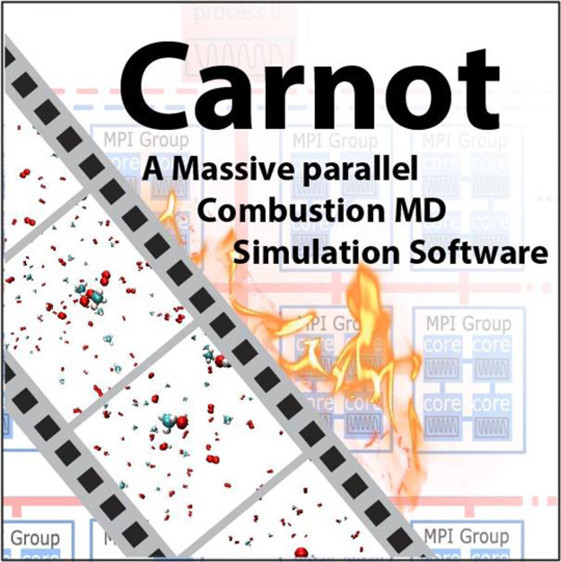
Prof. ERDİ ATA BLEDA is a Professor in the Department of Physics at Marmara University, Faculty of Arts and Sciences . He earned his Ph.D. in Physics and Astronomy from Clemson University (2008) and has held academic positions at both Marmara University and Istanbul Arel University. His research spans atomic and molecular physics, computational quantum chemistry, high-order harmonic generation, and machine learning applications in materials science. Doctorate: Clemson University, Physics and Astronomy (2004–2008) Postgraduate: Clemson University (2002–2004) Undergraduate: Marmara University, Physics (1997–2001) His research interests include atomic and molecular interactions , quantum mechanical modeling , nonlinear optical processes , plasma spectroscopy , and machine learning in material properties prediction . He employs computational methods such as DFT, TDDFT, and kinetic Monte Carlo simulations to study molecular systems, confined atoms, and nanostructures. His recent work explores twisted bilayer graphene using machine learning and high-harmonic generation from endofullerenes. The most recent publications reflect a strong trend in computational materials discovery , atomic-scale simulation , and quantum phenomena in confined systems . His work integrates physics, chemistry, and computer science, often with applications in nanotechnology and astrophysics. Themes include dielectronic recombination in plasmas, hydrogen bonding in organic molecules, and electronic structure analysis of novel carbon systems. His scientific awards include: In recognition of passion and dedication to improving student learning with Pearson’s MasteringPhysics (2013) Second Place in Physics Mef National Project Competition (1997) He supervises several graduate and doctoral students, with recent theses on machine learning in 2D nanostructures and parallelization of Green’s function methods. He has led multiple TÜBİTAK-funded research projects integrating GPU computing and quantum modeling. He also serves as the Erasmus Program Institutional Coordinator and has held leadership roles in academic commissions. He has contributed to scientific software development and holds patents in interactive data management systems. He is actively involved in research laboratories and teams focusing on computational physics, quantum chemistry, and high-performance computing. His group collaborates internationally and presents regularly at major physics and quantum chemistry conferences.