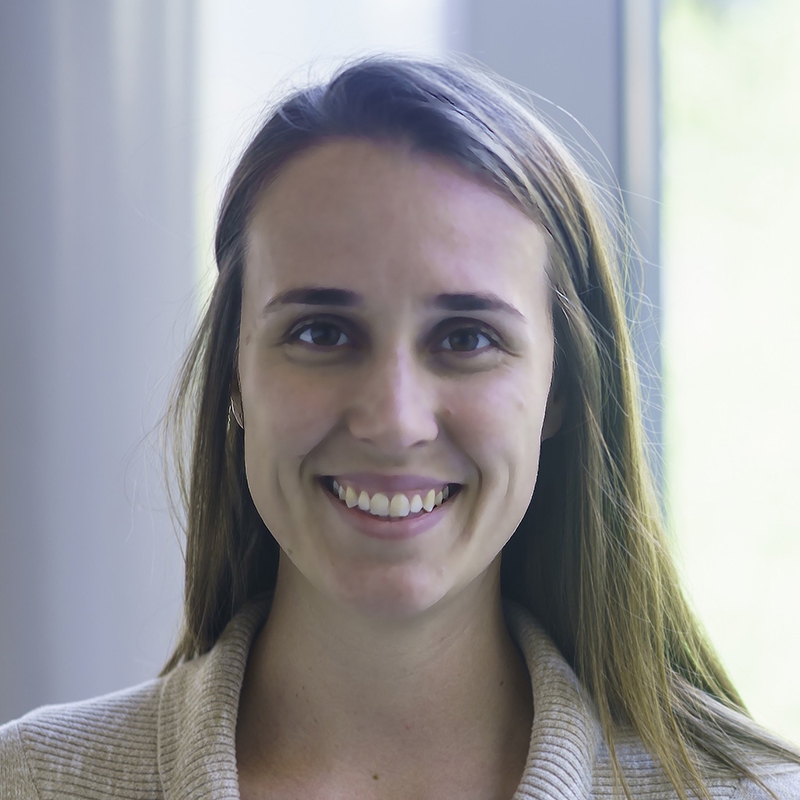
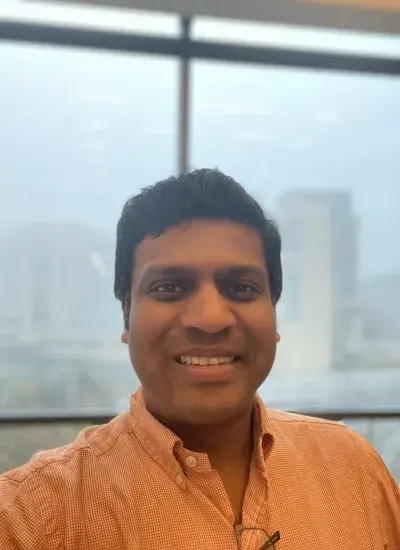
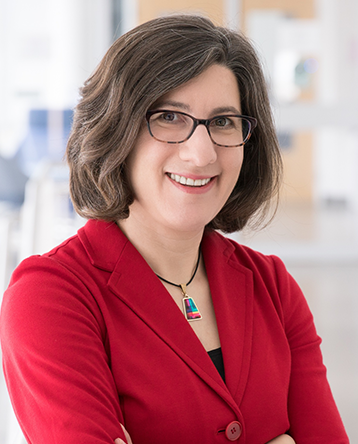
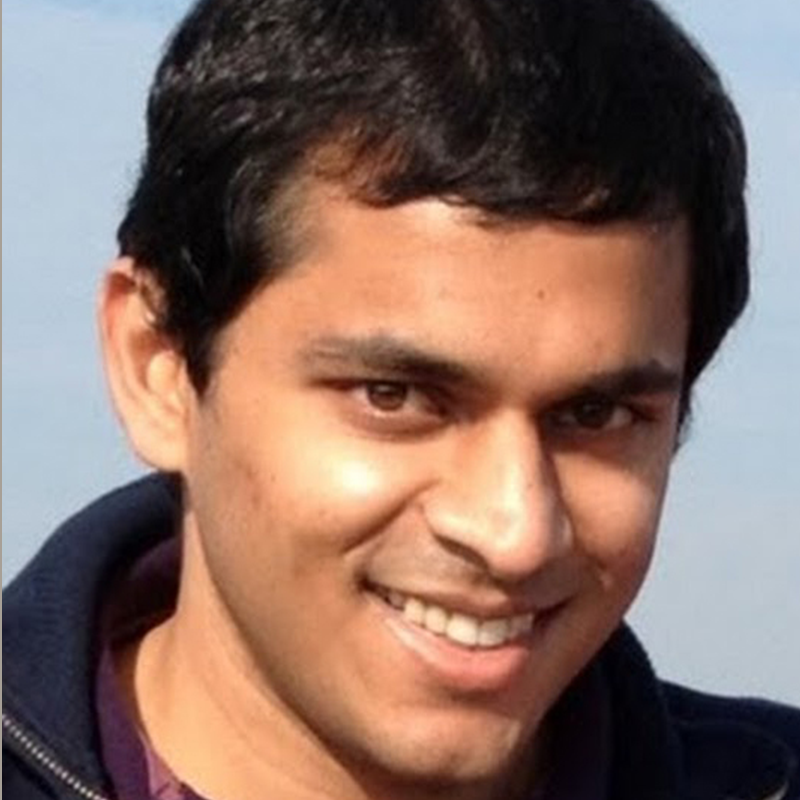
Deva Kannan Ramanan is a Professor at the Robotics Institute of Carnegie Mellon University , focusing on computer vision , machine learning , and human-centered robotics . His work bridges neurorobotics and visual perception , with applications in autonomous driving and 4D reconstruction . Research Topics Computer Vision 3-D Vision and Recognition Visual Servoing Neurorobotics Human-Centered Robotics Graphics & Creative Tools His recent publications in CVPR , ICRA , and ICCV emphasize 4D human reconstruction , neural rendering , and vision-language models for autonomous systems. He serves as General Chair of CVPR 2027 and Program Chair of CVPR 2018 , with IARPA funding for aerial-ground rendering (2023-2027). Current students include PhD candidates Sally Chen, Kangle Deng, and Zhiqiu Lin, while past advisees like Arun Vasudevan and Olga Russakovsky now hold positions at Amazon and Meta respectively.
Michael Kaess is an Associate Professor at the Robotics Institute, Carnegie Mellon University (CMU), within the School of Computer Science. He leads the Robot Perception Lab (RPL) and contributes to the Field Robotics Center (FRC) and Computer Vision Group (CV). His research focuses on efficient perception algorithms for mobile robots, particularly in 3D mapping, SLAM, and sensor fusion using vision, LiDAR, inertial, and sonar data. Kaess holds a PhD in Computer Science from Georgia Tech and was a postdoc at MIT's Marine Robotics Lab. Education: Georgia Institute of Technology, PhD in Computer Science (2008) MIT, Postdoctoral Associate (2008–2010) Research Interests: Kaess develops algorithms for robust and efficient inference in robotics, emphasizing factor graphs and linear algebra. His work spans underwater robotics, aerial systems, tactile SLAM, and multi-sensor integration. Key areas include SLAM with planes/lines, imaging sonar reconstruction, and neural field methods for LiDAR-visual fusion. Publications: Over 145 papers, including work on EDPLVO (visual odometry), HoloOcean (underwater simulation), and neural radiance fields with LiDAR. Recent trends focus on robust incremental smoothing, acoustic-optical fusion, and real-time volumetric mapping. Awards: Recognized with the RSS Test of Time Award (2020), Outstanding Associate Editor (2022), and paper awards at ICRA/ICRA. Active in conference organization (IROS/ICRA program committees). Advising & Grants: Supervises 10+ current PhD/MSc students, with past advisees contributing to CoRL/ICRA work. Manages grants in perception, autonomy, and marine robotics. Teaches courses like Robot Localization and Mapping (16-833). Labs/Teams: Directs RPL, collaborates with FRC on field robotics. Develops open-source tools like GTSAM (GNU Toolkit for Smoothing and Mapping).
Chris Donahue is an Assistant Professor in the Computer Science Department at Carnegie Mellon University . He also serves as a part-time Research Scientist at Google DeepMind on the Magenta team. His work focuses on leveraging generative AI to enhance human creativity, particularly in music. Education: PhD in Computer Science (UC San Diego), Postdoctoral Scholar (Stanford University) His research spans controllable generative modeling of music and audio , with a focus on real-time interactive systems. Projects like Piano Genie , Beat Sage , and Copilot Arena demonstrate his commitment to real-world deployment. His Generative Creativity Lab (G-CLef) explores AI applications beyond music, including programming and natural language. Recent publications highlight advancements in multimodal music evaluation , real-time adaptation , and AI-driven sound morphing . He co-developed Magenta RealTime , an open-weight real-time music generation model, and MusicFX DJ Mode . Scientific Awards: Best Paper Award (top 1) at NAACL Student Research Workshop 2025 Best Paper Award (top 1% of submissions) at CHI 2025 Best Paper Runner-up at ISMIR 2021 He co-advises PhD students like Wayne Chi (NDSEG Fellow) and mentors Irmak Bukey . His lab receives support from the AIxArts incubator fund at CMU .
Sicun Gao is an Associate Professor in the Computer Science and Engineering department at the University of California, San Diego. His research focuses on practical algorithms for NP-hard search and optimization problems in computational systems, emphasizing combinatorial perspectives in numerical and statistical contexts to achieve reliable autonomy. Research Interests: Automated reasoning, Hamilton-Jacobi reachability, safe reinforcement learning, control barrier functions, and optimization in cyber-physical systems. Teaching: Courses on AI search, optimization, and graduate research seminars. The 15 most recent publications highlight advancements in safe AI control, motion planning, and policy optimization, often integrating neural networks with formal verification. Awards include the IEEE Power & Energy Society Technical Committee Prize Paper Award and the IROS RoboCup Best Paper Award. He advises PhD students working on AI-driven control and robotics, with alumni placed at institutions like Seoul National University, Amazon, and Apple. Grants include NSF Career, Air Force Young Investigator, and DARPA Assured Autonomy funding. His lab develops tools like dReal for automated reasoning in nonlinear theories over the reals.
Larry Pileggi is the Coraluppi Head and Tanoto Professor of Electrical and Computer Engineering at Carnegie Mellon University (CMU). He is also the Department Head of CMU’s ECE Department and has held prior roles at Westinghouse Research and Development and the University of Texas at Austin. His work bridges academic research and industry innovation, with co-founding ventures like Fabbrix Inc., Extreme DA, and Pearl Street Technologies. Dr. Pileggi earned his Ph.D. in Electrical and Computer Engineering from CMU (1989), following an M.S. (1984) and B.S. (1983) in Electrical Engineering from the University of Pittsburgh. His research focuses on three core areas: secure integrated circuit hardware (mitigating supply-chain threats), integrated circuits design methodologies (supporting sub-20nm CMOS and heterogeneous technologies), and power systems simulation (developing robust grid analysis tools like SUGAR). He has been recognized with numerous awards, including the prestigious 2023 Phil Kaufman Award for contributions to electronic system design, and is an IEEE Fellow. His academic leadership includes fostering maker initiatives and interdisciplinary research programs to address future challenges in energy and computing systems. Pileggi’s advising record includes over 47 Ph.D. students, many of whom collaborate with him in industry ventures. Current and past grants support his work on resilient power grids and novel memory technologies, reflecting a commitment to both theoretical and applied research. His lab, the Pileggi Lab, develops cutting-edge solutions for energy and integrated systems, emphasizing scalable simulation, secure hardware design, and next-generation memory architectures. Collaborations span institutions like ETH Zurich and industry partners in EDA and semiconductor sectors.
Virginia Smith is the Leonardo Associate Professor of Machine Learning at Carnegie Mellon University (CMU), with a courtesy appointment in the Department of Electrical and Computer Engineering. She holds a Ph.D. from UC Berkeley and undergraduate degrees from the University of Virginia. Her research focuses on developing efficient, privacy-preserving machine learning systems, particularly in federated learning, distributed optimization, and resource-constrained settings. Key areas include federated learning frameworks like CoCoA and Ditto, unlearning algorithms, and privacy amplification techniques. Smith's work bridges theory and practice, addressing challenges such as data heterogeneity, fairness, and robustness. She has led initiatives like the LEAF benchmark for federated learning and has contributed to open-source tools for scalable ML systems. Her awards include the Sloan Research Fellowship, Samsung AI Researcher of the Year (2023), and an NSF CAREER Award. She is actively involved in curriculum development, teaching courses on federated learning and large-scale ML at CMU. Her research group explores cutting-edge topics like federated optimization with sparse communication, unlearning in LLMs, and secure ML pipelines. Collaborations span academia and industry, with applications in healthcare, IoT systems, and AI safety. Smith serves as Program Chair for ICML 2025 and frequently contributes to workshops on federated learning and trustworthy AI.
James McCann is an Associate Professor at the Carnegie Mellon Robotics Institute, where he leads the Carnegie Mellon Textiles Lab. He has been a faculty member since May 2017 after working at Disney Research Pittsburgh. McCann's academic journey includes a PhD from Carnegie Mellon advised by Nancy Pollard, followed by a postdoc at Adobe Research and a period developing video games. McCann's research focuses on building creative tools that operate in real-time and build user intuition, with particular emphasis on textiles fabrication and machine knitting. His work spans computer-aided fabrication, simulation, graphics, and creative tools development. He has pioneered systems for machine knitting design, including compilers for knitting instructions and tools for automatic conversion of 3D meshes to knitting patterns. His recent publications demonstrate a strong trend toward computational textiles, with significant contributions to knitting semantics, deployable textile structures, and applications of machine knitting in healthcare and robotics. McCann's work bridges computer science, robotics, and textile arts, creating practical systems for once-off manufacturing with industrial knitting machines. McCann actively mentors students, with current PhD candidates working on solid knitting machines, knit calibration, and assistive devices. His teaching portfolio includes courses on Real-Time Graphics, Algorithmic Textiles Design, and Game Programming. He has taught at CMU since 2017, developing innovative courses that blend computer science with physical fabrication. As director of the Textiles Lab, McCann oversees research projects spanning machine knitting, robotic painting, and real-time graphics systems. His lab develops practical tools for creators, emphasizing intuitive interfaces and real-time feedback that lower barriers to advanced fabrication techniques.
Yonatan Bisk is an Assistant Professor at Carnegie Mellon University within the Language Technologies Institute (with courtesy appointment in Robotics Institute). His research bridges Natural Language Processing , Robotics , and Embodied AI , focusing on language grounding, theory of mind, and multimodal interaction. Education : Ph.D. in Computer Science from University of Illinois at Urbana-Champaign Postdoctoral Experience : USC ISI, University of Washington, Allen Institute for AI Industry Appointments : Microsoft Research, Meta AI His research emphasizes embodied language systems and social intelligence in AI . Recent projects include WebArena for autonomous agents, SOTOPIA for social reasoning, and HomeRobot for open-vocabulary manipulation. He leads the REAL Center (Robotics, Embodied AI, and Learning) to foster interdisciplinary collaboration. Key scientific awards include selection for the DARPA ISAT Study Group (2024). He teaches courses like "Talking to Robots" and "Multimodal Machine Learning" while serving as area chair/editor across NLP, Robotics, and ML communities.
Anthony Rollett is a Professor in the Department of Materials Science and Engineering at Carnegie Mellon University , where he has been a faculty member since 1995. He serves as the Principal Investigator and Co-Director of the NASA-supported Institute for Model-Based Qualification & Certification of Additive Manufacturing (IMQCAM) and co-director of the Next Manufacturing Center . Prior to CMU, he held leadership roles at Los Alamos National Laboratory (1991-1995). Education: Ph.D., Materials Engineering, Drexel University (1987) MA, Metallurgy and Materials Science, Cambridge University (1977) Research Interests: Rollett’s work focuses on microstructural evolution and microstructure-property relationships in 3D using experiments and simulations. His expertise spans additive manufacturing , metal 3D printing , materials for energy systems , grain growth , recrystallization , and stereology , with techniques like high-energy diffraction microscopy (HEDM) and dynamic x-ray radiography (DXR) . Scientific Contributions: He has over 320 peer-reviewed publications and an h-index >80 . His recent articles highlight machine learning for laser processing , fatigue analysis of additively manufactured alloys, and design optimization for heat exchangers in supercritical CO2 and solar thermal applications . Scientific Awards: Fellow of ASM International (1996) Fellow of the Institute of Physics (UK) (2004) Fellow of The Minerals, Metals & Materials Society (TMS) (2011) Cyril Stanley Smith Award (TMS, 2014) Member of Honor, French Metallurgical Society (2015) US Steel Professor (2017) Francqui International Professor (2020-2021) International FAME Award (2023) Leadership & Impact: Rollett co-led the development of a NASA Space Technology Research Institute for additive manufacturing and established a new master’s program in additive manufacturing (2018). His research group is funded by industry , federal agencies , and Pennsylvania state grants . He also serves on the Basic Energy Science Advisory Committee and Defense Programs Advisory Committee for the Department of Energy.
Yuvraj Agarwal is a Professor in the School of Computer Science at Carnegie Mellon University , where he leads the SYNERGY Labs . His research focuses on Systems and Networking with emphasis on Embedded Systems , Security , and Energy Efficiency in computing environments. He has been recognized with the NSF Expeditions in Computing Award for Computational Decarbonization research and multiple best paper awards. Education : PhD in Computer Science from University of California, San Diego Research Leadership : Founder/Director of SYNERGY Labs; Executive Director of NSF Expeditions in Variability (2010-2013) Research Trajectory : Recent publications highlight his work on Privacy-preserving smart classroom systems (EduSense, ClassID) IoT security labeling frameworks Audio privacy protection mechanisms Computational decarbonization of infrastructure His research combines hardware-software co-design with societal impact considerations. Scientific Recognition : NSF Expeditions in Computing Award for CoDec (2024) Ubicomp/IMWUT Distinguished Paper Award (2024) CHI Best Paper Honorable Mention (2022) Advising & Collaboration : Mentors students in IoT systems , privacy research , and green computing . Collaborates with institutions including University of Massachusetts Amherst and industry partners like Johnson Controls. Grants include NSF funding for multi-university research initiatives.
Lorrie Faith Cranor is the Director and Bosch Distinguished Professor in Security and Privacy Technologies at the CyLab Security and Privacy Institute, and the FORE Systems University Professor of Computer Science and Engineering and Public Policy at Carnegie Mellon University. She also directs the CyLab Usable Privacy and Security Laboratory (CUPS) and co-directs the MSIT-Privacy Engineering master’s program. She previously served as Chief Technologist at the U.S. Federal Trade Commission and is a co-founder of Wombat Security Technologies. Carnegie Mellon University – CyLab Security and Privacy Institute School of Computer Science – Department of Computer Science College of Engineering – Department of Engineering and Public Policy PhD Program in Societal Computing Human-Computer Interaction Institute (affiliate) Heinz College (affiliate) Dr. Cranor’s research centers on usable privacy and security, privacy engineering, and technology policy. Her work spans authentication systems, privacy policies, IoT security, and human behavior in digital environments. She has pioneered research on password usability, privacy labels (e.g., 'nutrition labels' for privacy), and privacy decision-making. Her interdisciplinary approach integrates computer science, public policy, and behavioral science to create systems that are both secure and user-friendly. Her recent publications reflect a strong focus on privacy interfaces, consent mechanisms, IoT security labels, and user comprehension of digital privacy. Trends include evaluating the usability of privacy controls across platforms, designing tools for developers to generate accurate privacy disclosures, and understanding user behavior in online tracking and advertising contexts. Her work frequently appears in top venues such as CHI, SOUPS, and PETS. ACM CHI Academy inductee ACM Fellow IEEE Fellow 2018 ACM CHI Social Impact Award 2018 International Association of Privacy Professionals Privacy Leadership Award 2018 IEEE Cybersecurity Award for Practice Alumni Achievement Award, McKelvey School of Engineering Top 100 Innovator under 35, Technology Review Dr. Cranor has advised numerous PhD students in interdisciplinary programs including Societal Computing, Engineering and Public Policy, and Human-Computer Interaction. Her research has been supported by grants from the National Science Foundation, DARPA, and industry partners. She serves on the boards of the Computing Research Association, Center for Democracy and Technology, and Electronic Privacy Information Center. She is a frequent media commentator on privacy and security issues. She leads the CyLab Usable Privacy and Security Laboratory (CUPS), a multidisciplinary research group that includes faculty and students from computer science, policy, and HCI. The lab focuses on making privacy and security systems more intuitive, effective, and user-controlled. Key projects include the Usable Privacy Policy Project, privacy nutrition labels, and the Personalized Privacy Assistant Project.
Ameet Talwalkar is an Associate Professor in the Machine Learning Department at Carnegie Mellon University and Chief Scientist at Datadog. He holds a PhD from the Courant Institute at NYU (2010) where he received the Janet Fabri Prize for Best Thesis. His professional achievements include co-founding Determined AI (acquired by HPE), creating MLlib in Apache Spark, co-authoring the textbook 'Foundations of Machine Learning,' and spearheading the MLSys conference. Talwalkar's research focuses on fundamental challenges in machine learning systems, including distributed ML, federated learning, neural architecture search, and human-AI interaction. His work bridges theoretical foundations with practical applications across domains like computational biology, PDE solving, and code generation. Current interests include AI for science, specialized model development, and agent-based systems. His publications demonstrate strong focus on ML systems optimization, foundation model evaluation, and interpretable AI. Recent works investigate specialized foundation models, PDE-solving frameworks, code generation tools, and human-AI interaction paradigms. The research consistently targets efficiency, scalability, and practical deployment challenges. Best Paper Award at EAAMO 2023 Best Student Paper at NYAS ML Symposium 2009 Runner-up for Best Real-world Application at Socal ML Symposium 2017 Janet Fabri Prize for Best PhD Thesis (2010) Talwalkar leads the CMU MLSys Lab focused on scalable ML systems and has served as Board President for the MLSys conference series. His educational contributions include developing courses like 'Machine Learning with Large Datasets' and creating the LEAF benchmark for federated learning and NAS-Bench-360 for neural architecture search.
Dr. Theophilus A. Benson is a Professor in the Department of Electrical and Computer Engineering at Carnegie Mellon University, with additional responsibilities at Carnegie Mellon University-Africa. His research group focuses on improving network performance and availability through models, algorithms, and frameworks that manage network state semantics. Key application areas include addressing the digital divide, optimizing microservices/cloud systems, software-defined networks, and CDN designs. Education: Ph.D., University of Wisconsin, Madison (2012) M.S., University of Wisconsin, Madison (2008) B.S., Tufts University (2004) Research Focus: Professor Benson's work spans three core domains: Democratizing Web Performance (measurements and optimizations for developing regions), Systems Abstractions for Programmable Infrastructures (eBPF/P4 frameworks), and Self-Managing Networks (ML-driven configurations). His African Internet Observatory initiative analyzes Africa's internet ecosystem to address digital inequity through assessment probes and statistical methods. Publication Trends: Recent works (2021-2024) demonstrate a strong focus on programmable networks (eBPF/P4 management), web performance in developing regions, and data-driven cloud/CDN optimizations. Earlier foundational work established expertise in SDN fault tolerance, network updates, and video streaming characterization. Awards & Honors: SIGCOMM Test of Time Award NSF CAREER Award NEC Faculty Award Google Faculty Award Facebook Faculty Award (2x) DARPA ISAT Study Group Member Grants & Advising: Secured funding from NSF (CAREER, NeTS), Google, Facebook, and Yahoo. Current advisees include 4 PhD/MS students working on programmable networks and web performance. Actively recruiting post-docs and students for African connectivity and eBPF projects. Leadership: Co-chairs NSDI'25 and ApNet'24 conferences. Leads the NetLab research group developing deployable systems adopted by web-scale companies and open-source communities.
Golan Levin is Professor of Electronic Art at Carnegie Mellon University's School of Art, with courtesy appointments in the School of Design, School of Architecture, School of Computer Science, and Entertainment Technology Center. From 2009 to 2022, he served as Director and Co-Director of CMU's Frank-Ratchye STUDIO for Creative Inquiry, a laboratory dedicated to supporting atypical, anti-disciplinary research at the intersection of arts, science, technology, and culture. Levin's research spans interactive art, digital fabrication, information visualization, and generative design. He explores the critical potential of visualization, generative computation for expressive form, and how abstraction connects to realities beyond language. His practice engages interactive gestural robotics, nonverbal interaction aesthetics, and tactical applications of personal digital fabrication through responsive artifacts and media provocations that highlight human-machine relationships. His publications reveal consistent innovation in real-time audiovisual systems, interactive fabrication interfaces, and pedagogic tools for artists. Key trends include slit-scan video techniques, tangible augmented-reality performance, and noise-based visualizations, demonstrating his commitment to expanding human action vocabulary through digital media while bridging artistic expression with computational systems. Levin's work has received significant recognition: Permanent collection inclusion at Museum of Modern Art (MoMA) Whitney Biennial exhibition "50 Designers Shaping the Future" by Fast Company (2012) Competitive grants from National Endowment for the Arts, National Endowment for the Humanities, Creative Capital, and Rockefeller MAP Fund As an educator, Levin teaches "studio courses in computer science" on interactive art, experimental capture, and generative design, emphasizing computation as a medium for critical inquiry. His research funding from major cultural institutions supports interdisciplinary exploration at the arts-technology nexus. The Frank-Ratchye STUDIO for Creative Inquiry, which he directed for 13 years, remains a vital hub for anti-disciplinary collaboration, continuing his legacy of fostering creative agency through technology-infused artistic practice.
Vyas Sekar is the Tan Family Professor of Electrical and Computer Engineering at Carnegie Mellon University (CMU), with a courtesy appointment in the Computer Science Department. He is affiliated with CyLab and co-directs the Future of Enterprise Security initiative. His research focuses on networking, cybersecurity, distributed systems, and IoT security, with an emphasis on data-driven approaches and network verification. Education: Ph.D. in Computer Science (2010) from CMU; B.Tech. from IIT Madras (President of India Gold Medal recipient). Professional roles include Chief Scientist at Conviva and co-founder of Rockfish Data. Research Interests: Cybersecurity, network security, software-defined networking (SDN), IoT security, DDoS defense, privacy-preserving data sharing, and network performance optimization. Recent work includes developing tools like Pigasus (FPGA-accelerated intrusion detection), Nomad (cloud side-channel mitigation), and frameworks for anomaly detection in IoT networks. Articles Trends: Recent publications address advanced threats like LLM-driven network attacks, stealthy automotive network exploits (CANDid), and optical-layer DDoS defenses. Emphasis on practical solutions (e.g., SketchPlan for telemetry, Pryde for firewall evasion detection). Awards: ACM SIGCOMM Test of Time Award (2022), IIT Madras Young Alumni Achiever Award (2022), Intel Outstanding Researcher Award (2021), and NSF CAREER Award (2016). Recognized for contributions to intrusion prevention, network security, and IoT resilience. Grants & Projects: Led NSF-funded ONSET project (optical-layer DDoS defense), CyLab's Secure IoT Initiative, and collaborations with industry partners like Intel, Facebook, and Nokia Bell Labs. Advises graduate students in cybersecurity and networking. Labs & Teams: Active contributor to CyLab, co-developer of frameworks like Lumos (hidden IoT device detection) and KalKi (IoT security platform). Engages in interdisciplinary research across CMU’s Robotics Institute and Software Engineering Institute.